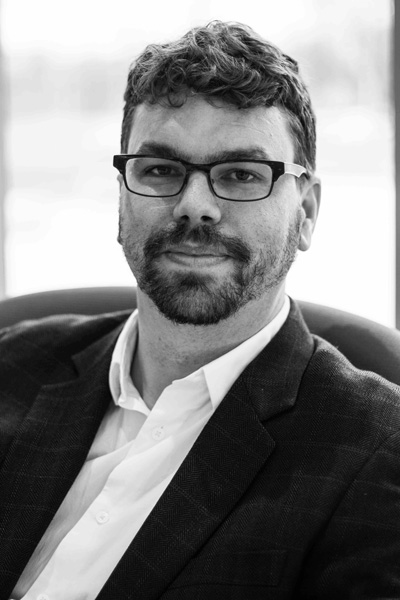
Nathan Martin is an Associate Professor of Music Theory at the University of Michigan, School of Music, Theatre & Dance. He joined in 2015 after postdoctoral fellowships at Columbia, Harvard, Katholieke Universiteit Leuven, Hochschule für Musik Freiburg, and Yale. He holds a PhD from McGill University’s Schulich School of Music (2009). His research focuses on the history of music theory and musical form analysis, particularly the works of Jean-Philippe Rameau and their reception among Enlightenment thinkers like Jean-Jacques Rousseau. He integrates intellectual history with practical analytical methods, emphasizing both contextual and emic perspectives. Recent interests include adapting empirical social science and linguistics methods to study musical form. Key publications include articles on Rameau’s harmonic concepts, Rousseau’s musical writings, and global music theory history. His 2014 article on Rameau’s supposition/suspension theories earned the Society for Music Theory’s Outstanding Publication Award. He co-edited Formal Functions in Perspective (2015) and served as co-editor of Music Theory & Analysis until 2019. Professional highlights include the Edward T. Cone Membership at the Institute for Advanced Study (2018–2019) and a 2023 visiting researcher role at the Max Planck Institute for Empirical Aesthetics. His work bridges historical analysis with contemporary empirical approaches, fostering interdisciplinary dialogue in music theory.
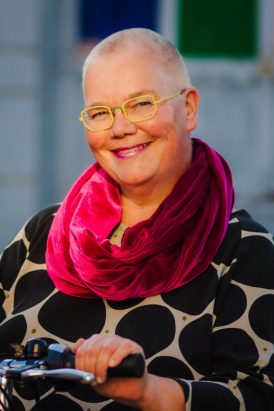
Petra Kuppers is a Professor at the University of Michigan, specializing in disability culture, performance art, and ecocriticism. She holds a PhD from Falmouth College of Art/Plymouth University (1999) and is affiliated with multiple departments, including English, Drama, and Gender Studies. Her work bridges academic research with community-based performance, emphasizing socially just futures through art. Key roles include Artistic Director of The Olimpias, co-founder of Turtle Disco, and a Just Tech Fellow (2024–2026) for 'Planting Disabled Futures,' a VR project blending disability culture and environmental ethics. She teaches graduate courses on disability studies and creative writing, advising students through a monthly 'Research Coven.' Kuppers has authored influential books like *Disability and Contemporary Performance* (2003) and *Eco Soma* (2022), recognized with awards such as the Guggenheim Fellowship and ATHE Book Prize. Her poetry collections, including *Gut Botany* (2020) and *Diver Beneath the Street* (2024), explore intersections of disability, ecology, and true crime. Her research spans crip ecologies, archival activism, and somatic methods, with recent projects including *Crip/Mad Archive Dances* and participatory events like 'Crip Drifts.' She emphasizes accessibility in performance, digital art, and public engagement, often collaborating with Indigenous communities and global disability collectives.
Panpan Yang is a Lecturer in Arts and Visual Cultures of Modern China at the School of Arts, SOAS University of London. She joined SOAS in 2021 after completing her joint PhD at the University of Chicago under the direction of Wu Hung, Tom Gunning, W. J. T. Mitchell, Judith Zeitlin, and Dana Polan. Her interdisciplinary work bridges art history, screen studies, East Asian studies, and digital humanities, with a focus on innovative methodologies in art historical writing. Dr. Yang earned a dual BA from Peking University, double majoring in art and philosophy, followed by an MA from Tisch School of the Arts at NYU, and a PhD from the University of Chicago. During her undergraduate studies, she served as president of the Society of Dream of the Red Chamber Studies, which informed her secondary academic interest in Redology and the visual material world of the novel Hong lou meng. Panpan Yang's research explores how minor discourses can deterritorialize the terrains of both art history and screen studies. Her work demonstrates a multimethodological approach attentive to archival research, material practices, close visual analysis, computer-aided vision, and cross-cultural theorization. She is particularly interested in Chinese animation history, calligraphic imagination in contemporary art, and the intersections between traditional Chinese art forms and new media. Her publications reveal a consistent focus on Chinese visual culture across multiple media forms, with particular attention to animation, film, and calligraphy. Yang's work demonstrates how traditional Chinese art forms engage with contemporary digital media, creating new hybrid forms that challenge disciplinary boundaries. Her research shows a trajectory from historical analysis of Chinese animation to contemporary explorations of calligraphy in digital contexts, revealing the ongoing relevance of traditional Chinese aesthetics in modern media. Dr. Yang has received several prestigious awards for her scholarly and creative work: China's National Young Screenwriter Award Domitor Essay Award Dean's Distinguished Dissertation Award Nomination Honourable Mention from the Association for Chinese Animation Studies As a Principal Investigator, Dr. Yang leads the AHRC-funded research project "Stroke by Stroke: Calligraphic imagination in contemporary Chinese art and emergent media" (2023-25) with Shane McCausland. She was also a collaborating partner on the NEH-funded "Media Ecology Project." Her research has received additional support from the Getty Foundation and the Sino-British Fellowship Trust. At SOAS, she works closely with faculty and graduate students interested in Chinese arts and cultures, art theory, cinematic arts, and digital art history. Dr. Yang is currently developing innovative research at the intersection of traditional Chinese calligraphy and contemporary digital media through her AHRC-funded project. This work explores how calligraphic imagination manifests in contemporary art and emergent media contexts, creating new pathways for understanding Chinese cultural heritage in the digital age.
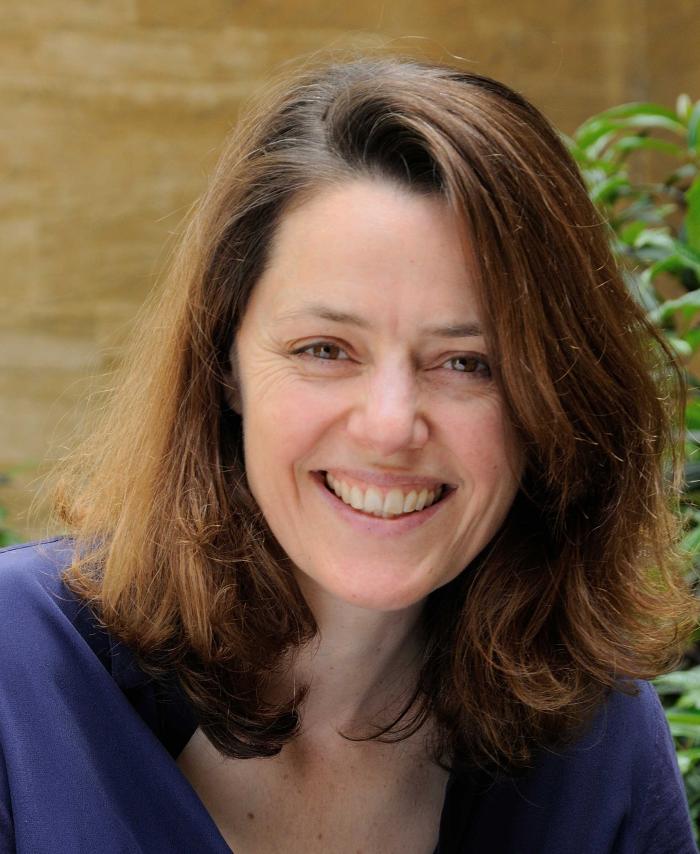
Jocelyn Alexander is Professor of Commonwealth Studies and Head of Department at the University of Oxford's Department of International Development (ODID). She teaches primarily on the MPhil in Development Studies and the DPhil in International Development, and serves on the editorial board of the Journal of Southern African Studies and the publications committee of the International Africa Institute. Her research interests include: Southern African social and political history Liberation movements and their legacies Violence and memory Political imprisonment Rural politics and state-making Political & International Dimensions of Development Sub-Saharan Africa Professor Alexander is currently working on a Leverhulme-funded collaborative research project titled 'Global Soldiers in the Cold War: Making southern Africa's liberation armies', and writing a history of political imprisonment in Zimbabwe. Her research uses qualitative methodologies, notably oral history and archival research, and she is interested in cross-disciplinary approaches combining history, anthropology, politics, and literature. Her recent publications demonstrate a strong focus on transnational histories of Southern African liberation movements, political imprisonment in Zimbabwe, and the legacies of violence in post-colonial states. She has made significant contributions to understanding the connections between liberation movements, the Cold War context, and the formation of post-colonial states in Southern Africa. Scientific awards: Leverhulme grant for project on Cold War-era 'global soldiers' (2019) Professor Alexander has supervised numerous doctoral students working on topics related to Southern African politics, history, and development. She has also co-authored important works including 'Violence and Memory: One Hundred Years in the 'Dark Forests' of Matabeleland' (2000) and authored 'The Unsettled Land: The Politics of Land and State-making in Zimbabwe, 1893-2003' (2006). She has taught at Sussex and Bristol Universities and has been a Research Associate at the University of Zimbabwe, bringing extensive regional experience to her academic work.
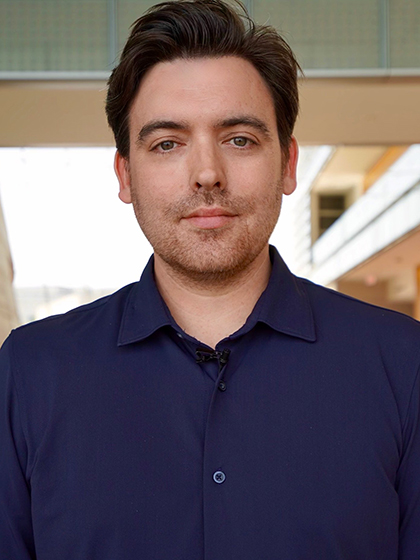
Daniel Shanahan is an Associate Professor at the Bienen School of Music , Northwestern University , where he coordinates the Music Theory and Cognition program and directs the Music Cognition Lab. He holds a PhD from the University of Dublin, Trinity College. His research integrates music-analytic, computational, and experimental methodologies to investigate cognitive and communicative constraints in music. Key themes include corpus studies, music and emotion, oral transmission of musical traditions, computational analysis of jazz and folk music , and the application of machine learning and generative AI to musicology. Shanahan has served as co-editor of Empirical Musicology Review (2016–2022) and sits on editorial boards of multiple journals. His work appears in Music Perception , The Journal of New Music Research , Musicae Scientiae , and Frontiers in Psychology , with chapters in Routledge Companions and the Oxford Handbook of Music and Corpus Studies . Recent projects include an NSF grant studying sound's impact on learning (2023) and co-editing the Oxford Handbook . He currently serves as treasurer for the Society for Music Perception and Cognition . Mentorship Award (Society for Music Perception and Cognition, 2024) Outstanding Multi-Author Collection Award (Society for Music Theory, 2023) Distinguished Scholar Award (Ohio State University) Rising Faculty Research & Undergraduate Teaching Awards (Louisiana State University) His publications demonstrate expertise in music cognition, computational analysis, emotional expression, and oral/embodied transmission , with trends showing interdisciplinary applications of AI and cross-cultural studies. Shanahan's mentorship emphasizes student well-being, empathetic guidance, and fostering academic potential . He has hosted global open lab meetings during the pandemic and cultivated mentees who now contribute to service roles in academic committees.
Professor Stephen Broad is a musicologist and educator serving as Director of Research and Knowledge Exchange at the Royal Conservatoire of Scotland. He holds a DPhil from the University of Oxford and has extensive experience in historical musicology, music education, and policy development. His research focuses on Olivier Messiaen, 1930s French music culture, and music practice in Scotland. Broad has authored/co-authored influential reports like What’s Going On? , which informed the Scottish Youth Music Initiative, and chairs the European Platform for Artistic Research in Music (EPARM). Education: DPhil in Historical Musicology, University of Oxford (2001) MA in Music and Physics, University of Glasgow (1997) Research Interests: Historical Musicology: Messiaen’s early career, French musical traditions, and music historiography Music Education: Pedagogy in diverse contexts, policy development, and workforce training Practice-Based Research: Philosophical frameworks and interdisciplinary methodologies Awards & Roles: External Examiner at Royal Academy of Music, Royal College of Music, and others Editorial boards for Music Education Research and Practice-Based Research Journal Recipient of grants including the Scottish Government’s £1m Musical Instrument Fund Advising & Grants: Supervised over 10 doctoral projects in musicology, performance, and education Contributed to policy initiatives like Creative Scotland’s music development programs Labs/Teams: Leads the Sciences, Humanities and Arts Research Exchange (SHARE) and chairs EPARM, fostering international collaboration in artistic research.
Tria Blu Wakpa is an Assistant Professor in the Department of World Arts and Cultures/Dance at UCLA's School of the Arts and Architecture. Her work bridges academia and community engagement, focusing on decolonizing methodologies to examine Indigenous peoples' practices in confinement contexts. Education: Ph.D. and M.A., Ethnic Studies, UC Berkeley M.F.A., Creative Writing, San Diego State University B.A., English with Film, Oklahoma State University (summa cum laude) Research Interests: She explores dance, athletics, and yoga through Indigenous frameworks, analyzing their roles in education, incarceration, and performance. Her work emphasizes community collaboration, particularly with tribal experts, and critiques colonial structures. Awards & Recognition: 2023 Gerald Kahan Scholar’s Prize (American Quarterly article) Fulbright Association’s Selma Jeanne Cohen Dance Lecture Awardee (2023) Fellowships: Ford Foundation, Hellman Fund, UC Postdoctoral Program Community Engagement: Co-Founder/Editor-in-Chief of Race and Yoga journal. Serves on LA Cultural Affairs Commission, LA Unified School District’s American Indian Parent Committee, and Fernandeño Tataviam Education Committee. Teaches at tribal, carceral, and public institutions.
Professor Håkan Larsson holds the position of Professor and Head of the Department of Movement, Culture, and Society at the Swedish School of Sport and Health Sciences (GIH). He specializes in Educational Science with a focus on gender, sexuality, and sport didactics. His academic leadership includes directing research initiatives such as the PIF group (Pedagogical Sport Research) and the FIHD Graduate School, which trains teachers in physical education and health. Larsson supervises eight doctoral students and teaches in GIH’s master’s and doctoral programs, notably leading mandatory courses in sports science. Research Interests: Pedagogical processes in club and school sports Gender, sexuality, and embodiment in physical education Heteronormativity and LGBTQ+ inclusion in sports Collaborations: Norwegian School of Sport Sciences (part-time leave) Swedish National Agency for Education (Skolverket) Riksidrottsförbundet (Swedish Sports Confederation) His research spans projects like 'Heteronormativitet inom idrotten' (2012–2013) and the KUL project (2011–2013), funded by the Swedish Research Council. Larsson also chairs evaluation committees for academic programs and collaborates with interdisciplinary groups like Research in Education & Movement Culture. Publications emphasize critical pedagogy, transgender embodiment in education, and innovative teaching methods. His work bridges theory and practice, addressing contemporary challenges in physical education and sport equity.
Professor Robert Vilain is Senior Tutor at St Hugh’s College, University of Oxford, and Lecturer in German at Christ Church. Previously, he held the position of Professor of German and Comparative Literature at the University of Bristol (2010–2023) and served as Director of the South, West & Wales Doctoral Training Partnership (2020–2023). He was Warden of Wills Hall (2015–2018), overseeing welfare and pastoral care. Vilain earned his DPhil in comparative literature from Christ Church, where he also studied French and German as an undergraduate in the 1980s. His research focuses on comparative literature, modernist poetry, and the avant-garde, with a particular emphasis on Rainer Maria Rilke, Yvan Goll, and Hugo von Hofmannsthal. His work bridges German, French, and Austrian cultural contexts, exploring themes like spirituality, exile, and interdisciplinary art forms. Education: Bachelor of Arts (French and German), Christ Church, Oxford Doctor of Philosophy (DPhil) in Comparative Literature, Christ Church, Oxford Research Interests: Vilain’s studies delve into modernist lyricism, the avant-garde’s interplay with visual and musical arts, and the reception of German and French literary figures in transnational contexts. He is renowned for his analyses of Rilke’s spiritual and existential themes, as well as his examinations of Yvan Goll’s exile writings and Hofmannsthal’s engagement with 20th-century political history. Publications: His scholarly works include edited volumes on Austrian cultural identity, translations of Rilke’s texts, and critical studies on figures like Hermann Bahr and Georg Trakl. His recent articles explore Rilke’s engagement with Venice, Beethoven, and Rome, reflecting his interdisciplinary approach. Labs/Teams: As Senior Tutor, Vilain oversees academic and pastoral affairs at St Hugh’s, fostering an inclusive intellectual environment. He collaborates with institutions like the South, West & Wales DTP to support doctoral training in the humanities.
Vincent Masse is an Associate Professor in the Department of French at Dalhousie University's Faculty of Arts and Social Sciences. His office is located in Room 3172, Marion McCain Building, with contact information including email (vincent.masse@dal.ca) and phone (902-494-6808). He holds a BA and MA from McGill University, a PhD from the University of Toronto, and completed postdoctoral work at Paris IV (Sorbonne). His research focuses on medieval and early modern European history and literature, with specializations in: Portrayals of non-European worlds Travel narratives and contact literature History of apocalyptic thought Development of printed news and ephemeral literature 19th-century Quebec literature History of the book and print culture Professor Masse has supervised multiple graduate students including MA theses on apocalyptic elements in medieval literature, Renaissance philosophical thought, and religious conversion tropes in Enlightenment fiction. He maintains regular office hours on Tuesdays and Thursdays from 2:30-3:00 p.m. His media engagements include podcast appearances on Arthurian legends and documentary participation about lost kingdoms. His course "FREN 2666 The End Of The World" has received significant media coverage in outlets like CBC Radio and The Chronicle Herald.
Kyoko Iwaki is a Senior Lecturer at the Department of Literature of the University of Antwerp, with a focus on Japanese theatre, performance studies, and post-catastrophe narratives. She actively engages in collaborative research and holds internal governance roles, including membership in the Departmental Council for Literature and the Education Committee for the Educational Master in Languages. Her research explores Japanese contemporary theatre's intersections with ethics, digital performance, and nuclear trauma. Key themes include collaborative methodologies, liminality, and the philosophical implications of post-Fukushima art. Her work spans classical adaptations, avant-garde practices, and interdisciplinary approaches to performance. Recent publications analyze experimental Japanese theatre (Okada Toshiki, Sankai Juku), post-disaster memory, and the politics of digital pandemic spaces. She contributes to global discourse through interviews with practitioners and critiques of institutional frameworks in theatre and academia.
Adrienne Cohen is an Associate Professor in the Department of Anthropology and Geography at Colorado State University, affiliated with the College of Liberal Arts. Her research focuses on the intersections of aesthetics, politics, and urban life in Africa, particularly through ethnographic studies of dance and performance in Guinea. She currently explores rock climbing as a lens for understanding environmental knowledges and kinesthetic practices, supported by the Wenner-Gren Foundation. Education: Ph.D. (2016), M.Phil (2013) in Sociocultural Anthropology from Yale University; M.S.Ed. (2005) in TESOL from Long Island University; B.A. (2001) in International Studies from Pitzer College. Research Interests: Aesthetics and politics, African studies, urban theory, embodiment, environmental knowledges, qualitative methods. Notable works include Infinite Repertoire (2021), analyzing dance in postsocialist Guinea, and recent articles on rock climbing ethnography and feminist testimony. Teaching: Courses span cultural anthropology foundations, African urban studies, ethnographic writing, and contemporary theory. She advises graduate students in cultural anthropology focusing on embodiment, performance, environmental studies, and the Anthropocene. Advising & Grants: Actively mentoring MA/PhD students; her current project on rock climbers has received Wenner-Gren Foundation support. She emphasizes collaborative, fieldwork-driven research. Labs/Teams: Engages in transnational ethnographic collaborations, particularly in Guinea and climbing communities. Her work bridges urban African studies with emerging environmental anthropology frameworks.
Michael J. Kramer is an Associate Professor of History at SUNY Brockport, specializing in Modern US History, Cultural History, and Digital Humanities. His work bridges traditional historical inquiry with innovative digital methodologies, including digital editing and speculative digital humanities tactics. PhD & MA in History from the University of North Carolina, Chapel Hill BA in History from Columbia University Research interests include the intersection of folk music revival and cultural democracy, sensory history approaches, and the role of technology in historical interpretation. He actively engages in public history projects such as the Fannie Barrier Williams Project and SUNY HistoryLab, connecting historical inquiry to civic education. Current projects explore the 1976 US Bicentennial celebrations, computational approaches to folk music ballads, and affective theories of social change. His upcoming publications span topics from the Berkeley Folk Music Festival to the selected writings of Theodore Roszak.
Zenzele Isoke is an Associate Professor in the Department of Women, Gender, and Sexuality Studies at the University of Minnesota, and previously affiliated with the Harriet Tubman Department at the University of Maryland. Her research focuses on black feminist theory, urban ethnography, and decolonial methodologies. She examines the political struggles of Black/queer women in cities across the U.S., Middle East, and Caribbean, emphasizing spatial justice and intersectional resistance. Education: HBCU-educated, working-class background. Roles: Director of Graduate Studies at University of Minnesota; former affiliation with University of Maryland’s Harriet Tubman Department. Her scholarship bridges academia and activism, including projects like Unheard Voices at the Bottom of Empire , which integrates art, meditation, and grassroots organizing. Recent works include an epilogue in Queer Newark (2024) and contributions to Handbook on Gender and Cities (2024). Key themes: Black queer memorialization, urban spatial politics, and decolonial writing practices. Publications: Over 30 peer-reviewed articles and book chapters, including Urban Black Women and the Politics of Resistance (2013). Current projects explore mindfulness in activism and the afterlife of childhood trauma through a genre-blending memoir. Labs/Initiatives: Collaborates with Indigenous Futures Lab and D.C. Queer Studies network.
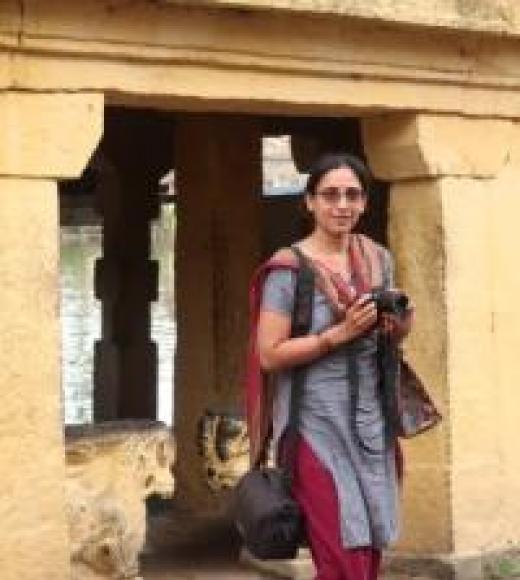
Archana Venkatesan is a Professor of Religious Studies and Comparative Literature at the University of California, Davis. She holds a Ph.D. from the University of California, Berkeley (2004), along with earlier degrees from Berkeley and De-Anza College. Her research focuses on Tamil Vaishnava poetry, South Indian performance traditions, and women’s roles in Hindu goddess worship. Venkatesan has authored influential works like In Andal’s Garden (2015) and A Hundred Measures of Time (2014), exploring devotional art, temple rituals, and mystical poetry. Her current projects include collaborative work on the Nava Tirupati temples network and translations of classical Tamil texts like the Tiruvaymoli and Kampa-Ramayanam. Academically, she teaches courses on Hinduism, religious performance, and South Asian literature. Venkatesan has received prestigious awards including a Guggenheim Fellowship (2018), National Endowment for the Humanities grants, and the Shivdasani Fellowship. She directs the Religions of India Initiative, fostering interdisciplinary study of Indian religious traditions. Her scholarship bridges literary translation, ethnographic fieldwork, and theological analysis, with a focus on marginalized voices in devotional traditions. Recent publications (2018) explore sound’s role in Vaishnava devotion and alternate histories of Carnatic music, reflecting her interdisciplinary approach to South Asian religious cultures.