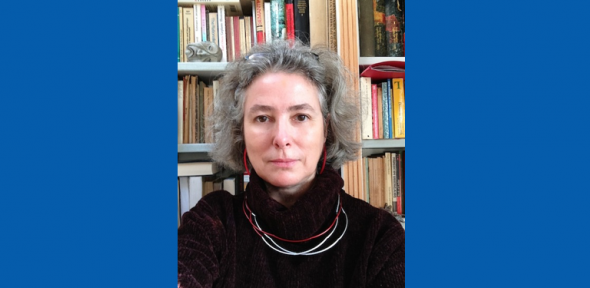
Barbara Gail Montero is the Rev. John A. O’Brien Professor of Philosophy at the University of Notre Dame, where she holds a faculty position in the Department of Philosophy within the College of Arts and Letters. She earned her BA from the University of California, Berkeley, and her PhD from the University of Chicago. Her research focuses on two core areas: the metaphysical relationship between mind and body, and the role of consciousness in expert action. Notably, she explores how physicalism interacts with abstract entities and how athletes defy skill plateaus through orthogonal models of attention and automaticity. Her key publications include Continuous Improvement: Intertwining Mind and Body in Athletic Expertise (2022, co-authored), A Very Short Introduction: Philosophy of Mind (2021), and Thought in Action: Expertise and the Conscious Mind (2016). She has also published influential papers on pain memory gaps, expertise-induced amnesia, and critiques of flow-state theories. Montero’s interdisciplinary work bridges philosophy with dance performance, as seen in collaborations like Curved Spacetimes: Where Friedrich Nietzsche Meets Virginia Woolf . Her teaching spans philosophy of mind, logic, and science, emphasizing neural plasticity and conscious engagement in expertise.
Dr Marion Kant is a Lecturer in the Department of German at the University of Cambridge's Faculty of Modern and Medieval Languages and Linguistics. Her work bridges musicology and dance history, focusing on body politics, the history and aesthetics of performance (theatre, opera, dance, ballet), German-Jewish relations, Nazi ideology, and anti-fascist exile. Her research explores the intersection of physical culture, nationalism, and avant-garde arts. She is currently editing a six-volume Cultural History of Dance for Bloomsbury, examining German nationalism and movement concepts from the 19th and 20th centuries. Her publications span German physical cultures, nationalist ideologies, and the role of dance in exile communities. Key Research Themes: Body aesthetics, German-Jewish assimilation, Nazi cultural policies, avant-garde movements, and transnational exile networks. Notable Projects: Analysis of Nazi-era dance policies, documentation of anti-fascist artists in Los Angeles, and historical studies of German physical cultures.
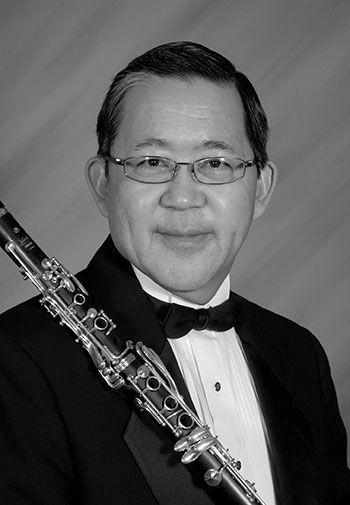
Miles M. Ishigaki serves as Professor of Music in the Department of Music within California State University, Fresno's College of Arts and Humanities. He has taught applied clarinet, chamber music, music theory, and music appreciation at Fresno State since 1987 while directing the university clarinet choir. From 1989-2017, he held the position of state chair for the National Association of College Wind and Percussion Instructors, demonstrating sustained institutional commitment. His academic credentials include: Doctor of Musical Arts in Performance, University of Oklahoma (1988) Doctoral study in Music Performance, University of Arizona (1981-1982) Master of Music in Performance, Colorado State University (1981) Dual Bachelor's degrees: Music Education and Music Performance, University of Northern Colorado (1978) Dr. Ishigaki's research centers on the dialectic between intuition and analytical understanding in musical performance, particularly regarding clarinet repertoire. His seminal work documents interpretive approaches of legendary clarinetists including Larry Combs, Stanley Hasty, and Leon Russianoff, focusing on Stravinsky's Three Pieces for Solo Clarinet. His collaborative research with Dr. Michael Rogers bridges music theory and performance practice, revealing how structural analysis informs expressive execution. This scholarly trajectory consistently examines the cognitive and technical dimensions of artistic mastery. His publications from 1988-2017 reveal evolving emphases from symposium documentation and performance analysis toward technology integration in music education, culminating in the 2017 Music Fundamentals ebook. Collectively, his work establishes clarinet pedagogy as both scientific discipline and artistic practice, with growing attention to digital learning environments while maintaining core focus on interpretive authenticity. His recognitions include: 2013 Provost's Teaching Award in Technology for innovative digital pedagogy 2006 Honorary Alumnus distinction from University of Northern Colorado Dr. Ishigaki has mentored exceptional students who have earned Fulbright Scholarships, McNair Doctoral grants, and participation in national honor ensembles. His studio consistently produces competition winners while he maintains active performance engagements with regional orchestras and international venues. Beyond academia, he serves as COO of I&M, Inc., applying sustainable technology principles to water and energy systems, demonstrating interdisciplinary impact beyond music. As founder of both the West Coast Clarinet Congress and Fresno State Faculty Clarinet Quartet, he cultivates professional communities while maintaining Yamaha Artist status. His community outreach through organizations like the Japanese American Citizen's League and Valley Children's Hospital reflects deep civic engagement alongside scholarly pursuits.
Aafke Fraaije is a postdoctoral researcher at the Section Ethics & Philosophy of Technology , Faculty of Technology, Policy and Management , Delft University of Technology. Her work bridges art, ethics, and technology through interdisciplinary approaches to citizen engagement and responsible innovation. Institution: Delft University of Technology School: Faculty of Technology, Policy and Management Department: Section Ethics & Philosophy of Technology Academic Rank: Research Fellow Research Interests : Ethics of human-nature-technology relationships Art-based methods for public engagement with technology Participatory futuring in smart city development Inclusive approaches to technology governance Communication frameworks in clinical and engineering contexts Critical analysis of responsible research and innovation (RRI) Recent Research Trends : Her publications focus on using artistic practices (dance, theatre) to explore ethical implications of smart city technologies, developing frameworks for responsible innovation, and analyzing communication dynamics in high-stakes environments like surgery and robotics. Key themes include citizen participation in technological development, interdisciplinary methodologies, and ethical accountability across sectors.
Panpan Yang is a Lecturer in Arts and Visual Cultures of Modern China at the School of Arts, SOAS University of London. She joined SOAS in 2021 after completing her joint PhD at the University of Chicago under the direction of Wu Hung, Tom Gunning, W. J. T. Mitchell, Judith Zeitlin, and Dana Polan. Her interdisciplinary work bridges art history, screen studies, East Asian studies, and digital humanities, with a focus on innovative methodologies in art historical writing. Dr. Yang earned a dual BA from Peking University, double majoring in art and philosophy, followed by an MA from Tisch School of the Arts at NYU, and a PhD from the University of Chicago. During her undergraduate studies, she served as president of the Society of Dream of the Red Chamber Studies, which informed her secondary academic interest in Redology and the visual material world of the novel Hong lou meng. Panpan Yang's research explores how minor discourses can deterritorialize the terrains of both art history and screen studies. Her work demonstrates a multimethodological approach attentive to archival research, material practices, close visual analysis, computer-aided vision, and cross-cultural theorization. She is particularly interested in Chinese animation history, calligraphic imagination in contemporary art, and the intersections between traditional Chinese art forms and new media. Her publications reveal a consistent focus on Chinese visual culture across multiple media forms, with particular attention to animation, film, and calligraphy. Yang's work demonstrates how traditional Chinese art forms engage with contemporary digital media, creating new hybrid forms that challenge disciplinary boundaries. Her research shows a trajectory from historical analysis of Chinese animation to contemporary explorations of calligraphy in digital contexts, revealing the ongoing relevance of traditional Chinese aesthetics in modern media. Dr. Yang has received several prestigious awards for her scholarly and creative work: China's National Young Screenwriter Award Domitor Essay Award Dean's Distinguished Dissertation Award Nomination Honourable Mention from the Association for Chinese Animation Studies As a Principal Investigator, Dr. Yang leads the AHRC-funded research project "Stroke by Stroke: Calligraphic imagination in contemporary Chinese art and emergent media" (2023-25) with Shane McCausland. She was also a collaborating partner on the NEH-funded "Media Ecology Project." Her research has received additional support from the Getty Foundation and the Sino-British Fellowship Trust. At SOAS, she works closely with faculty and graduate students interested in Chinese arts and cultures, art theory, cinematic arts, and digital art history. Dr. Yang is currently developing innovative research at the intersection of traditional Chinese calligraphy and contemporary digital media through her AHRC-funded project. This work explores how calligraphic imagination manifests in contemporary art and emergent media contexts, creating new pathways for understanding Chinese cultural heritage in the digital age.
Jeffrey Ruoff is an Associate Professor of Film and Media Studies at Dartmouth College. His research focuses on documentary filmmaking, film festivals, and North African cinema. He authored Telluride in the Film Festival Galaxy (2016) and edited works on film programming and travel cinema. Ruoff teaches documentary production, video mashups, and courses on New Waves in Film. His films, including the 2012 documentary Still Moving: Pilobolus at Forty , explore dance and cultural history. He holds a B.A. from Cornell University, an M.F.A. from Temple University, and a Ph.D. from the University of Iowa. In 2015-16, he participated in the OpEd Public Voices Fellowship. Ruoff’s writing appears in academic journals and popular outlets like The Huffington Post and Fortune .
Enrique Sánchez Lansch is a Professor of Media Dramaturgy at the Institute for Music and Media at Robert Schumann University of Düsseldorf, appointed in 2018. Born in Gijón, northern Spain, and raised in Cologne, he has established himself as a prominent documentary filmmaker with a strong focus on music-related subjects. His educational background includes studies in music with a focus on singing, Romance languages, philosophy, and German studies. He completed his master's thesis on adaptation of literature into music films. After gaining professional experience in fictional series production, he pursued further studies in film and screenwriting at Columbia University and UCLA. Sánchez Lansch's research and creative interests center on the intersection of music and visual media. His work explores how musical experiences can be effectively translated to film, examining the relationship between sound and image. He has particular expertise in documenting musical institutions, historical contexts of music, and the educational aspects of musical performance. His approach combines rigorous historical research with innovative visual storytelling techniques that respect the integrity of musical performance while creating compelling cinematic narratives. His filmography reveals a consistent focus on music documentaries that bridge cultural and historical contexts. Early works focused on major musical institutions and figures, while more recent projects have expanded to examine the relationship between music and broader social, political, and cultural phenomena. His films consistently demonstrate a sophisticated understanding of both musical content and cinematic storytelling. His notable awards include: German Film Award German Documentary Film Award Bavarian Film Award German Critics' Award German Kinogilde Award Franz Hofer Prize Best Documentary Film at Los Angeles Latino International Film Festival Best Documentary Film at SEMINCI Festival de Valladolid Diapason d'Or Emmy nomination for "A Celebration for Gershwin" Sánchez Lansch has served as a mentor to young filmmakers, notably curating and presenting music short films by young talents for the Beethovenfest Bonn from 2006 to 2013. His professional activities extend beyond filmmaking to include teaching at institutions such as the dffb (German Film and Television Academy Berlin) and his current professorship at Robert Schumann University. He is an active member of both the German Film Academy and the European Film Academy, contributing to the broader film community through these organizations. As Professor of Media Dramaturgy, Sánchez Lansch contributes to the academic framework of the Institute for Music and Media, bringing his extensive professional experience to bear on the education of future media creators. His work bridges the gap between academic study and professional practice in the field of music-related visual media.
Sunny Stalter-Pace serves as the Hargis Professor of American Literature in Auburn University's College of Liberal Arts, English Department. A specialist in modernist performance, literature, and urban space, she authored Imitation Artist: Gertrude Hoffmann's Life in Vaudeville and Dance (2020) and is currently completing a cultural history of the New York Hippodrome. Her work bridges academic research with public engagement through blogs, interviews, and collaborations with institutions like the Library of Congress. Her educational foundation includes: Ph.D. in English, Rutgers University (2007) M.A. in English, Rutgers University (2003) B.A. in English and French, Loyola University Chicago (1997), magna cum laude Stalter-Pace's research interrogates intersections of mobility, gender, and performance in 20th-century American culture. She examines how vaudeville, subway systems, and theatrical spectacles shaped public identity, with particular attention to women's experiences and spatial politics. Her methodology combines literary analysis, archival research, and visual studies to reveal how imitation and movement function as cultural forces. Current projects explore aquatic performances at the New York Hippodrome and the legacy of vaudeville producer Gertrude Hoffmann. Her 15 most recent publications demonstrate an evolving trajectory from subway systems ( Underground Movements , 2013) toward aquatic spectacles and vaudeville legacies, consistently centered on New York City's infrastructure. This body of work establishes mobility studies as a critical lens for understanding modernism, revealing how transportation networks and performance venues structured social interactions. Her interdisciplinary approach connects theater history, gender studies, and urban theory to uncover marginalized narratives in American cultural production. Key recognitions include: Harry Ransom Center Fellowship (2020) New York Public Library Short-Term Research Fellowship (2020) Alabama Humanities Foundation Grant (2014) College of Liberal Arts Excellence in Teaching Award nomination (2011) Multiple research fellowships from 2003-2017 Stalter-Pace has secured substantial funding for archival research through fellowships from the NEH, MLA, and university grants. She serves on Biographer’s International Organization's program committee and curated the 'Common Grounds' exhibition at Auburn's Jule Collins Smith Museum. Her teaching innovations include the first-year seminar 'Thinking Through the Arts' and courses on contemporary drama that integrate Hamilton into American literature pedagogy. As Book Review Editor for Transfers: Interdisciplinary Journal of Mobility Studies , she shaped scholarly discourse in mobility studies. Through her Hippodrome research blog and collaborations with the New York Public Library, Stalter-Pace transforms specialized scholarship into accessible public history. Her Library of Congress presentation on Albertina Rasch and the Hippodrome exemplifies her commitment to bridging academic research with community engagement, while ongoing interviews and blog posts extend her work beyond traditional academic boundaries.
Katherine Saltzman-Li is an Associate Professor at the University of California, Santa Barbara (UCSB), affiliated with the Department of East Asian Languages & Cultural Studies, the Program in Comparative Literature, and the Department of Theater and Dance. Her research focuses on Japanese performing arts, particularly Kabuki theater, Japanese literature, and folklore. She holds a Ph.D. from Stanford University. Her work examines Edo-period Kabuki playwriting through studies of rare treatises like Kezairoku , interactions among Edo artists, and adaptations of puppet theater into Kabuki. She co-edited Cultural Imprints: War and Memory in the Samurai Age (2022) and Realisms in East Asian Performance (2023), challenging Eurocentric theatrical realism frameworks. She co-curated exhibitions on Japanese theater prints at the Santa Barbara Museum of Art and directs the Japanese Performing Arts Research Consortium (JPARC). Her teaching spans Japanese literature, folklore, and performance studies, including courses on traditional theater, comparative drama, and digital humanities applications in theater research.
Rodney Sebastian is an Assistant Professor in the Theology and Religious Studies Department at St. John's University's St. John's College of Liberal Arts and Sciences. He holds a Ph.D. from the University of Florida, an M.A. from the National University of Singapore, and B.A. degrees from Curtin University of Technology (Australia) and the National University of Singapore. His research focuses on the intersection of politics, religion, and aesthetics in Manipur, India, with a particular interest in the sociopolitical origins of Manipuri Rāsalīlā dance dramas and classical Asian texts on governance. He also explores contemporary state-religion dynamics in Singapore and South/Southeast Asia. Dr. Sebastian’s multidisciplinary approach integrates anthropological fieldwork, archival research, and textual analysis. He is affiliated with the Bhāgavata Purāṇa Research Project at the Oxford Center for Hindu Studies and advocates interfaith dialogue. His teaching emphasizes experiential learning through field trips, community engagement, and high-impact pedagogical practices. His publications span topics such as Manipur’s sociopolitical history, Singaporean religious agency, and Hindu diaspora studies. Beyond academia, he contributes to cultural preservation initiatives and global religious discourse.
Xiaomei Chen is a Professor of Chinese Literature at the University of California, Davis, affiliated with the Comparative Literature, Performance Studies, Cultural Studies, and CATS (Cinematic and Technological Studies) programs. Her research focuses on modern Chinese literature, theater, cultural studies, and performance studies, with a particular emphasis on revolutionary propaganda, postsocialist cultural reconfigurations, and diasporic narratives. Education: She holds a Ph.D. in Comparative Literature from Indiana University, an M.A. in English Literature from Brigham Young University, and a B.A. in English (equivalent) from Beijing Institute of Foreign Languages. Research Interests : Modern Chinese literature and drama Revolutionary theater and propaganda Women’s literature and feminist critique Cross-cultural performance and comparative literature Postsocialist cultural studies Publications include seminal works such as Staging Chinese Revolution: Theater, Film and the Afterlives of Propaganda (2016), Occidentalism: A Theory of Counter-discourse in Post-Mao China (1995), and edited volumes on modern Chinese drama and cultural studies. Her articles critically examine themes like revolutionary narratives, diasporic identities, and the intersection of theater with political discourse. She has taught courses on modern Chinese literature, film, and drama in English translation, emphasizing cultural analysis and transnational perspectives. Her work bridges historical and contemporary studies, offering insights into China’s evolving cultural landscape.
Dr. Sarah Bay-Cheng is Dean and Professor of Theatre & Performance Studies at York University’s School of the Arts, Media, Performance & Design (AMPD). Her research focuses on intersections between theatre, media, and digital technologies, with over 100 academic essays, lectures, and reviews. She authored or edited four books, including *Performance and Media: Taxonomies for a Changing Field* (2015) and *Mapping Intermediality in Performance* (2010). Prior to her role at York, she was Chair of Theater and Dance at Bowdoin College and Founding Director of the Techne Institute at the University at Buffalo. She holds a BA from Wellesley College and a PhD from the University of Michigan. Research Interests: Digital Humanities, intermediality, performance historiography, film studies, and technology’s role in contemporary performance. Awards include a 2015 Fulbright Senior Scholarship in Media and Cultural Studies. She serves on boards for Factory Theatre and StageView.com. Her work bridges historical and emerging digital practices, emphasizing how media shapes performance’s past, present, and future.
Teresa Faucon is an Associate Professor and HDR researcher at Sorbonne Nouvelle University (Paris 3), affiliated with the IRCAV research institute. She specializes in cinema and audiovisual aesthetics, montage theory, and postcolonial film studies. Her roles include director of the Cinema and Audiovisual Master's program (2021–2023), and leadership in disability and professional training initiatives. She co-founded key research groups like Indian Cinemas (2012), CREAViS (2015), and Exotismes en champ-contrechamp (2018), focusing on decolonial cinema and exoticism analysis. Her work bridges academic research with creative projects, including the interactive Maps of Film Analysis platform. Research interests span Indian and Southeast Asian cinemas, dance-cinema interactions, and experimental film forms. She has organized 7 international conferences and co-edited major texts like Chorégraphier le film (2019). Recent publications include studies on exoticism's sonic dimensions and non-European cinema. Her digital platform Les cartes de l'analyse de film innovates in nonlinear film analysis through heuristic maps. She co-directs the Formes filmiques and Cinémas en champ-contrechamp book series, promoting global cinema scholarship.
Stephen S. Hudson is an Assistant Professor of Music Theory at Occidental College. He holds a B.A. from the University of California, Davis, and a Ph.D. from Northwestern University. Appointed in 2022, he specializes in metal music studies and R&B/Soul harmony. Education: B.A., University of California, Davis; Ph.D., Northwestern University Hudson’s research focuses on embodied experiences of rhythm, timbre, and song form in metal music, as well as harmonic complexity in R&B and Soul. His work has been featured in Music Theory Spectrum , Metal Music Studies , and Current Musicology . Recent publications include articles on Drake’s harmonic loops and Meshuggah’s groove structures. He is authoring two books: Heaviness in Metal Music (Oxford University Press) and a study of Meshuggah’s riffs (Lever Press). As Vice President of the Pacific Southwest chapter of the American Musicological Society, he advocates for inclusive music theory pedagogy that extends beyond classical traditions. His teaching emphasizes tools for songwriters and producers. Hudson maintains an active interest in classical and baroque cello performance, reflecting his engagement with both historical and contemporary music practices.
Professor Emery Schubert is a distinguished academic at the University of New South Wales, Faculty of Arts and Social Sciences, where he holds a professorship in the School of the Arts & Media. With over 20 years of research experience, he has established himself as a leading expert in the scientific study of music aesthetics and emotion. His educational background includes a PhD in Music, which forms the foundation of his interdisciplinary approach combining psychology, musicology, and cognitive science. Schubert's research expertise spans emotion in music, empirical aesthetics, music health and wellbeing, continuous response to music and dance, cognitive modelling of aesthetic experience, and creativity. Schubert has received significant recognition for his work, being named Individual Leader in Field of Music and Musicology by The Australian's Research magazine in both 2020 and 2022, and ranking among Stanford's World's Top 2% Researchers in 2023. His research has been supported by over AUD$5 million in grant funding, primarily from Australian Research Council schemes. Humanities, Arts & Literature - Individual Leader in Field of Music and Musicology (2020, 2022) Stanford's World's Top 2% Researchers (2023) Excellence in Postgraduate Supervision Award (UNSW Australia) - twice ARC Future Fellowship (4 years) ARC Australian Research Fellowship (5 years) 10th Anniversary Award, European Society for the Cognitive Sciences of Music Professor Schubert maintains an active supervision portfolio, having guided numerous honours and postgraduate students through the Empirical Musicology Laboratory. His teaching portfolio is extensive, covering nearly all music-related courses at UNSW, with particular focus on the psychology of music, music and wellbeing, and music perception. His research group provides students with specialized resources including recording studios, music technology laboratories, and performance spaces.