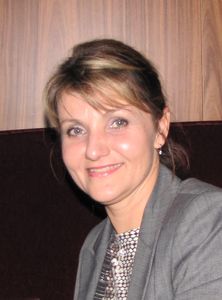
Assoc. Prof. Tatyana Yordanova is affiliated with the National Academy of Sports in Bulgaria, where she serves in the Faculty of Sports and Department of Technical and Ice Sports . She holds the academic rank of Associate Professor and has been leading the department since 2024. Education: Master's from State Central Institute of Physical Culture (1987); Doctorate in Sports Science (2019) Languages: English, Italian, Russian Her research focuses on technical elements in figure skating , speed-power abilities , balance stability , and judging systems . She has extensively studied jump mechanics and anthropometric factors in skaters. Her publications from 2018-2024 include studies on judging systems, jump techniques, and sports management. Key themes in her work involve training methodology, competition analytics, and biomechanics of skating. Since 2002, she has worked as an international figure skating judge, including at the Sochi 2014 Olympics . She chaired the Bulgarian Skating Federation (2011-2023) and participated in projects like Erasmus+ mobility (2022, 2024). Her pedagogical career includes roles as scientific assistant (1988), senior assistant (2006), and associate professor (2023).
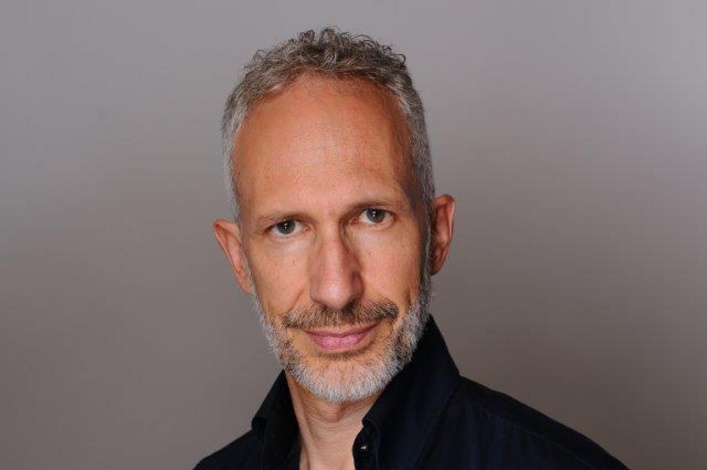
Nathan Martin is an Associate Professor of Music Theory at the University of Michigan, School of Music, Theatre & Dance. He joined in 2015 after postdoctoral fellowships at Columbia, Harvard, Katholieke Universiteit Leuven, Hochschule für Musik Freiburg, and Yale. He holds a PhD from McGill University’s Schulich School of Music (2009). His research focuses on the history of music theory and musical form analysis, particularly the works of Jean-Philippe Rameau and their reception among Enlightenment thinkers like Jean-Jacques Rousseau. He integrates intellectual history with practical analytical methods, emphasizing both contextual and emic perspectives. Recent interests include adapting empirical social science and linguistics methods to study musical form. Key publications include articles on Rameau’s harmonic concepts, Rousseau’s musical writings, and global music theory history. His 2014 article on Rameau’s supposition/suspension theories earned the Society for Music Theory’s Outstanding Publication Award. He co-edited Formal Functions in Perspective (2015) and served as co-editor of Music Theory & Analysis until 2019. Professional highlights include the Edward T. Cone Membership at the Institute for Advanced Study (2018–2019) and a 2023 visiting researcher role at the Max Planck Institute for Empirical Aesthetics. His work bridges historical analysis with contemporary empirical approaches, fostering interdisciplinary dialogue in music theory.
Tobias Pettersson is a Senior Lecturer at the Department of Pedagogy: Music, Dance and Drama , University of Gothenburg . His roles include Undergraduate Teaching Coordinator and Education Coordinator for both first/second cycle education and teacher training programs. He works at the intersection of musicology , gender studies , and pedagogical traditions . Current position since 2015 Active in teacher education since the 1990s Doctoral degree in musicology (2004) Research Focus: Analyzes the origins and persistence of musical traditions , gender equality in music life , and education for sustainable development . Led projects at the Centre for Environment and Sustainability (2012-2014) and developed web-based educational toolboxes. Key Contributions: Publications on Beethoven's canonization in Swedish education (2004), gender dynamics in performing arts (2006), and critical analyses of musicological epistemology (2005). His work bridges historical musicology , pedagogical theory , and sustainability education . Contact: Email: tobias.pettersson@gu.se Office: Eklandagatan 86, 41259 Göteborg
Kirsten Yri is an Associate Professor of Musicology at Wilfrid Laurier University, serving as Chair of Music Promotions and Appointments, and Coordinator for Music History, Theory, and Critical Analysis. She also oversees the Master of Music: Collaboration, Curation, and Creative Performance program. Her research focuses on medievalism in contemporary music and popular culture, the early music revival of the 20th century, and representations of gender in opera and music within colonial/postcolonial contexts. Yri’s research interests include analyzing how medieval themes are reinterpreted in modern contexts (e.g., film, heavy metal, and stage productions), examining the ideological underpinnings of early music revival movements, and exploring the intersection of music with gender, nationalism, and global cultural politics. Her work often critiques Western-centric narratives and highlights marginalized voices in music history. Her publications span articles in journals and edited volumes, with a focus on composers like Carl Orff and Hildegard of Bingen, as well as groups like Corvus Corax and Anonymous 4. She has contributed to interdisciplinary projects such as The Oxford Handbook of Music and Medievalism (2020). While no scientific awards are cited, her work is widely recognized in musicology and cultural studies. Yri’s teaching and research emphasize collaborative, interdisciplinary approaches to music history, blending academic rigor with creative curation. She speaks English, Swedish, and German, enhancing her ability to engage with international scholarly resources and communities.
Panpan Yang is a Lecturer in Arts and Visual Cultures of Modern China at the School of Arts, SOAS University of London. She joined SOAS in 2021 after completing her joint PhD at the University of Chicago under the direction of Wu Hung, Tom Gunning, W. J. T. Mitchell, Judith Zeitlin, and Dana Polan. Her interdisciplinary work bridges art history, screen studies, East Asian studies, and digital humanities, with a focus on innovative methodologies in art historical writing. Dr. Yang earned a dual BA from Peking University, double majoring in art and philosophy, followed by an MA from Tisch School of the Arts at NYU, and a PhD from the University of Chicago. During her undergraduate studies, she served as president of the Society of Dream of the Red Chamber Studies, which informed her secondary academic interest in Redology and the visual material world of the novel Hong lou meng. Panpan Yang's research explores how minor discourses can deterritorialize the terrains of both art history and screen studies. Her work demonstrates a multimethodological approach attentive to archival research, material practices, close visual analysis, computer-aided vision, and cross-cultural theorization. She is particularly interested in Chinese animation history, calligraphic imagination in contemporary art, and the intersections between traditional Chinese art forms and new media. Her publications reveal a consistent focus on Chinese visual culture across multiple media forms, with particular attention to animation, film, and calligraphy. Yang's work demonstrates how traditional Chinese art forms engage with contemporary digital media, creating new hybrid forms that challenge disciplinary boundaries. Her research shows a trajectory from historical analysis of Chinese animation to contemporary explorations of calligraphy in digital contexts, revealing the ongoing relevance of traditional Chinese aesthetics in modern media. Dr. Yang has received several prestigious awards for her scholarly and creative work: China's National Young Screenwriter Award Domitor Essay Award Dean's Distinguished Dissertation Award Nomination Honourable Mention from the Association for Chinese Animation Studies As a Principal Investigator, Dr. Yang leads the AHRC-funded research project "Stroke by Stroke: Calligraphic imagination in contemporary Chinese art and emergent media" (2023-25) with Shane McCausland. She was also a collaborating partner on the NEH-funded "Media Ecology Project." Her research has received additional support from the Getty Foundation and the Sino-British Fellowship Trust. At SOAS, she works closely with faculty and graduate students interested in Chinese arts and cultures, art theory, cinematic arts, and digital art history. Dr. Yang is currently developing innovative research at the intersection of traditional Chinese calligraphy and contemporary digital media through her AHRC-funded project. This work explores how calligraphic imagination manifests in contemporary art and emergent media contexts, creating new pathways for understanding Chinese cultural heritage in the digital age.
Enrique Sánchez Lansch is a Professor of Media Dramaturgy at the Institute for Music and Media at Robert Schumann University of Düsseldorf, appointed in 2018. Born in Gijón, northern Spain, and raised in Cologne, he has established himself as a prominent documentary filmmaker with a strong focus on music-related subjects. His educational background includes studies in music with a focus on singing, Romance languages, philosophy, and German studies. He completed his master's thesis on adaptation of literature into music films. After gaining professional experience in fictional series production, he pursued further studies in film and screenwriting at Columbia University and UCLA. Sánchez Lansch's research and creative interests center on the intersection of music and visual media. His work explores how musical experiences can be effectively translated to film, examining the relationship between sound and image. He has particular expertise in documenting musical institutions, historical contexts of music, and the educational aspects of musical performance. His approach combines rigorous historical research with innovative visual storytelling techniques that respect the integrity of musical performance while creating compelling cinematic narratives. His filmography reveals a consistent focus on music documentaries that bridge cultural and historical contexts. Early works focused on major musical institutions and figures, while more recent projects have expanded to examine the relationship between music and broader social, political, and cultural phenomena. His films consistently demonstrate a sophisticated understanding of both musical content and cinematic storytelling. His notable awards include: German Film Award German Documentary Film Award Bavarian Film Award German Critics' Award German Kinogilde Award Franz Hofer Prize Best Documentary Film at Los Angeles Latino International Film Festival Best Documentary Film at SEMINCI Festival de Valladolid Diapason d'Or Emmy nomination for "A Celebration for Gershwin" Sánchez Lansch has served as a mentor to young filmmakers, notably curating and presenting music short films by young talents for the Beethovenfest Bonn from 2006 to 2013. His professional activities extend beyond filmmaking to include teaching at institutions such as the dffb (German Film and Television Academy Berlin) and his current professorship at Robert Schumann University. He is an active member of both the German Film Academy and the European Film Academy, contributing to the broader film community through these organizations. As Professor of Media Dramaturgy, Sánchez Lansch contributes to the academic framework of the Institute for Music and Media, bringing his extensive professional experience to bear on the education of future media creators. His work bridges the gap between academic study and professional practice in the field of music-related visual media.
Teresa Faucon is an Associate Professor and HDR researcher at Sorbonne Nouvelle University (Paris 3), affiliated with the IRCAV research institute. She specializes in cinema and audiovisual aesthetics, montage theory, and postcolonial film studies. Her roles include director of the Cinema and Audiovisual Master's program (2021–2023), and leadership in disability and professional training initiatives. She co-founded key research groups like Indian Cinemas (2012), CREAViS (2015), and Exotismes en champ-contrechamp (2018), focusing on decolonial cinema and exoticism analysis. Her work bridges academic research with creative projects, including the interactive Maps of Film Analysis platform. Research interests span Indian and Southeast Asian cinemas, dance-cinema interactions, and experimental film forms. She has organized 7 international conferences and co-edited major texts like Chorégraphier le film (2019). Recent publications include studies on exoticism's sonic dimensions and non-European cinema. Her digital platform Les cartes de l'analyse de film innovates in nonlinear film analysis through heuristic maps. She co-directs the Formes filmiques and Cinémas en champ-contrechamp book series, promoting global cinema scholarship.
Paul Richards is a Research Foundation Professor of Music and head of the composition and theory area at the University of Florida since 1999. He previously served as Visiting Professor at Florida State University (2016) and taught at Baylor University and the University of Texas at Austin. His academic roles include teaching courses in composition, music theory, and orchestration, along with supervising graduate students. He earned a DMA in Composition from the University of Texas at Austin and degrees from the University of Arizona. Education: Doctor of Musical Arts (DMA), Composition, University of Texas at Austin, 1998 Master of Music (MM), Theory and Composition, University of Arizona, 1993 Bachelor of Music (BM), Theory and Composition, University of Arizona, 1991 Research Interests: Richards’ work spans orchestral, vocal, chamber, and theatrical compositions, including operas and wind ensemble pieces. His style blends eclectic influences—from Jewish sacred music to modernist techniques—resulting in works praised for their "strong melodic gift" and innovative orchestration. Commissions have come from prestigious organizations like the Florida Orchestra, Boston Brass, and White Snake Projects. Awards and Recognition: Recipient of numerous international composition prizes, including the St. Mary’s College/Kaplan Foundation Commission Competition and Second Prize in the International Horn Society Composition Competition University of Florida Research Foundation Professorship (2017–2020, 2010–2013) Finalist in the National Opera Association’s Dominic Argento Chamber Opera Competition (2023) Advising and Grants: Richards has advised over 40 graduate students and chaired multiple PhD committees. His grants include support from the University of Florida and the Research Foundation. He has also served as a mentor in composer-in-residence programs, including the Jacksonville Symphony Orchestra’s Fresh Ink Competition. Labs and Collaborations: He co-founded the Florida Contemporary Music Festival (2013–2018), fostering collaboration between composers and performers. His work integrates interdisciplinary projects, such as music for dance and film, and he actively collaborates with choreographers and theater artists.
Professor Annie Mahtani is a Professor of Electroacoustic Composition and Practice at the University of Birmingham's Department of Music. She holds a BMus (Hons), MA, MPhil, and PhD from the University of Birmingham and Birmingham City University. Her work focuses on electroacoustic music, acousmatic composition, multichannel audio, spatialisation, and field recordings, with significant contributions to site-specific installations and cross-disciplinary collaborations. She co-directs the SOUNDkitchen collective and serves on key boards such as the British ElectroAcoustic Network (BEAN) and the British Section of ISCM. Her research explores the sonic identity of environmental sounds, large-scale multichannel composition, and ambisonic audio techniques. As a performer with BEAST (Birmingham Electroacoustic Sound Theatre), she develops live acousmatic performances and soundwalks. Recent projects include Becoming Tree (an immersive audio retelling of a literary work) and Minimum Monument , performed at Birmingham Hippodrome. She actively collaborates with dance and theatre companies like Rosie Kay Dance Company. Professor Mahtani teaches undergraduate and postgraduate modules in electroacoustic composition and is involved in admissions and curriculum leadership. Her works have been performed globally in festivals like Klang! Électroacoustique and Sound + Environment, showcasing her innovative contributions to contemporary music and sound art.
Paul D. Miller, known professionally as DJ Spooky, That Subliminal Kid, is a Professor of Music and Mediated Art at The European Graduate School (EGS). Based in New York City, he is an experimental electronic and hip-hop musician, conceptual artist, and writer whose work spans music production, film, multimedia installations, and critical theory. He has released over a dozen albums pioneering 'illbient' and trip hop genres, authored influential books including Rhythm Science and Sound Unbound , and exhibited internationally at venues like the Venice Biennale and Andy Warhol Museum. Education: Bowdoin College: Studied philosophy and French literature; thesis on Richard Wagner's Gesamtkunstwerk as precursor to new media. Research Interests: Miller's work centers on remix culture as a postmodern methodology, exploring intersections of sound, image, and technology. His theoretical framework positions the DJ as a 'post-subjective auteur' who creates meaning through layered connections across time, culture, and media. Key projects include Rebirth of a Nation (reworking D.W. Griffith's film to address racial history) and Terra Nova (Antarctica sound recordings addressing climate change), demonstrating his focus on historical reinterpretation and environmental crisis through digital media. Publications: His 14 scholarly articles (2001-2009) analyze remix as cultural practice across domains from album art history ( The Inner Sleeve ) to Baudrillard's philosophy ( Baudrillard: A Remembrance ). The corpus reveals consistent investigation into how sampling, digital layering, and media archaeology reshape narrative, memory, and cultural identity in the information age. Awards: No scientific awards or fellowships were documented in the source text. Advising and Grants: The source text provides no information regarding students supervised, academic advising, or research grants administered by Miller. Labs and Teams: Miller operates through project-based collaborations rather than fixed labs, forming temporary collectives with institutions like the American Museum of Natural History (for Terra Nova ) and artists including Yoko Ono, Ryuichi Sakamoto, and choreographer Francesca Harper. His 'Unfinished Stories' project with Pulitzer-winning critic Margo Jefferson exemplifies his interdisciplinary approach bridging dance, music, and social commentary.
Alexandra BELIBOU is a PhD Lecturer at the Department of Music Performance and Pedagogy, Faculty of Music, Transilvania University of Brașov. Her work bridges musicology with modern interdisciplinary approaches, focusing on music education technology, therapeutic applications, and 20th-century compositional analysis. She holds a prominent position in advancing digital pedagogy through software integration. Research Interests: Music therapy methodologies emphasizing pluralistic approaches in clinical settings AI applications in music composition and education Analysis of 20th-century composers like Schoenberg, Reich, and Pärt Cultural studies of folk music traditions (e.g., Irish dance music, Romanian psalmic liturgy) Publications Trends: Recent work explores pandemic-era musician well-being, AI-assisted composition tools, and the intersection of music with medicine/physics. Earlier research delves deeply into psalmic text settings across centuries, minimalist techniques, and numerical symbolism in atonal music. Her teaching and research emphasize bridging traditional musicology with emerging technologies, as seen in proposals for software-based creativity workshops and interdisciplinary curricula.
Stephen S. Hudson is an Assistant Professor of Music Theory at Occidental College. He holds a B.A. from the University of California, Davis, and a Ph.D. from Northwestern University. Appointed in 2022, he specializes in metal music studies and R&B/Soul harmony. Education: B.A., University of California, Davis; Ph.D., Northwestern University Hudson’s research focuses on embodied experiences of rhythm, timbre, and song form in metal music, as well as harmonic complexity in R&B and Soul. His work has been featured in Music Theory Spectrum , Metal Music Studies , and Current Musicology . Recent publications include articles on Drake’s harmonic loops and Meshuggah’s groove structures. He is authoring two books: Heaviness in Metal Music (Oxford University Press) and a study of Meshuggah’s riffs (Lever Press). As Vice President of the Pacific Southwest chapter of the American Musicological Society, he advocates for inclusive music theory pedagogy that extends beyond classical traditions. His teaching emphasizes tools for songwriters and producers. Hudson maintains an active interest in classical and baroque cello performance, reflecting his engagement with both historical and contemporary music practices.
Scott Durbin is an Assistant Professor and Program Coordinator for Music Business at the University of Louisiana at Lafayette , affiliated with the School of Music & Performing Arts . With a career spanning academia and the entertainment industry, he is best known as a co-founder of the Grammy-winning children's band Imagination Movers , which produced a Disney Channel series and earned an Emmy Award for Outstanding Original Song (2008–2009). His academic work focuses on bridging real-world music industry practices with education. Bachelor of Arts (B.A.) , Centenary College of Louisiana (1992) Master of Education (MEd) in Curriculum and Instruction , University of Louisiana at Lafayette (2019) Teacher's Certificate (1994), University of New Orleans Scott's expertise lies in Music Business , Digital Service Providers (DSPs) , Musical Copyright and Rights Management , and Musical Monetization . His research emphasizes Metadata integration for rights tracking and revenue generation, reflecting his industry experience with Disney, Concord Music, and mechanical licensing frameworks. His publications include children's music albums and educational songbooks, showcasing cross-disciplinary impact in Entertainment Industry , Artist Management , and Streaming Revenue Models . These works highlight his role in evolving music industry practices through Digital Distribution and Licensing Agreements . Drs. Chuck and Sue Lein/BORSF Endowed Professorship in Music Management/Business (2015) Rising Star Award , College of Arts (2015) Eminent Faculty Award for Service Leadership (2015) ASCAP Plus Award (2015, 2016, 2019) Daytime Entertainment Emmy® (2008–2009) As a Mechanical Licensing Collective (MLC) Educator Ambassador , Scott shares industry insights on Musical Copyright and Digital Licensing . He teaches courses like MUS 455: Artist Management, Booking, and Touring , leveraging his experience negotiating contracts with Disney and managing large-scale tours.
Koray Tahiroglu is a University Lecturer at Aalto University's School of Arts, Design and Architecture, specializing in Sound and Music Computing. His work bridges artificial intelligence, digital musical instruments, and embodied interaction, with a focus on deep learning applications in audio synthesis and human-AI creative collaboration. His research explores New Interfaces for Musical Expression (NIME), sonic interaction, and physical computing. He collaborates with SOPI Research Group and Google Brain Team (Magenta) on AI-driven artistic innovation. Recent Publications : 2024 studies on dance-sound cross-correlation and intra-action frameworks; 2023 work on AI-terity and deep learning syllabi; 2022 explorations of GAN synthesis, musical expectations, and lifeworld sonification. Scientific Awards : Co-Creative Artificial Intelligence of Music (2022) 2010 grant for scientific publications and artistic activities 2017 Honorable Mention for mobile cultural heritage research Tahiroglu contributes to digital art education and leads projects at Media Lab Helsinki, advancing sonic interaction and generative audio systems.
David Brodbeck is a Professor in the Department of Music at the University of California, Irvine. His research and teaching focus on Central European music and musical culture during the long nineteenth century, as well as rock music. He has published extensively on composers such as Schubert, Mendelssohn, and Brahms, exploring connections between biography and musical analysis, and has extended his scholarship to intertextuality in rock recordings by the Beatles and the Beach Boys. Ph.D., University of Pennsylvania (1984) Previous faculty: University of Pittsburgh, University of Southern California His research spans from technical analysis of Brahms's symphonic and chamber works to broader social questions, including antisemitism in Wagnerian circles, cosmopolitan patriotism in Austro-Hungarian music, and the role of Heimat in Goldmark's compositions. His forthcoming monograph Brahms Patriotic and Political (2025) continues this political and cultural exploration. His publications have garnered significant recognition, including the Virgil Thomson Award for Outstanding Book in Music Criticism and the American Musicological Society's Award for Excellence in Jewish Studies and Music. He has also received fellowships from the National Endowment for the Humanities, the Alexander von Humboldt Foundation, and grants from the American Council of Learned Societies and the American Philosophical Society. Brodbeck's work bridges historical, analytical, and cultural methodologies, with a focus on music's intersection with politics and identity. He has served as President of the American Brahms Society, underscoring his leadership in Brahms scholarship.