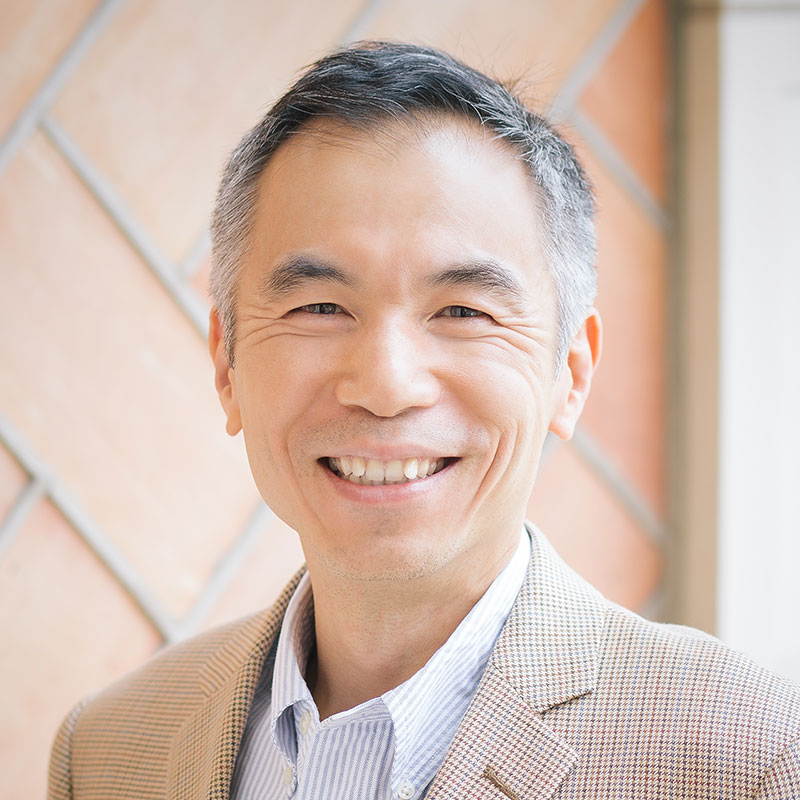
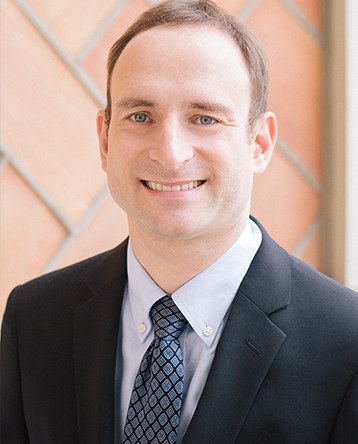
James C. Hoe is Professor of Electrical and Computer Engineering at Carnegie Mellon University (College of Engineering). He is on sabbatical at MangoBoost and directs research in computer architecture, reconfigurable computing, and high-level hardware design. Education Ph.D., Electrical Engineering and Computer Science, MIT (2000) M.S., Electrical Engineering and Computer Science, MIT (1994) B.S., Electrical Engineering and Computer Science, UC Berkeley (1992) Research Interests Professor Hoe’s work spans computer architecture , reconfigurable computing , FPGA architectures , and high-level hardware synthesis . His group created the CoRAM abstraction for virtualized FPGA computing and leads efforts in power-efficient accelerators, in-network computing, and security-oriented FPGA systems. Scientific Awards IEEE Fellow (2013) Intel Outstanding Researcher Award (2021) Research Funding & Projects Intel / VMware Crossroads 3D-FPGA Academic Research Center – co-leading exploration of FPGA roles in future datacenters. DARPA BRASS program ($2.7 M, 4 years) – ensuring long-lived software systems remain robust to resource changes. Pigasus open-source IDS – world’s fastest FPGA-accelerated intrusion-detection system (100 Gb/s on one server). Labs & Teams He heads activities within the Computer Architecture Lab at Carnegie Mellon (CALCM) , supervising graduate researchers on CoRAM++, SPIRAL autotuning, and FPGA overlays for stream processing.
Shiyu Su is an Assistant Professor in the Department of Electrical and Computer Engineering at the University of Waterloo. His research focuses on high-speed data converters, wireless transceivers, digital phase-locked loops (PLL), and AI-assisted analog/mixed-signal design automation. He holds a Ph.D. from the University of Southern California (2019) and teaches courses such as ECE 340 (Electronic Circuits 2) and ECE 432 (Radio Frequency Integrated Devices and Circuits). Education: B.S. from Beijing University of Post and Telecommunication (China) and Queen Mary, University of London (UK), 2011; M.S. and Ph.D. from USC, 2013 and 2019, all in electrical engineering. Research Interests: High-speed ADCs/DACs RF/mm-wave transceivers Time-approximation filters (TAF) Analog/mixed-signal design automation Memristor-based computing Biomedical interfaces Key Awards: IEEE SSCS Predoctoral Achievement Award (2017–2018) Best Student Paper Award at IEEE RFIC (2022) Ming Hsieh Institute Scholar (2019–2020) Lab Focus: The Shiyu Su Lab develops integrated circuits for communications, sensing, and computing, with a focus on AI-driven methodologies and digital-analog co-design. Collaborations include work with Prof. Wei Wu (USC) on memristor-based systems.
Professor Francis Butler is a Full Professor at University College Dublin's School of Biosystems and Food Engineering, where he has been since 1990. His academic roles include research leadership in food safety, food chain integrity, and microbial risk assessment. He leads the UCD Institute for Food and Health and the UCD Centre for Food Safety as a Principal Investigator. Education: BE, Grad Dip University Teaching & Learning, MBA, and PhD from University College Dublin. Research Focus: His work centers on food safety hazards, quantitative risk assessment, and next-generation sequencing for pathogen identification. Recent projects include Listeria monocytogenes growth modeling, norovirus in oysters, and hepatitis E in pork products. He has secured over €6 million in research grants, including EU-funded projects like FOODINTEGRITY and SIGMACHAIN. Awards & Recognition: European Food Safety Authority Fellowship, Marie Sklodowska-Curie Fellowship, and UCD Teaching Grant. He coordinates international educational programs, including the UCD MSC Food Safety and Risk Analysis. Professional Activities: Member of EFSA advisory committees, editorial boards (e.g., Microbial Risk Analysis ), and international conference chairs. His work bridges academia, industry, and policy to enhance food safety standards globally.
Franz Franchetti is the Kavčić-Moura Professor of Electrical & Computer Engineering at Carnegie Mellon University. He serves as Associate Dean for Research and Director of the Engineering Research Accelerator at CMU. Education: Ph.D. in Computational Mathematics (Vienna University of Technology, 2003) M.Sc. in Technical Mathematics (Vienna University of Technology, 2000) His research interests focus on automatic performance tuning and program generation for emerging parallel computing platforms , including multicore CPUs , GPUs , and 3DIC chip design . He leads the SPIRAL effort to automate highly optimized software libraries and explores domain-specific compiler transformations in HPC applications for smart grids and material sciences . Recent work extends SPIRAL to quantum computing . The scientific awards Franchetti has received include the Gordon Bell Prize (2006) , HPC Challenge Class II Award (2010) , and the CIT Dean's Early Career Fellowship (2013) . He and his students have won multiple Best Paper Awards at HPEC, DAC, and ISPA ACM TODAES Best Paper (2014) Student Research Competition wins (PACT 2024, CGO 2023) Franchetti has advised students like Richard Veras and Thom Popovici . He has secured significant grants from agencies such as DARPA, DOE, NSF, and industry partners (Intel, NVIDIA, Mercury). He co-founded SpiralGen, Inc. and holds leadership roles in organizations like ASciNA Western Pennsylvania and as Honorary Consul of Austria in Pittsburgh.
Itsuro Morita is Professor in the School of Fundamental Science and Engineering, Faculty of Science and Engineering, Waseda University, Tokyo. Before joining Waseda in 2022 he spent 23 years at KDDI R&D Laboratories, advancing from researcher to executive research fellow, and has been a visiting researcher at Stanford University. He is an IEEE Fellow and IEICE Fellow recognized for pioneering large-capacity, long-haul optical transmission systems. Education: 2004 – 2005 Tokyo Institute of Technology, Graduate School of Science & Engineering, Department of Electrical and Electronic Engineering (Doctoral coursework) 1990 – 1992 Tokyo Institute of Technology, Graduate School of Science & Engineering, Department of Physical Electronics (M.E.) 1986 – 1990 Tokyo Institute of Technology, School of Engineering (B.E.) Research Interests: Morita’s work sits at the intersection of optical fiber communication and software-defined networking. He explores ultra-high-capacity transmission via space-division multiplexing (multi-core/few-mode fibers), real-time MIMO digital signal processing for modal crosstalk mitigation, and SDN/NFV orchestration of disaggregated optical networks. Additional interests include quality-of-transmission estimation using machine learning, telemetry-enabled control planes (gRPC/gNMI), and metro-embedded edge/cloud architectures for IoT services. Publication Trends: Recent articles emphasize two converging themes: (i) petabit-per-second SDM/WDM experiments using novel fiber geometries and real-time DSP, and (ii) cloud-native SDN control frameworks that integrate machine-learning-based QoT prediction, YANG/NETCONF modeling, and open APIs (TAPI/OpenConfig) for multi-domain, partially disaggregated networks. These works collectively push both the physical capacity frontier and the agility of next-generation optical infrastructure. Scientific Awards: C&C Prize 2024 (NEC C&C Foundation) – contributions to WDM optical submarine cable systems IEICE Achievement Award 2021 – pioneering research on 10-Pbit/s ultra-large-capacity SDM transmission Telecom System Technology Award 2021 – 10.16-Pbit/s dense SDM/WDM transmission record IEEE Fellow (2021) – contributions to large-capacity high-speed transmission systems IEICE Fellow (2020) – research on trans-oceanic high-speed optical signal transmission Ichimura Industrial Award – Contribution Prize 2018 – development of terabit-class submarine cable systems Maejima Hisoka Award 2012 – proposal and demonstration of distributed-control soliton communication Minister of Economy, Trade and Industry Award for Advanced Technology 2006 – 160 Gbit/s ultra-high-speed optical transmission technology Advising & Grants: At Waseda University Morita advises graduate students on experimental photonic networking and leads externally funded projects on petabit SDM transmission and SDN orchestration. While specific grant numbers are not disclosed, his continuous industry-university collaborative testbeds (with KDDI, CTTC, and others) indicate substantial competitive funding. Labs & Teams: He heads the Optical Space-Division-Multiplexing Laboratory at Waseda, maintaining joint experimental facilities with KDDI Research and international partners (e.g., CTTC, Spain). The group operates real-time coherent MIMO testbeds, multi-domain SDN controllers, and fiber-level SDM prototypes capable of petabit-per-second demonstrations.
Sveta Zinger is a Full Professor in context-informed dynamic image analysis for clinical decision support at Eindhoven University of Technology (TU/e). She holds affiliations with the Biomedical Diagnostics Lab, NeuroPlatform, and EAISI Health. Her research focuses on medical image/video analysis, temporal data analysis, and machine learning for clinical applications. She has led projects funded by ZonMw, NWO, Philips, and others. She is also Co-Editor-in-Chief of Computer Methods and Programs in Biomedicine and serves on the Vidi committee for NWO. Education: MSc (2000) from Dnepropetrovsk State University; PhD (2004) from École Nationale Supérieure des Télécommunications, France. Postdoctoral roles at the French Atomic Agency and University of Groningen. Research Projects: Includes FORSEE (video monitoring for adverse events in healthcare) and NEUROTREND (fMRI biomarkers for depression). Awards: Second place in the CAMELYON17 challenge for metastases detection. Her teaching includes courses on DSP fundamentals, medical image processing, and cognitive neuroscience. She collaborates with clinical and industrial partners to advance biomedical diagnostics and healthcare technology.
Scott Durbin is an Assistant Professor and Program Coordinator for Music Business at the University of Louisiana at Lafayette , affiliated with the School of Music & Performing Arts . With a career spanning academia and the entertainment industry, he is best known as a co-founder of the Grammy-winning children's band Imagination Movers , which produced a Disney Channel series and earned an Emmy Award for Outstanding Original Song (2008–2009). His academic work focuses on bridging real-world music industry practices with education. Bachelor of Arts (B.A.) , Centenary College of Louisiana (1992) Master of Education (MEd) in Curriculum and Instruction , University of Louisiana at Lafayette (2019) Teacher's Certificate (1994), University of New Orleans Scott's expertise lies in Music Business , Digital Service Providers (DSPs) , Musical Copyright and Rights Management , and Musical Monetization . His research emphasizes Metadata integration for rights tracking and revenue generation, reflecting his industry experience with Disney, Concord Music, and mechanical licensing frameworks. His publications include children's music albums and educational songbooks, showcasing cross-disciplinary impact in Entertainment Industry , Artist Management , and Streaming Revenue Models . These works highlight his role in evolving music industry practices through Digital Distribution and Licensing Agreements . Drs. Chuck and Sue Lein/BORSF Endowed Professorship in Music Management/Business (2015) Rising Star Award , College of Arts (2015) Eminent Faculty Award for Service Leadership (2015) ASCAP Plus Award (2015, 2016, 2019) Daytime Entertainment Emmy® (2008–2009) As a Mechanical Licensing Collective (MLC) Educator Ambassador , Scott shares industry insights on Musical Copyright and Digital Licensing . He teaches courses like MUS 455: Artist Management, Booking, and Touring , leveraging his experience negotiating contracts with Disney and managing large-scale tours.
Prof. Vesa Välimäki is an Audio Signal Processing Professor at Aalto University's School of Electrical Engineering, leading the Audio Signal Processing Research Group within the Aalto Acoustics Lab. He also serves as Vice Dean for Research and Head of the Doctoral Programme at the university. His research focuses on digital signal processing, machine learning, and their applications in audio, acoustics, and music technology, particularly in artificial reverberation, audio filter design, and virtual analog modeling. He has pioneered techniques like velvet noise for reverberation synthesis and contributed to open-source tools like FLAMO. His academic accolades include IEEE, AES, and AAIA Fellowships, along with multiple best paper awards at venues like DAFx and ICASSP. He has advised numerous students, including recipients of prestigious awards like the Huawei Master's Thesis Award. Prof. Välimäki has held editorial roles at the Journal of the Audio Engineering Society and organized major conferences such as SMC-17. His work extends to applied projects like acoustic optimization for early childhood education facilities and immersive audio in virtual reality (e.g., the 'Space Walk' project). Key Projects: NordicSMC (Nordic University Hub for Sound and Music Computing), Aalto Acoustics Lab, FLAMO library Grants: NordForsk funding (2018–2023), Foundation for Aalto University Science and Technology His research spans both theoretical advancements (e.g., diffusion models for audio restoration) and practical implementations (e.g., real-time equalizers, headphone compensation systems). He collaborates internationally, contributing to acoustic measurement techniques and noise reduction strategies for diverse environments.
Dr. Barry Cardiff is an Assistant Professor in the School of Electrical and Electronic Engineering at University College Dublin (UCD), where he has been a member of academic staff since September 2013. His career spans both industry and academia, with significant experience at Nokia Mobile Phone (UK) Ltd and Silicon & Software Systems (S3 group) before returning to complete his PhD at UCD. Education: B.Eng (1992), M.Eng.Sc. (1995), PhD (2011) from University College Dublin Professional Experience: Design Engineer at Nokia (1993-2001), Systems Architect at S3 group (2001-2007, 2011-2013) Current Position: Assistant Professor at UCD School of Electrical and Electronic Engineering Dr. Cardiff's research focuses on Digital Signal Processing applications in communication systems, with particular emphasis on theoretical analysis and practical implementation. His work bridges traditional communication theory with emerging biomedical applications, especially in wearable IoT sensors. He has made significant contributions to power/complexity reduction techniques in circuit design, specifically DSP algorithms for digitally assisted analog circuits. His research program addresses critical challenges in biomedical signal processing, sensor fusion, and efficient data transmission for healthcare applications. His recent publications demonstrate a strong trend toward biomedical applications of signal processing techniques, with a focus on ECG analysis, atrial fibrillation detection, and respiratory rate estimation using multimodal sensor fusion. The research shows a clear progression from traditional communication systems toward healthcare applications, with an emphasis on edge computing solutions that reduce power consumption in wearable devices. IEEE BioCas best paper award (2024) IEEE senior member since 2019 Active reviewer for multiple IEEE journals including Transactions on Biomedical Circuits and Systems, Circuits and Systems, and VLSI Systems Dr. Cardiff has supervised numerous research projects and has been instrumental in developing curriculum for digital communications, signal processing, and wireless systems. His teaching philosophy emphasizes open, friendly, and hands-on approaches that encourage independent thinking. He coordinates multiple modules including Communication Theory, Digital Electronics, DSP Technology, and Wireless Systems, demonstrating his commitment to both theoretical foundations and practical applications of electrical engineering principles. His research group works at the intersection of signal processing, machine learning, and biomedical engineering, developing innovative solutions for wearable healthcare monitoring. Current projects focus on event-driven processing architectures, decentralized classification systems, and signal quality-aware fusion techniques that enable robust performance in noisy real-world environments.
Paolo Prandoni is a Lecturer at École Polytechnique Fédérale de Lausanne (EPFL) in the School of Computer and Communication Sciences (IC). He serves as a Scientist in the Audiovisual Communications Laboratory (LCAV) and teaches in the SSC-ENS and SIN-ENS units, focusing on signal processing theory and practical applications in audiovisual communications. He earned his PhD from EPFL after completing all prior education there, driven by childhood fascination with long-distance telephony. His doctoral work established foundations in communication systems that continue to inform his research. Prandoni's research spans audio/image processing, machine learning for media analysis, and DSP education. Key areas include computational photography (e.g., spectral imaging, stained glass rendering), speech quality assessment via transfer learning, music information retrieval (e.g., fingering prediction), and audience analytics through his company Quividi. His work consistently bridges theoretical signal processing with real-world implementation. Recent publications reveal a strategic shift toward machine learning integration in signal processing tasks, particularly non-intrusive speech assessment and lensless imaging reconstruction. Simultaneously, he advances DSP pedagogy through MOOC development and hands-on teaching tools using off-the-shelf hardware, emphasizing accessibility and practical skill development. No scientific awards are documented in the provided materials. He has advised PhD student Thanikachalam Niranjan (thesis: Image Based Relighting of Cultural Artifacts , 2016) and teaches Communication Systems and Computer Science courses. His educational impact extends through the open-access textbook Signal Processing for Communications (2008) and tools like MultiPub for maintainable online classes. Industry engagement includes Quividi co-founding (2006) and ongoing CSO role in attention analytics. As a core LCAV laboratory member, he collaborates on interdisciplinary projects including cultural heritage digitization, embedded signal processing systems, and real-time audience measurement, leveraging EPFL's infrastructure for both academic and commercial applications.
Prof. Mohammed Khalid is a Professor in the Department of Electrical and Computer Engineering at the University of Windsor. He specializes in FPGA-based systems, network-on-chip architectures, and hardware acceleration for signal processing applications. His leadership roles include serving on the executive committee of IEEE Canada. His research focuses on optimizing cryptographic hardware, automotive embedded systems, and efficient algorithm implementations on FPGAs. Key contributions include advancements in PUF-based security mechanisms, high-speed elliptic curve processors, and FPGA-accelerated machine learning algorithms. He has led projects in automotive radar systems and AUTOSAR configuration tools. His work emphasizes practical applications of hardware-software co-design principles. Research Highlights : Development of novel FPGA architectures for real-time signal processing Innovative approaches to resource-efficient cryptographic hardware Pioneering work on hybrid NoC architectures for multi-FPGA systems Awards : IEEE Windsor Section Award (2019) for group leadership Best Student Paper Award (2024) for supervised research by Mohit Sharma Prof. Khalid's 150+ publications span FPGA design methodologies, adaptive signal processing, and embedded systems security. His research group collaborates with industry partners to advance automotive electronics and IoT applications.
Uwe Meyer-Baese is an Associate Professor in the Electrical and Computer Engineering Department at the FAMU-FSU College of Engineering. He holds a Ph.D. (Dr.-Ing. habil) from Darmstadt University of Technology, Germany. His research focuses on Digital Signal Processing with FPGAs, VLSI design, and medical imaging applications. He has authored over 100 publications, 5 books, and holds 3 patents. He has been recognized with awards such as the Humboldt Fellowship (2009) and the FAMU-FSU Teaching Award (2007). Education History: Dr.-Ing. habil (Venia Legendi), Darmstadt University of Technology, Germany, 2003 Ph.D. (Dr. Ing.), Darmstadt University of Technology, Germany, 1995 M.S., Darmstadt University of Technology, Germany, 1989 Research Interests: FPGA-based embedded systems and real-time DSP Low-power VLSI architectures Medical image processing (e.g., breast MRI, brain tumor analysis) Hardware security and intellectual property protection Graph theory applications in biological networks Recent work includes advancements in FPGA implementations for microprocessor systems, brain network controllability studies, and AI-driven medical diagnostics. His lab focuses on bridging hardware design with biomedical applications, emphasizing practical implementations through FPGA platforms. Awards: Max-Kade Award in Neuroengineering (1997) ECE Department Research Award (2005) Humboldt Fellowship (2009) FAMU-FSU Teaching Award (2007) He has advised over 60 master’s theses and contributed to major grants in FPGA-based medical systems. His book Digital Signal Processing with Field Programmable Gate Arrays is a widely used textbook in the field.
Victor Lazzarini is a Professor of Music at Maynooth University, Ireland, specializing in computer music and audio signal processing. He holds a BMus from Universidade Estadual de Campinas (UNICAMP), Brazil, and an AMusD from the University of Nottingham, UK. His research spans electroacoustic music, digital signal processing, and music technology. He leads the Csound project, a widely used sound and music computing system, and authored libraries like Aulib and Aurora. Education: Bachelor of Music (BMus), UNICAMP, Brazil Advanced Music Degree (AMusD), University of Nottingham, UK His research interests include sound synthesis, computer music languages, and the intersection of music with technology. He has authored over 150 peer-reviewed publications and books such as Spectral Music Design: A Computational Approach (Oxford UP, 2021) and co-edited volumes like Ubiquitous Music Ecologies (Routledge, 2020). His work bridges academic and industrial sectors through projects like the Enterprise-Ireland-funded commercialization initiative. Prof. Lazzarini’s contributions to music technology include pioneering tools like Csound, which enable real-time audio synthesis and processing. His articles span topics from digital filter design to historical computer music archaeology, reflecting his expertise in both theoretical and applied domains. Awards: AIC/IMRO International Composition Prize (2006) He advises on interdisciplinary projects such as the BeatHealth initiative, integrating ubiquitous computing and music. His creative output includes electroacoustic compositions performed globally and released on labels like FarPoint Recordings. Lazzarini actively collaborates with international teams, contributing to conferences like DAFx and ICMC, and leads initiatives like the Ubimus (Ubiquitous Music) research network.
Chigo Okonkwo is Full Professor and Chair of Secured Ultra High Capacity Transmission at the Department of Electrical Engineering , Eindhoven University of Technology. He leads the high-capacity optical transmission laboratory at the Institute for Photonics Integration and contributes to the Center for Quantum Materials and Technology Eindhoven (QT/e) . Academic Qualifications: MSc in Telecommunications and Information Systems, University of Essex (2002) PhD in Optical Signal Processing, University of Essex (2010) Research Interests: Professor Okonkwo focuses on: Maximizing capacity of single-mode fiber systems through advanced-coded modulation and Probabilistic/Geometrically shaped signals Developing Space Division Multiplexing (SDM) systems for Petabit/s transmission using multi-mode/multi-core fibers Quantum secure communications and cryptographic protocol development Optical vector network analyzer (OVNA) technology for SDM fiber characterization Free-space optical link deployment in urban environments Low-complexity digital signal processing algorithms Recent Publications Trends: His 15 most recent articles (2023-2025) demonstrate active research in: Quantum-classical network integration Extreme capacity fiber transmission (Petabit/s systems) Machine learning for optical diagnostics SDM fiber measurement technologies Hybrid QKD-PQC security frameworks Free-space optical urban communication Scientific Awards: Asia Communications and Photonics Conference (ACP) 2018 Best Paper Award European Conference on Optical Communications (ECOC) 2018 Student Paper Award Optica Student Paper Awards (2022) Corning Outstanding Student Paper Competition Finalist (2025) Advisory & Collaborations: Advisor to 8+ researchers including Menno van den Hout, Vincent van Vliet, and Thomas Bradley Technical Program Committee Member, European Conference on Optical Communications (ECOC) since 2014 Sub Committee Chair for Digital Signal Processing track at ECOC 2018 General Chair for OSA Advanced Photonics Congress on Signal Processing for Photonics Collaborates with EU projects (HOMTech, PhotonDelta) and industrial partners Co-founder and Chief Technology Officer of CUbIQ Technologies Laboratory & Infrastructure: Maintains the world-class High Capacity Optical Transmission Lab at TU/e, featuring: Advanced SDM fiber testing equipment Quantum communication research infrastructure Free-space optical link experimental setups Multi-core fiber amplification systems Coherent transmission testbeds Machine learning-enabled diagnostic tools
Markus Bader is a PostDoc Researcher at the Technische Universität Wien's Faculty of Informatics, Department of Automation Systems. He holds roles as Curriculum Coordinator for Master's programs in Automation Systems and Mobile Robotics, and serves on multiple academic committees including the Faculty Council and Curriculum Commissions for Informatics and Computer Engineering. He earned his Diplom-Ingenieur (2006) and Doctor Technica (Dr.techn.) from TU Wien. His research focuses on autonomous systems, mobile robotics, and control systems, with notable work on multi-robot coordination, path planning algorithms, and real-time navigation in human environments. Key projects include TransportBuddy (2018), exploring navigation in human spaces, and the Formula Student Driverless race car design (2017). Bader has led or contributed to funded projects such as the Austrian Research Promotion Agency (FFG)-supported Green Facade Digital Twin (2025–2027), Independent Wheel Offset Steering (2016–2017), and MPCv1 (2015–2017), emphasizing model predictive control and sensor integration. Research Highlights : Prioritized multi-robot route planning (MRRP), human motion prediction for autonomous navigation, and sensor fusion for vehicle localization. Grants : FFG-funded projects totaling over €2.5M, including autonomous vehicle coordination and mobile robotics tool development. He advises students on topics like ROS2-based route planning and independent steering systems, with 7+ supervised theses documented. Bader's work bridges theoretical robotics research with practical applications in industrial automation and autonomous vehicle systems.