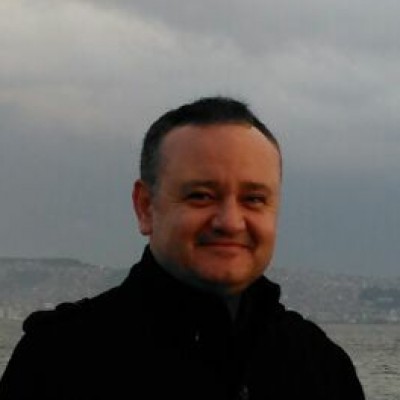
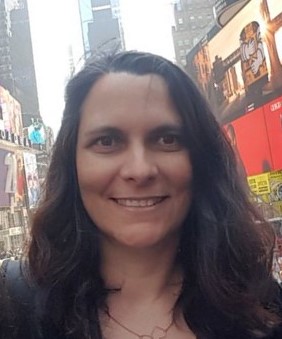
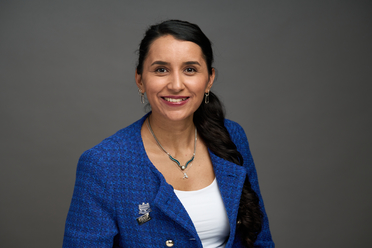
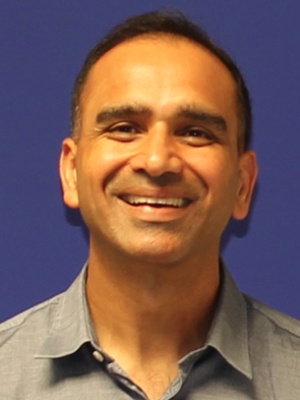
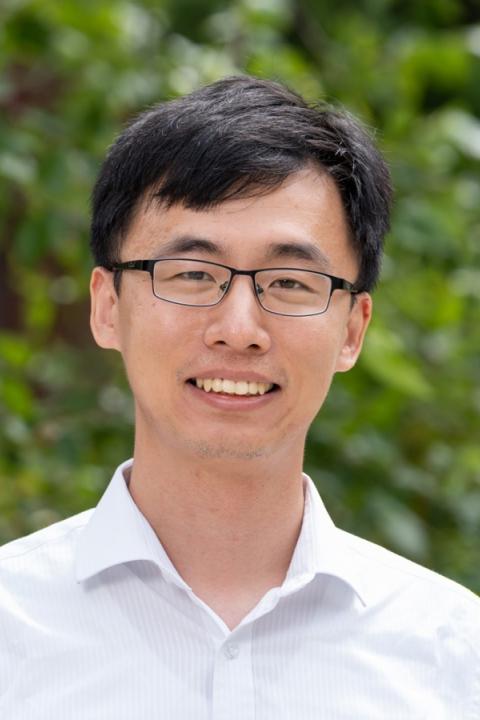
Assoc. Prof. Dr. Kadir Vardar is an Associate Professor at the Department of Electrical and Electronics Engineering, Faculty of Engineering, Dumlupınar University. He has held academic and administrative roles since 2012, including Vice President of Department (2015–2019). His research focuses on power electronics, embedded systems, renewable energy, and neural network applications in control systems. Education: BSc (2001) and MSc (2004) from Dumlupınar University; PhD (2011, English Program) from Dokuz Eylül University. Projects: Over 15 projects, including TÜBİTAK-funded initiatives on smart home automation, PV inverters, and embedded HIL simulators. Awards: 2011 Dokuz Eylül University Doctoral Publication Honor Award; 2001 Department First Place at Dumlupınar University. Research interests span power electronics (inverters, active filters), renewable energy systems (PV), and embedded systems (STM32, microcontrollers). He has published 29 articles and supervised multiple theses. Current courses include Power Electronics, Advanced Microcontrollers, and System Programming.
Gabriella Bosco is a Full Professor at Politecnico di Torino in the Department of Electronics and Telecommunications. She specializes in optical communication systems, focusing on fiber optics transmission, digital signal processing (DSP), and nonlinear effects mitigation. Her roles include Editor-in-Chief of the IEEE/OSA Journal of Lightwave Technology and Board member of the IEEE Photonics Society. She earned her Telecommunication Engineering degree (1998) and PhD (2002) from Politecnico di Torino. Research Interests: Performance analysis and design of optical transmission systems Application of DSP in optical links Fiber-optic sensor networks and anomaly detection Nonlinear interference mitigation techniques Awards: OSA Fellow (2017) IEEE Fellow (2019) 2014 & 2015 Best Paper Award in Journal of Lightwave Technology Professional Service: Program Chair/General Chair of OFC 2017-2019 Editorial roles in major photonics journals EU-funded projects: E-Photon/One, Nobel, BONE Labs & Groups: Leading the OptCom Group, a pioneer in optical communications research since 2000. Collaborates with industry leaders including Huawei and Cisco.
Roberto Gaudino is a Full Professor at Politecnico di Torino, specializing in optical communications and high-speed fiber optic systems. He leads the PhotoNext Center, focusing on photonic technologies for ultra-high-speed networks and industrial sensors. His research spans optical access networks (FTTH), short-reach data centers, and innovative fiber sensing. He has coordinated major EU projects like FABULOUS, POF-ALL/PLUS, and contributed to ITU-T standards (e.g., NG-PON2). He is an Associate Editor for IEEE/OSA JOCN and serves on conference committees including ECOC and ICTON. Education: Laurea in Electronic Engineering (summa cum laude, Politecnico di Torino, 1993) and PhD in Optical Communications (Politecnico di Torino, 1998). Professional service includes roles as Telecommunication Program Coordinator and Vice-Dean of the PhD School in EE. He has authored over 280 papers (h-index 31) and holds several awards including OSA's Spotlight on Optics (2016). Research emphasizes experimental validation and theoretical models. Key projects include CISCO Photonics collaborations for data-center optics, TIM Labs for next-gen PON, and Georgia Tech's MOSAIC network testbed. He pioneered reflective PON architectures and silicon photonics integration, with applications in Fronthauling and vibration monitoring using deployed fibers. Key achievements: First SI-POF media converter prototype (POF-ALL), record ODN power budgets in reflective PONs (42 dB), and contributions to international standards. Current work focuses on coherent PON convergence, 100G+ transmission, and real-time disaster detection via fiber sensing. Grants and collaborations span EU projects, industry contracts, and standardization bodies. He actively mentors students in optical communications and advises on network planning tools for large-scale PON deployments.
Adrian Sampson is an Associate Professor in the Department of Computer Science at Cornell University, where he is part of the Computer Systems Laboratory and the programming languages group. He joined Cornell in 2016 as an Assistant Professor and was promoted to Associate Professor in 2022. Prior to Cornell, he was a Visiting Researcher at Microsoft Research (2015-2016). He received his Ph.D. from the University of Washington in 2015 under advisors Luis Ceze and Dan Grossman, with a dissertation on Hardware and Software for Approximate Computing. His research focuses on breaking down abstraction barriers and rethinking the hardware-software interface. He is particularly known for his work on approximate computing, which explores how computers can be more efficient by allowing them to make controlled mistakes. He leads the Capra research group at Cornell, which investigates programming languages and computer architecture. Sampson's recent publications demonstrate a strong focus on hardware acceleration, FPGA programming, compiler design, and programming language theory. His work often bridges the gap between high-level programming abstractions and low-level hardware implementation, with particular attention to predictability, verification, and energy efficiency. He has made significant contributions to geometry types for graphics programming, timeline types for modular hardware design, and virtual machines for FPGA programming. Among his notable recognitions are the IEEE TCCA Young Computer Architect Award (2021), NSF CAREER award (2019), and multiple Distinguished Artifact Awards at major conferences. He has advised numerous Ph.D. students who have gone on to positions at institutions like Wellesley College, Northwestern University, and Amazon. Sampson is actively involved in academic service, serving on program committees for major conferences including PLDI, ASPLOS, and ISCA. He has also held leadership roles such as ACM SIGARCH Board of Directors (2023-2025) and SIGPLAN Information Director. His teaching at Cornell includes courses on computer systems, programming languages, and advanced compilers.
Dr Tomasz Kazmierski is an Associate Professor in the Department of Electronics and Electrical Engineering at the University of Southampton. His research focuses on hardware security, VLSI design, and energy-efficient computing. He leads projects such as the EPSRC-funded 'Next Generation Energy-Harvesting Electronics' and 'Event-based parallel computing (POETS)'. Current Projects: Event-based parallel computing (EPSRC) Next Generation Energy-Harvesting Electronics (EPSRC) Supervision: PhD students Peiyao Sun, Xuan Ji, and Haosen Yu Research Interests: Hardware Security & Trojan Resilience Approximate Computing Ultra-Low Power Circuits Neural Network Accelerators Recent work emphasizes secure design of neural network hardware, optimization of VLSI interconnects, and aging-aware circuit techniques. His publications span conferences like IEEE ISCAS and IEEE AsianHOST, addressing topics from fault-tolerant signal processing to energy-harvesting systems.
Eda Ozkara San is a Clinical Assistant Professor at NYU Rory Meyers College of Nursing, where she focuses on advancing nursing education through innovative simulation-based strategies. She holds a PhD in Nursing Science from the City University of New York Graduate Center, an MBA in Healthcare Administration from Bahcesehir University, and a BSN from Koc University in Turkey. PhD in Nursing Science, CUNY Graduate Center (2018) MBA in Healthcare Administration, Bahcesehir University, Istanbul BSN, Koc University, Istanbul Her research and scholarship center on using clinical simulation—particularly standardized patient (SP) techniques—to promote cultural competence, inclusivity, and equity in nursing education. She has led and contributed to numerous studies evaluating simulation effectiveness in teaching care for people with disabilities, LGBTQ+ populations, and mental health conditions. Her work emphasizes evidence-based educational strategies that foster empathy, communication, and clinical confidence in nursing students. The trend in her recent publications shows a strong focus on simulation as a transformative tool in nursing pedagogy, with recurring themes in disability inclusion, transgender healthcare, international comparative studies, and the development of culturally congruent care models. She frequently employs quasi-experimental, pre-post, and integrative review designs to assess educational outcomes. Among her notable honors are: Fellow, New York Academy of Medicine (2019) Certified Healthcare Simulation Educator (CHSE) Pace University President’s Award for Excellence in Leadership (2018) Multiple research awards from CUNY, NLN, and Transcultural Nursing Society Distinguished Clinical Nursing Faculty Award, NYU (2015) Dr. Ozkara San has served as a simulation educator and faculty developer at both Pace University and NYU. She has designed simulation curricula, led faculty training in debriefing and assessment, and contributed to national discourse through presentations at conferences. She is an active member of key professional organizations, including the Society for Simulation in Healthcare (SSH), the International Nursing Association for Clinical Simulation and Learning (INACSL), and the Transcultural Nursing Society. Her work bridges clinical expertise with academic innovation, aiming to reduce healthcare disparities through education. She is involved in simulation center operations and curriculum development, particularly in undergraduate nursing programs. While no formal advisees are listed, her leadership in simulation-based learning indicates a mentorship role for students and junior faculty. She has received grant funding to support her research, including from the Alexander Gralnick Research Fund and CUNY. Her future work likely continues to expand the role of simulation in promoting equity, cultural safety, and professional development in nursing.
Professor Shujun Zhang is a faculty member at the Department of Computer Science, Electrical Engineering and Mathematical Sciences, Western Norway University of Applied Sciences (HVL). He specializes in power electronics, electric drives, and microgrid systems with applications in maritime engineering, renewable energy, and battery technology. His work bridges academia and industry through collaborative projects and technical consultancy. Power Electronics Electric Drives Microgrid for Maritime Systems Renewable Energy Integration Digital Real-Time Control Systems His research focuses on developing state-of-the-art power conversion systems, including modular multilevel converters and hybrid propulsion systems. He leads projects with industry partners like Siemens Bergen and Norwegian Electric Systems AS, emphasizing hardware-in-the-loop testing and embedded programming. Recent publications highlight applications of power electronics in electric ferry charging systems, DC/AC converter design, and stability analysis of hybrid microgrids. His lab features advanced equipment: Modular Multilevel Converter Prototypes Typhoon HIL 604 DSP/FPGA Boards Permanent Magnet and Induction Motors Basic Line HIL Machines
Timo Hämäläinen is a Professor of Computer Engineering at Tampere University, leading the Unit of Computing Sciences within the Faculty of Information Technology and Communication Sciences. He is a core member of the System-on-Chip research group and the Computer Engineering Team, actively contributing to the System-on-Chip Hub initiative. His research focuses on System-on-Chip (SoC) design methodologies, FPGA-based high-level synthesis, real-time embedded systems, and open-source hardware-software co-design frameworks like RISC-V and HEVC encoding. He has pioneered work on agile SoC development processes and validation techniques for large-scale hardware systems. Key research areas include: High-level synthesis (HLS) optimization for FPGAs Real-time processor architectures and context-switching latency reduction Formal verification of IP-XACT-compliant SoC designs Resilient RISC-V MPSoC implementations Hardware-accelerated algorithms for signal processing and networking His recent publications (2023-2025) emphasize agile SoC development frameworks, hardware-software co-design for real-time systems, and validation methodologies for large-scale embedded systems. He has contributed to open-source projects like Kvazaar HEVC encoder and the Kactus2 IP-XACT toolchain. Academic advising includes students such as Santéri Mäki-Äijö (formal verification), Arto Oinonen (RISC-V tooling), and Sakari Lahti (processor modeling). His work integrates academic research with industrial collaboration through frameworks like the Fault-slip-Through quality assessment methodology.
Cumhur Erkut is an Associate Professor in the Sound and Music Computing group within the Department of Architecture, Design and Media Technology at Aalborg University, Copenhagen, Denmark. With a publication record spanning over two decades from 2000 to present, his research bridges computer science, audio engineering, and creative arts. His primary research interests include Sound Synthesis, Physical Modeling of musical instruments, Virtual Reality Audio, Sonic Interaction Design, and Embodied Interaction. His work demonstrates a consistent focus on the intersection of technology and human experience, particularly in how sound and movement interact in digital environments. His recent publications show a strong shift toward AI-driven audio processing, voice conversion, and differentiable digital signal processing techniques. Dr. Erkut's publication trends reveal an evolution from traditional physical modeling of musical instruments (particularly string instruments like tanbur, clavichord, and guitar) toward more contemporary applications in virtual reality, embodied interaction, and AI-powered audio processing. His work consistently emphasizes real-time performance considerations and human-centered design principles. He has served in significant academic roles, including organizing the 17th International Conference on New Interfaces for Musical Expression (NIME 2017) at Aalborg University, demonstrating his leadership within the international research community. His collaborative network is extensive, with frequent co-authorship with Stefania Serafin, Vesa Välimäki, Antti Jylhä, Rolf Nordahl, and other prominent researchers in the sound and music computing field. These collaborations span multiple institutions across Europe, reflecting the international nature of his research.
Dr. Chang Y Choo is a Professor of Electrical Engineering at San José State University, where he also serves as Director of the AI/ML FPGA/DSP Systems Laboratory. His academic career spans over three decades, with previous positions at Worcester Polytechnic Institute and industry experience at Altera Corp. (now Intel). Dr. Choo maintains an active research program focusing on hardware acceleration for AI and signal processing applications, with particular emphasis on FPGA-based implementations for real-world systems. Dr. Choo's educational background includes: Ph.D. in Computer and Systems Engineering, Rensselaer Polytechnic Institute (1986) M.S. in Operations Research and Statistics, Rensselaer Polytechnic Institute (1982) B.S./M.S. in Engineering, Seoul National University, Korea Dr. Choo's research interests center on the intersection of hardware design and artificial intelligence. His work focuses on implementing computer vision, deep learning, and digital signal processing algorithms on specialized hardware platforms including FPGAs, GPUs, and custom ASICs. Current projects include developing real-time illumination/view-independent object recognition systems for autonomous vehicles, wideband acoustic echo cancellation for wearable technology, and FPGA-based accelerators for medical imaging applications. His research bridges theoretical algorithm development with practical hardware implementation constraints. Analysis of Dr. Choo's recent publications reveals a clear trajectory toward increasingly sophisticated hardware-accelerated AI systems. His work has evolved from foundational research in digital signal processing and image compression to cutting-edge applications of deep learning on specialized hardware. Recent publications demonstrate expertise in implementing CNN architectures on FPGAs, developing metabolic syndrome prediction models, and creating food object detection systems using transformer models. This progression reflects the broader field's shift toward hardware-aware AI development. Dr. Choo's significant scientific contributions include multiple patents that have advanced the state of the art in several domains: U.S. Patent No. 9,025,763 (2015): 'Apparatus and Method for cancelling wideband acoustic echo' U.S. Patent Nos. 7,058,675 (2006) and 7,124,161 (2006): 'Apparatus and method for implementing efficient arithmetic circuits in programmable logic devices' U.S. Patent Nos. 5,943,096 (1999) and 6,621,864 (2003): 'Motion vector based frame insertion process' U.S. Patent Nos. 5,832,131 (1998) and 5,991,455 (1999): 'Hashing-based vector quantization' U.S. Patent No. 5,587,710 (1997): 'Syntax based arithmetic coder and decoder' Throughout his career, Dr. Choo has been actively involved in both academic and industry collaborations. He has served as a technical consultant for numerous Silicon Valley companies including National Semiconductor (now Texas Instruments), Philips Semiconductor, Skybox Imaging (acquired by Google), Novariant (now AgJunction), and Ricoh Innovations. His industry experience informs his teaching approach, which emphasizes practical implementation considerations alongside theoretical foundations. Dr. Choo has also served as an expert witness in intellectual property court cases involving audio and video compression algorithms and FPGA hardware. Dr. Choo directs the FPGA/DSP AI/DL Laboratory at San José State University, which focuses on developing hardware-accelerated solutions for real-time AI applications. The lab maintains strong connections with Silicon Valley technology companies and provides students with hands-on experience in cutting-edge hardware design methodologies. Current research directions include autonomous vehicle navigation systems, medical imaging applications, and edge AI deployment strategies.
Dr. Peter Rucz is an Adjunct Professor at the Department of Network Systems and Services, Budapest University of Technology and Economics (BME). He holds a Ph.D. in Electrical Engineering (Summa cum laude, 2016) from BME's Doctoral School of Electrical Engineering. His research focuses on acoustic modeling, sound design of musical instruments, and audio compression technologies. He has participated in projects like REEDDESIGN, INNOSOUND, and AMORES, addressing topics such as organ pipe acoustics, nonlinear navigation algorithms, and robust communication protocols. Teaching roles include courses on Acoustic Measurements, Sound Engineering, Programming Basics, and Multimedia Systems. His research interests span aeroacoustic simulations, psychoacoustic models in audio compression, and computational methods for open-space acoustics. Awards include the 2016 Best Student Paper Award and 2013 I-INCE Grant. He mentors students in topics like cavity sound formation in wind instruments and DSP-based signal processing.
Magnus Karlsson is a Professor of Photonics at Chalmers University of Technology and serves as Deputy Dean of the Department of Microtechnology and Nanoscience (MC2), responsible for research and graduate education. He co-leads the fiber optics research group with Prof. Peter Andrekson and co-founded the Chalmers Center for Optical Communication (FORCE) in 2010 alongside Prof. Erik Agrell. Karlsson teaches courses in Wireless and Photonics System Engineering and Photonics and Lasers, and holds editorial leadership as Editor-in-Chief of the IEEE/Optica Journal of Lightwave Technology. His research centers on optical fiber communication systems with expertise in light propagation, polarization dynamics, and nonlinear optical effects. Current investigations focus on capacity-enhancing techniques including Voronoi constellation geometric shaping, silicon nitride integrated photonics for microwave applications, and machine learning-driven polarization sensing. His work bridges theoretical modeling of phase-noise channels with experimental validation of novel receiver architectures for deep-space communication through atmospheric turbulence. Recent publications reveal strong trends in overcoming nonlinear transmission limits through multidimensional modulation and MIMO processing for coupled-core fibers. His group pioneers integrated photonic solutions for high-frequency signal generation while advancing real-time network monitoring capabilities in operational fiber infrastructure. Key themes include power-efficient signaling, distributed sensing, and computational methods for channel compensation. Karlsson's leadership in the fiber optics group and FORCE drives collaborative research in next-generation optical networks. His editorial role and ECOC program committee membership position him as a key influencer in shaping global optical communication standards and disseminating cutting-edge research advancements.
Aakash Tyagi is a Professor of Practice in Computer Science & Engineering at Texas A&M University, affiliated with the Multidisciplinary Engineering program. His roles include academic leadership, teaching, and industry collaboration. He holds a Ph.D. in Computer Engineering from the University of Louisiana (1993), an M.S. in Electrical and Computer Engineering (1989), and a B.S. in Electronics & Communication from Kamla Nehru Institute of Technology, India (1987). His research focuses on hardware verification, secure computing, and high-performance computing architectures. He has over two decades of industry experience at Intel, contributing to CPU design and managing projects like the Knights Landing processor. Teaching interests include computer architecture, data structures, and project management. His publications emphasize innovative applications of machine learning in hardware verification, formal methods for processor security, and optimization techniques for EDA tools. Notable works include HyPFuzz (2023), MinBLoG (2024), and Spec2Assertion (2025), advancing automated verification and vulnerability detection. Tyagi has received over 15 teaching and service awards from Texas A&M, including multiple Distinguished Achievement Awards (2015–2024) and grants for instructional innovation. He actively bridges academia and industry through research partnerships and mentorship.
Dr. Mihai Teodor Lazarescu is an Associate Professor at the Department of Electronics and Telecommunications (DET), Politecnico di Torino , where he contributes to research and teaching activities. He is also a member of the PolitoBIOMed Lab (Biomedical Engineering Lab) and the Ambient Sensing and Processing research group. Scientific Affiliation: IEEE Member (2019-present) Editorial Roles: Guest Editor for SENSORS, ELECTRONICS, and ACM Transactions on Embedded Computing Systems His research interests focus on hardware acceleration for machine learning algorithms, particularly using FPGAs for data center and embedded applications. He works on high-level synthesis optimization flows, capacitive sensor design for indoor monitoring, and low-power embedded systems . His work intersects Internet of Things , Wireless Sensor Networks , and Machine Learning with applications in human localization, environmental monitoring, and industrial automation. Recent publications demonstrate expertise in neural network optimization , DSP resource sharing , and multi-FPGA allocation . His teaching spans Applied Electronics , Digital Electronic Design , and Embedded Systems Optimization across bachelor's and master's programs in Electronic Engineering and Computer Engineering . Patents: Noise cancellation for single-plate capacitive sensors Capacitive sensor for space change detection Projects: Scientific Manager for Horizon 2020-S2RJU project (2018)
Dongpeng Xu is an Associate Professor in the Department of Computer Science at the University of New Hampshire. His research focuses on cybersecurity, software security, and program analysis, with particular emphasis on binary code analysis, malware detection, and obfuscation techniques. He holds a Ph.D. in Information Sciences and Technology from Pennsylvania State University, an M.Eng. in Software Engineering from the University of Science and Technology, and a B.E. in Fashion Design and Engineering from Jilin University. Research Interests: Cybersecurity and software security Malware analysis and detection Program obfuscation and deobfuscation Formal methods in program analysis Approximate computing security Binary code simplification His publications highlight advancements in malware lineage inference, SMT solver optimization for obfuscated expressions, and hardware-software co-design for secure systems. Notable contributions include VAHunt for detecting repackaged Android malware and VMHunt for verifying obfuscated binary code. He has also explored security threats in approximate computing and developed tools like GraphMR for mathematical reasoning in cybersecurity contexts. Teaching includes courses such as CS 527 (Fundamentals of Cybersecurity) and multiple iterations of CS 727/827 (Software Security). His research has been supported by grants like the SaTC: CORE grant for deobfuscation techniques. Xu’s work bridges theoretical foundations with practical applications, addressing challenges in both software protection and malicious code analysis.