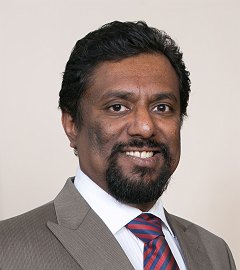
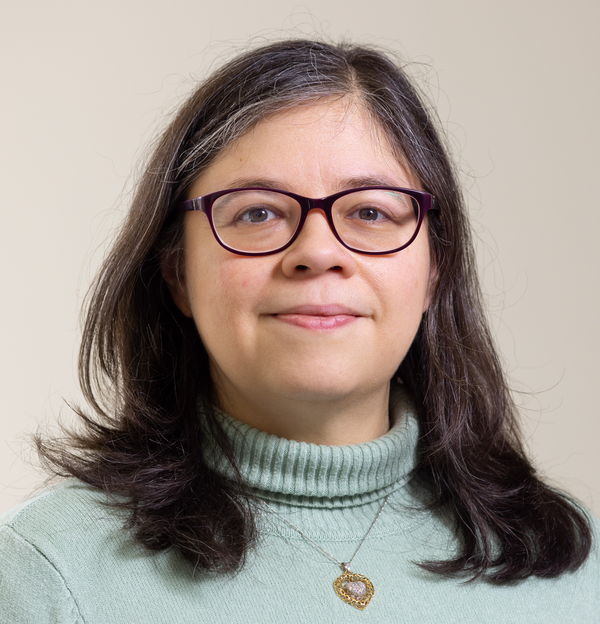
Bernhard J. Berger is a Lecturer in the Department of Computer Engineering at the Institute of Embedded Systems, Hamburg University of Technology (TUHH). His research focuses on software security, static code analysis, machine learning, optimization, and research data management. He has held significant roles such as Program Committee member for ICPC 2025 and MSR 2025, and has received awards including the Best Reviewer Award (ICPC 2023) and Best Engineering Paper Award (SCAM 2019). His work spans interdisciplinary applications including maritime systems security, GPU-accelerated AI, and evolutionary algorithms. Recent studies emphasize AI-driven security tools (e.g., ML-SAST) and domain-specific language approaches to optimization (EvoAl). He has contributed to over 30 peer-reviewed publications, with notable work in IEEE Transactions on Software Engineering and Science of Computer Programming. Berger collaborates closely with industry through DAAD review committees and serves on artifact evaluation boards for ISSTA and ARES conferences. Education: Doctoral Thesis (2022), Diploma in Computer Science (2007) Key Projects: ArchSec tool suite, Threat Modeling Frameworks, Bauhaus static analysis methodology Lab Affiliation: Embedded Systems Design Group His advisory roles include Deputy of TUHH's Election Verification Committee and Session Chair at IEEE Congress on Evolutionary Computation 2023. Current research trends integrate machine learning with static analysis for automated vulnerability detection, while also exploring explainable AI techniques for neural network optimization.
Professor Saman Amarasinghe is a full Professor in the Department of Electrical Engineering and Computer Science (EECS) at the Massachusetts Institute of Technology (MIT), and Principal Investigator at MIT's Computer Science and Artificial Intelligence Laboratory (CSAIL). He leads the Commit compiler research group, which focuses on programming languages and compilers that maximize application performance on modern computing platforms. His work spans multiple academic departments and research centers, with strong affiliations to both MIT's School of Engineering and CSAIL. Professor Amarasinghe's research interests center around high-performance domain-specific languages and compiler technology . His work combines language design with sophisticated compilation techniques to deliver unprecedented performance for targeted application domains. His research spans multiple areas including image processing (Halide), sparse tensor algebra (TACO), graph analytics (GraphIt), stream computations (StreamIt), and bioinformatics (Seq). A significant thread throughout his work is the application of machine learning for compiler optimizations, from Meta optimization in 2003 to the OpenTuner autotuner framework. Analysis of Professor Amarasinghe's recent publications reveals a strong focus on sparse computing , compiler vectorization , and domain-specific language implementation . His work consistently bridges theoretical compiler concepts with practical performance gains across diverse application domains. The progression from earlier work on StreamIt and Halide to more recent projects like GraphIt and TACO shows an evolution toward more specialized, high-performance DSLs targeting specific computational patterns. His 2020-2025 publications particularly emphasize sparse tensor operations, GPU acceleration, and machine learning integration with compiler technology. ACM Fellow (2019) Professor Amarasinghe has made significant contributions to academic entrepreneurship and student development. He founded Determina, Inc. (acquired by VMware) based on security research from his MIT lab and co-founded Lanka Internet Services, Ltd., Sri Lanka's first ISP. As faculty director of MIT Global Startup Labs, his programs across 17 countries have helped create over 20 successful startups. His teaching includes the popular Performance Engineering of Software Systems (6.172) course with Professor Charles Leiserson, as well as innovative project-based courses like the Open Source Software Project Lab and Bring Your Own Software Project Lab. His educational approach emphasizes hands-on experience with compiler and language design concepts. Professor Amarasinghe leads the Commit compiler research group at MIT CSAIL, which has produced numerous influential domain-specific languages and compilers including Halide, TACO, Simit, StreamIt, and GraphIt. The lab maintains strong industry connections through projects like OpenTuner and Determina, and collaborates with researchers worldwide on compiler technology. The group's work spans both theoretical compiler research and practical implementation, with a consistent focus on bridging the performance gap between high-level programming abstractions and hardware capabilities.
Robert Bruce Findler is a Professor of Computer Science at Northwestern University, specializing in programming languages and software engineering. He serves as a core developer of the Racket programming language and has contributed extensively to language design, macro systems, and gradual typing. Affiliation: Department of Electrical Engineering and Computer Science, McCormick School of Engineering Research Interests: Programming Languages (PL), Domain-Specific Languages (DSLs), Macro Systems, Gradual Typing, Contracts His work spans both theoretical and practical domains, including the development of Racket's Redex framework for semantics engineering and innovative approaches to contract systems in gradual typing. He has been actively involved in the PL community through committee memberships and program organization. Recent research focuses on macro systems (Rhombus), contract optimization (Collapsible Contracts), and language interoperability (The Functional, the Imperative, and the Sudoku). His GitHub contributions reflect ongoing development in Racket and related tools. Key Collaborations: Racket development ecosystem, PLDI/POPL/ICFP/SPLASH conferences Committee Roles: ICFP Programme Committee, REBLS Program Committee, POPLmark Retrospective Panelist
Prof. Dr.-Ing. Richard Membarth is a Research Professor for System-on-a-Chip and AI at the Edge Computing at Technische Hochschule Ingolstadt (THI). He is affiliated with the Hardware-Software Co-Design group and holds a secondary position at the German Research Center for Artificial Intelligence (DFKI) Saarbrücken. Co-creator of DSL frameworks like AnyDSL and Hipacc Key contributor to MetaDL (AI metaprogramming) and PRIME (predictive rendering) His research bridges GPU computing , domain-specific languages , and compiler technology , with recent work on Vulkan SPIR-V compilation and device-driven SpMV algorithms . Notable awards include the HiPEAC Paper Award (2018) and multiple Best Paper Awards for his compiler frameworks.
Dr. Pascal Reuss is a Researcher at the Intelligent Information Systems (IIS) Division within the Institute of Computer Science , University of Hildesheim . His work focuses on Case-Based Reasoning (CBR) systems, Multi-Agent Systems , and Knowledge Management applications. Active in CBR framework development and game-based AI research Teaching Computer Science III (Databases) for winter 2025/26 Participating in university sustainability initiatives like Stadtradeln 2024/25 Reuss contributes to AI education through practical implementations in gaming environments and has developed visualization tools for CBR agent behavior. His research spans multi-agent collaboration , dynamic case bases , and domain-specific language implementations for knowledge maintenance. Notable contributions include: Co-developing the FEATURE-TAK framework for knowledge extraction Designing case factories for distributed CBR systems Implementing finite state machines for tactical game agents Creating CBR-based fitness planning systems His work appears in various CBR and Game Development publications from 2011-2024. The research demonstrates practical applications of CBR in aircraft maintenance diagnostics , training plan generation , and educational technology contexts.
Prof. Dr. Thomas Farrenkopf is a full-time Professor in the Department of Business Informatics at the Technische Hochschule Mittelhessen , serving as Dean of Studies . He leads the Business Informatics Bachelor program and specializes in digitalization, multi-agent systems, and AI-driven decision support. Expertise Areas : Industry 4.0, Smart Factory, Semantic Web, full-stack software development Contact : thomas.farrenkopf@mnd.thm.de Research Focus : His work bridges knowledge-based methods with practical applications in artificial intelligence, particularly through multi-agent systems for traffic modeling and business simulations. He developed AGADE Traffic (a knowledge-based traffic simulator) and ATHOS (a domain-specific language for multi-agent simulations), focusing on scalability and complexity reduction. Recent studies explore individual preferences' impact on traffic policies and agent-based feedback mechanisms in business contexts. Academic Contributions : With over 15 publications since 2013, his research spans agent-based modeling, semantic web applications, and smart manufacturing - notably improving throughput times in toolmaking by 90% through Industry 4.0 implementations. Teaching & Supervision : Actively supervises Bachelor's Practical Projects (BPP), providing guidance for internship-related academic work through structured evaluation processes and electronic reporting systems. Collaborations : Works with international researchers like Johannes Nguyen, Simon T. Powers, and Michael Guckert, publishing in venues such as SN Computer Science , Lecture Notes in Computer Science , and Journal of Artificial Societies and Social Simulation .
Dr. Sandra Diaz Pier is a Scientific Lead at the Jülich Supercomputing Centre (JSC) within the Jülich Research Centre , Germany. Specializing in computational neuroscience , high performance computing (HPC) , and machine learning , she bridges neuroscience and advanced computational methods through her research. Education: B.Sc. in Electronic Systems Engineering, Mexico M.Sc. in Computer Science (focus: machine learning, quantum computing), Mexico Second M.Sc. in Electrical Engineering, Ontario, Canada Ph.D. in Computer Science, Germany (2021) Her research focuses on modeling and simulating brain dynamics and plasticity at multiple scales, leveraging HPC to accelerate large-scale neural network simulations. She actively contributes to EU projects like the Human Brain Project (HBP) , Virtual Brain Cloud , and EBRAINS 2.0 , emphasizing infrastructure development and educational training. Her work includes open-source tools such as the NEST simulator , The Virtual Brain , and L2L , enabling efficient parameter exploration and multiscale co-simulation frameworks. The 15 most recent publications highlight her interdisciplinary approach, spanning topics from quantum computing in biomolecular simulations to neural plasticity algorithms and cloud-based brain modeling . These articles reflect her expertise in integrating machine learning , multi-scale simulation , and HPC infrastructure for neuroscience challenges, including seizure propagation, Parkinson’s disease progression, and swarm intelligence in spiking networks. She leads technical coordination in projects like EBRAINS and serves as a task leader in the HBP infrastructure work package , while also organizing workshops and hackathons for open-source tools. Her role involves supporting domain scientists through methodological research and workflow optimization for brain simulations.
Frank Hannig is a Professor at the University of Erlangen-Nuremberg, Germany, specializing in computer architecture and high-performance computing. His research focuses on FPGA acceleration, hardware-software co-design, neural network optimization, and embedded systems. He has collaborated extensively with co-authors such as Jürgen Teich and Oliver Reiche, producing over 200 publications since 2001. His work emphasizes domain-specific languages (DSLs) for image processing (e.g., Hipacc) and compiler optimizations for FPGAs. Key contributions include techniques for quantized neural networks on microcontrollers, CGRA toolchain evaluation, and efficient mapping of CNNs onto processor arrays. Hannig also explores energy-efficient architectures and reconfigurable computing for emerging applications like edge AI and automotive systems. Publications span conferences like ASAP, FPL, and ARC, reflecting his interdisciplinary approach to bridging algorithm design and hardware implementation. His research often addresses practical challenges in deploying machine learning models on resource-constrained devices while maintaining performance and energy efficiency.
Michael Coblenz is an Assistant Professor in the Computer Science Department at University of California, San Diego. His research focuses on integrating user-centered design into programming language development, creating safer languages for blockchain and scientific computing. He completed his Ph.D. at Carnegie Mellon University under Jonathan Aldrich and Brad A. Myers, followed by a Basili postdoctoral fellowship at University of Maryland. Specializes in usability of programming languages Created Obsidian language for safer smart contracts Developed PLIERS methodology for iterative language design Active in Rust usability and REST API quality research His work bridges programming languages and human-computer interaction, with recent projects including Kale (safer spreadsheets) and climate change-focused programming tools. He has served on program committees for SPLASH, VL/HCC, and HATRA conferences. 2025: Graduate Consortium Co-chair at VL/HCC 2024: HATRA Organizing Chair 2023: Doctoral Symposium Chair at SPLASH
Sarah E. Chasins is an Assistant Professor at the University of California at Berkeley , affiliated with the College of Engineering and Department of Electrical Engineering and Computer Sciences . She leads the PLAIT Lab (Programming Languages for Approachable and Inclusive Tools), with additional affiliations at the Berkeley Institute for Data Science (BIDS) and collaborations across disciplines. Her research focuses on democratizing programming through Program synthesis Human-Computer Interaction for programming languages Tools for non-traditional programmers Embedded domain-specific language design Web automation frameworks She has developed systems like Ringer for browser automation and Skip Blocks for execution history reuse. Recent publications highlight trends in Direct manipulation programming Synthesis-backed refactoring Sequence-to-tree code search DSL usability for domain experts Functional programming practices Web script optimization She has advised numerous graduate and undergraduate researchers, including: Current PhD students: Justin Lubin, Eric Rawn, Parker Ziegler Alumni: Gabriel Matute (MSc), Rebecca Hicke (undergraduate) Her service includes committee roles at top conferences like OOPSLA, PLDI, and PLATEAU, as well as teaching courses on CS164: Programming Languages and Compilers CS294-184: Building User-Centered Programming Tools CS39-001: Technology, Society, and Power
Jan Becker is a Professor of Marketing and Service Management at Kühne Logistics University (KLU) in Hamburg, Germany. He holds a Dr. habil. and Dr. sc. pol. in Marketing from Christian-Albrechts-University at Kiel. With over 15 years of industry and consulting experience in digital transformation, his work bridges academic research and practical applications in customer management. Academic Affiliation: Kühne Logistics University (2011–present) Research Focus: Customer Relationship Management, Strategic Marketing, Service Management, Electronic Commerce Teaching: Offers courses in Consumer Behavior, Marketing, Marketing Analytics, and Nonprofit Management across bachelor, master, and doctoral programs His research explores critical areas such as: Geographic proximity effects on social influence Proactive postsales service efficiency Reward-scrounging in referral programs Outcome heterogeneity in entertainment marketing CRM implementation challenges in corporate settings Network effects in peer-to-peer systems Notable scientific awards include the 2018 Sheth/Journal of Marketing Award and the 2015 IJRM Best Paper Award. He is a regular visiting scholar at UCLA’s Anderson Graduate School of Management. Jan Becker’s industry collaborations focus on advanced analytical methods for decision-making in customer management, including churn prevention, referral program optimization, and targeting strategies. His empirical studies span telecommunications, online communities, and digital media sectors, emphasizing both theoretical rigor and practical relevance.
Daniel Strüber is an Associate Professor in Software Engineering at Chalmers University of Technology and the University of Gothenburg, Sweden, and an affiliate of the Department of Software Science at Radboud University Nijmegen, Netherlands. His research focuses on model-driven engineering, AI engineering, and empirical software engineering, addressing challenges in software quality, variability management, and security. He holds a PhD (summa cum laude) from Philipps University Marburg and has held academic positions including Assistant Professor at Chalmers and postdoctoral roles at King's College London and Philipps University Marburg. Education: PhD in Computer Science, Philipps University Marburg (2011–2016) Diplom (M.Sc. equivalent) in Computer Science, Philipps University Marburg (2005–2011) Research Interests: Strüber's work spans model-driven engineering, AI integration in software systems, and empirical studies. Key areas include: Model-based languages and tools for software quality assurance Machine learning-enabled systems and their engineering principles Robotics software engineering and variability management Formal methods for consistency and security Search-based optimization in model-driven development Recent Contributions: Recent work includes studies on LLM-assisted reverse engineering, empirical analysis of manual abstraction in software systems, and model-driven approaches for edge deployment of ML models. His research bridges theory with practical implementations in domains like robotics and web-based systems. Awards: Best Reviewer Award (SoSyM 2025) Distinguished Reviewer Awards (GPCE 2024, SPLC 2023) Transformation Tool Contest Awards (2020, 2016) EASST Best Paper Awards (ICGT 2020, ICGT 2017) Grants & Leadership: Co-editor of a JSS special issue on Product Line Engineering (2024) and program co-chair of SPLC 2024. Active in conferences like ICSE, ICGT, and MODELS. Leads grants such as the VR SEMLA project (2022–2024) and the DFG EUphORia fellowship (2019). Teaching: Courses include 'Software Engineering for AI Systems' at Chalmers and 'Software Product Lines' at Radboud University. Involves students in real-world projects via GiPHouse, a student-run company.
Nada Amin is an Assistant Professor of Computer Science at Harvard University's John A. Paulson School of Engineering and Applied Sciences (SEAS), where she leads the metareflection lab . Her research combines programming languages (PL) and artificial intelligence (AI), focusing on neuro-symbolic systems that are correct by construction, with applications in program synthesis, verification, and precision medicine. Harvard John A. Paulson School of Engineering and Applied Sciences (2019–Present) University Lecturer in Programming Languages at University of Cambridge (2017–2019) Doctoral and postdoctoral work at EPFL (2011–2017) Her research spans three core themes: Safer : Type systems and formal verification (Coq, Dafny, Frama-C) Faster : Multi-stage programming and interpreter collapsing techniques Easier : Neuro-symbolic AI for program manipulation and biological reasoning Key publications include: 2025: Modular Imperative with LLMs (LMPL), Multi-stage Relational Programming (PLDI) 2024: Persimmon for extensible variant types (OOPSLA) 2023: LURK for recursive knowledge (ICFP), Dolorem language growth pattern (ECOOP) Scientific honors include: Teaching Assistant Team Award (EPFL, 2015) Michigan Cambridge Research Initiative Grant (2018) ArsDigita Prize (1999) She has served on program committees for GPCE (co-chair), ICFP, PLDI, and organized workshops in metaprogramming and logic programming. Her teaching portfolio includes graduate courses on neurosymbolic programming, program synthesis, and advanced PL theory.
Dr. Nina Herrmann is a researcher at the Chair of Machine Learning and Data Engineering (School of Business and Economics, University of Münster). Her work focuses on parallel programming, domain-specific languages (DSL), and algorithmic skeletons for heterogeneous computing environments. Education: Bachelor of Information Systems (WWU Münster, 2017) Master of Science in Information Systems (WWU Münster, 2019) Semester abroad at University of Trento (Italy, 2018–2019) Research Interests revolve around optimizing high-performance computing through algorithmic skeletons, DSL design, and machine learning applications in resource-constrained systems. She has supervised multiple theses on topics including EdgeML methods, memory-efficient ML models, and parallel programming frameworks. Project Contributions include the ongoing Musket (Muenster Skeleton Tool) for DSL-based parallel code generation, and the completed Muesli (Muenster Skeleton Library), which simplified parallel application development using algorithmic skeletons. Teaching Activities span courses like Computer Science I/II , Parallel Programming , and specialized seminars on topics including graph machine learning and process mining. Contact: nina.herrmann@uni-muenster.de
Matthew J. Parkinson is a Principal Researcher at Microsoft Azure Research in Cambridge, UK. His work focuses on memory and concurrency safety , with significant contributions to formal verification , systems programming , and language design . He actively participates in academic communities as a session chair and committee member for conferences like OOPSLA , PLDI , and ISMM . Research Trends : His recent publications (2023-2025) emphasize dynamic region ownership , wait-free reference counting , and allocator optimization for concurrent systems. These works span systems programming , formal verification , and domain-specific language tools , reflecting his interdisciplinary approach. Conference Contributions : Parkinson has served as session chair for tracks including MPLR Session 2 (2023) and PLDI: Memory Models & Program Logics (2023). He has also contributed to program committees for POPL , IWACO , and The Future of Weak Memory (2024).