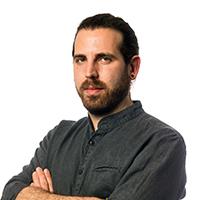
Giuseppe Corriero is a Full Professor at the Department of Biosciences, Biotechnology and Environment (DBBA) at the University of Bari Aldo Moro, Italy. His research focuses on Mediterranean marine ecosystems, particularly sponge biology, coral reef conservation, and marine biodiversity. With extensive fieldwork along the Apulian coast and throughout the Mediterranean Sea, Professor Corriero has established himself as a leading researcher in marine ecology and conservation biology. His office is located at Campus - Via Orabona, 4 Bari, and he can be reached at +39 0805442380 extension 2380. Professor Corriero's research interests span multiple areas of marine biology with a strong emphasis on Mediterranean ecosystems. His work particularly focuses on sponge ecology and mariculture , coral reef conservation , and marine biodiversity assessment . He investigates mesophotic zones, bioconstructions, and the impacts of pollution on marine organisms. His research on seahorses (particularly Hippocampus guttulatus ) has contributed significantly to understanding their habitat preferences, diet through DNA metabarcoding, and conservation needs. Through integrated multitrophic aquaculture systems like the REMEDIA LIFE project, he explores sustainable approaches to marine resource management and bioremediation. Analysis of Professor Corriero's recent publications (2023-2025) reveals a strong focus on Mediterranean marine ecosystems, particularly mesophotic zones and bioconstructions. His work demonstrates expertise in sponge biology, coral reef ecology, and marine conservation. A significant portion addresses environmental challenges including microplastic pollution, invasive species, and sustainable aquaculture practices. His interdisciplinary approach combines field ecology, laboratory experiments, and molecular techniques to address pressing marine conservation issues in the Mediterranean region, with particular attention to Apulian coastal waters. Professor Corriero leads research teams focused on Mediterranean marine ecosystems, particularly those studying sponge mariculture, coral reef conservation, and seahorse ecology. His work with the REMEDIA LIFE Integrated Multitrophic Aquaculture system represents an innovative approach combining polychaetes, sponges, and macroalgae for sustainable mariculture and environmental remediation. His research often involves fieldwork along the Apulian coast, particularly in the Mar Piccolo of Taranto and other Mediterranean sites, indicating collaboration with local marine research stations and conservation initiatives.