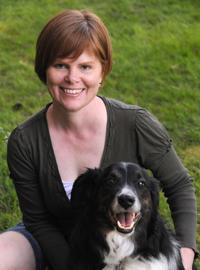
Angel Xuan Chang is an Associate Professor at Simon Fraser University's School of Computing Science, where she leads research at the intersection of natural language processing, computer vision, and 3D scene understanding. She holds the prestigious Canada CIFAR AI Chair position and is affiliated with multiple research groups including 3DLG, GrUVi, SFU NatLang, SFU AI/ML, and VINCI. PhD in Computer Science, Stanford University MSc in Computer Science, Stanford University M.Eng in Electrical Engineering and Computer Science, MIT BSc in Computer Science and Engineering, MIT Professor Chang's research primarily focuses on connecting language to 3D representations of shapes and scenes, with particular emphasis on grounding language for embodied agents in indoor environments. Her work spans natural language processing and understanding, linking natural language with visual and 3D representations, multimodal grounding of language, embodied AI, and machine learning applications for biodiversity monitoring through the BIOSCAN project. She has developed methods for synthesizing 3D scenes and shapes from natural language and created various datasets for 3D scene understanding. Her recent publications reveal a strong trend toward integrating language understanding with 3D scene generation and manipulation, with increasing focus on practical applications in embodied AI and biodiversity monitoring. The research shows progression from foundational work on text-to-3D scene generation to more sophisticated approaches for evaluating semantic coherence in generated scenes and developing efficient methods for zero-shot scene modeling. Canada CIFAR AI Chair TUM-IAS Hans Fischer Fellow (2018-2022) Best paper award at 3DV 2025 for 'An Object is Worth 64x64 Pixels: Generating 3D Object via Image Diffusion' Professor Chang actively advises numerous graduate students who appear as first authors on her publications, indicating a strong mentoring program. Her research is supported through multiple channels including the CIFAR AI Chair position and likely various research grants supporting her BIOSCAN-related work and 3D scene understanding projects. She has been involved in organizing multiple workshops at major conferences including ICML, CVPR, and ICLR. Her research is conducted through several interconnected groups: 3DLG (3D Language and Graphics), GrUVi (Graphics, Vision, and Interaction), SFU NatLang (Natural Language Processing), SFU AI/ML, and VINCI. These groups work collaboratively on problems spanning language grounding, 3D scene understanding, embodied AI, and biodiversity applications, creating a rich interdisciplinary research environment.