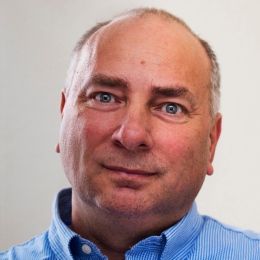
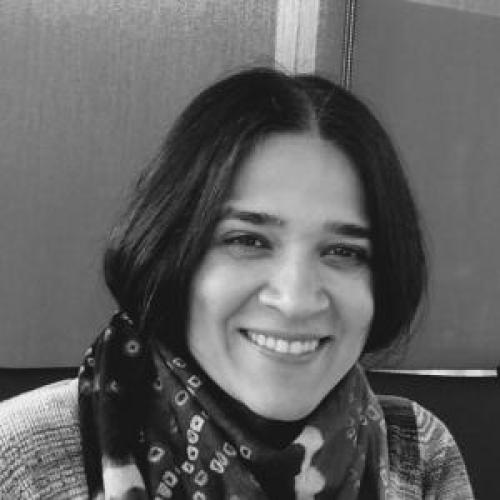
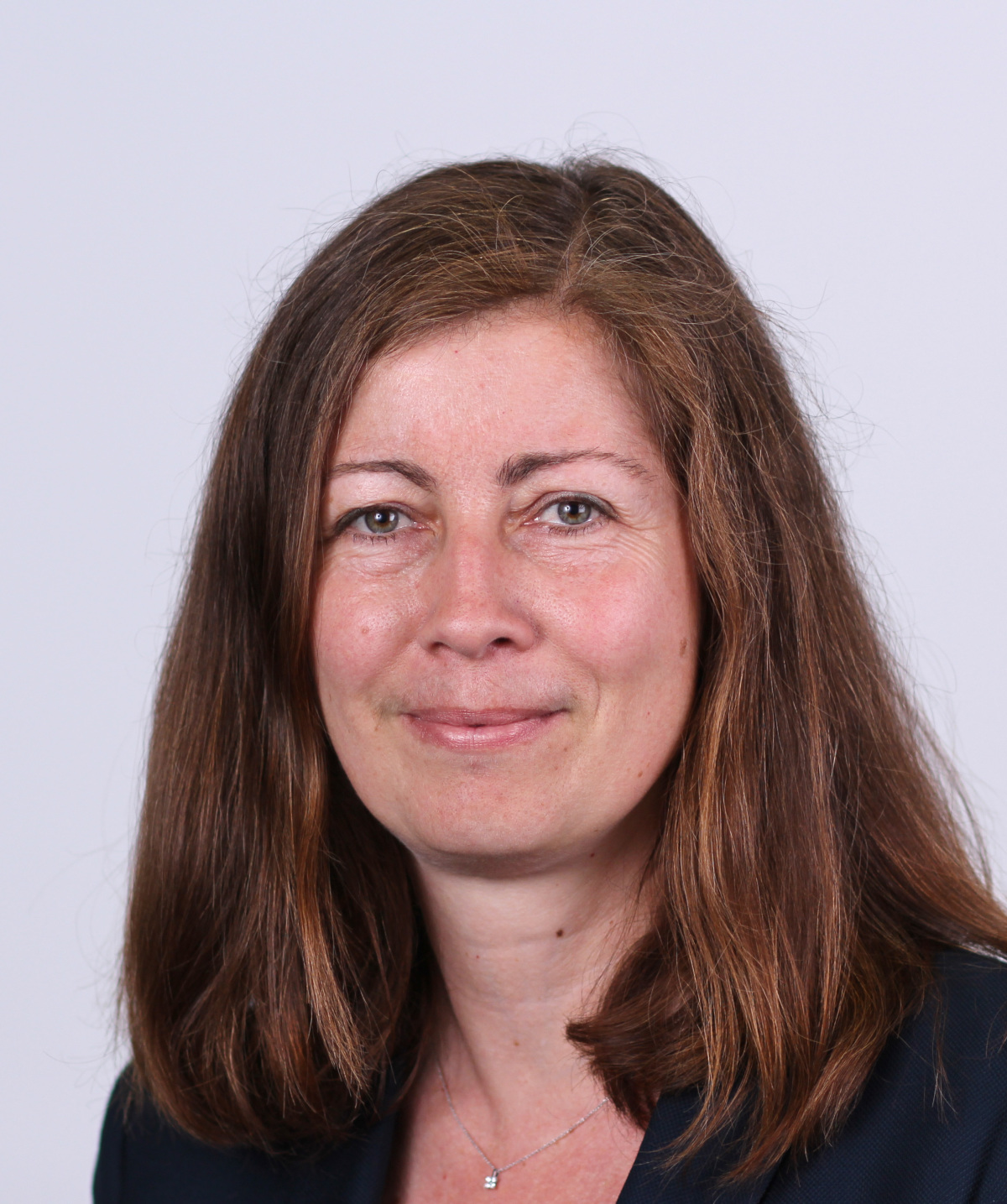
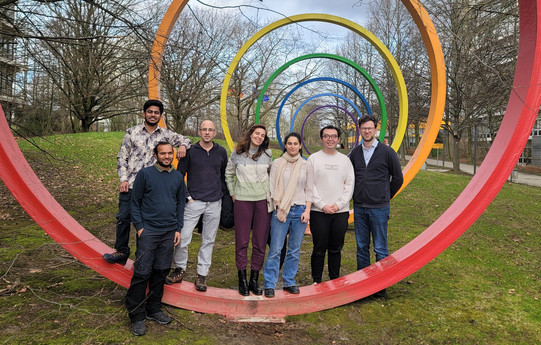
Prof. dr. Marcel Swart is a Professor at the University of Groningen , affiliated with the Faculty of Science and Engineering and the Molecular Inorganic Chemistry department within the Stratingh Institute of Chemistry. His research focuses on computational chemistry applications in inorganic and bioinorganic systems, particularly in catalysis, transition metal reactions, and polarizability modeling. Research Interests : Catalysis of hydrogen peroxide reactions Computational modeling of transition metal complexes Spin state and redox activity analysis QM/MM methods for solvent effects High-valent metal-oxo species Non-redox innocent ligand behavior Recent Publications show strong emphasis on iron and manganese catalytic systems, density functional theory applications, and hydrogen atom transfer mechanisms across both organic and biological contexts.
Kálmán J Szabó is a Professor and Head of the Department of Organic Chemistry at Stockholm University . His research focuses on transition metal catalysis and organocatalysis for creating fluorine- and boron-containing organic molecules with applications in pharmaceuticals and advanced electronics. Key research areas include: Asymmetric synthesis of chiral organofluorine and organoboron compounds Fluorine-18 labeling for PET diagnostics in cancer and inflammation DFT computational studies of reaction mechanisms Organocatalytic fluorocyclization for tertiary fluoride centers Homologation and borotropic migration techniques His group has developed novel catalytic methods for trifluoromethylthiolation , enantioselective fluorination , and asymmetric synthesis of boronic acids . Recent breakthroughs include three-component chiral trifluoromethyl allenol synthesis and improved 18F-labeling of anticancer drugs . Scientific achievements: Recipient of Knut and Alice Wallenberg Foundation grant (2024) for organoboron chemistry Developed first asymmetric organocatalytic homologation for diverse trifluoromethyl species Established mechanistic framework for benziodoxole-based CF3/SCF3 transfer reagents Research team includes doctoral students Tautvydas Kireilis , Linus Johansson Holm , Marie Deliaval , and Kevin Bajerke . Current projects target fluorinated anticancer peptides and sustainable synthesis methods for life sciences applications.
Pratibha Dev is Professor of Physics and Graduate Director in the Department of Physics and Astronomy , College of Arts & Sciences , Howard University . Since joining Howard in 2015, she has led a theoretical group investigating condensed-matter physics, quantum chemistry, and materials science through ab-initio computational approaches. Education Ph.D. Physics, University at Buffalo, Buffalo, NY (2009) M.S. Physics, Miranda House College, Delhi University, India B.S. Physics, Miranda House College, Delhi University, India Research Focus Her work sits at the intersection of condensed-matter physics, quantum chemistry, and materials science . Current thrusts include: novel 2D quantum materials and van-der-Waals heterostructures topological insulators and crystalline topological phases hybrid nanomaterials for next-generation solar cells solid-state defect centers for quantum sensing and quantum information science The group employs density-functional theory, many-body perturbation theory, and machine-learning techniques to predict and explain electronic, optical, magnetic, and transport properties of bulk, nanostructured, and composite systems. Funding & Grants Research is supported by the National Science Foundation , the Air Force Office of Scientific Research , and the W. M. Keck Foundation . Scientific Awards & Honors Annual NRC/ASEE Postdoctoral Research Publication Award, 2016 Chemistry Division Award, Naval Research Laboratory, 2015 National Research Council (NRC) Fellowship, 2012–2015 EMPOWER Fellowship, Irish Research Council, 2010–2012 College of Arts and Sciences Dissertation Fellowship, University at Buffalo, 2008–2009 Research Group & Mentoring The Dev Computational Materials Group (http://devcmgroup.nfshost.com) currently comprises research scientists Ivan Naumov , Suryakanti Debata , Sajjan , and Sharmila Shirodkar , along with graduate students Cyrille Armel Sayou Ngomsi , Sai Krishna Narayanan , and Benjamin Edun . Alumni include Tamanna Joshi (Ph.D. 2022) , Priyanka Manchanda (Postdoc 2018-2021) , Pankaj Kumar (Postdoc 2019-2020) , and numerous undergraduate researchers. Teaching Contributions She offers a spectrum of courses ranging from undergraduate Introduction to Modern Physics to graduate sequences in Quantum Mechanics and Solid State Physics , plus a specialized graduate course on The Art of Communication in Scientific Presentation .
Rossitza Pentcheva is a Professor at the University of Duisburg-Essen leading research in quantum materials and energy conversion through ab initio modeling. Her work focuses on transition metal oxides thermoelectric heterostructures photoelectrochemical water splitting spin-resolved electronic states strain and disorder effects in Heusler alloys at the nanoscale. Recent research trends include topological phases in oxide superlattices lattice-electronic coupling in magnetocaloric systems orbital engineering via geometric constraints machine-learned force fields for nonequilibrium dynamics defect-mediated tuning of oxygen evolution catalysts across collaborative projects like CRC1242 and TRR270. Her group has produced 12 doctoral graduates since 2019, with ongoing contributions to Nature Materials and Science publications. Selected scientific collaborations span institutions in Germany, US, Canada, and Italy, driving European patents and machine-learning frameworks for material discovery.
Prof. Dr. Igor Schapiro is a faculty member in the Department of Physics at the Technical University of Dortmund and serves as director at the UA Ruhr Research Center Chemical Science and Sustainability . His research focuses on computational chemistry and photochemical reactions in organic and biomolecules. His work emphasizes light-induced reactions in chromophore-protein complexes and solvated molecules, supported by the development of computational tools for photochemical/photobiological systems . Recent publications highlight applications in X-ray spectroscopy , spin dynamics , and magnetic anisotropy in nanostructured materials. His research group collaborates across institutions including the European XFEL and Hebrew University, maintaining strong ties with interdisciplinary projects like the Collaborative Research Centre 1242.
Rasa Platakytė is an Assistant Professor at the Institute of Chemical Physics, specializing in vibrational spectroscopy and low-temperature matrix isolation techniques. Her research examines molecular interactions, hydrogen bonding dynamics, and photochemical reactions under cryogenic conditions using advanced spectroscopic methods. Research Focus: Her work spans vibrational spectroscopy of isolated molecules, matrix isolation FTIR studies of molecular conformations, hydrogen tunneling phenomena, and photoisomerization mechanisms. Primary methodologies include low-temperature FTIR/Raman spectroscopy combined with computational chemistry approaches. Teaching & Supervision: Since 2018, she has taught optics courses across multiple faculties including Medicine, Physics, and Chemistry. Actively supervises 1-3 bachelor students annually and contributes to physics education through the young physicist school 'Fotonas'. Science Outreach: Organized the 'Cafe Scientifique' lecture series (2018-2022) bringing science to public spaces, and co-organized the international student conference 'Open Readings'.
Barbara Chiavarino is an Associate Professor at the Department of Chemistry and Pharmaceutical Technologies, Sapienza University of Rome. Her research focuses on the structure and reactivity of ionic species, particularly metal-drug complexes and bioactive molecules in the gas phase, using advanced techniques like FT-ICR mass spectrometry, IRMPD spectroscopy, and computational modeling. Education : PhD in Pharmaceutical Sciences (1996), Habilitation for Associate Professor (2013). Teaching : Courses in General and Inorganic Chemistry for Applied Pharmaceutical Sciences and Pharmacy programs since 1999. Her research spans ionic reactivity , metal-ligand interactions , and reaction mechanisms , with a focus on anticancer drugs like cisplatin and natural antioxidants such as genistein. She collaborates internationally and has published over 82 peer-reviewed papers with an h-index of 22. Key methodologies include mass spectrometry, IR spectroscopy, and theoretical calculations to study coordination motifs, hydrogen bonds, and cation-π interactions. Recent work explores interactions of platinum drugs with biomolecules, chiral recognition in carbohydrates, and hydration effects in vitamin-metal complexes. Peer Review : Referee for journals including Chem. Eur. J. , J. Phys. Chem. A , and Int. J. of Mass Spectrometry . Professional Affiliation : Member of the Italian Chemical Society since 2009.
Pascale Armand is a Senior Research Fellow at the University of Montpellier, affiliated with the Institute of Chemistry of Montpellier (ICGM - UMR5253) and the Balard Research Chemistry Center. Her research focuses on materials chemistry, nanostructures, and materials for energy, with emphasis on disordered systems and structure-property relationships. Her work involves synthesizing functional inorganic materials and characterizing their structural, optical, and dielectric properties using advanced techniques like synchrotron radiation, neutron diffraction, and vibrational spectroscopy. She has led studies on piezoelectric quartz analogues, phase-change chalcogenides, and nonlinear optical materials, often combining experimental and theoretical approaches. Selected publications highlight her contributions to amorphous/crystalline thin films, solid solutions in oxides, and vibrational origin of thermal stability. Collaborations span academic and industrial partners, including participation in the French GdR CHALCO consortium. Her research has applications in nonlinear optics, piezoelectricity, and energy storage technologies.
Corey Damon, PhD, is an Assistant Professor in the Department of Biochemistry at Canisius College within the College of Arts and Sciences. His research focuses on marine fouling organisms, biofilm formation, and antifouling coatings through structural biology and enzymatic processes. He also explores biochemical changes from strenuous exercise. Education: PhD and MA in Chemistry from University at Buffalo; BS in Biochemistry from Canisius College Dr. Damon's research bridges organic chemistry and marine biology to develop silane-based antifouling materials using natural metabolic pathways. His recent work emphasizes computational methods in organic mechanisms and hybrid xerogel surfaces. Scientific Awards: Applauding Participation in the Learning Environment Award, SUNY Jamestown Mattern-Tyler Teaching Award, SUNY Buffalo
Sotirios Karabetsos serves as a Lecturer at the Department of Electrical and Electronic Engineering, University of West Attica, specializing in Voice Signal Processing Systems and Broadband Data Communications. His academic journey includes a PhD from the National Technical University of Athens (NTUA) and advanced studies at Brunel University, London. PhD, School of Electrical & Computer Engineering, NTUA (2004-2010) MSc in Data Communication Systems, Brunel University (2001-2003) Diploma in Electrical and Computer Engineering, NTUA (2000-2004) Electronic Engineering Degree, TEI of Athens (1995-1999) His research spans Broadband telecommunications , Software Defined Radio , Digital Signal Processing , and Machine Learning applications. His work focuses on innovative communication systems including wired, wireless, and optical networks, with particular emphasis on signal processing for voice and data transmission. Recent publications demonstrate expertise in Radio over Fiber technologies, multicore fiber applications, machine learning for transportation, and advanced speech synthesis techniques. His work bridges theoretical research with practical implementations in next-generation communication systems. As an educator, Dr. Karabetsos teaches undergraduate courses including Telecommunications, Wideband Transmission Technologies, and Digital Audio and Speech Technologies, along with postgraduate courses on 4G/5G Communication Systems and Software Defined Radio. His laboratory work spans Buildings A and Z at the Ancient Olive Grove Campus, where he conducts research in signal processing and communication systems. Office hours are held Mondays and Wednesdays from 14:00-15:00, with additional availability upon request.
Michael Psarakis is a Professor at the Department of Informatics of the University of Piraeus , where he directs the Embedded Computing Systems Laboratory . He holds academic degrees from the University of Patras (Computer Engineering) and the National and Kapodistrian University of Athens (PhD in Informatics & Telecommunications). Research Focus : Embedded Systems Architecture with emphasis on Hardware, Fault-Tolerant Design, FPGA-based Accelerators, and Radiation Effects on Microelectronics Leadership : Scientific Director of 10+ EU/National Research Programs Professional Affiliations : IEEE Member, ACM Member, Chair of IEEE DFT Conferences (2019-2020), and Organizer/Program Committee Member of International Conferences (DATE, IOLTS, ETS, ARC).
Chunhao Wang is an Assistant Professor in the Department of Computer Science and Engineering at an unspecified university. His research focuses on quantum algorithms, optimal control of quantum systems, and their applications in computational chemistry and machine learning. He has active NSF-funded projects on quantum control and continuous-time open quantum systems. Active NSF Grants: FET Small (2023-2026), CAREER (2023-2028) His work spans quantum computing, algorithm design, and solving high-dimensional problems in optimization and statistical mechanics. Recent publications highlight quantum speedups for classical algorithms and efficient simulation of non-Markovian systems. Collaborations include researchers like Li, X. and Wu, X.
Lars Bo Stegeager Hemmingsen is an Associate Professor in the Department of Chemistry at the University of Copenhagen. His research focuses on bioinorganic chemistry and specialized spectroscopic techniques, particularly Perturbed Angular Correlation (PAC) spectroscopy. He maintains active research collaborations with international facilities including TRIUMF and CERN, and supervises bachelor's and master's students in his research group. Dr. Hemmingsen's primary research interests center on elucidating the role of metal ions in biological systems. His work encompasses the function of metalloenzymes, mechanisms of protein aggregation induced by metal ions (particularly relevant to Alzheimer's disease), and the binding of heavy metals to proteins leading to toxicity. His research group employs a variety of spectroscopic techniques alongside quantum chemistry methods to uncover the structure and dynamics of metal sites in biomolecules, with a special emphasis on proteins. His research output demonstrates a strong focus on mercury ($$^{199}\text{Hg}$$, $$^{197m/g}\text{Hg}$$) and cadmium ($$^{111m}\text{Cd}$$, $$\text{Cd(II)}$$) spectroscopy, with numerous publications analyzing metal-thiolate complexes and metal-binding proteins using advanced techniques like PAC spectroscopy and relativistic DFT calculations. Recent work has explored applications in medical fields including cancer theranostics and Auger electron therapy. Dr. Hemmingsen actively mentors students, welcoming bachelor's and master's candidates to participate directly in ongoing research projects. His group utilizes specialized techniques including PAC spectroscopy and beta-NMR, the latter being described as "a billion times more sensitive than conventional NMR spectroscopy."
Fadhil S Kamounah is an Academic employee in the Department of Chemistry at the University of Copenhagen with 55 research outputs (52 journal articles, 3 reviews) over the last five years. His work bridges biological and chemical sciences through high-impact publications in journals like EMBO Journal and ACS Sustainable Chemistry and Engineering. His research centers on molecular oncology, particularly mitotic disruption in cancer therapy and colorectal tumor microenvironment reprogramming via bacteriome-metabolite interactions. Concurrently, he investigates antibiotic resistance mechanisms including mcr-gene cloning in E. coli and develops postbiotic-based prevention strategies. Chemical research spans computational studies of curcumin analogues (DFT/nonlinear optics) and sustainable polymer recycling through catalytic glycolysis of PET blends. Recent publications (2023-2025) reveal strong interdisciplinary collaboration patterns across oncology, microbiology, and green chemistry. Key trends include therapeutic targeting of kinetochore-microtubule attachments, metabolite-driven cancer progression models, and CO 2 -ammonia mediated fabric recycling. His work consistently addresses translational challenges in cancer treatment and antimicrobial resistance through multi-institutional teams.
Ramon Bosque Pueyo serves as Associate Professor in the Department of Inorganic and Organic Chemistry at the University of Barcelona's Faculty of Chemistry, where he concurrently holds the position of Vice-Dean of Safety, Health and Sustainability. His research is anchored in the Electronic Structure Group (Grup d'Estructura Electrònica) specializing in organometallic chemistry. PhD in Chemistry, University of Barcelona (1994) Licenciatura in Chemistry, University of Barcelona (1989-1991) His primary research focuses on organometallic compounds for biomedical applications, particularly platinum-based anticancer agents and luminescent materials. Current investigations explore structure-activity relationships in cyclometallated Pt(II/IV) complexes, bimetallic systems for multitarget therapies, and tautomeric behavior in organometallic benzoxazines. His work bridges synthetic inorganic chemistry with computational modeling to develop metallodrugs overcoming cisplatin resistance. Publication analysis reveals consistent output in high-impact inorganic chemistry journals, with recent emphasis on near-infrared emitters (2023), axial ligand effects in Pt(IV) anticancer compounds (2024), and hybrid ferrocenyl/rhenium systems (2018). His keyword profile centers on coordination chemistry, medicinal applications, and photophysical properties. Active grant leadership includes four major projects from 2014-2025 through AGAUR and the Ministry of Economy, focusing on organometallic applications in asymmetric catalysis and metallodrugs. His research group maintains strong institutional collaborations within the University of Barcelona's chemistry department, particularly with the Electronic Structure Group on computational-experimental synergies in organometallic synthesis.