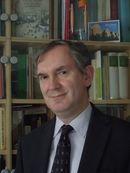
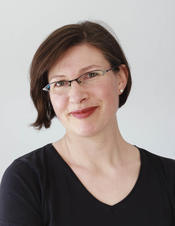
Andrew M. Drozd is an Associate Professor of Russian at the Department of Modern Languages and Classics, University of Alabama. He serves as the Russian Program Director and Russian Minor Advisor, specializing in 19th-century Russian literature, Czech-Russian literary interrelations, and Slavic folklore. PhD, Indiana University (1995) Teaches courses: First-Year/Second-Year Russian, Russian Phonetics, Business Russian, Russian Folklore, Dostoevsky, Tolstoy, and Russian Science Fiction His research examines the intersections of Russian and Czech literary traditions during political upheavals, with a focus on Chernyshevskii’s works and their ideological impacts. Recent publications include Modern Czech Literature: Writing in Times of Political Trauma (2025) and co-edited volumes on Russian radicalism and Darwin’s reception in Russia. The 15 most recent articles reveal a trajectory from 19th-century Russian critiques of Darwinism to contemporary Czech literary analysis, spanning dialectology, intertextuality, and ideological narrative structures. Dr. Drozd’s editorial work includes Revisiting Russian Radicals (2024) and Reading Darwin in Imperial Russia (2023), alongside contributions to journals like Slavic and East European Journal and Germano-Slavica .
Michal Bočák is an Associate Professor in the Department of Communication and Media Studies at the Faculty of Arts, University of Prešov in Prešov, Slovakia. He also serves as a visiting lecturer in gender and queer studies at the Department of Journalism, Palacký University in Olomouc, Czech Republic. His academic career includes serving as Vice-Dean for Educational Affairs (2021-2023) and previously as chair of the Department of Communication and Media Studies (2012-2021). Bočák earned his PhD in general linguistics from the University of Prešov in 2008, followed by a habilitation procedure in general linguistics in 2020. His educational background includes an MA in phonetics & media studies from the University of Prešov (2005). His research primarily focuses on media representations of identities, particularly gender and sexuality, discourse theory, and methods of discourse analysis. He has conducted extensive analysis of culinary magazines and television news formats, examining how they construct representations of food, tradition, and national identity. His work bridges semiotics, cultural studies, and media theory, with particular attention to queer theory applications in media analysis. Bočák's publications demonstrate a consistent focus on discourse analysis frameworks, with significant contributions to understanding how media texts construct meaning through intertextuality, representation, and discursive positioning. His work spans traditional media formats like television news to digital spaces including web pornography. As an editorial board member for Media Studies: Journal for Critical Media Inquiry and Jazyk a kultúra [Language and Culture], Bočák actively contributes to scholarly discourse in his field. He is also a member of the Center for Cultural, Media and Communication Studies in Olomouc, Czech Republic. His academic leadership includes serving as Vice-Dean for Educational Affairs and previously as department chair, demonstrating his commitment to academic administration alongside his research and teaching responsibilities. His work editing conference proceedings and academic collections shows his engagement with the broader scholarly community.
Bojan Belić is a Teaching Professor and Languages Coordinator at the Department of Slavic Languages & Literatures at the University of Washington . He specializes in Bosnian, Croatian, Montenegrin, and Serbian language pedagogy, linguistics, and Slavic language curriculum development. Education: Ph.D. in Slavic Linguistics, The Ohio State University (2005) Research Interests: Focus on Slavic languages, language pedagogy, Russian studies, and curriculum design. He coordinates programs in Bosnian, Croatian, Montenegrin, Serbian, Bulgarian, Czech-Slovak, Polish, Romanian, Russian, Slovene, and Ukrainian. Contact: Email: bojan@uw.edu | Office: PDL A-214 | Office Hours: By appointment (Summer 2025).
Assoc. Prof. Hana Vančová, PhD., is a dedicated academic at Trnava University's Faculty of Education, where she has served as an Associate Professor in the Department of English Language and Literature since 2013 (promoted from Assistant Professor following her 2022 habilitation). Currently Deputy Head of Department for Education, she oversees curriculum development and serves as study advisor for single-subject and combined English language teacher education programs at bachelor's, master's, and doctoral levels. Her institutional commitment spans over a decade with full-time employment since 2013. Education: 2004–2009: Master of Arts (Mgr.) in English Language and Literature – Slovak Language and Literature, Faculty of Education, Trnava University 2009–2012: Doctor of Philosophy (PhD.) in Pedagogy, Faculty of Education, Trnava University 2019: Professional Development: "Teaching languages in the digital era: the best apps, web platforms and ICT solutions for learning languages", Institute for Training, Employability and Mobile Learning Hana Vančová's scholarly work centers on English pronunciation pedagogy , with pioneering research in technology-enhanced instruction . Her primary domains include phonetics and phonology , lexicology , and digital language learning tools , investigating how AI, mobile applications, and multimedia resources optimize pronunciation acquisition. She bridges theoretical linguistics with practical classroom applications through ergonomic educational design, emphasizing learner-centered methodologies that address sociolinguistic factors like accent identity and intelligibility. Her habilitation thesis established her as a key innovator in pronunciation technology. Analysis of Vančová's publication trajectory (2014-2024) reveals a decisive shift from foundational studies on Slovak learners' pronunciation errors toward cutting-edge research on AI-driven pronunciation training. Her recent work explores karaoke-based methods and ethical AI implementation in CALL (Computer-Assisted Language Learning), highlighting human-AI interaction dynamics. The consistent thread is her commitment to making pronunciation instruction accessible through technological innovation, with publications increasingly addressing inclusivity, ethical considerations, and ergonomic design in digital language learning environments. While no specific scientific awards are documented beyond her academic promotion, Vančová's habilitation procedure—evaluated by an international committee including scholars from Poland, Czech Republic, and Slovakia—represents significant scholarly recognition. Her work has received 36 citations (14 foreign, 22 domestic) as of 2021. As study advisor for English language teacher training programs, Vančová mentors students across bachelor's, master's, and doctoral studies, guiding curriculum development for profile subjects in phonetics, lexicology, and digital language education. She maintains structured consultation hours (Wednesdays 10:00-11:30, study advising 11:30-13:00 via MS Teams) and demonstrates sustained research productivity through monographs, textbooks, and peer-reviewed articles. Though specific grant funding isn't detailed, her habilitation thesis exemplifies capacity for substantial scholarly projects with practical pedagogical impact. No dedicated laboratories or formal research teams are documented; Vančová's academic activities operate within the Department of English Language and Literature framework, focusing on individual research initiatives and departmental leadership in educational technology integration.
Radim Lacina, Ph.D., serves as Assistant Professor at Masaryk University's Faculty of Arts with dual appointments in the Department of Czech Language and Department of Linguistics and Baltic Languages. His academic trajectory includes research positions at Osnabrück University and University of Potsdam prior to his current role. His educational foundation comprises a 2025 Ph.D. in Cognitive Science (magna cum laude) from Osnabrück University, where his dissertation examined scalar implicatures and focus processing. This followed a 2020 M.Sc. in Psychology of Language (With Distinction) from the University of Edinburgh and a 2019 B.A. in Psychology, Philosophy and Linguistics (First Class) from the University of Oxford. Lacina's research investigates real-time language comprehension mechanisms, specializing in how contextual information integrates during utterance processing. His experimental pragmatics work centers on Czech language phenomena including scalar diversity, focus alternatives, negation effects, and agreement attraction illusions through behavioral methodologies. Analysis of his recent publications reveals a cohesive research program examining morphosyntactic processing in Czech, particularly agreement phenomena and scalar implicatures. His methodological approach combines probe recognition, lexical decision, and speeded acceptability paradigms to bridge theoretical linguistics with cognitive science, with significant contributions to understanding cross-linguistic variation in language processing. Current research activities include participation in the "Lexikon a gramatika češtiny V" project (2025) as MU Researcher and prior involvement in the LangInLife project. His international collaborations span the Scales in Language Processing and Acquisition project at Osnabrück University and University of Potsdam, plus a 2024 visiting academic position at Oxford's Faculty of Linguistics. He maintains active teaching responsibilities including Psycholinguistics, Pragmatics, and the Roman Jakobson Linguistic Seminar across multiple academic terms, with office hours available in-person (D.413) or online by appointment.
Herbert Eagle is an Associate Professor in the Arts and Ideas in the Humanities Program at the University of Michigan's Residential College, with additional affiliations in Screen Arts and Cultures, Slavic Languages & Literatures, and CREES. He earned his Ph.D. from the University of Michigan in 1973. His research spans Russian and East European cinema, film semiotics, poetry, and dissident literature under communist regimes. Research interests focus on: Semiotic analysis of cinematic narratives Eastern European directors (e.g., Eisenstein, Polanski, Kundera) Socialist realism and its subversion Structural innovation in avant-garde film Publications consistently explore cinematic semiotics, narrative disruption in Soviet-bloc art, and interdisciplinary cultural analysis, with works examining Polish, Czech, and Ukrainian filmmakers through theoretical frameworks like formalism and structuralism. Awards include: Teaching excellence honors from Purdue University (1975, 1976) University of Michigan's Excellence in Education Award (1991) Early-career recognition: Borden Prize (1960) and Michigan Society of Fellows (1970-73)
Keith Johnson is a Professor of English at the College of William & Mary, specializing in modernist and contemporary literature. He holds a PhD from Boston University and focuses on intersections between literary theory, philosophy, film/media studies, and world literature. His work explores themes such as animism, ecological thought, and posthumanist discourses. Research interests include cyberpunk ecologies, geological imaginaries, and ethical frameworks in the Anthropocene. Notable publications include Jan Svankmajer: Animist Cinema (2017) and critical essays on Kafka, Coetzee, and Bataille. His scholarship bridges literary analysis with interdisciplinary topics like mineral ontology, trauma studies, and existential ethics. Johnson’s recent articles (2016–2023) trace shifts toward materialist critiques of capitalism, technological anxiety, and planetary crises. He participates in the Sara & Jess Cloud Lecture Series and contributes to William & Mary’s English Department’s emphasis on global literary traditions. His academic contributions span multiple disciplines: 15 recent articles demonstrate engagement with film theory, environmental philosophy, and postcolonial studies. Current research trends focus on redefining ethical frameworks for non-human entities in contemporary narratives.
Edith W. Clowes is the Brown-Forman Professor in the Department of Slavic Languages and Literatures at the University of Virginia, within the College of Arts and Sciences. She holds a PhD in Slavic from Yale University and is a leading scholar in Russian and Czech literature, culture, and intellectual history. Her work spans philosophy, religion, utopian thought, and the concept of imagined geographies in post-Soviet identity. Her research focuses on the intersection of literature and philosophical thought, particularly in revolutionary and fin-de-siècle Russia. She has pioneered interdisciplinary studies on regional identities in Russia and is currently advancing digital humanities through literary cartography, including the project Mapping Imagined Geographies of Revolutionary Russia (1914–1922) . Her scholarship explores how space, place, and identity are constructed in cultural discourse. The most recent publications reflect a sustained engagement with imagined geographies, regional identity, and digital methodologies. Her work bridges literary analysis, cultural theory, and spatial cognition, with a strong emphasis on interdisciplinary and multimodal approaches. She frequently publishes in both English and Russian, contributing to international scholarly dialogue. Her scientific awards include prestigious fellowships from ACLS, NEH, DAAD, Fulbright-Hays, IREX, and others, underscoring the recognition and impact of her research. Professor Clowes has served as a past director of the Center for Russian, East European, and Eurasian Studies at the University of Kansas. She mentors through editorial leadership and collaborative scholarship, though specific advisees are not listed. Her research has been supported by major institutional grants, including Title VI, US Army Research Office, DAAD, Open World Institute, and the Institute of Turkish Studies. She is actively involved in editorial work as Associate Editor of Russian Review and serves on the editorial boards of Losevskie chteniia , Region , and Beiträge zur slavistischen Philologie . She also co-founded 'Music Works' to support music education and has collaborated with university museums on art exhibits and conferences.
Dr. Urszula Idziak-Smoczyńska is a researcher at the Institute of Religious Studies, Faculty of Philosophy, Jagiellonian University in Kraków, Poland. Her academic work focuses on the intersection of religion and philosophy through linguistic lenses, with particular expertise in contemporary French philosophy and Wittgenstein studies. Her research interests include: Philosophy of religion Contemporary French philosophy (particularly Derrida, Nancy, Marion) Phenomenology Postmodern philosophy Wittgenstein studies Philosophy of language Dr. Idziak-Smoczyńska has been actively involved in multiple research projects including 'Problems of contemporary phenomenology' under Prof. Jacek Migasiński, 'Polish Cartesianism. History and contemporary perspectives,' and several international projects on phenomenology and subjectivity with scholars from Slovakia, Czech Republic, and Belgium. Her research particularly focuses on the works of Jacques Derrida, Jean-Luc Marion, and Ludwig Wittgenstein, exploring the theological turn in contemporary philosophy and the relationship between language, religion, and phenomenology. Her scholarly output demonstrates a consistent engagement with the theological dimensions of postmodern thought, examining how religious concepts persist and transform within secular philosophical frameworks. She has made significant contributions to understanding the intersections between deconstruction, phenomenology, and religious experience, particularly through her analyses of Derrida's late religious turn and Marion's saturated phenomena. Dr. Idziak-Smoczyńska has authored the monograph 'Dar. Spór między Jeanem-Lukiem Marionem a Jacquesem Derridą' (Gift: The Dispute between Jean-Luc Marion and Jacques Derrida) and numerous scholarly articles published in international journals and edited volumes. She has also contributed translations of important philosophical works by Jean-Luc Marion, Gabrielle Dufour Kowalska, and Jean-Paul Sartre.
Ondřej Bojar is an Associate Professor at the Institute of Formal and Applied Linguistics (UFAL), part of the Faculty of Mathematics and Physics at Charles University in Prague . He actively engages in research and teaching, with a focus on machine translation and computational linguistics. His work spans both theoretical and applied domains, involving collaborations with industry and academia.
Stefan-Michael Newerkla is a University Professor of West Slavic Linguistics at the Department of Slavonic Studies, Faculty of Philology and Cultural Studies, University of Vienna. He has served as Head of the Institute of Slavic Studies since 2022, following previous leadership roles as Deputy Head (2018-2022) and Head (2005-2008). His academic leadership extends to significant positions including Member of the Academy Council of the Austrian Academy of Sciences (2022-2026), Member of the International Board of Palacký University Olomouc (2022-2026), and Member of the Scientific Council of the Czech Academy of Sciences (since 2013). Professor Newerkla earned his doctorate in 1998 with a dissertation on "Intended and actual linguistic reality in Bohemia. Diglossia in the school system of the Czech-speaking countries of the Habsburg Monarchy 1740–1918 using the example of the West Bohemian district town of Plzeň (Pilsen)" and completed his habilitation in 2003 on "Language Contacts Czech – German – Slovak. German Loanwords in Czech and Slovak: Historical Development, Evidence, Previous and New Interpretations." His academic journey began with studies in Slavic Studies, English Studies, and American Studies at the University of Vienna from 1992-1998. His research focuses on West Slavic linguistics with particular emphasis on contact linguistics, areal linguistics, linguistic geography, and historical sociolinguistics. He investigates the development of linguistic contacts between German, Hungarian and Slavic languages, examining Central Europe as a linguistic area with special attention to Austriazisms and Internationalisms research. His work also explores the school system and language teaching in the Habsburg Monarchy, analyzing language legislation versus language reality and diglossia or polyglossia in the educational system. Additional research interests include the National Renewal in the Bohemian Lands, Vienna's role in the Czech National Renewal, the Slovak national awareness process, and the grammatology and grammarography of West Slavic languages. Analysis of his recent publications (2023-2025) reveals a continued focus on historical language contact in Central Europe, particularly examining multilingualism in the Habsburg Monarchy and linguistic heritage. His work increasingly incorporates interdisciplinary approaches, connecting linguistic analysis with historical, educational, and cultural studies perspectives. Recent publications show particular attention to Czech language in Austria, language teaching methodologies, and the reconstruction of historical language contact phenomena, with several multilingual publications reflecting his expertise in cross-cultural communication. Professor Newerkla's scientific achievements have been recognized with numerous prestigious awards: Medal of the Minister for Foreign Affairs of the Czech Republic (August 7, 2024) for Services to Diplomacy Premia Bohemica for 2023 for outstanding contribution to promoting Czech literature abroad Josef-Dobrovský-Ehrenmedaille of the Czech Academy of Sciences (April 25, 2017) Full member of the Austrian Academy of Sciences (since 2018) Corresponding Member of the Austrian Academy of Sciences (since 2014) Member of the Academic Assembly of the Czech Academy of Sciences (since 2010) Award from University of Vienna for Innovative Teaching (June 22, 2001) As an academic leader, Professor Newerkla has supervised numerous theses across various levels of study. His research is supported by significant grants, most notably his role since 2016 as consortium member and board member of the Special Research Programme "German in Austria. Variation – Contact – Perception" (SFB F 60-G23), where he heads Task Cluster C and subprojects 05 and 06. He also led the research project "Slavists in Exchange: Austria and Russia 1849-1939" (2021-2025). His administrative roles have included Chairman of the Curricular Commission of the Senate of the University of Vienna (2010-2016) and Member of the Senate of the University of Vienna (2009-2016). Professor Newerkla is actively involved in multiple international research teams and collaborations, including the Permanent Conference of Austrian and Czech Historians on Common Cultural Heritage (SKÖTH), which he has co-chaired since 2009. His research group at the University of Vienna's Institute of Slavic Studies focuses on West Slavic linguistics, with particular expertise in historical language contact phenomena and the linguistic heritage of Slavic languages in Central Europe. He has also served as editor for numerous publications including the Vienna Slavic Yearbook (New Series) since 2013.
Prof. Wilken Engelbrecht is a prominent scholar in Dutch language and literature at the John Paul II Catholic University of Lublin. His work focuses on historical linguistics , medieval philology , and literary reception studies in Central and Eastern Europe. He has led international projects like CODL and organized conferences including the 15th Regional Colloquium van Comenius . Education & Appointments : PhD in Dutch Philology, habilitation on prepositional complements, founder of Olomouc Neerlandistiek program His research spans 150 years of Dutch studies in Czech Republic , medieval Latin commentaries on Ovid, and translation dynamics under socialist regimes. Recent publications analyze Czech reception of Frisian literature and Ovidian traditions in academic contexts. Awards & Recognitions : Bronze Medal for Long Service Silver Medal of Palacký University Officier van de Orde van Oranje-Nassau Individual Rector's Award (I stopień) He serves on editorial boards for Roczniki Humanistyczne and Neerlandica Wratislaviensia , and has reviewed over 10 habilitation theses. His teaching includes Dutch language courses and comparative studies at Palacký University.
Jørn Boisen is an Associate Professor at the Department of English, Germanic and Romance Studies, University of Copenhagen, specializing in French literature, intellectual history, and European cultural studies. He has held leadership positions including Head of Department at both the University of Copenhagen (2013-2019) and the University of South-Eastern Norway (2019-2023). Boisen holds a Docteur d'université from Université Michel de Montaigne, Bordeaux III (1995) and a PhD from Odense University (1993). His educational background includes studies in French, Spanish, and literature across Denmark, France, and Norway. His research focuses on the making of the European mind, French politics, contemporary French literature, comparative literature, history of the novel, the novel and philosophy, European and French cultural studies, history of mentalities, and Latin American literature. Boisen has written extensively on authors including Romain Gary, Milan Kundera, and Albert Camus, with particular attention to philosophical dimensions of literature and questions of truth, memory, and identity. His recent scholarly output demonstrates a consistent engagement with 20th century European literature, particularly Czech and French works, while also addressing contemporary political issues in France and Europe. His publications span literary criticism, philosophical analysis, and cultural commentary, often bridging academic scholarship with public intellectual discourse. Carlsbergs scholarstipendium (1988) Gold medal from the University of Odense (1990) Le prix de l'association internationale des études françaises (2002) Chevalier de l'ordre des palmes académiques (2007) Boisen serves as a journalist for Weekendavisen and has held editorial positions including Literary Editor-in-Chief of Revue Romane (2002-2015). He coordinates international research networks including 'Societies of forgetting' and participates in numerous academic associations such as AIEF and MLA. His professional activities extend beyond academia to include cultural commentary in Danish media and consulting for major publishers like Gyldendal and Hachette.
Patricia Martinkova is an Associate Professor at the Faculty of Education, Charles University , a Senior Researcher leading the Department of Statistical Modelling at the Institute of Computer Science, Czech Academy of Sciences , and an Affiliate Associate Professor at the University of Washington (Statistics and Social Sciences). She is also the founder of the Computational Psychometrics Group and the Center for Educational Measurement and Psychometrics at Charles University. Her research focuses on advanced psychometric models and estimators for granular insights in education, psychology, and health, with emphasis on inter-rater reliability , differential item functioning (DIF) , and reproducible research via tools like ShinyItemAnalysis . She has developed software packages ( difNLR , SIAmodules , SIAtools ) and authored the book Computational Aspects of Psychometric Methods. With R (2023). Recent projects include the 2025–2027 EduCoDe (Czech Science Foundation) and 2024–2028 Digital Technologies and Wellbeing (EU-funded). She has received recognition as a Fulbright Alumna (2013–2015) and organized the IMPS 2024 conference (570+ participants). Teaching includes courses on Statistical Methods in Psychometrics and Item Response Theory , incorporating active learning and R-based tools.
Natasha Janzen-Ulbricht is a Lecturer in the Didactics of English at the Institute of English Philology (WE6) within the Department of Philosophy and Humanities at Freie Universität Berlin . Her research focuses on integrating theater and movement-based teaching methods into language education, examining their impact on learning outcomes and group cohesion. Key areas of her work include: Developing gesture-based strategies for teaching spatial terms and prepositions. Combining quantitative (e.g., speech rate analysis) and qualitative (e.g., classroom storytelling) research methodologies. Collaborating with urban and rural schools in Germany and conducting international teaching experiments in the Netherlands, Czech Republic, and Poland. Her recent publications explore the intersection of embodied cognition and foreign language fluency , emphasizing the role of codified gestures in enhancing language acquisition. She is a member of the International Society for Gesture Studies and authorized to examine Master’s theses in English teaching at Freie Universität Berlin.