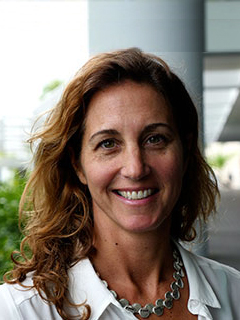
Kim Wood is Associate Professor of Hydrology and Atmospheric Sciences at the University of Arizona, specializing in tropical cyclone dynamics. Research integrates satellite observations, machine learning, and climate analysis to study hurricane intensification, structural evolution, and climate change impacts. Teaching interests include tropical meteorology and remote sensing applications. Research focuses on hurricane-ocean interactions, rapid intensification prediction, and climate-driven changes in storm behavior. Recent publications emphasize machine learning applications for intensity forecasting and spatiotemporal analysis of subsurface ocean responses.
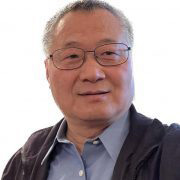
Xiangdong Zhang serves as a Research Professor at North Carolina State University, specializing in climate science with a focus on Arctic dynamics and global climate connections. His work addresses critical questions regarding polar-midlatitude interactions and climate change impacts through advanced modeling and observational analysis. Dr. Zhang's research centers on Arctic climate change mechanisms, particularly sea ice dynamics, atmospheric circulation patterns, and freshwater fluxes in polar oceans. He investigates how Arctic amplification influences mid-latitude extreme weather events, employing techniques ranging from in situ observations to deep learning reconstructions of climate variables. His studies frequently examine storm impacts on sea ice melt, water vapor transport over the Tibetan Plateau, and decadal changes in polar meteorology. Analysis of his recent publications (2020-2023) reveals a strong methodological emphasis on climate modeling and data reconstruction, with increasing focus on the societal implications of Arctic change. Key trends include quantifying the role of intense Arctic cyclones in sea ice decline, diagnosing freshwater budget changes in polar oceans, and resolving controversies around Arctic influences on extreme winter weather. His work consistently bridges observational data with theoretical climate dynamics. Dr. Zhang contributes to climate science through the Research group at NC State University, participating in collaborative projects focused on polar climate change and its global ramifications. His publications frequently appear in high-impact climate journals and special issues addressing Arctic-midlatitude linkages.
Dr. Mirosława Malinowska is an Adjunct Professor at the Department of Meteorology and Climatology , Faculty of Oceanography and Geography, University of Gdańsk. She serves as Deputy Dean for Education and contributes to institutional development through roles like Deputy Dean of the Faculty. Her work spans climatology, meteorology, and climate change impacts, with a focus on the Baltic Sea coast, Kashubian Lake District, and Vistula River Delta. Adjunct Professor (2012-present) Deputy Dean for Education (2013-present) Faculty of Oceanography and Geography, University of Gdańsk Her research examines precipitation patterns , extreme weather events , and climate change symptoms in Poland. She investigates atmospheric instability indices, climatic hazards affecting agriculture, and bioclimatic conditions in urban settings. Her work integrates field studies, synoptic analysis, and e-learning methodologies. Recent publications highlight trends in extreme precipitation, climate impacts on agriculture, and educational innovations. She has contributed to institutional reports and interdisciplinary studies on climate-education-policy connections. Her career reflects a commitment to addressing modern geographical challenges through empirical research and academic development initiatives.
Amy C Clement is a Professor at the Rosenstiel School of Marine, Atmospheric, and Earth Science, University of Miami. Her research focuses on climate variability, ocean-atmosphere interactions, and the role of external forcings in driving climate patterns. She leads studies on the Atlantic Multidecadal Variability (AMV), tropical climate dynamics, and cloud feedback mechanisms. Clement’s work integrates climate modeling with paleoclimate data to explore historical and future climate trends. Key research interests include the AMV’s influence on hurricanes, the impact of volcanic forcing on multidecadal variability, and the interplay between ocean circulation and atmospheric dynamics. Her team uses advanced climate models to investigate phenomena like El Niño-Southern Oscillation (ENSO), Pacific Decadal Oscillation (PDO), and North Atlantic Oscillation (NAO). Recent studies highlight the dominance of external forcings over ocean dynamics in driving AMV. Clements’ grants include projects on hyperlocal climate projections for South Florida and community-driven resilience strategies for climate stressors. She collaborates on interdisciplinary initiatives linking climate science with societal adaptation, such as the Resilient 305 initiative. Her lab emphasizes model-data synergy, employing observational datasets like coral records and satellite data to validate simulations. Notable achievements include groundbreaking papers on positive low-level cloud feedbacks (2009), AMV’s external forcing origins (2015), and tropical Pacific climate sensitivity (2011). She advises on climate literacy and policy, bridging scientific insights with public understanding through engaged scholarship.
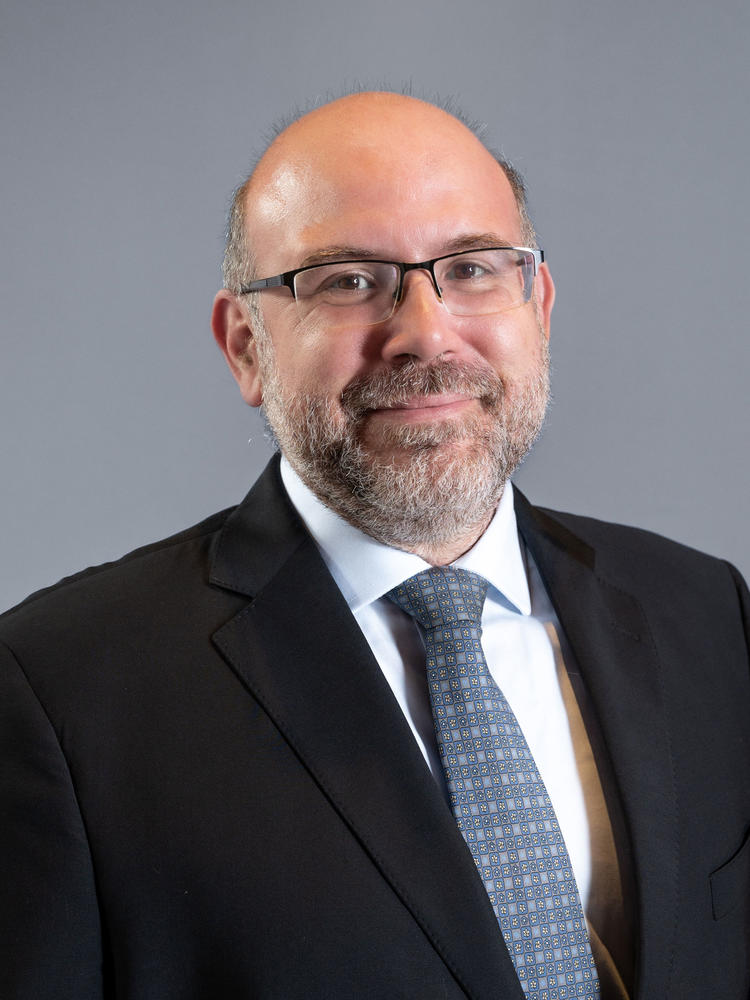
Professor Gabriele Villarini is a faculty member at Princeton University, holding dual appointments in the Department of Civil and Environmental Engineering and the High Meadows Environmental Institute. He specializes in flood hydrology, extreme events, and climate change impacts, with a focus on integrating hydroclimatological data with climate projections to assess flood risk. His work bridges theoretical advancements in statistical hydrology with practical applications for disaster resilience. Education: Executive MBA (University of Iowa, 2018) PhD in Civil and Environmental Engineering (University of Iowa, 2008) Bachelor of Science in Civil Engineering (University of Rome La Sapienza, 2003) Research Interests: Villarini’s research emphasizes process-driven flood frequency analysis, compound flooding, and climate model applications. He pioneered methods to distinguish flood-generating mechanisms (e.g., rain vs. snowmelt) to improve projections under climate change. His work addresses societal challenges like coastal resilience, urbanization impacts on rainfall extremes, and tropical cyclone dynamics. Grants & Projects: He leads over 40 funded projects, including DoD climate resilience initiatives, NOAA flood modeling frameworks, and collaborations with agencies like the U.S. Army Corps of Engineers. Recent efforts include developing probabilistic tropical cyclone rainfall generators and hazard assessment tools for coastal cities. Awards: James B. Macelwane Medal (AGU, 2016) Hydrological Sciences Award (EGU, 2013) AGU Fellow (2016) Labs/Teams: Villarini’s group collaborates with the High Meadows Environmental Institute and the Cooperative Institute for Modeling the Earth System (CIMES). His team develops open-source tools like the SHiELD modeling framework for flood inundation analysis.
Professor Paul Arbon AM is a Matthew Flinders Distinguished Professor at Flinders University's College of Nursing and Health Sciences in Adelaide, Australia. He serves as Director of the Torrens Resilience Initiative and the World Health Organisation Collaborating Centre for Mass Gatherings and Global Health Security. Professor Arbon holds additional appointments as a Member of the WHO Health Security Interface Technical Advisory Group, a Member of the Roster of Experts for the International Health Regulations, and Adjunct Professor at James Cook University's College of Public Health, Medical and Veterinary Science. Professor Arbon's research focuses on disaster and emergency health systems, with particular expertise in mass gathering health, community resilience building, and health security. His work spans population-level and front-line responses to health threats including chemical, biological, radiological, and nuclear (CBRN) events, as well as mis- and dis-information challenges. His research methodology incorporates both quantitative and qualitative approaches, with recent work developing non-linear predictive models for mass gathering health risks and consensus frameworks for minimum data sets in disaster health. Analysis of Professor Arbon's recent publications reveals a strong focus on practical applications of disaster health research, with significant contributions to mass gathering medicine, health security frameworks, and emergency care systems. His work bridges academic research with real-world implementation, particularly evident in his guidance documents for specific sectors and his contributions to WHO frameworks. The interdisciplinary nature of his research is reflected in publications spanning public health journals, clinical practice outlets, and policy-focused publications. Australian National Medal (1991) for diligent long service to the community in hazardous circumstances Knight of the Order of St John (2009) for exemplary leadership and service to St John Ambulance Australia Member of the Order of Australia (2004) for contribution to the Australian community, particularly as Chief Commissioner of St John Ambulance Australia and for Nursing Education and Research Queensland Flood and Cyclone Citation (2011) Listed among the top 2% of researchers globally in the Stanford-Elsevier standardization index Professor Arbon has supervised numerous doctoral students across diverse topics including family resilience during disasters, nurses' and paramedics' experiences in disaster settings, health care during conflict, and health system strengthening for crisis. His research is supported by significant grants related to disaster health, mass gathering security, and community resilience building. He has served as Chief Commissioner of St John Ambulance Australia and Dean of the School of Nursing and Midwifery at Flinders University, bringing practical leadership experience to his academic work. Professor Arbon leads the Torrens Resilience Initiative, established in 2009 to improve organizational and societal capacity to respond to disruptive challenges. The initiative hosts the WHO Collaborating Centre for Mass Gatherings and Global Health Security and works closely with international partners to develop evidence-based approaches to disaster health. His team includes researchers from multiple disciplines working on community resilience, mass gathering health, and health security projects across Australia and internationally.
Colin Zarzycki is an Associate Professor in the Department of Meteorology and Atmospheric Science at Pennsylvania State University, affiliated with the College of Earth and Mineral Sciences. His research focuses on simulating extreme atmospheric phenomena, bridging weather and climate scales through high-resolution modeling techniques. Key areas include tropical cyclone dynamics, regional climate prediction, dynamical core development, and software engineering for petascale computing. He has contributed to advancing climate models like the Community Earth System Model (CESM) and HighResMIP2 framework, with a focus on improving detection of weather extremes in big climate data. Recent work emphasizes tropical cyclone characteristics, atmospheric river impacts, and rain-on-snow flood event analysis. His research integrates machine learning (e.g., LSTM networks) and feature tracking methods to enhance predictive accuracy. Collaborations span institutions globally, addressing challenges in climate model validation and parameterization schemes for turbulence and surface fluxes. Zarzycki’s work has been featured in prominent journals like Geoscientific Model Development and Journal of Climate . He actively engages in public discourse on climate change impacts, including media contributions on hurricane activity and regional snowpack changes. His interdisciplinary approach combines computational innovation with observational data integration, positioning him at the forefront of climate modeling advancements.
Suzana J. Camargo is a Professor of Climate at Columbia University's Columbia Climate School and the Lamont-Doherty Earth Observatory. She holds adjunct roles in the Department of Earth and Environmental Sciences and the School of Professional Studies. Her research focuses on tropical cyclones, climate variability, and extreme weather events. Camargo has a Ph.D. in Physics from the Technical University of Munich and has been a leader in climate science for over two decades. Education: Ph.D. Physics, Technical University of Munich, 1992 M.Sc. Physics, University of São Paulo, 1989 B.Sc. Physics, University of São Paulo, 1986 Professional Roles: Co-director, Postdoctoral Research Program (Columbia Climate School, 2024–present) Marie Tharp Lamont Research Professor (2019–2024) Executive Director, Initiative on Extreme Weather and Climate (2015–2021) Research Interests Camargo's work centers on tropical cyclone dynamics, climate change impacts on extreme weather, and subseasonal forecasting. She has advanced methodologies for detecting climate signals in cyclone activity and pioneered risk assessments for coastal communities. Publications Trends: Recent work emphasizes climate model validation, tropical cyclone migration patterns, and risk projections under global warming. Key contributions include groundbreaking analyses of CMIP6 model outputs and MJO teleconnections. Awards: 2023 AGU Fellow 2023 Excellence in Mentoring Award 2020 AMS Distinguished Scientific Achievement Award Grants & Advising: Lead on NOAA Model Diagnostics Task Force (2015–present). Mentored numerous Ph.D./M.S. students in climate and atmospheric science. Collaborates on international climate initiatives like the IPCC AR6. Labs/Teams: Director of the Columbia Climate School's Tropical Cyclone Research Group. Active in the NOAA Subseasonal to Seasonal (S2S) Project and the World Meteorological Organization's Expert Team on Tropical Cyclones and Climate Change.
Jacopo Riboldi is a Lecturer at the Department of Environmental Systems Science at ETH Zurich, specializing in atmospheric dynamics. He is affiliated with the Atmospheric Dynamics Professorship at ETH Zurich, where he conducts research on synoptic and dynamical meteorology with a focus on weather systems and their role in climate evolution. Dr. Riboldi earned his Bachelor's degree in Physics from Università degli Studi in Milan, Italy in 2012, followed by a Master's in Atmospheric and Climate Science from ETH Zurich in 2014. He completed his PhD in Atmospheric Dynamics at ETH Zurich in 2018, with a thesis titled "Modulation of the downstream impact of extratropical transition by the midlatitude flow configuration: revisiting the phasing problem." His research focuses on synoptic and dynamical meteorology, particularly on Rossby waves—the large-scale atmospheric oscillations that modulate weather over middle latitudes. These waves play a crucial role in the occurrence and evolution of extreme weather events such as heatwaves, cold spells, windstorms, tropical cyclones, and severe thunderstorms. Currently, as an SNF-Ambizione Fellow, he is studying how weather systems and climate variability affect the genesis of cold air during boreal winter, a process closely tied to global warming. Dr. Riboldi's work demonstrates how understanding weather systems from a synoptic perspective can provide insights into long-term climate trends and improve predictions of extreme weather events caused by anthropogenic global warming. His research bridges short-term weather phenomena with long-term climate variability, offering valuable contributions to climate science. SNF-Ambizione Fellow in Atmospheric Dynamics (2023-present) Postdoctoral Researcher at Uppsala University (2021-2023) Postdoctoral Researcher at Laboratoire de Météorologie Dynamique, Paris (2018-2021) His publication record shows a consistent focus on atmospheric dynamics, with recent work examining compound extreme events across the North Atlantic, Rossby wave propagation characteristics, and the connections between Arctic Amplification and midlatitude weather patterns. His research often involves international collaborations with institutions across Europe. As an advisor and researcher, Dr. Riboldi has contributed to numerous collaborative projects examining compound extremes, Rossby wave dynamics, and the impacts of Arctic Amplification. His work often involves international collaborations with researchers across Europe and utilizes advanced atmospheric modeling and observational data analysis techniques. He is affiliated with research groups studying atmospheric blocking, extratropical cyclones, and the connections between tropical and extratropical weather systems. His current work focuses on boreal cold air reservoirs and their influence on winter weather and climate.
Professor Gregor Leckebusch is a leading academic in Meteorology and Climatology at the University of Birmingham. He holds the UK Met Office Joint Chair and serves as Director of the NERC DTP CENTA (2019-2022). His work bridges meteorological research with climate risk assessment, focusing on extreme weather impacts. University of Birmingham (2011-present) Freie University Berlin (Associate Professor, 2004-2010) University of Leipzig (Acting Chair, 2010-2011) His research centers on tropical cyclones, storm surges, and climate change impacts. He has sustained collaborations with reinsurance giants like SwissRe and CoreLogic-EQECAT, leveraging industry funding for projects on hazard connectivity and parametric insurance thresholds. Key projects include NERC Large Grant HURACAN and EPSRC IAA Energy Sector Resilience. Recent publications highlight expertise in CMIP6 model diagnostics, causality-guided decadal predictions, and statistical postprocessing of monsoon rainfall. His work aligns with UN Sustainable Development Goals for climate action and sustainable cities. As a PhD supervisor, he welcomes candidates interested in extreme weather modeling and climate risk. He co-edits the journal Natural Hazards and Earth System Sciences , emphasizing interdisciplinary approaches to weather extremes.
Prof. Dr. Henning Rust is a Professor of Statistical Meteorology at the Department of Geosciences, Freie Universität Berlin, and head of the Statistical Meteorology Group. He co-speaks the Hans-Ertel-Centre for Weather Research, funded by the German Weather Service (DWD), and contributes to national and international climate projects like MiKlip and BINGO. His work bridges statistical modeling, extreme event analysis, and climate risk communication. PhD in Theoretical Physics (2007, University of Potsdam) Diplom in Physics (2001, Albert-Ludwigs-Universität Freiburg) BSc with Honours in Physics (1998, Brock University, Canada) Research Interests focus on stochastic precipitation models , extreme convective events , statistical downscaling , and forecast verification . He specializes in time series analysis and long-range dependence in climatological data. His recent publications analyze decadal climate predictability, compound extremes (e.g., ozone-weather interactions), and citizen science applications in weather education. Notable works include skill score decomposition for Atlantic climate phases and flexible IDF curve modeling for urban hydrology. Awards include a summa cum laude PhD and the Distinguished Graduation Student Award for Physics. He supervises PhD and Master’s students on topics like windstorm risk modeling and precipitation extremes . Additional roles: German Meteorological Society (executive board) , MiKlip steering committee , and climate communication via self-built weather station projects.
Dr. María del Mar Vich Ramis is a Lecturer with a PhD at the University of the Balearic Islands, affiliated with the Faculty of Sciences. She specializes in diagnosing hazardous meteorological phenomena in the Mediterranean, particularly severe storms, medicane cyclones, and intense precipitation events, with over 15 years of research experience. Research focus: climate models, regional climate change impacts, and high-performance computing systems Technical expertise: CM1, WRF, and MM5 meteorological numerical models Teaching: Experimental Physics I, General Physics, and Physics for interdisciplinary degrees (Biochemistry, Automation Engineering, Biology) Collaborations: Member of the Meteorology (Meteo-UIB) Consolidated R+D+I Group Her work bridges academic research with private-sector experience in climate modeling, while she also contributes to outreach and research project mentorship.
Dr. Daniel Burow serves as Assistant Professor in the Applied Aviation Sciences Department within Embry-Riddle Aeronautical University's College of Aviation. His expertise spans applied climatology, meteorology, hazards research, and geospatial analysis with significant contributions to coastal environmental studies. His educational foundation includes: Ph.D. in Geography from University of Tennessee M.S. in Geography from University of North Dakota B.S. in Meteorology: Mathematics and Geography from Valparaiso University Dr. Burow's research program integrates satellite remote sensing and field methodologies to address critical environmental challenges. His work focuses on hurricane impact assessment on coastal dunes, urban stormwater systems, marine pollution detection, and climate perception dynamics. By analyzing pre- and post-event satellite imagery, he quantifies environmental changes from natural disasters while examining societal responses to weather hazards through survey-based studies. This dual approach bridges physical environmental processes with human dimensions of climate adaptation. Analysis of his 15 publications (2019-2025) reveals a clear trajectory toward advanced satellite applications, with 60% of recent work utilizing remote sensing for coastal change detection. His research shows strong regional focus on Florida's vulnerable coastline and Tennessee's severe weather patterns, producing actionable insights for disaster management and climate resilience planning. The interdisciplinary nature of his work spans meteorology, geography, and environmental science with increasing emphasis on anthropogenic impacts. While no specific awards are listed, his consistent publication record in respected journals including Remote Sensing (multiple 2024 papers) and Geographical Review demonstrates scholarly impact. His research appears grant-supported through evident fieldwork and data acquisition capabilities. As an educator, Dr. Burow teaches advanced and introductory GIS courses alongside climate change curriculum, preparing students for geospatial careers in environmental monitoring. His publications indicate active student collaboration opportunities, particularly in data collection and analysis for coastal research projects. The integration of his research specialties with Embry-Riddle's aviation mission creates unique opportunities for studying weather impacts on aerospace operations.