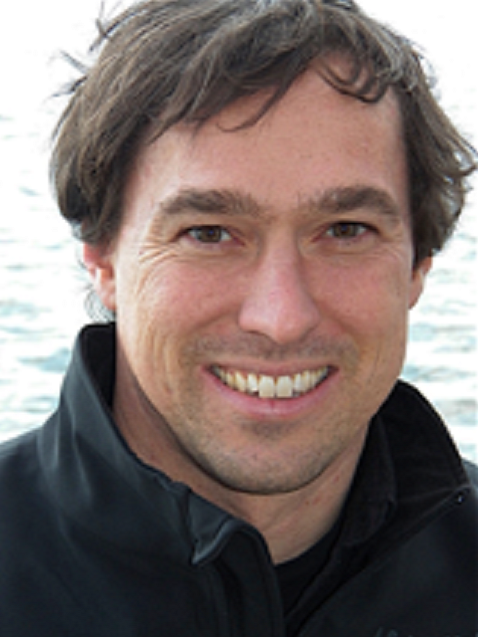
Priv.-Doz. Dr. Michael Riemer is a Senior Lecturer and group leader in the Dynamic Meteorology group at the Institute for Atmospheric Physics , Johannes Gutenberg-University Mainz. His research focuses on atmospheric dynamics, tropical cyclone evolution, weather predictability, and high-impact weather phenomena. University: Johannes Gutenberg-University Mainz Role: Senior Lecturer and group leader Research Interests: Atmospheric dynamics and Rossby wave behavior Tropical cyclone extratropical transition processes High-impact weather system predictability Midlatitude flow interactions with cyclones Potential vorticity dynamics Climate change impacts on extreme weather Publication Trends: Recent work examines convective spread impacts on jet dynamics, objective identification of African easterly waves, Rossby wave packet predictability, and Greenland blocking dynamics. His research frequently employs potential vorticity frameworks and ensemble forecasting techniques. Collaborations: Dr. Riemer collaborates with institutions across Europe and North America, including the European Centre for Medium-Range Weather Forecasts (ECMWF), Alfred Wegener Institute, and various international weather prediction projects.
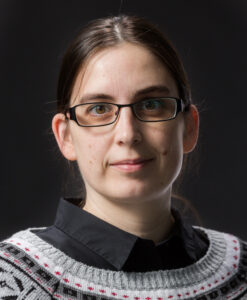
Jun.-Prof. Dr. Annette Miltenberger is an Assistant Professor at the Institute for Atmospheric Physics, Johannes Gutenberg University Mainz, Germany. She leads and co-leads multiple large-scale atmospheric research projects funded by the German Research Foundation and the HALO research aircraft programme. Education PhD (Dr. sc. ETH Zurich), 2014 – Thesis: Lagrangian perspective on dynamic and microphysical processes in orographically forced flows Research interests Her work centres on cloud microphysics, with particular emphasis on mixed-phase and ice-phase clouds, aerosol–cloud interactions, and the coupling between microphysics and atmospheric dynamics. She develops and applies Lagrangian analysis methods to study moisture transport, cirrus formation, and the representation of uncertainties in weather and climate models. Additional foci include foehn flow dynamics and the impacts of diabatic processes on the upper troposphere–lower stratosphere (UTLS) region. Projects & Funding 2025–2028 – NAWDIC (North Atlantic Waveguide, Dry Intrusion, and Downstream Impact Campaign), lead PI of the HALO sub-project NAWDIC-DImoist 2025–2028 – Co-PI of NAWDIC-MESO GLACIATE: Modelling-satellite-aircraft approach for cirrus advanced characterisation TPChange Project B8: Lagrangian analysis of extratropical cyclones for UTLS aerosol and humidity BINARY: Big Data in Atmospheric Physics M3ODEL: Mainz Institute of Multiscale Modeling ACPC initiative deep convection working group Scientific output trend Across 40+ peer-reviewed papers since 2013, her publications reveal a clear trajectory from fundamental process studies (secondary ice production, ice-nucleating particles) toward integrated model-intercomparison and field-campaign analyses. Recent work increasingly targets the UTLS region, warm conveyor belts, and the climatic impacts of aerosol perturbations, leveraging high-resolution ICON simulations, HALO aircraft data, and multi-model ensembles. Teaching activities Since 2019 – Supervising journal clubs and Bachelor/Master theses Since 2022 – Lecturer for “Clouds and Aerosols I” and “Introduction to Modelling and Data Analysis in Environmental and Atmospheric Sciences” 2020–2024 – Lecturer for “Clouds and meso-to large-scale dynamics”, “Application of Models / Modelling with Partial Differential Equations”, and project courses on urban heat islands and Rhine flooding 2019–2020 – Teaching assistant for modelling courses under Prof. Spichtinger Laboratory & Collaborations She operates within the Institute for Atmospheric Physics modelling group and collaborates extensively with the Karlsruhe Institute of Technology (KIT), ETH Zurich, the UK Met Office, and international HALO campaign partners. The group maintains high-performance computing resources for ICON-ART simulations and Lagrangian trajectory analyses.
Gregory Jenkins is a Professor of Meteorology and Atmospheric Science at The Pennsylvania State University, associated with the Institute of Energy and the Environment (IEE). He holds dual affiliations at the university's main campus in University Park, PA, with offices at 510 Walker Bldg and 781 Hastings Road in the Land and Water Research Building. His primary research focuses on understanding atmospheric processes affecting West Africa, including ozone dynamics, climate variability, and tropical weather hazards such as Saharan dust storms and cyclones. He collaborates extensively on environmental justice initiatives related to air quality and health impacts. Research Themes: Climate and Natural Systems, Equitable Communities and the Built Environment Key Projects: - Advancing Climate Justice Pathways in Africa - Saharan Dust-Pathogen Interaction Studies - WRF-CHEM Modeling of Air Quality - Hurricane Fred Case Analysis Dr. Jenkins explores how natural phenomena like lightning and mineral dust interact with anthropogenic activities to influence tropospheric ozone levels. His climate research addresses 20th-century drying trends and future projections for aridification in West Africa, emphasizing challenges for urbanization, water security, and public health. He actively investigates tropical weather systems threatening coastal regions and island nations, advocating for improved real-time forecasting to protect vulnerable communities. His work bridges meteorological science with societal impacts, particularly in regions like Senegal and the Cape Verde Islands where environmental changes disproportionately affect marginalized populations. His recent articles highlight critical issues such as air pollution monitoring gaps in Africa, PM10 particulate variability, and the role of meteorological factors in disease transmission. He consistently employs advanced modeling techniques (WRF-CHEM, regional climate models) and interdisciplinary approaches combining atmospheric chemistry, climatology, and public health data. Though no specific awards are listed, his contributions to climate justice frameworks and atmospheric process understanding are significant. Dr. Jenkins collaborates with international researchers on environmental justice networks and air quality initiatives. His advising role appears primarily academic through co-authorships rather than formal student mentorship. He is involved with IEE laboratories including the Environmental Contaminants Analytical Laboratory and Radiocarbon Laboratory, though specific lab responsibilities aren't detailed here.
Paul E. Roundy is a Professor in the Department of Atmospheric & Environmental Sciences at the University at Albany. His research focuses on tropical atmospheric and oceanic waves, their interactions with convection, and impacts on global weather/climate systems. Key interests include tropical cyclone formation modulation, ENSO dynamics, and intraseasonal oscillations. Education: Advanced degrees in atmospheric sciences (specifics not detailed in text). Research: Develops forecasting systems for tropical cyclones using convectively coupled wave analysis. Investigates MJO (Madden-Julian Oscillation) and Kelvin wave interactions with large-scale circulation patterns. Utilizes extended EOF techniques for climate mode tracking. Tools/Projects: Maintains operational forecast systems (e.g., tropical cyclone probability forecasts) and visualization tools for real-time climate diagnostics. Collaborates with NOAA and NASA datasets.
Christopher D. Thorncroft is a Professor and Director of the Atmospheric Sciences Research Center (ASRC) at the University at Albany, State University of New York. He holds an appointment in the Department of Atmospheric & Environmental Sciences. His research focuses on understanding the West African monsoon, its impacts on Atlantic tropical cyclones, and the interplay between atmospheric processes across weather and climate timescales. Education: BSc in Physics, University of Bristol, 1984 MSc in Meteorology, University of Reading, 1985 PhD in Meteorology, University of Reading, 1988 Research Focus: Dr. Thorncroft investigates African easterly waves (AEWs), their interaction with mesoscale convective systems, and the role of convectively coupled equatorial waves in tropical cyclone formation. His work also addresses the annual cycle of the West African monsoon and decadal variability of Sahel rainfall. His research spans diurnal to multidecadal timescales, integrating weather-scale dynamics with climate-scale predictability. Labs/Teams: He leads research activities at the ASRC, which hosts interdisciplinary studies in atmospheric sciences and environmental systems. The center emphasizes collaborative projects on climate, weather, and geophysical phenomena.
Michael M. Bell is a Professor in the Department of Atmospheric Science at Colorado State University (CSU), affiliated with the Walter Scott, Jr. College of Engineering. He joined the CSU faculty in 2016 after roles as Assistant Professor at the University of Hawaii and Research Assistant Professor at the Naval Postgraduate School. His research focuses on tropical, mesoscale, and radar meteorology, particularly tropical cyclone structure and intensification. He leads the TC-RAMS team, advancing extreme weather prediction and software tools. Education: Ph.D. Meteorology, Naval Postgraduate School (2010) M.S. Atmospheric Science, Colorado State University (2006) B.S. Applied Mathematics & Minor in Meteorology, Metropolitan State College of Denver (2001) B.A. Religion, University of Florida (1996) Research Interests: Bell studies tropical cyclone lifecycle dynamics, mesoscale processes, radar analysis techniques, and open-source software development. His work uses aircraft and radar observations alongside high-resolution models to improve forecasting accuracy. Awards: PECASE (2017) NSF CAREER Award (2014) ONR Young Investigator Award (2015) Herbert Riehl Memorial Award (2006) Team & Labs: As TC-RAMS team lead, Bell oversees projects like the SEA-POL radar deployment in Steamboat Springs (2024-2025) and the PICCOLO field campaign. His group collaborates on NOAA, NSF, and ONR-funded initiatives to advance weather radar technology and tropical cyclone understanding.
Olivier Pauluis is a Professor of Mathematics and Atmosphere/Ocean Science at the Courant Institute of Mathematical Sciences, New York University (NYU). He holds a Ph.D. in Atmospheric and Oceanic Sciences from Princeton University (2000) and M.S./B.S. degrees in Applied Mathematics and Engineering from Université Catholique de Louvain (Belgium). His research focuses on atmospheric circulation, hydrological cycles, and climate dynamics, particularly exploring interactions between climate systems and future changes. He leads the Center for Prototype Climate Modeling (CPCM) at NYU-Abu Dhabi and contributes to the Center for Atmosphere Ocean Science (CAOS). Education: Ph.D., Atmospheric and Oceanic Sciences, Princeton University, USA (2000) M.S., Applied Mathematics, Université Catholique de Louvain, Belgium (1995) B.S., Engineering, Université Catholique de Louvain, Belgium (1995) Research interests include global atmospheric circulation patterns, thermodynamic processes in hurricanes, and the role of water vapor in climate energy budgets. His work bridges applied mathematics and climate science, addressing questions like how atmospheric circulation interacts with the hydrological cycle and how these systems will evolve under climate change. Key publications explore isentropic analysis of convective motions, hurricane dynamics, and the global atmospheric circulation in moist isentropic coordinates. His recent work highlights the impact of coordinate systems on hurricane modeling and the thermodynamic constraints of climate systems. Pauluis collaborates with NYU’s CPCM and CAOS, focusing on prototype climate models and interdisciplinary research in atmospheric science.
Bhuvnesh Jain is the Walter H. and Leonore C. Annenberg Professor in the Natural Sciences at the University of Pennsylvania's Department of Physics and Astronomy. He co-directs the Penn Center for Particle Cosmology and the Penn Data Driven Discovery Initiative. His affiliations include roles with the Dark Energy Survey (DES), Large Synoptic Survey Telescope (LSST), and Euclid space mission. He holds the Edmund J. and Louise W. Kahn Term Chair (2011-2015) and is a Fellow of the American Physical Society. Education: Ph.D., MIT (1994) A.B. in Physics (High Honors), Princeton University (1989) Research Interests: Cosmology: Formation of large-scale structure, dark matter/dark energy properties Gravitational lensing: Weak lensing analyses, CMB-galaxy cross-correlations Machine learning: Applications to astrophysical data, deep learning for image deblending Galaxy clusters: Splashback radius studies, halo boundary dynamics Modified gravity: Astrophysical tests of gravity theories Recent Article Trends (2025): Focus on resolving cosmological tensions (Hubble constant, structure growth) Weak lensing analyses combining DES, ACT, and Euclid data Development of diffusion-based reconstruction techniques Machine learning approaches for parameter inference Awards/Leadership: Co-chair of LSST Weak Lensing Science Collaboration Advisory roles in DES, LSST, and Simons Observatory Organized Data Science for Social Good programs Advising/Grants: Current advisees: Agrawal, Gomes, Park, Zhong, Gatti, Lin Alumni placements at Chicago, Cambridge, Caltech, and industry Leadership in Penn's Data Science minor and postdoctoral fellowships Labs/Teams: Core member of Penn's cosmology group Collaborations with DES, LSST, and CMB surveys (ACT/SPT) Developed courses on statistical methods in natural sciences
Dr. Difei Deng is a Lecturer and ARC DECRA Fellow at the School of Science, UNSW Canberra , where they have been since 2016. Their research focuses on extreme weather events , particularly tropical cyclones , with expertise in numerical modeling and atmospheric meso-scale dynamics . They are an Associate Investigator at the ARC Centre of Excellence for Climate Extremes and affiliated with the Bushfire Research Group at UNSW Canberra. Research areas: Tropical cyclones, extreme rainfall, climate modeling, atmosphere-fire interactions Grants: ARC DECRA (2020-2023), UNSW Faculty Matching Funds (2020-2023) Awards: AMOS Penny Whetton Lecture Award (2024), UNSW High Quality Research Paper Award (2018-2020) Research Trends: Recent work spans deep-learning architectures for tropical cyclone track forecasting , climate change impacts on cyclogenesis shifts , and rainfall enhancement mechanisms during landfalling cyclones. They apply numerical models to study storm-vortex interactions , moisture transport , and environmental feedback in extreme weather systems. Scientific Awards: High Quality Research Paper Award (UNSW, 2018-2020) ARC DECRA Fellowship (2020-2023) AMOS Penny Whetton Lecture Award (2024) Supervision & Grants: Dr. Deng supervises four students ( Lu, Akter, Le, Huang ) on projects involving extreme rainfall associated with tropical cyclones . They offer $35,000/year PhD scholarships for high-achieving candidates. Grants include funding from the Australian Renewable Energy Agency (ARENA) and Cooperative Research Centres (CRC) projects .
Rosana Nieto Ferreira is an Associate Professor of Atmospheric Science in the Department of Geography, Planning and Environment at East Carolina University (ECU). She holds her office in Brewster A-242 and can be reached at 252-328-0751 or ferreirar@ecu.edu. Dr. Ferreira earned her PhD in Atmospheric Science from Colorado State University in 1994, following MS and BS degrees in Meteorology from the University of São Paulo, Brazil. Her educational background reflects a strong foundation in meteorology with international experience: PhD, Atmospheric Science, Colorado State University (1994) MS, Meteorology, Universidade de São Paulo, Brazil (1988) BS, Meteorology, Universidade de São Paulo, Brazil (1985) Dr. Ferreira's research integrates observations and numerical model simulations to study regional climate dynamics across multiple timescales. Her primary interests include Climate Variability, Climate Dynamics and Prediction, Climate Modeling, Monsoon Dynamics, and Tropical Cyclones. She has made significant contributions to understanding Amazon and African squall lines, tropical cyclone formation, African easterly wave dynamics, and tropical-extratropical interactions. Notably, her NSF-funded research led to the discovery of a monsoon-like precipitation signal in the southeastern United States, and she is currently investigating how this signal might change in a warmer climate. Her work employs radar and reanalysis datasets along with the Weather Research and Forecasting model to study precipitation organization in the southeastern US. Analysis of Dr. Ferreira's 15 most recent publications reveals a consistent focus on regional climate dynamics with particular emphasis on precipitation systems across different geographical regions. Her work shows a progression from South American monsoon systems to southeastern US precipitation patterns, demonstrating how climate phenomena in different regions share common dynamical principles. The research spans observational studies, modeling approaches, and theoretical frameworks, with increasing attention to climate change impacts in her more recent work. Key themes include monsoon dynamics across the Americas, tropical-extratropical interactions, and the organization of precipitation systems at multiple scales. Dr. Ferreira's scientific recognition includes: 2014-2015 ECU Scholar-Teacher Award for outstanding integration of scholarship and teaching 2014 ECU Senate Teaching Grant for developing the ECU Weather Forecasting Teaching Laboratory Her research has been supported by significant funding from major agencies including the National Science Foundation (NSF), National Oceanic and Atmospheric Administration (NOAA), and National Aeronautics and Space Administration (NASA). Current projects include an NSF grant (2016-2019) investigating mechanisms for seasonal transition of precipitation organization in the southeastern US under current and future climate conditions. She has also served as Editor for the Journal of Climate (2014-2017) and as Chair of the M.S. in Geography Graduate Program at ECU. Her international collaborations are facilitated by fluency in Portuguese, English, Spanish, and intermediate French. Dr. Ferreira teaches a range of courses including Weather and Climate, Global Climates, Dynamic Meteorology, Synoptic Meteorology, and Tropical Meteorology at both undergraduate and graduate levels. Her teaching laboratory development project demonstrates commitment to hands-on meteorological education.
Andressa Andrade Cardoso serves as a Postdoctoral Research Assistant in the Department of Meteorology at the University of Reading, specializing in Mediterranean Cyclones. Her work contributes to atmospheric dynamics research within the university's climate science framework, based in the Brian Hoskins building (office BH 1U12). Her research spans Atmospheric Science, Meteorology, Climate Science, Extreme Weather Events, Cyclone Dynamics, and Mediterranean Climate Systems. This focuses on modeling cyclone formation, intensity prediction, and regional climate impacts in the Mediterranean basin, utilizing advanced meteorological simulation techniques. Contact is available via a.andradecardoso@reading.ac.uk . No additional affiliations, awards, or advising roles are documented in the source material.
Prof. Peter Clark is a Professor of Meteorology at the University of Reading's Department of Meteorology and an Honorary Met Office Research Fellow. His research focuses on convective-scale numerical weather prediction, mesoscale meteorology, atmospheric turbulence, and urban surface exchange. He leads and co-investigates projects such as the ParaCon and Circle-A initiatives, aiming to improve models of atmospheric processes across scales. Research Interests: Convective-scale and hectometric Numerical Weather Prediction Convection and turbulence dynamics in grey zones Mesoscale structure of extratropical cyclones Sting jet dynamics in windstorms Urban meteorology and surface exchange modeling Key Projects: PI of the Circle-A Project CoI of Hi-Fi turbulence closure project Lead on urban surface exchange and sting jet climatology studies Advising & Collaboration: Supervised over 20 PhD/postdoc researchers since 2003 Collaborates with Met Office and international institutions Lead on major projects like COPE and DYMECS
Christopher E. Holloway is a Professor in the Department of Meteorology at the University of Reading, where he serves as MSc Programme Director for Postgraduate Taught Programmes. His work focuses on atmospheric convection, tropical weather, and climate dynamics, with particular emphasis on the interactions between convection and larger-scale atmospheric fields. Holloway's research interests center on the organization of convection, including convective self-aggregation and its role in observed organized convection phenomena. He investigates interactions involving the vertical structure of temperature and moisture at various spatial scales, with applications to the Madden-Julian Oscillation (MJO) and tropical cyclones. His work spans both theoretical and applied meteorology, with strong connections to climate modeling and prediction. His recent publications reveal a strong focus on tropical meteorology, cloud physics, and climate dynamics. The research demonstrates consistent themes in understanding convective organization, cloud-radiation interactions, and the representation of convection in models. There's a clear progression from fundamental cloud processes to regional climate impacts, with increasing emphasis on high-impact weather events and their predictability. Holloway leads multiple significant research projects including UPFLO (a 5-year AFESP project), serves as Co-I on FORWARDS (a WCSSP SE Asia project), and is Reading PI on CIRCULATES (a NERC project within the CloudSense programme). He also serves as Associate Editor for the Journal of the Atmospheric Sciences. His research group includes several postdoctoral researchers and PhD students working on diverse aspects of convection, tropical meteorology, and climate modeling. Current projects examine convective updrafts, anvil clouds, high-resolution forecasts of high-impact weather in Southeast Asia, and cloud feedbacks on climate sensitivity.
Dr. Alexander Robinson is an Earth System Complexity Group Leader at the Alfred Wegener Institute (AWI) in the department of Geosciences. His research focuses on Earth-system stability, climate extremes and risks, and energy-system resilience. He holds a PhD from the University of Potsdam and a BSc from Pennsylvania State University. Education: PhD in Geosciences, University of Potsdam, 2011 Bachelor of Science, Pennsylvania State University, 2005 Research Interests: Dr. Robinson’s work explores long-term Earth system stability, abrupt climate events, and the design of resilient renewable energy systems. He leads projects such as TIPMIP (Tipping Points Modelling Intercomparison Project) to assess climate tipping points and has contributed to ISMIP6 ice sheet modeling efforts. His research spans glaciology, paleoclimatology, and computational Earth system modeling. Awards: Heinrich Award (Paleoclimate Dynamics) Advising & Grants: While no specific student advisees are listed, Dr. Robinson collaborates on large-scale interdisciplinary projects funded by international initiatives, such as the EU’s ISMIP6 and TIPMIP programs. Labs/Teams: He leads the Earth System Complexity Group at AWI, focusing on ice sheet dynamics, climate tipping points, and model development. Key projects include the development of tools like the FastIsostasy model for glacial isostatic adjustment simulations.
Courtney Schumacher is the E.D. Brockett Professor of Geosciences at Texas A&M University's College of Geosciences, Department of Atmospheric Sciences. Her research focuses on tropical convective processes, radar meteorology, and mesoscale-climate interactions. She employs radar data and climate models to study precipitation dynamics in the tropics and subtropics. Education: Ph.D. (2003), M.S. (2000) in Atmospheric Sciences from the University of Washington; B.A. (1994) in Environmental Sciences from the University of Virginia. Research emphasizes environmental influences on precipitation, radar climatology, and model-data comparisons. Notable projects include analyses of the Madden-Julian Oscillation (MJO), Amazonian convection, and hurricane activity in historical contexts. She has contributed to major field campaigns like GoAmazon2014/5 and DYNAMO/CINDY2011/AMIE. Recent articles highlight advancements in machine learning for rainfall prediction, lightning modeling in global climate systems, and diurnal circulation patterns over West Africa. Her work bridges observational data with theoretical climate dynamics, emphasizing tropical systems' global impacts. No scientific awards are explicitly listed. Advising and grants remain unspecified, though her extensive publication record suggests active research and mentorship roles. She collaborates on interdisciplinary teams studying cloud systems, climate feedbacks, and remote sensing techniques.