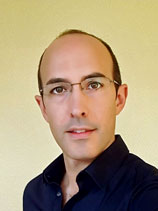
Vincent Chagnault serves as an Associate Professor ( Maître de conférences ) at the University of Picardy Jules Verne within the Faculty of Science, Department of Chemistry. He conducts research at the Laboratoire de Glycochimie et des Agroressources d'Amiens (LG2A UR 7378), where he leads projects focused on carbohydrate-based therapeutic and sustainable material development. His research centers on heparan sulfate (HS) analogues , with three primary thrusts: 1) Synthesis of thiodisaccharide mimetics with enhanced stability for studying HS-protein interactions in inflammation and tumor growth; 2) Development of regioselective modification methodologies for carbohydrates using catalytic CoCl₂ and metal-free iodine-based reactions; 3) Creation of sustainable sugar-based surfactants with low cytotoxicity for potential replacement of petroleum-derived compounds. His work bridges synthetic organic chemistry with biological evaluation, yielding compounds with demonstrated activity against heparanase (IC50 in micromolar range) and selective antibacterial effects against Gram-positive pathogens. Analysis of his 15 most recent publications reveals consistent output in high-impact chemistry journals, with increasing interdisciplinary focus since 2020. His research demonstrates strong methodological innovation in carbohydrate chemistry while maintaining clear therapeutic and sustainability applications. The inclusion of French-language podcast explanations for several publications indicates active science communication efforts. Chagnault's work receives support through institutional funding at LG2A, with collaborative projects involving multiple French research entities. His laboratory maintains strong connections between synthetic chemistry development and biological validation, particularly through partnerships with groups specializing in enzyme kinetics and cellular assays. His laboratory focuses on glycochemical innovation , operating at the intersection of organic synthesis and biological application. The LG2A facility enables comprehensive carbohydrate modification, structural analysis, and preliminary biological screening. Current projects emphasize translating synthetic advances into practical applications for therapeutic development and sustainable materials.