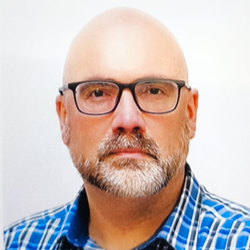
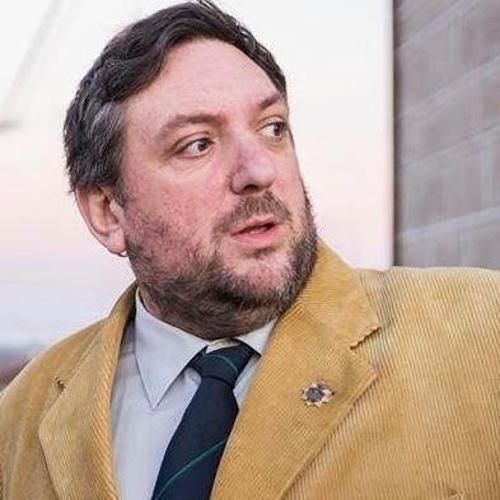
Mihaela Mic is a Researcher at the National Research and Development Institute for Isotopic and Molecular Technologies in Cluj-Napoca, Romania. Her work focuses on atomic, molecular, and chemical physics, particularly in the characterization of bioligand-macromolecule complexes using advanced techniques like isothermal titration calorimetry (ITC). Education: MSc in Physics (2003), Babeș-Bolyai University, Cluj-Napoca PhD in Physics (2007), Babeș-Bolyai University, Cluj-Napoca Key research areas include: Characterization of intermolecular interactions (e.g., cyclodextrin-based inclusion compounds) Design of molecular receptors for selective cationic species binding Investigation of stimuli-responsive polymeric nanoparticles for drug delivery applications
Chandrabali Bhattacharya serves as Assistant Professor in the Department of Chemistry and Biochemistry at the University of Nevada, Las Vegas, where she founded and directs the mRNA Nanomedicine Program to advance mRNA therapeutics research in Nevada. Her work pioneers targeted delivery systems for mRNA using carbohydrate-protein interaction principles. Dr. Bhattacharya earned bachelor's and master's degrees in chemistry from Presidency College Kolkata and Indian Institute of Technology Kharagpur. She completed her Ph.D. in bioorganic chemistry at Arizona State University under Dr. Sidney M. Hecht, investigating bleomycin's disaccharide moiety in tumor targeting. Subsequent postdoctoral training included glycosaminoglycan research with Dr. Linda Hsieh-Wilson at Caltech and mRNA delivery development with Drs. Daniel Anderson and Robert Langer at MIT's Koch Institute as a Juvenile Diabetes Research Foundation Fellow. Her research integrates organic chemistry, glycobiology, and nanomedicine to design precision mRNA delivery vehicles. The Bhattacharya Lab specializes in glycolipid-based nanoparticles that target immune cells for cancer immunotherapy, including CAR-T cell engineering and personalized neoantigen vaccines. By leveraging disease-specific glycation patterns, her team develops 'living drugs' through reprogrammed T cells and dendritic cell-targeted vaccines. Analysis of her 2024-2025 publications reveals groundbreaking work in expanding mRNA delivery beyond liver/lung targets. Key innovations include Cortico LNPs for spleen-selective delivery (enabling autoimmune disease treatments) and ENDO LNPs for pancreatic targeting (with implications for diabetes and pancreatic cancer therapies). Her research consistently bridges fundamental glycochemistry with clinical translation in oncology and immunology. Her scientific recognition includes: Juvenile Diabetes Research Foundation Fellowship Supported by competitive research funding, Dr. Bhattacharya leads a multidisciplinary team developing next-generation delivery platforms. Her mRNA Nanomedicine Program fosters statewide collaboration to position Nevada as a hub for RNA therapeutics innovation, with current projects focused on overcoming tissue-specific delivery barriers for cancer and metabolic diseases. The Bhattacharya Lab operates at the chemistry-biology-engineering interface, combining synthetic organic chemistry with cellular immunology to solve delivery challenges. Future work will expand organ-targeting capabilities and accelerate clinical translation of mRNA-based cancer immunotherapies through industry partnerships and novel biomaterial design.
Assoc. Prof. Dr. Bekir Sayginer is a faculty member in the Department of Chemistry at Kırşehir Ahi Evran University , where he serves as Department Chair since 2023. His academic journey includes post-doctorate research at İhsan Doğramacı Bilkent University's National Nanotechnology Application and Research Center (2016-2018) , a PhD in Chemistry from the University of Manchester (2012-2015) , and prior degrees in Chemistry and Business Administration. Education PhD: University of Manchester, Chemistry (2015) Master's: University of Manchester, Chemistry (2011) Associate Degree: Anadolu University, Business Administration (2010) BSc: Gazi University, Chemistry (2008) Research Interests span Physical Chemistry , Polymer Science , and Nanotechnology , with a focus on polymers of intrinsic microporosity (PIMs) for environmental applications. His work explores electrospinning for ultrafine fiber production, chemical modifications to enhance adsorption/selectivity in gas or water purification, and hybrid materials for photocatalysis or energy storage. Key projects include CO2 capture membranes, dye removal from wastewater, and superhydrophobic membranes for oil/water separation. Scientific Awards include multiple TÜBİTAK Yayın Teşvik (UBYT) grants in 2017-2019 and a Turkish Ministry of Education YLSY scholarship for international PhD studies (2009). His collaborations with researchers like Tamer Uyar , Peter M. Budd , and Johannes C. Jansen span 2014-2025, with publications in high-impact journals such as Journal of Materials Chemistry A , Chemical Communications , and Journal of Membrane Science .
Yi Liao is a Professor at the Florida Institute of Technology within the College of Engineering and Science, Department of Chemistry and Chemical Engineering. His research focuses on the design, synthesis, and characterization of photosensitive molecules and materials, particularly metastable-state photoacids and carbon monoxide releasing molecules (PhotoCORMs). Email: yliao@fit.edu Office: F.W. Olin Physical Sciences, Room 310 His work spans applications in vascular tissue engineering, energy-efficient carbon dioxide capture, and biomedical systems. Recent publications highlight advancements in visible-light-activated materials, reversible proton transfer mechanisms, and ultrasound-responsive microbubbles for therapeutic delivery. Key research themes include: Development of metastable-state photoacids with extended proton dissociation lifetimes Integration of PhotoCORMs into electrospun scaffolds for antibacterial vascular grafts Multi-stimuli responsive systems combining light and thermal activation Computational and experimental characterization of photoreactive materials
Nasri Nesnas is the Edward H. Kalajian Professor in the Department of Chemistry and Chemical Engineering at Florida Institute of Technology's College of Engineering and Science. He has been a faculty member at Florida Tech since 2002, progressing from Assistant Professor to Associate Professor and finally to Professor in 2017. In addition to his professorship, he serves as Chair of the Research Council at Florida Tech and has held leadership positions in the Faculty Senate including President (2020-2021) and Past President (2021-2022). Dr. Nesnas received his B.S. in Chemistry from Manhattan College in 1994, followed by an M.A. (1995), M.Phil. (1998), and Ph.D. (1999) in Chemistry from Columbia University, where he worked under Professor Ronald Breslow. He completed postdoctoral research at Columbia University from 1999-2002 with Professor Koji Nakanishi. Dr. Nesnas's research spans multiple interdisciplinary areas at the intersection of chemistry, neuroscience, and biology. His work focuses on Photochemistry , particularly the development of light-activated compounds for neuroscience applications; Chemical Neuroscience , where he creates tools to precisely control brain activity; Bioorganic Chemistry for understanding biological processes; Natural Products research; and fundamental Organic Synthesis and Organic Reaction Mechanisms . His group has made significant contributions to the development of 'caged' neurotransmitters that can be activated with specific wavelengths of light, allowing precise control of neural activity. Dr. Nesnas's recent publications demonstrate a strong dual focus: developing innovative photosensitive compounds for neuroscience applications (particularly caged glutamate compounds activated by blue and green light) and environmental chemistry applications (particularly ferrate-based water treatment technologies). His neuroscience work enables unprecedented precision in controlling neural activity, while his environmental research addresses critical water purification challenges through novel oxidation processes. Dr. Nesnas has received numerous awards and recognitions for his work: Edward H. Kalajian Professorship (2024-29) CCE Faculty Excellence Award in Research (2025) Gordon L. Nelson Health Science Research Innovation Program (2024) ACS Orlando Section Outstanding Chemist Award (2023) Bronze Medal for merit and contributions to the development of Palacký U. (2022) Gavel Award for dedicated service as Faculty Senate President (2021-22) Charles E. Helmstetter Faculty Excellence Award in Research (2018-19) Kerry B. Clarke Faculty Excellence Award in Teaching (2016-17) Dr. Nesnas has successfully mentored numerous graduate students through completion of their Ph.D. and M.S. degrees. His research has been supported by significant funding from the National Institutes of Health (NIH, 2015-27), Intel Corporation (2007-09), National Science Foundation (2004-05), Florida Solar Energy Center (multiple grants), and the Community Foundation of Brevard (2018-20). He maintains active international collaborations with institutions including Caltech and University of Palacký in Olomouc. Dr. Nesnas leads the NN Research Group at Florida Tech, which includes both graduate and undergraduate researchers. The group maintains strong international collaborations, particularly with Palacký University in the Czech Republic where Dr. Nesnas serves as a Visiting Research Professor (2025). The group's interdisciplinary work combines synthetic organic chemistry with applications in neuroscience, environmental science, and drug delivery systems.
Dr. Jian-Fang Cui is a Research Assistant Professor in the Department of Chemistry at Southern University of Science and Technology (SUSTech) in Shenzhen, China. He is also recognized as a Shenzhen Overseas High-Level Talent (Peacock Program C), highlighting his significant contributions to the field of chemistry. His academic career spans prestigious institutions including Shanghai Institute of Organic Chemistry and The Hong Kong Polytechnic University. Education: Ph.D. in Organic Chemistry (2006-2011), Shanghai Institute of Organic Chemistry, Chinese Academy of Sciences, supervised by Professor Henry N. C. Wong B.S. in Applied Chemistry (2002-2006), School of Chemistry and Chemical Engineering, Sun Yat-sen University Dr. Cui's research focuses on three main areas: asymmetric catalysis, organometallic chemistry, and functional materials. His work on the design and synthesis of functional tetraphenylenes and chiral gold(III) complexes has led to significant advances in asymmetric catalysis. He has developed novel chiral ligands and catalysts based on chiral tetrabenzocyclooctatetraene, creating new methodologies for asymmetric synthesis. His research on chiral Au(III) complexes has explored their structures, reactivity, and applications in catalysis, while his work on organic luminescent materials has produced small molecule fluorescent probes with potential applications in sensing and bioimaging. Analysis of Dr. Cui's publication record reveals a consistent focus on organic synthesis, asymmetric catalysis, and gold chemistry. His most recent work (2022-2023) shows increasing sophistication in the design of chiral catalysts and their applications in complex molecular transformations. The research spans fundamental methodology development to applications in chemical biology and materials science, demonstrating both depth and breadth in his scholarly contributions. Scientific Awards: Shenzhen Overseas High-Level Talent (Peacock Program C) First-class scholarship of Sun Yat-sen University (2005) Dupont Scholarship of Sun Yat-sen University (2005) Second-class scholarships of Sun Yat-sen University (2003, 2004) Outstanding Graduate Student Award of Sun Yat-sen University (2006) Dr. Cui has been actively involved in collaborative research projects, working with prominent scientists including Professor Man-Kin Wong at The Hong Kong Polytechnic University. His research has resulted in over 20 publications in high-impact chemistry journals including Angewandte Chemie, Chemical Science, and Journal of the American Chemical Society. While specific grant information isn't detailed in the provided text, his position as a Research Assistant Professor at SUSTech and recognition as a Peacock Program talent suggest successful grant acquisition to support his research program. Dr. Cui is part of the Department of Chemistry at SUSTech, which is part of the Faculty of Science. His research group focuses on developing novel synthetic methodologies with applications in asymmetric catalysis and materials science. The lab employs advanced techniques in organic synthesis, organometallic chemistry, and spectroscopic characterization to advance their research goals.
Dr. Guo Qiongyu is an Associate Professor and doctoral supervisor at the Department of Biomedical Engineering, Southern University of Science and Technology, Shenzhen, China. She previously served as Assistant Professor at the same institution (2017-2024) and held research positions at Lehigh University (2016-2017) and Johns Hopkins University (2009-2016). Her academic journey includes a Ph.D. in Macromolecular Science and Engineering from Case Western Reserve University (2010) and a B.S. in Polymer Science and Engineering from University of Science and Technology of China (2004). Her research focuses on shape memory biomaterials for translational medicine , particularly in Implantable artificial cornea construction Transcatheter arterial chemoembolization Degradable vascular scaffolds Cell regulation mechanisms . She has pioneered novel platforms for temperature-responsive drug delivery and nanoscale shape control , addressing clinical challenges in oncology and tissue regeneration. Her recent work explores micron-scale shape memory particles , photothermal embolization , and collagen-cyclodextrin implants . Key trends include Smart biomaterials for vascular targeting Microfluidic synthesis of anisotropic microembolics Deep learning-based tumor model analysis . Scientific Awards Shenzhen Overseas High-Level Talent 'Peacock Plan' Class B (2010-present) American Arthritis Foundation Postdoctoral Fellowship (2010-2013) She has secured substantial research funding for biomedical material development and maintains active collaborations in organ-specific vasculature modeling and flexible bioelectronics . Her Advanced Biomedical Functional Materials Lab trains students in solving global clinical challenges through material innovation.
Jesper de Claville Christiansen is a Professor at the Department of Materials and Production within the Faculty of Engineering and Science at Aalborg University. His research focuses on soft matter physics, polymers, rheology, colloids, nanocomposites, biomaterials, and plastic recycling. He leads the Materials Science and Engineering research group and actively contributes to EU-funded projects like RHQI and STRONG-UR. PhD in Materials Science and Technology MSc in Industrial Technology His expertise aligns with the UN Sustainable Development Goals for sustainable materials and energy systems. He has secured major grants from Innovation Foundation Denmark, Energinet SOV, and the Independent Research Fund Denmark. Scientific Awards: Knighted by Her Majesty the Queen of Denmark (2014) Honorary Professor, Ludong University, China (2015) Active in bioprinting, polymer science, and circular plastics economy, he collaborates internationally with institutions like University of Tianjin and Ludong University.
Veronique Seidel is a Senior Lecturer at the Strathclyde Institute of Pharmacy and Biomedical Sciences (SIPBS), University of Strathclyde, United Kingdom. She leads research in natural products chemistry and pharmacognosy with applications in pharmaceutical and cosmeceutical development, while teaching MPharm modules including the Year 3 Management of Infection and Infectious Diseases course. Education: Doctor of Philosophy in Phytochemical and Pharmacological studies on some species of Annonaceae, University of Strathclyde (1995-1998, awarded 1999) Research Interests: Dr. Seidel's work focuses on discovering bioactive compounds from global plant and beehive sources (honey/propolis) through ethnopharmacological investigation, purification, structure elucidation, and screening for antitubercular, anti-inflammatory, antibiofilm, and antivirulence properties. Her laboratory integrates traditional natural product chemistry with computational approaches including molecular docking and dynamics simulations to identify novel therapeutic agents. Research Trends: Recent publications demonstrate a strategic shift toward computational-experimental synergy, with 2025 studies targeting bacterial biofilm disruption through regulator proteins (SarA/LasR) and advanced drug delivery systems like dimenhydrinate-cyclodextrin complexes. This reflects her growing emphasis on translating natural product discoveries into clinically relevant antimicrobial and anti-inflammatory applications. Scientific Awards: Faculty of Science Starter Research Award (2003) Fellowship of the Higher Education Academy (FHEA) Award (2011) Life Sciences Prize (French Academy of Pharmacy) Parke-Davis Natural Products Chemistry Prize (French Academy of Pharmacy) Advising and Leadership: Dr. Seidel supervises PhD students and has completed 11 supervised works. She coordinates 20 research projects including the EU COST ACTION MedPlants4Vet and tuberculosis drug discovery initiatives. As founder of the SIPBS-WIDE committee, she led the successful Athena SWAN Silver Award application and previously served as Honorary Treasurer of the Phytochemical Society of Europe (2014-2019). Research Infrastructure: She directs the Natural Products Research Laboratory which utilizes specialized equipment including sample mixers for extraction and purification workflows, focusing on geographical diversity of natural sources to identify novel bioactive molecules.
Berit Olofsson is a Professor of Organic Chemistry at Stockholm University and Deputy Director of SUCCeSS (Stockholm University Center for Circular and Sustainable Chemistry). She earned her MSc in Chemical Engineering from Luleå and Lund Universities, followed by a PhD from KTH Royal Institute of Technology in 2002. Her postdoctoral work at the University of Bristol with Varinder K. Aggarwal focused on total synthesis of (-)-Epibatidine and methodological studies. Research Interests : Sustainable organic synthesis through hypervalent iodine chemistry , mechanochemical methods , and metal-free reagents. Her group's work enables atom-efficient , non-toxic , and moisture-tolerant synthetic routes, with applications in pharmaceuticals, agrochemicals, and biobased materials. Publication Trends : Berit's articles emphasize diaryliodonium salts for arylation/vinylation reactions, transition-metal-free protocols , and mechanochemical cascade reactions . Notable works include Angew. Chem. Int. Ed. 2009 review and Angew. Chem. Int. Ed. 2023 on ring-opening difunctionalization. Scientific Recognition : EuChemS Division of Organic Chemistry Award for Service (2024) Arrhenius Plaque (2021, 2022) Chemistry Europe Fellow (2018) STIAS Fellow (2014-2015) Green Chemistry Award (Pfizer, 2025) Leadership & Outreach : Berit has served as Section Dean for Chemistry (2019-2023), Chair of the International Scientific Committee for ESOC (2023-2025), and organized large-scale initiatives like the Nobel Symposium on Chemistry for Sustainability (2025) and hand sanitizer production during the 2020 pandemic. Her group (current members: Manisha Lamba , Sayad Doobary , Pernilla Öberg , Leonard Kersting , Benjamin Gunschera , Henrik Hupatz ) collaborates internationally and focuses on scalable, eco-friendly methodologies.
Gonzalo Astray Dopazo is a Full Professor in the Department of Physical Chemistry at the Faculty of Science, University of Vigo, Spain. He leads research initiatives within the Agricultural and Food Research Group (AA1) at the Ourense campus. His career spans 16 years of applying machine learning to environmental and food chemistry challenges, including microplastic adsorption prediction and polyphenol extraction optimization. Focuses on cyclodextrin inclusion complexes Specializes in olive oil by-product valorization for functional foods Develops biomolecule-based crop protection strategies Works on low-sodium meat product formulation The website showcases his research outputs, thesis supervision opportunities, and editorial roles in special journal issues.
JUAN CARLOS MEJUTO FERNANDEZ is a full-time University Professor at the Department of Physical Chemistry, Faculty of Sciences, University of Vigo. His research focuses on Physical Chemistry , Organic Reactivity in Microheterogeneous Media , and Machine Learning Applications in Chemistry , with a strong emphasis on Food Chemistry and Agricultural Systems . Education : PhD in Chemistry, University of Santiago de Compostela (1996), thesis: Organic Reactivity in Microheterogeneous Media , supervised by Dr. José Ramón Leis Fidalgo. Research interests include computational modeling of chemical systems, surfactant behavior in mixed solvents, isotopic composition for food traceability, and nanotechnology applications in food preservation. His recent work explores blockchain technology for agricultural traceability and machine learning for predicting chemical properties like viscosity and adsorption capacity. Articles trends demonstrate expertise in microemulsions , essential oil encapsulation , and machine learning-driven chemical analysis , with applications in renewable energy, probiotic production, and food safety. Contact: xmejuto@uvigo.es . Personal website: AA1 Research Group .
Dr. Mindaugas Mačernis is an Associate Professor at the Institute of Chemical Physics (ICP), Vilnius University, specializing in theoretical chemical physics and quantum chemistry. His research leverages high-performance computing (HPC) to study molecular systems, including carotenoids, protein complexes, and quantum dynamics. He leads the HPC laboratory (supercomputer 'VU HPC Saulėtekis') and heads NCC Lithuania, a national competence center for supercomputing. Research Interests: His work spans computational physics, quantum chemistry, carotenoid photophysics, supercomputing applications, and quantum information technologies. Key methodologies include quantum chemical modeling, molecular dynamics simulations, and advanced spectroscopic analysis. Recent Publications (2020–2022) focus on computational studies of carotenoid dynamics, protein–pigment interactions, and proton transfer mechanisms. Trends include leveraging quantum computing frameworks and HPC for biomolecular simulations. Awards: Prize for research of young scientists, Lithuanian Academy of Sciences (2015) Leadership & Advising: Dr. Mačernis directs projects including EuroCC (NCC Lithuania) and LitGrid-HPC. He supervises doctoral candidates (Jonas Franukevičius, Laurynas Diska) and teaches courses on quantum computing, molecular dynamics, and database systems.
Naiel Nassar, MD , a Clinical Professor at the University of California, San Francisco (UCSF) School of Medicine , serves as Director of the Infectious Diseases Division and Antibiotic Stewardship Director . Based in Fresno, he leads clinical and research initiatives at the Center for AIDS Research, Education and Services (CARES) in Sacramento. Board certified in Internal and Infectious Diseases Completed fellowship at UC Davis Research Interests span Infectious Diseases , HIV/AIDS , Nanoparticle Drug Delivery , and Neuropharmacology . His work integrates Biomedical Engineering for environmental and therapeutic applications, alongside Molecular Biology in cancer and neurodegenerative diseases. Publications highlight collaborations in Public Health , Pharmacology , and Environmental Health . Selected Publications demonstrate expertise in drug synergy , neuroinflammation , and nanotechnology for medicine . Key studies include targeting cancer metabolism , adjuvant therapies in HIV , and nanoscale environmental remediation .
Joana Duarte Da Rocha Pereira is a Tenure Track Lecturer at KU Leuven's Department of Microbiology, Immunology and Transplantation , leading the Virus-host Interactions and Therapeutic Approaches (VITA) Research Group . She is affiliated with the Faculty of Medicine and serves on the Faculty Council of Medicine and Departmental Council . Research Focus: Her work employs Zebrafish larvae Human intestinal organoids to study viral pathogenesis , host-pathogen interactions , and antiviral strategies , with emphasis on norovirus, rotavirus, and bunyaviruses. She investigates Cell tropism Viral dissemination Microbiome interactions Enterotoxin mechanisms Article Trends: Her research spans pan-respiratory antivirals , zoonotic virus models , and cross-species immune responses , utilizing advanced techniques like single-cell RNA sequencing , fluorescent reporter viruses , and high-content screening . Advising: She supervises research on Human intestinal organoids Bunyavirus endonuclease inhibition Rift Valley fever pathogenesis Viral-fungal co-infections