Vincenzo Trovato is Associate Professor in Civil, Environmental and Mechanical Engineering at University of Trento, specializing in power systems, energy storage, and renewable integration. With extensive industry experience at EDF R&D and ACER, he develops solutions for grid stability and market operations. Research focuses on frequency response optimization, thermostatic load control, HVDC interconnectors, and storage economics. His publications demonstrate consistent innovation in grid flexibility solutions for low-carbon systems. Awards & Honors: Energy UK Young Energy Professional Award (2018) EDF R&D Trophies Finalist (2018) Italian National Scientific Qualification (2020) Supervision: Mentors 12+ graduate students on power systems and energy storage projects, including PhD candidates at Imperial College London.
Serge Onyper is an Associate Professor in the Psychology Department at St. Lawrence University. He joined the institution in 2007, driven by a passion for teaching and research. His research focuses on cognitive processes, sleep science, and learning, with a particular interest in how sleep hygiene, classroom schedules, and cognitive interventions impact mental performance and academic outcomes. Dr. Onyper emphasizes hands-on research collaboration with students, leveraging his active research lab to explore topics like memory, decision-making, and behavioral health. Education: Ph.D. in Experimental Psychology, Syracuse University (2007) Research Interests: Onyper’s work bridges cognitive psychology and applied research. He investigates how sleep patterns, classroom timing, and environmental factors influence learning and cognitive performance. His studies often involve longitudinal analyses, exploring interventions like cyclic breathing techniques and classroom schedule adjustments. He also examines memory phenomena, such as the self-reference effect and source confusion during skill acquisition. Recent Research Trends: His articles highlight a focus on sleep-related issues (e.g., pandemic-induced sleep disruption, bedroom clutter effects), educational scheduling (high school start times), and cognitive processes (visual search asymmetry, chewing gum’s cognitive impacts). His work combines experimental methods with real-world applications, aiming to improve academic and health outcomes. Advising & Grants: Onyper prioritizes mentoring undergraduate researchers, fostering close collaborations through his lab. Though no specific grants are listed, his research has been published in high-impact venues, reflecting sustained academic engagement. He is currently on sabbatical until 2026. Labs & Teams: He maintains an active research lab at St. Lawrence, where students and faculty collaborate on projects ranging from sleep hygiene to cognitive skill development.
Suhaib Salawdeh is a Lecturer in the Department of Building & Civil Engineering at the National University of Ireland, Galway, and serves as Principal Investigator of the Engineering Research Group (ERG). His work focuses on structural engineering, particularly seismic design, steel structures, and advanced material behavior. He has contributed to over 19 peer-reviewed publications since 2010, with an h-index of 9 and 246 citations. His research explores topics such as self-centring braced frames, tidal energy conversion devices, and finite element simulations of structural steel. Key research interests include seismic design methodologies, structural testing under dynamic loads, and the application of advanced numerical models to analyze material behavior. Salawdeh’s work emphasizes practical validation through shake table experiments and collaboration with industry partners. He has pioneered studies on novel structural elements like self-centring steel braces and heavy-duty precast components, contributing to safer and more resilient building systems. His publications reflect a multidisciplinary approach, addressing challenges in both traditional and emerging areas such as floating tidal energy systems. Collaborations with international researchers and institutions underscore his commitment to advancing engineering solutions for real-world applications.
Andrzej Wrzesien is a Lecturer in Structural Engineering and Programme Leader for BEng (Hons) in Civil Engineering at the University of Strathclyde. He holds a PhD from the Department of Civil and Environmental Engineering at the same institution. Prior to academia, he worked in industry for 5 years, specializing in cold-formed steel (CFS) portal framing systems, serving as a KTP Associate and later Research and Development Manager. His research focuses on cold-formed steel structures, particularly portal frames, fire resistance, seismic performance, and sustainable design using stressed skin action and optimization techniques. Affiliations: School of Computing, Engineering and Physical Sciences; Member of Malaysian Cold-formed Steel Institute (MyCSI) International Advisory Panel Research interests include composite materials (timber/plasterboard integration), fire behavior of CFS, and improving sustainability through genetic algorithm optimization. He has extensive experience in large-scale structural testing using advanced instrumentation and software development for data acquisition.
Grace Oyeyi is a Professor of Civil Engineering at the University of Windsor's Faculty of Engineering. Her research focuses on sustainable transportation infrastructure, with a particular emphasis on innovative uses of recycled materials in pavement systems. She leads projects on lightweight cellular concrete, pavement environmental impacts, and climate-resilient infrastructure. Her work integrates field testing, sensor technology, and data-driven modeling to enhance material performance and reduce environmental footprints. Affiliations: University of Windsor - Faculty of Engineering, Civil Engineering Department Research Themes: Recycled Materials Integration in Pavements Environmental Impact Assessment of Construction Materials Smart Infrastructure Monitoring Systems Cold-Climate Pavement Adaptation Her research has produced over 20 peer-reviewed articles since 2020, including studies on cellular concrete thermal behavior, recycled aggregate performance, and smart pavement instrumentation. She collaborates with industry and government to translate findings into practical guidelines for sustainable infrastructure development. Key projects include Ontario-based pavement test sections and Nigerian flood-resilient systems. Dr. Oyeyi's work bridges academic research and real-world applications, emphasizing lifecycle sustainability and resilience. She advocates for policy frameworks that incentivize recycled material adoption in construction.
Dr. Mohammad Rezania is a Reader in Civil Engineering (Geomechanics) at the University of Warwick's School of Engineering. He holds an Honorary Professorship at Southwest Jiaotong University (China) and serves as Editor-in-Chief of the ICE Journal of Machine Learning and Data Science in Geotechnics. His academic journey includes a B.Sc. from Sharif University of Technology, M.Sc. from Iran University of Science and Technology, and a PhD from the University of Exeter. Research focuses on resources and energy geotechnics, constitutive modeling of geotechnical materials, sustainable construction materials, and landslide risk assessment. Notable projects include the MINRESCUE initiative (€3.18M), addressing mining waste valorization, and leading the SeaDream project (€1.08M) on marine energy resilience. He also coordinates interdisciplinary grants like REMEDI (€1.35M) for environmental remediation. Teaching responsibilities include module leadership for Geotechnical Engineering (ES3B6), Finite Element Methods for Tunnelling (ES96V), and contributes to design and humanitarian engineering projects at the graduate level. His work bridges traditional geotechnics with modern machine learning and data science applications.
Zhidan SUN is an Associate Professor at the University of Technology of Troyes, France, affiliated with the Laboratory of Mechanical & Material Engineering (LASMIS). He has been serving in this position since September 2019, following his role as Assistant Professor from September 2013 to August 2019. His academic journey includes research and teaching positions at Université de Versailles Saint-Quentin-en-Yvelines, ISAE-ENSMA, and MINES ParisTech-CEMEF. Dr. Sun's research focuses on mechanical properties of materials in relation to microstructural and environmental parameters. His work encompasses characterization of tensile and fatigue properties, analysis of damage and fracture mechanisms, and numerical modeling with finite element methods. Key research areas include time-dependent grain boundary embrittlement of copper alloys, multiscale modeling of hot tearing during solidification of metals, fatigue crack growth affected by gaseous hydrogen, cohesive zone method based thermo-mechanical fatigue models, and characterization and multiscale modeling of materials processed by Surface Mechanical Attrition Treatment (SMAT). His recent publications demonstrate a consistent focus on surface treatment techniques, particularly SMAT and shot peening, and their effects on mechanical properties, fatigue behavior, and residual stress distribution. These works span from fundamental material characterization to advanced numerical modeling approaches, with applications in aerospace, biomedical, and electronic materials. The research shows a progression toward more sophisticated multiscale modeling and experimental validation techniques. With 87 publications, 24,998 reads, and 1,307 citations according to ResearchGate, Dr. Sun has established himself as a significant contributor to the field of material mechanics and surface engineering. He serves as a Guest Editor for the journal Metals, reflecting his standing in the academic community. Dr. Sun's research involves extensive collaboration with colleagues across multiple institutions, as evidenced by his co-authorship network. His work addresses critical challenges in material performance prediction and enhancement, particularly for components subjected to cyclic loading and demanding environmental conditions.
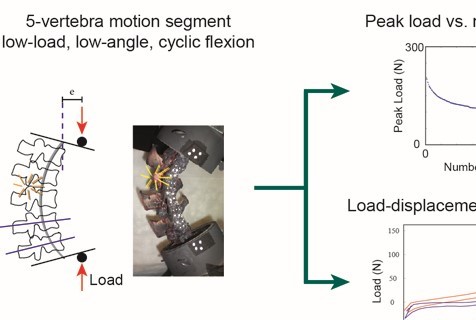
Dr. Laurel Kuxhaus is an Adjunct Professor in the Department of Mechanical & Aerospace Engineering at Clarkson University's Coulter School of Engineering & Applied Sciences. As a biomechanical engineer with expertise in orthopedic biomechanics, she bridges engineering principles with clinical applications to improve patient outcomes. Her research spans both fundamental biomechanical studies and translational medical device development. Ph.D. in Bioengineering (University of Pittsburgh, 2008) M.S. in Mechanical Engineering (Cornell University, 2003) Dual B.S. in Engineering Mechanics and Music (Michigan State University, 2001) Her research investigates musculoskeletal mechanics through ex-vivo models of orthopedic trauma and repair, combining theoretical modeling with experimental validation. Current projects include spinal fracture prevention, cancellous bone material characterization, and novel intramedullary device design. Her work has been cited 8 times across key biomechanics journals. Selected publications reveal trends in spinal biomechanics, elbow joint analysis, and bone material properties. She collaborates extensively with institutions like the NSF and ASB, and her lab has produced award-winning students including Nicole Zaino (NSF Graduate Research Fellowship) and Katie Slocum (Honors Thesis). Dr. Kuxhaus also contributes to biomechanics education through active learning pedagogy. Fellow of ASME (2017) ASME Congressional Fellow (2018-19) ORS Business Plan Competition Runner-Up (2018) NSF Program Director (2019) She has mentored numerous graduate and undergraduate students including Nicole Zaino, Megan DeRidder, and Stacey Zeigler, while maintaining collaborations with Dr. George Fulk, Dr. Kathleen Issen, and Dr. Arthur Michalek. Her lab's research on topics like vertebral fractures and thumb force production has been presented at ASB, SB3C, and ORS conferences.
Hasan Kasim is a Postdoctoral Research Fellow at the University of Alabama at Birmingham (UAB), affiliated with the Materials Processing and Applications Development (MPAD) Center under Prof. Selvum "Brian" Pillay. His research focuses on the mechanics of elastomer and polymer-based composite materials, emphasizing sustainable processes for recycling carbon and glass fibers from thermoset composite waste. Key interests include evaluating material performance under dynamic loading conditions (shock, cyclic, static) and environmental factors, alongside numerical simulations and theoretical modeling. Research activities involve composite characterization, experimental testing, and computational analysis to optimize material behavior and recycling methodologies. The MPAD Center serves as his primary research hub, driving innovations in both material science and environmental sustainability. No scientific awards or formal grants are explicitly listed in the provided information. His academic background and educational history are not detailed here.
Dr. Vladimir G. Fast is a Professor in the Department of Biomedical Engineering at the University of Alabama at Birmingham (UAB). His research focuses on cardiac electrophysiology, mechanisms of arrhythmias, optical imaging of cardiac activity, and tissue engineering. He joined UAB in 1997 and teaches courses in Biomedical Engineering and Cardiac Electrophysiology. Education: B.S., M.S., and Ph.D. in Physics and Biophysics from the Moscow Institute of Physics and Technology. Research Interests: Dr. Fast explores the effects of electrical fields on cardiac cells, electrophysiological properties of engineered cardiac tissue, and cardiac regeneration using stem cell-derived constructs. His work integrates optical imaging, biomimetic models, and bioreactor systems to study cardiac repair and arrhythmia mechanisms. Key Contributions: His recent studies include developing cardiac muscle patches using pluripotent stem cells, enhancing cardiac cell repair through genetic modifications (e.g., N-cadherin, TBX20), and optimizing 3D spheroid models for myocardial infarction therapy. His research emphasizes translational applications of tissue engineering and regenerative medicine. Professional Activities: Dr. Fast is affiliated with academic societies in biomedical engineering and cardiology. His work has led to advancements in understanding electrophysiological properties of engineered cardiac tissues and optimizing cell-based therapies.
Hassan Ijaz serves as a Lecturer in Mechanical Engineering at the CEES School of Engineering. He holds a Doctorate in Mechanical Engineering from École centrale de Nantes, specializing in delamination crack growth in composite laminates under static and fatigue loadings. His research focuses on Damage Mechanics, Failure Analysis, and Finite Element Analysis (FEA) of composite materials and machining processes. Key areas include interfacial delamination in CFRP/GFRP laminates, homogenization techniques for honeycomb structures, and FEA of chip formation in Aluminum/Magnesium alloys using Johnson-Cook damage criteria. Educational Background: Doctorate (2009) and MEng (2006) in Mechanical Engineering from École centrale de Nantes. Research Interests: Extensive work on FE simulation of composite failure, machining parameter optimization, and material behavior under dynamic loading. His studies incorporate advanced FEA software (ABAQUS, CAST3M) and Fortran-based VUMAT/UMAT subroutines for modeling complex material responses. Publications: Over 39 peer-reviewed articles in journals like Mechanics of Advanced Materials and Structures and Journal of Manufacturing Processes . Recent trends emphasize additive manufacturing, cryogenic machining, and micro-scale surface integrity optimization. Awards: None explicitly listed. Currently accepting PhD students in Mechanical Engineering. Grants/Labs: Details not provided in text. Focus on academic and industrial collaborations in composite material analysis and machining innovation.
Aleksandar Bodić is a Researcher at the Department of Applied Mechanics and Automatic Control, Faculty of Engineering, University of Kragujevac, Serbia. His research focuses on structural analysis, materials science, numerical simulations, and biomedical engineering applications. He holds a position in the Applied Mechanics and Automatic Control department and is affiliated with the university's broader engineering community. His work integrates computational methods like the Finite Element Method (FEM), Smoothed Particle Hydrodynamics (SPH), and Finite Volume Method (FVM) to address challenges in mechanical, civil, and biomedical engineering. Notable areas include piezoelectric nanocomposites, blast-resistant structures, dental material performance, and cardiovascular fluid dynamics. His recent studies emphasize predictive modeling for structural safety, fatigue analysis, and particle dynamics in medical devices. Research interests span advanced materials characterization, structural dynamics under extreme conditions, and computational tools for engineering problem-solving. He collaborates on projects involving interdisciplinary applications, such as improving muzzle brake efficiency for firearms and optimizing drug delivery systems via dry powder inhalers. No academic awards or grants are explicitly mentioned in the provided information. His advisory role and student supervision details are currently unavailable. Affiliated with the Faculty's technical and research infrastructure, his work contributes to the Department for Applied Mechanics and Automatic Control's broader mission in advancing engineering science and technology.
Miroslav Živković is a Professor at the Faculty of Engineering of the University of Kragujevac, Serbia. He holds a chair in Applied Mechanics and Automatic Control within the Department of Applied Mechanics and Automatic Control. His academic career focuses on computational mechanics, materials science, and structural analysis. Research interests include finite element method (FEM) applications, phase-field modeling of damage in materials, fluid dynamics simulations, and fatigue analysis of metallic alloys. He leads projects involving software development for engineering analysis tools, such as PAKF-Turbulent and SPH-LifeCycle. His publications emphasize structural health monitoring, material behavior under cyclic loading, and numerical methods for solving complex engineering problems. He collaborates on interdisciplinary projects combining mechanical engineering, computer science, and applied informatics. Key contributions include: Development of advanced FEM solvers for dam safety and industrial applications Experimental and computational studies on ductile fracture in steels and aluminum alloys Phase-field modeling of shape memory alloys and fatigue degradation Software tools for automated testing and parameter identification in engineering systems His work bridges theoretical mechanics with practical engineering solutions, addressing challenges in structural integrity, material durability, and computational modeling.
Dr. Sarah Calve is an Associate Professor in the Department of Mechanical Engineering at the University of Colorado Boulder. Her research focuses on the mechanics of soft biological materials, musculoskeletal development, and regeneration, with a particular emphasis on the extracellular matrix (ECM). She leads the Musculoskeletal Extracellular Matrix Laboratory (MEML), which develops novel techniques to visualize ECM architecture and quantify its mechanical properties in developing tissues. Education: B.S. in Materials Science and Engineering, Cornell University, 2000 M.S. in Molecular, Cellular and Developmental Biology, University of Michigan, 2005 Ph.D. in Macromolecular Science and Engineering, University of Michigan, 2006 Research Interests: Dr. Calve’s work integrates biomechanics, biochemistry, and imaging to understand how ECM composition and mechanics influence musculoskeletal development. Key areas include: Development of bioorthogonal labeling strategies to track ECM proteins Optical clearing and 3D imaging of ECM architecture in mouse models Role of hyaluronic acid in muscle regeneration and repair Design of ECM-mimetic hydrogels for regenerative therapies Awards: NIH Director’s New Innovator Award (2017) Rising Star Junior Faculty Award (2018) National Academy of Engineering Frontiers of Engineering Symposium Invitee (2018) Advancing Research: Dr. Calve’s lab combines experimental and computational approaches to characterize ECM dynamics during development. Projects include collaborations on hyaluronic acid hydrogel design and NIH-funded studies on ECM remodeling. She holds two patents for muscle and tendon engineering methods. Labs/Teams: The MEML collaborates with institutions like the University of Michigan and Northwestern University to advance regenerative therapies based on ECM insights.
Varvara Zania is an Associate Professor in the Department of Environmental and Resource Engineering at the Technical University of Denmark (DTU). Her research focuses on geotechnical engineering, soil-structure interaction, and seismic analysis, with contributions to sustainable infrastructure and soil improvement technologies. **Education**: PhD in Mechanics (2009), Technical University of Crete MSc in Underground Constructions (2004), National Technical University of Athens Civil Engineering Diploma (2003), National Technical University of Athens **Research Interests**: Dynamic soil-structure interaction Seismic stability of geotechnical systems Physical modeling and centrifuge testing Geosynthetics and soil improvement techniques Probabilistic geotechnical analysis **Recent Research Trends**: Her work emphasizes sustainable infrastructure solutions, probabilistic site characterization, and advanced numerical modeling. Key areas include deep excavations, offshore wind turbine foundations, and geotechnical responses under extreme loading. **Advising & Projects**: Supervises PhD students on topics like deep excavation behavior, rammed earth materials, and soil parameter uncertainty. Leads projects funded by DTU and industry partners, focusing on sustainable geotechnical design and infrastructure resilience. **Labs/Teams**: Engaged in multidisciplinary teams at DTU, collaborating on projects involving geotechnical testing, numerical simulations, and field applications.