Alan Duggan is a Research Fellow in the Department of Building & Civil Engineering at the University of Galway, affiliated with the Engineering Research Group (ERG). His work focuses on sustainable construction practices, environmental engineering, and the environmental impact of infrastructure projects, particularly in peatland regions. He specializes in carbon footprint analysis, geotechnical challenges in peatland construction, and the development of low-carbon materials and techniques. Principal Investigator in ERG Focus areas: Peatland rehabilitation, carbon sequestration in construction materials, and sustainable transportation infrastructure His research integrates geotechnical engineering with environmental science, addressing challenges in ground improvement, drainage systems, and carbonation processes. Key contributions include studies on stabilized peat as a carbon sink and embodied carbon analysis in motorway construction. His publications span environmental sustainability, material science, and infrastructure planning, emphasizing practical solutions for reducing environmental impact in construction projects.
Professor Adam Gorb is a renowned composer and academic, serving as Professor of Composition and former Head of the School of Composition at the Royal Northern College of Music (RNCM) from 2000 to 2023. He holds a PhD in Composition from the University of Birmingham (2013), alongside degrees from Cambridge University (BA 1980) and the Royal Academy of Music (RAM, MMus with Principal’s Prize 1993). His research and creative output focuses on orchestral, operatic, and wind ensemble composition. Notable works include operas Anya 17 (2012) and The Path to Heaven (2018), which explore themes like human trafficking and the Holocaust. His wind ensemble pieces, such as Towards Nirvana and Farewell , have won British Composer Awards and are performed globally. Awards include three British Composer Awards and a House of Commons accolade for Anya 17 . He advises PhD students in composition while maintaining international collaborations, including recent projects in Romania, Australia, and the USA. His music is frequently recorded and performed worldwide, with CDs such as 24 Preludes (2022) and Dancing in the Ghetto (2016) showcasing his diverse output. Teaching roles include undergraduate and postgraduate composition at the RNCM, alongside guest lectures at institutions globally. His current projects include commissions for the Royal Academy of Music and interdisciplinary work with Parkinson’s patients.
Professor L.J. Sluys is a Full Professor and Chair of Computational Mechanics at the Faculty of Civil Engineering and Geosciences, Delft University of Technology (TU Delft). He has been a leading figure in computational mechanics since 1999, heading the Computational Mechanics group and serving as head of the Department of Materials, Mechanics, Management and Design (3MD) from 2018 to 2024. His research is centered on the computational modeling of material behavior, particularly focusing on failure processes and high-performance materials. His research interests include computational mechanics of materials, modeling of failure and fracture processes, multi-scale methods, and the computational modeling of high-performance materials such as composites and concrete. He employs advanced numerical techniques including the finite element method, extended finite element method (XFEM), level-set methods, and cohesive zone modeling to simulate complex mechanical behaviors under static and dynamic loading conditions. His work spans civil, mechanical, and materials engineering domains, with applications in infrastructure, energy, and sustainable materials. The recent publications highlight a strong trend in modeling fracture, fatigue, and degradation in heterogeneous materials such as composites, concrete, and geological formations. His work integrates multi-physics and multi-scale approaches, often coupling mechanical, thermal, and chemical effects. There is a consistent focus on numerical robustness, model validation, and the development of adaptive computational frameworks for simulating progressive damage and failure. Research Fellow of the Netherlands Academy of Arts and Sciences (KNAW) Professor Sluys has taught core courses such as Introduction to the Finite Element Method and Computational Methods in Non-linear Solid Mechanics for over a decade, indicating a strong commitment to academic education. He has supervised numerous students, though specific names are not listed in the provided texts. He leads an active research group in computational mechanics, contributing to both fundamental and applied research in solid mechanics. His work involves collaboration with international institutions and industry partners, particularly in the areas of infrastructure durability and advanced materials.
Dr. Premdass Ramdas is a Senior Lecturer at Monash University Malaysia, affiliated with the Jeffrey Cheah School of Medicine and Health Sciences. He joined in October 2023 with over 13 years of experience in medical biotechnology and health sciences, focusing on cancer research and bioactive natural compounds. PhD in Cancer Proteomics and Genomics, University of Malaya MSc in Medical Sciences (Cancer Genomics and Natural Products), International Medical University BSc with First-Class Honors His research focuses on the anticancer mechanisms of tocotrienols, utilizing proteomics, genomics, bioinformatics, and mouse models. He explores epigenetics, nutrigenomics, RNA/microRNA analysis, exosome biology, and AI-driven big data in cancer. His work contributes to UN Sustainable Development Goals in health and well-being. Recent publications show a strong trend in systematic reviews and mechanistic studies on vitamin E analogues in cancer, particularly colorectal and breast cancers. His research integrates molecular biology with computational approaches, including molecular docking and data mining. First-class honors for BSc Malaysian Palm Oil Board Scholarship for MSc MyBrain15 Scholarship for PhD Dr. Ramdas has secured research grants such as FRGS and actively supervises research projects. He is currently accepting PhD students and has co-supervised non-HDR reviews, indicating active mentorship. He has no known labs or teams explicitly mentioned, but collaborates extensively, particularly with Prof. Radhakrishnan A.K.
Jan Emblemsvåg is a Professor at NTNU’s Department of Ocean Space Operations and Civil Engineering in Ålesund, Norway. He has held senior industry roles including Shipyard Director at Vard, SVP Ship Design & Systems at Rolls-Royce Marine, and Managing Director at Midsund Bruk. His academic positions span BI Norwegian Business School, Ålesund University College, and NTNU since 2006. Emblemsvåg’s expertise bridges engineering and management, focusing on sustainable development through rigorous analytical frameworks. Education: PhD from Georgia Institute of Technology (1999), MSc (1995), and Civil Engineering degree from Norwegian Institute of Technology (1994). R&D focuses on six core areas: 1) Product/process development with Lean methodologies, 2) Life-Cycle Costing/Analyses (integrating cost, environmental, and social dimensions), 3) Risk management and uncertainty analysis using Monte Carlo methods, 4) Operations/General management under Lean principles, 5) Project management with Lean integration, and 6) Renewable energy (especially nuclear power’s role in maritime and industrial sectors). Publications emphasize energy policy critiques, nuclear propulsion feasibility, and sustainable shipping. Recent work highlights nuclear energy’s potential as a cost-effective, low-emission solution for maritime transport and industrial needs. Active in policy debates advocating evidence-based energy strategies. Labs/Teams: Leads NTNU’s research initiatives on nuclear propulsion for merchant ships (NuProShip project) and collaborates internationally on maritime safety and evacuation modeling.
Tara M. Sinclair is Professor of Economics and International Affairs and Chair of the Department of Economics at the George Washington University. She is also affiliated with the Elliott School of International Affairs through the Institute for International Economic Policy and the Institute for European, Russian, and Eurasian Studies. Additional affiliations include the GW Institute of Public Policy Research, the Regulatory Studies Center, and GW-CIBER. Sinclair has held influential public sector roles, including Deputy Assistant Secretary for Macroeconomics at the U.S. Department of the Treasury (2022–2024) and founding Chief Economist at Indeed Hiring Lab. PhD in Economics, Washington University in St. Louis (2005) AM in Economics, Washington University in St. Louis (2001) BA in Foreign Languages, Wheaton College (1996) Her research centers on macroeconomic fluctuations, labor market dynamics, forecasting, and the application of big data to economic analysis. She employs econometric and time series methods to model business cycles, evaluate forecast accuracy, and assess policy impacts. Her work connects academic research with real-world decision-making, particularly in labor markets and monetary policy. Sinclair frequently uses online job posting data to generate timely insights into employment trends. Her recent publications focus on post-pandemic labor market transformations, remote work persistence, forecast evaluation, and regulatory economics. She has published in top journals such as Labour Economics , Journal of Applied Econometrics , Oxford Bulletin of Economics and Statistics , and International Journal of Forecasting . Her research leverages real-time data to analyze topics like unemployment insurance claims, job mismatch, and global hiring trends. Scientific recognition includes membership in the Conference on Research in Income and Wealth (CRIW), the Federal Forecasters Consortium Governing Board, and authorship at VoxEU. She has served as a Special Government Employee on the Bureau of Labor Statistics Technical Advisory Committee. She advises and collaborates with numerous researchers and institutions. Her leadership roles include directing the GW Center for Economic Research (former) and leading research initiatives at Indeed Hiring Lab. She teaches graduate and undergraduate courses in macroeconomics and econometrics, and is frequently cited in major media outlets including the New York Times , Wall Street Journal , and Financial Times , and appears on networks such as CNN, NPR, and Bloomberg. Her research team includes collaborators from Federal Reserve Banks, international organizations, and academic institutions. She leads projects funded by GW-CIBER and contributes to policy reports for the U.S. Treasury and Indeed Hiring Lab.
Dr. Bronwyn Cahill is a Senior Scientist and Research Group Leader leading the Integrated Optical Remote Sensing Research Group at the Leibniz Institute for Baltic Sea Research Warnemünde (IOW), Germany. Her interdisciplinary research integrates optical remote sensing, in situ data, data science, and bio-optical process modeling to address challenges in coastal and marine ecosystems, with a focus on land-ocean connectivity, underwater lightscapes, and biogeochemical cycles. Education: Ph.D. in Oceanography (2006) – University of Rhode Island, USA BSc (Honours) in Ocean Science (1993) – University of Plymouth, UK BA (Honours) in French and Philosophy (1989) – Trinity College Dublin, Ireland Research Interests: Her work centers on understanding how changing light climates impact marine ecosystems and carbon cycles. Key themes include optical remote sensing applications, climate change effects on coastal seas, marine heatwaves, phytoplankton dynamics, and the development of advanced biogeochemical models for marginal seas like the Baltic. Publication Trends: Her 15 most recent articles (2011-2025) predominantly explore marine biogeochemistry, climate impacts on coastal systems, and ocean-atmosphere interactions. Over 60% focus on Baltic Sea dynamics, employing modeling, remote sensing, and field data to analyze carbon fluxes, algal blooms, and ecosystem responses to environmental stressors. Projects & Grants: She leads several major initiatives: SEAGUARD (2025-2027): AI-driven seagrass adaptation research (BMUKN-funded) ISOLUME (2025-2028): Lightscape indicators in marine ecosystems (BMFTR-funded) KIVib Küste (2025-2026): AI-based Vibrio risk assessment (EFRE-funded) SkaMix-WMT (2025-2028): Water mass transformation in Skagerrak (DFG-funded) Leadership: Heads the Integrated Optical Remote Sensing Research Group at IOW, fostering collaborations across physical, biological, and chemical oceanography to advance predictive capabilities for marine environmental change.
Naim Rashid is an Assistant Professor in the Department of Environmental Engineering at Montana Technological University, with prior roles including Associate Professor at National University of Science and Technology (2023–2024) and Assistant Professor at COMSATS University (2015–2021). His work focuses on the water-energy-environmental nexus, particularly using microalgae and purple bacteria for wastewater treatment and resource recovery. Education: Ph.D. in Civil and Environmental Engineering from KAIST (2013), M.S. in Environmental Engineering and Biotechnology from Myongji University (2009). Research interests include integrated wastewater treatment using phototrophic microalgae and purple bacteria, biofilm technologies for resource recovery, and life cycle assessment of environmental processes. He also specializes in PFAS removal and bioremediation of coal ash ponds. His publications emphasize biofilm reactors , single-cell protein production , and bioenergy systems from waste streams. Recent work explores nutrient dynamics in biofilm growth, sustainable petroleum industry wastewater treatment, and algal co-cultivation for biodiesel. Awards: Green Talent Award (Germany), Global Young Academy Membership (2017–2022), Fulbright Scholar Award (USA). Professional Service: Curriculum Review Committee, Graduate Council, and advisor to Environmental Engineers of Montana Tech (EEMT) club. Projects: Bioremediation of coal combustion residue, PFAS removal, and integration of acid mine drainage treatment with aquaculture feed synthesis.
Chuan-Fu Lin is an Associate Professor in the Department of Mechanical Engineering at The Catholic University of America (CUA), School of Engineering. His research focuses on energy storage systems , nanotechnology , and materials innovation for renewable energy and advanced manufacturing . He founded and directs the Energy Materials Innovations Laboratory (EMI-Lab) , which develops solid-state electrolytes , Li/Na metal anodes , and low-cost eco-friendly energy storage solutions through atomic layer deposition (ALD) and thin film engineering . 2024 : Secured $637k DOE grant to study interfacial kinetics of conversion materials 2023 : Published on fluorinated SEI layers for sodium batteries 2022 : Advanced LiPON protection strategies 2021 : Developed Al2O3-coated Mg anodes 2020 : NSF collaborative award with Prof. Rubloff and Qi His work spans solid-state batteries , aqueous battery systems , and conversion electrode materials , with a strong emphasis on preventing corrosion , enhancing cycling stability , and reducing overpotential . Key projects include polymer/ceramic hybrid electrolytes , in-operando characterization cells , and scalable current collector designs . Notable scientific awards include the 2024 Charles H. Kaman Award and NSF support for collaborative research.
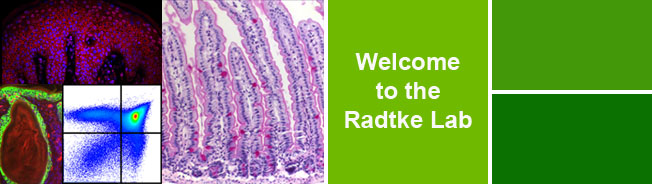
Freddy Radtke is a Full Professor at the School of Life Sciences at École polytechnique fédérale de Lausanne (EPFL), where he leads the Radtke Lab (UPRAD) within the Swiss Institute for Experimental Cancer Research (ISREC). He holds multiple affiliations across EPFL, including in the SSV-ENS and EDMS-ENS programs, reflecting his broad engagement in teaching and doctoral education in life sciences. His research is centered on the molecular mechanisms of stem cell maintenance and differentiation, particularly through the Notch signaling pathway. His work spans several self-renewing systems: the hematopoietic system, skin, and gut. Key findings include the identification of Delta-like 4 as the essential Notch1 ligand for T cell commitment, the tumor suppressor role of Notch1 in skin, and its critical function as a gatekeeper of intestinal progenitor cells by repressing CDK inhibitors. These discoveries have significant implications for understanding cancer development and regenerative processes. The recent publications highlight a consistent focus on Notch signaling across diverse biological contexts—hematopoiesis, skin development, intestinal regeneration, and stem cell systems biology. The keywords and subfields reflect deep mechanistic investigations into cell fate decisions, signal transduction, and tissue homeostasis, with strong translational relevance to cancer and inflammatory diseases. Freddy Radtke has mentored numerous Ph.D. students and is actively involved in teaching courses such as Stem Cells and Organoids and Scientific Project Design in Translational Oncology . His lab conducts research supported by external funding, and he collaborates across disciplines to integrate systems biology with stem cell research. The lab includes scientists, doctoral assistants, technicians, and administrative staff, indicating a vibrant and multidisciplinary research team.
David Suter is an Associate Professor at École Polytechnique Fédérale de Lausanne (EPFL), affiliated with the School of Life Sciences (SV) and the Institute of Bioengineering (IBI-SV), leading the UPSUTER research unit focused on Gene Regulation & Cell Identity. He is based in the AI building at Station 19, Lausanne, and holds active teaching and leadership roles across multiple departments, including Life Sciences Engineering. He serves as Director of the Doctoral Program in Molecular Life Sciences (EDMS), and is a member of the Doctoral School Committee and the PhD Program Committee for Computational and Quantitative Biology. His research centers on the quantitative analysis of gene expression dynamics and cell identity, employing cutting-edge techniques such as ultrasensitive bioluminescence imaging, fluorescent protein timers, genome editing, and high-throughput genomics (ChIP-seq, ATAC-seq, CUT&RUN). His lab investigates transcriptional memory, proteostasis, transcription factor search dynamics, and cell fate decisions using embryonic stem cells and cancer cells as model systems. These approaches enable real-time, single-cell resolution studies of transcription factor behavior, mRNA production, and protein turnover across cell divisions. The publication trends in his work emphasize live-cell imaging, quantitative molecular biology, and systems-level understanding of gene regulation. His articles reflect a strong focus on visualizing and quantifying biological processes in living cells, particularly around transcription factors like Sox2 and their role in pluripotency and differentiation. The integration of biophysical tools with molecular biology allows his team to decode the mechanisms underlying cell identity maintenance and fate transitions. He actively supervises PhD students, both current and past, contributing significantly to doctoral education at EPFL. His leadership in the EDMS program underscores his commitment to training the next generation of scientists in molecular and quantitative life sciences. While no specific grants are mentioned in the text, his lab's advanced technological development (e.g., bioluminescence imaging tools) suggests strong funding support. David Suter leads the Suter Lab, a multidisciplinary research group combining molecular and cell biology with computational and biophysical methods. The lab fosters close collaborations and maintains a strong technical core in imaging and genomics, enabling innovative research on the fundamental principles of gene regulation during development and disease.
Professor Atul Jain is a distinguished faculty member in the Department of Climate, Meteorology & Atmospheric Sciences at the University of Illinois at Urbana-Champaign. He leads a prominent research group focused on understanding Earth's climate system through advanced computational modeling and has established himself as one of the world's leading climate scientists with extensive contributions to IPCC assessments. Dr. Jain earned his Ph.D. in Atmospheric Sciences from the Indian Institute of Technology. His educational background provided the foundation for his pioneering work in climate modeling and biogeochemical cycles. Professor Jain's research centers on climate interactions with land physical processes (hydrology and energy), biological processes (carbon and nitrogen), and land use/cover changes including agricultural intensification. His lab developed the Integrated Science Assessment Model (ISAM), a global model-data integration framework that combines satellite and ground-based observations to examine biogeochemical cycles, water, and energy fluxes. His recent work has focused on the impact of land use changes on biogeophysics and biogeochemistry, permafrost carbon storage, methane and nitrous oxide emissions, climate impacts on agricultural production, and spatially explicit greenhouse gas emissions from food systems. His research has gained significant international attention, particularly his 2021 study on food production emissions which was widely covered by major media outlets including The Guardian, The New York Times, and Scientific American. Dr. Jain has received numerous prestigious awards including the National Science Foundation's Faculty Early Career Development Award. He has been consistently recognized as a "Most Highly Cited" Researcher by Clarivate Analytics One of the "World's Top Climate Scientists" by Reuters Fellow of the American Association for the Advancement of Science (AAAS) Fellow of the American Geophysical Union (AGU) Recipient of the Distinguished Alumni Award from IIT Delhi (2024) Professor Jain has mentored numerous graduate students and postdoctoral researchers who have gone on to successful careers in academia and research institutions. His research group has secured substantial funding from NSF, NASA, and other agencies to support their work on climate change modeling and assessment. He has served as a lead and contributing author for major IPCC assessments and has been instrumental in shaping climate science policy. His research group maintains the ISAM modeling framework and has developed extensive datasets on historical land-cover change and land-use conversions. The group actively collaborates with international researchers and institutions to advance understanding of Earth's climate system and its response to human activities.
Andrew Murray is a Professor at Harvard University, affiliated with the Rowland Institute and Department of Molecular and Cellular Biology. His research focuses on evolutionary biology, genetics, and synthetic biology using budding yeast as a model organism. Primary Affiliation: Harvard University Lab: Murray Lab Collaboration: with David Nelson (Physics/MBI) Research interests include: Evolution of biological novelty through experimental evolution Cellular mechanisms for environmental adaptation Quantitative analysis of evolutionary trajectories Engineering yeast strains to test biological principles Publications span evolutionary genetics, cell biology, and biophysics with recent work on ABC transporters and yeast colony dynamics. Collaborative clinical publications also exist in cardiology and surgical outcomes. Scientific recognition includes the John Harvard Distinguished Science Fellowship .
Frank Willems is a Full Professor of Systems and Control Technology and Chair of Integrated Powertrain Control at Eindhoven University of Technology (TU/e), holding a part-time position realized with support from TNO. He is affiliated with the Control Systems Technology group within the Department of Mechanical Engineering, and also contributes to EIRES and EAISI research initiatives. Dr. Willems obtained his MSc (1995) and PhD (2000) in Mechanical Engineering from Eindhoven University of Technology (TU/e). His academic journey continued with a position at TNO Automotive, where he currently serves as a principal scientist in powertrain control. Professor Willems' research focuses on developing optimal and robust control methods for automotive powertrain systems. His work addresses the critical challenge of integrating energy and emission management strategies at the powertrain system level, which is essential as traditional methods become infeasible due to increasingly strict environmental regulations. Key research areas include control-oriented modeling of internal combustion engines, cylinder pressure-based combustion control, and integrated energy and emission management. His research aims to minimize development time and costs through model-based control methods, with the ultimate goal of achieving auto-calibration where powertrain energy efficiency is optimized online using smart sensors and route information. Dr. Willems serves as an Associate Editor for Control Engineering Practice and is an active member of the IFAC Technical Committee Automotive Control. He has participated in numerous international program committees for conferences including the IFAC Conference on 'Engine and Powertrain Control, Simulation and Modeling (E-CoSM)', IFAC Symposium 'Advances in Automotive Control (AAC)', and 'Symposium for Combustion Control (SCC)'. His research has been supported by organizations including the Dutch Technology Foundation (STW) and DENSO Japan. At TU/e, Professor Willems teaches courses on 'Optimal control and reinforcement learning' and 'Advanced control for future heavy-duty powertrains.' His research group, part of the Control Systems Technology group, focuses on developing self-learning powertrain control systems to address the complexity and diversity of future ultra-clean and efficient vehicles.
Angela Sasic Kalagasidis is a Professor and Department Head at Chalmers University of Technology , leading the Building Physics research group. She serves as a board member of the Moisture Center at Lund University of Technology , contributing to interdisciplinary research in building science. Building Physics Heat and Mass Transfer Energy Efficiency Moisture Safety Indoor VOC Emissions Climate Change Adaptation Her recent publications focus on aerogel-based materials for insulation, urban heat island mitigation , and thermal energy storage systems . Key methodologies include CFD simulations , field testing , and life cycle assessment frameworks . Research trends show emphasis on: Advanced computational tools for hygrothermal analysis Integration of phase change materials in building systems Climate resilience in building envelopes Optimization of ventilation and moisture control