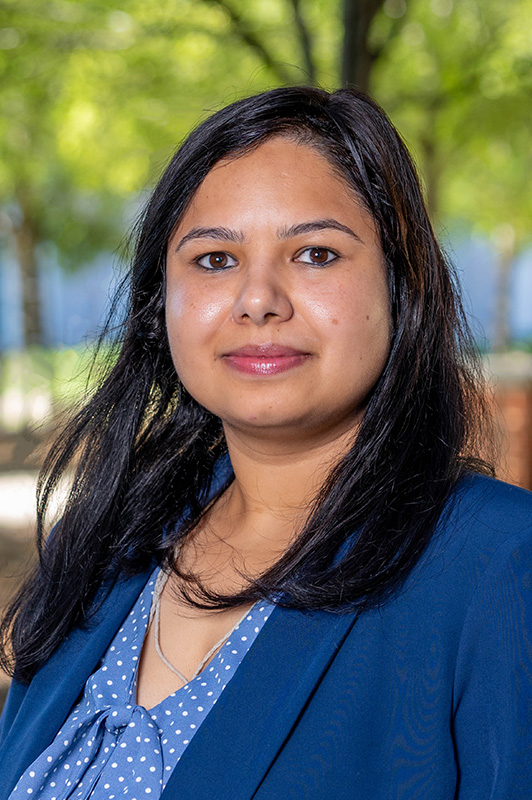
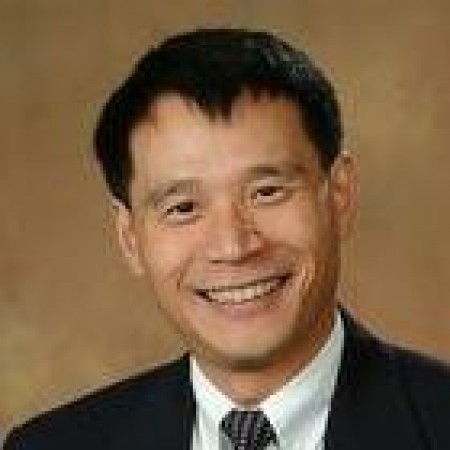
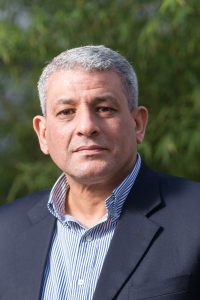
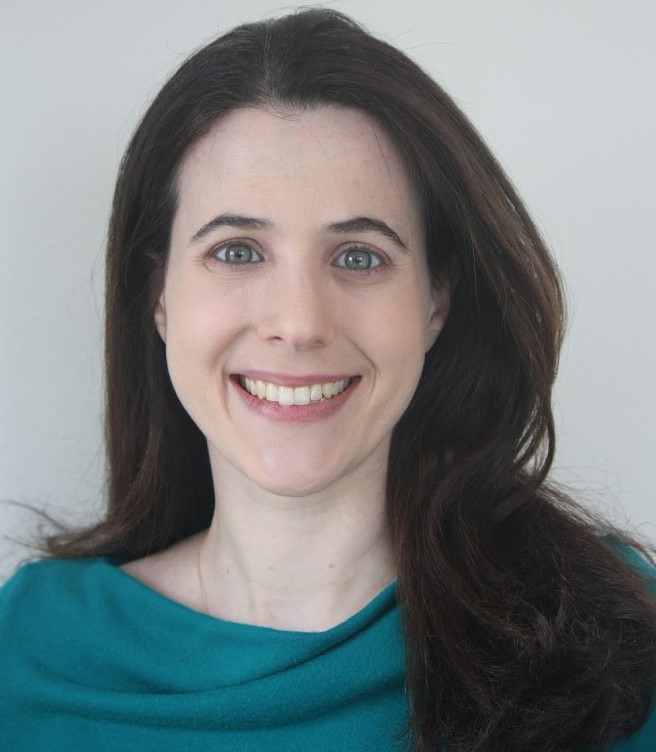
Neha Sharma is an Assistant Professor in the Department of Civil and Environmental Engineering at Auburn University. Her research focuses on nutrient recovery, electrochemical resource recovery, water reuse, trace metal cycling, and pollutant fate and removal.
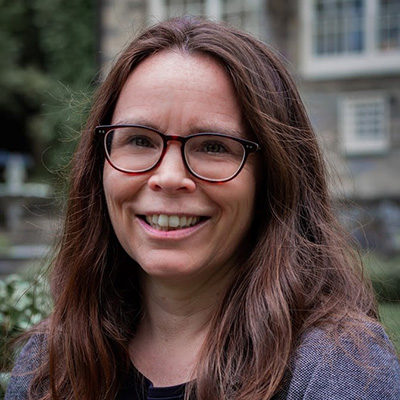
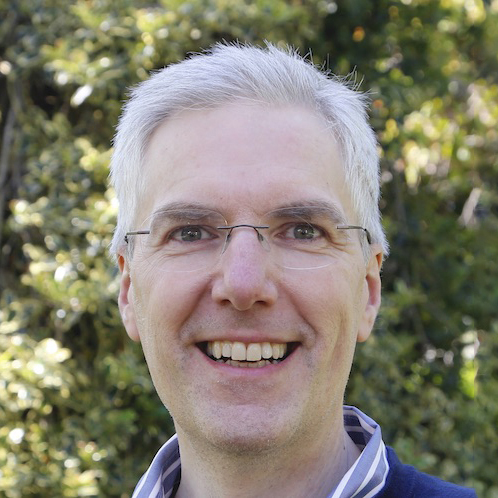
Mika Järvinen serves as Associate Professor in the Department of Energy and Mechanical Engineering at Aalto University, leveraging fundamental sciences—physics, thermodynamics, chemistry, and numerical modeling—to address cross-sector energy challenges. His research spans sustainable bioenergy and inter-linked circular economy systems integrating energy, materials, and environmental considerations across biomass, pulp/paper, metallurgy, and waste-to-energy industries. His expertise centers on sustainable bioenergy and circular economy frameworks, utilizing numerical modeling to optimize combustion engineering and metallurgical processes. By maintaining diverse industrial engagement, he ensures research continuity during economic fluctuations while advancing black liquor spraying technologies and energy-material-environment synergies. This approach enables flexible, physics-based solutions for complex industrial energy conversion problems. Professor Järvinen's 2025 publications reveal a cohesive focus on renewable energy systems operating within planetary boundaries, spanning carbon capture (calcium looping), low-temperature heat engines, and comprehensive textbook development. His work integrates solar, wind, bioenergy, and storage technologies into holistic frameworks that balance technical innovation with ecological constraints, emphasizing system-level sustainability over isolated component optimization. His scientific recognition includes: Best Dissertation Award (2002) from Helsinki University of Technology's Department of Machine Technology for research on black liquor droplet conversion Resonate Award (2015) from Caltech University's Resnick Institute As lead of the Energy Conversion and Systems research group, he directs projects bridging fundamental modeling with industrial applications while developing educational resources for next-generation energy engineers. His laboratory work emphasizes experimental validation of numerical models across combustion, metallurgical, and biomass conversion processes.
Haitong Li is an Assistant Professor in the School of Electrical and Computer Engineering at Purdue University's College of Engineering, joining the faculty in 2022. His research bridges nanoelectronic devices, integrated circuits, and nanotechnology-inspired AI hardware to address critical challenges in energy-efficient artificial intelligence systems. Education: Ph.D. in Electrical Engineering, Stanford University Research Interests: Dr. Li pioneers emerging memory technologies—particularly Resistive RAM (RRAM)—for in-memory computing and neuromorphic systems. His work focuses on 3D monolithic integration of RRAM and gain cell memory with CMOS to enable edge AI, with recent breakthroughs in hardware acceleration for large language models and sustainable computing. Key innovations include carbon footprint prediction for LLMs and zeroth-order fine-tuning techniques. Publication Trends: Dr. Li's 2023-2025 publications reveal a strategic shift toward sustainable AI hardware, emphasizing carbon-aware LLM inference and edge deployment. His research consistently targets data movement reduction through memory-centric architectures, spanning photonic accelerators, neuro-symbolic computing, and heterogeneous 3D integration. Awards: No scientific awards were documented in the provided sources. Advising and Grants: Current advisees and grant funding details were not specified in the available materials. Labs and Teams: Research group composition and laboratory facilities were not described in the source text.
Jennifer Wilcox is the Presidential Distinguished Professor of Chemical Engineering and Energy Policy at the University of Pennsylvania's School of Engineering and Applied Science. She holds the James H. Manning Chair and directs the Clean Energy Conversions Lab, which focuses on carbon management strategies to mitigate climate change. Wilcox also served as Principal Deputy Assistant Secretary of Fossil Energy and Carbon Management at the U.S. Department of Energy from January 2021. Her research spans carbon capture, utilization, and storage (CCUS), direct air capture (DAC), mineral carbonization, life cycle assessment, and techno-economic analysis of carbon management technologies. Wilcox's work examines both mitigation and adaptation strategies to minimize negative climate impacts associated with society's dependence on fossil fuels. She takes a multi-perspective approach that includes experimental work, materials characterization, geo-spatial analyses, systems modeling, and techno-economic analysis while considering environmental and social contexts. Wilcox's research has been featured in major publications including the first textbook on Carbon Capture and Storage, the California Getting to Neutral report, the CDR primer, Greenhouse Gas Removal Technologies, the State of CDR Volume 2, and the Roads to Removal report. Her work has received recognition including the DOE Secretary's Achievement Award for contributions to the Getting to Neutral report. Secretary's Achievement Award for work on the Getting to Neutral Report Principal Deputy Assistant Secretary of Fossil Energy and Carbon Management (2021) Author of the first textbook on Carbon Capture and Storage Lead contributor to the California Getting to Neutral report Co-author of the CDR primer with nearly 40 subject matter experts Wilcox mentors several PhD candidates and research associates including Maxwell Pisciotta, Shelvey Swett, Hélène Pilorgé, Shrey Patel, Aline Uwase, Katherine Vaz Gomes, and Abby Lunstrum. Her lab examines various carbon management strategies from technology development to deployment optimization, with a focus on maximizing climate change mitigation while minimizing adverse social and environmental impacts. The Clean Energy Conversions Lab tracks public funding for carbon management projects across the United States and analyzes lessons from recent legislation like the Bipartisan Infrastructure Law and Inflation Reduction Act to identify opportunities for carbon management.
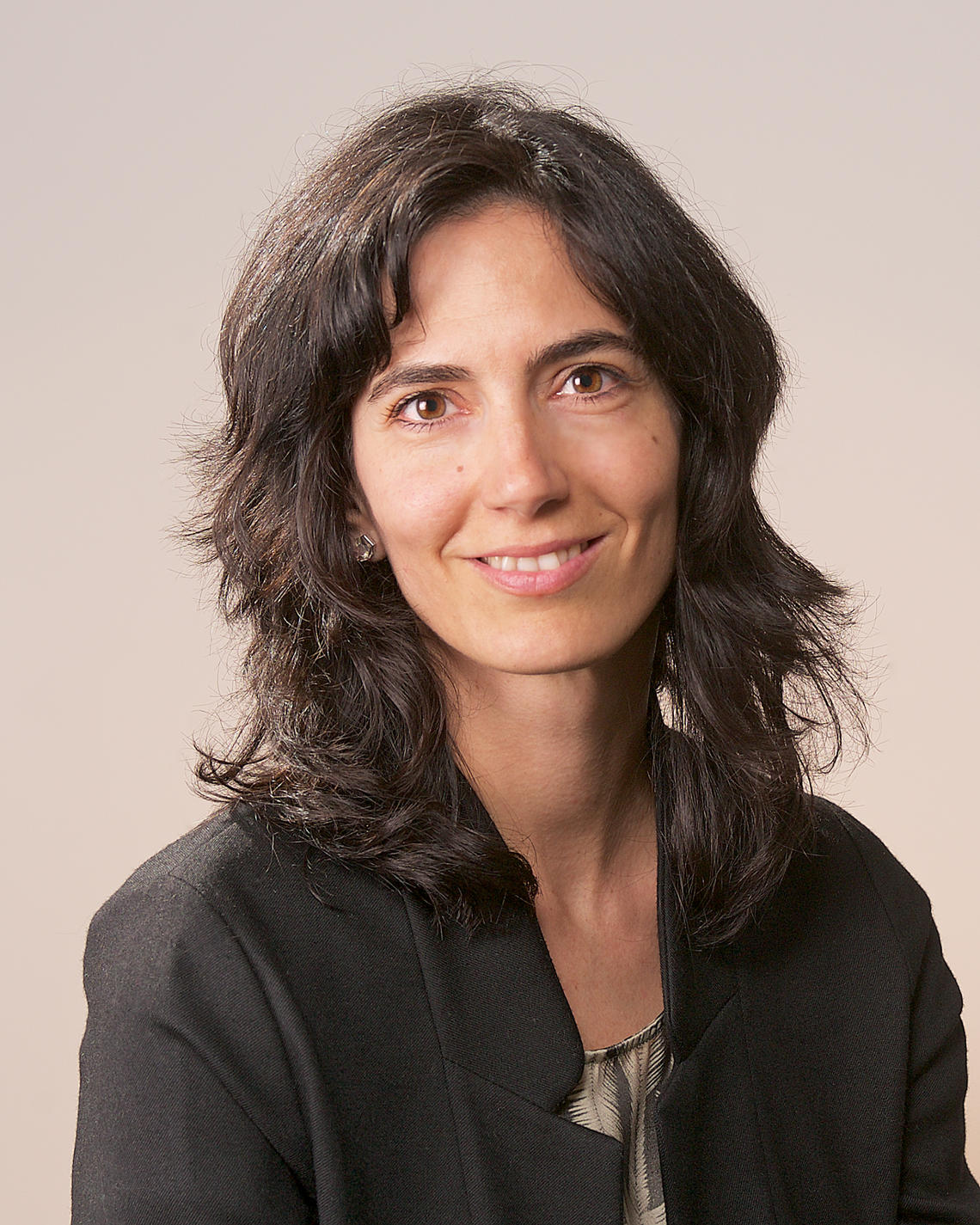
Dr. Enrica Dall'Ara serves as the Associate Dean of Planning and Landscape Architecture and an Associate Professor at the University of Calgary's School of Architecture, Planning and Landscape. Her work bridges academic research and professional practice, exemplified through her firm PARC, which specializes in public space design, urban renewal, and the rehabilitation of industrial sites. She emphasizes interdisciplinary collaboration, integrating fields like environmental engineering and biology into landscape architecture. Education: Laurea in Architettura (Master Degree equivalent in Architecture), University of Ferrara, Italy Master in Landscape Architecture, ETSAB, Polytechnic University of Catalonia, Spain PhD in Landscape Design, University of Florence, Italy Research Interests: Dr. Dall'Ara focuses on practice-based research, public space design, service landscapes, and the integration of cultural advocacy into landscape architecture. Her work explores site-specific design solutions, the role of agriculture in urban-rural dynamics, and the preservation of traditional rural landscapes. She advocates for designs that serve life through poetic, functional, and culturally sensitive approaches. Contributions: Through her teaching, Dall'Ara encourages students to view design as research, fostering critical thinking and interdisciplinary dialogue. Her firm’s projects, such as the roundabout gardens in Imola, Italy, demonstrate her commitment to merging ecological, functional, and aesthetic considerations in landscape interventions. Professional Affiliations: Canadian Society of Landscape Architects (CSLA) Alberta Association of Landscape Architects (AALA) Associazione Italiana di Architettura del Paesaggio (AIAPP) Ordine degli Architetti, Pianificatori, Paesaggisti e Conservatori (Province of Forlì-Cesena, Italy)
Raffaele Ferrari is the Cecil & Ida Green Professor of Oceanography and Co-Director of the MIT Lorenz Center within the Department of Earth, Atmospheric, and Planetary Sciences (EAPS). He holds a BS/MS from Università di Torino and a PhD from Politecnico di Torino and Scripps Institution of Oceanography. His research focuses on ocean dynamics, climate modeling, and paleoclimatology, with emphasis on turbulence, carbon cycling, and climate system interactions. Key projects include the Climate Modeling Alliance (CliMA) and the Bottom Boundary Layer observational program. He has been recognized with awards such as the Harald Sverdrup Lecture (2022) and the Nicholas P. Fofonoff Award (2007). His work integrates high-resolution modeling, observational data, and theoretical frameworks to advance climate science. Education: BS/MS (Università di Torino), PhD (Politecnico di Torino/Scripps) Affiliations: MIT Lorenz Center, CliMA collaboration (Caltech/JPL), MIT-WHOI Joint Program Research spans ocean turbulence, paleoclimate dynamics (e.g., Last Glacial Maximum, Eocene), and climate model development using AI/ML. He advises numerous students across these themes, contributing to breakthroughs in submesoscale dynamics and ocean energetics.
Kevin Manaugh is an Associate Professor at McGill University, specializing in Urban Planning with a focus on sustainable transportation and spatial justice. His research examines how decision-making processes in urban development balance environmental, economic, and social equity goals, particularly through transport systems. He holds a PhD in Urban Planning from McGill University (2013). His key research interests include integrating social equity into land use policies, analyzing accessibility impacts on socioeconomically diverse populations, and studying behavior change related to sustainable transportation. Current projects explore equitable transit accessibility, responses to local mobility policies, and health/well-being effects of sustainable transport choices. Manaugh has published extensively on transportation equity, urban form analysis, and GIS applications. His work bridges theoretical frameworks with practical policy implementation, emphasizing participatory approaches to urban planning. Notable contributions include studies on pandemic street reallocation equity and cycling infrastructure prioritization strategies. His research has been supported by interdisciplinary collaborations and applied to Canadian urban contexts. Despite prolific output, Manaugh maintains an active engagement with public discourse on urban mobility challenges and equitable urban futures.
Andy Pavlo is an Associate Professor with Indefinite Tenure in the Computer Science Department at Carnegie Mellon University's School of Computer Science. He is an active member of the CMU Database Group and the Parallel Data Laboratory, where he leads research in database management systems with a focus on self-driving architectures, transaction processing, and large-scale analytics. His work bridges academic research and industry applications through projects like NoisePage, OtterTune (which he co-founded and served as CEO before it ceased operations), and Peloton. Dr. Pavlo's research interests span database management systems with particular emphasis on autonomous database architectures that can self-tune and optimize without human intervention. His work explores transaction processing systems that can handle high-throughput workloads while maintaining consistency, and large-scale data analytics techniques that efficiently process massive datasets. He has made significant contributions to query optimization, database extensibility, and automatic database tuning using machine learning techniques. His recent work on database extensibility revealed critical issues in PostgreSQL's extension ecosystem, showing that approximately 16% of extensions are incompatible with at least one other extension due to API violations and memory errors. His research output demonstrates a consistent focus on practical database systems challenges, with recent publications examining database extensibility, user-defined function optimization, and the cyclical nature of database research. The articles show a strong trend toward making database systems more autonomous, with increasing integration of machine learning techniques for automatic tuning and optimization. His work often combines deep theoretical analysis with practical implementation in open-source systems. Dijkstra Award 2024 for contributions to database systems research Dr. Pavlo actively mentors graduate students, with current advisees including Wan Shen Lim, William Zhang, and Sam Arch (co-advised with Todd Mowry). His former students have gone on to successful careers in both industry and academia. He has secured significant research funding through CMU's affiliate program with major database companies including ClickHouse, DataStax, dbt, Firebolt, MotherDuck, RelationalAI, SingleStore, Spiral, PingCAP/TiDB, Yellowbrick, and Yugabyte. His research is supported by these industry partnerships and likely includes NSF funding given his active participation in the database research community. At CMU, Dr. Pavlo leads the Database Group and organizes several seminar series including "SQL or Death," "Database Building Blocks," and "ML⇄DB Technical Talks." These seminars bring together researchers and practitioners to discuss cutting-edge developments in database systems. He also runs a summer research internship program that has attracted students for multiple consecutive years, indicating a strong research group with ongoing projects and funding.
Prof. Richard L. Peters is a Professor and Head of the Chair of Tree Growth and Wood Physiology at the Technische Universität München (TUM) since 2024. His research focuses on tree physiology, wood formation, and climate-forest interactions. He holds a doctorate summa cum laude from the University of Basel (2018) and has conducted postdoctoral research at the Swiss Federal Institute for Forest Science (WSL) and Ghent University. His work integrates forest ecology, dendrochronology, and ecophysiology to address climate change impacts on forests. Education: B.Sc./M.Sc. in Biology at Utrecht University, Ph.D. from University of Basel (2018). Key career steps include a Swiss National Science Foundation (SNSF) fellowship at Ghent University and coordination of the Swiss Canopy Crane II project (2021). Research Interests: Tree water-use strategies, drought tolerance mechanisms, carbon allocation dynamics, and the physiological basis of tree growth. He leads interdisciplinary projects to monitor forest responses to environmental stress using tools like the TreeNet network. Awards: Early Postdoc Mobility Fellowship (SNSF, 2019), Doctorate summa cum laude (2018). Contributions: Authored >180 publications, co-developed the datacleanr R package for ecological data processing, and pioneered methods linking tree-ring data with climate models. His work emphasizes the need for better observational data to improve vegetation models.
Sebastian Raisch is a Full Professor of Strategic Management at the Geneva School of Economics and Management (GSEM), University of Geneva, where he also serves as Director of the Executive MBA program. He is affiliated with the Institute of Management and holds a Ph.D. from the University of Geneva. His academic work is deeply rooted in understanding how organizations balance stability and change, particularly in the face of digital transformation. Research Interests: His primary areas of expertise include strategic management, organizational ambidexterity, organizational paradox, artificial intelligence in organizations, and digital transformation. His research investigates the dynamics of corporate growth and decline, strategic renewal, and the integration of human and artificial intelligence in organizational decision-making. He is especially interested in how firms navigate tensions between competing demands such as exploration and exploitation, automation and augmentation, and stability and innovation. Publications and Trends: His recent publications (2023–2025) show a strong shift toward the role of artificial intelligence in management, with a focus on hybrid human-AI systems, ethical AI, and the strategic implications of AI adoption. Earlier works center on ambidexterity, paradox theory, and corporate turnaround, establishing him as a leading scholar in these domains. Scientific Awards: Strategic Management Society’s Best PhD Paper Award Emerald Publishing Group’s Citation of Excellence Award Journal of Management’s Scholarly Impact Award Editorial and Professional Service: Sebastian Raisch serves as Associate Editor at the Academy of Management Review and sits on the editorial boards of the Academy of Management Journal and the Strategic Management Journal . He has advised numerous doctoral students and supervised research projects on organizational innovation and digital strategy, though specific names are not listed in the provided materials. He has not received explicit mention of research grants, but his extensive publication record suggests active research funding. Labs and Research Teams: While no formal lab is mentioned, Raisch leads or contributes to research initiatives within the Institute of Management at GSEM, particularly in strategic management and digital innovation. He collaborates with scholars across Europe and the U.S., including notable co-authors like J. Schad, S. Krakowski, and M. Tushman.
Ron H.J. Peerlings is Associate Professor in the Department of Mechanical Engineering at Eindhoven University of Technology (TU/e) , where he leads the Mechanics of Materials research group. Promoted to Associate Professor in 2007 after joining as Assistant Professor in 2000, he has built an extensive portfolio in theoretical and computational mechanics of materials. Education: PhD (1999) – Eindhoven University of Technology, thesis: Enhanced damage modelling for fracture and fatigue Post-doctoral research (1999–2000) – University of Cambridge, Engineering Department Research interests revolve around micromechanics , micro-plasticity , multiscale modelling , homogenisation , damage and fracture , and enriched continuum theories . His work spans advanced high-strength steels, composites, paper and fibrous networks, with strong emphasis on coupling rigorous theoretical developments to industrially motivated problems. His recent publications (2023-2025) demonstrate a clear trajectory towards integrating advanced experimental techniques (e.g., digital image correlation, micro-mechanical testing) with high-fidelity computational frameworks such as crystal-plasticity finite-element modelling, FFT-based solvers and micromorphic homogenisation. Dominant themes include: Deformation and fracture in lath martensite and dual-phase steels Hygro-mechanics of paper and fibrous networks Pattern-transforming mechanical metamaterials Discrete-to-continuum scale bridging methods Scientific awards are not explicitly listed in the provided material; however, his prolific output (294 research items, >6500 citations) attests to significant peer recognition. Teaching & supervision: He delivers courses on Computational Mechanics – Numerical Methods for Fluids and Solids and Fracture Mechanics – Theory and Application , and has supervised >80 student works and numerous PhD candidates whose names appear on joint publications. Laboratory & teams: He heads the Group Peerlings within the Mechanics of Materials cluster, maintaining close collaboration with the Mechanics of Materials Group Geers and extensive national/international experimental and computational networks.
Prof. Dr. Gonzalo Guillén Gosálbez is a Full Professor at the Department of Chemistry and Applied Biosciences , ETH Zürich. He holds a PhD in Process Systems Engineering (UPC, 2005) and has held academic positions at Imperial College London (Reader), University of Manchester (Senior Lecturer), and Universitat Rovira i Virgili (Assistant/Associate Professor). His research focuses on Sustainable Chemical Processes , integrating life cycle assessment, optimization techniques, and planetary boundary analysis to evaluate and design low-carbon technologies. Current position: Full Professor, ETH Zürich (2019–present) Prior roles: Imperial College London (2016–2019), University of Manchester (2014–2016), URV Spain (2008–2014) Education: PhD (UPC, 2005), MEng/BEng (University of Murcia) His research explores CO2 valorization , green methanol synthesis , circular marine fuels , and planetary boundary compliance in energy and chemical systems. Recent work emphasizes machine learning for process modeling, single-atom catalysis , and decentralized ammonia production . Scientific contributions include 15+ peer-reviewed articles (2023–2025) in journals like Nature Chemical Engineering , ACS Sustainable Chemistry & Engineering , and Energy & Environmental Science . Key themes: Optimization of hybrid fossil/renewable carbon systems Environmental impacts of energy transitions Catalyst design for sustainable chemistry Life cycle assessment of emerging technologies Awarded UPC Top Doctoral Student Award and Top National Student Award , he combines process systems engineering with sustainability metrics to address global challenges in chemical and energy systems.
Professor Huibing Zhang is a Professor of Management at the Naveen Jindal School of Management, University of Texas at Dallas. He holds a Ph.D. in Economics from Duke University (1994) and a B.S. from Shanghai Jiao Tong University, China (1984). Prior to his current position, he served as Associate Professor at the University of North Carolina at Chapel Hill (2000–2005) and Assistant Professor at Carnegie Mellon University (1994–2000). Education: Ph.D. in Economics, Duke University, 1994 B.S., Shanghai Jiao Tong University, China, 1984 His research focuses on financial economics, tax policy, and asset pricing. Key areas include the impact of capital gains taxes on asset prices, behavioral finance, and optimal portfolio strategies. He explores topics such as model uncertainty in financial markets, external habits affecting stock returns, and optimal consumption decisions under borrowing constraints. His work integrates theoretical frameworks with practical applications in taxation and investment planning. Awards and Honors: Fellow, TIAA-CREF Institute TIAA-CREF Paul A. Samuelson Award (2004) for outstanding work on optimal asset location and allocation Barclays Global Investors/Michael Brennan Runner-Up Award (2002) for research on optimal consumption and investment with capital gains taxes Undergraduate Economics Teaching Award, Carnegie Mellon University (1998) BP America Research Chair, Carnegie Mellon University (1995–1996) Grants and Contracts: Taxes, Estate Planning and Financial Theory: New Insights and Perspectives (Q-Group, 2002; TIAA-CREF, 2002) Diversification and Capital Gains Taxes with Multiple Risky Assets (TIAA-CREF, 2001) Optimal Asset Location and Allocation with Taxable and Tax-Deferred Investing (TIAA-CREF, 2000) Optimal Portfolio Choice and Consumption with Capital Gains Taxes (TIAA-CREF, 1999) Carnegie Mellon Faculty Development Fund (1998–1999)
Dr. Tarek Sayed is a Professor at the University of British Columbia's Department of Civil Engineering within the Faculty of Applied Science. He specializes in Transportation Engineering, focusing on road safety analysis, traffic operations, and Intelligent Transportation Systems (ITS). He serves as the Director of the Bureau of Intelligent Transportation Systems and Freight Security (BITSAFS-Engineering) and Editor of the Canadian Journal of Civil Engineering . His research addresses three core areas: improving road safety evaluation techniques, enhancing safety through traffic operations and highway design analysis, and advancing ITS technologies. Notable contributions include frameworks for safety-audits of infrastructure projects like the Sea to Sky Highway and methodologies for evaluating transit signal priority systems in Vancouver. He has authored/co-authored over 250 publications and supervised 60 graduate students. Key Roles: Professor, BITSAFS Director, Journal Editor Awards: Tier 1 Canada Research Chair, Wilbur Smith Award, Sandford Fleming Award, Prince Michael International Road Safety Award Consulting: Global projects in traffic safety and ITS for agencies like ICBC, FHWA, and Ashghal His research integrates Bayesian statistical methods, extreme value theory, and machine learning to model traffic conflicts, pedestrian behavior, and safety interventions. Current projects include real-time safety optimization using autonomous vehicle data and analyzing shared space interactions between cyclists and pedestrians. Dr. Sayed chairs national/international committees, including the U.S. Transportation Research Board’s safety data committee. His work bridges academia and practice, influencing policy and infrastructure investment decisions worldwide.
Adriana Schulz is an Assistant Professor in the Department of Computer Science & Engineering at the University of Washington's College of Engineering. She leads a research group focused on computational design, computer-aided design (CAD), and digital fabrication. Her work bridges computer science with practical applications in manufacturing, robotics, and sustainable design. Dr. Schulz received her Ph.D. in Computer Science from MIT in 2018 under the supervision of Professor Wojciech Matusik. Prior to her doctoral studies, she earned a Master's degree in Mathematics from IMPA (Instituto Nacional de Matemática Pura e Aplicada) in Rio de Janeiro, where she worked with Professor Luiz Velho, and a Bachelor's degree in Electronics Engineering from UFRJ (Federal University of Rio de Janeiro). Her research interests center around computational tools that enhance design and manufacturing processes. She develops novel algorithms for CAD systems, computational fabrication techniques, and sustainable design approaches. Her work spans multiple domains including robotics, textiles, electronics, and architecture, with a strong emphasis on creating practical tools that designers and engineers can use in real-world applications. She explores how machine learning, particularly neurosymbolic approaches, can improve design workflows and enable new capabilities in computational design systems. Analysis of her recent publications reveals a strong trend toward more intelligent and user-centered design tools. Her research increasingly integrates machine learning with traditional CAD systems to create more intuitive interfaces, supports sustainable design practices with computational tools, and develops novel fabrication techniques that push the boundaries of what's possible with digital manufacturing. She has made significant contributions to zero-waste fashion design, immersion cooling for high-performance computing, and CAD program understanding through novel representation learning techniques. Innovators Under 35 - MIT Technology Review Bolsa Aluno Nota 10 from FAPERJ Engineer 20000 award Dr. Schulz actively mentors several PhD students and postdoctoral researchers, including Haisen Zhao, Ben Jones, Yuxuan Mei, and others, often in collaboration with colleagues across different departments. Her research has attracted significant media attention, with coverage in major outlets including MIT News, BBC, IEEE Spectrum, Wired, and TechCrunch. Her work on Interactive Robogami was noted as the most read article in the International Journal of Robotics Research in its publication year. She leads a vibrant research group at the University of Washington that focuses on computational design systems, with particular emphasis on creating tools that bridge the gap between digital design and physical fabrication. Her team develops novel algorithms for CAD systems, computational fabrication techniques, and sustainable design approaches that have practical applications across multiple industries.