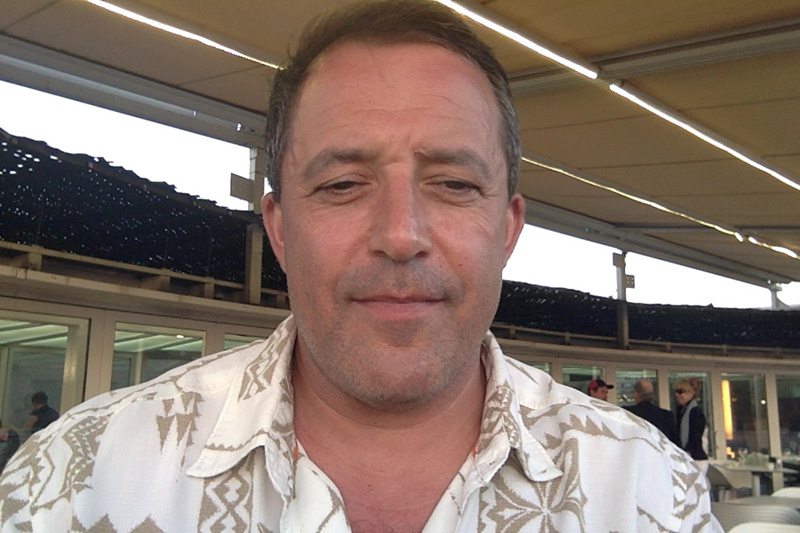
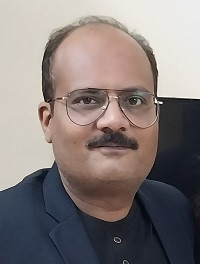
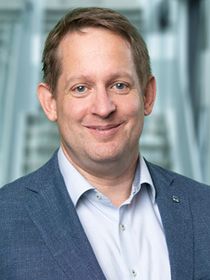
Gene Tsudik is a Distinguished Professor of Computer Science at the University of California, Irvine (UCI), with a career spanning over two decades. He obtained his Ph.D. in Computer Science from the University of Southern California (USC) in 1991, focusing on access control in the Internet. His research spans multiple areas including computer and network security, applied cryptography, and digital privacy, with a recent emphasis on database privacy, genomic privacy, and usable security. His notable contributions include the Inter-Domain Policy Routing (IDPR) protocol, KryptoKnight for network security, and Tree-Based Group Key Agreement protocols. He has over 210 publications and 8 patents. From 2002 to 2007, he served as Associate Dean of Research and Graduate Studies at UCI's School of Information and Computer Sciences and currently directs the UCI Secure Computing and Networking Center (SCONCE). Research Keywords : Cybersecurity, Cryptography, Privacy, Network Security, Digital Signatures, Genomic Data Protection. Scientific Awards : IEEE Fellow (2012), ACM Fellow (2014), AAAS Fellow (2016), Fulbright Senior Scholar (2007), and IFIP Fellow (2020). Professor Tsudik has supervised 18 PhD students and held visiting positions at universities across Europe and Asia. His recent publications focus on secure hardware attestation, biometric authentication, and social media data privacy.
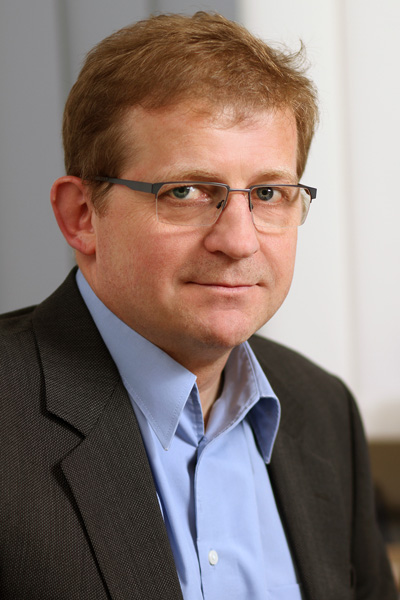
Lam James is a Chair Professor of Control Engineering at the University of Hong Kong (HKU), affiliated with the Faculty of Engineering. He holds a BSc (1st Hons.) in Mechanical Engineering from the University of Manchester, and MPhil/PhD degrees from the University of Cambridge. His academic journey includes roles as a Croucher Fellow, Lecturer at the University of Melbourne, and faculty member at City University of Hong Kong before joining HKU in 1993. Professor Lam serves as Editor-in-Chief for four international journals including IET Control Theory and Applications and Journal of The Franklin Institute . His research focuses on networked control systems, vibration control, control theory, and multi-agent systems. With 600+ peer-reviewed publications, he maintains an H-index of 102 (Web of Science) and 108 (Scopus), recognized as a Highly Cited Researcher in multiple fields. Education: BSc Manchester (Mechanical Engineering), MPhil/PhD Cambridge Editorial Roles: 20+ journals, including leadership roles since 2012 His awards include Foreign Membership of Academia Europaea (2024), National Academy of Artificial Intelligence membership (2025), and two State Natural Science Awards (2015, 2019). He is a Fellow of multiple institutions including IEEE, IMechE, and HKIE.
Wolfgang Kunz is a Full Professor (C4, W3) and Chair of Electronic Design Automation at the Technische Universität Kaiserslautern since 2001. His academic career spans multiple prestigious institutions, including Goethe-University Frankfurt/Main and the University of Massachusetts, Amherst. He has held leadership roles such as Dean (2005-2007) and Vice-Dean (2007-2009) at TU Kaiserslautern. Habilitation (Dr. rer. nat. habil.), Computer Science, University of Potsdam (1996) Doctoral degree (Dr.-Ing.), Electrical Engineering, University of Hannover (1992) Dipl.-Ing. degree, Karlsruhe Institute of Technology (1989) His research focuses on hardware verification, security, and optimization, particularly in embedded systems and processors. His work on formal verification methods has been commercialized by companies like Synopsys, Mentor Graphics, and Siemens EDA. His 2016-2021 publications address critical security issues such as Spectre/Meltdown and introduce innovative verification frameworks adopted by industry leaders like Infineon and OneSpin Solutions. Scientific awards include the IEEE Fellow (2006), German IT Society Award (2005), and TU Kaiserslautern Distinguished Teaching Award (2016). He has served on editorial boards of major journals and coordinated the Erasmus Mundus European Master Program in Embedded Computing Systems since 2010. Key students: Jörg Bormann, Raik Brinkmann, Tobias Ludwig Collaborations: Siemens EDA, Infineon, AbsInt, Intel SCAP Spin-offs: LUBIS EDA, OneSpin Solutions
Matteo Maffei is a Full Professor at TU Wien, leading the Security and Privacy group. He joined in 2017 after 11 years at Saarland University's CISPA. He holds a Ph.D. in Computer Science from Ca’ Foscari University of Venice (2006). He coordinates the TU Wien Cybersecurity Center, the SecInt Doctoral School, and the FWF Special Research Program SPyCoDe. His research focuses on formal methods for security and privacy, blockchain technologies, and web security. Roles: Full Professor, Coordinator of TU Wien Cybersecurity Center, Module Head of Christian Doppler Lab for Blockchain Technologies (CDL-BOT), Board Member of Vienna Cybersecurity and Privacy Research Cluster (ViSP). His work emphasizes formal verification of cryptographic protocols, smart contracts, and decentralized systems. Key achievements include ERC Advanced (2024) and Consolidator (2018) Grants, and leadership roles in conferences like IEEE Computer Security Foundations Symposium (CSF). Research Interests: Formal methods, smart contracts, blockchain scalability, web security, privacy-preserving protocols, and decentralized systems. His recent projects include optimizing Lightning Network channels, secure multi-hop payments, and AI-driven robustness verification. Publications: Over 200 publications in top venues like CCS, IEEE S&P, and CRYPTO. Recent work includes advancements in blockchain interoperability (e.g., Alba bridges), light client protocols (Blink), and neural network verification techniques. Grants & Awards: ERC Advanced Grant (2024), ERC Consolidator Grant (2018), DFG Emmy Noether Fellowship (2009). Led projects funded by EU Horizon, FWF, and industry partners like ABC Research GmbH. Advising & Labs: Supervised over 20 PhD/Master theses. Active in the Christian Doppler Lab for Blockchain Technologies and the SPyCoDe SFB. Collaborates with institutions like SBA Research and Stanford University.
Atakan Aral serves as an Associate Professor at the Faculty of Computer Science, University of Vienna, where he leads research in edge computing, distributed systems, and environmental monitoring applications. His work focuses on developing efficient and resilient computing systems for environmental applications, with particular emphasis on neuromorphic edge AI and the cloud-edge continuum. He maintains an active teaching schedule offering courses in Distributed Systems Engineering, Cloud Computing, and Practical Software Courses with Bachelor's Thesis work across multiple semesters through 2025. Dr. Aral's research interests span several critical areas in modern computing including edge computing architectures, federated learning approaches, neuromorphic computing for environmental monitoring, and resilient systems design. His work addresses fundamental challenges in resource-constrained environments, particularly focusing on latency-sensitive applications and energy-efficient computation. The interdisciplinary nature of his research bridges theoretical computer science with practical environmental applications, developing systems that can operate effectively in remote or resource-limited settings. Analysis of his recent publication trajectory reveals a clear evolution from foundational cloud computing research toward increasingly specialized edge intelligence systems. Early work focused on resource allocation and scheduling in cloud environments, while his current research emphasizes neuromorphic approaches for sustainable environmental monitoring. His publications demonstrate growing interdisciplinary collaboration, particularly with environmental scientists, and increasing focus on practical implementations of theoretical concepts in real-world monitoring systems. Dr. Aral leads significant research projects including TROCI (Towards Resilient Operation of Critical Infrastructure), an ongoing initiative, and SWAIN (Sustainable Watershed Management Through IoT-Driven AI), which ran from February 2021 to February 2024. His work spans multiple dimensions of computing systems, from hardware-aware algorithms to application-level implementations, with consistent contributions to major conferences and journals in distributed systems and edge computing. He is an active member of the Scientific Computing research group at the University of Vienna, working from Room 6.49 at Währinger Straße 29. His research environment includes collaboration with the Environment and Climate Research Hub, reflecting the interdisciplinary nature of his work that bridges computer science with environmental applications. His publications indicate strong international collaboration across European institutions and research groups.
Uwe Zdun is a Professor at the Faculty of Computer Science, University of Vienna, where he serves as Vice-Director of Studies for Computer Science and Head of the Research Group Software Architecture. His teaching portfolio includes core courses such as Software Engineering 2, Advanced Software Engineering, and Practical Software Courses for Bachelor's and Master's theses across multiple semesters (2024W-2025S). His research spans software architecture with emphasis on microservices, cloud computing, and DevOps. Key focus areas include architectural design decisions, infrastructure-as-code conformance, security in distributed systems, and the integration of machine learning operations (MLOps/RLOps). He investigates cognitive aspects of architecture practices through controlled experiments and develops model-driven approaches for quality assessment in complex systems. Recent publications (2024-2026) reveal three dominant trends: (1) Security and coupling analysis in infrastructure-as-code deployments, (2) MLOps/RLOps integration for Industry 4.0 cyber-physical systems, and (3) Performance optimization patterns for CI/CD pipelines and autoscaling. His work bridges theoretical architecture models with industrial practice, particularly in microservice ecosystems and reinforcement learning applications. Professor Zdun leads the Research Group Software Architecture at the University of Vienna's Faculty of Computer Science. The group focuses on empirical validation of architectural patterns, tool development for conformance checking, and advancing design decision methodologies in cloud-native and AI-driven systems.
Marco Di Renzo is a CNRS Professor (Directeur de Recherche Titulaire) at University of Paris-Saclay, affiliated with CentraleSupelec and the Signals and Systems Laboratory (L2S). He serves as Coordinator of the Communications Networks Area at the DigiCosme Laboratory of Excellence and Editor-in-Chief of IEEE Communications Letters. His academic leadership includes membership in the Ph.D. School on ICT Admission Committee at Paris-Saclay University. His educational background includes a Laurea (cum laude) and Ph.D. in Electrical Engineering from University of L'Aquila, Italy (2003, 2007), and a Habilitation à Diriger des Recherches from University Paris-Sud (2013). Laurea (cum laude), Electrical Engineering, University of L'Aquila (2003) Ph.D., Electrical Engineering, University of L'Aquila (2007) Habilitation à Diriger des Recherches, University Paris-Sud (2013) Di Renzo's research focuses on next-generation wireless communications, particularly reconfigurable intelligent surfaces (RIS), 6G technologies, and stochastic geometry modeling. His work bridges theoretical communication theory with practical implementations in cellular networks, millimeter-wave communications, and ultra-wide band systems. Recent publications demonstrate leadership in holographic metasurfaces, integrated sensing and communication (ISAC), and AI-empowered network design, establishing him as a pioneer in electromagnetic wave manipulation for future networks. His award-winning publications span RIS-aided communications, channel modeling, and security frameworks. Analysis of his recent work reveals consistent focus on three pillars: (1) fundamental electromagnetic theory for wave manipulation, (2) practical RIS implementations across frequency bands, and (3) integration with AI for network optimization. His articles frequently address industrial applications including factory automation and space-air-ground networks. Di Renzo's scientific recognition includes: IEEE Fellow (2020) and IET Fellow (2020) Highly Cited Researcher (Web of Science, 2019) SEE-IEEE Alain Glavieux Award (2017) Multiple Best Paper Awards (IEEE ICC, EURASIP) Nokia Foundation Visiting Professorship (2020) As Principal Investigator for CNRS, he coordinates multiple Horizon 2020 projects including SURFER, PathFinder, and MetaWireless. His leadership extends to serving as Project Coordinator for H2020 5Gwireless, 5Gaura, MAPNET, and REDESIGN. With over 350 publications, 17,000+ citations, and h-index of 66+, his research group maintains strong industry partnerships with Nokia and other telecommunications leaders. Di Renzo directs the Signals and Systems Laboratory (L2S) at Paris-Saclay and coordinates the DigiCosme Excellence Lab's Communications Networks Area. His team specializes in electromagnetic modeling for wireless networks and has pioneered the European Telecommunications Standards Institute (ETSI) Industry Specification Group on RIS. The group maintains active collaborations with Aalto University (Finland), University of Technology Sydney (Australia), and University of L'Aquila (Italy).
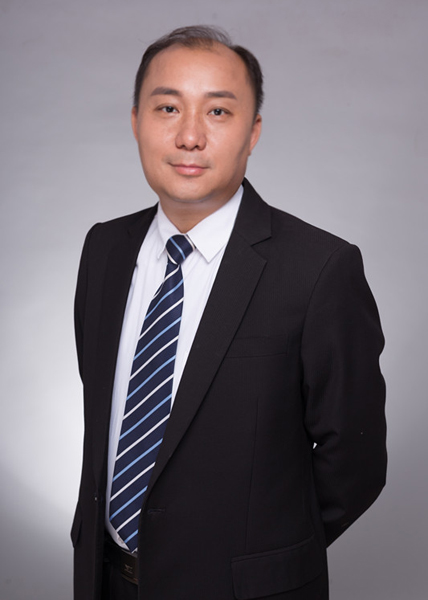
Hongbo Jiang is a Distinguished Professor and Vice Dean of the College of Computer Science and Electronic Engineering at Hunan University, China. He holds concurrent roles as Director of the Trusted Systems and Networking Key Laboratory of Hunan Province and Director of the Hunan International Technical Cooperation Base for High-Performance Computing and Distributed Systems. His academic journey includes tenures as a Professor at Huazhong University of Science and Technology and a Hong Kong Scholar Research Fellow at The Chinese University of Hong Kong. Education: PhD in Computer Science (Case Western Reserve University, 2008), B.S./M.S. in Mathematics (Huazhong University of Science and Technology, 2002). Research Interests: Distributed systems, mobile computing, smart sensing, wireless networks, IoT, and edge computing. Ongoing projects include mobile/wireless applications, data science in IoT, and edge computing platforms. His work emphasizes practical implementations such as DriverSonar for driving safety and SmileAuth for biometric authentication. Key Achievements: Elected Member of Academia Europaea (2022), Fellow of AAIA, IET, and BCS. Notable awards include the Wu Wenjun Science and Technology Award (2020) and multiple best paper recognitions. Over 100+ publications in top venues like ACM MobiCom, IEEE/ACM Transactions. Professional Contributions: Editorial roles across 8+ journals including IEEE Transactions on Mobile Computing and ACM Transactions on Sensor Networks. Conference leadership includes co-founding ACM TURC and EAI ICECI. Active in technical committees for INFOCOM, MOBIHOC, and ICDCS. Labs/Teams: Leads research groups focused on networking, IoT, and edge computing. Current openings for PhD/MSc students and PostDoc researchers with strong mathematical and systems backgrounds.
Andreas Ekelhart is a Researcher at TU Wien's Department of Information and Software Engineering. His work focuses on cybersecurity, cyber-physical systems, and industrial control systems. He specializes in developing frameworks like SLOGERT for automated log analysis and Kyrstal for attack discovery using knowledge graphs. His research also explores digital twin technology for threat detection and semantic web applications in machine learning systems. Key contributions include the VloGraph framework for distributed security log analysis and the QualSec approach for automated security risk identification in production systems. He collaborates on standards like AutomationML and emphasizes privacy-preserving data analysis through semantic architectures.
Mohamed Khamis is an Associate Professor at the University of Glasgow , specializing in Human-Computer Interaction (HCI) with a focus on Human-centered Security and Eye Tracking for privacy protection. His research spans Pervasive Displays , Usable Security , and User Privacy in immersive environments. PhD from Ludwig Maximilian University of Munich (LMU) Supervised by Florian Alt and Andreas Bulling Research Interests: Usable Security and Privacy Designing Gaze-based Systems Thermal Attacks and Shoulder Surfing Mitigation Security in Public Displays and Virtual Reality Recent Publications demonstrate expertise in: Drone Interaction and Proxemics Privacy Scales for Measuring Granular Constructs Gaze-enabled Mobile Authentication Multimodal Security Systems Deepfake Privacy Applications XR Dark Patterns Analysis Scientific Contributions: Recipient of multiple Honorable Mention Awards at CHI and MobileHCI Funding from EPSRC for thermal imaging research Keynote speaker at ECCV 2020 Open Eyes Workshop Co-organizer of ETRA workshops on Eye-Gaze for Security
Dr. Manav R. Bhatnagar serves as a Professor and Brigadier Bhopinder Singh Chair Professor in the Department of Electrical Engineering at Indian Institute of Technology Delhi. He ranks #517 globally in Networking & Telecommunications among the top 2% scientists worldwide according to Stanford University and is a Fellow of INAE, NASI, IET(UK), IETE, and OSI. His academic credentials include a Ph.D. in Signal Processing for Communications from University of Oslo (2008), M.Tech. in Communications Engineering from IIT Delhi (2005), and B.E. in Electronics from North Maharashtra University (1997). He has held visiting appointments at prestigious institutions including Aalto University (Finland), University of Rennes (France), University of Oslo, Indian Institute of Science Bangalore, and University of Minnesota. Dr. Bhatnagar's research spans cutting-edge domains including 5G/6G communication, optical wireless communication, quantum communication, molecular communication, power line communication, and machine learning applications. His work demonstrates significant interdisciplinary connections between communication theory, signal processing, and emerging technologies. His publication record shows a strong focus on wireless and optical communication systems, with recent work addressing challenges in jamming detection, quantum relay systems, IRS-assisted communication, and game-theoretic approaches to resource allocation. His research consistently bridges theoretical foundations with practical applications in next-generation communication systems. NASI-Scopus Young Scientist Award Shri Om Prakash Bhasin Award (2016) Dr. Vikram Sarabhai Research Award (2017) BASIC RESEARCH AWARD of IIT Delhi (2023) Sir Visvesvaraya Young Faculty Research Fellowship (2016) Senior Member of IEEE As an academic advisor, Dr. Bhatnagar has mentored numerous PhD students who have gone on to successful careers at institutions including IIT Jodhpur, IIT Roorkee, Aalto University, and IIT Kanpur. His editorial roles include current Editor of IEEE Transactions on Communications and former Editor of IEEE Transactions on Wireless Communications (2011-2014). His textbook "Telecommunication Switching Systems and Networks" has become a standard reference in the field.
Edgar Weippl is a Professor at the Faculty of Computer Science, University of Vienna, where he serves as Vice Dean and Head of the Research Group Security and Privacy. His work spans cybersecurity, blockchain, and machine learning, with teaching roles in information security and software security courses. Current Positions: Vice Dean (Faculty of Computer Science), Head (Security and Privacy Research Group), Deputy Head (Neuroinformatics & Knowledge Engineering Groups) Research Interests: Cybersecurity, blockchain, IoT security, code obfuscation, privacy technologies, reinforcement learning, and socio-technical systems security Selected Publications: Focus on blockchain privacy, VoWiFi security, code obfuscation, and reinforcement learning applications
Univ.-Prof. Martin Pinzger is a Professor at the Department of Informatics Systems, Alpen-Adria-Universität Klagenfurt. He serves as Head of Department and Member of the Senate, actively contributing to academic governance. Research Focus: Automating Software Engineering Tasks, Mining Software Repositories, Program Analysis, Software Evolution and Visualization Recent Work: Developing tools for API evolution analysis, cybersecurity AI (CAI), robotics benchmarking (RobotPerf), and dependency validation His research combines empirical studies with tool development for software maintenance and security. Current projects address challenges in REST API breaking changes, cloud security certifications, and robotic system performance evaluation. Publications since 2023 demonstrate continued engagement with topics spanning AI-driven code segmentation, microservice API evolution, and cybersecurity tool development. Key trends include cross-disciplinary applications of NLP to software engineering and security-focused tool creation. Contact: martin.pinzger@aau.at
Albert Treytl is a Senior Researcher at the Danube University Krems , serving as Head of the Center for Distributed Systems and Sensor Networks and Deputy Head of the Department for Integrated Sensor Systems. He holds a Master’s degree in Electrical Engineering from the Vienna University of Technology (2001) and has over two decades of experience in communication technologies and security. Current roles: Head of Center, Deputy Head of Department Research focus: Security for embedded systems, IoT, digital twins, AI in energy optimization Involvement: IEEE, CEN TC 247 WG4, IEEE1588 standardization His work addresses distributed data management, smart grid security, and model predictive control strategies for energy efficiency in buildings and traffic systems. He leads multiple national and international projects funded by FFG and EU programs. Recent research projects include KI4HVACS (AI-driven HVAC optimization), Factories4Renewables (industrial renewable energy integration), and Dataskop (sensor-based data economy). He has authored over 100 peer-reviewed publications and serves as co-lecturer at the Vienna University of Technology.
Andreas Rauber is an Associate Professor in the Department of Data Science at Technical University of Vienna. He serves as Curriculum Coordinator for Bachelor and Master programs in Business Informatics and Data Science, and chairs the Curriculum Commission for Business Informatics. His research focuses on Information Systems Engineering, Logic and Computation, and Visual Computing, addressing challenges in data management, digital preservation, and reproducibility in e-science. He leads projects like OS Trails and FAIR-AI, emphasizing FAIR principles and trustworthy research infrastructures. Rauber has contributed to over 150 publications, including works on data citation frameworks, adversarial ML defenses, and reproducibility in IR. His work bridges technical innovation with policy, exemplified through roles in the EOSC Support Office Austria and RDA Austria initiatives. Key projects include establishing FAIR data practices across universities and advancing digital preservation through repositories like DBRepo. He coordinates international collaborations, such as the EU-funded EOSC-Life and EGI Advanced Computing projects. His teaching spans courses in machine learning, information retrieval, and research methods, fostering next-generation data scientists.