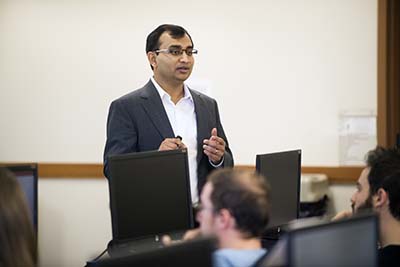
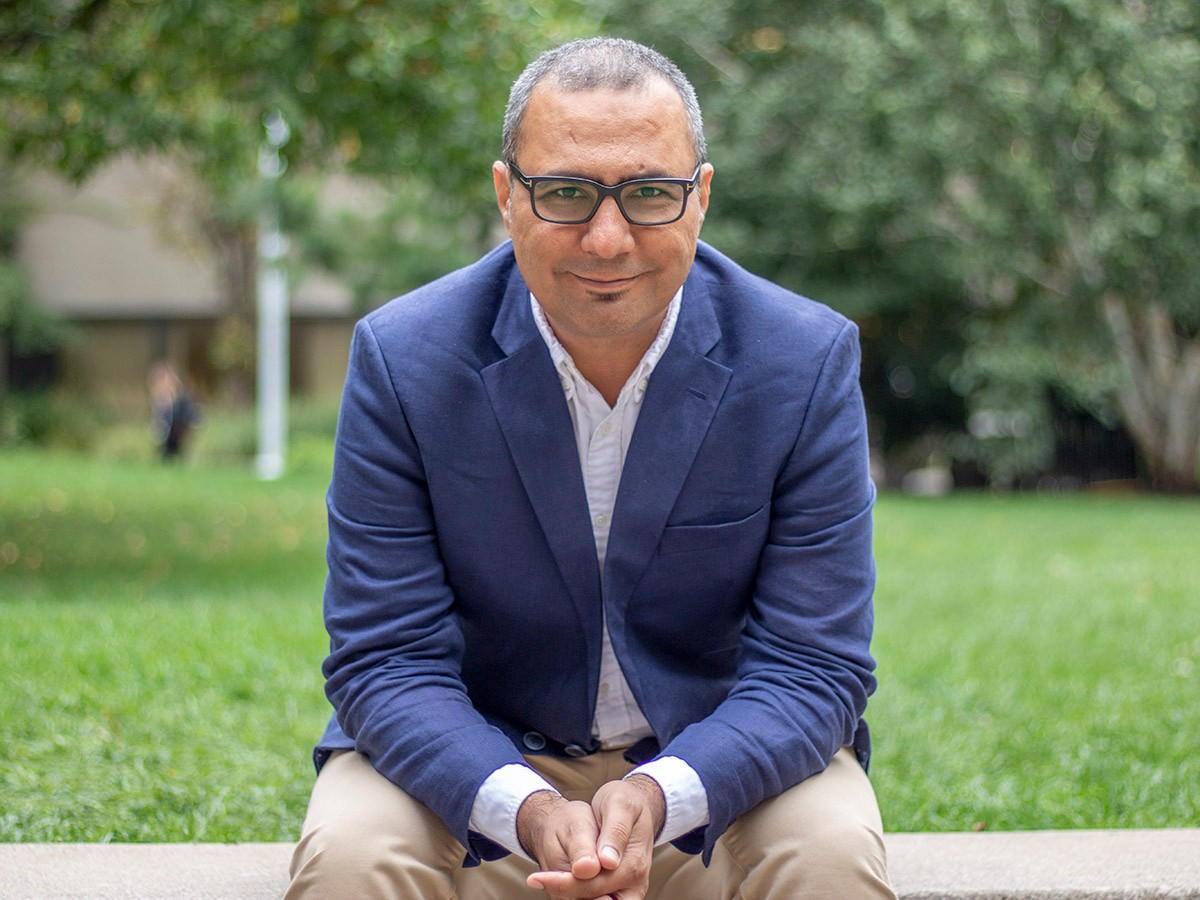
Minseok Ryu is an Assistant Professor at the School of Computing and Augmented Intelligence, Arizona State University (ASU). He holds a Ph.D. in Industrial & Operations Engineering from the University of Michigan (2020). Prior to ASU, he was a postdoctoral appointee at Argonne National Laboratory’s Mathematics and Computer Science Division. His research focuses on optimization methodologies for decentralized and stochastic decision-making distributed algorithms for machine learning and operations research applications in healthcare systems and energy grids Teaching responsibilities include courses on applied deterministic operations research (IEE 574), optimization (IEE 622), and research practicums (IEE 792). His work emphasizes computational challenges in decision-making under uncertainty, with recent projects addressing nurse staffing optimization, federated learning frameworks (e.g., APPFL/APPFLX), and resilient power grid systems. He has no recorded academic awards but actively contributes to open-source software and cross-disciplinary research collaborations. Research interests bridge theory and practice, targeting social goods through optimization techniques like distributionally robust optimization, federated learning, and heuristic algorithms for energy and healthcare systems.
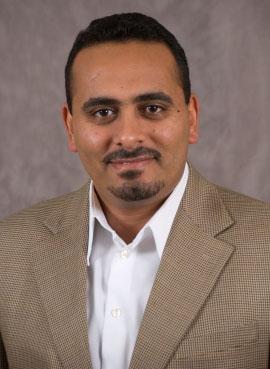
Mohammad Saifur Rahman is the Daniels School Chair in Management and a Professor of Management Information Systems at the Mitch Daniels School of Business, Purdue University. Previously, he was an Associate Professor at the Haskayne School of Business, University of Calgary. His academic journey includes significant leadership roles such as co-chairing the Conference on Information Systems and Technology (CIST) in 2013 and serving as president of the INFORMS eBusiness Society in 2014. Currently, he serves as an associate editor for both Management Science and Information Systems Research (ISR). Ph.D. in Management Information Systems, Krannert School of Management, Purdue University (2008) MBA in Management Information Systems, Southern Illinois University (2004) BS in Computer Science, Southern Illinois University (2002) Rahman's research primarily focuses on the economic implications of digital transformations. His work examines how digitization affects consumer behavior, market structures, and business strategies across various industries. He investigates the value of digital traces in driving consumer behavior and improving decision-making, particularly in omnichannel retail environments. His research on the sharing economy has revealed important insights about economic disparities, showing how platforms like Airbnb provide economic benefits to predominantly white neighborhoods while failing to generate similar spillover effects in predominantly Black or Hispanic neighborhoods. His recent publications reveal a consistent focus on the intersection of technology, economics, and social impact. Rahman's work frequently examines how local market structures interact with digital platforms to create or exacerbate economic inequalities. His research spans multiple disciplines including information systems, economics, marketing, and operations management, with a particular emphasis on empirical studies using real-world data from major companies like Walmart and Cisco. CICP Faculty Commercialization Award (2020) INFORMS Sandy Slaughter Early Career Award (2018) World's Top 40 Business School Professors Under 40 by Poets and Quants (2017) Jay N. Ross Young Faculty Scholar Award (2015) Dean's Award for Outstanding Research Achievement (University of Calgary, 2014) Rahman has secured substantial research funding from organizations including Social Sciences and Humanities Research Council (SSHRC), Adobe Systems ($50,000 grants in 2017 and 2020), Trask Innovation Fund ($21,218), and NSF I-Corps ($50,000). He has advised numerous PhD students and collaborated with industry partners to translate research into practical applications. Rahman co-founded RightFit Analytics, a precision health analytics solution that utilizes AI to learn success patterns in healthcare. He has organized significant academic events including the Krannert-Walmart Data Dive (believed to be the first data dive on a college campus) and the Dawn or Doom Data Dive in cooperation with Cisco. Rahman actively engages with industry through consulting and collaborative research projects. His work with Walmart, Cisco, and other major corporations demonstrates his ability to bridge academic research with practical business applications. He has been particularly active in studying how AI and big data analytics can be leveraged to improve business decision-making while addressing potential negative consequences like algorithmic bias and economic inequality.
Henrik Sandberg is a Professor at the Division of Decision and Control Systems , KTH Royal Institute of Technology , Stockholm, Sweden. He holds the title of Deputy Head of Division and is affiliated with the School of Electrical Engineering and Computer Science . Education: MSc in Engineering Physics (1999) PhD in Automatic Control (2004) from Lund University Postdoctoral position at Caltech (pre-2007) Research Interests: Focus on cyber-physical systems security , power systems , model reduction , and fundamental limitations of control systems . Key sub-areas include attack detection , networked control , privacy-preserving estimation , and resilient control architectures . Publications: Over 150 papers across IEEE Transactions and Automatica , covering topics like stealthy attacks , distributed control , LQG optimization , and thermodynamic costs in filtering . Recent work includes LWE-based encrypted control and Bayesian deception mechanisms . Scientific Awards: Best Student Paper Award Finalist at IEEE CASE 2014; Best Student-Paper Award at IEEE CDC 2004. Grants & Projects: Leads the DYNACON project (WASP Cybersec cluster) and collaborates on CERCES (critical infrastructure resilience). Serves as examiner for multiple advanced courses in cybersecurity and control systems. Contact: Email: hsan@kth.se Phone: +46 (0)8 790 7294 Room: A:607, Malvinas Väg 10, Stockholm
Professor Nagi Gebraeel serves as the Georgia Power Early Career Professor in the H. Milton Stewart School of Industrial and Systems Engineering at Georgia Institute of Technology, where his research integrates predictive analytics, machine learning, and optimization for industrial IoT applications. His work focuses on real-time equipment diagnostics, prognostics, and operational decision-making in critical infrastructure systems. Education: Ph.D. in Industrial Engineering (2003), Purdue University M.S. in Industrial Engineering (1998), Purdue University Research Focus: Dr. Gebraeel develops statistical learning algorithms for IoT-enabled maintenance, repair, and operations (MRO), with emphasis on federated learning frameworks for distributed fault diagnosis and cybersecurity protection against Industrial Control System (ICS) attacks. His research spans manufacturing, power generation, and deep space habitats through NASA's HOME Space Technology Research Institute, where he pioneers self-aware habitat systems. Recent work addresses data heterogeneity in high-consequence industrial environments using causal-informed analytics. Publication Trends: His 2024-2025 publications demonstrate a strong trajectory toward distributionally robust optimization for maintenance logistics, federated learning architectures for distributed fault diagnosis, and prognostics for complex systems like offshore wind farms and industrial robots. Key themes include handling imbalanced data in fault diagnosis, state-space representations for interdependent systems, and cybersecurity integration in manufacturing networks. Awards and Recognition: NSF CAREER Award (2007) SAE Aircraft Electrical Power System Recognition Award (2008) SAE Materials Modeling and Testing Recognition Award (2006) IEEE-AUTOTESTCON Certificate (2006) Fellow of the Institute of Industrial and Systems Engineers Advising and Funding: Dr. Gebraeel mentors doctoral students including Michael Ibrahim (2025 IISE Best Student Paper winner), Heraldo Rozas (now Assistant Professor at University of Chile), Ayush Mohanty, and Nazal Mohamed. He secured a $500,000 NSF grant in August 2025 for AI-driven cybersecurity in distributed manufacturing networks and leads NASA-funded research on deep space habitat systems. His work bridges academic research with industry applications through Georgia Tech's Strategic Energy Institute collaborations. Research Infrastructure: He directs the Analytics and Prognostics Systems laboratory at Georgia Tech's Manufacturing Institute and leads the Predictive Analytics and Intelligent Systems (PAIS) research group. Previously, he served as associate director of Georgia Tech's Strategic Energy Institute (2014-2019), fostering data science applications in energy systems.
Dr. Herb Lin is the Hank J. Holland Fellow in Cyber Policy and Security at the Hoover Institution and Senior Research Scholar for Cyber Policy and Security at the Center for International Security and Cooperation (CISAC), both at Stanford University. He also serves as Chief Scientist, Emeritus for the Computer Science and Telecommunications Board of the National Academies, where he worked from 1990 to 2014, and as Adjunct Senior Research Scholar and Senior Fellow in Cybersecurity at Columbia University's Saltzman Institute for War and Peace Studies. Dr. Lin received his doctorate in physics from MIT, providing him with a strong technical foundation that informs his policy work at the intersection of technology and national security. His academic background bridges the gap between deep technical understanding and policy application in the cybersecurity domain. Dr. Lin's research focuses on the policy dimensions of cybersecurity and cyberspace, with particular emphasis on offensive cyber operations as instruments of national policy, information warfare, and influence operations affecting national security. His work addresses critical challenges at the intersection of emerging technologies like artificial intelligence, quantum computing, and their implications for nuclear security, election integrity, and democratic processes. He has been instrumental in analyzing how cyber capabilities are transforming traditional security paradigms and how policy frameworks must adapt to these changes. His extensive publication record reveals a consistent focus on the evolving relationship between cyber capabilities and national security strategy. Lin's work demonstrates increasing attention to the implications of artificial intelligence for warfare, the vulnerabilities created by quantum computing for current cryptographic systems, and the growing threat of cyber-enabled information warfare to democratic institutions. His research trajectory shows a progression from traditional cybersecurity issues toward the broader implications of digital technologies for national and international security. Member of Science and Security Board of Bulletin of the Atomic Scientists Served on President Obama's Commission on Enhancing National Cybersecurity (2016) Regular congressional testimony on cybersecurity matters Contributor to Stanford Emerging Technology Review As a mentor and collaborator, Dr. Lin works extensively with policymakers, military officials, and technology experts to translate complex cybersecurity concepts into actionable policy recommendations. His approach emphasizes practical solutions to emerging threats while recognizing the technical limitations and policy constraints that shape real-world security outcomes. Dr. Lin is associated with multiple research initiatives including Stanford's Center for International Security and Cooperation and the Stanford Emerging Technology Review, which aim to connect technological advances with policy considerations for national security decision-makers.
Dr. Nanpeng Yu is a Full Professor at the University of California, Riverside , serving as Vice Chair and Graduate Advisor in the Department of Electrical and Computer Engineering . He maintains cooperative faculty affiliations with the Department of Computer Science and Department of Statistics , and directs the Energy, Economics, and Environment Research Center at UCR. Education : B.S. in Electrical Engineering from Tsinghua University (2006), M.S. in Electrical Engineering and Economics, and Ph.D. from Iowa State University (2010) Prior Industry Experience : Senior Power System Planner and Project Manager at Southern California Edison (2011-2014) Dr. Yu’s research bridges smart grid technologies , data-driven optimization , and machine learning for energy systems. Key areas include voltage control , renewable energy integration , transportation electrification , and grid resilience . His recent work focuses on physics-informed graph learning for unit commitment problems and adversarial purification in power system classifiers. The AI-Energy Nexus Laboratory under Dr. Yu has produced impactful publications in Applied Energy , IEEE Transactions on Power Systems , and Transportation Research series, covering topics like heavy-duty EV charging infrastructure and dynamic distribution network reconfiguration . Lab members have won the American-Made Digitizing Utilities Grand Prize ($300,000) from the U.S. DOE. Leadership Roles : Chair, IEEE Power and Energy Society Distribution System Operation and Planning Subcommittee Chair, IEEE Power and Energy Society Working Group on Data-Driven Modeling for Power Distribution Networks Associate Editor, IEEE Transactions on Smart Grid and IEEE Power Engineering Letters Scientific Awards : Regents Faculty Fellowship Regents Faculty Development Award Multiple IEEE Best Paper Awards
Dr. Marina Miron is a post-doctoral researcher at King’s College London’s Department of War Studies and Honorary Research Fellow at the Centre for Military Ethics. Her work focuses on military strategy, cybersecurity, and ethical education in conflict contexts. She holds a PhD from the University of New South Wales (Australian Defence Force Academy) and has taught at institutions like the NATO School and Colombian War College. Current projects include analyzing Russia/China’s information warfare strategies and developing country-specific military ethics programs for Colombia’s armed forces. She also advises on cyber defense, AI in military contexts, and drone technology impacts. Research interests span counterinsurgency, hybrid warfare, cyber operations, and ethical dilemmas in modern conflict. She co-leads a British Academy-funded project on Western countermeasures against information warfare and contributed to NATO’s counterterrorism training programs. Her work bridges technological advancements with ethical considerations, particularly in unmanned systems and medical ethics. Publications analyze Russian cyber capabilities, drone public perception, and historical conflict resolution cases like Peru. She frequently appears in media discussions on Ukraine and cybersecurity threats. Professional networks include King’s Cybersecurity Centre and Freeman Air & Space Institute.
Phuong H. Nguyen is an Associate Professor at the Department of Electrical Engineering at Eindhoven University of Technology (TU/e). He leads the digital Power & Energy Systems (digi-PES) lab, focusing on smart energy systems, distributed control, and IoT integration for future energy grids. His research addresses energy transition challenges, including microgrid optimization, flexibility markets, and data-driven grid management. Nguyen holds a PhD from TU/e (2010) and has held visiting researcher positions at Clemson University. His work contributes to UN SDG goals related to affordable and clean energy. Education: Bachelor's in Electrical Engineering, Hanoi University of Science and Technology (2002) Master's in Electrical Engineering, Asian Institute of Technology (2004) PhD in Electrical Engineering, TU/e (2010) Key Research Areas: Smart Grids and Cyber-Physical Systems Distributed Energy Resource Management Local Energy Markets and Flexibility Provision IoT and Big Data in Energy Systems Awards & Recognition: Best Paper Award SEST 2020 Projects & Grants: REACT-D: Reactive Power Management (Project Manager) Al-driven Applications to Smarten Power System Operation (Project Lead) UNIversity Campus as a Self-Regulated Network (Co-Manager) Labs & Teams: The digi-PES lab develops cyber-physical tools for energy transition, including microgrid simulations, flexibility markets, and grid resilience strategies.
Geert Deconinck is a full professor at KU Leuven , leading the Electrical Energy Systems and Applications (ELECTA) research group within the Department of Electrical Engineering (ESAT). He also serves as scientific leader of the EnergyVille research center's algorithms domain, focusing on smart electrical networks and thermal systems. M.Sc. and Ph.D. from KU Leuven Head of ELECTA since 2012 (10 professors, 8 postdocs, 70+ PhDs) Over 8 million EUR research budget in last 5 years 44 completed PhDs and 10 current advisees IEEE Transactions editorial board member His research spans smart grid architectures , distributed control , and cyber-physical security , with recent focus on EV-grid integration , renewable energy democratization , and multi-carrier energy systems . Current projects include: Smart Charging - E-Mobility meets Renewable Energy Early Detection and Defense Systems for Smart Grids Open-source P2P energy sharing platforms Microgrid control strategies for PV-battery systems Awarded IET Fellow and IEEE Senior Member status, his work combines machine learning with power systems engineering through both theoretical modeling and experimental validation . He has contributed over 575 publications with 9800+ Google Scholar citations.
Dalibor Radovanović is a researcher at Singidunum University , affiliated with the Faculty of Business Informatics . His work spans cybersecurity, blockchain technologies, and their applications in business and IoT systems. Education: Doctoral Dissertation (2016, Singidunum University) Master's & Basic Studies (Faculty of Business Informatics) Secondary Education: ETŠ Nikola Tesla Research Interests include: Security frameworks for IoT and blockchain integration Smart card and wireless network vulnerabilities E-governance and corporate IT audit methodologies Machine learning applications in cybersecurity Environmental performance optimization in agribusiness Publication Trends reveal a focus on blockchain (2022), cybersecurity (2009-2022), and IT governance (2010-2017). His work bridges theoretical analysis with practical implementations in Serbia's digital economy. Collaborations with scholars like Marko Šarac and Saša Adamović highlight interdisciplinary approaches to securing financial systems, educational institutions, and industrial IoT applications.
Gizem Kayişoğlu is an Assistant Professor in the Department of Maritime Transportation and Management Engineering at Istanbul Technical University. Her research focuses on cybersecurity challenges in maritime systems, human error probability, and risk assessment methodologies. She actively explores vulnerabilities in shipboard systems such as ECDIS, VDR, and radar while emphasizing regulatory compliance and maritime safety standards. Her work integrates frameworks like CORAS, Fuzzy FUCOM, and SLIM to address cybersecurity dynamics and human factors in maritime operations. Key collaborations involve analyzing ransomware threats, AIS system vulnerabilities, and port infrastructure protection through interdisciplinary approaches. Her articles highlight trends in maritime cybersecurity, including ransomware mitigation, cyber hygiene practices, and critical infrastructure protection. She has contributed to developing risk assessment tools and checklists tailored for maritime environments, emphasizing both technological and human aspects of safety. No scientific awards have been explicitly mentioned. She has not listed formal advisees, and her professional activities focus on advancing maritime cybersecurity through academic and applied research.
Bilal Farooq is an Associate Professor and Program Director for the Master of Engineering in Interdisciplinary Engineering (MEIE) at Toronto Metropolitan University, holding the Canada Research Chair in Disruptive Transportation Technologies and Services within the Department of Civil Engineering. His educational background includes a PhD from the University of Toronto (2011), MASc from Lahore University of Management Sciences (2004), and BSc from the University of Engineering and Technology (2001). Dr. Farooq's research pioneers disruptive transportation solutions through cyber-physical systems, AI/machine learning applications, behavioral modeling, and optimization techniques. His work specifically targets on-demand multimodal systems, sustainable urban transportation, urban air mobility, automated vehicles, and extended reality applications, addressing critical urban mobility challenges with human-centered approaches. Analysis of his recent publications reveals a strong trend toward quantum-enhanced computational methods, privacy-preserving federated learning frameworks, and sustainability-focused decarbonization strategies across transportation domains, with increasing emphasis on human factors and real-world implementation. Notable scientific awards include: Ontario Early Researcher Award (2018) Canada Research Chair (2017) MassMotion Academic Pedestrian Modelling Project of the Year (2016) Québec Early Researcher Award (2014) Dr. Farooq actively supervises graduate students and secures significant research funding through his Canada Research Chair position and Early Researcher Awards. He directs the Laboratory of Innovations in Transportation (LiTrans), which develops interdisciplinary solutions integrating mathematics, engineering, computer science, and economics to address emerging transportation challenges. LiTrans focuses on disruptive transportation technologies, complete streets design, cyber-physical systems, pedestrian dynamics, resilience, and climate change impacts, collaborating with industry and government partners to translate research into practical urban mobility innovations for smart cities worldwide.
Dr. Harry T. Conway is the Alternate Permanent Representative of Liberia and Chair of the Marine Environment Protection Committee (MEPC) at the International Maritime Organization (IMO). He leads global maritime environmental policy initiatives, including the 2023 IMO GHG Strategy. His academic affiliations include guest lecturing at the International Maritime Law Institute's special course on marine environmental protection and opposing a WMU PhD candidate's thesis. Education: PhD in Politics and International Relations (Cardiff University, UK), MA (Distinction) in International Maritime Policy (University of Greenwich, UK), and MBA (Hanze University of Applied Sciences, Netherlands). His research focuses on environmental politics, with emphasis on climate agreements and maritime decarbonization. Professional Experience: Policy Officer and Officer-in-Charge of Liberia's IMO Permanent Mission (2012–present), Chief of Staff at Liberia Maritime Authority (pre-2012), and finance roles in Liberian banking institutions. He contributed to the 2050 Africa Integrated Maritime Strategy for the African Union and serves on the International Quality Assessment Review Body (IQARB). Publications include contributions to 'The African Union and the Law of the Sea' and peer-reviewed articles on maritime innovation and decarbonization. He frequently speaks at international shipping conferences and advises on maritime regulatory frameworks.
Professor Alistair Brandon-Jones (PhD, PGDip, BSc Hons) is a Full Chaired Professor of Operations and Supply Chain Management at the University of Bath's School of Management since 2014. He serves as Head of the Information, Decisions and Operations Division (2020–present) and holds Visiting Professor roles at Hult International Business School and Danish Technical University. His career spans academic leadership positions at Manchester Business School, Bath, and Warwick Business School, where he completed his PhD. Research Interests : Digitalisation of operations and supply chains, professional service operations, healthcare operations, and cybersecurity in AI systems. His work combines empirical methods with cross-sector collaborations, supported by UKRI, ESRC, EPSRC, and the Welsh Assembly Government. Key themes include telehealth integration , responsible AI deployment , and value-based procurement . Teaching & Consulting : He teaches Operations Management, Supply Chain, and Project Management across executive, MBA, and undergraduate levels, with consulting experience for Maersk, NHS, and Qatar Leadership Centre. His textbooks like Operations Management (10th ed., 2022) are globally cited. Scientific Awards : Times Higher Education Teaching Excellence Prize Association of MBAs (AMBA) Award Production Operations Management Society (POMS) Recognition Hult International Business School Teaching Prize Supervision & Projects : Currently supervising doctoral students in digital transformation, he leads two major projects: ESRC Digital Security by Design Social Science Hub (2020–2025) and Welsh Government Healthcare Integration (2009–2009). His research aligns with UN SDG 12 (Sustainable Consumption and Production) through supply chain innovations.
Laura Albert is a Professor of Industrial & Systems Engineering at the University of Wisconsin-Madison and former David H. Gustafson Department Chair (2021-24). She serves as a Fellow of AAAS and IISE, and previously held the INFORMS presidency. Her research focuses on optimizing public-sector systems, with applications in critical infrastructure protection, emergency response, and cybersecurity. She advocates for public engagement through op-eds and blogs like 'Punk Rock Operations Research.' Education: PhD in Industrial Engineering, University of Illinois at Urbana-Champaign (2006) MS in Industrial Engineering, University of Illinois at Urbana-Champaign (2001) BS in Industrial Engineering, University of Illinois at Urbana-Champaign (2000) Research Interests: Dr. Albert’s work bridges operations research and public policy, addressing challenges in emergency medical services, voting system security, law enforcement strategies, and opioid treatment diversion programs. She employs mathematical optimization, game theory, and stochastic modeling to design resilient systems. Awards: INFORMS Impact Prize (2018) NSF CAREER Award (2011) Fulbright Award (2020) AAAS Fellow (2020) Advising & Grants: While explicit student names aren’t listed, her research has been supported by grants from the NSF, Army Research Office, and other agencies. She advises on interdisciplinary projects involving public health, cybersecurity, and disaster management. Labs/Teams: Engaged in collaborative efforts across the College of Engineering, including affiliations with the Electrical & Computer Engineering department. Leads initiatives on resilient infrastructure and emergency response systems.