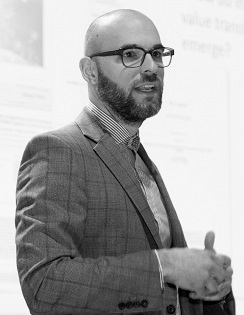
Professor Markos Zachariadis is the Chair in Financial Technology (FinTech) and Information Systems at Alliance Manchester Business School (AMBS), University of Manchester. He holds roles in the World Economic Forum’s Global Future Council on Resilient Financial Systems and is a FinTech Research Fellow at the Cambridge Centre for Digital Innovation. His research focuses on the economics of digital innovation, payment systems (e.g., SWIFT), and Open Banking. Zachariadis has authored/co-authored influential works such as The Society for Worldwide Interbank Financial Telecommunication (SWIFT) and contributes to policy discussions globally. Education: PhD in Management (Economics of Payment Systems), London School of Economics (2011) MSc in Analysis, Design and Management of Information Systems, London School of Economics (2004) Bachelor of Economics, University of Patras (2003) Research Interests: Financial Technology, Payment Networks, Digital Innovation, Data Standards, Blockchain, and Regulatory Impact. His work bridges academia and industry, addressing challenges in financial infrastructure and digital transformation. Awards: Recipient of prestigious awards including the NET Institute Award and SWIFT Institute Award for contributions to payment systems and Open Banking research. Grants & Advisory Roles: Leads projects on FinTech regulation and financial crime, collaborating with institutions like the Hellenic Competition Commission. His advisory roles span global organizations including the Bank of England and European Commission. Labs/Teams: Founding Director of the Centre for Financial Technology Studies (CFTS) at Manchester Business School, fostering interdisciplinary research in FinTech.
Dr. Brady D. Lund is an Assistant Professor at the University of North Texas, focusing on interdisciplinary research at the intersection of information science, artificial intelligence, and ethics. His work addresses AI adoption in libraries, data privacy, academic integrity, and international development. He holds a Ph.D., M.S., and B.S. from Emporia State University and Wichita State University. Education: Ph.D., Emporia State University M.S., Emporia State University B.S., Wichita State University Research Interests: Dr. Lund explores how AI impacts information seeking behaviors, data privacy literacy, and library services. His work emphasizes ethical AI deployment in academic and clinical settings, with a focus on marginalized communities. Key areas include AI-driven library systems, blockchain applications for academic integrity, and the societal implications of generative AI. Research Trends: Recent publications analyze AI's role in health information, cybersecurity threat intelligence, and library leadership in minority-serving institutions. He critiques AI authorship policies, evaluates large language models, and advocates for equitable AI access in developing countries. Labs & Teams: Leads the Computational Humanities and Information Literacy Lab and the CyberCrews initiative, focusing on AI ethics, digital literacy, and interdisciplinary collaboration.
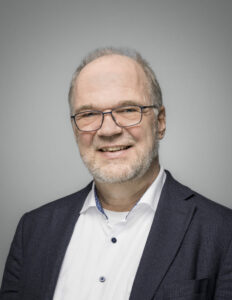
Prof. Dr. Dirk Heckmann is a prominent academic and legal expert currently serving as a member of the Bavarian Institute for Digital Transformation (bidt) Board of Directors and holding the Chair of Digital Law and Security at the Technical University of Munich . As a constitutional lawyer and judge at the Bavarian Constitutional Court, he bridges legal expertise with digital policy through advisory roles in the Federal Government's Data Ethics Commission and the Chancellor's National IT Summit. In 2020, he established the TUM Center for Digital Public Services to advance legally sound, common-good-oriented digitalization. His research focuses on digital education , digital administration , and healthcare digitalization , with particular emphasis on legal certainty for digital systems . Recent projects like ReDiKo (Regulating Digital Communication Platforms) and AFFAIRE (AI Regulation for Examinations) highlight his commitment to evidence-based digital governance. He has authored the juris Practical Commentary on Internet Law since 2021, shaping Germany's digital legal discourse. Professor Heckmann actively engages in public debates about digital sovereignty and platform regulation , most notably at the 2025 Nuremberg Digital Festival where he will discuss open-source foundations for digital sovereignty. His work spans constitutional law , data ethics , and AI policy , with recent publications analyzing social media harassment, AI's impact on education, and digital violence legislation.
Associate Professor Lasantha Meegahapola is a Deputy Head of Department (Teaching & Learning) at RMIT University's School of Engineering in Melbourne, Australia. He holds an IEEE Senior Membership and serves as an Associate Editor for several prestigious journals, including IEEE Transactions on Power Systems and IET Renewable Power Generation. His research focuses on Power System Stability with Renewable Integration, Microgrid Control, and Smart Grid Technologies, addressing challenges like voltage stability, inverter-based grid dynamics, and renewable energy penetration. He has supervised 16 PhD students to completion and published over 200 articles. Key contributions include identifying stability issues in microgrids and advancing grid-forming inverter control strategies. His work aligns with UN Sustainable Development Goals 7 (Clean Energy), 9 (Infrastructure), and 13 (Climate Action). He is actively involved in IEEE committees, including the PSDP Task Force on Microgrid Stability. Teaching roles include Programme Manager for the Bachelor of Electrical Engineering (HK) and Subject Coordinator for Power System Analysis and Control courses. Collaborations span industry and international research institutions, emphasizing real-world applications of his research in power systems and renewable energy integration.
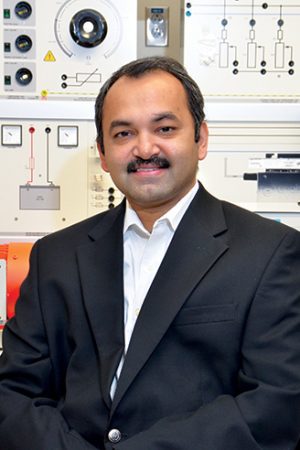
Dr. Madhav Manjrekar is an Associate Professor in the Department of Electrical and Computer Engineering at the University of North Carolina at Charlotte. He earned his Ph.D. from the University of Wisconsin–Madison in 1999. His research focuses on power electronics applications in utility systems, renewable energy interfaces, and cybersecurity of electricity infrastructure. Key areas include power quality improvement in microgrids, high-voltage direct current (HVDC) transmission, and advanced electrical machine design for electric vehicles and wind energy systems. His work emphasizes innovative solutions for energy storage integration, grid resiliency, and fault-tolerant power systems. Recent publications highlight advancements in DSTATCOM for microgrids, solid-state circuit breakers, and doubly salient electrical machines. He has contributed to projects like the US-Caribbean Super Grid and HVDC interconnectors for offshore renewable energy. Dr. Manjrekar’s research also addresses cybersecurity vulnerabilities in power infrastructure and explores next-gen semiconductor technologies like SiC MOSFETs. His interdisciplinary approach bridges power electronics, machine design, and grid stability, with applications in both academic and industry settings.
Dr. Tolulope J. Falokun is an Assistant Professor of Law at the University of Detroit Mercy School of Law . Her expertise spans Technology Law, International Law, and AI Ethics. She holds an LL.M. from Harvard Law School and top-tier degrees from Nigerian institutions, including a First Class Honors from the Nigerian Law School (top 1%). Education: LL.B., Obafemi Awolowo University (2017); B.L., Nigerian Law School (2018); LL.M., Harvard Law School (2020). Certifications: Introductory Certificate in Arbitration (Chartered Institute of Arbitrators). Her research focuses on blockchain, AI regulation, cross-border legal frameworks, and privacy law. She teaches courses like Blockchain & AI in Legal Systems and Private International Law in the Digital Era . Recent professional roles include presentations at Arizona State University and the University of Oklahoma, and judging the Canadian & American Transnational Law Moot.
Professor Sandra Wachter is a leading academic in legal and ethical implications of AI, Big Data, and robotics at the Oxford Internet Institute (OII) , University of Oxford, and as Humboldt Professor at the Hasso Plattner Institute. She leads the OII's governance of emerging technologies (GET) research programme , focusing on AI regulation, algorithmic bias, and human rights. Affiliations : Berkman Klein Center (Harvard University), World Economic Forum, UNESCO, IEEE, World Bank, Bonavero Institute of Human Rights, Oxford Martin School, and more. Research : Legal and ethical frameworks for AI, explainability (notably Counterfactual Explanations ), fairness metrics, and combating algorithmic discrimination through her Conditional Demographic Disparity (CDD) tool. Awards : Alexander von Humboldt Foundation Research Award (2025), O2RB Excellence in Impact Award (2021, 2018), Computer Weekly Women in UK Tech (2021), Privacy Law Scholar (2019), CognitionX Outstanding Achievements (2023, 2017). Impact : Her work is implemented by Google, IBM, Amazon, and Microsoft; influences NHS and MHRA policies; and has been cited in major media outlets including The New York Times, BBC, and Nature.
Steve Worthington is an Adjunct Professor at Swinburne University of Technology's School of Business, Law and Entrepreneurship in Melbourne, Australia. Previously, he held a Professorship in Marketing at Monash University until 2013. His research focuses on financial services distribution via electronic channels, payment systems regulation, and cross-cultural financial practices. He has contributed extensively to academic journals such as the International Journal of Bank Marketing and practitioner outlets like The Financial Times and ANZ's BlueNotes . His work includes analyses of payment card markets in China and Japan, regulatory interventions in Australia's payment system, and expert testimony on financial services marketing disputes. Worthington's research interests span payment systems innovation, consumer behavior in financial contexts, and the intersection of technology with financial services. Notable contributions include studies on cashless society debates, payment fraud dynamics, and the cultural dimensions influencing financial product adoption. He frequently engages with industry conferences and media, offering insights into emerging trends like digital payment adoption and regulatory challenges in the financial sector. His publications highlight interdisciplinary approaches, blending economic policy analysis with marketing strategy. Key themes include the societal implications of cash decline, fairness perceptions in financial services, and the ethical dimensions of payment technologies. Despite no explicit awards listed, his prolific media engagement and advisory roles reflect recognition of his expertise in payment systems and financial markets.
Dr. Harry T. Conway is the Alternate Permanent Representative of Liberia and Chair of the Marine Environment Protection Committee (MEPC) at the International Maritime Organization (IMO). He leads global maritime environmental policy initiatives, including the 2023 IMO GHG Strategy. His academic affiliations include guest lecturing at the International Maritime Law Institute's special course on marine environmental protection and opposing a WMU PhD candidate's thesis. Education: PhD in Politics and International Relations (Cardiff University, UK), MA (Distinction) in International Maritime Policy (University of Greenwich, UK), and MBA (Hanze University of Applied Sciences, Netherlands). His research focuses on environmental politics, with emphasis on climate agreements and maritime decarbonization. Professional Experience: Policy Officer and Officer-in-Charge of Liberia's IMO Permanent Mission (2012–present), Chief of Staff at Liberia Maritime Authority (pre-2012), and finance roles in Liberian banking institutions. He contributed to the 2050 Africa Integrated Maritime Strategy for the African Union and serves on the International Quality Assessment Review Body (IQARB). Publications include contributions to 'The African Union and the Law of the Sea' and peer-reviewed articles on maritime innovation and decarbonization. He frequently speaks at international shipping conferences and advises on maritime regulatory frameworks.
John (Xuefeng) Jiang is an Eli Broad Endowed Professor in Accounting at Michigan State University's Broad College of Business, holding appointments in the Department of Accounting and Information Systems, with courtesy positions as Professor of Finance and Faculty Affiliate of the law school. He serves as President-Elect of the Financial Accounting and Reporting Section (FARS) of the American Accounting Association and is an associate editor at Management Science. Dr. Jiang received his education from Renmin University of China and the University of Georgia, and has passed the Uniform CPA exams in both China and the United States. His research spans interdisciplinary areas at the interface of accounting and finance, with particular focus on corporate governance, healthcare management, information technology systems, regulation & public policy, and corporate finance. His methodological approach employs natural experiments and novel data sources to address fundamental questions in financial reporting and disclosure. Dr. Jiang's scholarly work has evolved from traditional accounting topics like earnings management and credit ratings to contemporary issues in healthcare management and cybersecurity. His recent publications examine hospital pricing transparency, data breaches in healthcare systems, and the impact of media oversight on hospital behavior, demonstrating his ability to apply accounting principles to emerging real-world challenges. His research has been widely covered by major media outlets including the Wall Street Journal, New York Times, NPR, Forbes, and CBS News. American Accounting Association Distinguished Contribution to Accounting Literature Award (2017) Multiple Outstanding Teacher of the Year awards from graduating students Dr. Jiang has successfully mentored doctoral students who have secured tenure-track positions at the University of Florida, the National University of Singapore, and Miami University. He has served on the FARS steering board from 2018 to 2022 and is actively involved in the academic community as a past President of MSU's Chinese Faculty Club and faculty advisor for the Broad China Business Society.
Dr. Dicky Tsang is an Associate Professor at the Faculty of Law , The Chinese University of Hong Kong. He holds degrees from Georgetown University (S.J.D.), Columbia University (LL.M., J.D.), University College London (LL.M.), and the University of Hong Kong (LL.B., PCLL). His practice experience includes corporate finance law at Linklaters and Shearman & Sterling across New York, London, Hong Kong, Beijing, and Shanghai. Admitted to practice in New York, England & Wales, and Hong Kong Research Interests : Dr. Tsang specializes in Private International Law and Company Law , focusing on cross-border corporate liability, veil-piercing, arbitration agreements, and FRAND litigation. His work bridges empirical legal analysis with comparative law frameworks. Publication Trends : His recent scholarship examines jurisdictional conflicts, enforcement of foreign judgments, and regulatory challenges in global corporate law. Publications span journals like Virginia Journal of International Law and Journal of Private International Law . Scientific Awards : Outstanding Research Impact Award 2022-23 CUHK Research Excellence Award 2019-2020 CUHK Teaching Excellence Award 2016-2017 Grants : He has led multiple RGC-funded projects, including empirical studies on China’s choice-of-law regime and foreign judgment enforcement. Collaborative grants explore corporate governance and legal education in Asia.
Scott Kerlin is a Senior Lecturer in the Department of Electrical Engineering and Computer Science at Oregon State University's College of Engineering. He holds an M.S. and B.S. in Computer Science from the University of North Dakota. Prior to academia, he worked at the Mayo Clinic on medical software systems and IBM as a build master for enterprise products. His career spans roles including network administrator, lab manager, and Undergraduate Director at UND. Dr. Kerlin's research focuses on bridging industry experience with academic curriculum, particularly in computer science education, project-based learning, and cybersecurity. He emphasizes practical applications of theoretical concepts, such as integrating 3D printing and scanning technologies with security systems for small satellites. His work also explores student efficacy in AI courses and scalable software project management methodologies. He has taught at multiple institutions, including the University of Minnesota and Augsburg University, and held roles at Michigan Tech as Senior Security Engineer. His 2024 Engineering+ Outstanding Teaching Award highlights his commitment to pedagogical innovation. Current projects include in-space 3D printing, solar energy systems, and cryptographic solutions for satellite communications. Key areas of contribution include: 3D printing/Scanning: Material characterization, key replication, and aerospace applications Cybersecurity: Intrusion detection, satellite communications security, and chaotic cryptosystems Educational Innovation: Active learning frameworks, PBL implementation, and student performance modeling His interdisciplinary approach connects computer science fundamentals with real-world engineering challenges, emphasizing sustainability and industry relevance in curricula.
Jon M. Peha is a Full Professor in the Department of Engineering and Public Policy and the Department of Electrical and Computer Engineering at Carnegie Mellon University's College of Engineering. He serves as Founder and Director of the Center for Executive Education in Technology Policy (CEE-TP) and maintains affiliations with the CyLab Security and Privacy Institute and the Information Networking Institute. His career uniquely bridges government service (as FCC Chief Technologist, White House OSTP Assistant Director, and congressional advisor), industry leadership (as CTO for three tech startups), and academic research. Education: Ph.D. in Electrical Engineering, Stanford University (1991) M.S. in Electrical Engineering, Stanford University (1986) B.S. in Electrical Engineering and Computer Science, Brown University (1984) Peha's research spans the technical and policy dimensions of information networks, with particular focus on spectrum management, broadband Internet architecture, wireless communications, cybersecurity, and communications for emergency response. His work integrates engineering principles with economic and regulatory analysis to address real-world challenges in telecommunications infrastructure. Current projects examine connected vehicle communications, spectrum sharing models, and consumer-centric broadband labeling systems that emerged from his large-scale user studies. His research publications demonstrate consistent leadership in both technical innovation and policy analysis, with recent work addressing satellite interference mitigation, V2X communications, and pandemic-era internet performance. The breadth of his scholarship reflects his unique position at the intersection of engineering practice and policy formulation. Scientific Awards: IEEE Fellow AAAS Fellow FCC Excellence in Engineering Award IEEE Communications Society TCCN Publication Award Brown Engineering Medal AAAS Featured Science and Technology Policy Fellow (40@40) Peha actively engages with policymakers through congressional testimony, FCC consultation, and White House advisory roles. His government service has directly informed his academic work on spectrum policy, network neutrality, and public safety communications. He has supervised numerous graduate students across EPP, ECE, and INI programs, with research spanning vehicular networks, spectrum sharing, and emergency communications systems. As Director of CEE-TP, he leads executive education initiatives that bridge technical expertise and policy decision-making. His work with CyLab focuses on cybersecurity and privacy challenges in broadband systems and connected vehicles. Current projects include developing cost-effective spectrum sharing models for intelligent transportation systems and analyzing the economic implications of multi-network access architectures in 5G networks.
Timo Minssen is Professor of Law at the University of Copenhagen (UCPH) and the Founding Director of UCPH's Center for Advanced Studies in Bioscience Innovation Law (CeBIL). He also holds affiliations as an LML Research Affiliate at the University of Cambridge and an Inter-CeBIL Research Affiliate at Harvard Law School's Petrie-Flom Centre. With extensive expertise in Intellectual Property, Competition, and Regulatory Law, Minssen focuses on the legal aspects of emerging health and life science technologies, including genome editing, big data, artificial intelligence, and quantum technology. His educational background includes a German law degree (Staatsexamen) from Georg-August-University in Göttingen, and Swedish biotech & IPR related LL.M., LL.Lic., and LL.D. degrees from Lund University and Uppsala University. His PhD thesis on the patentability of biopharmaceutical technology in the US & Europe received the prestigious Swedish King Oscar award. 2024: TUM Global Visiting Professor, Technical University of Munich (Germany) 2016: Visiting Research Fellow, University of Cambridge (UK) 2014: Visiting Research Fellow, University of Oxford (UK) 2013-14: Visiting Scholar, Harvard Law School (US) 2012: LL.D. - Doctor of Laws (Swedish "juris doktor"), EU/US patent law, Lund University, Sweden Minssen's research spans AI & Big Data in Health & Life Sciences, Sustainable and responsible innovation & tech transfer, Pharmaceutical-, Life Science- & Biotech Law, Comparative European & US Patent Law, Intellectual Property Law & Open Innovation, and EU Competition- & US Antitrust Law. His work addresses legal issues throughout the lifecycle of health and life science products and processes, from R&D regulation to technology transfer and commercialization. His extensive publication record includes 7 books and over 200 articles and book chapters published in leading journals such as Science, Nature Biotechnology, JAMA, and Harvard Business Review. His research has been featured in The Economist, Financial Times, and other major media outlets. Minssen's recent work shows a strong focus on AI regulation, quantum technology law, and data governance in health contexts, reflecting the evolving landscape of technology and law. Scientific Awards and Recognition King Oscar award for best Jur. Dr. thesis (2014) Jorcks Fonds Forsknings Pris (Jorck's Foundation Research Prize) (2017) Awapatent Research Prize (2009) Max Planck Research Scholarship (2005) Visiting Scholar appointments at Harvard Law School, University of Oxford, and University of Cambridge Recipient of a Novo Nordisk Foundation Grant for a "Collaborative Research Program in Biomedical Innovation Law" (2018) As an advisor, Minssen serves international organizations including the WHO, WIPO, and EU Commission. He has supervised numerous PhD students in areas including pharmaceutical law, biotechnology patents, and antimicrobial resistance. His current research projects include the Novo Nordisk Foundation's International Collaborative Bioscience Innovation & Law (Inter-CeBIL) Programme (50 million DKK), CLASSICA: EU Horizon Project on AI-assisted surgery, and AI@Care: Law and Ethics and Algorithmic Bias in Healthcare. Minssen leads the Center for Advanced Studies in Bioscience Innovation Law (CeBIL), which serves as a hub for interdisciplinary research on the intersection of law, technology, and innovation in the health and life sciences. The center collaborates with institutions worldwide to address pressing legal challenges in emerging technologies.
Dr. Shanna Williams is an Assistant Professor in the Department of Educational and Counselling Psychology at McGill University's Faculty of Education. She holds clinical licensure in Quebec and Ontario, with expertise in forensic child psychology and maltreatment-related research. Her work focuses on child lie-telling, commercial sexual exploitation, moral development, and eyewitness testimony. Prior roles include a postdoctoral fellowship at the University of Southern California’s Gould School of Law and forensic law enforcement collaboration in Los Angeles. Education: Ph.D., McGill University: School/Applied Child Psychology M.A., McGill University: Educational Psychology B.A., McGill University: Psychology Postdoctoral Visiting Fellow, University of Southern California Research Interests: Lie-Telling Dynamics: Investigating how cognitive and social factors influence children's deception across contexts. Child Maltreatment: Developing trauma-informed forensic interview protocols and assessing maltreatment impacts on memory and disclosure. Legal Systems: Enhancing child-witness support through improved questioning techniques and cross-cultural legal practices. Publications Trends: Her recent work emphasizes pandemic-era challenges in child protection, digital exploitation, and legal system adaptations. Over 20 peer-reviewed articles address topics like forensic interviewing methods, maltreatment detection, and interdisciplinary collaboration. Awards: SSHRC Postdoctoral Fellowship (2016-2017) SSHRC Joseph-Armand Bombardier CGS Doctoral Fellowship (2010-2013) Advising & Grants: Supervises graduate students in child psychology and maltreatment studies. Research funded by SSHRC, NSF, and NIH grants focusing on forensic child development. Labs/Teams: Child Interviewing & Witness Lab Canadian Child Interviewing Research Team