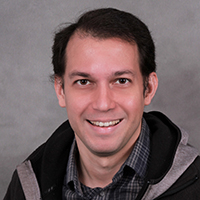
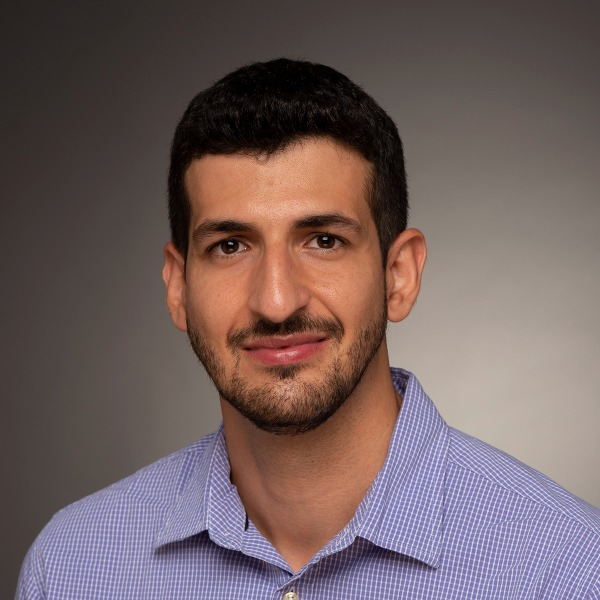
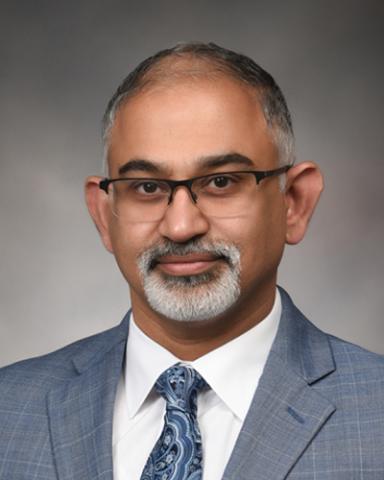
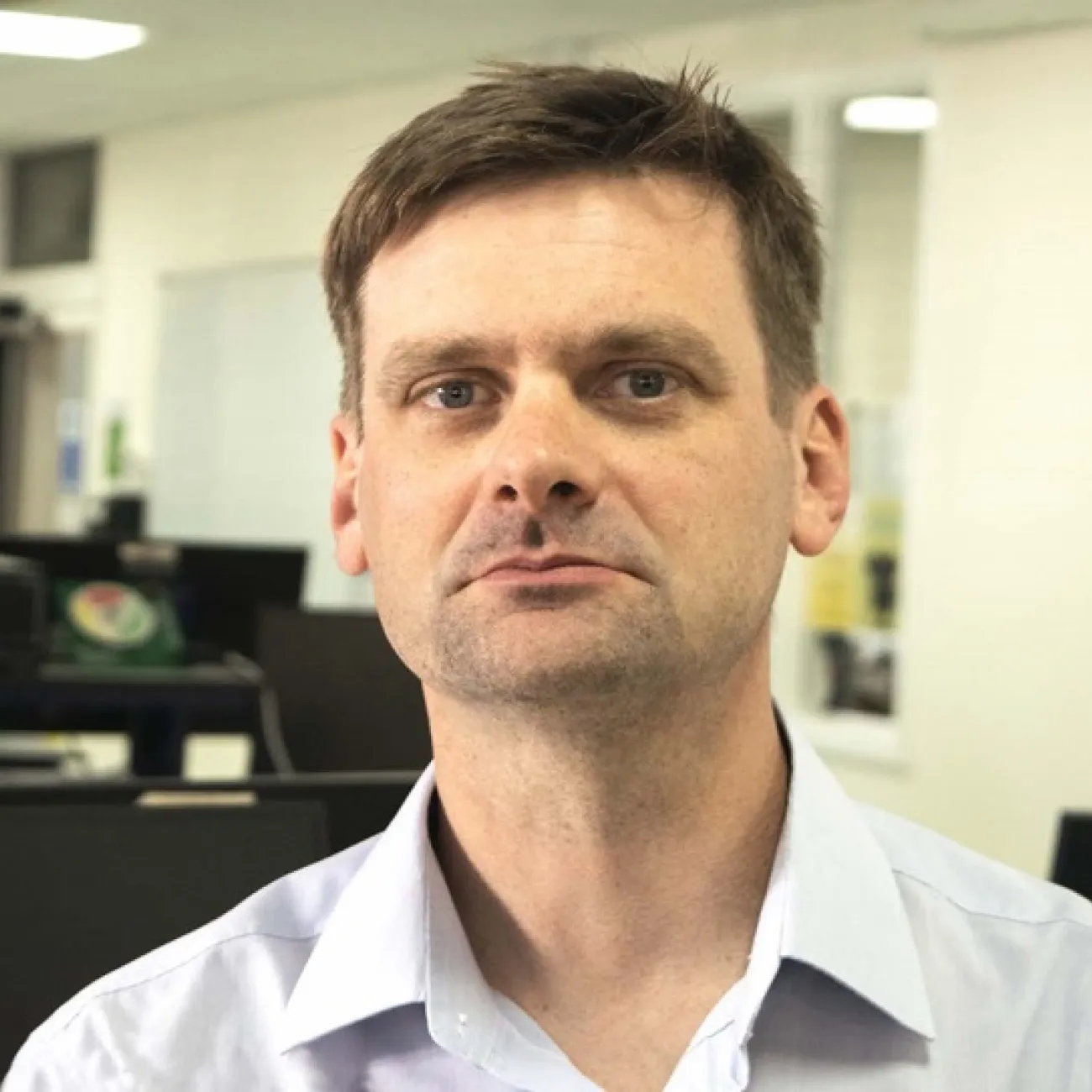
Ricardo A. Calix is a Professor of Computer Information Technology at Purdue University Northwest. His research focuses on Machine Learning, Natural Language Processing, AI applications in Cyber Security and Healthcare, and Deep Learning methodologies. He holds a Ph.D. in Engineering Science from Louisiana State University. Key research areas include ethical AI model analysis, reinforcement learning for aerospace control systems, and industrial automation through machine learning. His work spans cybersecurity tools (e.g., CyberSecTK) and healthcare data mining from social media. Calix has secured grants as PI/Co-PI for projects like 'Detection of Potential Drug Effects from Twitter Data' (NIH) and 'A Smart and Fast IDS' (Northrop Grumman). He authored Getting Started with Deep Learning: Programming and Methodologies Using Python (2017). Recent publications (2023-2024) address biases in AI models, blast furnace automation, and autonomous aircraft control via reinforcement learning. His work bridges theoretical AI with practical applications in industry and security.
Simone Ferlin is an Adjunct Senior Lecturer at Karlstad University and a Senior Performance Engineer. She holds a PhD in Computer Science from Simula Research Lab and Universitetet i Oslo (2017), focusing on robustness in multipath transport protocols like MPTCP. Her research spans network performance, security, and congestion control in mobile/5G networks and the Internet. She collaborates actively with academia and industry, co-supervising students in areas such as edge computing, container orchestration, and distributed systems. Affiliations: Department of Informatics, Karlstad University; Red Hat Research; Ericsson R&D. Education: PhD (2017), Simula/UiO; Master’s and Undergraduate studies emphasized networking and electronics. Her work includes projects like AIDA (AI-driven edge networking) and DRIVE (latency-sensitive mobile services). She has published over 50 papers on topics like QUIC, eBPF, and containerized microservices. Awards include the Best Paper at IEEE ICIN 2021 and ANRP 2025 Prize. Teaching responsibilities include Future Internet Design and Service Quality . Advising spans 15+ students across institutions like TU Berlin, KTH, and Unifesp. She chairs conferences (e.g., ACM SIGCOMM 2025) and serves on editorial boards (IEEE Communications Magazine). Key interests: network observability, low-latency protocols, and sustainability in networking.
Prof. Ivan De Oliveira Nunes is an Assistant Professor of Cybersecurity at the University of Zurich (UZH), affiliated with the Department of Informatics (IfI) and the Digital Society Initiative (DSI). Previously, he held a similar position at the Rochester Institute of Technology (2021–2025). He earned his Ph.D. from the University of California, Irvine (UCI) in 2021, advised by Prof. Gene Tsudik, and was part of the Sprout Lab. His academic journey includes a B.S. in Computer Engineering from the Federal University of Espirito Santo (Brazil) and an M.Sc. in Computer Science from the Federal University of Minas Gerais (Brazil). His research focuses on Security & Privacy, Computer Networking, Embedded Systems, and Applied Cryptography. Key areas include IoT/CPS Security, System Security, and Provable Execution in resource-constrained systems. Notable contributions include work on remote attestation, secure software updates, and formally verified security protocols. Prof. Nunes advises multiple Ph.D., M.Sc., and undergraduate students, including current Ph.D. candidates Antonio Joia Neto, Liam Tyler, and Alexandra Lengert. Former advisees include Adam Caulfield (now at U. of Waterloo) and Spencer Roth (M.Sc. 2023). He leads the SPINS Research Group, exploring secure systems design, and has secured grants such as the CRII: SaTC grant (2023). His work bridges theoretical foundations and practical implementations, emphasizing real-world applicability in embedded and IoT systems.
Romil Chadha, MD, MBA, MPH, FACP, SFHM, is a Professor of Internal Medicine at the University of Kentucky College of Medicine and serves as the Chief Medical Information Officer (CMIO) at UK HealthCare. He previously served as Division Chief of Hospital Medicine from 2019 to 2023 and is a certified Epic Physician Builder. His work bridges clinical medicine, health informatics, and executive leadership, with a strong focus on improving patient care through technology and data-driven decision-making. His educational background includes: MBBS from University College of Medical Sciences, Delhi, India MPH from the University of Texas, School of Public Health, Houston MBA from the Gatton College of Business and Economics, University of Kentucky Internal Medicine Residency at Westlake Hospital, Chicago, IL Romil Chadha’s research and professional interests lie at the intersection of hospital medicine and health informatics. He is deeply engaged in clinical decision support systems, data analytics, operational efficiency, and the digitization of healthcare workflows. His work emphasizes patient-centered care, evidence-based medicine, and empowering patients through clear communication. He advocates for innovation in health IT and continuous improvement in clinical systems. The recent articles authored or featured by Dr. Chadha highlight a strong trend in healthcare innovation, leadership, and informatics. Topics include clinical decision support, cybersecurity, workforce scheduling, pandemic response, and digital transformation. His publications reflect a consistent focus on leveraging data and technology to improve clinical outcomes, operational efficiency, and provider well-being. His key professional recognitions include: Fellow of the American College of Physicians (FACP) Senior Fellow of the Society of Hospital Medicine (SFHM) Certified Physician Executive (CPE) by the American Association for Physician Leadership Dr. Chadha is actively involved in mentoring and leadership development through the Society of Hospital Medicine (SHM), where he chairs the Academic Leaders SIG and serves on the Performance Measurement & Reporting Committee. He has contributed significantly to SHM conferences, committees, and chapters, particularly in Kentucky. His leadership roles involve strategic planning, recruitment, operations, and coaching for hospital medicine teams, as well as building clinical order sets and advancing data analytics capabilities. He has no known formal grants listed in the provided text but leads institutional initiatives in health IT and quality improvement. He is a core member of the medical informatics group at UK HealthCare and plays a pivotal role in shaping the institution’s clinical information systems strategy. His work involves close collaboration with physicians, IT teams, and administrative leaders to ensure technology supports clinical excellence and safety.
Ha Dao Thi Thu is a Postdoc researcher at the Max Planck Institute for Informatics in the Internet Architecture department, Germany. She previously held roles such as JSPS Research Fellow at the National Institute of Informatics, Japan, and Lecturer/Teaching Assistant at the University of Information Technology (VNUHCM–UIT), Vietnam. Educational background: PhD in Informatics from SOKENDAI (School of Multidisciplinary Sciences), Japan (2019-2022) MSc in Computer Science from VNUHCM–UIT (2016-2019) B.Eng in Computer Networks & Communications from VNUHCM–UIT (2011-2016) Her research focuses on online privacy , data protection , and network/web security , particularly analyzing cookie mechanisms, behavioral advertising, and privacy measurement frameworks. Recent work includes studies on cookie partitioning, illegal streaming tracking, and SSO login systems. She has served on program committees for PETS (2024-2026) and PAM (2023-2025), and contributed to journals/conferences like IEEE Access and AINTEC. Scientific recognition includes the NII Best Student Award 2022 and JSPS Fellowships for Young Scientists 2022 .
Richard Guest is a Professor of Biometric Technologies at the University of Southampton's School of Electronics and Computer Science. He holds an Honorary Professorship at the University of Kent and a Visiting Researcher position at Purdue University. His expertise spans biometric systems, forensic technologies, and ethical AI applications. Previously, he served as Deputy Divisional Director and Head of Engineering at the University of Kent before joining Southampton in 2024. Education: BEng (Hons) in Computer Science (University of York, 1995), PhD in Electronic Engineering (University of Kent, 2000). Research focuses on applied AI, biometric security, forensic image analysis, and privacy-preserving techniques. He leads ISO/IEC standardization efforts for biometric data interchange and advises the UK Home Office on biometric ethics. His work includes mobile facial recognition systems and explainable AI for legal settings. Publications span mobile biometric verification, forensic verification tools, and transformer-based AI models. He has secured over £5M in research funding and supervises PhD students in Computer Science. Awards include Fellowships from the British Computer Society and IET, Chartered Engineer status, and membership in EPSRC's Peer Review College.
Giovanna Di Marzo Serugendo is a researcher affiliated with the University of Geneva (Faculty of Social Sciences, Centre for Informatics) and the Institute of Information Service Science (ISS) . Her work spans semantic technologies, agent-based modeling, and sustainable systems. Research interests focus on Semantic knowledge graphs for regulatory compliance Ontology-driven resource management Self-organizing systems inspired by biological models AI applications in smart grids and urban mobility Digital agriculture platforms for smallholder farmers Recent publications highlight trends in ontology automation using LLMs, agent-based simulations for urban planning, and KG-enhanced compliance frameworks . She leads projects integrating digital twins with smart energy systems and develops bio-inspired coordination paradigms. Supervised works include 17 research projects in these domains. Current technical reports and conference papers explore cybersecurity-safety interdependencies in autonomous vehicles and decentralized event source detection in sensor networks.
Marta Catillo is a Researcher at the Department of Engineering (DING) of the University of Sannio (UNISANNIO) . She specializes in Cybersecurity , with focus on Machine Learning applications for intrusion detection , IoT security , and cloud auto-scaling mechanisms . Her research addresses challenges in Denial of Service (DoS) mitigation , anomaly detection , and deep learning architectures for security. Teaching: [803004] PROGRAMMING 1 for Electronic and Biomedical Engineering students (2025 cohort) Contact: Office hours: Thursdays 3-5 PM, Room 23, Bosco Lucarelli Palace Research trends: From 2019-2025 publications, her work spans adversarial attack resistance , collective anomaly detection , outlier-aware architectures , and empirical analysis of defense mechanisms , with recurring collaborations with Antonio Pecchia , Umberto Villano , and Massimiliano Rak . Key methodologies include deep autoencoders , hybrid detection systems , and measurement-based security evaluation . Technical Contributions: Developed the ZED-IDS framework for zero-day threat detection, MultiCIDS for multivariate time series intrusion detection, and DEFEDGE for edge-cloud security testing.
Devki Nandan Jha is a researcher specializing in Internet of Things (IoT) , Cloud/Edge Computing , and Cybersecurity . His work focuses on runtime monitoring, security frameworks, and deployment optimization in heterogeneous environments. Collaborations include institutions across Europe and Asia, with frequent co-authorship with Rajiv Ranjan, David Wallom, and David Blundell.
Ashkan Yousefpour is a Computer Scientist with a PhD from the University of Texas at Dallas , where he contributed to the FLOW project. He served as a Lecturer and research assistant at UT Dallas, while also working as a Visiting Researcher at UC Berkeley . His research spans Fog/Edge Computing , Federated Learning , Reinforcement Learning , and Distributed Systems . Current Role: AI Scientist at Meta Academic Affiliation: Department of Computer Science, University of Texas at Dallas Research Interests include: Minimizing IoT service delay through fog offloading Developing failure-resilient distributed neural networks (ResiliNet) Advancing privacy-preserving machine learning (Opacus, Papaya) Optimizing traffic flow with autonomous vehicles via reinforcement learning Advising : Supervised multiple graduate students including Ashish Patil , Harshavardhan Nalajala , and Brian Nguyen . Collaborated with researchers like Professor Alexandre Bayen (UC Berkeley) and Professor Cathy Wu (MIT) on traffic control frameworks such as Flow .
Xiaofei Xie is an Assistant Professor at the School of Computing and Information Systems (SCIS), Singapore Management University (SMU). He received his PhD from Tianjin University in 2018 and was a postdoctoral researcher at Nanyang Technological University (2018-2021) before joining SMU in 2022. His research focuses on software engineering, AI systems, and cybersecurity. Dr. Xie's primary research areas include program analysis, software testing, vulnerability detection, and quality assurance of AI systems. His work spans: Testing methodologies for autonomous systems and games AI security including backdoor detection and model robustness Automated program repair and code generation Formal methods and semantic code analysis His recent publications demonstrate strong emphasis on AI/ML system testing, cybersecurity applications, and program analysis techniques. Research trends show increasing focus on LLM-based program repair, autonomous system validation, and federated learning security. Major Awards: ACM SIGSOFT Distinguished Paper Awards (ASE'23, ISSTA'22, ASE'19, FSE'16) CCF Outstanding Doctoral Dissertation Award (2019) 3rd place in AI Singapore's Trusted Media Challenge (2022) Wallenberg-NTU Presidential Postdoctoral Fellowship (2019) APSEC Best Paper Award (2020) He currently advises 7 PhD/Master's students including CHENG Mingfei, KONG Jiaolong, and YU Jiongchi. Dr. Xie leads research in software reliability and AI security at SMU's SCIS.
Douglas D. Hodson is a Professor of Computer Engineering at the Air Force Institute of Technology (AFIT), Wright-Patterson AFB, Ohio, affiliated with the Department of Systems and Engineering Management within the Graduate School of Engineering and Management. He holds a PhD in Computer Engineering from AFIT (2009), an MBA and MS in Electro-Optics from the University of Dayton, and a BS in Physics from Wright State University. His research focuses on computer engineering, software engineering, real-time distributed simulation, and quantum communications , with a strong emphasis on Quantum Key Distribution (QKD) systems, modeling and simulation (M&S), and Live-Virtual-Constructive (LVC) environments. His work integrates cybersecurity, network performance, and advanced simulation frameworks such as AFSIM and SwarmSim. His recent publications (2021–2022) reflect a trend toward secure distributed systems, AI-driven classification, fog modeling in military simulations, and opinion dynamics in social systems. These works span disciplines including cybersecurity, artificial intelligence, defense modeling, and environmental effects in multi-domain operations. Scientific Awards and Honors: IEEE Senior Member (2021) Outstanding Achievement Award, World Congress in CSCE (2018) SOCHE Faculty Excellence Award (2017) Harold Brown Award (2015) Multiple AFIT Civilian Category III Awards (2014, 2013) Dayton Area Graduate Studies Institute Scholar (2003–2007) Rev. Raymond A. Roesch, S.M., Award of Excellence, University of Dayton MBA (1998) Advising and Grants: Dr. Hodson has advised numerous graduate students, many of whom are co-authors on his publications. His research has been supported by AFIT, AETC, and collaborative defense-focused grants, particularly in quantum communications and simulation technologies. He has led or contributed to teams receiving Air Force Modeling and Simulation Team Awards and QKD Research Team Awards. Labs and Teams: He is a key contributor to the AFIT Quantum Communications and Modeling & Simulation research teams, working on projects involving AFSIM, QKD system modeling, decoy state protocols, and swarm UAV simulation. His lab environment fosters interdisciplinary collaboration in cybersecurity, physics, and software engineering.
Dr. Rosario Giustolisi is an Associate Professor in the Department of Computer Science at the IT University of Copenhagen . His research centers on computer security with a focus on cryptographic protocols for decision systems (e.g., voting and exams), automated security analysis, accountability frameworks, and sociotechnical security aspects. Before joining ITU, he held postdoctoral roles at SICS RISE and Lund University, Sweden, and earned his PhD from the University of Luxembourg with work on secure exam protocols, culminating in his book Modelling and Verification of Secure Exams (Springer, 2018). Research Trends: His 15 most recent articles (2016–2025) span cryptographic protocol design, coercion-resistant voting/exams, zk-SNARK applications, differential privacy, automated security analysis, and sociotechnical threat modeling. Key subfields include secure decision systems, privacy-preserving mechanisms, and formal verification. Scientific Awards: Best Paper Award, NordSec 2017 Best Paper Award, SECRYPT 2014 Villum Experiment Grant (Sole PI) 2020 ICT TNG Postdoc Grant (Sole PI) 2016 CSC Best PhD Thesis Award 2016 Acknowledgments from Apple for Security Advisory Professional Service: Organized cybersecurity breakfast talks at ITU and served on conference committees for ACM SAC (Security track), STAST, E-VOTE ID, and NordSec. He also contributed as a journal referee and sub-reviewer for multiple conferences.
Sandra Geisler is a Junior Professor for Data Stream Management and Analysis at the Department of Computer Science, RWTH Aachen University, a position she has held since September 2021. She is also the leader of the Digital Health Spaces group at the Fraunhofer Institute for Applied Information Technology (FIT) in St. Augustin, reflecting her dual expertise in academic research and applied digital health solutions. Bachelor/Master: Diploma in Computer Science, RWTH Aachen University (2008) PhD: Doctoral degree in Computer Science, RWTH Aachen University (2016) Her research focuses on data stream systems, real-time analytics, data quality, and their applications in digital health and industrial processes. She has made significant contributions to ontology-based data quality management, edge computing for stream processing, and FAIR data principles. Recent work explores the integration of large language models into data management workflows and the development of privacy-preserving platforms for industrial data exchange. Her recent publications demonstrate a strong trend in distributed and edge-based stream processing, interdisciplinary applications in healthcare and supply chains, and the use of AI for data discoverability and quality. Topics include in-network computing, simulation of edge queries, self-tonometry for glaucoma, and cross-company data sharing with privacy awareness. She has served as Associate Editor for the Data & Knowledge Engineering Journal (Elsevier), Public Relation Chair for QDB Workshop (VLDB 2016), and Workshop Chair for IMMoA and HIMoA workshops. She has also edited a special issue on Information Management in Mobile Applications in the Pervasive and Mobile Computing Journal. Geisler has supervised multiple theses on topics including LLM-based ontology integration, edge anomaly detection, and data ecosystem modeling. She has been actively involved in research grants and projects related to industrial data processing, digital health, and sustainable production. She teaches courses such as Data Stream Management and Analysis and Data Ecosystems Lab. She leads the Digital Health Spaces research group at Fraunhofer FIT, focusing on innovative solutions for health data management and patient-centric digital tools. Her work bridges computer science, healthcare, and industrial applications, promoting secure, efficient, and intelligent data ecosystems.
Charalampos Alevizos is a Research Fellow at the University of Central Lancashire (UCLan), specializing in cybersecurity and blockchain technologies. He completed his doctoral thesis in 2024 on enhancing Zero Trust Architecture using blockchain and distributed ledger technologies. His research focuses on AI-driven cybersecurity solutions, threat intelligence systems, and resilient network defense mechanisms. Alevizos has published extensively in top-tier journals, including International Journal of Information Technology , Electronics , and Sensors , addressing topics such as blockchain-based intrusion detection, probabilistic cyber resilience metrics, and AI-enhanced threat analysis. His work bridges theoretical frameworks with practical applications in critical infrastructure, transportation systems, and financial services sectors. Key contributions include frameworks for quantifying defense effectiveness against cyberattacks, dynamic throttling strategies for 6G-enabled networks, and methodologies for incorporating uncertainty in cyber risk analysis. He collaborates with global researchers on interdisciplinary projects, emphasizing real-world cybersecurity challenges.