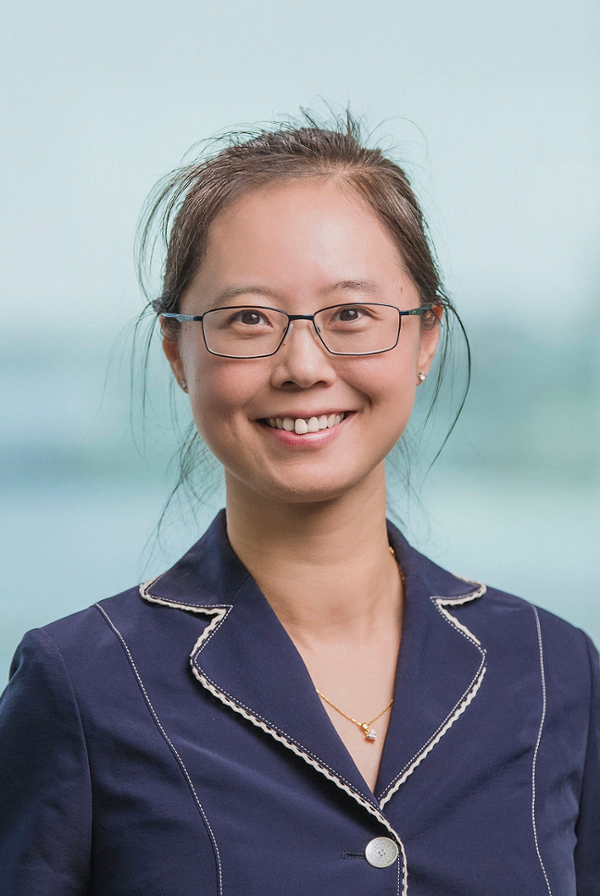
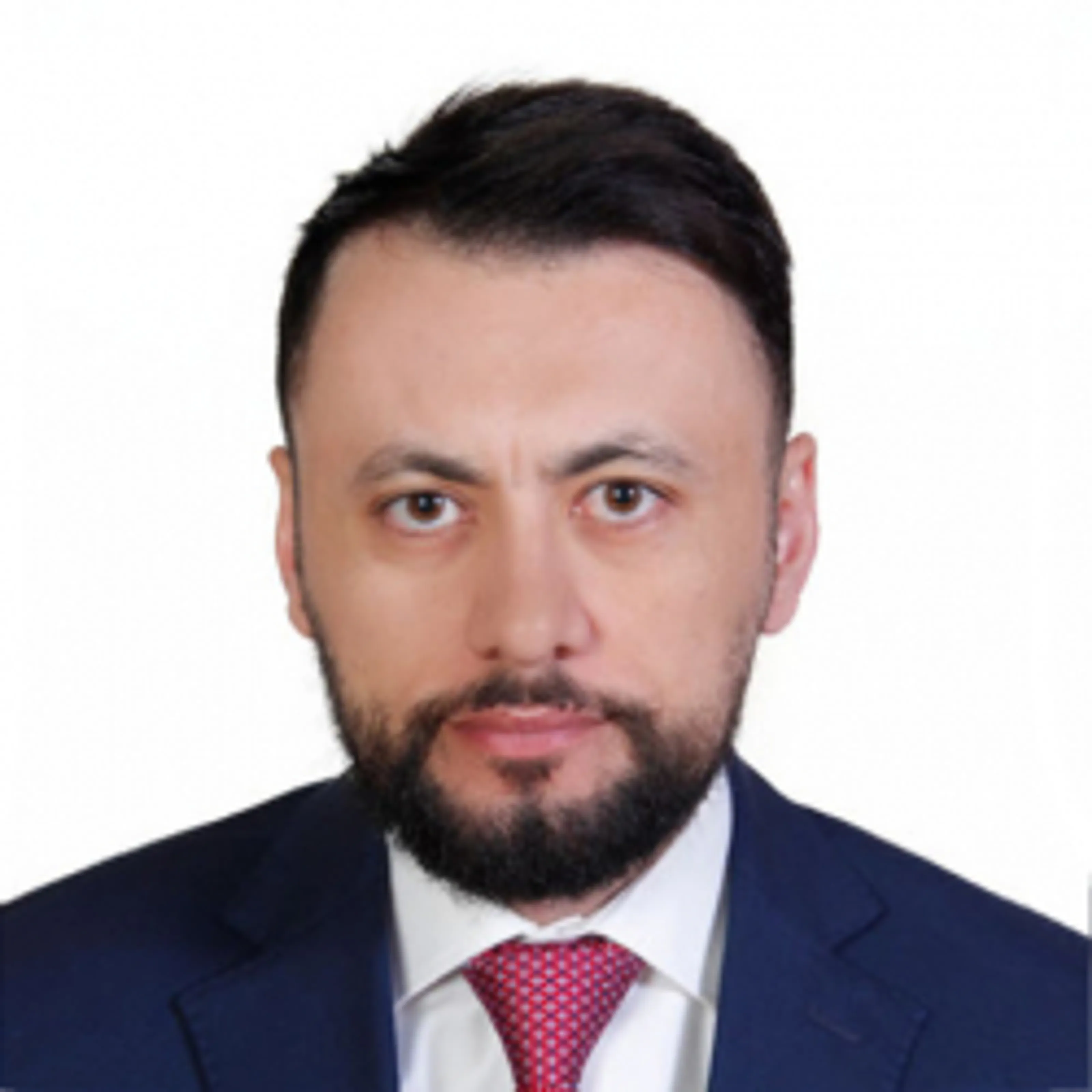
Marco Badami is a Full Professor at the Department of Energy (DENERG) , Polytechnic of Turin. He serves as Scientific Director for national and EU-funded research projects in energy systems and has been a Course Lecturer for Energy Systems and Industrial Use of Energy since 2010. He supervises PhD students in Energetics and Electrical Engineering . Research Interests: His work spans energy systems optimization, machine learning applications for industrial energy efficiency, smart grids, cogeneration scheduling, blockchain-based energy data immutability, and predictive maintenance algorithms for photovoltaic plants. Current projects focus on AI-driven energy audits, optimized control systems for industrial microgrids, and digital twin architectures. Collaborations: He works with Trigenia Srl, Stogit SpA, and international institutions on commercial research contracts. His scientific contributions include 15+ publications on topics like LSTM forecasting for solar energy, deep reinforcement learning for multi-energy systems, and decentralized peer-to-peer energy trading platforms.
Farah Kamw is an Assistant Professor in the Department of Computer Science at Wayne State University. With a PhD in Computer Science (2019) from Kent State University, her expertise spans 18 years of software development, academic teaching, and research in information visualization and database management. Education : PhD (Kent State), MSc (University of Zakho), BSc (University of Baghdad) Her research focuses on Information Visualization and Visual Analytics of spatial-temporal data, particularly through 8 publications (2013-2021) addressing urban mobility patterns, trajectory analysis, and geospatial data integration. She has developed several open-source visual analytics tools including TrajAnalytics and SparseTrajAnalytics, applying both document and graph database techniques. Farah teaches core Computer Science courses such as Algorithm Design , Programming Languages , and Database Systems . Her technical skills include Python, C++, Java, SQL, NoSQL databases, and GIS technologies.
Weifeng Li serves as an Associate Professor in the Department of Management Information Systems at the University of Georgia's Terry College of Business. His academic foundation includes a Ph.D. in Management Information Systems from the University of Arizona (2017) and a B.S. from Shanghai Jiao Tong University (2012). Ph.D., Management Information Systems, University of Arizona (2017) B.S., Management Information Systems, Shanghai Jiao Tong University (2012) Dr. Li's research centers on AI security and cybersecurity applications , with methodological expertise in machine learning, natural language processing, and Bayesian modeling. His work spans critical domains including adversarial robustness in AI systems, dark web threat intelligence, disinformation detection, and phishing defense mechanisms. He develops frameworks for proactive cyber defense through generative adversarial learning and interpretable multi-modal models. His publication portfolio reveals a strong trajectory in top-tier venues, with recent work focusing on adversarial robustness (RADAR framework), dark web community analysis, and interpretable AI for security applications. Research consistently bridges theoretical machine learning advances with practical cybersecurity implementations, particularly in financial technology and social media contexts. Dr. Li's research has received funding from the National Science Foundation's Secure and Trustworthy Cyberspace (SaTC) program, supporting his work on AI security frameworks. His collaborations span multiple institutions and research groups focused on cyber threat intelligence. He contributes to cybersecurity infrastructure through systems like the AZSecure text mining platform for dark web monitoring and hacker community analysis. His work enables proactive threat detection through nonparametric topic modeling and generative adversarial approaches to counter cybercriminal tactics.
Md. Zoheb Hassan serves as an Assistant Professor in the Department of Electrical Engineering and Computer Engineering at Laval University, where he leads cutting-edge research in wireless communications and spectrum management. His academic role includes graduate recruitment and active participation in the university's research ecosystem, particularly through the Establishment of the Next Generation of Professors program funded by FRQNT. Dr. Hassan's research centers on spectrum sharing and management, wireless communication systems, and communications network control systems. He pioneers the integration of digital twin technology and machine learning to solve critical challenges in next-generation networks, including interference management in 5G/6G aerial corridors, Internet of Vehicles, and satellite-terrestrial integration. His work emphasizes practical implementations such as proof-of-concept demonstrations for tactical networks and proactive resource allocation in dynamic environments. Analysis of his 2024-2025 publications reveals a dominant trend toward AI-driven wireless resource optimization, with 12 of 15 recent papers featuring digital twins for interference management, spectrum sharing, and energy efficiency. Key thematic clusters include vehicular communications (4 papers), underwater IoT networks (2 papers), and hardware-impairment resilient designs (3 papers), demonstrating his focus on bridging theoretical advances with real-world deployment challenges across diverse network topologies. Dr. Hassan has secured significant competitive funding for his research initiatives: Digital Twin-Enhanced Interference Management for Next-Generation Radio Access Networks in the FR3 Band (FRQNT, 2025-2027) Center for Radio Frequency and Communications Systems, Technologies and Applications (FRQNT, 2024-2030) Context-Aware Spectrum Sharing and Management for Next Generation Wireless Networks (NSERC, 2024-2029) Development of innovative technologies for modeling predictive systems in urban mobility (MITACS, 2022-2026) Springboard to Discovery supplement for Context-Aware Spectrum Sharing (NSERC, 2024-2025) He actively mentors doctoral candidates, currently supervising Mahima Karim (PhD in Electrical Engineering, expected 2025) and Mohammadamin Parhizgar (PhD in Electrical Engineering, expected 2024). His supervisory approach combines theoretical rigor with practical problem-solving, focusing on spectrum management algorithms and digital twin implementations for next-generation networks. While specific laboratory affiliations aren't detailed in the source material, his projects indicate strong alignment with Laval University's wireless research infrastructure and the Center for Radio Frequency and Communications Systems.
Federico Silvestro is a Full Professor at the University of Genoa , affiliated with the Naval, Electrical, Electronic and Telecommunications Engineering Department . His academic roles include being a Course Coordinator, Department Council Member, and Deputy Director of DITEN. His research focuses on Power systems stability and control Cybersecurity in energy networks Electric propulsion for marine applications Optimal energy storage and microgrid design Integration of renewable energy in maritime contexts Recent publications highlight trends in data-driven power system analysis , DC microgrid modeling , cybersecurity for virtual power plants , and advanced energy management strategies for maritime and port systems. Email: federico.silvestro@unige.it He leads the ENET-RT Lab , focusing on real-time power systems simulation and co-simulation platforms for marine and grid applications.
Dr. Ramsey Faragher is a Senior Research Associate at the Computer Laboratory , University of Cambridge, and a Bye-Fellow at Queens' College. His work focuses on infrastructure-free indoor positioning systems, sensor fusion, and improvements to smartphone sensing capabilities. Academic Affiliation : University of Cambridge (Computer Laboratory) Professional Roles : Bye-Fellow at Queens' College, Senior Research Associate His research spans multiple disciplines within computer science and engineering, emphasizing innovative navigation solutions and signal processing techniques. Key areas include GNSS robustness, wireless security, and machine learning applications for positioning systems. Recent publications highlight advancements in supercorrelation for automotive GNSS, sensor data calibration, and motion-compensated signal processing. Articles frequently address challenges such as spoofing mitigation, urban navigation, and infrastructure-free localization. Scientific Recognition Fellow of the Royal Institute of Navigation Chartered Physicist (CPhys)
Waël Jaafar is a Professor in the Department of Software Engineering and IT at École de technologie supérieure (ETS), a constituent school of the Université du Québec system in Montreal, Canada. His research spans multiple critical domains in modern communications and computing infrastructure, with a particular focus on next-generation wireless networks and intelligent systems. Dr. Jaafar holds a B.Eng. from Sup'Com Tunisie, and both M.Sc.A. and Ph.D. degrees from Polytechnique Montréal. His academic background provides a strong foundation for his interdisciplinary research that bridges theoretical concepts with practical engineering solutions. His research interests center around wireless communications systems, with particular emphasis on 5G/6G networks, UAV communications, space telecommunications, and machine learning applications for networking. He has developed significant expertise in federated learning techniques for distributed networks, cybersecurity applications for next-generation mobile systems, and edge computing architectures. His work frequently explores the intersection of communication theory, artificial intelligence, and network security, with applications ranging from industrial IoT to public safety communications. Analysis of his recent publications reveals a strong trend toward integrating artificial intelligence with wireless networking infrastructure, particularly focusing on UAV-assisted communications, federated learning approaches for distributed networks, and security enhancements for 5G/6G systems. His research demonstrates increasing emphasis on practical implementation challenges including energy efficiency, communication overhead reduction, and reliability in non-ideal network conditions. As an academic supervisor, Dr. Jaafar actively mentors numerous graduate students across various projects. He currently supervises doctoral candidates working on blockchain-enhanced security for 5G networks, green network slice orchestration, and federated learning approaches for Open RAN architecture. His master's students are engaged in diverse topics including LiDAR-based power line monitoring, multimodal behavioral authentication, and 5G/6G security using AI techniques. Dr. Jaafar is affiliated with two prominent research laboratories at ETS: LASI (Computer System Architecture Research Laboratory) and LACIME (Communications and Microelectronic Integration Laboratory). At LASI, he contributes to research in AI-based systems engineering, resource orchestration in edge/cloud environments, and intelligent network design. Through LACIME, he engages with broader communications research spanning from microelectronic components to complex communication systems, with particular focus on wireless networks and signal processing applications.
Dr. Yanjie Fu is an Associate Professor in the School of Computing and AI at Arizona State University, part of the Ira A. Fulton Schools of Engineering. He maintains his office in BYENG 506 at the Tempe campus and can be reached at yanjie.fu@asu.edu. Dr. Fu received his Ph.D. from Rutgers University in 2016, the B.E. degree from the University of Science and Technology of China, and the M.E. degree from the Chinese Academy of Sciences. His industry research experience includes positions at Microsoft Research Asia and IBM Thomas J. Watson Research Center. His research focuses on developing disruption-robust machine intelligence that can handle imperfect and complex data. Dr. Fu's work spans two major efforts: Data for AI (D4AI), exploring how structure knowledge of data can guide AI, and AI for Data (AI4D), investigating how AI can augment, reprogram, and knowledgeize data. His current research interests include space-time intelligence, data-centric AI, sim2decision, multimodal reasoning, and LLM with agentic AI. His lab has contributed projects including D4AI-spatial, D4AI-timeseries, D4AI-causal outliers, AI4D-RL, AI4D-Gen, and AI4D-LLM. Dr. Fu's recent publications reveal a strong trend toward integrating causal reasoning with deep learning for robust anomaly detection, advancing time series forecasting with novel normalization techniques, and applying generative AI to urban planning. His work increasingly bridges traditional machine learning with large language models, particularly focusing on data-centric approaches for tabular data transformation and feature engineering. US NAE FOE early career engineer (2023) US NSF CAREER (2021) NSF CRII (2018) ACM KDD18 Best Student Paper Finalist IEEE ICDM Best Paper Finalist (2014, 2021, 2022) ACM SIGSpatial Best Paper Runner-up (2020) 2022 Baidu Scholar global top Chinese young scholars in AI 2021 Aminer.org AI 2000 Most Influential Scholar Award Honorable Mention Dr. Fu has successfully mentored multiple Ph.D. students who have secured tenure-track faculty positions at prestigious institutions including University of Kansas, Chinese Academy of Sciences, Great Bay University, Portland State University, and University of Macau. His research has been supported by significant grants including the NSF CAREER award, and he currently serves as Associate Editor of ACM Transactions on Knowledge Discovery from Data. He is also a senior member of both ACM and IEEE. Dr. Fu leads a research group focused on developing trusted and safe machine intelligence. The lab connects computing issues across representation learning, self-supervised learning, interactive learning, adaptive learning, and stream learning to build disruption-robust frameworks. The group executes two key steps: data representation construct (integrating structure knowledge, self-optimization, explainability) and learning strategy construct (integrating robust representations with adaptive and interactive learning).
Dr. Yongkai Wu is an Assistant Professor in the Department of Electrical and Computer Engineering at Clemson University, where he focuses on advancing Responsible AI , Causal Inference , and Machine Learning . His research addresses fairness, trustworthiness, and transparency in AI systems through causal modeling and has been published in top-tier venues like AAAI, NeurIPS, and KDD. Education: Ph.D. in Computer Science (2020) and M.S. in Computer Science (2018) from the University of Arkansas; B.Eng. in Electronic Engineering (2014) from Tsinghua University. Dr. Wu’s research spans Responsible AI and Causal Inference , with applications in healthcare, computer vision, and cybersecurity. He explores Causal Fairness in non-IID settings, Responsible LLMs , and Robust Learning via hyperspectral data. His work integrates ethics into AI/ML systems, ensuring equitable outcomes in dynamic environments. His recent articles highlight trends in Fairness through causal inference, Explainable AI in healthcare, and Efficient LLMs . Collaborations with institutions like the University of Maryland and Prisma Health underscore real-world impact. Scientific Awards: Best Paper Award (SIGKDD'25), travel awards from SBP-BRiMS, IJCAI, KDD, and NeurIPS. Dr. Wu’s grants include NSF , SC EPSCoR , Prisma Health , and United States Army CCDC funding for projects on Responsible AI in Healthcare , Hyperspectral AI , and Robust Learning . He mentors students through summer programs and directed research, emphasizing hands-on experience with Python, PyTorch, and ethical AI frameworks.
Dr. Shuangshuang Jin is an Associate Professor in the School of Computing with a joint appointment in the Department of Electrical and Computer Engineering at Clemson University's College of Engineering, Computing and Applied Sciences. Previously, she served as a Senior Research Scientist at Pacific Northwest National Laboratory. Her educational background includes a Ph.D. in Computer Science (2007), M.S. in Computer Science (2003) from Washington State University, and a B.S. in Computer Science (2001) from Wuhan University. Ph.D., 2007 - Washington State University, Computer Science M.S., 2003 - Washington State University, Computer Science B.S., 2001 - Wuhan University, Computer Science Dr. Jin specializes in high-performance computing (HPC), distributed and parallel computing, general-purpose computation on graphical processing units (GPGPU), and HPC-based big data analysis, machine learning, scientific computation, and visualization. Her research focuses on applying these technologies to electrical engineering (power and energy systems, power electronics), automotive engineering, systems biology, and computer graphics. She leads the High-Performance Computing Enabled Science and Engineering (HPCeSE) Lab, where she supervises six PhD students working on HPC implementations for power system dynamic simulation, GridPACK application development, data-driven model-based smart control of power electronics converters, and other cutting-edge projects. Her recent publications demonstrate expertise in accelerating power system simulations, PV inverter reliability assessment, edge computing for power systems, and virtual prototyping of vehicle powertrain systems. The research trends show increasing focus on GPU acceleration, real-time simulation capabilities, and integration of HPC with emerging power system challenges. Junior Faculty Excellence in Teaching award (2021) Churchill Carter Fellowship (2022-2023) Zucker Graduate Education Center PhD Grant (2023) Doctoral Dissertation Completion Award (2023-2024) Outstanding Masters Student in Computer Science award (2022) Dr. Jin has successfully secured multiple grants from DOE, DOD, and other agencies for projects including 'Vehicle Propulsion Digital Twins', 'GridPACK-Wind', and 'Tool for Reliability Assessment of Critical Electronics in PV (TRACE-PV)'. She has advised numerous PhD and Master's students who have gone on to positions at national laboratories and industry. Her HPCeSE Lab maintains strong connections with Pacific Northwest National Laboratory, Fermi National Accelerator Laboratory, and other research institutions, providing students with valuable internship opportunities. Dr. Jin leads the High-Performance Computing Enabled Science and Engineering (HPCeSE) Lab at Clemson University, which focuses on developing optimized HPC-based parallel programming algorithms and architectures to solve complex scientific and engineering domain problems. The lab works on smart grid modeling and simulation, power electronics reliability assessment, ground vehicle systems prototyping, and advanced grid analytics, utilizing OpenMP, MPI, Pthreads, and CUDA/OpenCL on various computing platforms.
David Andrews is a Professor in the Department of Computer Science and Computer Engineering at the University of Arkansas College of Engineering. He holds the Mullins Endowed Chair of Computer Engineering and directs research through the Computer Systems Design Laboratory (CSDL). His work bridges hardware and software systems with a focus on practical implementation. His educational background includes: Ph.D. in Computer Engineering from Syracuse University Computer Engineer Degree from Syracuse University M.S.E.E. from University of Missouri-Columbia B.S.E.E. from University of Missouri-Columbia Andrews' research centers on embedded systems architectures from a holistic systems perspective, examining interactions between programming languages, runtime systems, and hardware components. His work spans reconfigurable computing, FPGA-based acceleration, and hybrid CPU/FPGA systems. A key contribution is the HybridThreads (hthreads) platform, which abstracts hardware/software boundaries to enable thread-based programming for heterogeneous systems. Recent publications demonstrate his focus on accelerating machine learning workloads on FPGAs, particularly transformer models and attention mechanisms, while addressing resource scheduling and real-time constraints. His publication trends reveal a consistent evolution from foundational work in parallel and distributed embedded systems toward specialized hardware acceleration for modern AI workloads. The research increasingly focuses on memory-centric architectures, computational overlays, and practical implementations for real-time applications across diverse domains including cultural heritage documentation and cybersecurity. As director of the Computer Systems Design Laboratory, Andrews leads interdisciplinary research in real-time embedded systems, reconfigurable computing, multiprocessor systems on chip, and hardware/software co-design. The lab integrates knowledge into undergraduate and graduate curricula covering digital design, computer organization, embedded systems, and systems modeling. CSDL supports a collaborative environment with undergraduate, master's, and PhD students working alongside visiting researchers from global institutions.
Yazan Otoum is a Part-Time Professor in the School of Electrical Engineering and Computer Science at the University of Ottawa and concurrently an Assistant Professor in the School of Computer Science and Technology at Algoma University . A licensed Professional Engineer in Ontario, he is internationally recognized for his interdisciplinary work at the intersection of cybersecurity, artificial intelligence, and the Internet of Things . Education Ph.D. in Electrical and Computer Engineering, University of Ottawa (September 2022) M.Sc. in Network Engineering and Management, DePaul University (December 2009) Research Interests Dr. Otoum’s research program is dedicated to securing the rapidly expanding IoT ecosystem. His core themes include: Scalable meta-learning models that adapt to evolving threats in resource-constrained IoT devices. Federated and transfer learning to enable privacy-preserving, collaborative intrusion detection across heterogeneous networks. Healthcare IoT (IoMT) security, ensuring safe and trustworthy medical devices and data streams. Smart-city infrastructures , where AI-driven security safeguards critical urban services. His recent work leverages large language models (LLMs) , blockchain , and differential privacy to push the boundaries of next-generation cyber-defence mechanisms. Publication Trends Across 23 peer-reviewed works (2017-2025), a clear evolution is evident: early studies established foundational deep-learning intrusion detection frameworks (DL-IDS), followed by federated and transfer-learning paradigms tailored for IoT and IoMT. The latest 2024-2025 publications integrate cutting-edge generative AI and blockchain techniques, highlighting a shift toward holistic, scalable, and privacy-preserving security ecosystems for IoT, Internet of Vehicles, and healthcare domains. Professional Recognition & Service Licensed Professional Engineer (P.Eng), Ontario Certifications: CEH, CCNA, CHFI, ISO 27001 Lead Implementer Peer reviewer for IEEE, ACM, and Elsevier journals Invited speaker and mentor in cybersecurity education initiatives Teaching & Mentorship Dr. Otoum currently teaches Data Science and Data Structures and Algorithms at the University of Ottawa. His office hours are held Mondays 11:30 AM–1:30 PM in SITE room 4075. While specific student advisees are not listed, he is actively engaged in mentoring emerging researchers and practitioners in secure AI and IoT systems. Labs & Teams Operating at the intersection of academia and industry, Dr. Otoum collaborates with multidisciplinary teams spanning embedded systems, AI laboratories, and healthcare technology partners, fostering innovation that transitions seamlessly from theory to real-world deployment.
Dr. Ahmad Ghafarian is a Professor of Computer Science in the Mike Cottrell College of Business at the University of North Georgia (UNG), where he has served for over 20 years since 1996. He is a dedicated educator who emphasizes positive teacher-student relationships and has taught a wide range of undergraduate and graduate courses in computer science and cybersecurity. His educational background includes: Ph.D. in Computer Science, University of Glasgow, UK, 1982 M.S. in Computer Science, University of Glasgow, UK, 1974 B.S. in Mathematics, Ferdowsi University of Mashhad, Iran, 1970 Postdoctoral Studies in Information Security, University of Maryland University College, 2007 Graduate Certificate in Information Security, Purdue University, 2003 Dr. Ghafarian's research focuses on digital forensics and cybersecurity, with expertise in computer forensics, malware detection, cloud security, social media privacy, and SQL injection attacks. His work involves empirical studies of security tools and protocols, advancing forensic methodologies and security practices through rigorous experimentation and analysis. His publication record demonstrates a clear evolution from foundational computer science education topics in the 1990s to specialized cybersecurity research since the mid-2000s. Current work emphasizes memory forensics for social media platforms, ransomware detection mechanisms, connected vehicle security, and VoIP system vulnerabilities, reflecting his adaptation to emerging technological threats. No scientific awards were explicitly mentioned in the source material. Dr. Ghafarian has developed comprehensive curricula across 15+ graduate and undergraduate courses including cybersecurity capstones, network security, and computer forensics. His teaching innovations include semester-long projects, ethical case studies, and practical lab components using tools like Kali Linux. While specific grant funding isn't documented, his extensive publication record and curriculum development demonstrate sustained research engagement and academic leadership.
Luca Luceri is a Research Assistant Professor at the Thomas Lord Department of Computer Science at the University of Southern California (USC) and serves as a Lead Scientist at the USC Information Sciences Institute (ISI) . His work bridges machine learning , data science , and network science to address online harms like misinformation and social media manipulation . Education: Ph.D. in Computer Science, University of Bern, Switzerland M.Sc. in Telecommunications Engineering, Polytechnic University of Milan, Italy B.S. in Telecommunications Engineering, Polytechnic University of Bari, Italy Luca’s research focuses on computational social science and AI for social good , particularly analyzing malicious behaviors and social influence in socio-technical systems. He designs algorithms to detect influence campaigns and online harms , emphasizing actionable mitigation strategies. His recent publications (e.g., Contextualizing Internet Memes Across Social Media Platforms , Leveraging Large Language Models for Influence Campaign Detection ) reflect interdisciplinary trends in network science , NLP , and behavioral modeling applied to real-world socio-political challenges. Scientific Awards: Young Investigator Award for AI research (Embassy of Italy) Best Presentation & Paper Awards (Web Conference 2024) Best Paper Award (BeyondFacts’24) Luca co-leads the DARPA INCAS program and the Swiss NSF-funded CARISMA project , collaborating with policymakers to create scalable tools for combating geopolitical influence campaigns and online harms .
Professor Massimiliano Tani Bertuol is a distinguished academic specializing in economics at UNSW Canberra's School of Business, where he has served as Professor since 2015. His professional affiliations extend beyond UNSW as he is an Associate Investigator/Member at CEPAR; Ageing Futures; uDASH; AI Institute; and Cyber security (IFCYBER). Additionally, he maintains international connections as a Research Fellow at the Institute for the Future of Labor (IZA) in Germany since 2005, an Associate Member at Macquarie University's Centre for Workforce Futures since 2018, and a Research Fellow at the Global Labor Organization (GLO) in Maastricht since 2016. His educational background reflects a strong foundation in economics and business, having earned a PhD in Economics from the Australian National University (2003), a Master of Science in Economics from the London School of Economics (1992), and a Bachelor's degree in Business/Economics from Bocconi University in Milan, Italy (1989). His academic journey has positioned him as a leading researcher in human capital economics with international recognition. Professor Tani Bertuol's research centers on human capital development and its economic implications. His work examines how human capital can be fostered, efficiently transferred internationally through migration, and how it affects productivity, innovation, and economic growth at both firm and national levels. His research spans multiple regions including Australia, Europe, the US, Africa, and China, with particular focus on migration economics, labor market outcomes, and the economic impacts of education and skills. His current research agenda includes non-pecuniary incentives, behavioral/financial decisions in China, occupational licensing, language skills and economic assimilation, AI-human interactions in health contexts, and labor mobility and productivity. Analysis of his recent publications reveals significant interdisciplinary trends bridging economics with public health, environmental science, and technology. His work connects migration dynamics with economic outcomes, examines household financial behaviors through gender lenses, and investigates the complex relationships between environmental factors like air pollution and economic activities including education investment and entrepreneurship. More recent work explores AI applications in health and the economic implications of pandemic responses, demonstrating his ability to address contemporary challenges through rigorous economic analysis. 2023: UNSW ARC Postgraduate Council (Arc PGC) award for excellence in research supervision 2011: Vice-Chancellor Award for Teaching Excellence 2011: Faculty Award for Teaching Excellence for teaching economics Professor Tani Bertuol has successfully supervised 4 PhD students to completion, with 1 submitted dissertation and 5 currently under supervision. His active research program is supported by significant grant funding including an ARC Linkage Project (2023-27) on regional Australia's skills shortages and high-skill refugees' employment ($354,811), an ARC Discovery Project (2019-23) on migrant aging and wellbeing ($478,000), and a NUW Alliance grant (2021-23) on hearing screening and academic outcomes ($73,367). He serves as Associate Editor for Social Indicators Research and Higher Education Research & Development, contributing to scholarly discourse in his fields of expertise. His teaching portfolio includes courses in data analytics, finance, and professional executive education focused on cost-benefit analysis and data communication. He teaches ZBUS2333 Data Analytics and Visualisation, ZBUS8105 Finance and Investment Appraisal, and ZBUS8149 Introduction to Finance, demonstrating his commitment to developing the next generation of economics professionals with both theoretical knowledge and practical skills.