Roba Abbas is an Honorary Senior Fellow at the University of Wollongong’s Faculty of Business and Law, specializing in socio-technical systems and interdisciplinary research. She chairs IEEE’s Socio-Technical Systems Committee and previously served as Co-Editor-in-Chief of the IEEE Transactions on Technology and Society. Her work focuses on designing ethical, collaborative systems for digital transformation and innovation. Abbas has held leadership roles in academia and industry, spanning Business, Engineering, and Informatics disciplines. Her research interests include socio-technical theory, ethics in technology, digital transformation, and public interest technology. She actively engages in governance roles, including organizing high-profile events like the AAAS Annual Meeting panel on pandemic technologies and the IEEE International Symposium on Technology & Society. Abbas supervises PhD candidates exploring AI’s impact on banking and professional services marketing. She leads projects like 'Shaping Society's Experience of Cybersecurity and Artificial Intelligence,' addressing societal challenges of emerging technologies. Her contributions bridge technical innovation with societal implications, emphasizing stakeholder-driven design and ethical frameworks.
Thomas Sharkey is a Professor in the Department of Industrial Engineering at Clemson University's College of Engineering, Computing and Applied Sciences (CECAS). His research focuses on network optimization, interdiction, and resilience with applications in public sector problems including human trafficking disruption and Arctic emergency response. Education: Ph.D. in Industrial and Systems Engineering, University of Florida (2008) M.S.E. in Mathematical Sciences, Johns Hopkins University (2004) B.S. in Mathematical Sciences, Johns Hopkins University (2004) Research Interests: Dr. Sharkey's work centers on network optimization and interdiction, with a strong emphasis on real-world applications. His research spans network resilience , supply chain security , and public sector operations research . Recent efforts have concentrated on disrupting human trafficking networks through sophisticated network interdiction models and enhancing emergency response in the Arctic. His interdisciplinary approach often involves collaboration with law enforcement, policymakers, and community stakeholders to address complex societal challenges. Publication Trends: Over the past five years, Dr. Sharkey's research has increasingly focused on human trafficking disruption and Arctic emergency response. His work integrates network interdiction models with real-world data to develop actionable strategies for law enforcement. A notable trend is the application of bilevel and multi-objective optimization to model attacker-defender dynamics in illicit networks. Additionally, his research on fundamental surprise events, such as the COVID-19 pandemic, has contributed to operational resilience frameworks for critical infrastructure. Professional Affiliations: Institute of Industrial and Systems Engineers (IISE) Institute for Operations Research and the Management Sciences (INFORMS) Advising and Grants: Dr. Sharkey has led multiple federally funded projects, including an NSF CAREER award (2013) for "New Scheduling Models for Supply Chain Restoration, Construction, and Redesign" and a Collaborative Research grant (2013) on "Dynamic Resource Allocation Models for Law Enforcement Operations against Illegal Drug Trafficking". His research portfolio also includes RAPID and D-ISN TRACK 1 grants addressing infrastructure restoration and human trafficking disruption. As a professor, he mentors graduate students in operations research and industrial engineering, though specific advisee names are not provided in the source material. Labs and Teams: Dr. Sharkey contributes to the Resiliency and Security in Complex Networks research thrust within the Department of Industrial Engineering. He collaborates with interdisciplinary teams, including the Network Science Center at Clemson, to develop models for critical infrastructure protection and illicit network disruption. His transdisciplinary projects often involve partnerships with law enforcement agencies, non-governmental organizations, and community stakeholders.
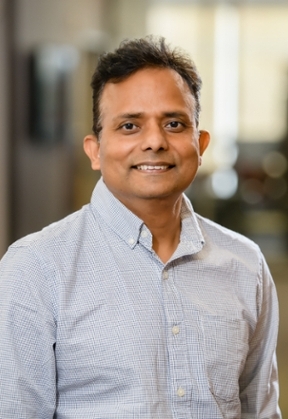
Umesh Vaidya is a Professor in the Department of Mechanical Engineering at Clemson University's College of Engineering, Computing and Applied Sciences. His research integrates control theory, dynamical systems, and data-driven methodologies to address challenges in power systems, robotics, and building automation. He leads the DYCO AI Lab and maintains active collaborations with industry and government agencies. Education: Ph.D. in Mechanical Engineering (Dynamical Systems and Control Theory), University of California, Santa Barbara B.E. in Electrical Engineering, Victoria Jubilee Technological Institute, Mumbai, India (1997) Research Focus: Vaidya pioneers operator-theoretic approaches for data-driven dynamical analysis, specializing in Koopman and Perron-Frobenius operators. His work spans robust optimization for cyber-physical systems, stability analysis of power grids, and safety-critical control for robotics. Recent innovations include density functions for safe navigation and transfer operator frameworks for building environment monitoring. Publication Trends: Analysis of 2019-2025 publications reveals escalating integration of Koopman operator theory with machine learning for control systems. Key trajectories include: (1) Safety-critical autonomy using density functions (35% of recent work), (2) Power grid stability via data-driven spectral methods (25%), (3) Optimization of networked systems (20%), and (4) Robotics control under uncertainty (20%). The shift toward real-world validation in autonomous vehicles and power systems is pronounced post-2021. Scientific Recognition: NSF CAREER Award (2012) for foundational work in dynamical systems Best Paper Award at American Control Conference (2018) for building environment monitoring Keynote invitations at Set-Oriented Numerics workshop (2016) and IPAM/UCLA (2019) Litton Industries Professorship (2010-2011) for engineering excellence Research Leadership: Vaidya directs the DYCO AI Lab, securing major grants including NSF CAREER and collaborative power grid analytics projects. His team develops convex approaches for data-driven control with safety guarantees, bridging theoretical advances with applications in autonomous vehicles and renewable energy integration. Current projects focus on digital twins for robust autonomy and Koopman-based stability assessment in high-penetration renewable grids. Technical Infrastructure: The DYCO AI Lab employs high-performance computing for operator-theoretic methods, with experimental validation platforms for off-road autonomous vehicles and building energy systems. Partnerships include national labs (NREL, ORNL) and industry leaders in power systems (Siemens, Duke Energy) and robotics (Boston Dynamics).
Dr. Dhirendra Shukla is the Dr. J. Herbert Smith ACOA Chair at the University of New Brunswick's J Herbert Smith Centre for TME. He holds a PhD in Entrepreneurial Finance from King's College London, an MBA from the Telfer School of Management (University of Ottawa), and advanced engineering degrees from the University of Bradford. His research focuses on venture capital, corporate governance, entrepreneurial finance, and sustainability in renewable energy and technology-driven industries. Education: BEng/MSc in Chemical Engineering & Computing (University of Bradford) MBA (University of Ottawa/Telfer School) PhD in Entrepreneurial Finance (King's College London) His teaching portfolio includes courses on entrepreneurial finance, global engineering, and leadership in technology management. Research interests span venture capital dynamics, IPO governance, blockchain applications, and smart energy systems. He has presented at conferences like the Strategic Management Society and Academy of International Business, contributing to cross-national studies on corporate governance and IPO performance. Shukla's work bridges academia and industry, with projects addressing renewable energy partnerships in Atlantic Canada and federated learning systems for privacy-preserving data analytics. His recent studies explore AI-driven digital twins, cyber-physical systems in smart cities, and blockchain adoption in higher education.
Dr. Shameek Bhattacharjee is an Assistant Professor of Computer Science at Western Michigan University and Director of the STAR Lab (Security Trust and AI for Resilient Systems). He holds a PhD in Computer Engineering from the University of Central Florida. Research Focus: Designs data-driven and model-driven frameworks for safety and security in smart connected systems. Key areas include IoT security, anomaly detection, trust management, and resilient learning for cyber-physical systems. Publications: Recent work demonstrates consistent focus on security challenges in critical infrastructure including smart transportation, water systems, and energy grids. Research employs advanced machine learning techniques for attack detection and resilient system design in IoT environments.
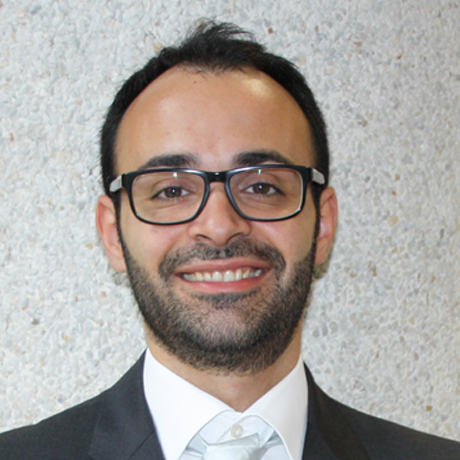
Pantaleone Nespoli is a postdoctoral researcher at the University of Murcia's Department of Information and Communications Engineering. He holds a PhD (cum laude) and Master's degree (110/110 cum laude) from the University of Naples Federico II, Italy. His research focuses on cybersecurity, cyber defense, IoT security, and SIEM systems. He is affiliated with CyberDataLab UMU and has contributed to projects like DEFENDER, COBRA 2.0, and EU-GUARDIAN, addressing AI-driven cyber defense and threat simulation. Education: PhD in Cybersecurity (2021, University of Murcia), M.Sc. in Computer Engineering (2017, University of Naples), B.Sc. in Computer Engineering (2013, University of Naples). Professional experience includes internships at NEC Labs EU and research collaborations with institutions like INCIBE and the Ministry of Defence. Research Interests: Cybersecurity frameworks, intrusion detection systems (IDS), SIEM integration, cyber deception tactics, and AI applications in defense. He emphasizes practical solutions for IoT security and cyber range training platforms. Notable Projects: EU-GUARDIAN (€13M+ funding) for AI-based cyber incident management, DEFENDER targeting IoT/5G/IoC security, and CDL-TALENTUM for cybersecurity workforce development. Awards include the Clusit Thesis Award (2018) and Ericsson Innovation Awards recognition. Labs/Teams: Active in CyberDataLab UMU, developing cutting-edge tools like SCORPION Cyber Range for gamified cybersecurity training and deception-based defense systems.
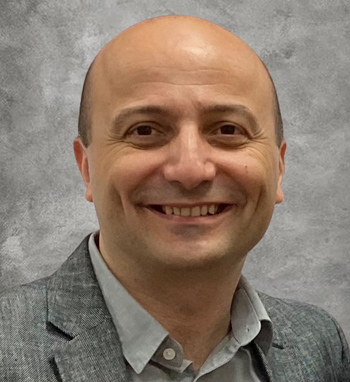
Dr. Kemal Akkaya is a Professor at the Department of Electrical & Computer Engineering, Florida International University (FIU), where he leads the Advanced Wireless and Security Lab (ADWISE). He holds a Ph.D. in Computer Science from the University of Maryland Baltimore County and has expertise in Network Security, IoT/CPS Security, Blockchain Applications, and 5G Security. His professional roles include serving as Research Director for FIU’s Emerging Preeminent Program in Cybersecurity and as Program Director for the first BS degree in IoT in the U.S. Education: Ph.D. in Computer Science, University of Maryland Baltimore County M.S. in Computer Engineering, Middle-East Technical University, Turkey B.S. in Computer Science, Bilkent University, Turkey Research Interests: Dr. Akkaya focuses on securing IoT and cyber-physical systems, blockchain for micro-payments, and network defense mechanisms. His work emphasizes privacy-aware protocols, secure key management, and SDN/NFV-based solutions. Awards: FIU Faculty Senate Excellence in Research Award (2020) College of Engineering and Computing Faculty Research Award (2020) Top Cited Article Award from Elsevier (2010) Advisees and Grants: While no student names are listed, his lab (ADWISE) likely supports graduate research in IoT and cybersecurity. His grants include interdisciplinary initiatives at FIU, focusing on securing emerging technologies like 5G and blockchain. Labs/Teams: Leads the ADWISE Lab, collaborating on projects like secure IoT payment systems, drone communication security, and resilient smart grid networks.
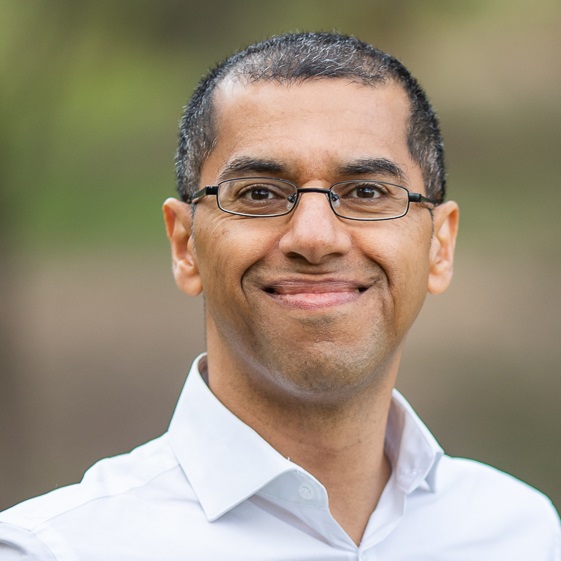
Professor Yeslam Al-Saggaf is a Professor in Computing at Charles Sturt University (CSU), where he has served since 2003. He holds a BEng(Hons) in Computer and Information Engineering from Malaysia, and both an MInfoTech and PhD from CSU. His research focuses on cybersecurity, ethical implications of technology, and the psychological and sociological impacts of digital behavior. He has authored The Psychology of Phubbing (Springer, 2022) and secured significant funding, including three Australian Research Council (ARC) grants (as Lead Chief Investigator) and an Australian Government Cyber Security grant. His work spans cybersecurity education for children, workplace ethics, and data governance in agriculture. Al-Saggaf’s research highlights include analyzing smartphone privacy risks among adolescents, developing IoT-based educational tools for children, and exploring the psychological effects of 'phubbing' (phone snubbing). His interdisciplinary approach integrates data mining, decision tree modeling, and sociological analysis to address real-world challenges in technology usage and security. Recent projects emphasize agricultural data exchange security and the ethical dimensions of computing education. Education: BEng(Hons) (Malaysia), MInfoTech and PhD (Charles Sturt University) Grants & Awards: ARC grants (2023–2025), Australian Government Cyber Security Grant Key Themes: Cybersecurity education, phubbing psychology, data governance, workplace ethics His work bridges technical innovation with human-centric challenges, advocating for inclusive language in cybersecurity communication and addressing societal impacts of emerging technologies.
Duncan Ki-Aries is a Lecturer in Computer Science (Cyber Security) at Bournemouth University, where he serves as Programme Leader for the MSc Cyber Security and Human Factors. His research integrates Requirements Engineering with security, risk, and human factors, particularly in Systems of Systems contexts. Research focuses on inclusive security design, cyberpsychology, and tool-supported risk assessment. He has published in venues like Computers & Security and organizes the ESPRE workshop series. Teaching includes modules on Cyberpsychology, Security by Design, and Human-Computer Interaction.
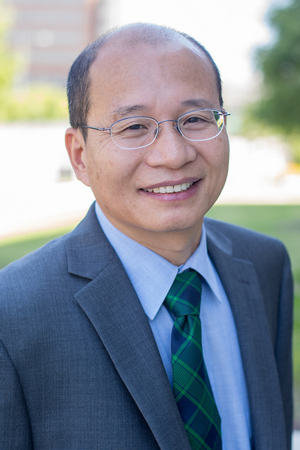
Yuliang Zheng is a Professor and Chair of the Department of Computer Science at the University of Alabama at Birmingham (UAB), part of the College of Arts and Sciences. He is renowned as the inventor of the ISO-standardized signcryption technology and a leader in modern cryptography and cyber security. His research spans cryptographic engineering, blockchain, and privacy-preserving systems. Dr. Zheng has over 230 refereed publications and played a key role in establishing international standards for public-key cryptography. He co-founded the Public Key Cryptography (PKC) conference and chairs its steering committee, demonstrating his global influence in the field. Education: B.S. (Highest Distinction) from Nanjing Institute of Technology (1982), M.S. and Ph.D. in Electrical Engineering from Yokohama National University (Japan), followed by a postdoctoral fellowship at the Australian Defence Force Academy. His career includes roles at the University of Wollongong, Monash University, and UNC Charlotte, where he founded the Information Security and Assurance Center (ISAC). Research focuses on cryptographic innovation, including signcryption, blockchain security, and privacy-enhancing technologies. He has advised banks, tech firms, and governments, and contributed to standards bodies like ISO, IEEE, and IETF. Awards include recognition as a top 10 cryptography researcher (1999) and ISO standardization milestones. Leadership and service include steering committees for major conferences like ICITS and ISC, editorial roles at The Computer Journal and IEEE Transactions, and program committee memberships across ACM-CCS, RSA, CRYPTO, and ASIACRYPT. His work emphasizes practical applications of security, such as privacy-preserving data generation and secure video surveillance systems.
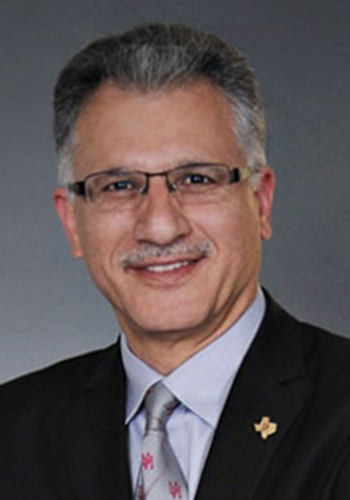
Heidar A. Malki is a Professor of Engineering Technology and Senior Associate Dean of the Technology Division at the Cullen College of Engineering, University of Houston (UH). He holds a joint appointment in the Electrical and Computer Engineering Department and has over three decades of academic and research experience. He earned his Ph.D. in Electrical Engineering from the University of Wisconsin-Milwaukee (1990). His roles include Department Chair (2009–present) and Associate Dean for Research (2004–2009). He is a Senior Member of IEEE and serves as an Associate Editor for the IEEE Transactions on Fuzzy Systems. Education: Ph.D. in Electrical Engineering, University of Wisconsin-Milwaukee (1990) M.S. in Electrical Engineering, University of Wisconsin-Milwaukee (1985) B.S. in Electrical Engineering, University of Wisconsin-Milwaukee (1983) Research Interests: Dr. Malki specializes in control systems, neural networks, fuzzy logic, and smart grid optimization. His work bridges academic research with industrial applications, particularly in the energy and telecommunications sectors. Notable areas include neuro-fuzzy controllers, power system dynamics, and cyber-security for critical infrastructure. He has collaborated with organizations like Southwestern Bell and the oil/gas industry on neural network applications. Publications & Awards: With over 100 publications, Dr. Malki’s work spans journals like IEEE Transactions on Fuzzy Systems and International Journal of Bifurcation and Chaos . His awards include the Fluor Daniel Outstanding Faculty Award (2001, 2003) and recognition in Who's Who in America . He has authored textbooks on control systems and contributed to academic volumes on fuzzy logic applications. Grants & Leadership: He secured funding for initiatives like the Houston Information Technology Workforce Certification Center and led conferences such as the 1997 IEEE International Conference on Neural Networks. His educational contributions include pioneering web-based control systems laboratories and interdisciplinary graduate programs in technology. Labs & Teams: His research teams focus on advanced wireless sensor networks, mechatronics, and energy system optimization. Collaborations extend to NASA and the U.S. Department of Energy, emphasizing applied engineering solutions for real-world challenges.
Nur Imtiazul Haque is a Visiting Assistant Professor at the University of Cincinnati's School of Information Technology within the College of Education, Criminal Justice, and Human Services (CECH). He holds a Ph.D. and M.Sc. in Electrical and Computer Engineering and Computer Engineering from Florida International University, USA, and a B.Sc. in Computer Science and Engineering from Khulna University of Engineering and Technology (Bangladesh). Previously, he served as a lecturer at Daffodil International University and a graduate research assistant in the Analytics for Cyber Defense lab, where he contributed to NSF and DOE projects. His research focuses on securing cyber-physical systems through formal methods, machine learning, and mathematical optimization, particularly in smart healthcare, smart homes, and industrial IoT. He has published 12 peer-reviewed papers, one book chapter, and patented a tool. Notable achievements include the Best Paper Award at IEEE/IFIP DSN 2023 and the Dissertation Year Fellowship Award. Dr. Haque has organized the International Workshop on AIOTS as publication chair and is an active IEEE member. His work addresses critical infrastructure vulnerabilities, with contributions to frameworks like SHATTER, PHASE, and iDDAF for detecting and mitigating advanced cyber threats.
Sara Baldoni is a non-tenured Assistant Professor at the Department of Information Engineering, University of Padova. She holds a Ph.D. in Applied Electronics from Roma Tre University (2018–2021) and was a Post-Doctoral researcher there until February 2023. Her research focuses on communication security, navigation systems, and multimedia processing, with a strong emphasis on GNSS, Cyber-Physical Systems (CPS), and sensor fusion. Education: Bachelor in Electronics Engineering (2016, Roma Tre University) Master in ICT Engineering (2018, Roma Tre University) Ph.D. in Applied Electronics (2021, Roma Tre University) Research interests include anomaly detection in CPS, GNSS integrity enhancement, and VR/AR applications. She leads projects such as ISEEYOO (CPS anomaly detection), RAILGAP (rail positioning via GNSS), and INSECTT (secure IoT-AI systems). Her work integrates machine learning, signal processing, and cybersecurity to improve system resilience and user experience in critical infrastructure and immersive technologies. Notable contributions include frameworks for GNSS imaging fusion, context-aware security, and VR saliency modeling. Ongoing projects emphasize rail safety (VOLIERA, RAILGAP) and AI-driven anomaly detection (ISEEYOO).
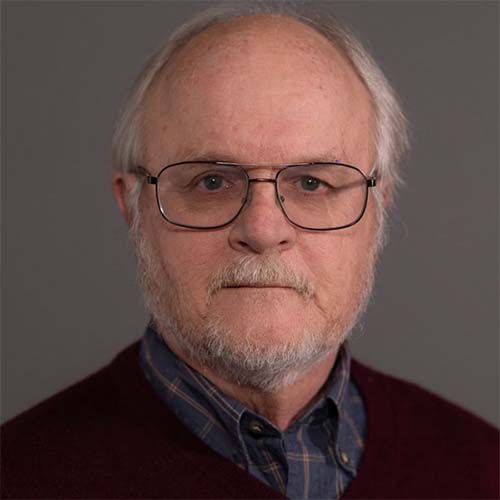
Professor Henry Coffman holds a position in the Department of Cyber Security Engineering at George Mason University's College of Engineering and Computing. With over 31 years of experience in Information Technology and cybersecurity, he previously served as Cybersecurity Program Lead at Lord Fairfax Community College (LFCC) for 17 years, developing a program recognized with the NSA Center of Academic Excellence in Cyber Defense designation and ABET accreditation. He currently focuses on academic instruction in the CYSE undergraduate program. Education: Ph.D. in Information Security from George Mason University (2007) His research interests center on advancing cybersecurity education and program development, leveraging his extensive industry experience with the Department of Defense and Interpol. He is certified as a CISSP and affiliated with organizations including ISC², ACM, the Virginia Cyber Range Executive Committee, and EPT.
Lingyu Wang is an Affiliate Professor at the Concordia Institute for Information Systems Engineering, Concordia University. He holds a Ph.D. in Information Technology from George Mason University (2006). His research focuses on cloud security, SDN/NFV security, security metrics, network security, software security, and privacy preservation. Dr. Wang has published extensively on topics including differential privacy systems, proactive security policy enforcement in containers, and cross-cluster security models for edge-core environments. His work also addresses challenges in securing industrial systems like IEC 61850 substations and 5G networks, leveraging techniques such as state auditing and event monitoring. His recent articles emphasize balancing security with performance efficiency, such as optimizing anomaly detection while preserving privacy and developing tools for real-time inconsistency detection in NFV environments. He has contributed to frameworks like ProSAS for proactive security auditing and VinciDecoder for automated forensic reporting in cloud environments. Dr. Wang’s research bridges theoretical cybersecurity principles with practical applications in cloud infrastructure, emphasizing resilience against zero-day attacks and supply chain vulnerabilities. His work frequently integrates machine learning and deep learning for enhanced security analysis and tool development.