Ruoxi Jia is an Assistant Professor in the Bradley Department of Electrical and Computer Engineering at Virginia Tech, affiliated with the Sanghani Center for Artificial Intelligence and Data Analytics. She holds a Ph.D. from UC Berkeley and a B.S. from Peking University. Her research focuses on machine learning, security, privacy, and cyber-physical systems, with recent emphasis on data-centric AI and trustworthy machine learning. Education: Ph.D., Electrical Engineering and Computer Sciences, UC Berkeley (2018) B.S., Peking University Research interests include adversarial machine learning, AI safety, data valuation, and privacy-preserving techniques. Her work addresses challenges in AI ethics, backdoor detection, and scalable model security. Recent publications explore topics like defense mechanisms against poisoning attacks, large model safety surveys, and red teaming strategies. She actively seeks students (PhD, Masters, interns) and emphasizes collaboration through her group. Her work bridges theoretical foundations and practical applications in AI and cybersecurity, with contributions to both technical and ethical dimensions of modern machine learning systems.
Yair Levy is a Professor of Information Systems and Cybersecurity at Nova Southeastern University’s College of Computing & Engineering, serving as Director of the Center for Information Protection, Education, and Research (CIPhER) and Head of the Levy CyLab. He earned his Ph.D. in 2003 from Florida International University. His research focuses on cybersecurity, social engineering, threat mitigation, and user authentication, with over 100 peer-reviewed publications and 4,200+ citations. He leads the Cybersecurity Curriculum Committee overseeing NSA-certified programs and is a founding member of the IIAKM, recognized with a 2013 ‘Fellow and Distinguished Scholar’ award and the 2014 ‘Lifetime Academic Achievement Award.’ Levy chairs FBI InfraGard South Florida’s Education Sector and serves on U.S. Secret Service task forces. He has secured $435K in DoD grants (2019–2020) and leads cybersecurity initiatives like the NSA-funded DoD Cyber Service Academy. His research emphasizes human-centric cybersecurity, including phishing susceptibility, insider threats, and authentication innovations. The Levy CyLab develops tools for measuring cybersecurity skills and mitigating social engineering risks. Awards: Fellow and Distinguished Scholar (IIAKM, 2013) Lifetime Academic Achievement Award (IIAKM, 2014) IEEE Senior Member Grants & Advising: Two DoD/NSA grants ($435K total, 2019–2020) Directed over 60 doctoral students in cybersecurity NSA Point of Contact for National CAE in Cybersecurity Labs & Teams: Levy CyLab: Focuses on human factors in cybersecurity, authentication systems, and threat mitigation NSU eHACKERs Cybersecurity Student Club Sponsor
Juan Francisco Cornago Baratech serves as an Associate Collaborator at Comillas Pontifical University's Higher Technical School of Engineering (ICAI), Department of Telematics and Computing, where he teaches Governance, Risk, and Compliance in the Cybersecurity Master's Program. With over 25 years of professional experience, he currently holds the position of Director of Cybersecurity at Babel (since September 2024) and previously spent 20 years as Senior GRC Manager at Grupo SIA (Indra Company). His academic foundation includes: Technical Engineer in Management Information Technology from Comillas Pontifical University Master's Degree in Security, Defense, and Leadership from Isabel I University (2023) Multiple international certifications: CISA (2005), CGEIT (2009), C|CISO (2013), CDPSE (2020), and lead auditor credentials for ISO 27001/22301 Cornago Baratech's expertise centers on integrating cybersecurity with strategic business objectives through frameworks like NIST Cybersecurity Framework 2.0. His work emphasizes balancing technological solutions with human and process elements across critical sectors including defense, transportation, banking, and critical infrastructure. He advocates for security as a foundation of digital trust and regulatory compliance while maintaining operational effectiveness. As an educator, he has supervised Master's Theses and taught specialized courses for 7 years at Comillas. He directs the Cybersecurity and Cyberintelligence Chair of the MESIAS Forum to strengthen Spain's national digital ecosystem and contributes to policy development through the National Cybersecurity Forum. His professional philosophy centers on security as a commitment to collective well-being, combining technical rigor with ethical responsibility in the digital society.
Dr. Imran Ahmed serves as a Senior Lecturer in Artificial Intelligence at Anglia Ruskin University's Faculty of Science and Engineering, School of Computing and Information Science. With over 100 research publications exceeding 250 JCR impact factor and an h-index greater than 30, he represents a distinguished academic in computer science and engineering fields. Dr. Ahmed's research spans multiple domains of artificial intelligence, with particular expertise in machine learning, deep learning, computer vision, and data science. His work focuses on medical imaging applications including brain tumor detection, Covid-19 detection, pulmonary nodule classification, and liver lesion detection. He also pioneers research in surveillance systems, IoT-enabled environments, anomaly detection, and AI applications for sustainability in environmental monitoring and precision farming. His recent publications demonstrate a strong trend toward practical AI applications in healthcare, environmental sustainability, and intelligent transportation systems. The research shows increasing emphasis on explainable AI, edge computing implementations, and interdisciplinary approaches that bridge computer science with medical, environmental, and industrial applications. His work consistently addresses real-world challenges with innovative technical solutions. World's top 2% scientists by Stanford University (2021, 2022) Double Gold Medallist Certificate of merit for brain MRI analysis for tumor detection Numerous awards for teaching, research, and administrative excellence Dr. Ahmed supervises research across multiple domains including medical imaging, healthcare informatics, surveillance systems, environmental monitoring, agricultural technology, recommender systems, anomaly detection, cyber security, public health, urban planning, smart cities, augmented reality, and human-computer interaction. His research projects include Human Surveillance and Activity Recognition, Data Analytics during Covid-19, Sustainable Healthcare applications, Deep Learning in Medical Imaging, and Sustainable Environmental Control frameworks. As Principal Investigator, he has led multiple funded projects integrating IoT and AI technologies for practical applications. He is actively involved in organizing technical sessions and workshops for IEEE conferences, particularly focusing on cybersecurity issues of IoT in Ambient Intelligence environments, connected intelligence for IoT applications, and real-time data processing in industrial contexts. His professional memberships include Fellow of the Higher Education Academy, Senior Member of IEEE, Member of ACM Computer Society, and Senior Member of the Institute of Research Engineers and Doctors.
Dr. Jifeng Xuan is a Professor and Deputy Dean at the School of Computer Science, Wuhan University, China. He founded the CSTAR (Centre of Software Testing, Analysis and Reliability) and holds editorial roles at Empirical Software Engineering and PLOS One . Previously, he was a postdoctoral researcher at INRIA Lille-Nord Europe (France) and earned his PhD from Dalian University of Technology. Research Interests: His work focuses on software testing, debugging, automated program repair, software data analysis, and search-based software engineering. He integrates AI/ML techniques for tasks like log analysis, fuzz testing, and vulnerability detection, with applications in robotics, microservices, and Android development. Publication Trends: Recent articles (2022–2025) emphasize AI-driven software engineering, including LLM-based repair, reinforcement learning for testing, and deep learning surveys. Security (vulnerability logs) and empirical studies on industrial challenges (e.g., C program repair) are recurring themes. Awards & Honors: ACM SIGSOFT Distinguished Paper Award (2025) IEEE TCSE Distinguished Paper Award (2025) CCF NASAC Youth Software Innovation Award (2024) Outstanding Doctoral Dissertation Award, China Computer Federation (2014) Luojia Young Scholar (2015) Student Advising & Labs: Actively recruits PhD and master students for CSTAR Lab. Research areas include automated debugging, testing tools (e.g., Mergebot, FastLog), and AI-generated code assessment. No specific grants listed.
Dr. Hui Han is a Senior Lecturer at Luleå University of Technology (LTU) in Sweden, working within the Machine Learning Group with a Wallenberg AI, Autonomous Systems and Software Program (WASP) professorship. She is affiliated with the Department of Computer Science, Electrical and Space Engineering, specifically within the Embedded Intelligent Systems LAB. Her office is located in Luleå at room A3424. Dr. Han earned her Ph.D. in Industrial Engineering from the Technical University of Madrid (UPM), Spain. Following her doctoral studies, she completed postdoctoral research at the Data Science department of Fraunhofer IESE in Germany and later served as a postdoctoral fellow in the Department of Computer Science at the Norwegian University of Science and Technology (NTNU), Norway. Dr. Han's research focuses on data science with specific expertise in Edge AI and TinyML (Tiny Machine Learning). She leads research efforts in developing sustainable modeling for Sustainable Supply Chain Management, particularly in reverse logistics and circular economy. Her work also encompasses social commerce and Industry 4.0 applications. As the first author, she has published 17 papers including 10 journal papers, 4 conference papers, and 3 magazine papers, accumulating over 1,000 citations according to Google Scholar. Her publications appear in high-impact journals such as Technological Forecasting & Social Change (IF 13.3), Expert Systems with Applications (IF 8.5), and Education and Information Technologies (IF 5.5). Dr. Han's teaching portfolio includes Management Information Systems, Project in Industrial AI, and TinyML. She has created an introductory TinyML course available on her YouTube channel. Her research spans multiple interdisciplinary areas including Industry 4.0, IoT, Cloud Computing, Big Data Analytics, Cyber-Physical Systems, Multicriteria decision support systems (particularly Fuzzy TOPSIS), Complex Relationships Analysis (PLS-SEM), Data Science, TinyML, Edge AI, Random Forest techniques, Information Systems, Social commerce, E-commerce, Sustainable Supply Chain Management, Reverse logistics, Closed-loop Supply Chains, Circle Economy, and Healthcare applications. Her Embedded ML for Health Project demonstrates practical applications of TinyML in healthcare, using Arduino Nano 33 BLE Sense and OV7675 Camera for melanoma detection through image processing and machine learning algorithms. This project showcases her ability to apply theoretical research to real-world healthcare challenges.
Susan D. Boon is a Professor in the Department of Psychology at the University of Calgary, where she is a member of the Social Psychology and Social Development research group (SPSD). She serves as the Director of the University of Calgary's "Lovelab" and is an Advisory Editorial Board Member of the Journal of Social and Personal Relationships. Dr. Boon was also the former President of the International Association for Relationship Research. Dr. Boon received her educational training at: B.A. in Psychology from the University of Alberta (1987) M.A. in Psychology from the University of Waterloo (1988) Ph.D. in Psychology from the University of Waterloo (1992) As a social psychologist, Dr. Boon is passionate about the topic of personal relationships with a particular fascination for their darker sides. Her research spans multiple domains including: Revenge and forgiveness in interpersonal relationships Infidelity and relationship trust Grandparent-grandchild relationships Risk in intimate relationships Ethics and morality in close relationships Interpersonal processes and judgment Dr. Boon's research publications reveal a consistent focus on the complex dynamics of interpersonal transgressions and responses. Her work demonstrates how revenge, forgiveness, and unforgiveness operate across different relationship contexts including romantic partnerships, friendships, and family relationships. She has developed innovative measurement tools like the GFIT Scale to assess goals following interpersonal transgressions, and her research bridges psychological theory with practical implications for relationship health. Dr. Boon's significant recognition includes: Winner of the 2020 IARR Book Award for "Communicating Revenge in Interpersonal Relationships" Through her leadership of the Love Lab at the University of Calgary, Dr. Boon has mentored numerous graduate students and collaborated with researchers internationally. Her work has been supported by various research grants that have enabled her team to explore the intricate psychological processes underlying relationship dynamics, particularly focusing on how individuals navigate the aftermath of interpersonal transgressions. As Director of the Love Lab, Dr. Boon oversees a research environment dedicated to understanding relationship processes through both experimental and survey methodologies. Her lab has contributed significantly to our understanding of how people respond to relationship challenges, with implications for therapeutic interventions and relationship education programs.
Anne Kohnke is an Associate Professor of Cybersecurity at the University of Detroit Mercy, where she also serves as Director of the Detroit Mercy Center for Cybersecurity & Intelligence Studies and Principal Investigator for the NSA/DHS Center of Academic Excellence in Cyber Defense (CAE-CD) Program. She transitioned from a 25-year IT career as a Vice President/Chief Information Security Officer to academia in 2019, previously holding a tenured position at Lawrence Technological University. Her academic background includes a Ph.D. in Cybersecurity from Benedictine University and an MBA from Lawrence Technological University. Research focuses on cybersecurity education, cyber resilience, supply chain risk management, and the intersection of cybersecurity with law enforcement and critical infrastructure protection. Key roles include: Co-Chair of the national CAE-CD Community of Practice Member of Evidencing Competency Working Groups Peer-reviewer and mentor for CAE-CD programs Board Member of the Metro-Detroit Vehicle Cybersecurity Institute Recent projects include a grant-funded policing reform initiative with Detroit-area jurisdictions and collaborative work on cybersecurity curriculum standards with ACM/IEEE/AIS/IFIP. She has authored six books and numerous articles on cybersecurity education, risk management frameworks, and ethical cybersecurity practices. Her academic contributions emphasize bridging industry-academia gaps through practical curriculum development and promoting cyber resilience as a national imperative. She actively participates in national cybersecurity initiatives, including NIST framework implementation and critical infrastructure protection strategies.
Ramin Karim is a Professor and Head of Subject in the Department of Civil, Environmental and Natural Resources Engineering at Luleå University of Technology. His research focuses on operation and maintenance technology, with expertise in railway systems, industrial cybersecurity, structural health monitoring, and the application of advanced analytics in asset management. He leads the Operation, Maintenance and Acoustics division, emphasizing interdisciplinary approaches to solving complex engineering challenges. Key research areas include predictive maintenance strategies for railway infrastructure, cybersecurity frameworks for Industry 5.0, and the integration of metaverse technologies in industrial contexts. His work often involves data-driven methodologies such as point-cloud processing, game theory for cyber threat modeling, and digital twin concepts. Recent publications highlight his contributions to railway maintenance policy optimization, health monitoring of ground support systems in mining, and cybersecurity challenges in industrial systems. He has co-authored over 50 peer-reviewed articles, many appearing in high-impact journals like International Journal of Systems Assurance Engineering and Management and Frontiers in Virtual Reality . Ramin Karim’s research also explores emerging technologies like federated learning for digital twins, blockchain applications in railways, and human-centric predictive health management systems. His work aligns with initiatives such as the Reality Lab Digital Railway, aimed at advancing sustainable and digitally enabled transportation solutions.
Dr. Hamed Aboutorab is a Lecturer at the School of Business, UNSW Canberra, specializing in applying artificial intelligence (AI) to supply chain management, risk analysis, and organizational resilience. His work integrates data analytics, machine learning, and decision-support systems to enhance operational efficiency and stability in complex environments. He focuses on proactive risk identification, cyber security in smart farming, and AI-driven models for supply chain disruptions. Research Interests: AI applications in logistics and risk management Cyber threats in agricultural systems Reinforcement learning for supply chain optimization Transformer-based models for risk analytics Teaching: ZBUS3102 Project Management ZBUS8302 Logistics Management Publications: Over 15 peer-reviewed articles in journals like Expert Systems with Applications , Automation in Construction , and Computers and Security . Recent work includes systematic reviews on supply chain risks and cyber threat hunting techniques. Labs/Teams: Engaged in interdisciplinary projects combining AI, cyber security, and supply chain innovation at UNSW Canberra.
Dr. Andria Procopiou is a Lecturer in Artificial Intelligence and Cybersecurity at the University of Central Lancashire Cyprus, serving as Course Leader for the MSc Computing program and Deputy Course Leader for the MSc Cybersecurity. She holds a PhD in Computer Science (City, University of London, 2022), an MSc in Human-Computer Interaction (University College London, 2014), and a BSc in Computer Science (University of Surrey, 2013). Her research spans AI applications in sports analytics, cybersecurity for smart cities/IoT, hate speech detection, and metaverse safety. She has led modules in User Experience Design, Penetration Testing, and Cybersecurity. Research interests include AI-driven solutions for sports injury prediction, real-time DDoS detection in IoT networks, and ethical challenges in the metaverse. Her work emphasizes explainable AI (XAI) for transparency in decision-making systems. She has published extensively in journals like Wireless Communications and Mobile Computing and conferences such as IEEE CYBER and the International Conference on Human-Computer Interaction. Education: PhD Computer Science (City University London), MSc HCI (UCL), BSc Computer Science (University of Surrey) Key Roles: Course Leader (MSc Computing), Deputy Course Leader (MSc Cybersecurity) Administrative Contributions: Module leadership in AI, Cybersecurity, and Digital Forensics Her recent publications address critical issues like privacy concerns in smart campuses, gender-based hate speech in virtual spaces, and injury patterns in professional football using data analytics. She collaborates with industry on IoT security solutions and metaverse governance frameworks.
Morten Falch is an Associate Professor at the Department of Electronic Systems, affiliated with The Technical Faculty of IT and Design at Aalborg University. His work focuses on cybersecurity, digital transformation, telecommunications policy, and public-private partnerships. He has led numerous projects addressing cybersecurity in wireless networks, EU-US policy frameworks, and sustainable telecommunication infrastructure. Key research areas include cybersecurity economics, regulatory frameworks for emerging technologies, and the societal impact of digital policies. Falch has collaborated on initiatives like the BEiNG WISE project (cybersecurity in wireless systems) and DINNOCAP (digital innovation capacity building). His publications span over 25 years, with recent emphasis on darkweb market analysis, IoT security, and EU cybersecurity institutions. He has supervised 4 PhD students and contributed to policy white papers on cross-border e-government services and Baltic Sea Region cybersecurity strategies. Falch’s work bridges academic research with practical industry challenges, emphasizing interdisciplinary approaches to technological governance. Notable projects include: CA22104 BEiNG WISE (2023-2027): Cybersecurity in next-gen wireless networks DINNOCAP (2021): Digital innovation capacity building across industries PISH (2020-2023): Intercultural communications in STEM education Labs/Teams: Active in interdisciplinary cybersecurity research groups and policy think tanks focusing on EU digital policy and emerging tech governance.
Dr. Alexios Mylonas is a Senior Lecturer at the University of Hertfordshire, affiliated with the School of Physics, Engineering & Computer Science and the Department of Computer Science. He leads the Cybersecurity and Computing Systems Research Group and is a founding Chapter Leader for OWASP Dorset. His research focuses on IoT security, incident response, web security, fraud detection, and adversarial machine learning. Education: PhD in Information and Communication Security (Athens University of Economics and Business) MSc in Information Security (Royal Holloway, University of London) BSc (Hons) in Computer Science (Athens University of Economics and Business) Research Interests: His work spans cybersecurity domains including IoT security, privacy preservation, digital forensics, and adversarial machine learning applications. Recent projects include AI-driven cybersecurity solutions (e.g., AI4CybSec) and tools like STATOS for malware analysis. Grants & Projects: AI4CybSec: Artificial Intelligence for Cyber Security (2022–2023, Co-Investigator) Labs/Teams: He directs the Cybersecurity and Computing Systems Research Group, fostering interdisciplinary collaborations in threat detection and secure system design.
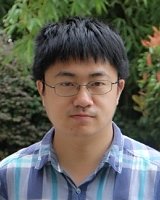
Mr. Yi Wang is a researcher at the Department of Mechanical Engineering, Imperial College London, specializing in Multi-scale Modeling of Powder Forging and related fields. His work bridges mechanical engineering, energy systems, and artificial intelligence. University: Imperial College London Department: Department of Mechanical Engineering Research Interests include electric vehicle-grid integration, microgrid resilience, reinforcement learning applications in energy systems, and multi-energy network optimization. His publications emphasize AI-driven strategies for low-carbon transitions and grid stability. Email: yi.wang12@imperial.ac.uk
Susan H. Perry is a tenured Professor and Program Director of the MAs in International Affairs at the American University of Paris, where she holds the US-UNESCO Chair in Artificial Intelligence and Human Rights alongside Professor Claudia Roda. She specializes in international human rights law and digital technology, focusing on vulnerable populations such as women and children, particularly in contexts involving state or corporate violations of legal conventions. Her work bridges the nexus between technology and human rights, including AI ethics, privacy-by-design frameworks, and legal accountability in digital spaces. Educationally, Perry holds a PhD from the École des Hautes Études en Sciences Sociales (University of Paris), an MSt in International Human Rights Law from Oxford University, a BA in Semiotics from Brown University, and advanced degrees in Chinese Studies from Yale and EHESS. Her career includes advising the French National Council for Human Rights (CNCDH), the European Union’s SHERPA Advisory Panel, and the 2025-27 Horizon Europe project AIOLIA on AI ethics. Her research trends emphasize AI’s societal impacts, legal frameworks for emerging technologies, and cross-cultural human rights advocacy. Notable publications include Human Rights and Digital Technology (2017) and Illusion Pixel (2015), alongside contributions to EU policy initiatives like the Artificial Intelligence Act. She actively engages in conferences on privacy, child rights, and digital governance, reflecting her dual role as scholar and activist. Perry’s affiliations include the International Political Science Association, the Yale-China Association, and editorial roles at Centre Chine, EHESS . Her work consistently bridges academic rigor with practical policy influence, addressing contemporary challenges at the intersection of technology, law, and human rights.




.jpg)