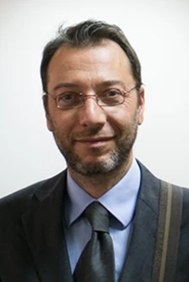
Guido Noto La Diega is a Sicilian-Scottish Professor of IP Law and Technology Law at the University of Strathclyde. He authored "Internet of Things and the Law" (Routledge, 2023) and co-edited a special issue on Non-binary Identities and the Law for GenIUS. His research spans AI regulation , data protection , copyright , and digital consumer rights , including a funded project "From Smart Technologies to Smart Consumer Law" (AHRC & DfG). He is a key figure in the Scottish Law and Innovation Network (SCOTLIN) and collaborates with the European Commission , Nexa Center for Internet & Society , and UCL Centre for Blockchain Technologies .
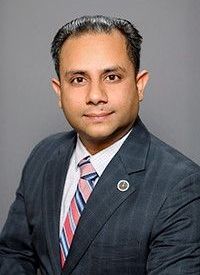
Dr. Paras Mandal is a Professor of Electrical and Computer Engineering (ECE) and Director of the Power & Renewable Energy Systems (PRES) Laboratory at the University of Texas at El Paso (UTEP). His research focuses on electric power systems, renewable energy integration, machine learning applications in smart grids, and cyber-security of power infrastructure. He has published over 200 articles and received awards such as the IEEE Best Papers Award and IEEJ Young Engineer Award. Mandal is a Senior Member of IEEE and holds leadership roles in IEEE Power and Energy Society (PES), including past Chair of IEEE PEEC Award Subcommittee and Secretary of IEEE New Product Development (NPD) Committee. His work is funded by NSF, DOE, DoEd, and industry, including co-leading the NSF-ERC-ASPIRE Power Thrust. Education & Professional Background: While specific educational details are not provided, his academic career demonstrates deep expertise in power systems engineering. He has pioneered initiatives in curriculum development, integrating emerging technologies like dynamic wireless power transfer (DWPT) and smart grid education through NSF-funded programs. Research Interests: Mandal’s work bridges theoretical advancements and practical applications in resilient energy systems. Key areas include: Optimization of microgrid operations under extreme weather Cyber-security protocols for inverter-based microgrids Machine learning-driven demand forecasting for EV charging infrastructure Resilience assessment of power distribution networks Integration of small modular reactors (SMRs) into distribution grids Articles Trends: Recent publications emphasize: Application of Model Predictive Control (MPC) for grid optimization Impact of EVs on urban power distribution systems Cyber-physical security of distributed energy resources (DERs) Hybrid deep learning models for renewable energy forecasting Awards & Recognition: Beyond his technical accolades, Mandal’s leadership in IEEE committees and his role in shaping energy education through concept map evaluations (NSF-funded) highlight his dual focus on innovation and pedagogy. Grants & Labs: As PRES Lab Director, he oversees projects funded by NSF-ERC-ASPIRE and collaborations like the $2.5M UTEP-El Paso Electric partnership for green energy research. His labs develop tools like RAPSim software for DER-integrated grid education. Future Work: Prioritizes: Smart grid resilience against cyber-physical threats Large-scale EV in-motion charging infrastructure Decarbonization strategies for urban energy systems
Dimitrios D. Piromalis is an Associate Professor at the University of West Attica , specifically within the Department of Industrial Design and Production Engineering . He leads the Research Lab of Electronic Automation, Telematics and Cyber-Physical Systems (EATCPS) , focusing on electronic embedded systems for applications in autonomous vehicles, IoT, and cyber-physical systems. With over 120 publications and extensive industry collaboration spanning 25 years, his work bridges academic research and practical engineering solutions. Education : BSc, MSc, and PhD in Electrical and Electronics Engineering. Research Focus : Electronic embedded systems, autonomous vehicles, IoT, cyber-physical systems, digital twins, 3D/4D printing, energy management, and smart agriculture. Recent publications highlight trends in TinyML for smart cities, predictive maintenance integration, hybrid energy storage for EVs, and digital twin applications across agriculture and automotive sectors. His work also extends to emergency communication systems, biomedical sensors, and blockchain-enabled energy gateways. Industry Collaboration : Field Application Engineer and Technical Consultant for multinational semiconductor companies. Teaching : Platforms for AI and Python programming, autonomous vehicles and drones.
Dr. Blair Archibald is a Lecturer in the School of Computing Science at the University of Glasgow. He holds a PhD in Computing Science from the same institution (2018). Previously, he was a Research Associate on the Science of Sensor Systems (S4) project. He is a member of the Systems, PLUG, and FATA research groups and a Software Sustainability Institute Fellow since 2017. His research focuses on computational modeling of complex systems using formal methods like Milner's Bigraphs and probabilistic model checking. He also investigates parallel and distributed computing, programming languages, and functional programming. His work emphasizes making formal methods accessible to non-experts through graphical techniques and tools such as BigraphER. Archibald has contributed to frameworks like YewPar, a C++ library for parallel combinatorial search, and has explored applications in transport systems resilience and human-swarm interaction. His interdisciplinary approach aims to apply formal methods to real-world challenges, such as decarbonizing transport through digital twinning. Key awards include the Software Sustainability Institute Fellowship (2017). His current research interests span BDI agent verification, probabilistic bigraphs, and scalable parallel algorithms. He is actively involved in supervising PhD students in these areas. Lab/Team Affiliations: Systems Research Group, PLUG (Programming Languages and User Interfaces Group), and FATA (Formal Analysis, Theory and Algorithms) at the University of Glasgow.
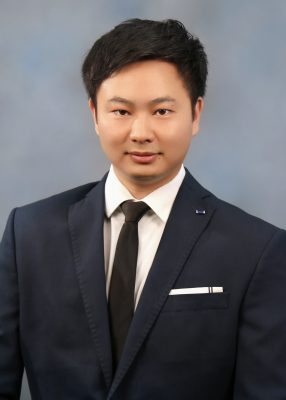
Junbo Zhao is the Castleman Term Professor in Engineering Innovation at the University of Connecticut's Department of Electrical and Computer Engineering. He directs the DOE-funded CyberCARED Center and serves as a Research Scientist at the National Renewable Energy Laboratory. His research focuses on cyber-physical power systems, resilience, and machine learning applications in smart grids. He leads multiple IEEE PES initiatives including the Working Group on Distribution System DERs and the Task Force on Cyber-Physical Interdependency. Education: PhD from Virginia Tech's Bradley Department of Electrical and Computer Engineering (2018), advised by Prof. Lamine Mili. Prior roles include Assistant Professor at Mississippi State University and Virginia Tech, and a summer internship at Pacific Northwest National Laboratory. Research Highlights: Develops advanced methodologies for power system modeling, cybersecurity, and renewable integration. Specializes in data-driven control, uncertainty quantification, and resilient energy systems. His work bridges physics-based models with machine learning techniques for smart grid optimization. Professional Contributions: Serves as Associate Editor for leading journals like IEEE Transactions on Power Systems and IET Renewable Power Generation. Holds over 200 publications and 20+ grants from NSF, DOE, and industry partners. Recognized with the 2024 NSF CAREER Award, 2023 AAUP Research Excellence Award, and numerous Best Paper Awards. Leads $5M+ projects on grid modernization Founder of IEEE Cyber-Physical Interdependency Task Force Prominent in distribution system visibility & control Labs & Teams: Directs CyberCARED - a DOE-funded initiative developing cybersecurity solutions for advanced energy delivery systems. Collaborates with industry partners like Eversource, Dominion Energy, and Avangrid on grid resilience projects.
Murat Yildirim is an Associate Professor in the Department of Industrial and Systems Engineering at Wayne State University and Director of the Cyber Physical Systems Laboratory. He holds a PhD in Industrial and Systems Engineering from the Georgia Institute of Technology, where he also completed his M.S. in Operations Research and dual B.S. degrees in Industrial/Systems Engineering and Electrical/Computer Engineering. His research integrates mathematical programming and data analytics to optimize networked systems, with applications in renewable energy, predictive maintenance, and industrial IoT. Key focus areas include: Real-time inference integration for large-scale optimization Sensor-driven asset management and maintenance planning Decentralized optimization frameworks for energy systems Machine learning for failure prognostics His publications (2019–2024) predominantly explore renewable energy optimization (wind/solar maintenance, grid resilience), industrial IoT applications (inventory-maintenance coordination), and decentralized computing methods. Recent works emphasize deep learning for equipment prognostics and privacy-preserving optimization. Awards & Honors: INFORMS Energy, Natural Resources and Environment Best Paper Award (2018) Finalist for INFORMS Data Mining/Quality Statistics Awards (2015–2016) Doctoral Colloquium Poster Competition Winner (2015) Research Funding & Projects: Secured $4.54M total ($1.15M personal share) from NSF, DoE, Ford, and MTRAC. Major projects include DoE-supported PV degradation analytics ($2.8M), NSF-CPS grants for decentralized vehicle fleet optimization, and wind farm digitization initiatives. Laboratory: Leads the Cyber Physical Systems Laboratory (cyphysystemslab.com), focusing on scalable inference and optimization for industrial and energy systems. Advises 7 PhD students and has placed graduates in roles at JP Morgan, Walmart, and BLEND360.
Michele Sevegnani is a Senior Lecturer in the School of Computing Science at the University of Glasgow, where he also earned his PhD. His work focuses on formal methods, particularly bigraphs with sharing, for modeling and verifying complex, location-aware, event-based systems. He is actively involved in major research initiatives including Probable Futures, TransiT, and CHEDDAR, funded by Responsible AI UK, UKRI, and industry partners. Education: PhD in Computing Science, University of Glasgow MSc in Bioinformatics, University of Edinburgh and University of Trento His research interests include formal verification, digital twins, probabilistic model checking, IoT, mixed-reality systems, and human-autonomy teaming. He has developed BigraphER, an open-source suite for bigraph simulation and analysis. His recent work addresses formal modeling of BDI agents, 5G/6G protocols, and AI in law enforcement. His publications span formal methods, AI, networking, and human-robot interaction, showing a consistent focus on applying rigorous mathematical models to real-world systems. Trends include runtime verification, safety assurance in autonomous systems, and the integration of AI with formal guarantees. Scientific Awards: Nominated for the BCS Distinguished Dissertation Award (2013) Recipient of Amazon Research Award (2022) He advises multiple PhD students and postdoctoral researchers. He has secured grants from the Royal Society of Edinburgh, Taiwan’s Ministry of Science and Technology, and Amazon. He has been a visiting researcher at UC Berkeley and collaborates with institutions in France and Taiwan. He leads the development of BigraphER and is a member of the editorial board of Science of Computer Programming . He regularly presents at international venues and workshops on formal methods and AI safety.
Giorgio Mossa is a Full Professor at the Polytechnic University of Bari (Italy) in the Department of Mechanics, Mathematics & Management, where he also serves as Director of the Master of Science in Ingegneria Gestionale. His work bridges industrial engineering, sustainability, and digital technologies. Research interests focus on: Sustainable systems : Circular economy implementation, decarbonization models, waste valorization, and life cycle assessment. Human factors : Cognitive workload modeling, human error prediction, and Industry 5.0 operator support. Digital transformation : IoT-enabled logistics, digital twins, cyber-physical systems, and servitization business models. Recent publications (2022-2025) demonstrate strong emphasis on: Industrial sustainability via waste-to-hydrogen pathways and circular bioeconomy Human-centric digital tools for maintenance and quality control Integration of IoT/cloud technologies in manufacturing and logistics
Yuhe Tian is an Assistant Professor in the Department of Chemical and Biomedical Engineering at West Virginia University (WVU), holding the Stuart and Karen Goodman Faculty Fellowship. She leads the INnovation-driven Sustainable SYSTems (INSSYST) group, focusing on systems engineering tools for process innovation, energy efficiency, and sustainable systems. Her research integrates mechanistic/hybrid modeling, optimization algorithms, and multi-scale approaches for modular process intensification and decarbonization. Education: Ph.D., Chemical Engineering, Texas A&M University (2021); B.E., Chemical Engineering, Tsinghua University (2016). She teaches undergraduate and graduate courses including CHE355 (Process Simulation) and CHE593C (Advanced Process Systems Engineering). Her team collaborates with the AIChE RAPID Institute on process intensification education and software development. Research interests include modular process intensification synthesis, fault-prognostic control, energy systems decarbonization, and machine learning in data-scarce regimes. Key contributions include the SYNOPSIS framework for operable system synthesis and publications in Computers & Chemical Engineering , AIChE Journal , and Chemical Engineering Science . She advises multiple PhD and MS students and has openings for researchers. Awards: Stuart and Karen Goodman Faculty Fellow. Grants and collaborations involve energy systems, process safety, and AI-driven optimization. Her work bridges theoretical advancements with industrial applications in chemical and energy sectors.
Sebastian Thiede is a Full Professor specializing in Manufacturing Systems , with extensive research contributions to Smart Industry , Sustainable Manufacturing , and Human-Centered Production . His work bridges advanced technologies like Machine Learning , Simulation , and Artificial Intelligence with industrial applications, addressing critical challenges in Circular Economy , Energy Efficiency , and Factory Decarbonization . Research focuses on Battery Manufacturing , Edge Computing , and Real-Time Locating Systems (RTLS) . Key methodologies include Digital Twinning , Surrogate Modeling , and Data-Driven Process Optimization . Recent publications highlight trends in Autonomous Sensor Data Analysis (2025), Cyber-Physical Architectures for reconfigurable systems, and Circular Transition Methodologies for manufacturing. His work often integrates Human Factors with Smart Automation , emphasizing environmental and economic impacts.
Dr. Sivaranjani Seetharaman is an Assistant Professor at Purdue University's Edwardson School of Industrial Engineering. She holds a PhD from the University of Notre Dame, completed postdoctoral research at Texas A&M University, and earned her M.S. from the Indian Institute of Science. Her research integrates control theory and machine learning for distributed decision-making in large-scale cyber-physical-human systems, with applications in transportation networks, power grids, and interdependent infrastructures. Her work focuses on developing efficient algorithms for real-time control, safety guarantees in learning systems, and optimization of networked systems. Analysis of her publications reveals strong emphasis on energy systems and safe learning-based control, with consistent applications to smart grids and electrified transportation. Her research demonstrates progressive integration of machine learning techniques with traditional control theory to address complex infrastructure challenges.
Dr. Wenqi Cui is an incoming tenure-track Assistant Professor at New York University's Tandon School of Engineering, Department of Electrical and Computer Engineering, joining in Fall 2025. Currently, she is a Postdoctoral Scholar at California Institute of Technology's Department of Computing + Mathematical Sciences, advised by Prof. Steven Low and Prof. Adam Wierman. Her research focuses on control, machine learning, and optimization for sustainable power systems and cyber-physical systems, emphasizing safety-critical AI solutions. Cui holds a PhD from the University of Washington (2024), an MS from Zhejiang University (2019), and a BEng from Southeast University (2016). Her work bridges theoretical foundations and practical applications, addressing challenges in decarbonizing energy systems. Notable contributions include structured neural-PI control with stability guarantees, reinforcement learning for frequency control, and efficient algorithms for power system dynamics. Cui has received prestigious fellowships like the Pioneer and PIMCO Postdoctoral Fellowships and was named a Rising Star in EECS (2022) and Cyber-Physical Systems (2023). Education: PhD in Electrical and Computer Engineering, University of Washington (2019–2024) MS in Electrical Engineering, Zhejiang University (2016–2019) BEng in Electrical Engineering and Automation, Southeast University (2012–2016) Research Interests: Control Theory & Optimization Machine Learning & Reinforcement Learning Power System Dynamics & Decarbonization Cyber-Physical Systems Awards: Pioneer Postdoctoral Fellowship (Caltech) PIMCO Postdoctoral Fellowship (Caltech) Rising Stars in EECS (2022) Rising Stars in Cyber-Physical Systems (2023) Her research group at NYU aims to develop algorithms for safe, robust AI-driven solutions in energy systems. Cui is actively recruiting PhD students and postdocs for Fall 2025.
Siva Seetharaman is an Assistant Professor in the Department of Industrial Engineering at Purdue University's College of Engineering, joining the faculty in 2022. His research bridges control theory, machine learning, and networked systems with critical applications in energy infrastructure and transportation electrification. Affiliated with Purdue's top-ranked engineering programs, he focuses on safety-critical control solutions for real-world cyber-physical challenges. His educational trajectory includes a Ph.D. in Electrical Engineering from the University of Notre Dame, followed by postdoctoral research at Texas A&M University. This foundation supports his interdisciplinary approach to complex system dynamics. Dr. Seetharaman's research centers on risk-aware control synthesis for safety-critical systems, with three core thrusts: (1) Developing risk-tunable control barrier functions for human-robot collaboration and autonomous systems; (2) Creating data-driven energy management frameworks for virtual power plants and grid reliability; (3) Advancing distributed learning methods for stability assessment in large-scale networked systems. His work uniquely integrates formal verification techniques with machine learning to address nonlinear dynamics in transportation electrification and decarbonized energy grids. Analysis of his 15 most recent publications (2021–2025) reveals a decisive shift toward causal safety engineering —evident in risk-tunable control barrier functions and sampling-based safe reinforcement learning—and energy-transportation convergence , particularly in electric roadway charging and heavy-duty vehicle grid impacts. Key technical trends include compositional verification of neural networks (ECLipsE), multi-scale energy datasets, and dissipativity-based modeling for nonlinear systems. His work consistently targets real-world deployment challenges in Texas grid case studies and transportation networks. No scientific awards were documented in the provided materials. No student advisement records or grant funding details were included in the source texts. His collaborative publication pattern suggests engagement with interdisciplinary teams across control theory, machine learning, and power systems domains, though specific mentoring activities remain unreported. While no dedicated laboratory is specified, his research on cyber-physical systems, electric roadways, and grid-transportation integration implies active participation in Purdue's energy and transportation research ecosystems. His focus on synthetic Texas case studies indicates strong ties to regional energy infrastructure initiatives.
Professor Mohammad Zandi serves as Professor of Chemical Engineering Education and Deputy Faculty Director of Education at the University of Sheffield's School of Chemical, Materials and Biological Engineering. With a career bridging academia and industry—including strategic research leadership at Tata Steel on biomass iron-making and algae-based CO 2 sequestration—he drives innovation in sustainable engineering education and industrial digitalization. Educational Background: BSc in Chemical Engineering MSc with Distinction in Advanced Chemical Engineering, University of Bradford PhD in Coal Combustion and Environmental Impacts, University of Sheffield His research centers on three interconnected pillars: Engineering Education (developing inclusive pedagogies and curricula for global student engagement), Energy Engineering & Management (optimizing renewable integration and sustainable systems), and Smart Manufacturing (implementing IoT, AI, and digital twins for industrial efficiency). This triad addresses 21st-century challenges from classroom innovation to heavy industry decarbonization, emphasizing practical solutions for resource-constrained environments. Publications reveal a strategic shift from foundational environmental work (coal ash leaching, biomass characterization) toward educational technology and Industry 4.0 applications. Recent outputs highlight data visualization tools like Wiz for manufacturing analytics and evidence-based approaches to international student success, reflecting his commitment to translating research into scalable educational and industrial practices. Scientific Awards: Award for Excellence in Learning & Teaching, Faculty of Engineering, University of Sheffield (2014) Foxwell Memorial Prize in Fuel Technology, Energy Institute (2005) Professor Zandi's advisory and grant leadership includes: Industrial Projects: Directed Tata Steel initiatives on biomass iron-making (with European steel consortiums) and algae-based CO 2 capture. Educational Innovation: Developed award-winning curricula for grand challenge engineering, supported by IChemE and Energy Institute partnerships. Professional Networks: Leverages AIChE and ASEE memberships for cross-sector collaboration on sustainable engineering education. His current work integrates Sheffield's engineering facilities with industrial partners through platforms like ChemEng Academy and LearniX, advancing digital twin applications for sustainable manufacturing while mentoring next-generation engineers in systems thinking and circular economy principles.
María Amparo Grau Ruiz is a Professor at the Department of Financial and Tax Law, Complutense University of Madrid. Her work bridges tax law with emerging technologies, focusing on AI applications in public expenditure auditing and sustainability-driven fiscal policies. Complutense University of Madrid – Department of Financial and Tax Law Author in Deusto Journal of Human Rights , Spanish Journal of External Control , and Tax Technical Magazine Researcher on EU tax harmonization and digital economy taxation Her research explores AI integration in tax administration , sustainability-focused fiscal instruments , and robotics governance . Articles address technical challenges like DAC6 transposition, carbon taxation frameworks, and digital economy taxation. Collaborations with Rita de la Feria and Yolanda Sánchez-Urán Azaña highlight interdisciplinary approaches to tax policy and labor dynamics. Key themes include: AI in Public Finance: Ethical implications of algorithmic budgeting and auditing Sustainability Taxation: Carbon credits, energy-efficient housing incentives Digital Economy: Taxation of digital services, platform economy regulations Robotics: Social security implications, fair taxation of automation