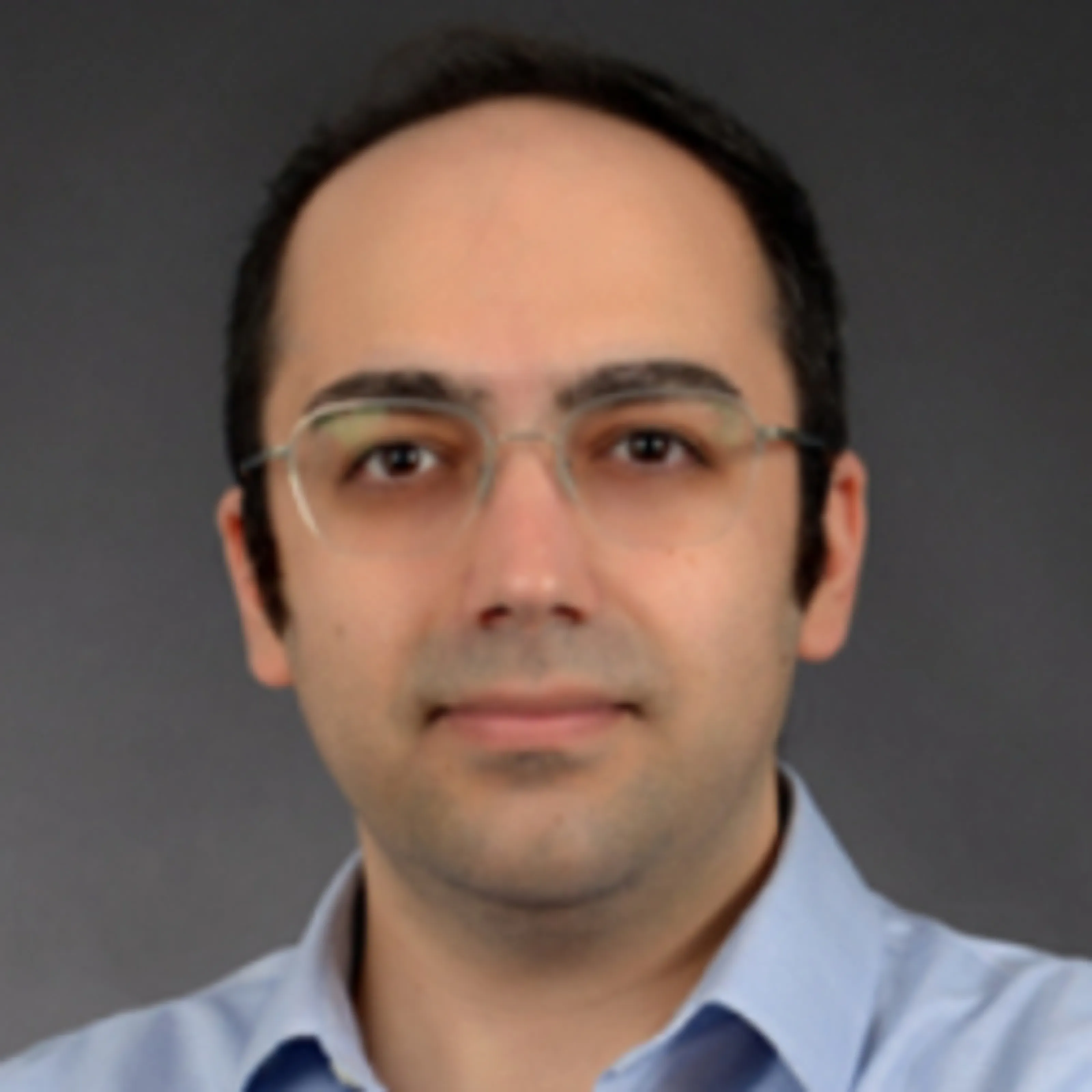
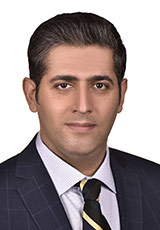
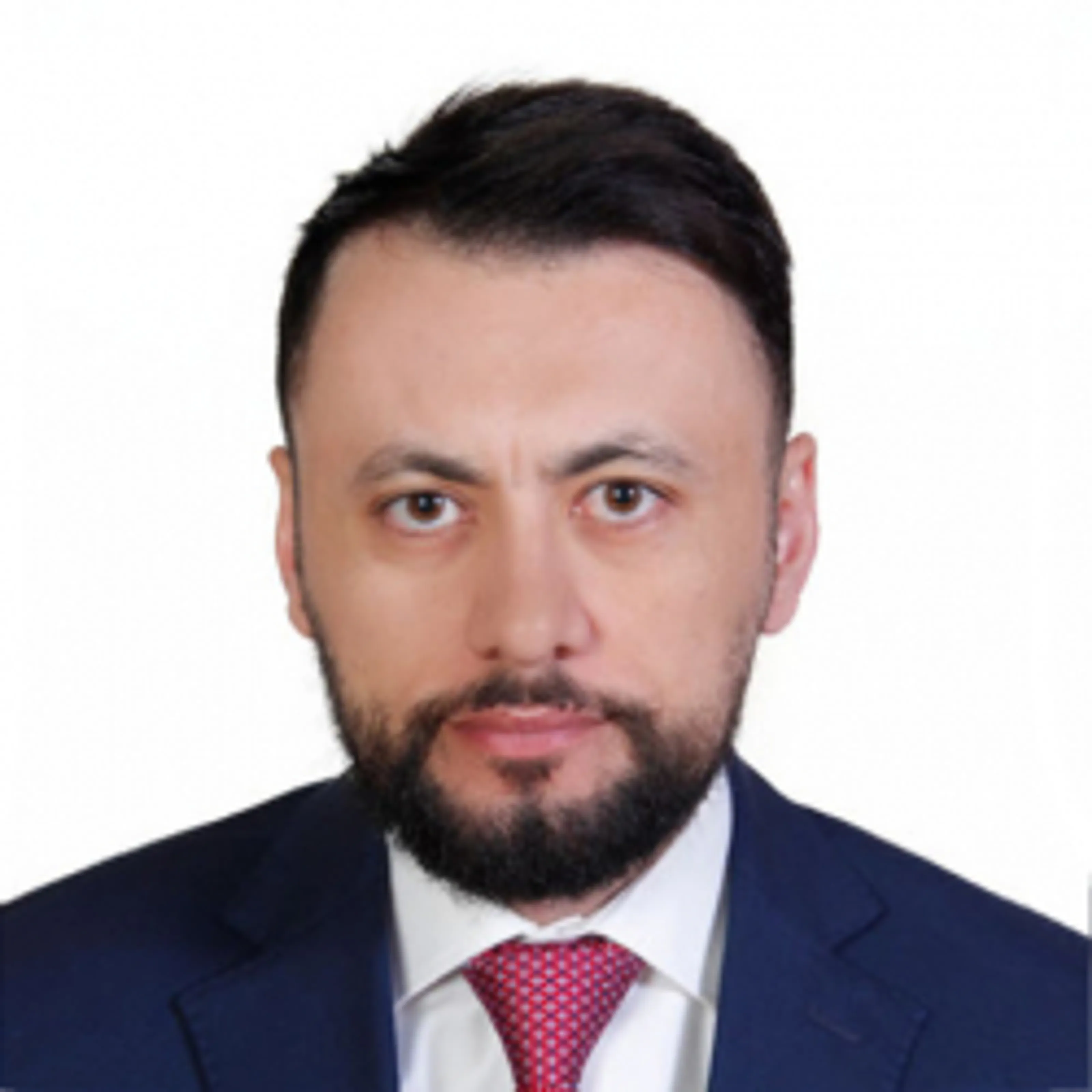
Ikjot Saini is a Professor at the University of Windsor’s Faculty of Engineering, co-leading the SHIELD Automotive Cybersecurity Centre of Excellence, Canada’s first organization addressing threats in connected transportation. Her research focuses on automotive cybersecurity, vehicular networks, and privacy-preserving technologies. She has supervised doctoral students Shiva Nejati and Kunj Dhonde, and contributed to courses in the University’s Continuing Education program, specializing in cybersecurity education for professionals. Her work includes pioneering studies on blockchain-based security for connected autonomous vehicles (CAVs), machine learning-driven intrusion detection systems, and privacy-enhancing mechanisms like pseudonym-changing strategies. She has been recognized with the K.W. Michael Siu Award from the APMA Institute for Automotive Cybersecurity (2020). Saini’s research bridges theoretical advancements with real-world applications, ensuring vehicles and infrastructure remain secure against evolving cyber threats. Her contributions span academic publications, industry partnerships, and policy recommendations, positioning her as a leader in vehicular cybersecurity. Ongoing projects emphasize eco-efficiency in cybersecurity solutions and adversarial modeling for privacy evaluation.
Dr. Mohammadreza Arani is an Assistant Professor and Canada Research Chair (CRC) in Smart Grid Cyber-Physical Security at Toronto Metropolitan University's Department of Electrical, Computer, and Biomedical Engineering. He joined the university in 2019, bringing expertise in renewable energy, microgrids, and cybersecurity. His research focuses on enhancing smart grid stability, renewable integration, and cyber-physical security. Education: BSc: Sharif University of Technology (2009) MASc: University of Waterloo (2012) PhD: University of Alberta (2017) Research Interests: Arani specializes in cyber-physical security of smart grids, microgrid dynamics, renewable energy systems, and power system stability. His work bridges urban infrastructure needs and advanced energy technologies, emphasizing practical solutions for modern grid challenges. Awards: NSERC Postdoctoral Fellowship (2017–2019) Alberta Innovates Technology Future Student Scholarship (2014–2017) Advising & Collaboration: Arani views graduate students as future colleagues, fostering independent research and collaboration. He emphasizes interdisciplinary approaches and industry-academia partnerships, leveraging Toronto's urban environment for applied research. Labs & Teams: While no specific lab is named, his research benefits from Toronto Metropolitan's facilities and collaboration networks in power systems and cybersecurity.
Mohammad Pirani is an Assistant Professor in the Department of Mechanical Engineering at the University of Ottawa, with a joint appointment at the School of Electrical Engineering and Computer Science. Previously, he held postdoctoral and research assistant professor roles at the University of Waterloo, University of Toronto, and KTH Royal Institute of Technology. Education: Ph.D., Mechanical and Mechatronics Engineering, University of Waterloo (2017) MASc., Electrical and Computer Engineering, University of Waterloo (2014) BASc., Mechanical Engineering, Amirkabir University of Technology (2011) His research focuses on resilient and fault-tolerant control in complex systems, including networked control systems and multi-agent systems . He explores intersections with network science , cybersecurity , and machine learning , addressing vulnerabilities in cyber-physical systems like automotive networks. Notable contributions include publications in IEEE Transactions on Control of Network Systems and Automatica , with recent work on network critical slowing down and graph-theoretic resilience strategies. His research trends emphasize reliable learning , security in distributed systems , and data-driven detection of critical transitions . Scientific Awards: Senior Member, IEEE Mohammad Pirani holds a dual appointment at the University of Ottawa and an adjunct professor position at the University of Waterloo. His work bridges mechatronics , robotics and automation , and networked systems , with future directions targeting cybersecurity in cyber-physical systems.
Amir Asif is a Professor at the Lassonde School of Engineering, York University, and concurrently serves as Vice President, Research and Innovation. His academic leadership roles include Dean of the Gina Cody School of Engineering and Computer Science at Concordia University (2014-2020). He specializes in signal processing, communications, and their applications in healthcare, power grids, and distributed systems. Asif holds a PhD from Carnegie Mellon University and a Harvard certification in executive leadership. Education: PhD, Electrical and Computer Engineering, Carnegie Mellon University (1996) MS, Electrical and Computer Engineering, Carnegie Mellon University (1993) BSc, University of Engineering and Technology Lahore (1990) Harvard Certificate in Leadership for Senior Executives (2018) Research Interests: Asif’s work spans signal processing for medical imaging (e.g., ultrasound elastography), smart grid optimization, and cybersecurity in power systems. His recent publications address hydrogen energy systems, EMG-based gesture recognition, and resilient control frameworks against cyberattacks. Grants & Leadership: He leads NSERC-funded projects on federated learning and resilient algorithms. He chairs the Ontario Council of University Research and serves on TRIUMF Innovations and the Richmond Hill Board of Trade. His grants include SSHRC funding for equity initiatives and NSERC support for distributed signal processing. Teaching & Mentorship: Asif has supervised over a dozen graduate students and taught courses like Digital Communications and Statistical Signal Processing Theory. Notable advisees include Arash Mohammadi (PhD, 2014) and Nick Sajadi (PhD, 2017).
Roozbeh Razavi-Far is an Assistant Professor at the Faculty of Computer Science and the Canadian Institute for Cybersecurity at the University of New Brunswick. His research focuses on machine learning, big data analytics, and cybersecurity of cyber-physical systems and IoT devices. He has authored/co-authored over 150 publications and is listed by Stanford as among the top 2% of most cited researchers (2022). His work spans federated learning, transfer learning, quantum machine learning, and dependable AI systems. He serves as an Associate Editor for Neurocomputing, Machine Learning with Applications, and IEEE Transactions on Industrial Cyber-Physical Systems, among others. As an IEEE Senior Member, he chairs IEEE Computational Intelligence and Systems, Man, and Cybernetics Societies. Previously, he directed the Learning System and Cybernetics Group at the University of Windsor (2016–2022). His research interests emphasize security in non-stationary environments, adversarial machine learning defenses, and real-time analytics for smart grids. Awards include NSERC-DG, NSERC-ECR, and USRG grants. He has mentored students who received NSERC Alexander G. Bell, MITACS, and Ontario Graduate Scholarships. His recent publications highlight advancements in privacy-preserving split learning, blockchain-based federated learning security, and graph-based malware detection. He also explores quantum computing applications in AI and cybersecurity frameworks for cyber-physical systems.
Amiya Nayak is a Professor at the School of Electrical Engineering and Computer Science of the University of Ottawa. His research focuses on Fault-Tolerant Computing , Distributed Systems , and Ad hoc and Sensor Networks . He specializes in cybersecurity, IoT security, blockchain integration, and machine learning applications in healthcare and vehicular networks. His work addresses challenges in secure communication protocols, distributed learning frameworks, and energy-efficient network designs. Notable research areas include: IoT Security : Developing frameworks for threat detection, privacy-preserving systems, and blockchain-empowered IoT defenses. Federated Learning : Enhancing healthcare predictions and IoT management through decentralized, privacy-aware machine learning. Vehicular Networks : Securing Vehicle-to-Everything (V2X) communication and optimizing QoS in cooperative internet of vehicles (IoV). Network Optimization : Leveraging deep reinforcement learning and graph neural networks for WDM network restoration and edge computing. His publications (2020–2025) highlight contributions to: Secure authentication protocols in medical sensor networks. AI-driven metaverse security solutions. Decentralized energy trading using NFTs. Energy-efficient sleep scheduling in wireless body area networks (WBANs). Nayak holds a Ph.D. and is a P.Eng. (Professional Engineer). His work bridges theoretical computer science with practical applications in telecommunications and healthcare systems.
Ljiljana Trajkovic is a Professor in the Department of Engineering Science at Simon Fraser University's Faculty of Applied Sciences. She holds a Ph.D. from the University of California, Los Angeles (1986), M.Sc. from Syracuse University (1979), and Dipl.Ing. from the University of Pristina (1974). Her research focuses on communication networks, nonlinear circuits, and machine learning applications for network security. She actively contributes to IEEE initiatives, including roles as conference committee chair and editorial board member. Education highlights include a strong foundation in electrical engineering and advanced studies in circuit theory and systems science. Her work bridges theoretical analysis with practical applications, such as anomaly detection in communication networks using machine learning. She teaches courses like ENSC 220 D100 Electric Circuits I, integrating research insights into education. Research interests emphasize network security, traffic analysis, and distributed systems. Recent articles explore BGP anomaly classification, ransomware detection, and virtual network embedding. She collaborates on tools like VNE-Sim and Anonym for network analysis. Awards and recognitions are highlighted through her leadership roles in IEEE and academic contributions. Advising and grants involve mentoring graduate students in cybersecurity and networking projects. She leads research teams exploring complex networks and their applications in autonomous systems. Her lab focuses on interdisciplinary projects merging electronics engineering with AI-driven network solutions.
Yazan Otoum is a Part-Time Professor in the School of Electrical Engineering and Computer Science at the University of Ottawa and concurrently an Assistant Professor in the School of Computer Science and Technology at Algoma University . A licensed Professional Engineer in Ontario, he is internationally recognized for his interdisciplinary work at the intersection of cybersecurity, artificial intelligence, and the Internet of Things . Education Ph.D. in Electrical and Computer Engineering, University of Ottawa (September 2022) M.Sc. in Network Engineering and Management, DePaul University (December 2009) Research Interests Dr. Otoum’s research program is dedicated to securing the rapidly expanding IoT ecosystem. His core themes include: Scalable meta-learning models that adapt to evolving threats in resource-constrained IoT devices. Federated and transfer learning to enable privacy-preserving, collaborative intrusion detection across heterogeneous networks. Healthcare IoT (IoMT) security, ensuring safe and trustworthy medical devices and data streams. Smart-city infrastructures , where AI-driven security safeguards critical urban services. His recent work leverages large language models (LLMs) , blockchain , and differential privacy to push the boundaries of next-generation cyber-defence mechanisms. Publication Trends Across 23 peer-reviewed works (2017-2025), a clear evolution is evident: early studies established foundational deep-learning intrusion detection frameworks (DL-IDS), followed by federated and transfer-learning paradigms tailored for IoT and IoMT. The latest 2024-2025 publications integrate cutting-edge generative AI and blockchain techniques, highlighting a shift toward holistic, scalable, and privacy-preserving security ecosystems for IoT, Internet of Vehicles, and healthcare domains. Professional Recognition & Service Licensed Professional Engineer (P.Eng), Ontario Certifications: CEH, CCNA, CHFI, ISO 27001 Lead Implementer Peer reviewer for IEEE, ACM, and Elsevier journals Invited speaker and mentor in cybersecurity education initiatives Teaching & Mentorship Dr. Otoum currently teaches Data Science and Data Structures and Algorithms at the University of Ottawa. His office hours are held Mondays 11:30 AM–1:30 PM in SITE room 4075. While specific student advisees are not listed, he is actively engaged in mentoring emerging researchers and practitioners in secure AI and IoT systems. Labs & Teams Operating at the intersection of academia and industry, Dr. Otoum collaborates with multidisciplinary teams spanning embedded systems, AI laboratories, and healthcare technology partners, fostering innovation that transitions seamlessly from theory to real-world deployment.
Shivam Saxena is an Assistant Professor in the Department of Electrical and Computer Engineering at the University of New Brunswick, located in Head Hall D65, Fredericton. His research focuses on smart grid technologies, including distributed energy resource integration, blockchain applications for energy trading, electric vehicle-grid interactions, and resilient microgrid design. This work addresses decarbonization challenges through technological and market innovations. Publications demonstrate a strong emphasis on real-world implementation, with field-tested solutions for V2X integration, blockchain-based transactive energy, and distributed control systems. Recent work explores novel applications in agricultural energy management and trust mechanisms for decentralized systems.
Jun Yan is an Associate Professor and Concordia University Research Chair in Artificial Intelligence in Cyber Security and Resilience at the Concordia Institute for Information Systems Engineering (Concordia University). His research focuses on cybersecurity, smart grid systems, and AI-driven solutions for energy and communication networks. He supervises graduate students in programs such as Information Systems Security (MASc), Computer Science (MCompSc), and Information and Systems Engineering (PhD). Research Highlights : Cybersecurity of distributed energy systems, AI penetration testing frameworks, and resilient transactive energy markets. Awards : Holds a prestigious university research chair in AI-driven cybersecurity. His work integrates machine learning with domain-specific challenges in smart grids, IoT security, and multi-agent systems. Notable contributions include frameworks for detecting adversarial attacks on power systems, optimizing renewable energy integration, and developing AI tools for penetration testing. His articles reflect a strong emphasis on interdisciplinary solutions blending cybersecurity, energy systems, and advanced computing. Yan’s research also addresses policy and infrastructure challenges in sustainable energy systems, including waste management policy analysis and optimal configuration of hybrid renewable systems. He has pioneered open-source co-simulation platforms like PEMT-CoSim and Quantum-Sim for secure energy trading and quantum communication in grids. He actively engages in grant-funded projects and advises on both academic and applied aspects of cybersecurity and intelligent systems.
Kuljeet Kaur is a Professor in the Department of Electrical Engineering at École de technologie supérieure (ÉTS) in Montreal, Canada. Her research is conducted through the LACIME (Communications and Microelectronic Integration Laboratory), a renowned research unit focusing on communications and microelectronic integration. She maintains an active research program with numerous publications and student supervision activities. Professor Kaur's research spans multiple interconnected domains focused on next-generation computing and communication systems. Her primary research axes include Sensors, Networks and Connectivity; Intelligent and Autonomous Systems; and Software Systems, Multimedia and Cybersecurity. Within these broad areas, she specializes in Cloud Computing, Edge/Fog Computing, Internet of Things (IoT), Cybersecurity, Privacy, Federated Learning, and Energy Management. Her work bridges theoretical foundations with practical implementations in intelligent transportation systems, healthcare applications, and smart grid technologies. Analysis of Professor Kaur's recent publications reveals a strong focus on security and privacy challenges in emerging computing paradigms. A significant portion of her work addresses federated learning approaches that maintain data privacy while enabling collaborative AI model training. Her research also demonstrates expertise in edge computing architectures, particularly for IoT applications, with emphasis on energy efficiency and security. The publications show consistent interdisciplinary collaboration across computer science, electrical engineering, and transportation domains. Professor Kaur actively supervises multiple graduate students at various levels. Her supervision portfolio includes doctoral candidates working on topics like decentralized AI networks and secure federated learning, as well as master's students focusing on edge AI for IoT applications, sensor drift compensation, and zero trust architecture for IoT. She also guides project students working on practical implementations of AI for smart grid optimization and secure IoT protocols. Her research is conducted within the LACIME laboratory, which brings together researchers working on everything from micro- and nanofabrication processes to communication protocols and signal processing. The lab provides a transdisciplinary environment where Professor Kaur's work on cyber-physical systems and secure communications benefits from complementary expertise in integrated circuit design and microsystems.
Prof. Lionel C. Briand is a leading academic in software engineering and trustworthy AI, holding appointments at the University of Ottawa (EECS Department, Nanda Laboratory) and the University of Limerick (Lero - National Software Research Centre). He serves as Director of Lero and Scientific Director of the SnT software verification lab in Luxembourg. His research focuses on software testing, model-driven engineering, AI-driven quality assurance, and regulatory compliance. He has held the Canada Research Chair (Tier 1) since 2003 and led major institutions like Simula Research Laboratory (Norway) and Fraunhofer Institute (Germany). Education & Career: Full Professor at Carleton University (2008–2012) Head of Software Quality Engineering at Fraunhofer IESE (2000–2008) Research Scientist at NASA Software Engineering Lab (1990s) Research Interests: His work spans secure AI systems, automated legal compliance (e.g., GDPR), metamorphic testing, search-based software engineering, and safety-critical systems. He emphasizes practical applications, collaborating with industry partners globally. Awards & Recognition: IEEE Fellow (2010), ACM Fellow (2020) Harlan Mills Award (2012), ERC Advanced Grant (2016) Fellowships from Royal Society of Canada (2023) and Academia Europaea (2025) Grants & Labs: PEARL grant from Luxembourg FNR for SnT lab ERC Advanced Grant for software testing research Leadership roles in Lero and Nanda Lab Publications: Over 500+ papers on testing methodologies, AI ethics, and regulatory compliance. Notable tools include CompAI (GDPR compliance) and Teasma (DNN test adequacy).
Benoît Dupont is a Full Professor at the School of Criminology, Faculty of Arts and Sciences, Université de Montréal. He holds the Canada Research Chair in Cybersecurity and directs the Centre de Criminologie Comparée (CICC). His research focuses on the co-evolution of technology and crime, cybersecurity resilience, and international cybercrime governance. He leads major initiatives such as the Smart Cybersecurity Network (SERENE-RISC), fostering interdisciplinary collaboration between academia, industry, and law enforcement. Education: Ph.D. in Political Science from the Université des Sciences Sociales de Toulouse 1 (2001). Academic roles include Director of the Cybersecurity Resilience Lab (LC2) and membership in various research networks like CÉRIUM and CICC. Research interests span cybercrime ecosystems, digital trust mechanisms, and the impact of technology on policing strategies. Notable contributions include studies on dark web operations, cyber-resilience practices, and polycentric governance frameworks for cyber threats. Key awards include the Prix Beccaria (2011) for criminological research and the Francopol Prize (2010) for combating cybercrime. He has supervised over 20 graduate students, many of whom focus on cybercrime prevention and digital forensics. Grants and partnerships include funding from NSERC, SSHRC, and the Canadian Cyber Threat Exchange. He collaborates internationally, including with Griffith University’s Centre of Excellence for Policing and Security in Australia. Labs/Teams: Directs the CICC and co-leads the Human-Centric Cybersecurity Partnership, emphasizing interdisciplinary cyber-resilience solutions.
Professor Wei Shi is a faculty member at the School of Computer Science, Carleton University. His research focuses on distributed computing, cloud networks, algorithm design for sensor/actuator systems, big data analytics, and data privacy. Notable projects include federated learning optimizations, blockchain-enabled edge intelligence for IoT/vehicle networks, and AI-driven cybersecurity solutions. His work addresses challenges in dynamic resource allocation, anomaly detection, and privacy-preserving techniques. Research Interests: Distributed Computing: Optimizing federated learning and client selection algorithms for wireless networks. Blockchain & Edge Intelligence: Developing decentralized systems for IoT and vehicular networks using AI large models. Security & Privacy: Innovating methods to detect AI-generated content, combat cyber-physical attacks, and protect user data privacy. Publications: Recent works emphasize federated learning applications, blockchain integration with edge computing, and cybersecurity for vehicular/IoT ecosystems. Key themes include energy-efficient algorithms, dynamic resource allocation, and intrusion detection in constrained environments. Email: wei.shi@carleton.ca
Jorg Liebeherr is a Professor in the Department of Electrical and Computer Engineering at the University of Toronto, holding the Nortel Chair of Network Architecture and Services. His research focuses on computer networks , particularly network calculus , self-organizing networks , protocol design , and traffic scheduling . Education: Diplom-Informatiker (with distinction), University of Erlangen (Germany), 1988 PhD, Computer Science, Georgia Institute of Technology, 1991 His recent work includes low-cost LoRa mesh networks for environmental sensing and mathematical frameworks for traffic control in 5G and IoT systems. Publications span journals like IEEE Internet of Things Journal and conferences such as IEEE Infocom and ACM Sigmetrics . Scientific Awards: IEEE Fellow (2008) Outstanding Service Award, IEEE ComSoc TC on Computer Communications (2006) ACM Sigmetrics Best Student Paper Award (2005) NSF CAREER Award (1996) Advising and Grants: Supervised 15+ theses (MASc/PhD) and secured grants from NSF, Virginia Engineering Foundation, and industry partners. Labs: Leads the Network Research Lab and HyperCast projects, an open-source platform for application-layer internetworking.