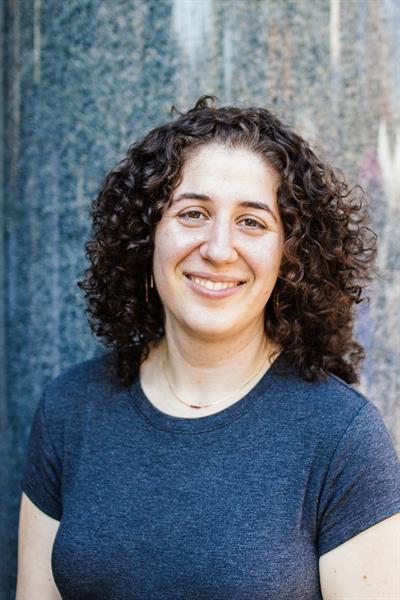
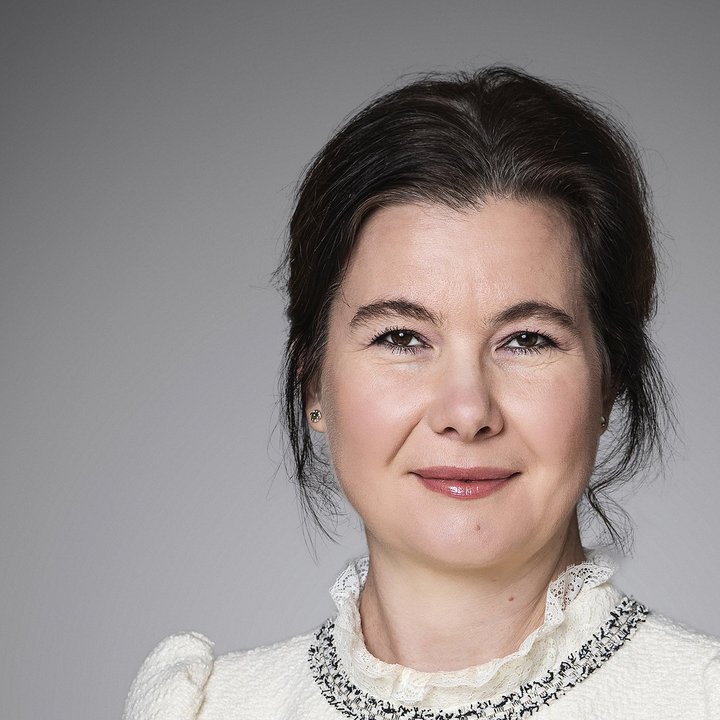
Romain Deguest is an Associate Professor at IÉSEG School of Management, France, affiliated with the LEM research institute. He holds dual PhDs in Operations Research from Columbia University and Applied Mathematics from École Polytechnique Paris. His research focuses on quantitative finance, particularly portfolio optimization, risk allocation mechanisms, and derivatives pricing. Research interests span: Advanced portfolio construction techniques under real-world constraints Empirical analysis of fixed income markets Risk decomposition methodologies for multi-asset portfolios Machine learning applications in predictive modeling Blockchain applications in financial contracts Recent publications show strong focus on duration-constrained bond portfolios, risk parity frameworks, and machine learning approaches to predictive regressions. His work frequently intersects with asset liability management challenges faced by institutional investors. Professional experience includes roles as Head of Research at Fundvisory and quantitative positions at EDHEC Business School and HSBC France. He maintains active industry collaborations through applied research in investment solutions design.
Aristea Sinanioti-Maroudi is a Professor of Commercial Law at the Department of Business Administration, University of Piraeus. She holds a PhD in Commercial Law from Ludwig-Maximilians-Universität München (Germany) with Magna Cum Laude distinction. Her professional experience includes roles as a legal advisor at the Max Planck Institute for Intellectual Property, member of the Greek Competition Commission (2006-2009), and active participation in EU legislative committees for digital communications regulation. Educations: LL.B. from National & Kapodistrian University of Athens (Highest Distinction), PhD from LMU Munich Her research focuses on intellectual property law, e-commerce regulation, corporate governance, and consumer protection. She has published extensively on topics like trademark protection, electronic banking law, and EU competition law. Her works include monographs on service marks, sponsorship contracts, and insurance law frameworks. She is a member of international legal associations including AIPPI, ALAI, and the International Association for Comparative Law. Currently serves on the National Telecommunications & Post Commission (EETT).
Josephine Wolff is an Associate Professor of Cybersecurity Policy at The Fletcher School and the Department of Computer Science at Tufts University. She also serves as Director of the Hitachi Center for Technology and International Affairs. Her expertise spans cybersecurity policy, cyber-insurance, government responses to cyberattacks, and the economics of information security. Wolff holds a PhD in Engineering Systems from MIT, an MS in Technology & Policy from MIT, and an AB in Mathematics from Princeton University. Education: PhD, Engineering Systems, MIT MS, Technology & Policy, MIT AB, Mathematics, Princeton University Research Interests: Wolff's work focuses on liability frameworks for cybersecurity incidents, cyber-insurance mechanisms, and regulatory challenges in cybersecurity. Her books include You'll See This Message When It Is Too Late (2018) and Cyberinsurance Policy (2022), analyzing legal and economic consequences of cyber breaches. Her research also examines trends in cybercrime, GDPR applications to AI, and global cybersecurity norms. Grants & Advising: Wolff has been a Fellow at New America and Harvard’s Berkman Klein Center. She previously taught at Rochester Institute of Technology. Her current roles at Tufts involve interdisciplinary collaborations across technology, policy, and international affairs. Labs/Teams: She directs the Hitachi Center for Technology and International Affairs, focusing on technology’s global governance implications.
Anastasia Kartasheva is an Associate Professor at the Institute of Insurance Economics within the School of Finance at the University of St. Gallen, Switzerland (2021-2024). She also holds a Senior Research Fellow position at the Wharton Alternative Investments Initiative, University of Pennsylvania (2019-present). Her career spans significant roles at the Bank for International Settlements (2012-2018) and academic positions at Wharton School and Georgia State University. PhD in Economics (2004), University of Toulouse, France MA in Economics (1998), New Economic School, Russia BSc in Mathematical Economics (1997), Lomonosov Moscow State University, Russia Her research focuses on insurance regulation , international financial regulation , and extreme risk management (pandemic, cyber, climate). She explores financial guarantees in life insurance , liquidity risk frameworks , and capital allocation strategies using reinsurance. Recent work examines fintech innovations in insurance and systemic risk implications. Article trends reveal expertise in systemic risk quantification , CoCo bond mechanics , and extreme risk financing . Empirical studies on pandemic insurance , cyber risk capital constraints , and reinsurance as divestment dominate her output. Collaborations with institutions like the Financial Stability Board and ECGI underscore regulatory impact. Teaching includes advanced courses on financial institutions , monetary policy , and financial regulation at the University of St. Gallen. She leads research teams including PhD candidates Artur Dobysh and Changrui Zhou , focusing on global insurance group structures and cyber risk financing .
Dr. Lijun (Liz) Zhao is a tenured Senior Lecturer (Associate Professor) in Corporate and Commercial Law at The City Law School, City, University of London. She directs the Academic Visitor Programme and serves on the Research Ethics Committee. PhD from University of Wales Admitted to Chinese Bar Council pre-academia Co-founding Director of The China-Europe Commercial Collaboration Association (CECCA) Her research focuses on Trade and Commercial Law , with specialization in Artificial Intelligence , Digital Assets , and Maritime Transport . She examines International Economic Law intersections with Belt and Road Initiative and Seafarers' Welfare . Recent publications address AI Regulation , Maritime Labour Standards , and Global Trade Governance . She bridges China-EU Legal Perspectives through empirical studies and comparative analyses. As academic director of CECCA, she facilitates East-West collaboration through grants from Erasmus+ and Higher Education Innovation Funding . She supervises PhD students in areas like Multinational Transport Law and Arbitration , and chairs international conferences on Maritime Cyber Security and Green Shipping .
Associate Professor Ozan ÖZDEMİR serves at Suleyman Demirel University's Faculty of Economics and Administrative Sciences within the Department of Banking and Finance. His academic career spans over 15 years with continuous research contributions in specialized financial domains. Dr. ÖZDEMİR's research focuses on International Accounting/Financial Reporting Standards, Cost Management, and Bank Accounting, with expanding interests in Islamic Banking and Sustainability Reporting. His work consistently addresses practical challenges in financial reporting standards implementation, particularly TFRS/IFRS frameworks, and analyzes sector-specific performance metrics across banking, insurance, and energy industries. His publication trends reveal strong methodological diversity including panel data analysis, bibliometrics, multi-criteria decision techniques (TOPSIS/EDAS), and entropy-based relational analysis. Recent works increasingly address contemporary issues like pandemic financial impacts, cybersecurity in banking, and digital transformation in financial reporting. Teaching portfolio includes specialized courses: Bank Accounting Digital Accounting and Reporting International Financial Reporting Applications Sustainability and Integrated Reporting Management Accounting in Financial Institutions Professional development includes extensive book chapter contributions across international publications on financial technologies, digital transformation, and banking research. His Google Scholar profile indicates an H-index of 10 with 278 total citations reflecting growing academic impact.
Professor Julie-Anne Tarr is a distinguished academic at Queensland University of Technology (QUT), holding the position of Professor in the Faculty of Business and Law, School of Accountancy. With a diverse background spanning academia and industry across multiple countries including the United States, Australia, and the Pacific region, Professor Tarr brings extensive practical experience to her academic work. Her educational background includes: JD (Juris Doctor) from Cornell University PhD from the University of Queensland LLM from Monash University Bachelor of Arts from the University of Wisconsin, Madison Professor Tarr's research interests focus on regulation and incentivization of disclosure in legal contexts, particularly in insurance, emerging technology, and commercial law. Her work spans several key areas: Insurance law, risk, and regulation, with particular focus on emerging technologies Consumer protection in complex contracts and financial services Governance, ethics, and corporate oversight in nonprofit organizations and social enterprises Biotechnology and medical research governance Legal philosophy, comparative law, and history Her research output demonstrates a clear trajectory toward increasingly complex technological intersections with traditional legal frameworks. Professor Tarr has pioneered work in drone regulation and insurance, blockchain applications in insurance, and the legal implications of autonomous vehicles. Her recent publications show a strong emphasis on how emerging technologies challenge existing regulatory frameworks and insurance models, requiring innovative legal solutions. Professor Tarr has received numerous prestigious awards for her scholarly contributions: BILA 2024 Prize recipient for 'most notable contribution to literature in the field of law as it affects insurance' Kulp-Wright Book Award Finalist (2023) for 'Drone Law and Policy' British Insurance Law Association 2022 Prize Finalist Multiple QUT Vice Chancellor Performance Awards (2017, 2014, 2010) QUT David Gardiner Outstanding Teacher of the Year nominee (2014) As an educator and supervisor, Professor Tarr has guided numerous PhD and Master's students through their research journeys. Her supervisions span topics including tax treatment of cross-border donations, home loan information disclosure, director financial literacy, drone liability frameworks, and corporate culture's relationship to fraud. She has also held significant leadership roles, including Chair of the Australian Business Deans Council (2019) and Editor for Insurance & Transport at the Australian Business Law Journal (2015-present). Professor Tarr's research is supported by her affiliations with multiple research centers at QUT: Centre for Future Enterprise (Chief Investigator) Australian Centre for Philanthropy and Nonprofit Studies (Senior Fellow) Australian Centre for Health Law Research (Chief Investigator) Behavioural Economics Studies Center (Affiliate)
Professor Brian Ray is the Leon M. and Gloria Plevin Professor of Law and Associate Dean for Faculty Development and Online Programs at Cleveland State University School of Law. He directs the Center for Cybersecurity and Privacy Protection and leads the IoT Cybersecurity Industry Liaison role within the Internet of Things Collaborative (IoTC), supported by a $1.75M Digital Excellence Grant. His expertise spans cybersecurity, data privacy, constitutional law, and comparative law. Education: J.D. from The Ohio State University (Order of the Coif, valedictorian), B.A. in Liberal Studies and Japanese from University of Notre Dame, M.A. in East Asian Languages from University of Pennsylvania, and a Fulbright Fellowship at Kyoto University. Professional roles include litigation at Jones Day, judicial clerkships at the Sixth Circuit Court of Appeals and South Africa's Constitutional Court. Research focuses on cybersecurity policy, transnational data jurisdiction, and socio-economic rights frameworks. Key projects include the Cleveland eDiscovery Roundtable, CyberOhio Advisory Board, and Sedona Conference's Data Security Working Group. Awards include SC Magazine's 2017 Outstanding Cybersecurity Educator and Fulbright Scholar recognition. Teaching covers Civil Procedure, Comparative Constitutional Law, and International Law. Leadership roles include co-chairing Northeast Ohio CyberConsortium's Workforce Development Committee and advising on blockchain and IoT security initiatives. Current work explores smart city technologies, pandemic-era data governance, and global privacy standards. Grants: $1.75M IoT Collaborative Grant (2018) Labs/Teams: Center for Cybersecurity & Privacy Protection, Sedona Conference WG11, IoTC Future Work: Public interest tech in urban innovation, post-pandemic privacy frameworks
Piotr Manikowski is a Professor at the Department of Insurance within the Institute of Finance at the University of Economics in Poznan, Poland. He specializes in insurance risk management, underwriting cycles, and digitalization trends in the insurance sector. His research focuses on motor insurance, satellite insurance, solvency analysis, and the application of quantitative methods in risk assessment. With 35 publications and 29 professional activities, he has contributed extensively to insurance literature, including studies on Solvency II compliance, underwriting cycles in Asia-Pacific markets, and innovations in motor insurance. His work bridges theoretical frameworks and practical applications, addressing challenges in emerging technologies like cryptocurrency and telematics. Prof. Manikowski has supervised 3 academic theses and actively participates in professional organizations. His research interests include the Polish pension system, cybersecurity-related insurance, and the impact of reinsurance on financial stability. He is a member of academic conferences and a recognized expert in insurance economics, contributing to both national and international forums.
Michael Skrein is a Visiting Industry Professor at Queen Mary University of London’s School of Law since 2016. He is also a partner at Reed Smith LLP, leading their Responsible Business (ESG) programme in EMEA. His legal practice focuses on intellectual property, media law, public/regulatory law, and multi-jurisdictional disputes. Skrein holds MA degrees from the University of Oxford and University of Southern California. He has served as a moot judge in international IP law competitions and advises on crisis scenarios and ESG strategies. Research interests include IP enforcement, cross-border legal frameworks, media regulation, and ESG compliance. His work spans advertising, aviation, insurance, and leisure industries. He is fluent in French and German and affiliated with organizations like the British Literary & Artistic Copyright Association and Royal Television Society. Awards: Legal 500 UK Hall of Fame, Chambers Global rankings, WTR 1000, Impact Case of the Year (2019). Professional Roles: Global ESG practice, litigation leadership, and UK parliamentary law reform consultations. Labs/Teams: Co-leads Reed Smith’s ESG initiatives and academic collaborations with Queen Mary Law School.
Francesca Bartolini is an Associate Professor of Private Law at Link Campus University in Rome since 2021, specializing in contract law, civil law, and digital law. She previously taught at Bocconi University (2017–2021) and the University of Genoa (2021–2023), focusing on legal systems, consumer law, and sports law. She is a Fellow of the European Law Institute and a member of the Italian Civil Law Association and SECOLA. A qualified lawyer since 2010, she also serves as Arbitro Bancario Finanziario (Banking Arbitrator) appointed by the Bank of Italy. Education: PhD in International Civil, Business, and Company Law (2012, University of Genoa) and a Laurea degree in Law (2006, University of Genoa). She conducted research at C.I.E.L.I. (Genoa) and studied in Germany (Heidelberg) and the UK (Institute of Advanced Legal Studies, London). Her research interests center on contract law dynamics, digital legal challenges (e.g., autonomous vehicles, digital inheritance), consumer protection, and legal reform. Her publications address contractual invalidity, liability in tripartite financing, and the intersection of technology and law. Key achievements include contributions to EU consumer credit directives, analyses of medical liability, and advocacy for gender identity legal recognition. She actively engages in legal education and arbitration, emphasizing practical applications of theoretical frameworks.
Lorenzo Casini is a Full Professor of Administrative Law and Rector of the IMT School for Advanced Studies Lucca since November 2024. Previously, he taught at the University of Rome 'La Sapienza' (2002–2016) and served as legal counsel to Italy’s Ministry for Cultural Heritage and Tourism (2014–2018). He holds a Ph.D. in European and Comparative Administrative Law from Sapienza (2004) and was a Research Fellow at NYU’s Institute for International Law and Justice (2008–2009). His roles include serving as a law clerk to Italy’s Constitutional Court (2009–2014) and as Co-President of the International Society of Public Law (ICON-S). His research focuses on administrative law, global governance, and cultural heritage law. Key themes include the digital state’s evolution, public-private partnerships in cultural management, and legal frameworks for transnational institutions. He has authored over 200 publications and edited journals like the Rivista trimestrale di diritto pubblico . Prof. Casini’s articles emphasize interdisciplinary legal analysis, particularly in digital governance, sports law, and cultural policy. His recent work explores algorithmic governance, heritage preservation challenges, and institutional reforms. He has been recognized with the ESIL Young Scholar Prize (2018) and leads initiatives at Italy’s National School of Administration and the Institute for Research on Public Administration (IRPA).
Dr. Henry Huang is a Professor of Accounting and Director of the Syms Masters of Science in Accounting Program at Yeshiva University’s Sy Syms School of Business. He holds dual campuses at Beren (215 Lexington Ave, Room 604) and Wilf (Belfer Hall, Room 408). Dr. Huang earned a PhD in Accounting (with Finance minor) from the University of Houston’s C.T. Bauer College of Business, an LLM in Law, and a BA from Peking University. His expertise spans international investment, accounting information systems, securities litigation, and entrepreneurial planning. Research Interests: Dr. Huang examines external monitoring mechanisms like securities litigation, shareholder rights, and hedge fund activism, their impacts on accounting practices, capital costs, and corporate governance. Recent studies focus on climate risk, cyber-security, religiosity, and cryptoassets. His work has secured grants from Hong Kong’s Research Grants Council. Publications: Over 30 articles in top-tier journals including The Accounting Review, Journal of Financial Economics, and Strategic Management Journal. Key themes include litigation risk, climate risk management, audit costs of cryptoassets, and religiosity’s economic implications. Professional Experience: Prior teaching roles at University of Houston, Butler University, and Prairie View A&M University. Dual legal qualifications (U.S. and China) inform his research on securities litigation and regulatory compliance.
Gideon Parchomovsky is the Robert G. Fuller, Jr. Professor of Law at the University of Pennsylvania Law School. His research focuses on intellectual property, property law, and cyber law, with a particular emphasis on developing value-oriented legal theories and addressing gaps in corporate governance and regulatory frameworks. He has contributed extensively to debates on copyright infringement, patent systems, and the intersection of technology with legal principles. Key Affiliations: University of Pennsylvania Law School Research Interests: Intellectual Property Law (Patents, Copyright) Property Rights and Takings Cyber Law and Digital Regulation Corporate Governance and ESG Compliance His work often bridges legal theory and empirical analysis, such as his advocacy for a comprehensive property theory and critiques of eminent domain practices. Notable publications include Restructuring Copyright Infringement (2020) and Partial Takings (2017). He has been recognized with the A. Leo Levin Award for teaching excellence. Recent articles highlight trends in redefining corporate law, addressing systemic overincarceration through legal reforms, and exploring the ethical dimensions of AI-driven innovation. His scholarship frequently engages with emerging issues like ESG metrics and governance of private companies. Awards: A. Leo Levin Award (Best First-Year Law Teacher) Grants/Advising: Focuses on policy-driven research with interdisciplinary collaborations.
Norman I. Silber is the Boas-Claster Distinguished Professor in Civil Procedure at the Maurice A. Deane School of Law, Hofstra University, where he has been a faculty member since 1989. His scholarly work bridges law, history, and public policy, with primary expertise in consumer law, commercial law, legal history, and nonprofit corporations. He holds a JD from Columbia University and a PhD in History from Yale University. He previously practiced law at Patterson, Belknap, Webb & Tyler and clerked for Judge Leonard I. Garth of the U.S. Court of Appeals for the Third Circuit. His educational background includes: JD, Columbia University, 1986 PhD in History, Yale University, 1978 BA, Washington University, 1972 Professor Silber's research focuses on the evolution of consumer protection, the role of nonprofit organizations in society, and the legal history of 20th-century America. He has written extensively on topics such as donor privacy, nonprofit governance, and consumer behavior in crisis situations. His work often integrates oral history methodologies and interdisciplinary perspectives. He is particularly known for his books Test and Protest , A Corporate Form of Freedom , and With All Deliberate Speed . His recent publications reflect a consistent trend toward examining the intersection of law, ethics, and social responsibility—particularly in nonprofit finance, disaster response, and consumer rights. Articles such as 'Charitable Debt Calamity' and 'Thriving on Adversity' reveal a deep concern for institutional accountability and consumer protection in times of systemic risk. Scientific recognition includes: Fellow of the American Bar Foundation Member of The American Law Institute Red Ribbon Award, American Film Festival (for PBS documentary America at Risk ) He has served in significant professional roles, including past chair of the Consumer Affairs Committee of the Association of the Bar of the City of New York, past director of the American Council on Consumer Interests, and current director of Consumers Union (publisher of Consumer Reports ). He was the editor of Advancing The Consumer Interest and has consulted for national media, law revisions, and international consumer law reform, including in China. He has advised on UCC revisions and participated in numerous panels and policy discussions. He is also an active interviewer for the Columbia University Oral History Research Office and has conducted oral histories of prominent legal figures. Professor Silber has been deeply involved in public scholarship, contributing to encyclopedias, op-eds, and media commentary. He has presented at major academic conferences such as ARNOVA and the American Association of Law Schools, and has lectured at institutions including NYU, Berkeley, and St. John's. His work demonstrates a sustained commitment to both academic rigor and real-world impact in law and policy.