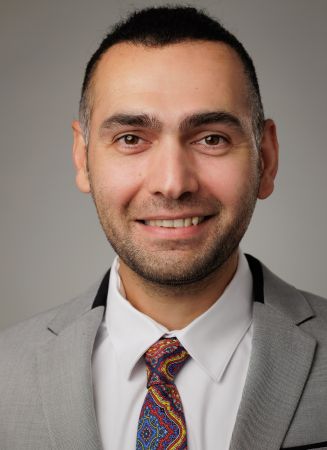
Felipe Martins is a Senior Lecturer-Researcher at Hanze University of Applied Sciences, active in both teaching and the Sensors and Smart Systems research group. He holds a PhD in Electrical and Electronic Engineering (2009) and has a background in industrial automation engineering (1999-2003). His work contributes to UN Sustainable Development Goals through educational robotics and automation. PhD: Modeling and Dynamic Compensation of Mobile Robots (Federal University of Espirito Santo) MSc: Control of Induction Generators via Fuzzy Logic BSc: Microcontroller-based Motor Control Research spans mobile robot control , educational robotics , autonomous navigation , and sensor networks . Recent publications focus on LiDAR data processing (2024), reinforcement learning for robotic applications (2022), and machine learning-driven localization (2023). He received Best Paper Awards at OL2A 2023 and WRE 2018. As a part-time teacher at University of Groningen (since 2022) and visiting researcher at CeDRI (2023), he bridges academia and industry. His editorial roles include guest editorships at Automation (MDPI) and Sensors journals. He co-organized RoboCup Junior events (2013-2021) and developed open-source robotics education tools like RoSoS A free simulator (2016).
Nour Khoudari is a Golomb Visiting Assistant Professor in the Department of Mathematics at Purdue University, affiliated with the College of Science. Their research focuses on traffic engineering, control theory, and applied mathematics, with a particular emphasis on integrating vehicle dynamics, energy models, and sparse control systems. They have conducted field experiments involving connected and automated vehicles (CAVs) to improve traffic flow and reduce congestion. Key projects include traffic smoothing experiments with 100 CAVs and validation of energy models using real vehicle data. Khoudari's work spans multi-scale analysis of traffic systems, from microscopic vehicle interactions to macroscopic traffic patterns. They have developed frameworks for hierarchical control designs and explored the macroscopic impacts of traffic waves. Their research also intersects cyber-physical systems, human factors in live traffic experiments, and mathematical modeling of complex systems like non-holomorphic maps. Publications highlight contributions to traffic flow optimization, energy dynamics simplification, and experimental validation of control algorithms. While no specific awards are listed, their active engagement in both theoretical and applied research demonstrates significant scholarly impact in transportation and control systems. Advising and grants are not explicitly detailed in the provided materials, though their involvement in large-scale field experiments suggests potential collaborative projects. No specific lab affiliations or teams are mentioned, though their interdisciplinary work likely involves cross-departmental collaborations within Purdue’s College of Science and engineering schools.
Javad Khazaei is an Assistant Professor in the Electrical & Computer Engineering Department at Lehigh University and director of the INTEGRITY Laboratory. Previously, he held an Assistant Professor position at Penn State Harrisburg and was affiliated with Penn State University Park's Architectural Engineering Department. He earned his Ph.D. in Electrical Engineering (Power and Energy) from the University of South Florida in 2016. Research Interests : His work focuses on smart grid dynamics and control, data-driven modeling and control in power systems, water-energy microgrids, smart grid cybersecurity, and renewable energy integration. His laboratory, INTEGRITY Lab, addresses challenges in resilient and intelligent energy systems. Recent Work Trends : His publications emphasize data-centric approaches for system identification, model predictive control (MPC) for microgrids, and enhancing resilience through advanced control strategies. Key themes include cybersecurity in energy systems, hybrid energy-water nexus optimization, and naval/marine microgrid resilience. Grants & Collaborations : Awarded a $12M DOE grant to expand marine energy initiatives, with partnerships focusing on naval microgrid resilience and offshore renewable integration. His work often involves interdisciplinary collaborations between electrical engineering, cybersecurity, and infrastructure systems. Lab & Infrastructure : Directs the INTEGRITY Lab, which develops cutting-edge solutions for cyber-physical energy systems. Research includes hardware-software integration for real-time monitoring and control of microgrid components.
Federico Tramarin is an Associate Professor at the Enzo Ferrari Engineering Department of the University of Modena and Reggio Emilia , Italy. He holds a Dr. Eng. in Electronic Engineering and a Ph.D. in Information Engineering from the University of Padova (2008 and 2012, respectively). Previously, he served as an Assistant Professor at the University of Padova's Department of Management and Engineering and held a post-doctoral position at the National Research Council of Italy (CNR) from 2013 to 2018. His research focuses on performance analysis and measurements of network systems , with emphasis on industrial real-time wired/wireless communications, cyber-physical systems, real-time embedded systems, Time Sensitive Networks (TSN), and IoT. He actively contributes to standards and protocols for industrial communication through memberships in IEEE committees (e.g., IEEE Industrial Electronics Society and Instrumentation and Measurement Society). Prof. Tramarin has authored/co-authored over 60 peer-reviewed publications in top conferences and journals, emphasizing real-time wireless LANs, industrial IoT, and networked control systems . His work spans topics like 5G-enabled PMU systems, TSN integration with SDN, and reliability in industrial wireless networks. He serves on editorial and program committees of major international journals and conferences, furthering the advancement of networked measurement systems. He is a member of the IEEE and the Italian Group of Electrical and Electronic Measurements (GMEE), reflecting his commitment to metrology and industrial automation. His interdisciplinary research bridges theoretical foundations with practical applications in smart manufacturing, automotive systems, and healthcare monitoring.
Ezio Bartocci is a Full Professor in Formal Methods for Cyber-Physical Systems Engineering at TU Wien's Faculty of Computer Science. He leads the Trustworthy Cyber-Physical Systems (TrustCPS) Group within the Cyber-Physical System Research Unit. His research focuses on formal verification, probabilistic systems, and runtime monitoring, with applications in autonomous systems, safety-critical software, and embedded systems. Roles & Affiliations: Full Professor, TU Wien (100% research focus) Principal Investigator in projects funded by EU, WWTF, FFG, and industry partners Chair of the Curriculum Commission for Computer Engineering Editor-in-Chief of the Formal Methods in Outer Space series Research Interests: Formal methods for CPS: verification, synthesis, and runtime monitoring Probabilistic programming and loop analysis Temporal logic specifications and mining Automated tools for safety-critical systems (e.g., Polar, MoonLight) Applications in healthcare, robotics, and autonomous vehicles Key Projects: ProbInG (2020–2025): Analyzing probabilistic loops ARTIST (2021–2026): AI and robotics safety EdgeAI (2022–2025): Optimizing embedded processing TAIGER (2023–2027): Trustworthy AI and CPS Grants & Funding: €10M+ secured from EU Horizon 2020, WWTF, FFG, and industry partners like TTTech Auto AG. Academic Leadership: Teaches courses on logical methods, CPS engineering, and scientific research at TU Wien. Supervises PhD students in formal methods and CPS domains. Tools Developed: Polar (probabilistic loop analyzer), MoonLight (spatio-temporal monitoring), and FIM (fault injection tool).
Patrick Thomas Eugster is a Full Professor of Computer Science at the Università della Svizzera italiana (USI), leading the Software Systems (SWYSTEMS) group within the Computer Systems Institute, which he co-founded. Previously, he held faculty positions at Purdue University (2005-2016) and TU Darmstadt (2014-2017), with a visiting role at MIT (2012/2013). His research focuses on distributed systems, networking, security, and programming languages, with over 160 publications and significant industry collaborations with companies like Amazon, Google, and Facebook. Education: He holds an M.S. (1998) and Ph.D. (2001) in Computer Science from École Polytechnique Fédérale de Lausanne (EPFL). Research Interests: His work addresses distributed systems challenges such as fault-tolerance, security, and efficient resource management. Recent topics include datacenter reliability, quantum network verification, and confidential computing. His team explores intersections between systems, languages, and networks to build robust and secure distributed applications. Publications: Recent work spans topics like failure detection in datacenters, formal verification of systems, and network congestion control. Key venues include USENIX ATC, ACM SIGMETRICS, IEEE Network, and TACAS. His 2025 work on failure detection and TCAM encoding exemplifies contributions to system resilience and hardware optimization. Awards: Jean-Claude Laprie Award (2025), TACAS Best Paper (2025), ERC Consolidator Grant (2014), NSF CAREER Award (2007). Advising & Grants: Supervised over 20 PhD and postdoctoral researchers. Active grants include EU Horizon Europe CloudStars, Swiss National Science Foundation, and industry partnerships with Cisco and SAP. Labs & Teams: Directs the SWYSTEMS group, collaborating on projects like secure cloud analytics, quantum network verification, and datacenter monitoring. Former students hold roles at universities, tech firms, and startups.
Gunar Schirner is an Associate Professor of Electrical and Computer Engineering at Northeastern University's College of Engineering . He holds a Ph.D. and M.S. from the University of California, Irvine, and a B.Sc. from Berufsakademie Berlin. His research focuses on embedded systems, cyber-physical systems, and hardware/software co-design, with emphasis on embedded vision and system-level methodologies. Education: Ph.D. & M.S. in Electrical and Computer Engineering, University of California, Irvine (2008, 2005) Bachelor's in Computer Engineering, Berufsakademie Berlin, Germany (1998) Research Interests: Embedded system modeling, real-time AI on edge devices, accelerator-rich computing architectures, and assistive robotics. His work bridges algorithm design with system-level implementation, including projects on neural-controlled prosthetics and marine mammal monitoring via passive acoustic sensing. Grants & Collaborations: Schirner leads/navigate grants totaling over $2M from the National Science Foundation (NSF), U.S. Army, and Office of Naval Research, including a $13M Army contract for distributed sensing research. He co-directs the Embedded Systems Laboratory , advancing heterogeneous platform design and embedded vision systems. Students & Impact: His advisees, including Mo Han and Yagmur Gunay, have won best paper awards at PETRA 2019. He actively integrates industry experience (e.g., Alcatel-Lucent) into teaching, mentoring students in both academia and industry.
Dr. Shuo Yan is a Senior Lecturer at RMIT University specializing in power electronics-dominant grids. His research develops advanced control systems for renewable integration and grid cybersecurity. Recognized in the top 2% of global scientists, he leads projects on microgrid stability and power converter optimization. Research focuses on: Smart load modeling and control Grid-forming converter technologies Cybersecurity of power electronic systems Consensus-based microgrid control Recent publications address neural network defenses against cyber threats and optimization of multi-port converters. Research combines theoretical control frameworks with practical validation through industry collaborations. Professional activities include Senior IEEE membership, editorial roles for IEEE journals, and leadership in international power electronics conferences. Teaching portfolio covers Power System Analysis and Power Electronic Converters.
Dr. Akanksha Saini is a Lecturer at RMIT University's School of Accounting, Information Systems, and Supply Chain. Her research focuses on cybersecurity, distributed systems, health informatics, and blockchain applications in healthcare. She holds an ORCID identifier (0000-0002-7191-2854) and is open to supervising Masters and PhD students in cyber security and related fields. Research Interests: Cybersecurity and Privacy Blockchain Technology in Healthcare Artificial Intelligence Applications Quantum Computation Supply Chain Management Health Informatics Systems Key Contributions: Pioneering work on securing distributed networks for IoT intrusion detection Developed blockchain-based frameworks for medical data sharing and access control Established collaborations with industry and international researchers Publications Highlight: Recent articles (2021–2025) emphasize blockchain applications in healthcare, federated learning, and cybersecurity challenges in the GenAI era. Over 30+ peer-reviewed papers in journals like Journal of Information Security and Applications and IEEE Internet of Things Journal . Supervision and Collaboration: Available to supervise research in cyber security and AI Industry partnerships align with national research priorities Co-authored papers with global collaborators in cryptography and health informatics Labs and Teams: Engaged in interdisciplinary projects at RMIT's School of Accounting, Information Systems, and Supply Chain, with a focus on real-world industry applications.
Dr. Qiang Fu is a Senior Lecturer at RMIT University's School of Computing Technologies, specializing in Cloud, Networked Systems, and Security. He holds a PhD from The University of Queensland and is actively involved in industry collaborations. His research focuses on Internet and Cloud-based systems, including Content Delivery Networks (CDNs), data centre design, Cyber-Physical Systems (CPS)/IoT, virtualization, and SDN/NFV. Recent work emphasizes network telemetry, fault detection, and IoT workflow optimization. He has published extensively in top-tier journals and conferences like IEEE Transactions and IFIP NOMS. Dr. Fu supervises PhD/Master students in areas such as network security, cloud computing, and IoT. His projects are often industry-funded and address real-world challenges like network scalability and blockchain integration. He is open to supervising students in these domains through RMIT's scholarship programs.
Professor Zhiyong Chen is a faculty member at the University of Newcastle, affiliated with the School of Engineering and the Electrical and Computer Engineering Department. He holds the rank of Professor and specializes in control systems, robotics, and nonlinear dynamics. His research focuses on biological control systems, swarm intelligence, and adaptive control strategies for complex systems. Chen has authored influential textbooks such as Stabilization and Regulation of Nonlinear Systems: A Robust and Adaptive Approach (2015), which provides foundational knowledge in nonlinear control theory. Education: PhD from the Chinese University of Hong Kong. Research interests include multi-agent systems, fault-tolerant control, and reinforcement learning applications. His work emphasizes practical implementations in robotics, transportation systems, and aerospace engineering. He has contributed to over 212 journal articles and 119 conference papers, addressing challenges in distributed control, cybersecurity in cyber-physical systems, and autonomous synchronization. Chen's recent projects involve cooperative control of high-speed trains, resilient multi-agent systems under cyber attacks, and physics-informed reinforcement learning. His methodologies often integrate theoretical rigor with real-world applications, such as nanopositioning systems and fault diagnosis in mechanical systems. Grants and collaborations highlight his role in interdisciplinary research, combining control theory with machine learning and cryptography for secure networked systems. His lab focuses on advancing adaptive control techniques and their deployment in safety-critical environments.
Michael Devetsikiotis is a Professor and Chair of the Department of Electrical and Computer Engineering at the University of New Mexico (UNM), part of the School of Engineering. He holds a Ph.D. from North Carolina State University (1993). His career includes roles as an Assistant/Associate Professor at Carleton University (1996–1998), Associate/Professor at North Carolina State (2000–2016), and leadership in UNM's ECE Department since 2016. He specializes in telecommunication networks, smart grids, IoT, and quantum information science. Education: Ph.D. in Electrical Engineering, North Carolina State University, 1993 M.S. in Electrical Engineering, North Carolina State University, 1990 Dipl. Ing. in Electrical Engineering, Aristotle University of Thessaloniki, Greece, 1988 Research Interests: Focuses on network design, smart grid communications, cyber-physical systems, and quantum technologies. He has published over 180 refereed papers and secured funding from NSF, NSERC, Cisco, and IBM. Notable projects include leading UNM’s Quantum Information Science program and managing the $20M NSF EPSCoR “SMART” Grid initiative. Articles Trends: Recent work emphasizes AI-driven network management (e.g., LSTM models for 5G/6G), blockchain for secure IoT/satellite systems, and quantum computing. Earlier contributions addressed EV charging infrastructure and smart grid resilience. Scientific Awards: IEEE Fellow (2012) NC State ECE Alumni Hall of Fame (2017) Advising & Grants: Directed UNM’s NSF Quantum Computing Faculty Fellowship (2020), enabling hires in quantum engineering. Previously managed a 800-student ECE graduate program at NC State. Active in IEEE leadership roles, including Distinguished Lecturer (2008–2011) and Chair of flagship conference committees. Labs & Teams: Spearheaded UNM’s IBM Q-Hub affiliation (2020), advancing quantum research collaboration. Leads interdisciplinary teams for smart city defense, blockchain energy markets, and 6G network automation.
Pio Ong is a Postdoctoral Scholar Research Associate in the Department of Mechanical and Civil Engineering. His work focuses on advancing control systems theory with an emphasis on safety-critical applications, resilient systems, and event-triggered control mechanisms. Research interests include cybersecurity in control systems, safety protocols for aerospace and robotic systems, and the integration of mathematical theories like control barrier functions with practical engineering challenges. His interdisciplinary work bridges theoretical analysis (e.g., implicit function theorem applications) and applied domains such as satellite orbit stabilization and networked systems. Key contributions involve developing computationally efficient safety filters and frameworks for systems under severe sensor attacks, hierarchical event-triggered policies balancing performance and safety, and nonsmooth control methods for maintaining system stability and connectivity. Ong's publications consistently address the unification of control objectives (safety, stability, smoothness) while conserving computational resources. His research lab environment (Gates-Thomas Laboratory) likely supports experimental validation of theoretical models, though specific lab affiliations are not explicitly stated. No awards or grants are listed in the provided text.
João Pedro Hespanha is a Distinguished Professor holding dual appointments in the Electrical and Computer Engineering and Mechanical Engineering departments at the University of California, Santa Barbara. He is affiliated with the Center for Control, Dynamical-Systems and Computation (CCDC) and the Institute for Collaborative Biotechnologies, where he leads research at the intersection of control theory, networked systems, and biological applications. Dr. Hespanha has established himself as a leading authority in hybrid systems and networked control with significant theoretical contributions and practical implementations. Dr. Hespanha received his Licenciatura and MS in Electrical and Computer Engineering from Instituto Superior Técnico in Lisbon, Portugal, before earning his PhD in Electrical Engineering and Applied Science from Yale University in 1998. After serving as an Assistant Professor at the University of Southern California from 1999-2001, he joined UC Santa Barbara in 2002 where he has remained ever since, rising to his current distinguished position. His educational background reflects a strong foundation in both theoretical mathematics and practical engineering applications. His research program spans multiple interconnected domains including hybrid and switched systems, networked control systems, cooperative control of autonomous agents, and systems biology. Dr. Hespanha's work on hybrid systems has fundamentally advanced the mathematical frameworks for modeling systems that combine continuous dynamics with discrete logic transitions. His research on networked control systems addresses critical challenges in communication-constrained environments, while his work in cooperative control tackles computational complexity and limited communication in multi-agent systems. His systems biology research applies control theory to model gene regulatory networks using stochastic hybrid systems. Dr. Hespanha's recent publications demonstrate consistent innovation across theoretical foundations and practical applications. His work shows a clear trajectory toward more complex networked systems, with increasing emphasis on security, resilience, and uncertainty quantification. The publications reveal strong interdisciplinary connections between control theory, computer science, and biology, with applications spanning autonomous vehicles, communication networks, and biological processes. Among his numerous accolades: Elevated to IEEE Fellow in 2008 for contributions to stability techniques for switched and hybrid systems Awarded the prestigious Ruberti Young Researcher Prize in 2009 Received the George S. Axelby Outstanding Paper Award in 2006 Honored with the Automatica Theory/Methodology best paper prize in 2005 Named IFAC Fellow in 2016 Received ACM SIGBED HSCC Best Paper Award in 2019 Dr. Hespanha has successfully mentored over 25 PhD students who have gone on to prominent positions in academia and industry. His research has been consistently supported by substantial funding from NSF, NIH, ONR, and other agencies, with current projects including pandemic management decision systems, precision drug delivery, and control of autonomous vehicle networks. He has taught numerous influential courses including Linear Systems Theory and Noncooperative Game Theory, authoring widely used lecture notes published by Princeton Press. Dr. Hespanha leads an active research group within the Center for Control, Dynamical-Systems and Computation, collaborating with researchers across engineering disciplines and biology. His lab maintains strong connections with industry partners working on autonomous systems, communication networks, and biological applications. He has organized major conferences including serving as General Chair for the 9th International Workshop on Hybrid Systems: Computation and Control in 2006, further establishing UCSB as a leading center for control systems research.
Beatriz Soret is an Associate Professor at Aalborg University's Department of Electronic Systems, part of The Technical Faculty of IT and Design. Her research focuses on satellite communications, IoT, wireless networks, and AI-driven network systems. She leads and collaborates on projects like STELLAR (2019-2021) and SATNEX V WI Y4.6 (2024-2025), addressing latency, reliability, and real-time data challenges in 6G and satellite networks. Her work emphasizes distributed computing, edge computing for Earth observation, and semantic communication frameworks. Key publications include advancements in RAN slicing for VR traffic, coded distributed computing, and AI-integrated network layers. She actively contributes to special issues on distributed intelligence and 6G technologies. Her research spans theoretical and experimental analyses of delay, age of information, and network performance in scenarios like LEO satellite constellations and industrial IoT. She collaborates with institutions globally, advancing non-terrestrial networks and smart connectivity solutions.