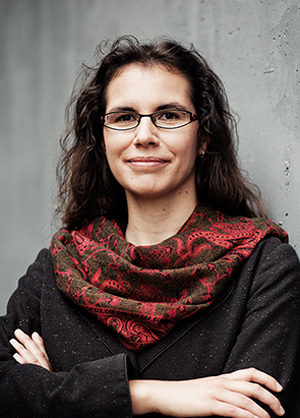
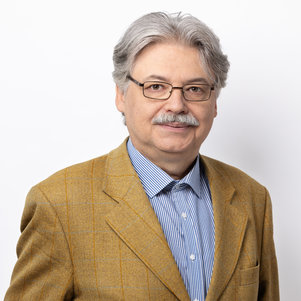
Esther S. Barron is a Clinical Professor and Director of the Donald Pritzker Entrepreneurship Law Center at Northwestern Pritzker School of Law. She specializes in venture capital, early-stage financing, and entrepreneurship law, guiding students in transactional matters for start-ups and social enterprises. BA , Brandeis University JD , Northwestern University Her research focuses on practical legal training for entrepreneurs, business law education, and the intersection of law and technology in distance learning. She has pioneered clinical programs that combine legal education with hands-on transactional experience. Her publications reflect expertise in entrepreneurship law, legal education, and digital learning tools. Key trends include practical application of business law, start-up legal frameworks, and pedagogical innovation. Dean’s Teaching Award SBA Faculty Appreciation Award Association of American Law Schools Teachers of the Year Award MSL Outstanding Online Professor Award Barron teaches courses such as Entrepreneurship Law, Venture Capital, and The Real Deal in the San Francisco Immersion Program. Her clinical work emphasizes real-world legal support for start-ups and social entrepreneurs, informed by her prior legal practice and entrepreneurial experience.
Stephen F. Reed serves as Clinical Professor of Law at Northwestern University's Pritzker School of Law, where he holds dual leadership roles as Assistant Director of the Donald Pritzker Entrepreneurship Law Center and Co-Director of the JD-MBA Program. He mentors law students in providing transactional legal services to startups, established companies, and social entrepreneurs while teaching core business law courses including Business Associations, Mergers & Acquisitions, and Entrepreneurship Law. Reed earned his AB cum laude from Princeton University and JD from Columbia Law School, building a foundation for his transition from private practice at Proskauer Rose LLP to academic leadership. His educational journey reflects a trajectory from corporate legal practice to specialized legal education. His research centers on the intersection of entrepreneurship and law, with significant contributions to business law pedagogy and clinical legal education methodology. Reed explores innovative teaching techniques including humor integration in business law instruction and technology-enhanced learning models, while maintaining practical focus on startup legal challenges and transactional lawyering skills development. Reed's scholarly output reveals evolving trends toward experiential learning in legal education, with publications addressing generational shifts in clinical teaching, distance learning applications for entrepreneurship law, and the pedagogical value of practical casebooks. His work consistently bridges theoretical legal concepts with real-world business applications. His teaching excellence has been recognized through multiple prestigious awards: Robert Childres Memorial Award for Teaching Excellence Dean's Teaching Award MSL Outstanding Residential Professor Award Outstanding Professor of a Small Class Award Through the Donald Pritzker Entrepreneurship Law Center, Reed supervises student attorneys in live-client representation while advancing interdisciplinary collaboration via the JD-MBA Program. His clinical supervision model emphasizes hands-on transactional experience, connecting classroom theory with practical legal service for emerging businesses. Reed leads the Donald Pritzker Entrepreneurship Law Center's pro bono initiatives that serve Chicago-area startups and social enterprises, while co-directing the JD-MBA Program's integrated curriculum that prepares future leaders for careers spanning law and business management.
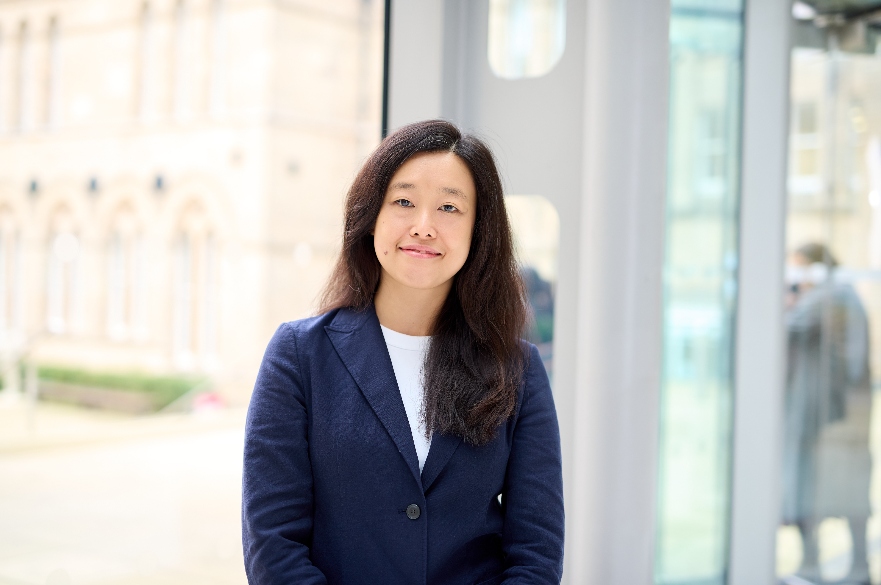
Dr. Elaine Chen serves as Senior Lecturer in Business Analytics and Course Leader for the MSc Business Analytics and Artificial Intelligence at Nottingham Business School, Nottingham Trent University. Her teaching emphasizes practical applications of data and AI technologies for business decision-making, with dedicated focus on accessibility for diverse student backgrounds across technical and strategic domains. Her academic credentials include: PhD in Computing Science MSc in Business Information Technology Postgraduate Certificate in Academic Practice BTech (Hons) in Business Information Systems Chen's research bridges educational and business contexts through data-AI integration: Generative AI adoption in higher education, particularly for neurodivergent/disabled students Human-AI collaboration frameworks in organizational settings SME applications for AI-driven efficiency and competitiveness Workforce analytics and talent management systems Her work consistently connects technical AI capabilities with real-world implementation challenges. Publication analysis (2023-2025) reveals accelerating focus on generative AI's educational impact and business strategy integration, evolving from her foundational work in social recommender systems (2014-2020) which established methodologies now applied to contemporary AI challenges in business contexts. Her professional recognition includes: Senior Fellow of the Higher Education Academy (HEA) Chen actively supervises PhD candidates in AI education, human-AI collaboration, and workforce analytics domains. Her pedagogy leadership includes designing accredited business analytics curricula and securing teaching innovation projects with documented outcomes in student engagement metrics. Prior industry experience as an automation engineer at Intel informs her practical approach to AI implementation. Current initiatives focus on generative AI ethics frameworks and longitudinal SME adoption studies, extending her established research trajectory into emerging business technology challenges.
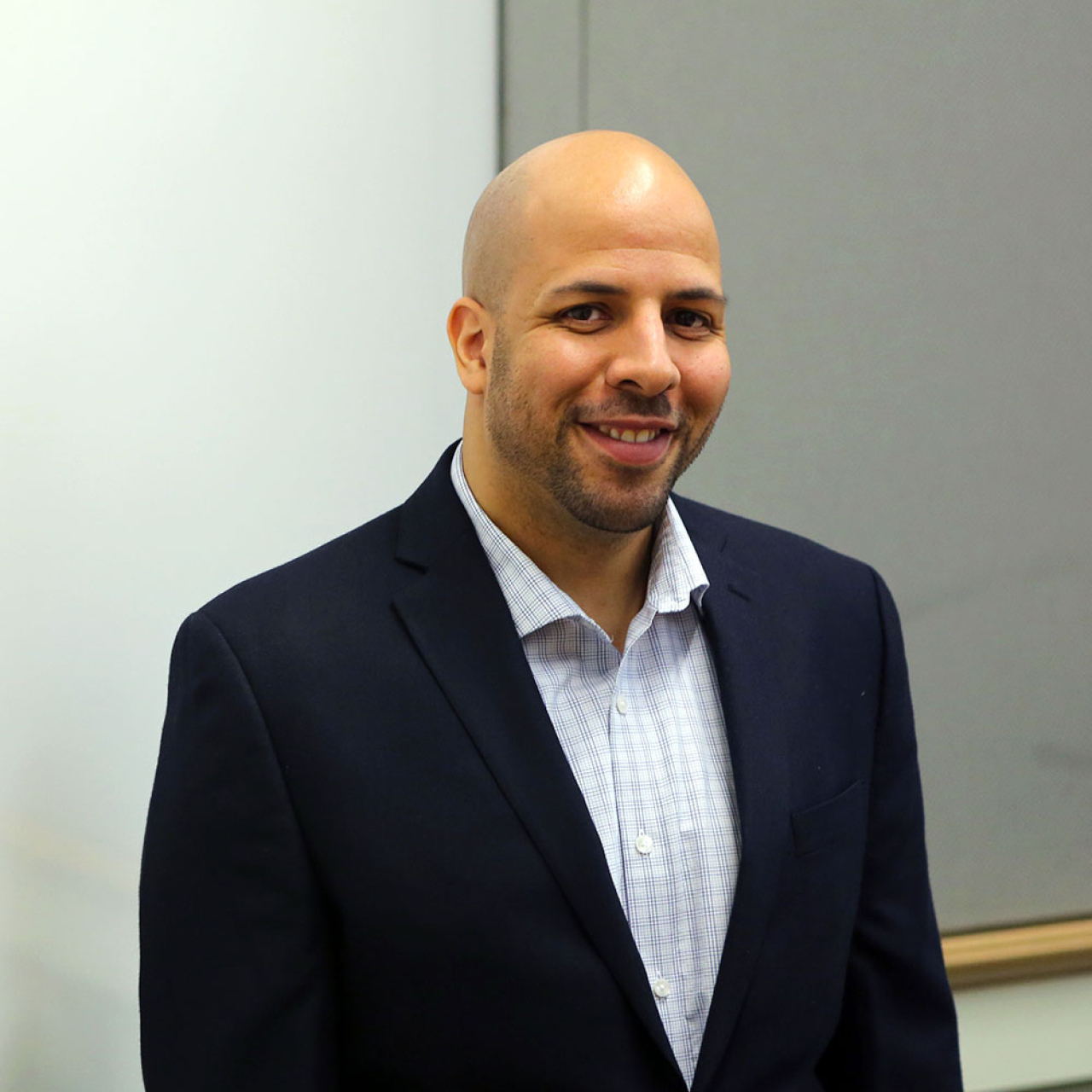
Dr. Nigel Lee is a Lecturer and NHMRC Emerging Leadership Fellow at the University of Queensland's School of Nursing, Midwifery and Social Work. He also serves as an Adjunct Associate Professor with the Molly Wardaguga Research Centre at Charles Darwin University and is affiliated with the Centre for Innovation in Pain and Health Research (CIPHeR). Dr. Lee completed his PhD in 2013 at Australian Catholic University, researching sterile water injections for managing back pain in labour. His research interests span midwifery care, labour pain management, breastfeeding support, perineal trauma prevention, and consent practices during childbirth. He has developed significant expertise in randomized controlled trials and mixed methods research design, with a strong focus on translating research into clinical practice. His recent publications (2023-2025) demonstrate continued productivity across multiple areas of maternal health, with particular emphasis on labour induction trends, breastfeeding education, perineal trauma prevention, and consent practices during labour and birth. These works reflect his commitment to improving evidence-based midwifery practice through rigorous research. Scientific Awards: NHMRC Emerging Leadership Fellow NHMRC Investigator Grant (2023-2027) for 'Water injections: Transforming childbirth pain management for any woman, anywhere' Dr. Lee actively supervises multiple PhD and Master's students across various topics including respectful maternity care, perineal trauma prevention, and breastfeeding support. His current NHMRC-funded projects extend through 2027, demonstrating sustained research productivity. He collaborates extensively with researchers across Australia, Sweden, the UK, and the USA, reflecting his strong international research network. Dr. Lee's work bridges clinical practice and research, with a clear focus on improving maternal health outcomes through evidence-based practice. His leadership in the Consortium for Sterile Water Injections Research and Training (ConSIRT) demonstrates his commitment to translating research findings into practical clinical applications.
Marcia Håkansson Lindqvist is a researcher at Mid Sweden University's Department of Education (UTV), with expertise in digitalization in education, teacher shortage, and school leadership. She contributes to projects like European Education Policy Network and HIMUV (Sustainability in Mid Sweden University Everyday Life) , focusing on organizational development and lifelong learning. Her research spans Technology-enhanced learning environments Professional development frameworks Artificial intelligence applications in education Comparative studies on teacher shortages in Nordic countries She has published extensively in journals like Journal of Educational Administration and British Journal of Educational Technology . Recent work explores AI integration in school leadership, hybrid work-integrated learning models, and cross-sector collaboration for special needs education. She collaborates with researchers across Scandinavia and contributes to edited volumes on leadership identity and digital competence.
Dr. Alexandra Schotte is a Lecturer in Pedagogy at the Faculty of Humanities and Social Sciences , University of Augsburg . Her research focuses on inclusive education , historical educational research , and Herbartian pedagogy , with a particular emphasis on disability education, educational media, and the Jewish Enlightenment (Haskala). She has held temporary professorial roles at the University of Duisburg-Essen and Friedrich Schiller University Jena. B.A. and M.A. in Educational Science and Sociology (1994–2000), Friedrich Schiller University Jena Ph.D. (Dr. phil.) in Educational Science (2008), Friedrich Schiller University Jena Her scholarly work explores intersections of educational theory , social pedagogy , and curriculum development , often contextualized through historical case studies and Herbartian philosophy. She co-edits academic series like Herbartstudien and contributes to international dialogues on postcolonial educational approaches. Scientific awards include: 2010 Award for 'Basic Pedagogical Research' (Friedrich Schiller University Jena) 2016 Habilitation Scholarship from the University of Augsburg's 'Equal Opportunities for Women in Research and Teaching' program She actively participates in academic societies, including the International Herbart Society and the German Society for Educational Science (DGfE), and contributes to educational media research through editorial and conference roles.
Prof. Dr. Andrea Dreyer is a full-time Professor of Art and its Didactics at the Bauhaus University Weimar , where she has served since 2013. She is Vice Dean for Strategic Development within the Faculty of Art and Design and actively participates in academic governance, including roles in graduation committees, teacher training advisory boards, and curriculum commissions. Her research focuses on teacher professionalization, architectural pedagogy, and digital art education, emphasizing interdisciplinary approaches and qualitative social research methodologies. First and Second State Examination for Teaching at Grammar Schools in Art Education and Social Studies (1994–2000, 2004–2006) Andrea Dreyer’s publications span topics such as Bauhaus-inspired pedagogy, urban-rural spatial education, and digital integration in art teaching. She has led initiatives like DigiProSMK and Denkraum.Bauhaus , and her work often bridges art, architecture, and societal transformation. She has served as Dean of Studies and Vice-Rector for Studies and Teaching at Bauhaus University, advocating for phase-transcendent teacher networks and reflective professional practices. Her recent articles address participatory architectural psychology, interdisciplinary curriculum design, and digitalization in art education. Despite extensive committee involvement and editorial contributions, no specific scientific awards are highlighted in the provided texts. She mentors students and collaborators within the kunst:pädagogik | netz:werk platform and maintains active partnerships with institutions like the Thuringian Ministry of Education and Friedrich-Schiller University Jena.
Paulo Borges de Brito is a Lecturer in the Department of Management at Colorado State University's College of Business. He specializes in teaching courses on Entrepreneurship, Social and Sustainable Venturing, and International Business. Brito holds a B.S. in Economics from Presbyterian Mackenzie University (Brazil), an M.S. in Environmental Science from Universidade de São Paulo, and an M.S. in Agricultural and Resource Economics from Colorado State University. Prior to joining CSU, he founded the Brazilian chapter of a global conservation non-profit and contributed to award-winning books on sustainable development synergies. His research explores the intersection of business and sustainability, with emphasis on: Bioeconomy-driven business opportunities Agroecology and climate adaptation in smallholder farming Sustainable international trade frameworks Inclusive pedagogical approaches in business education Brito's recent publications (2018–2024) cluster around three themes: sustainable bioeconomy transitions, climate-resilient agriculture in developing regions, and innovative business education methods. Earlier work (2006–2014) focused on Brazilian organic farming certification, community-based environmental action, and water-efficient agriculture. He has received significant recognition including the 2023 CSU Best Teacher Award and designation as an Inclusive Excellence Fellow . Brito actively serves on university committees including the CSU Todos Santos Strategic Advisory Committee, Faculty Institute for Inclusive Excellence Advisory Committee, and as College of Business representative for UCC and Scholastic Standards.
Dr. Elizabeth Dunn is a Professor in the Department of Psychology at the University of British Columbia, Faculty of Arts. Her research examines how time, money, and technology shape human happiness, with a secondary focus on health. She co-authored the book "Happy Money: The Science of Happier Spending" with Dr. Michael Norton and has given talks at TED, PopTech!, and TEDx. Dr. Dunn earned her PhD from the University of Virginia in 2004. Her academic journey has been marked by numerous accolades, including being named a "rising star" by the Chronicle of Higher Education in 2004. Her research primarily focuses on the science of happiness, examining how prosocial spending, time management, and technology use affect well-being. She investigates how to promote rewarding social interactions using technology and how spending decisions shape happiness in everyday life. Her work has appeared in top journals, with three papers published in Science. Recent research has expanded into climate action framing, AI companionship effects, and recycling behavior. Dr. Dunn's research portfolio shows a consistent focus on practical applications of happiness science. Her work has evolved from examining basic happiness mechanisms to applying these principles to contemporary issues like climate change, digital technology impacts, and environmental behavior. She frequently employs experimental methods and large-scale data analysis to understand how small behavioral changes can significantly impact well-being. Royal Society of Canada's College of New Scholars, Artists and Scientists (2015) Society for Personality and Social Psychology Fellow (2014) Social Science and Humanities Research Council Impact Connection Award Finalist (2014, 2015) Killam Faculty Research Fellowship (2011) Killam Faculty Research Prize (2010) Robert E. Knox Master Teaching Award (2010) Canadian Institutes of Health Research New Investigator Award (2010) Mind Gym Academic Prize Honouree (2007) Peter Wall Institute for Advanced Studies – Early Career Scholar (2007) Chronicle of Higher Education Rising Star (2004) Dr. Dunn has supervised numerous graduate students through the UBC Psychology Department's MA and PhD programs. While she is not currently accepting new graduate students for fall 2025, her lab has been instrumental in training the next generation of happiness researchers. Her research has been supported by significant grants including the Killam Faculty Research Fellowship and the Canadian Institutes of Health Research New Investigator Award. She is also a co-author of influential books that translate academic research into practical advice for the public. Dr. Dunn leads an active research laboratory focused on happiness and well-being. Her team conducts experimental research examining how time, money, and technology shape human happiness. The lab has expanded its focus to include contemporary issues such as the impact of AI on social connection, climate action framing, and sustainable behavior. The lab's work combines rigorous experimental methodology with real-world applications to help people optimize their pursuit of happiness.
Sophie Isaksson Hallstedt is a Full Professor at Chalmers University of Technology, conducting research in Sustainable Product Development (SPD) with a focus on strategic sustainability integration in product innovation. She holds appointments at both Chalmers and Blekinge Institute of Technology, and serves on international Design Society committees. Key Research Areas: Strategic socio-ecological sustainability, digital decision support tools, circular value chains, and sustainability in emerging technologies. Notable Projects: SUSTAIN (aerospace sustainability), Circular Design Nexus (user behavior analysis), and Digital Materials Ecosystems. Awards & Recognition: Featured in Royal Swedish Academy of Engineering Sciences (IVA) 100-list (2020, 2023). Publications: Over 80 peer-reviewed works demonstrating methods for sustainability maturity assessment, impact evaluation, and progress visualization. Teaching & Education: Developed master's programs and PhD courses in sustainability-driven product development. Collaborates extensively with industry partners like GKN Aerospace and VINNOVA. Current work examines predictive models for user behavior and sustainability implications of additive manufacturing.
Ebru Turanoglu Bekar is a Senior Lecturer at the Department of Industrial and Materials Science, Chalmers University of Technology, specializing in Smart Maintenance and Production Systems. She contributes to the Production Service Systems & Maintenance research group. Research Interests: Total Productive Maintenance (TPM), Artificial Intelligence applications in manufacturing, Multi-Criteria Decision Making, Performance Measurement systems Recent Focus: Development of data-driven algorithms for predictive maintenance, integration of digital twins in industrial contexts Key Projects: Factory SensAI (2025–2028) - Data integration for AI in manufacturing Trustworthy Predictive Maintenance TPdM (2022–2025)
Eric Soto-Shed serves as Lecturer on Education and Director of the Harvard Teacher Fellows Program at the Harvard Graduate School of Education (HGSE). With a 25-year career in education, he has held significant leadership roles including founding director of Harvard's teacher residency program, director of Secondary History/Social Studies Education at Brown University, and teacher educator positions at Stanford and NYU. He earned his Ph.D. from Stanford University in 2013 and previously taught social studies in New York City for 8 years, which deeply informs his commitment to supporting youth from underserved communities. At HGSE, he co-chairs the foundational course 'How People Learn' and teaches curriculum design and instructional methods for history and civic education. Soto-Shed's research centers on promoting inquiry and equity in K-12 history, civics, and social studies education. He co-leads the Civics Thinking Project, which develops research-based civics assessments and curriculum. His work emphasizes balancing the study of oppression with resistance and joy in historical narratives to provide students with a more complete understanding of human experiences. His recent publications explore comprehensive approaches to teaching Black history, civics education, and methods for combatting hate through historical understanding. These works demonstrate his advocacy for year-round Black history education that incorporates competing ideologies and joyful narratives alongside the study of oppression. Grants from the Library of Congress to train educators to teach with primary sources Board member of Self-Evident Education, a nonprofit using multimedia curriculum to educate about race and racism history As a consultant, Soto-Shed works with school districts to develop social studies curriculum and conducts professional development workshops focusing on historical inquiry, teaching controversial issues, and accessibility. His approach combines rigorous academic research with practical classroom applications, making his work valuable to both scholars and practitioners in education.
Dr. Carole Hruskocy is an Instructor in the Department of Curriculum and Instruction at Purdue University, with over 30 years of experience in education spanning roles as a teacher, instructional designer, program coordinator, and faculty chair. She has worked in corporate and higher education settings, teaching both online and traditional courses. Education: Ph.D. in Curriculum and Instruction with Educational Technology/ID focus (1999), M.S. in Curriculum and Instruction with ID focus (1993), B.A. in Elementary Education (1983), all from Purdue University. Her research focuses on technology infusion in education and international curriculum development , notably working with primary education in Liberia. Her publications highlight expertise in instructional design , online education frameworks , and equitable access to learning for marginalized populations. Dr. Hruskocy held leadership roles at Regis University (Professor, Curriculum Studies and Instructional Design) and LearningMate (Instructional Design Consultant). She actively contributes to organizations like ISTE, WCET, and AATC.
Florian Bociort is an Assistant Professor at the Optics Research Group , Delft University of Technology (Faculty of Applied Sciences). He holds a PhD in Physics from TU Berlin (1994) and has dedicated his career to optical system design, gradient-index optics, and computational methods in lens design. Research Interests Bociort’s research focuses on design landscapes of optical systems , where he pioneered the use of saddle points to escape local minima in optimization. His work spans Gradient-index optics (conversion of homogeneous lenses to GRIN media) Artificial intelligence in lens design Optics education (simulation-driven learning) Academic Contributions He has supervised multiple PhD theses on topics like: A. M. Boyd (2025): Generalized gradient-index lens optimization Z. Hou (2023): Systematic lens design searches Y. Shao (2021): Imaging coherence and optimization M. Strauch (2020): Tunable optics M. Mout (2019): Ray-based diffraction simulation Recent Publications His 2025-2018 publications show a trajectory from classical optical design to modern computational approaches, including simulation-driven education, gradient-index conversions, and high-NA diffraction modeling. The 2024 paraxial reconstruction and 2025 simulation-education articles exemplify this evolution. Patents & Expertise He co-invented two ASML-related patents in lithographic design and served as expert witness in the 2018 ASML-Nikon patent lawsuit. His personal webpage details his networks of local minima and fractal basins in optimization.
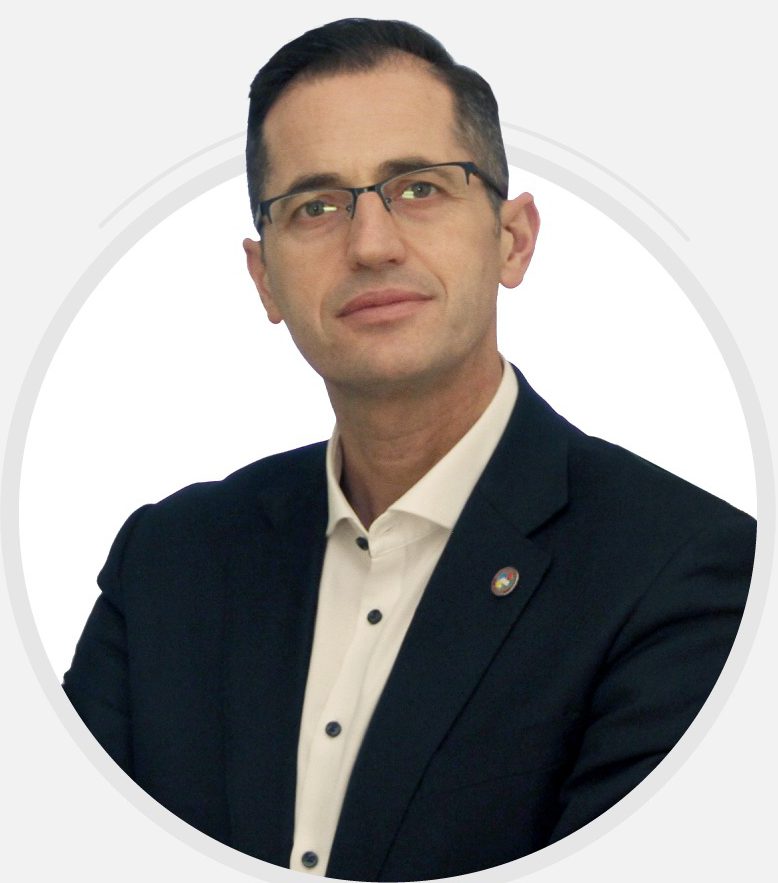
Prof. Blerim Rexha is a full professor at the University of Prishtina's Faculty of Electrical and Computer Engineering, Kosovo. With a Ph.D. in Computer Engineering from Vienna University of Technology (2004), he has led research in cybersecurity, blockchain, machine learning, and electronic voting systems. His teaching portfolio includes data, computer, and internet security courses. Education : Ph.D. in Computer Engineering (Vienna), Electrical Engineer MSc (Prishtina), specialized certifications in software engineering, biometrics, and .NET programming. His research spans cybersecurity (DDoS mitigation, face authentication attacks), blockchain applications (electronic voting bridges, transaction privacy), and machine learning integration (boosted trees for intrusion detection, LSTM for vulnerability scanning). He has contributed to cloud security through novel encryption methods and AI-driven attack detection. Recent publications focus on energy efficiency in cloud vs on-premises systems, XGBoost/CatBoost/LightGBM comparisons for network security, and blockchain bridges for e-voting. His work has addressed privacy preservation in video data, SMS encryption, and eID card pseudo-profiles. Awards include the 2024 Marin Barleti Prize for academic contributions and Best Paper Awards in election security (2015) and Kosovo website vulnerabilities (2013). Honors : Marin Barleti Prize (2024) Cyber Security Ambassador (2018) ICT Academician of the Year (2016) Best Paper Awards (2015, 2013) As academic advisor to the KosovaCyberTeam , he mentors students like Korab Keqekolla and Abian Morina. His leadership extends to Kosovo's Cyber Security State Training Center curriculum development and jury roles in Albanian ICT Awards .