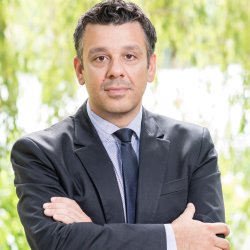
Dr Anastasios Siampos is the Associate Head of Surrey Business School (Education) and Senior Lecturer in Marketing at the University of Surrey. Since joining in 2015, he has contributed to teaching, programme leadership, and strategic initiatives. He served as Director of Studies for Undergraduate Business Programmes (2020–2025) and was part of the senior management team (2020–2024), focusing on curriculum innovation and industry alignment. Education: PhD, MSc (Hons), BSc, and a Senior Fellow of the Higher Education Academy (SFHEA). Research interests include Strategic Marketing, market orientation, and adaptive marketing capabilities. His work bridges academic theory with practical industry challenges, particularly in strategic decision-making and resource-based approaches. Publications include case studies and strategic analyses in leading business journals. He has advised on educational strategy and contributed to enhancing student engagement at both undergraduate and postgraduate levels.
Prof. Gjalt de Graaf is a Full Professor in the Department of Political Science and Public Administration at Vrije Universiteit Amsterdam, leading the New Public Governance (NPG) research group. He holds dual appointments in the Faculty of Social Sciences and Humanities, specializing in public governance quality, integrity, and value conflicts. His work addresses how social media, academic education, and whistleblowing impact governance practices. Research focuses on resolving public value conflicts, particularly in academia and public institutions. He explores governance through lenses like art’s role in policy-making and administrative traditions’ influence on professional ethics. Notable contributions include studies on Dutch justice policy under pressure and cross-national comparisons of academic integrity. Awarded the Best Article Award 2017 Public Integrity and the VU Faculty of Social Sciences Research Prize (2008) , his work aligns with UN SDGs on peace, justice, and strong institutions. He advises 4 PhD theses and leads projects like Veerkrachtige en zinvolle samenlevingen , addressing societal resilience and youth participation. Teaching includes courses on good governance, public administration ethics, and leadership in dynamic environments. He actively engages in media commentary on integrity issues and organizes conferences on anti-corruption and ethical leadership.
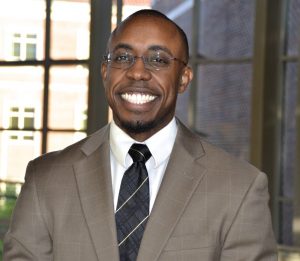
Dr. Darryl Dickerson is an Assistant Professor in the Department of Mechanical and Materials Engineering at Florida International University (FIU), part of the College of Engineering. His research focuses on mechanical characterization of biological interfaces, design of bioinspired materials, and advancing inclusive engineering education practices. He holds a Ph.D. (details not explicitly provided in text). Research Interests: Dr. Dickerson’s work bridges biomechanics and biomaterials engineering with social equity in education. Key areas include: Mechanical properties of biological interfaces (e.g., bone-cartilage junctions) Development of biomaterials for tissue repair using 3D printing and electrospinning Anti-marginalization strategies in engineering education, particularly for Black and Brown students Publications Trends: Recent work emphasizes dual themes: (1) Biomedical innovation through advanced material fabrication and (2) Inclusive pedagogy addressing systemic inequities in STEM education. Notable contributions include scaffold designs for osteochondral repair and frameworks for reducing microaggressions in team-based learning. Grants and Advising: No specific grants or advisees listed in the provided text. His work appears to be grant-funded through NIH/National Science Foundation pathways common in biomaterials and education research. Labs and Teams: While not explicitly stated, his research likely involves collaborations with FIU’s Center for Engineering and Computing’s diversity initiatives and biomaterials labs focusing on tissue engineering applications.
Zhiqiang Yu serves as an Associate Professor in the Department of Modern Languages and Comparative Literature at Baruch College's Weissman School of Arts and Sciences, City University of New York. With over two decades of teaching experience, he has established himself as a dedicated educator specializing in Chinese language, cinema, and civilization courses. Education: Ph.D. in Chinese, University of Washington M.A. in Asian Civilization, University of Iowa B.A. in Chinese Literature, Fudan University (Shanghai) Professor Yu's research focuses on innovative approaches to Chinese language pedagogy, with particular interest in applying economic principles and artificial intelligence to language teaching. His work bridges traditional linguistic scholarship with modern educational technology, examining how efficiency, resource allocation, and technological advancements can enhance language learning outcomes. His research spans Chinese linguistics, dialectology, cinema studies, and cultural elements in language teaching. His publication record reveals a consistent trajectory toward optimizing language instruction through systematic analysis. Recent work increasingly focuses on AI applications in language education and the economic framework of pedagogical efficiency. His scholarship demonstrates a progression from traditional linguistic analysis toward innovative teaching methodologies that incorporate modern technological and theoretical frameworks. Scientific Awards: Award of Excellent Academic Research Reviewer from Journal of International Chinese Education (2016) Graduate Teaching Fellowship from University of Washington (1993) Graduate Teaching Fellowship from University of Iowa (1989) Graduate Research Fellowship from University of Iowa (1988) Student Excellency Award from Fudan University (1984) Professor Yu has served extensively on departmental committees including as Department Assessment Coordinator and Secretary of the Asian and Asian-American Studies Committee. He has organized numerous academic events featuring prominent Chinese cultural figures and has contributed to developing Chinese language curriculum resources including online placement tests. His professional service extends to editorial work for CUNY publications and Chinese language training for the New York Police Academy. He maintains active involvement with multiple professional organizations including the American Name Society, American Oriental Society, American Society of Geolinguistics, Association for Asian Studies, and Chinese Language Teachers Association, frequently presenting at international conferences on Chinese language pedagogy.
Minh Hue Nguyen is a Senior Lecturer in EAL/TESOL Teacher Education at Monash University's School of Curriculum, Teaching and Inclusive Education within the Faculty of Education. She holds a PhD in Education (TESOL focused) from Monash University and has taught at Vietnam National University, Deakin University, and the University of Melbourne. Her educational background includes: PhD in Education (TESOL focused), Monash University (2015) MA in Applied Linguistics, Victoria University of Wellington (2008) BA in English Language Teaching, Vietnam National University (2003) Nguyen's research centers on teachers' professional learning, curriculum, and pedagogy in TESOL and EAL contexts, with specific focus on emotional experiences, identity development, mentoring, agency, and collaboration. She explores sociocultural contexts of teacher development through activity theory and sociocultural perspectives, examining how institutions support teachers' learning journeys from preservice to in-service stages. Recent work investigates professional learning for teacher educators and implementation of the Victorian EAL Curriculum. Her 15 most recent publications (2024-2025) reveal a strong thematic focus on language teacher agency, identity negotiation, and multilingual pedagogies. The research increasingly examines emotional dimensions of teaching, cross-cultural identity tensions, and collaborative models between EAL and content teachers, with significant contributions to understanding how teachers navigate complex educational contexts while developing professional identities. Her scientific recognition includes: Penny McKay Award Special Commendation Monash Education Research Community's Publication Award ATEA/Kay Martinez Award for Best Paper Monash Dean of Education’s ECR Project Award Advancing Women's Research Success Grant Vietnamese Government Merit-based Scholarships Nguyen actively supervises PhD research in TESOL teacher professional learning, teacher identity, and curriculum development, though is currently unavailable for new PhD students until 2027. She contributes to editorial boards for Teaching and Teacher Education, Second Language Teacher Education, and System journals, and serves on the Australian Teacher Education Association. Her work supports UN Sustainable Development Goal 4 (Quality Education) through inclusive pedagogical frameworks. She leads research projects including 'Elucidating practices to assist EAL learners to acquire specialised science vocabulary' and 'Establishing an online community-of-practice model for learner agency during work placements,' demonstrating commitment to practical educational innovations.
Libby Gerard is an Associate Adjunct Research Professor at the University of California, Berkeley School of Education and a Research Director for the Technology-Enhanced Learning in Science (TELS) Center. Her work focuses on leveraging innovative technologies to enhance science education through student idea capture, automated assessment, and teacher professional development. Doctorate in Educational Leadership (EdD), Mills College (2008) Bachelor’s in English Literature and Philosophy, Emory University (2000) Her research emphasizes: Automated scoring of student essays using NLP to improve science explanations Real-time instructional customization using embedded assessment data Technology-driven professional development for teachers and principals Social justice integration in science pedagogy Collaborative revision frameworks for inquiry-based learning K-12 education adaptation during the pandemic Recent publications highlight trends in educational technology for science learning, with a focus on NLP applications, interactive inquiry modules, and equitable teaching practices. She has authored studies in journals like Science , Review of Educational Research , and Computers & Education , often exploring how automated systems can enhance teacher-student dynamics. Scientific Awards : Best Paper Award at the AI4EDU Workshop (AAAI Conference, 2020) Libby leads funded projects such as: TIPS (NSF, 2021-2025): NLP for science education ARISE (Hewlett Foundation, 2020-2023): Anti-racism in science education STRIDES (NSF, 2018-2022): Responsive instruction for science teachers PLANS (NSF, 2015-2020): Automated learning support systems She contributes to teacher training through courses like Research Methods for Science Teachers and Apprentice Teaching in Science , emphasizing data-driven pedagogy and inquiry-based instruction.
Klaus-Michael Guse is a Lecturer at the Chair of History Didactics in the Department of History, Faculty of Arts and Humanities, University of Siegen. He is actively involved in teaching and research related to the didactics of history and cultural history education. His research interests focus on History Didactics , Historical Education , and Cultural History , with particular relevance to transnational and regional contexts. These interests align with the research centers housed within Faculty I, including the Research Center for Transnational Cultural History and the Research Center for Regional Cultural History. No recent publications are listed in the available materials, so no trend analysis can be performed on article output. Scientific Awards: No awards listed. There is no public information available regarding student advising, research grants, or funded projects. Dr. Guse offers consultation hours by appointment via email, indicating an active teaching and mentoring role within the department. He is associated with the Chair of History Didactics, which likely involves curriculum development, teacher training, and pedagogical research in history education, though no formal lab or research team is mentioned.
Jo-Anne Baird is a Professor of Education and Director of the Oxford University Centre for Educational Assessment (OUCEA) at the University of Oxford, affiliated with St Anne's College. She previously served as Head of the Department of Education and held academic roles at the Institute of Education (University of London) and the University of Bristol. Her research focuses on educational assessment, including systemic structures, examination standards, and collaboration with government and industry partners. Education: She holds a psychology doctorate, an MBA, and an Honorary Doctorate from the University of Bergen (2019). She is Co-Lead Editor of the Oxford Review of Education and has served on advisory boards for Ofqual, the Welsh Government, and the National Reference Test Expert Group. Research Interests: Educational assessment systems, standards maintenance, marking practices, and curriculum-aligned qualifications. Key projects include the 'Perception of Standards in Scotland (PASS)' and studies on GCSE reforms. She has advised parliamentary committees and contributed to policy frameworks like the Teaching Excellence Framework. Awards: Honorary Doctorate from the University of Bergen (2019). Advising and Grants: Supervises doctoral students in areas like assessment standards and policy. Funded projects include 'Examination Reform: Impact of linear/modular GCSEs' (Ofqual) and 'Predictability of the Irish Leaving Certificate' (State Examinations Commission). Labs/Teams: Leads OUCEA, collaborating with international institutions and policy bodies on assessment research and policy.
Melissa Landers-Potts is an Interim Assistant Dean for Academic Programs and Principal Lecturer at the University of Georgia's College of Family and Consumer Sciences (Department of Human Development and Family Science). She focuses on active and universal design for teaching and learning, emphasizing inclusive excellence. Her roles include overseeing undergraduate programs, aligning with the college's 2025 Strategic Plan, and fostering teaching excellence. She earned a Ph.D. (1998), M.A. (1994), and B.A. (1990) in Sociology/Anthropology from the University of Georgia and Carleton College. Her research explores socioeconomic status, race/ethnicity, and technology's impact on human development, with a focus on marginalized populations. She designs inclusive curricula and integrates service-learning, partnering with private-sector mental health companies for global adolescent mentorship programs. Recent studies include effects of economic stress on children, racism/classism, and technology's role in military youth well-being. Recipient of numerous awards, including the UGA Teaching Excellence Award (2022), she mentors faculty in active learning and service-learning initiatives. She chairs multiple committees (e.g., College Curriculum, Scholarships) and advises Phi Upsilon Omicron. Her outreach emphasizes experiential learning and inclusive educational practices.
Ellen Zegura is the Stephen Fleming Chair and Professor in the School of Computer Science at Georgia Tech's College of Computing. She holds multiple degrees from Washington University in St. Louis: BS in Computer Science, BS in Electrical Engineering, MS in Computer Science, and DSc in Computer Science. Her research focuses on computer networking, social responsibility in STEM education, and computing for development. She co-founded the Computing for Good initiative, emphasizing project-based learning to address societal challenges. Zegura is an IEEE and ACM Fellow, and serves on the Computing Research Association (CRA) Executive Board. Her education spans interdisciplinary fields at Washington University, combining computer science and electrical engineering. She has held leadership roles at NSF and CRA, advocating for equitable technology policies. Notable contributions include advancing QoE metrics for video conferencing, analyzing mobile broadband infrastructure disparities, and developing ethics education frameworks for computing curricula. Research interests include network measurement, community-empowered data practices, and bridging technical innovation with social impact. Recent work examines tribal mobility during pandemics, sensor co-design with Indigenous communities, and ethical pedagogy for teaching assistants. Her labs and collaborations, such as CERCS, emphasize interdisciplinary problem-solving. Zegura’s awards reflect her dual impact in technical innovation and societal engagement.
Laura Ascenzi-Moreno serves as Professor of Bilingual Education and Bilingual Program Coordinator in the Childhood, Bilingual and Special Education Department at Brooklyn College, City University of New York (CUNY), School of Education. Her academic leadership focuses on developing educators capable of serving linguistically diverse student populations through equity-centered pedagogical frameworks. Her educational foundation includes a B.A. in Anthropology and Education from Swarthmore College (1994), an M.A. in Individualized Studies in Education from Harvard Graduate School of Education (1999), New York State Permanent Certification for PreK-6 (2002), a Bilingual ESL and Teacher Leadership Program from Bank Street College (2004), and a Ph.D. in Urban Education from CUNY Graduate Center (2012). Dr. Ascenzi-Moreno's research pioneers translanguaging applications across literacy instruction, assessment, and computational learning environments. She investigates how emergent bilinguals' linguistic repertoires can transform reading development, teacher knowledge construction, and multimodal assessment practices. Her work consistently centers equity through frameworks like syncretic reasoning and accompáñamiento, challenging deficit ideologies while promoting asset-based approaches to multilingual education. Analysis of her 2020-2024 publications reveals an accelerating interdisciplinary trajectory where translanguaging principles increasingly intersect with computer science education. This evolution demonstrates strategic expansion from foundational literacy research into computational literacies, with growing emphasis on co-design methodologies and teacher agency in developing multilingual CS curricula. Her scientific recognition includes the 2024 NCTE Outstanding Elementary Educator Award, Language Arts Distinguished Article Award, and major NSF grants totaling $1.3 million for computational literacy projects. Additional honors encompass Fulbright Scholarship work in Colombia, PSC-CUNY research awards, and Westinghouse Science Talent Search distinction. As Principal Investigator of NSF-funded PiLa-CS and former CUNY-NYSIEB Associate Investigator, she secures substantial grant support while mentoring teacher candidates. Her service includes NCTE Elementary Steering Committee leadership (2022-2026), journal reviewing, and Brooklyn's New York Teacher Table participation addressing educator recruitment/retention. Dr. Ascenzi-Moreno co-directs the Participating in Literacies in Computer Science project and maintains active collaboration with NYC schools through translanguaging professional development initiatives. Her work with the CUNY-NYSIEB project established foundational frameworks now implemented across New York bilingual programs.
Alfredo Capozucca is a full permanent Researcher at the Department of Computer Science (DCS) within the Faculty of Science, Technology and Medicine (FSTM) at the University of Luxembourg. He holds a PhD in Computer Science from the University of Luxembourg (2010) and an M.S. from the National University of Rosario, Argentina (2003). His research focuses on modern software engineering methods, dependable systems, and computing education, with an emphasis on formal verification and sustainable computing practices. Capozucca has contributed to the design of courses at undergraduate and master's levels, including serving as Deputy Programme Director for the BSc in Computer Science from 2021-2024. His work bridges theoretical foundations with practical applications in education and industry. Research interests prominently include AI in education (e.g., ChatGPT's role in formal specification writing), formal verification techniques, and the integration of DevOps philosophies into academic curricula. He has authored numerous papers on topics ranging from security policy analysis to energy-efficient transactional models. Capozucca's contributions extend to open-source projects and tool development, such as the Messir UML requirements engineering tool. His teaching spans software engineering fundamentals, dependability, and modern DevOps practices, reflecting a commitment to aligning education with industry needs. Key professional roles include R&D engineer positions (2004-2006) and leadership in educational program design. His research infrastructure is based at the Maison du Nombre facility in Luxembourg. While no specific grants or awards are listed, his extensive publication record and teaching contributions highlight sustained academic engagement.
Mark d'Inverno is a Professor in the Department of Computing at Goldsmiths, University of London, where he has established himself as a leading researcher at the intersection of artificial intelligence, multi-agent systems, and creative applications. His academic journey began with foundational work in formal methods and agent-based systems, culminating in his 1998 PhD thesis 'Agents, Agency and Autonomy: A Formal Computational Model' from University College London, and has evolved toward practical applications in music technology and ethical AI systems. Professor d'Inverno's research interests span multiple interconnected domains, with a particular focus on computational creativity, multi-agent systems, and the application of AI in musical contexts. His work explores how artificial intelligence can enhance creative processes, particularly in music composition and performance, while maintaining ethical considerations in social AI systems. He has made significant contributions to understanding how agents can interact meaningfully in social contexts, how ethical frameworks can be embedded in online systems, and how technology can support creative learning experiences. His recent scholarly output demonstrates a clear trajectory toward applied research with social impact, as evidenced by his 2021-2024 publications which increasingly address ethical considerations in AI, human-AI collaboration in creative domains, and educational applications of technology. These works reveal a researcher deeply engaged with both theoretical foundations and practical implementations, bridging the gap between abstract computational models and real-world creative and educational applications. Professor d'Inverno maintains an extensive collaborative network, frequently working with Matthew Yee-King on music technology applications, with Pablo Noriega on ethical AI frameworks, and with Jon McCormack on computational creativity. His research has been supported through various projects that connect theoretical computer science with practical creative applications, particularly in the development of systems that facilitate human-AI creative collaboration.
Professor Juliet Foster is Dean of Education at the Institute of Psychiatry, Psychology & Neuroscience (IoPPN), King's College London. Previously, she served as Deputy Dean of Education at the Psychology Department since 2018 and held academic roles at the University of Cambridge as Senior Tutor and Senior Lecturer. King's College London (2018–present) University of Cambridge (prior to 2018) Her research focuses on public understandings of mental health, student wellbeing, and sociocultural psychology. She employs qualitative and mixed-methods approaches, contributing to the development of the 'whole university' mental health strategy. Juliet collaborates with Student Minds, the UK student mental health charity, and serves as an Assessor for the University Mental Health Charter. Key projects include evaluating peer support systems, studying loneliness in students, and analyzing media representations of mental health and homelessness. Her work aligns with the UN Sustainable Development Goal of Quality Education. Scientific Awards: British Psychological Society Social Psychology Section Award for the Most Outstanding PhD She co-chairs King's College London's Steering Committee on Student Mental Health and Wellbeing and has served on the British Psychological Society's Education and Training Board. Her research has been funded by ESRC, AHRC, and NIHR.
Mihye Won is an Associate Professor at Monash University’s Faculty of Education, specializing in innovative science education strategies. Her research integrates dialogic teaching, student-generated diagrams, immersive Virtual Reality (VR), and generative AI to enhance scientific understanding and creativity. She has secured Australian Research Council (ARC) funding for projects like Using Immersive Virtual Reality to Enhance Science Visualisation (2019–2025) and Drawing Science Diagrams to Enhance Scientific Creativity (2018–2025). Her work supports students, teachers, and early-career researchers, aligning with the UN Sustainable Development Goal for Education. PhD, University of Illinois at Urbana-Champaign: Inquiry-based science education via Dewey’s theory of inquiry Her research focuses on: Dialogic teaching to foster student reasoning Student-generated diagrams for conceptual understanding VR for visualizing complex science topics Generative AI in science learning Creative and critical thinking in science education Recent articles span VR applications, AI in physics education, collaborative drawing techniques, and curriculum-aligned creative pedagogy. Awards include the Most Valuable Paper Award 2024 for her work on enzyme-substrate interactions in VR. She serves on the advisory board for Chemistry Education Research and Practice and the editorial board of the International Journal of Science Education .