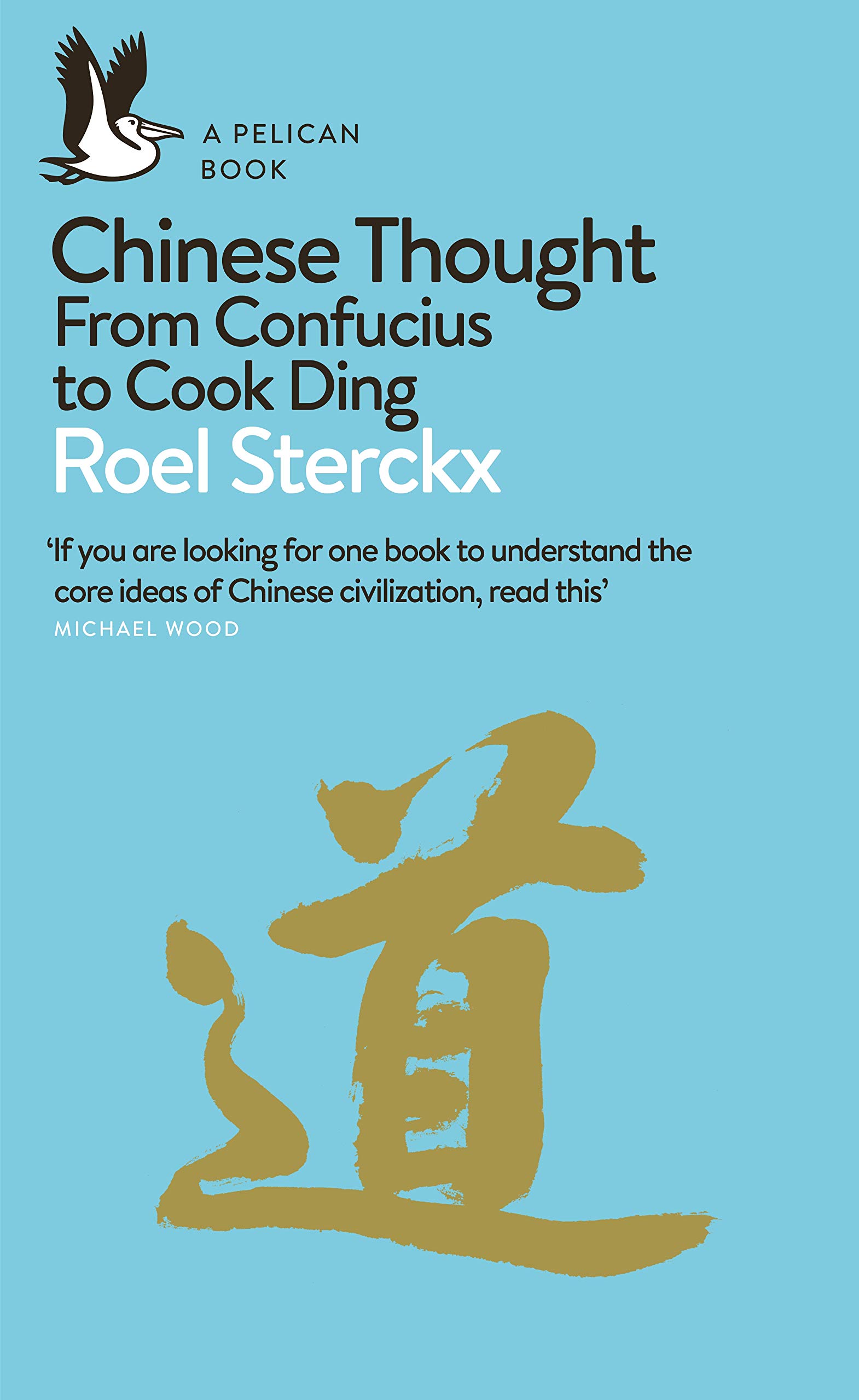
Professor Roel Sterckx is the Joseph Needham Professor of Chinese History, Science, and Civilization at the University of Cambridge, affiliated with Clare College. He specializes in pre-imperial and early imperial Chinese thought, classical Chinese language, and natural history. His research bridges anthropology and the history of science, focusing on topics like ritual, economic thought, and animal studies. He has authored influential books including Food, Sacrifice, and Sagehood in Early China and Animals through Chinese History . Sterckx is a Fellow of the British Academy (since 2013) and holds leadership roles at the Needham Research Institute. He supervises PhD students on subjects ranging from Warring States rhetoric to Han Dynasty apocrypha. Education: BA/PGCE in Sinology and History, Katholieke Universiteit Leuven Masters in Classical Chinese and Philosophy, National Taiwan University PhD in Chinese History, University of Cambridge Research Interests: Early Chinese cultural ecology, ritual economy, and the interplay of moral and material values. His work analyzes texts like the Rites of Zhou , Mozi , and Huainanzi , emphasizing agricultural thought and animal symbolism. Awards: British Academy Fellowship (2013) Grants and Labs: Directs the Cambridge-based Needham Research Institute, focusing on East Asian science and technology history. Current projects include studies on Han perceptions of southern regions and the economics of ritual in early China.
London School of Economics and Political Science (LSE)United Kingdom
Professor Leigh K. Jenco holds the position of Professor of Political Theory at the Department of Government, London School of Economics and Political Science (on sabbatical during 2024/25). Her expertise spans Chinese Thought, Taiwan Studies, Political Philosophy, and Global Intellectual History. She previously taught at the National University of Singapore and has held visiting roles at Taiwan's Academia Sinica, National Taiwan University, and the University of Heidelberg. Education: B.A. from Bard College M.A. and Ph.D. from University of Chicago Her research explores late Ming neo-Confucian concepts of equality through literary theory and the 20th-century rediscovery of Chinese folksong compendia. She leads the £1.5M British Academy-funded 'Chinese Global Orders' project and was the principal investigator for the EU's 'East Asian Uses of the European Past' initiative. She served as associate editor of the American Political Science Review (2016–2020). Her publications include groundbreaking monographs like Changing Referents (Oxford UP, 2015) and Making the Political (Cambridge UP, 2010), which bridge political theory with Chinese intellectual history. Current projects focus on Ming dynasty poetics and cross-cultural knowledge transfer. Grants & Projects: Lead investigator for 'Chinese Global Orders' (£1.5M, British Academy) EU H2020 'East Asian Uses of the European Past' (€1.2M) She is fluent in Classical Chinese, Mandarin, and English, and her work emphasizes global comparative frameworks to challenge Eurocentric narratives. Her research often intersects historical texts with contemporary political debates, particularly around cultural borrowing and identity formation.
Professor Qing Cao is Professor, Director of Studies, and Director of the Centre for Comparative Modernities at Durham University's School of Modern Languages and Cultures. His research examines Chinese media, communication, and modern intellectual history through three interconnected strands: the role of media in China's modernization, the impact of media language on social perceptions, and mutual China-West representations shaping identity politics. His research interests encompass China's modern intellectual history, Chinese politics, mass media dynamics, Western reporting on China, Chinese linguistics, and translation studies. Current projects include a book on Chinese state media's construction of alternative modernity and editorial work for the Routledge Research Encyclopaedia on Chinese Studies. Previously funded by AHRC and British Academy, his work explores the discursive transformation of Chinese society. Professor Cao's publications demonstrate sustained focus on discursive constructions of modernity and identity across historical periods, with recent work examining late Qing intellectual transformations through linguistic analysis. His supervision includes PhD students researching Western media representations of China, diplomatic language, and gender discourses in Chinese newspapers.
Robert L. Chard is a Professor of Chinese Classics and Tutorial Fellow in Chinese at St Anne's College, University of Oxford. He is affiliated with the China Centre, a leading institution for East Asian studies. His research focuses on the cultural history of Confucianism, Confucian ritual studies (禮學), and the intersection of religion, politics, and military history in early China and premodern East Asia. He teaches courses on classical Chinese texts, historical methodologies, and Chinese religious traditions. His recent scholarship explores Confucian ritual authority in early China, the role of Confucian temples in Japanese domain (han) education systems during the Tokugawa period, and transnational intellectual exchanges between China and Japan. He has published extensively on topics such as ritual practices, temple symbolism, and the socio-political dimensions of Confucian learning. While no specific grants or awards are listed, his work demonstrates deep engagement with primary sources and cross-cultural analysis. He advises students in classical Chinese studies and oversees tutorial programs at St Anne's College.
Curie Virag is an Associate Professor in World Philosophies within the Department of Philosophy at the University of Warwick. Her research centers on the history of ethics, epistemology, moral psychology, and philosophical anthropology in classical China and cross-cultural contexts, with particular emphasis on emotions and conceptualizations of the self. Virag's scholarship explores premodern Chinese philosophical frameworks for understanding human agency, selfhood, and knowledge formation. She actively bridges historical Chinese thought with contemporary philosophical discourse, organizing initiatives like the "Before Emotion" conference series and directing the ERC-funded PAIXUE Project on Chinese-Byzantine intellectual traditions. Her recent publications demonstrate sustained engagement with emotion theory across Chinese history, from early texts to medieval periods, and in comparative dialogue with Ancient Greece. Key works include monographs on early Chinese emotions and co-edited volumes examining cross-cultural affectivity. Virag serves on the Executive Committee of the Mind Association and as Associate Editor for Ethical Theory and Moral Practice, where she advances integration of non-Western philosophical traditions into contemporary ethics. She teaches Early Chinese Philosophy and World Philosophies at Warwick, building on prior appointments at Toronto, Edinburgh, and Central European University.
Lars Laamann is a Lecturer at the School of History, Religions and Philosophies, SOAS University of London. His research focuses on the historical interplay between religion, colonialism, and cultural exchange in East Asia, with particular emphasis on Christianity in China and Mongolian religious traditions. He maintains an active research profile as evidenced by his publication record spanning from 1996 to 2025. Dr. Laamann's primary research interests include: The historical development of Christianity in China from the Qing Dynasty to modern times Mongolian religious syncretism and its political implications Protestant and Catholic missionary strategies in Southeast Asia Orthodox Christianity's role in contemporary geopolitical conflicts Colonial-era religious encounters and their sociocultural impacts His scholarly publications demonstrate consistent focus on religious encounters in East Asia, with recent works exploring Orthodox Christianity in conflict zones (Ethiopia/Ukraine), memory studies in Chinese Christianity, and missionary history. The publication trends show increasing attention to comparative religious analysis across different Asian contexts. Dr. Laamann has supervised several doctoral students researching topics including: Qing Dynasty state formation and religious policy (J. Lu) Republican China's communication infrastructure (L.-C. Chen) Cross-cultural encounters in early Qing Empire (W. Kang) Economic transformations in Mongolia (S. Shan) He serves as editor for the Central Asiatic Journal and participates in collaborative research projects examining Orthodox Christianity's political dimensions.
Dr. Anders Karlsson is a distinguished scholar of Korean history at SOAS University of London, where he has been a faculty member since 2000. He is affiliated with the School of Languages, Cultures and Linguistics and the Centre of Korean Studies. His academic career has established him as a leading Western expert on Choson Korea (1392-1910), with particular expertise in legal history, statecraft, and social institutions of the period. Dr. Karlsson received his PhD in Korean history from Stockholm University in 2000 with a dissertation on the Hong Kyongnae Rebellion, which erupted in the North-western part of the Korean peninsula in 1812. His doctoral research established the foundation for his subsequent scholarship on rural society, famine relief, and local administration in late Choson Korea. Dr. Karlsson's research focuses on the social, institutional and intellectual history of Choson Korea. His work explores Confucian statecraft, famine and disaster relief mechanisms, penal law, rural unrest and rebellion, and writing systems. His scholarship is characterized by meticulous archival research and innovative theoretical approaches that bridge historical, legal, and cultural studies perspectives. He has made significant contributions to understanding how law functioned as an instrument of statecraft in premodern Korea, particularly examining the relationship between legal theory and practice, and how social status influenced legal outcomes. His publication record demonstrates a clear evolution from early work on peasant rebellions to increasingly sophisticated analyses of legal and administrative systems. The most recent fifteen years of his scholarship show a pronounced focus on legal history, with particular attention to how Confucian ideology shaped legal development and implementation. His articles reveal expertise in analyzing primary sources in Korean, Chinese, and Swedish, reflecting his unique position as a European scholar deeply immersed in East Asian historical materials. Dr. Karlsson has supervised numerous doctoral students working on Korean history topics, including: Lee H. - "The effect of the genre-based approach on KFL advanced learners' writing and reading" Jang H.J. - "Exploring the Development of Intercultural Competence of University Students Majoring in Korean" Kilkelly P. - "Mainstream culture and the inculturation of Catholicism in late Chosŏn Korea" Choi Y.-C. - "A History of Protestant theory of liberty in Korea, 1886-1917" Jin S.P. - "Korean neutralisation attempts (1882-1907): retracing the struggle for survival and imperial intrigues" Verdier-Shin M.-L. - "Contextualised mission: the South Korean evangelical response to the humanitarian crisis in North Korea (1995-2012)" Song S.K. - "Intellectuals and the state: the resilience and decline of Neo-Confucianism as state ideology in Joseon Korea" At SOAS, Dr. Karlsson teaches courses on Korean history, contemporary Korean culture and society, and Chinese characters (Hanja) as they are used in Korean. His teaching reflects his deep engagement with both historical and contemporary aspects of Korean studies, providing students with comprehensive perspectives on Korean civilization. He also maintains a significant profile as a literary translator, having translated Korean novels into Swedish for 25 years, including recent works by Han Kang, the 2024 Nobel Prize in Literature laureate.
London School of Economics and Political Science (LSE)United Kingdom
Wan-Ping Lin is a Visiting Fellow at LSE's Department of International Relations. She holds a PhD in Political Science from National Taiwan University (NTU) and is affiliated with the Stockholm China Center and the Institute for Security and Development Policy. Her research focuses on reimagining post-Westphalian world politics through Sinophone, Confucian, and Daoist frameworks, particularly their application to Chinese foreign policy and regional relations. She has published a monograph on Qin Yaqing's relational theory and an article analyzing Hong Kong's governance through Daoist perspectives. Previously, she served as a Postdoctoral Scholar at Academia Sinica in Taipei and a visiting researcher at Leiden University. Education: PhD in Political Science, NTU; taught courses at NTU and Soochow University. Research interests include Chinese IR theories, modern Chinese diplomacy, and postcolonial dynamics in East Asia. Currently developing projects on Confucian/Daoist IR theories' methodological and ethical relevance. Labs/Teams: Associated with LSE's Theory/Area/History Research Cluster.
Loubna El Amine is a Lecturer in Political Theory at the Department of Political Economy, King's College London, and an Affiliate of the Lau China Institute. She previously held tenure-track positions at Northwestern University and Georgetown University, alongside a Mellon Postdoctoral Fellowship at Yale University. Her research focuses on comparative political theory, classical Chinese political thought, and the intersection of state theory, culture, and gender in postcolonial contexts. El Amine holds a BA from the American University of Beirut and a PhD from Princeton University. Her work bridges East-West political thought, with a particular emphasis on Confucian philosophy. Key publications include Classical Confucian Political Thought: A New Interpretation (Princeton, 2015) and a forthcoming book on ancient Confucian political communities under contract with Oxford University Press. Her research interests span classical Chinese political concepts, theories of statehood, and gender dynamics in Confucian texts. Recent articles explore the domestic-political distinction in Confucian classics and the evolution of the nation-state. She has been recognized with fellowships from the National Endowment for the Humanities and the Henry Luce Foundation. El Amine contributes to the Political Theory Research Group and Global South Research Group at King's, focusing on political economy and non-European perspectives. Her teaching includes foundational courses in political theory and comparative analysis.
Dr Alexander Chow is a Senior Lecturer in Theology and World Christianity at the University of Edinburgh's School of Divinity. He holds a PhD in Theology from the University of Birmingham and has conducted postdoctoral research at Renmin University of China. As co-director of the Centre for the Study of World Christianity, he specializes in Chinese Christianity, global religious migration, and the intersection of faith with digital culture. His work bridges historical and contemporary studies, emphasizing the role of Chinese diaspora communities in shaping British Christianity. Key roles include co-editing Studies in World Christianity and editing the Liu Institute Series in Chinese Christianities . He chairs the Chinese Christianities Program Unit at the American Academy of Religion. His research focuses on transnational religious identities, the impact of migration on Christian communities, and public theology in multicultural contexts. Notable publications include Chinese Public Theology (Oxford UP, 2018) and Chinese Heritage in British Christianity (SCM Press, 2025), which explores the contributions of British Chinese Christians. Chow’s work addresses themes such as Confucian influences on Chinese theology, the legacy of colonial missions, and digital transformation in religious practice. He actively engages with contemporary issues like climate justice and the ethics of technology, reflecting his commitment to interdisciplinary and globally oriented scholarship.
Dr Paul Graham serves as Senior Lecturer in Politics and Director of Programmes in International Studies at the University of Buckingham's School of Humanities and Social Sciences, where he convenes the MA in United Nations and Diplomatic Studies. His academic leadership spans curriculum development and program administration within the Economics and International Studies department. His educational qualifications include undergraduate studies at Exeter University followed by advanced degrees from the London School of Economics, where he earned both MSc and PhD in political theory. Prior to joining Buckingham, he held teaching positions at Glasgow University from 1995 to 2013. Dr Graham's research operates at the intersection of classical political philosophy and contemporary technological challenges. His primary focus areas include Darwinian political theory examining evolutionary foundations of political behavior, and distributed ledger technology's implications for governance and power structures. He maintains a significant secondary interest in German literary theorist Karl Heinz Bohrer's conceptualization of decadence within cultural critique. His scholarly work bridges Rawlsian justice theory with emerging digital political paradigms, demonstrating consistent engagement with both foundational texts and cutting-edge applications. Analysis of his publication trajectory reveals sustained contributions to political theory through textbook authorship, encyclopedia entries, and specialized journal articles. His work demonstrates particular strength in translating complex philosophical concepts into accessible frameworks while maintaining rigorous academic standards. Recent publications increasingly integrate technological implications into traditional political discourse, reflecting evolving scholarly priorities. Within the academic community, Dr Graham contributes through teaching core modules including Freedom, Introduction to Political Theory, Political Psychology, and Evolution and Human Cooperation. His pedagogical approach emphasizes critical engagement with both historical and contemporary political thought, particularly through the lens of evolutionary theory and digital transformation.
Dr. Leping Mou is a Lecturer in Postsecondary Education at the University of Glasgow's School of Education. Their research focuses on comparative international education, sociology of education, and student development. Previously held positions include roles at the University of Toronto and York University in Canada, as well as institutions in China. Dr. Mou holds a PhD from OISE at the University of Toronto. Education Background: PhD in Higher Education and Comparative International Development Education (OISE/University of Toronto), MA in Educational Leadership (OISE/University of Toronto), BA/MA from Shandong University/Shanghai International Studies University. Research emphasizes three key areas: 1) Impact of socio-political factors on higher education institutions, 2) Cultural traditions' influence on pedagogy, and 3) Mixed-methods evaluation of higher education outcomes. Active in editorial roles for Journal of Further and Higher Education and Studies in Higher Education . Recent publications explore liberal arts education in East Asia, TVET institutions' role in sustainability, and pandemic responses in global universities. Grants include SSHRC Postdoctoral Fellowship (2023) and ACLS/AVDS funding for civic education research (2024-25). Supervising PhD students on topics like Chinese academic well-being and Deweyan educational thought. Teaches courses on educational research methodology and modern educational theory.
Professor John Preston is a faculty member in the Department of Philosophy at the University of Reading, UK. His academic role includes teaching and research in philosophy, with a focus on the history of philosophy, philosophy of science, and classical Chinese philosophy. He holds a DPhil from the University of Oxford and an M.Sc. in Artificial Intelligence from the University of Essex. His research spans figures like Wittgenstein, Feyerabend, and Mach, examining their contributions to epistemology, scientific methodology, and philosophical thought. Education: BA (Philosophy, Polytechnic of North London), BPhil (Oxford), DPhil (Oxford), MSc (Artificial Intelligence, Essex). Research Interests: History of philosophy (Wittgenstein, Vienna Circle, Feyerabend), philosophy of science, epistemology, classical Chinese philosophy, and the intersection of philosophy with artificial intelligence. External Roles: Former Secretary of the British Wittgenstein Society (2007–2010), member of the Royal Institute of Philosophy Council (2009–2017), external examiner for universities including Oxford, Manchester, and King's College London. Publications: Authored books such as *Feyerabend: Philosophy, Science and Society* and edited volumes like *Interpreting Mach: Critical Essays*. His work explores themes like scientific relativism, instrumentalism, and the philosophical underpinnings of logic and mechanics.
Canglong Wang is a Lecturer in Sociology at the School of Humanities and Social Science, University of Brighton. He holds a PhD in Sociology from the University of Edinburgh and has taught at multiple institutions including the University of Hull, Birkbeck University of London, and East China Normal University. Currently, he serves as Joint Course Leader for Criminology and Sociology programs and previously led the BA (Hons) Chinese Studies program at Hull. His research focuses on Confucian education revival in China, Chinese citizenship, transnational migration, and sociological theory. He has authored two books: The Rise of Confucian Citizens in China and Cultivating the Confucian Individual , and co-edited special journal issues on citizenship and education. His work includes a £24k international research project on Confucian citizen cultivation via heritage education spaces. Teaching specialties include sociological research methods, cultural sociology, and East Asian studies. He supervises PhD students in citizenship studies, race/ethnicity, and China-related topics. Research interests span Confucian education revival, cultural roots of citizenship, gender studies, and comparative sociology between China and the UK. He holds FHEA status and a Postgraduate Certificate in Academic Practice. Professional memberships include British Sociological Association and Chinese Educational Research Association. Recent articles explore linguistic dilemmas in citizenship under Xi Jinping, paradoxes in classical education, and Confucian pedagogy's interplay with modernity. Key projects include guest editing Citizenship Studies and China Perspectives special issues, and leading a comparative study on early career researchers' challenges in the UK. His work bridges Western citizenship theories with Confucian moral frameworks, examining how classical education shapes modern Chinese identity and civil society.
Pamela Kea is a Professor of Social Anthropology at the School of Global Studies, University of Sussex. She holds a BA in French literature from Smith College, an M.Sc. in Social Anthropology from UCL, and a Ph.D. in Social Anthropology from the School of Oriental and African Studies, London (2001). Her academic career includes roles as a research officer at The Gender Institute (LSE), associate tutor at The Open University, and ESRC postdoctoral research fellow (2004–2005). Education: BA, French Literature, Smith College M.Sc., Social Anthropology, UCL Ph.D., Social Anthropology, SOAS, London Research Interests: Kea’s work spans four key areas: (1) Gendered agrarian relations in West Africa, focusing on Senegambian female migration and land-labor exchange; (2) Asylum and displacement , examining EU policies and Gambian female asylum seekers; (3) Return migration and visual culture , analyzing transnational care through photography and ICT; and (4) Biographies and reparative histories , exploring West African diasporas’ return, digital colonialism, and archival recovery. Scientific Awards: ESRC Postdoctoral Research Fellowship (2004–2005) Teaching & Supervision: Kea teaches modules on Gender Across Cultures, Race and Identity, International Development, and Childhood/Youth studies. Her current DPhil students include Vitor Lopez (asylum and sexual orientation), Xinran Zhou (Confucianism and Chinese feminism), Cassie Biggs (male teachers in Malawi), and Alexis Stills (Ghanaian diaspora mental health). Recent graduates include Harriet Hughes (fashion in Africa) and Katrin Maier (Nigerian Pentecostalism).