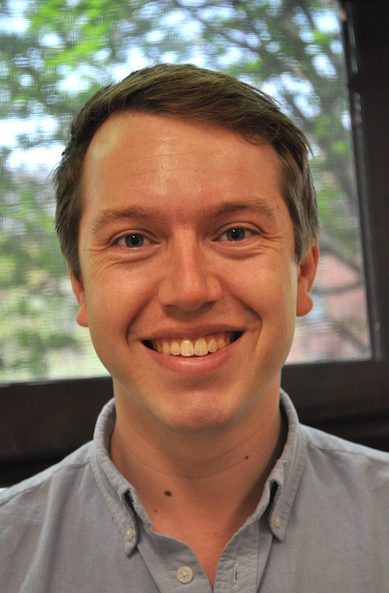
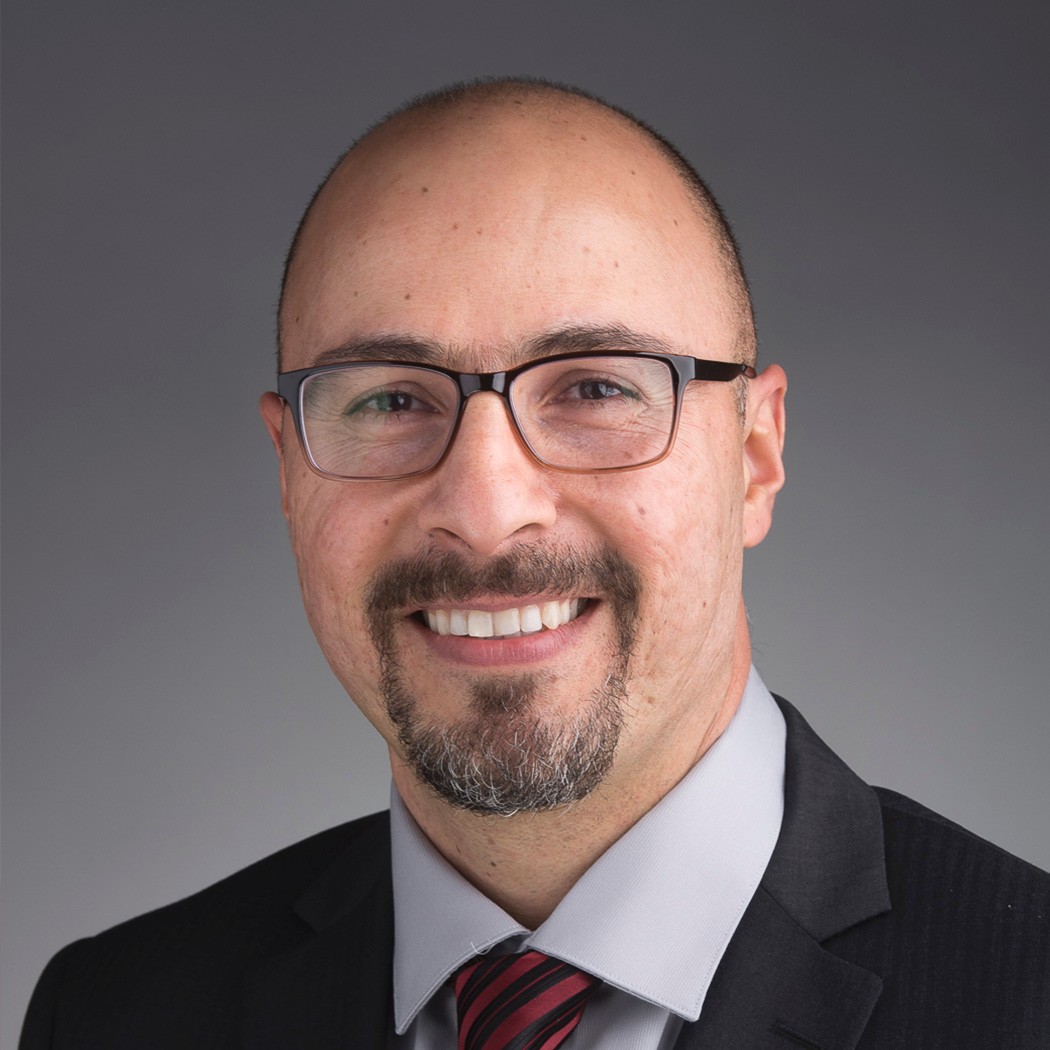
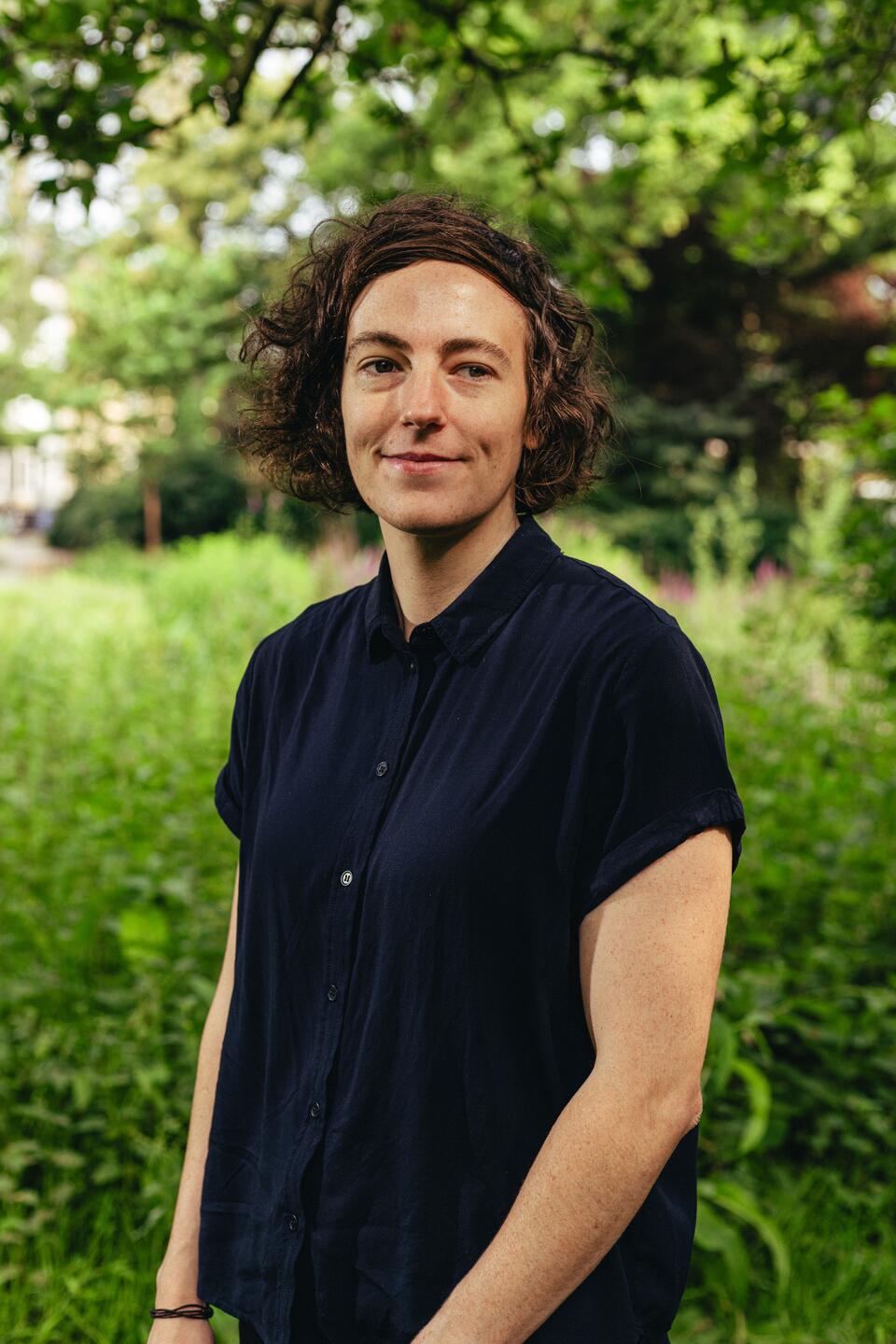
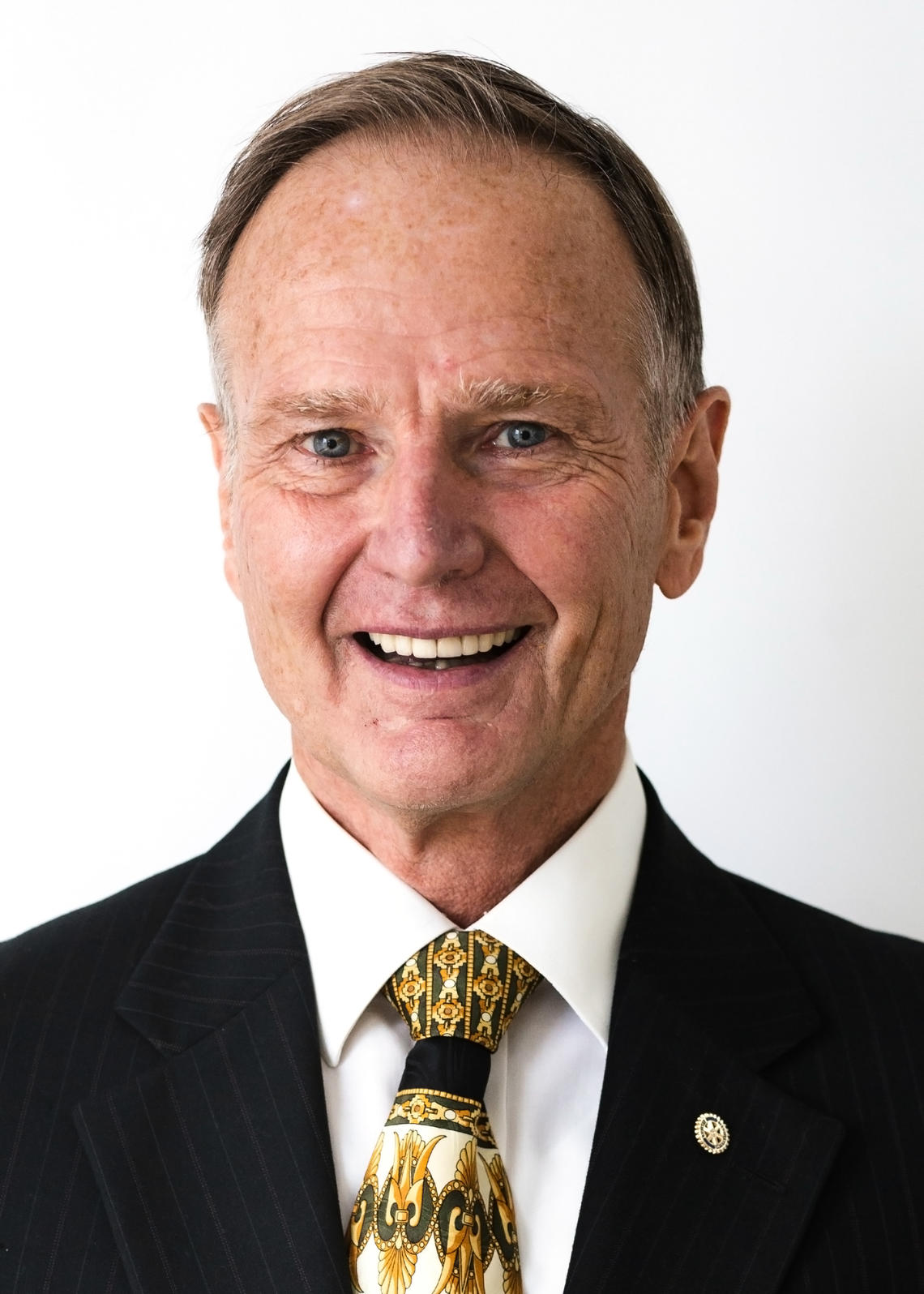
Fabian Fagerholm is an Assistant Professor in the Department of Computer Science at Aalto University. His work bridges software engineering, human-computer interaction, and empirical research methodologies. He actively participates in research groups such as Software and Service Engineering (SSE) and Human-Computer Interaction and Design (HCID). Fagerholm's research explores: Continuous experimentation in software development Developer cognition and mental models Agile methodologies and team dynamics Low-code platforms and end-user programming Software engineering education and pedagogy His publications reflect a strong empirical focus, with recurring themes of human factors in technical systems and educational innovation. He has received notable awards including: Journal of Systems and Software Best Paper Award (2018) EUROMICRO SEAA Distinguished Paper Award (2017) Teacher of the Year (2013) Nokia Foundation Scholarship (2013) Fagerholm contributes to software engineering infrastructure through tools for experimentation and boundary artifacts, enhancing collaboration in distributed teams.
David Duvenaud is an Associate Professor at the University of Toronto , holding a Canada Research Chair in Generative Models and a Schwartz Reisman Chair in Technology and Society . He is cross-appointed to the Department of Computer Science and Department of Statistical Sciences . A Sloan Research Fellow and founding member of the Vector Institute , his work bridges deep probabilistic models , AI safety , and scientific computing . PhD in Machine Learning (University of Cambridge, 2014) Postdoc in Hyperparameter Optimization (Harvard University, 2016) Co-founded Invenia (energy forecasting company) His research spans foundational Neural Ordinary Differential Equations (NeurIPS 2018 Best Paper) and Automatic Chemical Design (ACS Central Science 2018) to recent work on AGI governance (2025) and AI safety (2024). Key contributions include stochastic variational inference , implicit differentiation frameworks , and antisymmetrization layers for quantum Monte Carlo. Recent publications (2024-2025) focus on systemic existential risks from AI , many-shot jailbreaking attacks , and epistemic uncertainty quantification . His group trains energy-based models with scalable MCMC samplers and develops invertible neural architectures (e.g., Residual Flows NeurIPS 2019). He also explores human-AI alignment through LLM Processes (NeurIPS 2024) and Sycophancy in Language Models (ICLR 2024). Canada Research Chair (2025) NSERC Grant (2025) Sloan Research Fellow (2021) Schwartz Reisman Chair (2021) Best Paper Award (NeurIPS 2018) Distinguished Paper Award (ICFP 2021) His students include James Requeima , Jesse Bettencourt , and Raymond Douglas . He teaches courses on Statistical Methods for Machine Learning and Differentiable Inference . Current work (2025) investigates systemic human disempowerment through incremental AI capabilities and sabotage risk mitigation via hyperparameter-aware evaluations.
Professor Isabella Alexander is a distinguished legal historian and intellectual property scholar at the University of Technology Sydney (UTS), Faculty of Law. She specializes in copyright law with a particular focus on its historical dimensions and application to cartography and visual works. As a leading researcher in her field, she holds significant research grants including ARC Discovery projects on copyright law in the 21st century and copyright in cartography. Her educational background includes: PhD from the University of Cambridge LLB (Hons) from the Australian National University BA (Hons) from the Australian National University Professor Alexander's research explores how laws inform and regulate the creation, circulation and reception of knowledge and culture from a historical perspective. Her work bridges legal history with contemporary intellectual property challenges, particularly in areas of copyright for visual works, cartography, and digital creativity. She has made significant contributions to understanding the historical development of copyright principles and their application to modern technological contexts. An analysis of her recent publications reveals a strong focus on the intersection of copyright law with visual culture, cartography, and emerging digital challenges including AI-generated content and memes. Her work demonstrates a clear trajectory toward interdisciplinary approaches that connect historical legal frameworks with contemporary technological and cultural phenomena, showing increasing engagement with how historical understanding can inform solutions to modern intellectual property challenges. Her notable scientific achievements include: 2023 LSAANZ Award for published scholarly book/monograph for "Copyright and Cartography: History, Law, and the Circulation of Geographical Knowledge" Professor Alexander has secured significant research funding as Lead Chief Investigator on the ARC Discovery grant "Hacking Copyright Law in the 21st Century: Art, Law, History and Technology" and as sole Chief Investigator on "Copyright and Cartography: Understanding the past, shaping the future." She has actively contributed to policy development through submissions to the Australian Productivity Commission's Inquiry into IP Arrangements and on addressing copyright infringement online through secondary liability and website blocking mechanisms. She currently serves as President of the Australian and New Zealand Law and History Society and is a member of the Governing Board of the International Society for the History and Theory of Intellectual Property, demonstrating her leadership and influence in both national and international academic communities.
Matthew Payne is an Associate Professor in the Department of Film, Television, and Theatre at the University of Notre Dame. His affiliations include roles as Director of Graduate Studies and regional director for the Learning Games Initiative, a multi-institute research collective focused on game archiving and education. His research spans video game studies, media literacy, military entertainment, and the cultural history of video games. He explores play theory, media and war, and the intersection of media production with new technologies. The 15 most recent articles highlight his focus on video game studies, transmedia narratives, and the cultural implications of gaming. These works cover topics from Nintendo Amiibo to slow game time mechanics in Red Dead Redemption 2, with recurring themes of military representation and ludic storytelling. Matthew Payne has co-edited notable works including How to Play Video Games and Joystick Soldiers , emphasizing collaborative approaches to game studies and critical analysis of military gaming.
Nicholas Ng-A-Fook is a Full Professor in the Faculty of Education at the University of Ottawa, where he has served as former Associate Dean of Graduate Studies and Director of Teacher Education and Indigenous Teacher Education Programs. His work is deeply engaged with the Truth and Reconciliation Commission's 94 Calls to Action, working in partnership with Indigenous communities and school boards to disrupt colonialism, systemic racisms, and inequalities in educational curricula. Dr. Ng-A-Fook's educational background includes a Ph.D. in Curriculum and Instruction from Louisiana State University (2006), an M.A. in Education (Multicultural Education) from York University (2001), a Graduate Diploma in Education (Secondary Science and History) from the University of Western Sydney (1998), and a B.A. in Classical Studies from the University of Ottawa (1996). His research interests span Curriculum Studies, History of Education (particularly oral history), Life-writing research (autobiography and narrative inquiry), Critical Youth Studies (focusing on first-generation immigrant and Indigenous youth), Community-based research, and Contemporary perspectives in philosophy, science and technology including AI, genomic education, and anti-racist science education. Dr. Ng-A-Fook approaches his work as a curriculum theorist who draws on life writing research methodologies to co-create culturally responsive, relevant, and relational curriculum with educators. Dr. Ng-A-Fook's publications reveal a strong focus on reconciliation education, decolonizing curriculum, and addressing systemic racism in educational contexts. His work increasingly engages with digital technologies and artificial intelligence from a critical, decolonial perspective, examining how these technologies intersect with historical and ongoing colonial structures. His research shows a clear evolution toward more interdisciplinary work connecting curriculum studies with Indigenous knowledge systems, technology studies, and social justice movements. Among his notable honors are the 2024 Coutts Prize, the Ted T. Aoki Distinguished Service Award (2018), and the R.W.B. Jackson Award for an outstanding article in the Canadian Journal of Education. He also serves as Director of the EdCan Network and was Past-President of the Canadian Society for the Study of Education. As a supervisor, Dr. Ng-A-Fook currently mentors several graduate students including Melissa Daoust, Lisa Ambaye, Bahareh Samsamiardekani, and Madelaine McCracken. He created the FooknConversation podcast to address educational challenges with colleagues, community activists, artists, education leaders, teachers, and politicians, and maintains the Canadian Curriculum Theory Project website as a resource for his research.
Ryan Calo is the Lane Powell & D. Wayne Gittinger Professor of Law at the University of Washington School of Law, with joint appointments at the Information School and adjunct roles at the Paul G. Allen School of Computer Science and Engineering. He co-founded the UW Tech Policy Lab and Center for an Informed Public, focusing on technology policy, data privacy, and AI ethics. His research explores the intersection of law and technology, emphasizing AI regulation, surveillance law, and privacy harms. Key themes include legal indeterminacy in tech policy, ethical challenges of autonomous systems, and market manipulation in digital economies. His work spans law reviews, technical journals, and policy reports. Ryan Calo's articles highlight critical gaps in AI governance, surveillance frameworks, and robotics law. His publications address algorithmic bias, cultural responsiveness in AI, and legal implications of autonomous vehicles, with recurring focus on consumer protection, constitutional challenges, and cross-disciplinary policy solutions. Phillip A. Trautman 1L Professor of the Year Award (2014, 2017) Washington Law Review Faculty Award (2019) As a public intellectual, Calo has testified before the U.S. Senate multiple times, including on AI-driven privacy risks. He serves on advisory boards for major tech policy organizations and frequently appears in media discussing AI ethics, data breaches, and constitutional tech regulation.
Dr. Tatsuya Mori is a Professor at the Department of Computer Science and Communication Engineering , Faculty of Science and Engineering, Waseda University . He also holds visiting researcher positions at RIKEN Center for Advanced Intelligence Project (since 2018) and National Institute of Information and Communications Technology (since 2019). Education: Ph.D. in Information Science (2005), Waseda University Research Interests: Spanning information security and privacy across emerging technologies like autonomous driving , AI , 3D sensing , VR , biometric measurement , and Web3 . His work focuses on offensive security and interdisciplinary research , including physical-layer attacks on sensors and behavioral studies on phishing detection. Scientific Awards: Recipient of multiple prestigious awards, including the Distinguished Paper Award Runners-Up at IEEE EuroS&P 2024 , IPSJ Outstanding Paper Award 2024 , and CSS2024 Concept Research Prize . His research has been recognized in top conferences like USENIX Security , NDSS , and ACM CCS . Professional Leadership: Active in academic governance as Chief Investigator for NISC Working Groups and Committee Member for JST Research Areas . He serves on program committees for NDSS , IMC , and ACM CCS .
Carlos Toxtli is an Assistant Professor at Clemson University where he leads the Human-AI Empowerment Lab. His research applies Human-Centered AI to create fair workplace tools, focusing on NLP, computer vision, and crowdsourcing ethics. He holds a PhD in Computer Science from Northeastern University and previously worked at Google, Microsoft Research, and Snap Inc. Education: Ph.D. Computer Science, Northeastern University M.S. Innovation & Technological Entrepreneurship, Monterrey Institute of Technology MBA, IEDE Business School B.S. Computer Science, University of the Valley of Mexico B.S. Computer Engineering, National Autonomous University of Mexico Research Focus: Dr. Toxtli develops AI systems promoting workplace fairness through ethical frameworks. His work spans: 1) Human-AI collaboration for task management, 2) Bias mitigation in gig economies, 3) Multimodal interfaces for accessibility, and 4) Culturally adaptive systems. His lab explores how AI can augment human capabilities while ensuring transparency. Publication Trends: Recent works demonstrate strong focus on LLM reliability (7 papers), human-AI teaming (4 studies), and ethical AI frameworks (3 publications). Over 60% of 2024-2025 output addresses real-world deployment challenges. Awards: UNESCO IRCAI Global Top 100 project Google Apps Developer Challenge 1st Place Facebook Developers World Hack 1st Prize Intel Innovation Latin App 1st Prize NSF STIR Labs Research Grant Leadership: Founded the Human-AI Empowerment Lab securing $1.2M in NSF/industry grants. Supervises 8 PhD students in human-centered computing projects. Previously co-founded 5 tech startups including ComproPago (acquired by Coca-Cola FEMSA).
Ahmed Al-Rawi is an Associate Professor of News, Social Media, and Public Communication at Simon Fraser University's School of Communication. Since 2019, he has served as Director of the Disinformation Project, whose findings have been featured nationally and internationally. His academic work bridges journalism, digital media studies, and public communication with a focus on disinformation, social media dynamics, and media's role in democratic processes. Dr. Al-Rawi's research interests span disinformation studies, social media analysis, news framing, computational journalism, and the intersection of digital communication with societal issues including racism and public health crises. His work examines how digital platforms shape public discourse, influence political processes, and frame critical societal issues like the opioid crisis in Canada. He approaches these topics through interdisciplinary lenses that combine media studies, political science, and sociology. His scholarly contributions reveal consistent focus on digital communication's impact on society, with recent work examining far-right movements, conspiracy theories, and mediated racism in Canadian contexts. Earlier research explored similar dynamics in Middle Eastern contexts, particularly during the Arab Spring and in conflict zones like Iraq. Shortlisted for Gertrude Robinson Prize (2022) Radio report nominated for US national award (2004) Teaching awards at Erasmus University As an academic leader, Dr. Al-Rawi has advised numerous graduate students, served on editorial boards for prestigious journals including Journal of Popular Communication and Digital Journalism, and reviewed over 220 research papers. His practical expertise extends to consulting for governmental bodies including the Canadian Senate, House of Commons, Public Order Emergency Commission, and Elections BC.
Monika Rosińska is an Assistant Professor at SWPS University's Faculty of Design in Warsaw, where she serves as Head of the Department of Design Theory and Research and as Dean's Representative for Interdisciplinarity. She is affiliated with both the Institute of Social Sciences and the Design Institute within the university. Her research focuses on the socio-cultural dimensions of design practices, with particular expertise in non-anthropocentric design, science and technology studies (STS), and critical/speculative design approaches. She investigates the history of design within political, social and cultural contexts, and examines the sociology of objects in everyday life. Dr. Rosińska explores why the creative process extends beyond form and function, pursues definitions of "good design," and investigates what matters to contemporary designers. Her scholarly work reveals consistent themes across publications, with recent research increasingly focused on multi-species communities and non-anthropocentric approaches to design. Her 2019 paper "Zoepolis: Non-anthropocentric design as an experiment in multi-species care" represents a significant contribution to this emerging field, building on earlier work exploring urban revitalization and participatory design. Dr. Rosińska has curated exhibitions including "Zoepolis. Design for Plants and Animals," which serves as both research output and practical exploration of her theoretical frameworks. Her publications span from foundational works on collective behaviors ("Deindywiduacja. Socjologia zachowań zbiorowych") to cutting-edge explorations of AI in visual arts (2025). She actively contributes to academic discourse through platforms including Google Scholar, ResearchGate, Academia.edu, and ORCID, maintaining visibility across multiple scholarly networks. Her work bridges sociology and design in innovative ways that challenge traditional disciplinary boundaries.
Dr. Bill Hamilton is an Assistant Professor in the Department of Computer Science at New Mexico State University. His research focuses on live media design, online communities, and digital game culture. He holds a Ph.D. in Human Computer Interaction from Texas A&M University (2018), and has collaborated with industry partners like Microsoft Research and Motorola Mobility. Education: Ph.D. in Human Computer Interaction, Texas A&M University (2018) Bachelor’s degree in Computer Science, Texas A&M University Research Interests: Bill explores how live media supports societal participation in education, politics, work, and play. His work employs qualitative methods like ethnographic inquiry to study collaborative digital environments. Recent projects include designing wearable interfaces for human-drone teams and analyzing YouTube’s content policies' impact on free speech. Awards: 2018 Texas A&M Distinguished Graduate Research Award 2016 Best Paper at ACM Interactive Experiences for TV/Online Video Advising & Grants: Mentors students like Preeti De Maurya and Cassandra Palmer, with a focus on inclusive education technologies and collaborative tools for emergency response. Active in conference organization including ACM CHI’s Games and Play Subcommittee (2019). Labs: His research is conducted through the PlexLab, exploring playful interactions and live media systems.
Dr Luca Follis is an Associate Professor in Criminology within the Department of Sociology and Criminology at the School of Law, Politics and Sociology, University of Sussex. His interdisciplinary research explores the intersections of law, power, technology, and resistance, with a focus on penal systems, surveillance, and digital activism. His education includes a PhD in Sociology (with Honours) from the New School for Social Research, where his dissertation won the Albert Solomon Memorial Award. He also holds a B.A. in English Textual Studies from Syracuse University and a B.A. in Sociology and Mass Communication from the University of New Mexico. Political Sociology Criminology and Penal Governance Hacktivism and State Hacking Surveillance and Networked Technology Carceral Logistics and Prison (Im)mobilities Migration, Health Systems, and (Im)mobilities His recent publications reflect a strong trend in analyzing how digital technologies reshape state power and resistance, from state hacking and cyberwar to healthcare access during pandemics. He frequently collaborates with scholars like Anna Fish and engages in critical legal and historical analyses of punishment and control. Albert Solomon Memorial Award in Sociology, New School for Social Research Senior Fellow of the Higher Education Academy Luca Follis advises students and contributes to academic discourse through editorial work, collaborative research, and public engagement. While specific grant details are not listed, his extensive publication record and interdisciplinary projects suggest active research funding. He is involved in critical studies of justice infrastructures, carceral systems, and digital governance. His work bridges historical and contemporary issues, from 19th-century penal governance to modern cyber conflicts, often situating technological change within broader political and cultural dynamics. He contributes to both academic and public understanding of power, resistance, and justice in digital and carceral contexts.
Sara De Vuyst is an Assistant Professor of Contemporary Visual Culture at Maastricht University’s Department of Literature and Art within the Faculty of Arts and Social Sciences. Her research focuses on feminist/queer media studies, ageing representations, and gender issues in media/journalism/technology. She previously held postdoctoral appointments at Ghent University (ERC project Later-in-Life Intimacies) and was a Visiting Professor at Vrije Universiteit Brussel. Education: PhD in Communication Studies (Ghent University) Professional Roles: Chair of ECREA’s Gender, Sexuality & Communication section National Coordinator for Global Media Monitoring (Belgium) Research Interests: Her work critically examines age/gender/sexuality intersections in media and art, with a focus on queer feminist resistance and digital spaces. She created the website LILI to challenge societal norms around ageing and identity. Key areas include: Queer ageing narratives Gendered digital journalism practices Feminist critiques of media representations Publications: Authored Hacking Gender and Technology in Journalism (2020), published widely in gender/media studies journals. Engages interdisciplinary methods combining quantitative/qualitative approaches. Advocacy: Actively addresses gender inequalities in media through policy work and educational initiatives. Serves as a thought leader in intersectional digital media ethics.
Daniel Hack is a Professor of English at the University of Michigan, affiliated with the Department of English Language and Literature within the College of Literature, Science, and the Arts (LSA). His research focuses on Victorian literature, African American literature, and transatlantic cultural exchanges. He holds a B.A. from Yale University and a Ph.D. from the University of California, Berkeley. Professor Hack’s work explores how literary texts engage with material culture, transatlantic print networks, and racial identity. His books include The Material Interests of the Victorian Novel (2005) and Reaping Something New: African American Transformations of Victorian Literature (2017), which examines how African American writers reinterpreted Victorian texts. His current project investigates the relationship between fiction and real-life meaning-making in modern culture. He has received prestigious awards such as the Guggenheim Fellowship (2022), the Distinguished Undergraduate Teaching Award (2021), and the Donald Gray Prize (2012). His editorial work includes co-editing Victorian Literature and Culture and contributing to volumes like Jonathan Freedman: The Jewish Decadence (2021). His teaching spans courses on fiction, narrative theory, race, and Victorian literature. He has delivered invited lectures at Harvard, Yale, and numerous conferences, exploring themes like transatlantic influence, literary canon formation, and modernist narrative techniques. His professional service includes roles as Associate Chair of the English Department and leadership in academic organizations like the MLA.
Dr. Thomas Patrick Keenan is a Professor at the School of Architecture Planning and Landscape (SAPL) at the University of Calgary. A polymath with expertise in technology, cybersecurity, and education, he pioneered Canada’s first Computer Security course in 1974 and contributed to early computer crime legislation. His research focuses on balancing technological advancements with privacy concerns, addressing topics like cybersecurity, technocreepiness, and AI ethics. He previously served as Dean of another faculty and joined SAPL to engage with its interdisciplinary approach. Keenan is committed to education, mentoring students in programs like Shad Valley and supporting PhD research on smart cities and accessibility for neurodiverse individuals. Education: Holds degrees including BA, MSc (Eng), MA, EdD, MLE, and certifications like FCIPS, ISP, and ITCP. Research Interests: Explores the societal impacts of technology, including hacking, privacy erosion, AI ethics, and the ethical failures in tech professions. He emphasizes proactive measures to mitigate risks posed by emerging technologies. Key Themes in Articles/Publications: Focus on cybersecurity challenges (e.g., blockchain, data persistence), misinformation dynamics, and ethical dilemmas in tech adoption. His work highlights the need for regulatory frameworks and public awareness in navigating digital futures. Advising & Mentoring: Played a pivotal role in establishing Shad Valley, nurturing gifted students in STEM fields. Supports PhD research spanning smart cities and accessibility innovations. No formal grants are detailed in the text.