Laura Quick is an Associate Professor of Hebrew Bible at the University of Oxford and a Tutorial Fellow of Theology and Religion at Worcester College. Her academic work bridges biblical studies with comparative ancient Near Eastern literary culture, focusing on the intersection of language, gender, and ritual in the Hebrew Bible. Research Focus: Beauty and aesthetics in the Hebrew Bible and ancient Near East; body symbolism in biblical and Dead Sea Scroll texts; philological gender analysis; ritual and liturgical studies Academic Roles: Editorial Board, Hebrew Studies; Steering Committee, Philology in Hebrew Studies (SBL); External Member, Sheffield Institute for Interdisciplinary Biblical Studies Recent publications examine topics ranging from cosmetic practices in Esther and Ruth to the mythological background of Isaiah 14. Her scholarship frequently engages with Deuteronomy, Dead Sea Scrolls, and Septuagint studies, employing comparative methods to analyze textual strategies and cultural exchange. She teaches Hebrew poetry, ritual, and liturgy, contributing to both undergraduate and postgraduate theological education at Oxford.
Elisa Roßberger is an Assistant Professor with tenure track for Explorative Visual Archaeology of the Ancient Near East at the Free University of Berlin since October 2022. Previously, she held a similar position for Digital Humanities for Near Eastern Archaeology and Assyriology at Julius-Maximilians-Universität Würzburg (2021-2022). Her academic journey includes post-doctoral positions at LMU München's Graduate School Distant Worlds and Centre for Advanced Studies. Dr. Roßberger's educational background includes: PhD in Near Eastern Archaeology from Eberhard-Karls-Universität Tübingen (2010, summa cum laude), published as "Schmuck für Lebende und Tote" (2015) Graduate studies as a scholarship recipient of the DFG Graduate College "Forms of Prestige in Ancient Cultures" at LMU München (2006-2009) Studies in Near Eastern Archaeology, Political Science (International Relations), and Assyriology in Munich, Beirut, and Tübingen (2000-2006) Her research focuses on the archaeology of Iraq, Syria, and the Levant during the 3rd and 2nd millennia BCE, with particular emphasis on visual culture, multimodality, and digital approaches to ancient studies. She has conducted extensive fieldwork since 2000 at archaeological sites including Ba'ja (Jordan), Gerçin Höyük (Turkey), Tell Burak (Lebanon), Emar and Qatna (Syria), Tilla Bulak (Uzbekistan), and Ur (Iraq). Dr. Roßberger's scholarly output demonstrates consistent engagement with visual representation in ancient societies, particularly examining cylinder seals, terracotta figurines, and Babylonian imagery. Her work bridges traditional archaeological analysis with innovative digital methodologies, creating new approaches to understanding ancient material culture through multimodal analysis. Her major research projects include: Co-leading the interdisciplinary long-term project "KIŠIB. Digital Corpus of Ancient West Asian Seals and Sealings" since 2025 Leading the BMBF eHeritage project "Annotated Corpus of Ancient West Asian Imagery: Cylinder Seals" (ACAWAI-CS, 2020-2023) Leading the BMBF eHeritage project "Concept for Digitization of Ancient Near Eastern Cylinder and Stamp Seals" (DigANES, 2017-2018) Dr. Roßberger is actively involved in academic communities: Member of the DFG Network "Archaeological Image Research: Limitations and Transgressions of Images" since 2025 Co-Chair of the NFDI4Objects Community Clusters "Objects as Information Carriers" since 2024 Editorial board member for "Visual Culture of Ancient Western and Central Asia" (Palgrave Macmillan) Co-organizer of multiple international conferences on ancient Near Eastern temple inventories and digital perspectives on seals and sealings
Rumi Aoyama is a Professor at Waseda University's Graduate School of Asia Pacific Studies, specializing in diplomatic history, international relations, and contemporary Chinese politics and foreign relations. With a PhD from Keio University, she has established herself as a leading scholar on China's foreign policy, East Asian regional dynamics, and China-Japan relations. Professional Memberships: Japan Association for Contemporary China Studies, Asian Politics and Economics Association, Japan Association of International Relations Research Focus: Diplomatic history, international relations, East Asia, modern Chinese politics and foreign relations Dr. Aoyama's research interests span diplomatic history, international relations, East Asia studies, Chinese politics, and Chinese foreign relations. Her work particularly focuses on China's diplomatic strategies, mediation diplomacy, and the evolving regional order in Asia. She has published extensively on topics ranging from China's "Belt and Road" initiative to its approach to the Global South and its relations with Japan. Her recent publications reveal a strong focus on contemporary challenges in international relations, particularly examining China's role in mediating global conflicts, its strategic positioning amid US-China confrontation, and its evolving approach to regional order in Eurasia. Her work demonstrates how China is developing a distinctive diplomatic approach that blends traditional non-interference principles with proactive engagement in global affairs. 24th Ohira Masayoshi Memorial Award (2008) Dr. Aoyama has been actively involved in international academic exchanges, including research stays at National University of Singapore (2022-2023), George Washington University (2016-2017), and Stanford University (2005-2006). She also serves as Director of the Waseda Institute of Contemporary Chinese Studies and is affiliated with the Faculty of Education and Integrated Arts and Sciences School of Education. Her editorial leadership includes serving as Co-editor of Cambridge Elements in Indo-Pacific Security and previously as Managing Editor-in-Chief of the Journal of Contemporary East Asia.
Professor Yoshihiro Watanabe is affiliated with Waseda University's School of Culture, Media and Society, holding a Doctorate in Literature from the University of Tsukuba. He serves as Specially Appointed Trustee for Cultural Advancement (2023-present) and Principal of Waseda Saga Junior/Senior High School (2018-present). His research focuses on Classical China's formation , Confucian philosophy , and Three Kingdoms history , with significant contributions to understanding Han Dynasty aristocracy, historical perception, and cross-cultural analysis. Key research areas include Classical Chinese historiography Major awards: 2017 Omae Memorial Academic Prize, 2002 Oriental Society Award Current projects: Interdisciplinary study of Classical China (2016-2027) Research trends show consistent focus on Three Kingdoms political/military thought Classical Chinese philosophical texts Historical narrative techniques Confucianism's role in governance Chinese-Japanese cultural exchange Comparative analysis of classical sources Scientific contributions : Author of 12 monographs including Formation of Classical China (2019) Published 51 peer-reviewed articles Principal investigator for three major grants (2005-2016) Regular media contributor for NHK programs since 2008
Professor Yasuyuki Fukukawa is a distinguished academic affiliated with the School of Humanities and Social Sciences, Faculty of Letters, Arts and Sciences. Holding a PhD in Literature from Waseda University, he has established himself as a leading researcher in social psychology with a particular focus on evolutionary perspectives, aging, and public health. His extensive academic contributions span multiple disciplines, reflecting his interdisciplinary approach to understanding human behavior and social dynamics. Dr. Fukukawa's research interests encompass social interactions, stress mechanisms, evolutionary adaptation, and gerontology. His work often bridges psychological theory with practical applications for understanding aging populations and social health determinants. He has made significant contributions to the understanding of the behavioral immune system, social capital's impact on health, and evolutionary perspectives on human social behavior. His scholarly output demonstrates a clear progression from foundational work in stress and social support among aging populations toward more recent investigations of evolutionary psychology frameworks applied to contemporary social issues. A notable trend in his recent publications involves the behavioral immune system, emotion measurement technologies, and cross-cultural examinations of psychological phenomena. Best Poster Award (2022.06) - Human Behavior and Evolutionary Society Outstanding Poster Award (2019.10) - International Association of Gerontology and Geriatrics Excellent Presentation Award (May 2017) - Japan Society for Occupational Health Hideo Onuki Educational Award (Psychology Category) (2007) Foundation for the Promotion of Longevity Science and Technology Chairman's Award (2004) Dr. Fukukawa has maintained an active research program with numerous collaborations, particularly with researchers like Ryoko Takikawa and Wataru Onoguchi. His work has been supported by significant research grants from the Japan Society for the Promotion of Science, focusing on topics including the behavioral immune system, social capital's impact on health among older adults, and fall prevention programs for elderly populations. His laboratory work has increasingly incorporated technological approaches to psychological measurement while maintaining strong theoretical foundations in evolutionary and social psychology.
Théodora PSYCHOYOU is Professor at the Department of Music and Musicology of Sorbonne University and a permanent member of the Institute for Research in Musicology (IReMus – UMR 8223), which she directed from 2022 to 2024. She currently serves as Director of the Collegium Musicæ institute of the Sorbonne University alliance and is responsible for two Master's programs: Interpretation of Early Music - Baroque Music track, and the Franco-Italian Master's in Musicology Research in partnership with the University of Palermo. Her research focuses on the history and mechanisms of discourse on music in 17th and early 18th century France, the economy and status of musical and theoretical sources, and religious music in the 17th century, particularly the works of Marc-Antoine Charpentier (1643-1704). Her specialty areas include early music (Baroque), historically informed practice, history of musical theory, music and science in the 17th and 18th centuries, religious music in the modern era, study of sources, musical ecdotics, reception of antiquity and Hellenism, and the Ancients and Moderns debate. She has organized numerous research seminars and conferences on these topics, including the Hellenism seminar and the ANR Agon project. Her recent publications demonstrate a strong focus on the intersection of music with science, philosophy, and cultural history from the 17th century to contemporary times. She has made significant contributions to understanding the reception of ancient musical thought in modern contexts, the relationship between music and scientific developments, and the cultural significance of musical practices across different historical periods and geographical contexts. Her work spans historical musicology, theoretical approaches, and contemporary applications. Mention spéciale du Prix des Muses 2010 Prix des Muses 2007 dans la catégorie ouvrage collectif As an academic leader, she has directed major research initiatives including the Hellenism seminar, ANR Agon project, and Baroque XXI Praxis. She serves as Vice President of the International Musicological Society (2022-2027) and has held significant administrative roles including Director of IReMus (2022-2024) and Director of Collegium Musicæ (2023-present). Her collaborative work extends to international partnerships, particularly with Greek institutions, reflecting her interest in Hellenism and Mediterranean musical cultures. Her laboratory work focuses on critical musical editions, performance practices, history of musical theories, historiography, gender studies in music, music and religion, iconography, organology, and aesthetics. She leads research teams investigating the intersection of music with other disciplines, particularly through the Collegium Musicæ which connects music with sciences.
Theodore Levin serves as the Arthur R. Virgin Professor of Music at Dartmouth College, with significant international engagements including Senior Advisor to the Aga Khan Music Programme and former Executive Director of Yo-Yo Ma's Silk Road Project. His work bridges academic research and cultural advocacy across Central Asia and Siberia. His educational foundation includes a B.A. from Amherst College and both M.F.A. and Ph.D. degrees from Princeton University. Levin's research centers on ethnomusicological fieldwork examining the intricate relationships between sound, environment, and cultural identity among nomadic communities, with particular focus on spiritual practices and oral traditions along historical Silk Road routes. His publications reveal consistent thematic trajectories exploring musical preservation in rapidly changing societies, the ecological dimensions of sound production, and cross-cultural dialogue through artistic exchange. These works collectively document endangered traditions while analyzing their contemporary revitalization through international cultural development frameworks. As an educator, Levin teaches world music and American 'roots' music courses at Dartmouth, mentoring students in ethnographic methodologies. His professional activities extend to shaping global cultural policy through former leadership at Open Society Foundations' Arts and Culture sub-board, demonstrating sustained commitment to integrating arts into international development paradigms. Levin maintains active involvement with international initiatives including the Aga Khan Music Programme, where he contributes to preserving musical heritage across Muslim contexts through performance, education, and documentation projects that connect traditional artistry with contemporary creative expression.
Professor Kate Jenckes is a faculty member in the Department of Romance Languages and Literature (RLL) at the University of Michigan since 2005. She holds affiliations with the Center for Latin American and Caribbean Studies (LACS), the International Institute, and the Brazil Initiative Advisory Committee. Her research explores the intersections of aesthetics, philosophy, and politics in Chilean and Argentine literature, art, and critical thought, with a notable publication: Witnessing Beyond the Human: Addressing the Alterity of the Other in Post-coup Chile and Argentina (2017). Education: B.A. in 1992 from Reed College; Ph.D. in 2001 from the University of Oregon. Research interests emphasize post-coup Latin American cultural production, ethical dimensions of literature, and critical theory. Her work spans authors like Borges, Kafka, Gelman, and Chejfec, analyzing themes of memory, identity, and political resistance. Professional service includes roles on the LACS advisory board, U-M Senate Assembly, Rackham Executive Board, and Michigan Humanities Emerging Research Scholars Program (MICHHERS). She actively contributes to interdisciplinary initiatives bridging literature, philosophy, and social sciences. Publications reflect engagement with comparative literature, postcolonial studies, and deconstruction, with a focus on Latin American intellectual history and contemporary critical discourse.
Carmen Lamas is an Associate Professor at the University of Virginia, jointly appointed to the Department of English and the Department of American Studies. Her work bridges Latinx literary traditions with hemispheric American and Latin American studies, focusing on 19th-century to contemporary scholarship. PhD, University of Pennsylvania M.A., Georgetown University B.S./B.A., Florida State University Lamas specializes in Latinx literary cultures, translation practices, and historiography of the Americas. Her research interrogates the intersections of race, migration, and transnational identity through 19th-century texts, digital humanities projects, and collaborative editorial work. Her recent publications highlight the enduring relevance of 19th-century Latinx literature, emphasizing translation as both a creative and political act. Themes include hemispheric transformations, Afro-Latinx representation, and archival recovery of marginalized voices. LASA 2022 Latinx Studies Book Award MLA 2023 Book Prize All-University Teaching Award, 2022 Buckner W. Clay Award, 2021 Henry Luce Project Course Development Award, 2018 As co-founder of the Latina/o Studies Association and editor of Pasados , Lamas champions interdisciplinary collaboration. She has presented widely, including plenary addresses at MACLAS and the MLA Conference, and serves on editorial boards like J19 and Recovering the US Hispanic Literary Heritage .
Jordan A. Sand is a Professor of Japanese History at Georgetown University's College, with a joint appointment in the Department of East Asian Languages and Cultures. He holds a Ph.D. in History from Columbia University and a Master's in Architectural History from the University of Tokyo. His research explores Japanese modernity through the lens of urbanism, material culture, and everyday life. Key works include House and Home in Modern Japan (2004), Tokyo Vernacular (2013), and Teikoku Nihon no seikatsu kūkan (2015). His interdisciplinary research spans urban fires, food history (notably sushi and miso), and colonialism's material legacies. He co-directs the Asian Cities: Urban Settlers project, focusing on marginalized communities in Asian megacities. Recent publications address pandemic resilience, urban displacement, and the cultural history of mask-wearing. Education: Columbia University: Ph.D. in History (Year unspecified) University of Tokyo: M.E. in Architectural History Columbia University: B.A. (Year unspecified) Research Interests: Colonial urban spaces and material culture Comparative urban studies and informality Food as cultural and historical artifact His work bridges global and local histories, emphasizing interdisciplinary methods and collaborative urban studies. Current projects include analyzing Tokyo's postindustrial landscapes and rethinking Pacific historiography through trans-imperial networks.
Maria Isabel Siewers De Pazur is a distinguished Professor of Guitar at Mozarteum University in Salzburg, Austria, where she has led the Guitar Department since 1989. She also maintains connections with the Department of Music Education in Innsbruck. Born in Argentina, she has established an international career as both a performer and educator, with her work deeply rooted in Latin American musical traditions while embracing contemporary classical repertoire. Her research and performance interests center on Classical Guitar Performance, Latin American Music, Chamber Music with Guitar, 20th Century Guitar Repertoire, Contemporary Classical Music, Argentine Music, and Guitar Education. Siewers has dedicated her career to expanding the guitar repertoire through commissions of new works and premieres of contemporary compositions, with a particular focus on Latin American composers. Her recordings demonstrate remarkable diversity across musical eras and styles, with special emphasis on 20th century masterpieces, Latin American repertoire, and chamber music collaborations. The trajectory of her work shows a consistent commitment to bridging traditional and contemporary forms, with increasing focus on cross-cultural musical dialogues and innovative arrangements that honor historical contexts while speaking to modern audiences. Critic's choice (Gramophone) Best record of the year (Acoustic Guitar) Latin Grammy Award 2018 in the category Classical Throughout her career, Siewers has maintained a strong commitment to education, founding the Musicampus Classical Guitar program that has nurtured over 170 guitarists from throughout Latin America. Her teaching philosophy emphasizes chamber music, community engagement through public performances, and fostering international musical exchange. She has also been involved in recording projects that serve both educational and artistic purposes, documenting important repertoire and commissioning new works that expand the guitar's expressive possibilities. Siewers maintains active collaborations with composers, orchestras, and fellow musicians worldwide, regularly performing with ensembles such as the Prague Virtuosi, Bohemian Chamber Orchestra, and various string quartets. Her work with the Musicampus program demonstrates her commitment to developing the next generation of guitarists while preserving and innovating within the classical guitar tradition.
Helen Moore is President of Corpus Christi College, Oxford (since 2018), and has been a Fellow and Tutor in English at the college since 1996. She holds the rank of Associate Professor in the Faculty of English at the University of Oxford. Elected to the Academia Europaea in 2021, her academic leadership includes roles such as Director of Undergraduate Studies in English (2010-12) and member of the University Personnel Committee (2020-). Education: D.Phil. in English Literature, University of Oxford (1996) B.A. (Hons) in English Language and Literature, University of Oxford (1989-92, 1st class) Research Interests: Early modern English literature and drama, chivalric romance, Anglo-Spanish literary relations, classical reception, and translation studies. Notable projects include a critical biography of John Webster (supported by a Leverhulme Fellowship) and studies on Amadís de Gaula and the King James Bible. Awards and Grants: 2021: British Academy Rose Mary Crawshay Prize and Roland H. Bainton Prize 2016-17: Leverhulme Trust Research Fellowship 2020: Honorary Fellowship, Pembroke College Advising and Leadership: Supervised over 20 D.Phil. and M.St. students in medieval and early modern topics. Key roles include organizing interdisciplinary conferences like Ekphrasis (2002) and chairing the Manifold Greatness exhibition committee (2011). Labs/Teams: Collaborates with classical scholars on interdisciplinary projects and curates exhibitions linking literary history with cultural heritage.
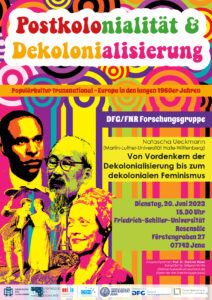
Prof. Dr. Natascha Ueckmann is a Professor of Cultural Studies specializing in France/Francophonie and Spain/Latin America at the Institute of Romance Studies, Faculty of Philosophy II, Martin Luther University Halle-Wittenberg. She manages all IKEA degree programs and master's programs, supervises tutors, and coordinates Erasmus+ exchanges with West African universities in Togo (Lomé and Kara) and Senegal (Dakar). Her academic trajectory includes doctoral studies at the University of Osnabrück with a dissertation on 'Women and Orientalism: Travel texts by French-speaking female authors of the 19th and 20th centuries,' followed by a habilitation on 'Aesthetics of Chaos: Creolization and Neo-Baroque in the Franco- and Hispanic-Caribbean Contemporary Novel' at the University of Bremen, for which she received the Elise Richter Research Prize. Prof. Ueckmann's research focuses on postcolonial studies, particularly Franco-Caribbean literature, gender studies, and the transatlantic circulation of ideas. Her publication record spans from 2016 to 2024, with recent works examining Enlightenment influences in Caribbean literature, gender representations in Francophone digital media, and slave revolts in literary narratives. Her scholarly output demonstrates consistent interdisciplinary engagement across literature, cultural studies, and postcolonial theory. Berninghausen Prize for Outstanding Teaching (2016) Elise Richter Research Prize of the German Association of Romance Studies She has supervised students including Susan Bargmann, who created a blog on the Nantes excursion examining colonial history. Prof. Ueckmann has organized numerous educational excursions to Berlin, Nantes, and Avignon, and has led major research projects including a DFG-funded study on Enlightenment's impact on Franco-Caribbean literature (2017-2023) and the current RE-VISUALIZE project (2022-2025) examining gender and Islam in Francophone digital media. She actively participates in international academic collaborations, has organized multiple Caribbean and West Africa study days, and serves on the board of the Society for Caribbean Research (SoCaRe) as Board Member for International Affairs since 2015.
Manolis Manoledakis is Professor of Classical Archaeology at the International Hellenic University (IHU) and Dean of the School of Humanities, Social Sciences and Economics since 2020. He directs IHU’s archaeological excavation at Neo Rysio and co-edits the journal Ancient West and East . His academic career spans multiple institutions including Aristotle University of Thessaloniki, University of Ioannina, and Democritus University of Thrace. Education: Ph.D. in Classical Archaeology, Aristotle University of Thessaloniki (2003) Master of Arts in Classical Archaeology, Aristotle University of Thessaloniki (1999) Bachelor’s degree in History and Archaeology, Aristotle University of Thessaloniki (1997) His research focuses on the archaeology, historical geography, and ancient history of the Black Sea region and Macedonia, with specialization in ancient topography, cults, mythology, and Greek vase painting. He has developed unique interdisciplinary methodologies combining cartographic analysis with archaeological fieldwork. The 15 most recent publications reveal trends in Pontic studies, Greek colonialism, Roman hydraulic engineering, and ethnographic analysis of indigenous communities. His work bridges textual analysis with material evidence, particularly through GIS applications and remote sensing technologies. Scientific Awards: Scholarship of excellence (Aristotle University of Thessaloniki, 2001) State Scholarships Foundation fellowship (2006-2007) Manoledakis has directed the MA in Black Sea and Eastern Mediterranean Studies and MA in Classical Archaeology and Ancient History of Macedonia. He organized international workshops and summer schools, and led excavation teams at Neo Rysio and Vergina, while contributing to environmental history projects like Mines, Olives and Monasteries . His editorial work includes proceedings of Black Sea Antiquities workshops and co-edited volumes in the Colloquia Antiqua supplement series. He has applied digital methods to Ptolemy’s Geographia and WW2 aerial photography for ancient landscape reconstruction.
George Bodie is a Lecturer in History at Goldsmiths, University of London, specializing in contemporary German history and the global Cold War. His academic work focuses on the connections between East Germany (GDR) and the postcolonial world, examining how ideas of socialist internationalism and solidarity were constructed and manifested in everyday life. Dr. Bodie completed his academic training with a BA in History from the University of Sussex (2011), an MA in European History from University College London (2012), and a PhD in History also from University College London (2020). George Bodie's research explores the construction of socialist internationalism and how these ideas shaped everyday behavior. His work primarily focuses on East Germany's connections with Cuba, Africa, and other parts of the postcolonial world during the Cold War era. He examines how these connections were represented in media, experienced through tourism and educational exchanges, and how they shaped both GDR citizens' worldview and the international standing of the socialist state. His research bridges diplomatic history, cultural studies, and transnational history to provide a comprehensive understanding of how socialist internationalism functioned as a mass phenomenon rather than just an elite project. Bodie's recent publications demonstrate a clear trend toward examining the everyday manifestations of socialist internationalism. His work moves beyond traditional diplomatic histories to explore how ordinary citizens experienced connections between socialist states and postcolonial nations. Through analyses of tourism, media representations, and educational exchanges, he reveals the complex tensions between ideological solidarity and consumerist pleasure in socialist internationalism. His research significantly contributes to understanding how the Cold War was experienced at the grassroots level across different geopolitical contexts. British Association for Slavonic & East European Studies Postgraduate Prize for Best Scholarly Article by a Postgraduate Student Dr. Bodie teaches across undergraduate and postgraduate programs at Goldsmiths. His teaching includes BA modules on 'The Central Powers in the First World War,' 'Germany's African Road to the Holocaust,' and 'The Greatest Whodunnit in History: Who Caused the First World War?' He also teaches the MA module 'A History of Violence.' His research appears in prestigious journals including the Journal of Contemporary History and International Review of Social History. He is currently working on a book exploring links between East Germany and the postcolonial world.