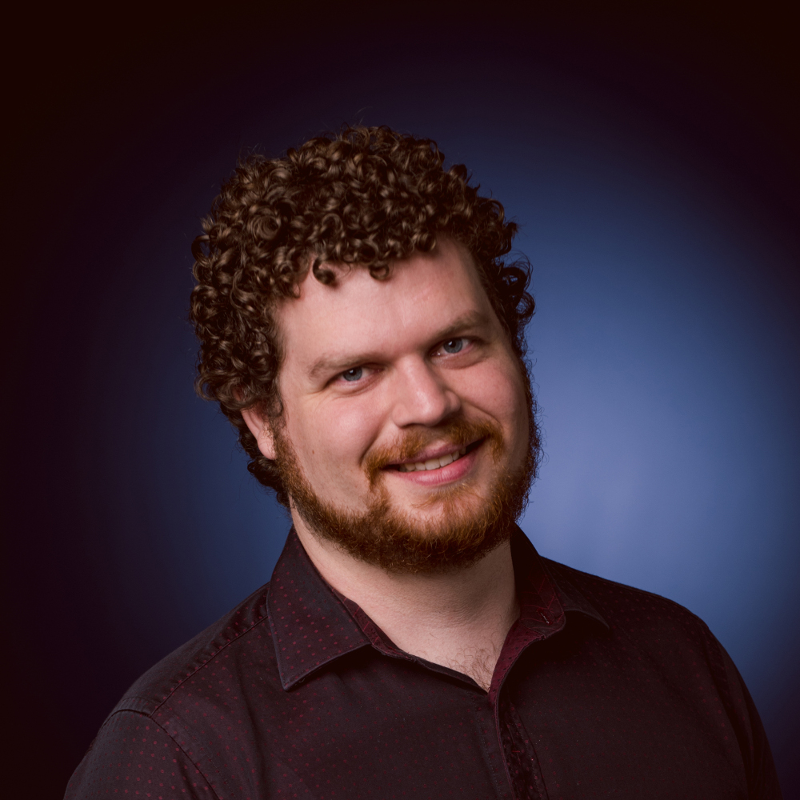
Jens Frederik Dalsgaard Nielsen is an Associate Professor at the Department of Electronic Systems, Aalborg University, within The Technical Faculty of IT and Design. He leads research in mixed-criticality systems, airborne computing architectures, and aerospace engineering education. His work integrates interdisciplinary collaboration with hands-on project-based learning. Primary affiliations: Automation & Control Group, Green Lab, and Aalborg University Space Center Research focuses on: Mixed-criticality system architectures for aerospace applications Real-time multiprocessor systems and on-chip networks Student satellite projects (e.g., AAUSAT series) Interdisciplinary PBL in engineering education Recent work emphasizes reliable airborne systems and platform architecture designs for aerospace applications. His contributions to CubeSat technologies have been highlighted in international media. Awards: 2025 Novo Nordisk Foundation Prize for Excellence in Technical Science Teaching Active in industry collaborations and international space education initiatives, including leadership roles in the DISCO student satellite program.
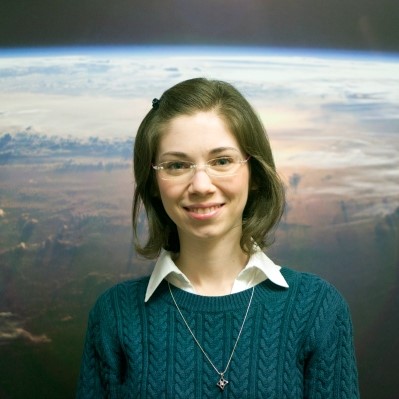
Dr. Robert Howie is a Research Fellow at Curtin University's School of Earth and Planetary Sciences, affiliated with the Faculty of Science and Engineering. He holds roles as Engineering Project Lead for the FireOPAL Space Domain Awareness Partnership and Unit Coordinator for the AERO3000 Space Systems Design course. Previously, he served as Research Engineer and DFN Technician for the Desert Fireball Network (DFN). His primary research focuses on Space Systems, Small Spacecraft, Intelligent Imaging Systems, Space Domain Awareness, Planetary Science, and Fireball Camera Networks. Robert's work bridges engineering expertise with interdisciplinary collaboration at Curtin's Space Science and Technology Centre. His research interests center on advancing space technology and planetary science through projects like the Desert Fireball Network, which tracks meteorites to understand solar system dynamics. He has contributed to CubeSat propulsion systems, meteoroid trajectory modeling, and global fireball observation networks. His engineering leadership in FireOPAL aims to enhance Australia's space domain awareness capabilities. Key contributions include developing automated observatories for the DFN and Global Fireball Observatory, as evidenced by his PhD thesis. His publications span meteorite recovery techniques, orbital analysis, and CubeSat thruster design. While no awards are explicitly listed, his involvement in high-impact collaborations like FireOPAL and the Desert Fireball Network underscores his scholarly impact. Robert advises projects in space systems design and mentors students through coursework. His work interfaces with global initiatives like the Hayabusa-2 mission and OSIRIS-REx observations, demonstrating cross-border scientific collaboration. He is actively engaged in advancing Australia's space sector through research and educational outreach.
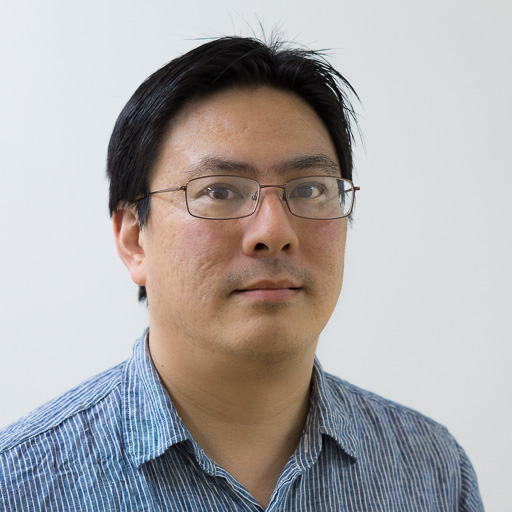
Sam M Dakka is an Assistant Professor in the Department of Mechanical, Materials and Manufacturing Engineering at the University of Nottingham, Faculty of Engineering. He previously served as a Senior Lecturer at Sheffield Hallam University and has held industrial engineering roles at GE Aviation and Honeywell Aerospace. His academic journey includes postdoctoral research at the University of Hawai'i at Manoa and UC Davis in collaboration with NASA. Ph.D. in Aerospace Engineering, University of Maryland (2002) His research spans combustion, propulsion, fluid dynamics, and aerospace sealing technologies. Key interests include alternative fuels, microgravity combustion, trapped vortex combustors, CubeSat propulsion, space debris capture, and aerodynamic flow control. His work integrates experimental, computational, and theoretical approaches to solve complex aerospace engineering challenges. Recent publications highlight advancements in biofuel combustion, flame stability, heat transfer in micro-channels, and innovative propulsion systems such as pulsed plasma and nuclear thermal thrusters. His work on shape-shifting wings and humpback whale-inspired tubercles demonstrates a strong interest in biomimetic and adaptive aerospace design. 2017 Best Paper Award - Design, Development and Testing of Shape Shifting Wing Model, MDPI AG Dr. Dakka has actively contributed to the academic community through peer review for journals including Aerospace , Energies , and Sensors . His research often involves interdisciplinary collaboration and addresses both fundamental and applied aspects of aerospace engineering. He has also explored topics in engineering education, including open educational resources and student engagement tools like Socrative. His work supports future aerospace systems, including very low Earth orbit (VLEO) satellites, space habitability for long-term missions, and sustainable propulsion technologies. He is a Senior Member of the American Institute of Aeronautics and Astronautics (AIAA), underscoring his active engagement in the aerospace community.
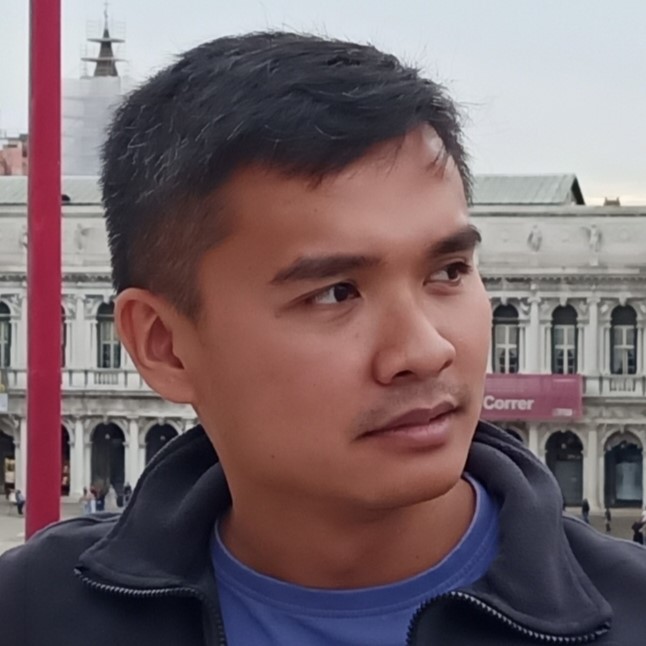
Nikolas Pfaffenzeller is a Researcher at the Chair of Astronomical & Physical Geodesy within the Department of Aerospace and Geodesy at the Technical University of Munich (TUM). His work focuses on advancing satellite gravimetry through innovative small satellite constellations and formations for Earth observation. He collaborates extensively with Professor Roland Pail and participates in major research initiatives including the CubeGrav Project, DFG Research Unit NEROGRAV, and ESA missions MAGIC/Science and QSG4EMT. His research interests center on next-generation gravity field missions using miniaturized satellite technology. Pfaffenzeller investigates temporal gravity field retrieval capabilities, ocean tide aliasing reduction through co-estimation techniques, and the impact of tone errors on gravity field solutions. His work addresses critical challenges in observing sub-daily mass changes in the Earth system and developing cost-effective alternatives to traditional gravity missions. Analysis of his publication record (2018-2025) reveals a strong focus on CubeSat constellations for gravity field retrieval, with particular emphasis on orbital configuration optimization, temporal resolution capabilities, and error mitigation strategies. His research bridges theoretical mission design with practical implementation considerations for future satellite gravimetry systems. Pfaffenzeller actively supervises Master's students, having guided thesis projects on optimal orbit constellations for reducing temporal aliasing and CubeSat mission design for gravity field observation. His research is supported through participation in multiple DFG and ESA-funded projects focusing on advancing gravity field measurement technologies. He contributes to the DFG Research Training Group UPLIFT and participates in the Spring School NEROGRAV 2025, demonstrating his engagement with the next generation of geodetic scientists. His work with the Engineering Institute for Astronomical and Physical Geodesy positions him at the forefront of developing next-generation Earth observation systems using miniaturized satellite technology.
Emil Atz is a Researcher at Boston University affiliated with the Dept. of Astronomy, Mechanical Engineering, and Electrical and Computer Engineering. His work focuses on heliophysics, space instrumentation, and plasma physics, particularly related to solar and magnetospheric phenomena. He is actively involved in CubeSat missions like CuPID and lunar missions such as LEXI, advancing X-ray imaging techniques for space observation. His research emphasizes cross-disciplinary collaboration, leveraging innovations in detector design, plasma dynamics, and space engineering. Recent projects include studying magnetopause reconnection, solar wind interactions, and developing calibration methods for space-based instruments. He advocates for inclusivity in heliophysics through educational initiatives and community engagement. Key contributions include advancing X-ray imaging for magnetospheric studies, analyzing LEXI's quantum detection efficiency, and troubleshooting on-orbit anomalies in the CuPID CubeSat. His work bridges theoretical models with practical instrumentation, informing future space missions and observational strategies.
Luisa Capannolo is a Research Scientist at Boston University working in the Department of Astronomy. She originally hails from L'Aquila, Italy, and moved to the United States in 2014 to pursue her PhD at Boston University after obtaining her Bachelor's and Master's degrees in Physics and Space Physics from the University of L'Aquila in Italy. Education: PhD in Astronomy - Boston University - 2020 Laurea Magistrale (Master's Degree) in Physics (Major: Space Physics & Astrophysics) - University of L'Aquila (Italy) - 2014 Laurea Triennale (Bachelor's Degree) in Physics - University of L'Aquila (Italy) - 2011 Luisa's research focuses on Space Physics, specifically the precipitation of energetic particles into Earth's upper atmosphere driven by plasma waves in the magnetosphere. Her work involves analyzing data from various spacecraft including high-budget missions like Van Allen Probes and POES, as well as low-budget CubeSats like FIREBIRD and AC6. She has developed innovative machine learning techniques, particularly LSTM-based deep learning models, to automatically identify and classify electron precipitation events by their driving mechanisms (wave-driven vs. current sheet scattering). Her research has significant implications for understanding space weather effects and atmospheric chemistry. Analysis of her publication record reveals a strong focus on relativistic electron precipitation phenomena, with a clear evolution toward incorporating machine learning techniques to solve complex classification problems in space physics. Her recent work demonstrates increasing sophistication in applying deep learning to analyze satellite data and categorize precipitation events by their underlying physical mechanisms. Scientific Awards: AGU 2021 Fred L. Scarf Award for outstanding dissertation in solar-planetary science Young Scientist Award at URSI 2021 Honorable Mention at URSI 2020 Student Paper Competition Outstanding Student Presentation Award at AGU 2018 Best student poster award at GEM 2018 Luisa has secured significant research funding as PI and Co-PI on multiple NASA and NSF grants totaling over $1.5 million. She mentors both undergraduate and graduate students at Boston University, including primary supervision of Yi-Ting Chen and Andrew Staff, and co-supervision of Sheng Huang and Alec Daily with Prof. Wen Li. Her work bridges space physics with machine learning, creating novel approaches to analyze complex space environment data.
Cadin Connor serves as a Research Fellow at Boston University with cross-departmental affiliations spanning the Department of Astronomy, Department of Mechanical Engineering, and Department of Electrical and Computer Engineering. Research focuses on space exploration systems and phenomena, including space tourism viability analysis, CubeSat development for solar-terrestrial boundary observation (CuPID mission), lunar telescope deployment, and characterization of the Moon's exosphere exhibiting comet-like properties. Key expertise integrates astrophysical observation with aerospace engineering for small satellite platforms. No scientific awards, student advisement records, or grant details are documented in available sources. Laboratory affiliations and team structures remain unspecified in current public profiles.
Ewan Douglas is an Associate Professor in the Department of Astronomy and an Associate Astronomer at Steward Observatory, University of Arizona. Joining in Spring 2019, he leads the UA Space Astrophysics Laboratory (UASAL) and focuses on developing advanced space instrumentation for exoplanet imaging and astrophysical research. Education: B.S. in Physics (Tufts University, 2008), Ph.D. in Astronomy (Boston University, 2016) Prior Roles: Postdoctoral researcher at MIT's Space Telecommunications, Astronomy, and Radiation Laboratory His research spans adaptive optics , interferometry , and high-contrast imaging to detect Earth-like exoplanets. He pioneered CubeSat-based technologies for space telescopes, including the Deformable Mirror Demonstration Mission (DeMi) and interferometric coronagraphy experiments via sounding rocket missions. Dr. Douglas integrates outreach into his work, teaching at the University of Arizona's Astronomy Camp on Kitt Peak and Mount Lemmon since 2006 and serving as a co-investigator for the TIMESTEP program to support underrepresented students in STEM.
Daniel Oi is a Reader in the Computational Nonlinear and Quantum Optics (CNQO) group at the Department of Physics, University of Strathclyde, under the Faculty of Science. He is also affiliated with SUPA (Scottish Universities Physics Alliance), Ocean, Air and Space, and StrathCyber. He holds an honorary Senior Lecturer position at the University of Bristol's Merchant Venturers School of Engineering (2020–2023). He is actively involved in quantum research and is accepting PhD students. BSc Hons Physics, University of Western Australia (1995) BEng Hons Mechanical Engineering, University of Western Australia (1997) MASt (Part III Mathematics), University of Cambridge (1999) PhD in Quantum Channels, Mixed States, and Interferometry, University of Oxford (2002) Daniel Oi's research spans fundamental quantum theory, quantum engineering, quantum computation, and quantum space technologies. His work emphasizes quantum communication, quantum optics, and quantum information, with applications in space-based quantum key distribution and satellite quantum networks. He explores quantum retrodiction, entanglement, and quantum metrology, bridging theoretical models with experimental implementations. His research contributes to UN Sustainable Development Goals, particularly in education and technological innovation. His recent publications (2020–2025) show a strong focus on space quantum communication, including satellite QKD, quantum repeaters, atom interferometry, and radiation-hardened photodetectors. His work combines theoretical advances with practical engineering for space deployment, emphasizing performance under finite resources and real-world constraints. Key themes include quantum networking, entanglement distribution, and quantum-enhanced sensing using interferometric techniques. He received the recognition of being a founding member of QUISCO (Quantum Information Scotland Network) in 2008. Daniel Oi has been a principal or co-investigator on multiple research projects, including EPSRC-funded CASE accounts, the DTP 2224 studentship, NPL iCASE on quantum transduction, the Integrated Quantum Networks Hub, and ESA’s VOLT Mission. He has hosted academic visitors, organized workshops, and delivered invited talks globally. He supervises research students and contributes to datasets in quantum scheduling and state amplification. He is actively involved in professional activities, including organizing the INSQT Workshop 5, speaking at the Satellite Quantum Key Distribution event, and participating in quantum networks and gravity workshops. His lab, the CNQO group, focuses on computational and theoretical aspects of nonlinear and quantum optics, supporting satellite quantum technologies and foundational quantum research.
Brian D. Iverson is a full Professor in the Department of Mechanical Engineering at Brigham Young University, where he leads the Flux Lab. His academic journey includes a Ph.D. and M.S. in Mechanical Engineering from Purdue University and a B.S. from Brigham Young University. Dr. Iverson's research bridges nanoscale thermal phenomena with industrial-scale applications, focusing on Enhanced convective heat transfer Condensation on superhydrophobic surfaces Microfabrication of sensors and actuators Thermal energy storage Solar absorptive surfaces Renewable power systems His publications span 15 recent articles (2025-2024) covering sCO2 Brayton cycles, biomass co-firing, condensation dynamics, and radiative properties. Key trends include power system integration, thermal management for aerospace, and advanced biosensor development. Scientific accolades include NSF CAREER Award (2018-2024) Fulbright U.S. Scholar in Germany (2021-2022) As an educator, he has taught graduate and undergraduate courses in Convective Heat Transfer (ME EN 643) Intermediate Heat Transfer (ME EN 540) Fluid Mechanics (ME EN 312) Capstone Senior Design Coaching He has advised graduate students at Stanford, Purdue, and University of Colorado, while current lab members work on thermal gradient gas chromatography, origami-inspired radiators, and nanotube-based biosensors.
Prof Zhen (Jeff) Luo is a Professor at the School of Mechanical and Mechatronic Engineering at the University of Technology Sydney (UTS). Since 2012, he has led the Advanced Metamaterials & Metastructures (AMM) and Engineering Computation and Optimisation (ECO) research groups, focusing on multi-disciplinary engineering innovations. Expertise : Advanced materials design, topology optimization algorithms, additive manufacturing, and computational mechanics. Education : PhD in Mechanical Engineering from Huazhong University of Science and Technology (2005). His research bridges Mechanical, Structural, Aerospace, and Biomechanical Engineering , developing cutting-edge metamaterials and computational methods. Recent work includes two-scale lattice optimization , stochastic bandgap analysis , and machine learning-aided virtual modeling for structural reliability. Key contributions span 3D-printed heat sinks , frequency-selective surfaces , and hydrogen storage systems . As a World’s Top 2% Scientist (Stanford, 2019–present), he has secured over AUD $7 million in grants, including from the Australian Research Council (ARC) and National Intelligence Discovery Research Grants (NI220100074). Awards : IAAM Scientist Award, IAAM Fellow. Leadership : Editorial roles in Structural and Multidisciplinary Optimization , Frontiers in Bioengineering and Biotechnology , and organizing roles in 21 international conferences.
Lorenzo Sabug Jr is a Research Associate in the Department of Electrical and Electronic Engineering at Imperial College London's Faculty of Engineering. He currently serves as co-investigator for the EPSRC-funded grant 'Concurrent Learning and Control of Large-Scale Phenomena', collaborating with Prof. Eric Kerrigan and Prof. Guillermo Rein on methodological research in physics-informed machine learning and dual control. His educational background includes: Ph.D. (cum laude) in Information Engineering from Politecnico di Milano, Italy (2023) M.Sc. in Electrical Engineering, Information Technology, and Computer Engineering from RWTH Aachen University, Germany (2016) B.Sc. in Computer Engineering from University of the Philippines Diliman, Philippines (2012) Lorenzo's research centers on the intersection of physics-informed machine learning and predictive control, with particular expertise in black-box optimization techniques. His work bridges theoretical developments with practical applications across diverse engineering domains, from emergency response to environmental phenomena like wildfires to spacecraft design and power grid management. His methodological contributions focus on the Set Membership Global Optimization (SMGO) framework and its variants, which address optimization problems where objective functions and constraints cannot be expressed analytically. This approach has proven valuable for experimental design and simulation-based engineering applications where traditional analytical methods fail. Lorenzo's publication record demonstrates consistent advancement from foundational optimization theory toward integrated learning-control frameworks. His work spans multiple engineering disciplines while maintaining a core focus on solving complex design problems through innovative optimization techniques when analytical solutions are not feasible. Recent publications emphasize contextual optimization and physics-informed approaches, showing evolution toward more sophisticated integration of physical models with data-driven methods. Key achievements include: Development of the SMGO and SMGO-Δ optimization frameworks as open-source toolboxes Application of optimization techniques to spacecraft attitude control, induction heating systems, and power grid management Being named co-investigator for the EPSRC-funded grant 'Concurrent Learning and Control of Large-Scale Phenomena' Lorenzo serves as an occasional reviewer for prestigious journals including Automatica, International Journal of Control, and IEEE Control Systems Society publications. He actively mentors graduate students through formal programs like the Graduate Mentorship and Assistance Program (GradMAP Philippines) and in personal capacity, guiding the next generation of researchers in optimization and control theory.
Alejandro Levi serves as an Adjunct Research Fellow at the Centre for Astrophysics, University of Southern Queensland (UniSQ), focusing on interdisciplinary research bridging astrophysical sciences and space engineering. His academic credentials include: Graduate Diploma of Science (GDipSc) from University of Southern Queensland Master of Engineering in Space Systems (MEngSpaceSys) from Stevens Institute of Technology Levi's research integrates two critical domains: astrophysical investigations into exoplanetary systems and planetary formation processes, alongside engineering development of miniaturized satellite platforms and scientific instrumentation. His work on CubeSats enables cost-effective space missions for astrophysical data collection, demonstrating practical applications of theoretical astrophysics through spacecraft design innovation. He maintains active engagement with global scientific communities through these professional affiliations: Graduate Member, American Astronomical Society (AAS) Fellow, British Interplanetary Society (FBIS) Senior Member, American Institute of Aeronautics and Astronautics (AIAA) Member, American Physical Society (APS) Astrophysics Division Senior Member, Institute of Electrical and Electronics Engineers (IEEE) Member, International Council on Systems Engineering (INCOSE) Member, Project Management Institute (PMI) As a core researcher at UniSQ's Centre for Astrophysics, Levi contributes to the institution's space science initiatives through his dual expertise in observational astrophysics and spacecraft systems engineering.
Joakim Slotte is a Researcher at Åbo Akademi University's Faculty of Science and Engineering , affiliated with the PET Center Technologies for a sustainable future . His work spans interdisciplinary domains, including space engineering , food composition analysis , nuclear physics , and materials science . Research Focus: Slotte's publications highlight expertise in CubeSat design and in-orbit mission analysis (2021), radiation chemistry for radiopharmaceuticals (2025), and nutritional biochemistry of wild bilberries (2023). His career demonstrates technical proficiency in microsatellite systems , nuclear forward scattering , and food risk assessment . Affiliations: Åbo Akademi University Faculty of Science and Engineering PET Center Technologies for a sustainable future Technical Contributions: Slotte has pioneered methods for CubeSat integration and gas target optimization in nuclear production. His work intersects space technology and food chemistry , addressing both engineering challenges and superfood safety .
Claus Melvad is a Professor at the Department of Mechanical and Production Engineering, School of Engineering, Aarhus University. His primary research focuses on developing robotic systems and metrology equipment for extreme environments, including Arctic and rainforest regions. Expertise: Robotics, Metrology, Autonomous Vehicles, Sensor Systems Affiliation: Aarhus University School of Engineering Research Highlights: Melvad specializes in creating rugged, low-cost instruments for environmental monitoring. His work includes: Autonomous drones for biodiversity and disease monitoring in tropical regions Robotic ocean profilers for polar environments Modular autonomous surface vehicles (ASVs) for climate research Custom sensor systems for extreme condition calibration Publication Trends: Recent projects emphasize drone technology for remote biodiversity monitoring, low-cost Arctic instrumentation, and autonomous sampling systems. Keywords include environmental robotics, sensor development, and extreme environment engineering. Projects: Lead initiatives like GlacierPro (autonomous methane profiler), DISCO (student CubeSat program), and NORDACC (autonomous surface vehicle).