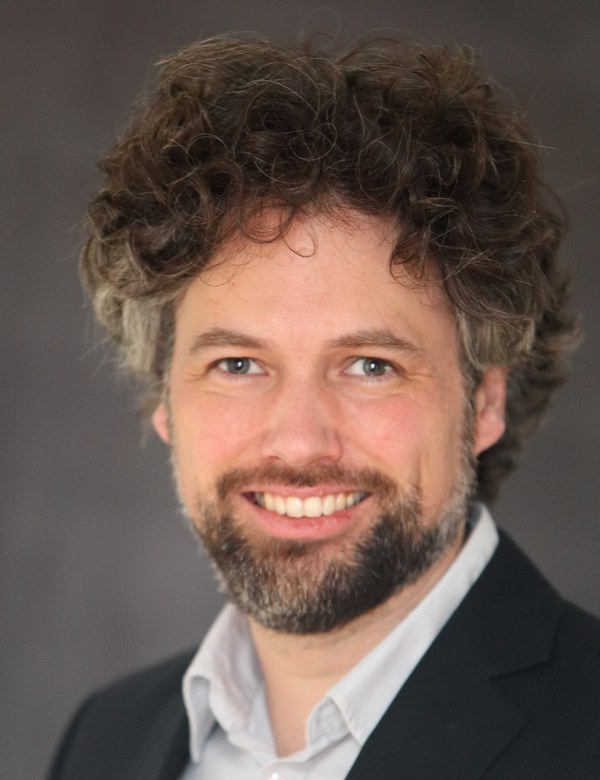
Izabela Szlufarska is a Professor in the Department of Materials Science & Engineering at the University of Wisconsin-Madison College of Engineering, with affiliations in Nuclear Engineering & Engineering Physics. Her research focuses on computational materials science, nanomechanics, radiation effects, and defect dynamics. PhD (2002): University of Tennessee, Knoxville MS (1999): Wroclaw University of Technology Key research areas include radiation tolerance of ceramics , machine learning for materials discovery , amorphous shear band dynamics , and tribochemical aging mechanisms . Recent work emphasizes molten salt thermophysics and high-entropy ceramics . 2025: MRS Board of Directors 2024: TMS Light Metals Award 2023: TMS Brimacombe Medalist 2016: WARF Romnes Fellowship 2008: NSF CAREER Award She teaches graduate courses in materials research and special topics. Awards highlight her leadership in radiation materials science and mentorship excellence.
Bernard Paul Henrissat is a Professor at the Department of Biotechnology and Biomedicine , Technical University of Denmark. He is affiliated with the Section for Protein Chemistry and Enzyme Technology and works on enzyme discovery. His ORCID is 0000-0002-3434-8588, and he can be reached at behen@dtu.dk. Research Interests: Henrissat's work focuses on enzyme biochemistry, polysaccharide structure and function, glycan analysis, glycoside hydrolases, comparative genomics, and carbohydrate active enzymes (CAZy). He investigates fungal and bacterial enzyme systems involved in polysaccharide degradation, with applications in marine biotechnology, biomass conversion, and microbiome research. Projects: He supervises multiple PhD projects including Bioinformatics of the Glycosylation Machinery of Archaea , Dissecting Dietary Glycan Recognition Across the Microbiome , and Novel Functionalities of Carbohydrate Processing Enzymes . These projects span from 2021 to 2027 with international collaborations. Publications: Henrissat has published extensively on enzyme discovery, including recent 2025 papers on Sordariomycetes fungi biotechnology, metagenomic cellulose conversion, bacterial polysaccharide lyases, CAZy database tools, and Aspergillus nidulans comparative genomics.
Ada-Ioana Bunea is an Associate Professor at the Technical University of Denmark, affiliated with the National Centre for Nano Fabrication and Characterization. Her research focuses on advanced manufacturing techniques and smart material systems for biomedical and environmental applications. Active in 4D printing, microrobotics, and biosensor development Supervises multiple PhD projects on adaptive microrobots and vaccine delivery systems Recipient of the AEG Elektronfonden Årets Juniorpris (2021) Her recent publications highlight trends in light-controlled multimaterial microrobots, hydrogel-based smart systems, and polymer graphitization studies. The research emphasizes precise microfabrication techniques and responsive material design. Scientific Awards: AEG Elektronfonden – Forsknings- og Uddannelseslegat, Årets Juniorpris (2021) As a supervisor, she contributes to projects such as Smart Polymer Microrobots for Cargo Transport and Additive Manufacturing of Microsystems for Vaccine Delivery, funded by the Independent Research Fund Denmark. Collaborations involve key institutions and researchers in nanofabrication and biomedical engineering.
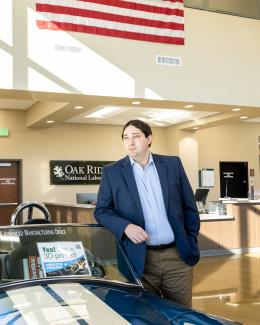
Dr. Michael Kirka is a Senior Research Staff and Group Leader at Oak Ridge National Laboratory (ORNL), specializing in additive manufacturing and high-temperature materials. His work focuses on overcoming non-weldability challenges and enabling materials with enhanced operational capabilities, such as Ni-base superalloys and refractory metals, for extreme environments. Research interests include Additive manufacturing of high-temperature alloys Microstructural engineering for mechanical behavior Modeling and simulation of fatigue and thermal processes Hydrogen embrittlement resistance in materials Texture evolution in 3D-printed metals Recent publications highlight trends in Cycle-jump acceleration methods for fatigue simulation Data-driven alloy design Microstructure heterogeneity analysis Repair techniques for gas turbine components Origami-inspired metallic structures Kirka earned a B.S. in Materials Science (2007) from the University of Michigan and M.S. (2010) and Ph.D. (2014) in Mechanical Engineering from Georgia Institute of Technology. He leads interdisciplinary teams integrating metallurgy, data science, and computational modeling.
Roland Logé is an Associate Professor at École Polytechnique Fédérale de Lausanne (EPFL), affiliated with the School of Engineering (STI) and the Materials Institute (IMX) . He leads the Laboratory of Thermomechanical Metallurgy (LMTM) and contributes to doctoral programs in Advanced Manufacturing . Education: B.S. in Materials Engineering (1994), Université Catholique de Louvain (Belgium) M.S. in Mechanics (1995), University of California, Santa Barbara (USA) Ph.D. in Metal Forming (1999), Mines Paristech-CEMEF (France) Research Interests focus on microstructure design in metallic alloys , thermo-mechanical processing , and additive manufacturing . His work bridges experimental characterization and numerical modeling to optimize properties in stainless steels , magnesium alloys , nickel superalloys , and bulk metallic glasses . Scientific Awards 2022: Albert Portevin Medal , French Metallurgy and Materials Society (SF2M) 2021: THERMEC Distinguished Award 2008: Alcan Prize , French Academy of Sciences Advising includes mentoring 20+ PhD students in areas like selective laser melting , grain refinement , and phase transformations . His grants involve collaborations with CERN and industrial partners in nuclear and aerospace sectors.
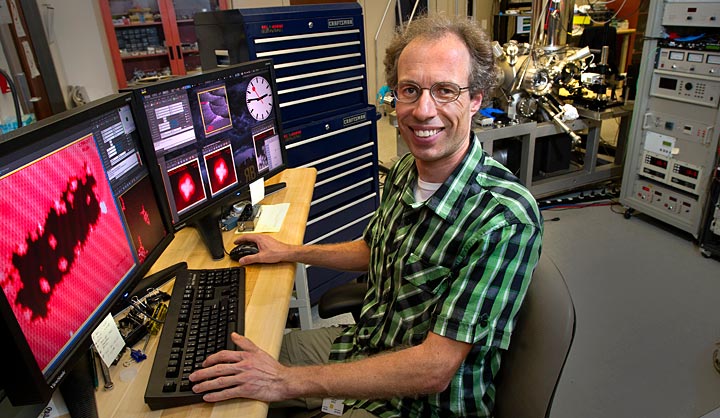
Dr. Percy Zahl is a Senior Staff Scientist at Brookhaven National Laboratory's Center for Functional Nanomaterials , specializing in Interface Sciences/Catalysis . With over two decades of experience, he leads the Low Temperature (LT) STM and NC-AFM/HR-AFM facility , providing world-class expertise in high-resolution imaging and experimental services. He is the lead developer of the open-source GXSM software since 2000, a globally used platform for scanning probe microscopy. Education : 1995-1996: Diplom Thesis in Physics, Leibniz University Hannover 1996-2000: Ph.D. in Physics, Leibniz University Hannover Research Interests span surface science , epitaxy , scanning probe microscopy (STM/AFM) , and instrumentation R&D . His work focuses on atomic-scale imaging , graphene nanoribbons , molecular binding phenomena , and AI-assisted microscopy . He explores quantum transport , spintronics , and low-temperature techniques . Scientific Impact includes the 2012 George T. Hanyo Award (AVS) for his contributions to open-source microscopy software. His publications cover graphene synthesis , molecular electronics , and nanoscale force quantification , with over 20 articles from 2025-2022 alone.
Professor Janine Kavanagh is a volcanologist at the University of Liverpool , where she holds the Chair of Volcanology (2023-present). She pioneered the establishment of the MAGMA Lab in 2014 to investigate volcanic plumbing systems through experimental and numerical approaches. Her expertise spans magma ascent dynamics, dyke/sill propagation, and volcano-hazard modeling. UKRI Future Leaders Fellow (2020-2027) Executive Editor, Tektonika (2022-present) President, IAVCEI Commission on Volcanic Plumbing Systems (past) Her research interests focus on magma-fluid interactions, monogenetic volcanism, and geothermal system characterization. She employs analogue experiments using PIV (Particle Image Velocimetry) and integrates field studies with computational models to unravel magma propagation mechanics and their surface expressions. Her recent publications reveal trends in magma flow quantification, geothermal fluid-rock reactions, and volcanic monitoring techniques. Articles span numerical validations, CO2-brine interactions, multi-scale dyke analysis, and open science initiatives. Royal Society grant (2023-2025): Hydrothermal alteration in geothermal systems NERC grant (2023): Discovery science in magma dynamics UKRI FLF (2020-2027): Linking indirect observations with magma processes As a geoscience educator , she co-founded GeoHub Liverpool , a diamond open-access platform for educational resources. She led the Applied Geology and Geohazards of the Canary Islands module and contributed to seismic monitoring studies via her livestreamed field experiments .
Martin Gebhardt is a prominent researcher in ultrafast optics and fiber laser systems, with significant contributions to thulium-doped laser engineering, high harmonic generation, and mid-infrared photonics. His work focuses on advancing high-power ultrashort pulse delivery, coherent beam combination, and nonlinear optical phenomena in gas-filled and solid-core fibers. Research Interests : Gebhardt’s research spans ultrafast laser dynamics , nonlinear compression , and mid-IR spectroscopy . He explores applications in industrial processing , quantum optics , and soft x-ray generation , leveraging innovative fiber architectures and soliton physics. Publication Trends : His recent articles highlight advancements in high-energy soliton-driven systems , gas-filled fiber interactions , and coherent laser stabilization . Common subfields include terahertz radiation , carbon-edge spectroscopy , and backside semiconductor machining .
Stephen Warren is an Associate Professor of Chemistry & Biochemistry at Gonzaga University in the College of Arts and Sciences. With a Ph.D. in Medicinal Chemistry from the State University of New York at Buffalo (1996), he teaches courses ranging from foundational General Chemistry to advanced Chemical Bibliography and Thesis supervision. His research spans drug discovery , enzyme inhibition , and fluorine chemistry , often involving undergraduate students in collaborative investigations. Warren’s scholarly output includes innovative work on: Protein-ligand structure databases (e.g., Iridium ) Allosteric site inhibitors for β-carbonic anhydrase Fluorinated molecule synthesis p38 MAP kinase targeting compounds Polymorphic chalcone characterization He has secured grants from the National Science Foundation and Washington Technology Center for projects like nanomaterial-based drug delivery systems and lactate analog development. His Google Scholar profile reflects ongoing contributions to crystallography and structural analysis of bioactive compounds.
Professor Eliodoro Chiavazzo is a leading academic at Politecnico di Torino's Department of Energy (DENERG), where he focuses on energy storage, heat and mass transfer, and thermal energy systems. He serves as a member of the CleanWaterCenter@PoliTo and contributes to editorial boards of Scientific Reports and Entropy . His research spans computational engineering and energy processes engineering, aligning with UN SDGs 6, 7, and 9. He mentors PhD students in energy-related topics and participates in interdisciplinary projects. Current Appointments : Full Professor at Politecnico di Torino External Roles : Visiting Researcher at Princeton University (2013), Researcher at ETH Zurich (2009) His research centers on energy storage through innovative technologies, including the EU-funded BIG-MAP project for sustainable battery materials and the SoFiA project for soap-film-based artificial photosynthesis. He integrates machine learning with physical modeling to accelerate materials discovery and develops scalable solutions for CO2-to-fuel conversion. His work also explores foam and nanoparticle-enhanced thermal storage, with applications in building efficiency and industrial processes. Professor Chiavazzo supervises a research group (M3ES) and has contributed to numerous patents in water purification and hydrogen production. He teaches advanced courses on energy conversion, transport, and storage across multiple engineering disciplines. His scientific output combines theoretical modeling, experimental validation, and practical implementation in renewable energy systems.
Daniele Marchisio is a Full Professor at the Department of Applied Science and Technology (DISAT) at the Polytechnic University of Turin. He serves as a Member of the Equality Committee and the University Open Access Commission. His academic journey began with a degree in Chemical Engineering from the Polytechnic University of Turin in 1997, followed by a PhD in 2001 from the same institution in collaboration with Iowa State University. His educational background includes: Bachelor's degree in Chemical Engineering (cum laude) from Polytechnic University of Turin (1997) PhD in Chemical Engineering from Polytechnic University of Turin in collaboration with Iowa State University (2001) Professor Marchisio's research focuses on multiscale computational methods for polydisperse particulate and multiphase flows. His work spans several key areas including precipitation and crystallization processes, particle aggregation and dispersion, nanoparticle formation in combustion, bubble columns, gas-liquid stirred reactors, turbulent liquid-liquid dispersions, and fluidized beds. He combines molecular dynamics with continuum modeling to develop innovative approaches in computational fluid dynamics, dissipative particle dynamics, mesoscopic modeling, and population balance methods. His research has significant applications in battery materials production and recycling, pharmaceutical processes, biomethanation, and aqueous phase reforming. His publication record demonstrates strong focus on multiphase systems , crystallization processes , and battery technology . Recent work shows increasing integration of machine learning techniques with traditional computational methods, particularly for parameter identification and optimization in complex chemical processes. His research bridges fundamental computational methods with practical industrial applications across energy, materials, and chemical engineering domains. Professor Marchisio has received several prestigious scientific awards: Most cited paper for Chemical Engineering Science (Elsevier, 2007) Sciencedirect top 25 most downloaded article (Elsevier, 2010) Abilitazione Scientifica Nazionale - prima fascia - 09/D2 (MIUR, Italy, 2014) Highly cited paper for the International Journal of Multiphase Flow (Elsevier, Netherlands, 2016) As an academic advisor, Professor Marchisio has supervised numerous PhD students working on cutting-edge research topics including magnesium hydroxide precipitation, lithium-ion battery modeling, and computational fluid dynamics applications. His research is supported by significant funding from multiple sources including European Union projects (H2020, Horizon Europe), national research programs (PRIN), and industry collaborations. Current major projects include BATCAT (Battery Cell Assembly Twin), NESSF (Non-equilibrium self-assembly of structured fluids), HPC Spoke 7, BIG-MAP, and SEArcularMINE. Professor Marchisio leads the Multiscale Modelling for Materials Science and Process Engineering research group within DISAT. His team specializes in developing integrated computational frameworks that bridge molecular-scale phenomena with continuum-level engineering applications. The group maintains strong collaborations with international institutions including Beijing University of Chemical Technology, CSIRO in Melbourne, and University College London. Their work has direct applications in sustainable engineering, clean energy technologies, and advanced materials development aligned with several UN Sustainable Development Goals.
PD Dr. Jens Elgeti is a researcher at Forschungszentrum Jülich's Institute for Advanced Simulation (IAS), specifically within the Theoretical Physics of Living Matter group (IAS-2). Based at the Wilhelm-Johnen-Straße campus in Jülich, Germany, his work bridges theoretical physics and biological systems through advanced computational modeling. His research focuses on active matter physics with particular emphasis on cellular mechanics, tissue dynamics, and microswimmer behavior. Key interests include: Mechanotransduction via membrane potential Active nematic systems in biological contexts Flagellar and ciliary propulsion mechanics Tissue morphogenesis through mechanical instabilities Cytoplasmic crowding homeostasis Collective dynamics of self-propelled biological entities Analysis of his recent publications (2023-2025) reveals a strong focus on mechanical regulation of biological processes, particularly how physical forces govern cellular behavior and tissue organization. His work frequently employs agent-based modeling, hydrodynamic simulations, and theoretical frameworks from soft matter physics to address fundamental questions in biophysics. While no specific scientific awards are documented in the provided materials, his research program demonstrates significant impact through high-output publication in key biophysical domains. His work provides critical theoretical foundations for understanding phenomena ranging from bacterial growth to multicellular tissue organization. As a researcher at one of Europe's leading interdisciplinary research centers, Elgeti contributes to Forschungszentrum Jülich's mission in the Helmholtz Association's Matter research area. His group develops computational approaches that bridge scales from molecular dynamics to tissue-level phenomena, with potential applications in regenerative medicine and synthetic biology.
Leora Dresselhaus-Marais is an Assistant Professor at Stanford University with appointments in the Department of Materials Science & Engineering, Mechanical Engineering (by courtesy), and Photon Science at SLAC National Accelerator Lab. Her research focuses on modernizing 19th-century materials processing methods through multiscale characterization and modeling, targeting sustainability in steelmaking, metal 3D printing, and critical material extraction. PhD, Physical Chemistry, MIT (2017) BA & MSc, Chemistry, University of Pennsylvania Her work develops ultrafast X-ray microscopy tools (100 fs resolution) to study defect dynamics across length scales—from atomic bonds to blast furnaces. Key projects include sustainable hydrogen-based ironmaking, transonic dislocation propagation in diamond, and mesoscale characterization of additive manufacturing processes. Recent publications highlight operando imaging of laser powder bed fusion, dark-field X-ray microscopy innovations, and defect-driven material behavior under extreme conditions. She received the AFOSR YIP Award (2023) and Stanford fellowships including Gabilan, Terman, and Precourt Center appointments. Advisor to 11 doctoral students Principal Investigator at Stanford PULSE Institute Develops multimodal ultrafast microscopes
Prof. Dr. Sebastian Schiffner serves as a Professor at the Technical University of Central Hesse within the Department of Mechanical Engineering and Energy Technology. He is affiliated with the Institute of Optics and Microsystems (IOM) in Gießen, Germany, where his office (C11.1.27) is located at Wiesenstrasse 14. His contact includes email sebastian.schiffner@me.thm.de and phone 0641 / 309 - 2117, with office hours held Mondays from 1:00 PM to 2:00 PM by email appointment. His research expertise spans critical engineering domains: Measurement technology for precision optics Data science applications in industrial systems Machine Learning and Data Analysis for image processing Industrial image processing for quality control Optical instruments and measuring devices His publication history reveals consistent innovation in merging data-driven methodologies with optical measurement systems. Key contributions include ultra-precision alignment techniques for lens manufacturing, in situ characterization of optics via deflectometry, and adaptive image processing solutions for high-end optical production. This work bridges mechanical engineering, computational analysis, and optical physics to solve manufacturing challenges. No scientific awards were documented in the source materials. Details regarding student supervision or research grant acquisitions were not provided in the available documentation. Prof. Schiffner's work is centered at the Institute of Optics and Microsystems (IOM), which specializes in optical systems development, micro-optics research, and advanced measurement technologies. The institute fosters interdisciplinary collaboration in optical engineering and microsystem design.
Professor George Fern is a faculty member at Brunel University London's College of Engineering, Design and Physical Sciences , affiliated with the Chemical Engineering department. He holds a Professor academic rank and serves as Director of the Wolfson Centre for Sustainable Materials Processing and Characterisation . A chemist by training with postgraduate qualifications (BSc, PhD in Chemistry, PG Cert HE), he has been active in academia since 2006 after earlier roles at Greenwich University (1998-2005). Research Interests : Focus on polymer processing , sustainable materials , opto-electronic devices , and luminescent materials . His work integrates electron microscopy (SEM/TEM) , X-ray diffraction (XRD) , and spectroscopic techniques (UV-Vis-NIR, FTIR, Raman) with applications in horticultural films , radiation sensors , and plastic recycling technologies . Current projects include the FEUD (Field Emission Ultraviolet Device) and PFP (Providing 30% Recycled Content for Food Packaging) initiatives. Key publications span carbon dots (2022), graphene oxide memory cells (2025), and luminescent markers for recycling (2020 patent) Recent research examines social dimensions of plastics recycling through UKRI-funded projects analyzing household behaviors across UK, Spain, and Germany Scientific Awards & Recognition : Chartered Chemist status, Fellow of the Royal Society of Chemistry and Royal Microscopical Society, and successful Dragon’s Den pitch winner for academic impact. Teaching & Leadership : Module leader for Engineering Chemistry and Chemical Engineering Design Project. Directed Formula Student Projects (ICE and Electric Teams) 2006-2021. His lab facilities include UHV processing chambers , organic/inorganic synthesis labs , and electron microscopy suites .