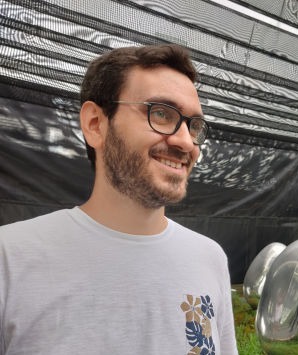
Ludovic Sacchelli is an Inria researcher (CR) affiliated with the McTAO team at the Centre Inria d'Université Côte d'Azur and the Laboratoire J.A. Dieudonné of Université Côte d'Azur. His research spans control theory, sub-Riemannian geometry, and mathematical neuroscience, focusing on optimal control, observers, and estimation problems. His work on sub-Riemannian manifolds and control systems includes stabilization techniques for non-uniformly observable systems and applications to UAV control, neural fields, and bioprocess modeling. He has contributed to heat kernel analysis, line fields interpolation, and geometric models for sound processing. His recent publications address topics like distributed state estimation in neural models, polynomial state-affine control systems, and geometric algorithms for orientation field interpolation. He has also explored observability singularities in bilinear systems and stabilization of weakly contractive systems. Teaching roles include instructing Measure Theory , Stochastic Processes , and applied mathematics at institutions such as Université Côte d'Azur, Polytech Nice, Lehigh University, and École Polytechnique. His mentorship includes supervising a Masters research project on numerical implementation of line fields interpolation in 2019.
Dr. Stefan Auer is an Associate Professor at the School of Chemistry within the Faculty of Engineering and Physical Sciences at the University of Leeds. His work bridges soft condensed matter physics, biophysics, and materials science to study biomolecular systems. Computational biophysics Soft matter physics Statistical mechanics Biomolecular self-assembly Phase transitions Nucleation His research applies theoretical and computational tools from soft matter physics to analyze phase behavior in biomolecular systems, including protein aggregation into amyloid fibrils and colloidal crystallization. He aims to understand nucleation mechanisms in biological systems and their potential as nanomaterials. Dr. Auer is affiliated with the Crystallisation and Directed Assembly research group, focusing on bridging colloidal systems, polymer physics, and protein behavior through computational modeling.
Zoë Fisher is Group Leader for Deuteration and Macromolecular Crystallisation at the European Spallation Source (ESS) in Lund, Sweden, and holds an adjunct senior lectureship in the Department of Biology at Lund University . She also leads Working Group 2 of the Chemistry of Life theme at LINXS , focusing on chemical-biology strategies to modulate biomolecular function. Dr. Fisher’s scientific journey is rooted in cell biology, molecular biology, physiology, and biochemistry, with a strong emphasis on structural biology. She employs isotope-labelling methodologies for NMR, neutron, and X-ray crystallography to tackle mechanistic questions of ligand binding, hydrogen-bond networks, electrostatic interactions, and the role of water in molecular recognition. Her current research integrates structural information from neutron and X-ray crystallography to design small-molecule modulators—ligands, substrates, inhibitors, or activators—that can fine-tune enzyme activity or alter protein conformation. Although the provided text mentions no formal awards or funded grants, her leadership roles at ESS and LINXS underscore her recognition within the structural-biology and chemical-biology communities. No laboratory or team rosters, student lists, or contact e-mail addresses were found in the supplied material.
Maxime Aubert is Professor of Archaeological Science at Griffith University, Australia, specialising in geochemical dating of early rock art and hominin fossils. He is a National Geographic Explorer and ARC Future Fellow whose discoveries have twice (2014 & 2020) been selected among the top-10 scientific breakthroughs by the journal Science . His research centres on uranium-series and other micro-analytical techniques to illuminate the timing and context of human evolution, early symbolic behaviour and the colonisation of Wallacea and Sahul. Education PhD Earth Sciences (Uranium-isotope Geochemistry), Université du Québec / INRS, 2009 Research Interests Aubert develops and applies cutting-edge geochemical methods to key questions in human evolution: Dating of Palaeolithic cave art and rock engravings Geochronology of hominin fossils and archaeological deposits Early human dispersals through Island Southeast Asia and into Australia Conservation science for Pleistocene rock-art heritage His recent publications reveal 51,200-year-old narrative art in Sulawesi, 1.04-million-year-old hominin sea-crossings to the same island, and the world’s earliest known surgical amputation (31,000 BP, Borneo), collectively reshaping global timelines of art, technology and medicine. Scientific Recognition Science journal Top-10 Scientific Breakthroughs 2014 & 2020 National Geographic Explorer ARC Future Fellowship Grants & Projects Aubert has secured > AUD 6 million in competitive funding, including ARC Discovery and Linkage projects, National Geographic grants, and industry partnerships with Google Arts & Culture. Current major projects investigate early art and occupation along the northern route to Australia, Aboriginal rock-art management in Cape York Peninsula, and the archaeology of the Great Papuan Plateau. Doctoral Supervision & Team Science He currently supervises Griffith doctoral candidates working on oxalate dating of Australian rock art and Tasmanian hand-stencil heritage, and has previously led or co-supervised PhD projects on Sulawesi underwater archaeology, Indonesian prehistoric migration, Siberian rock art, and Philippine cave archaeology. His team collaborates closely with Indonesian, Australian and European institutions, conducting large-scale field programs in Sulawesi, Borneo and Papua New Guinea.
Dr. Jenna Johnston is a Research Fellow in the Department of Chemical and Process Engineering at the University of Strathclyde. Her work focuses on crystallization processes, particularly in pharmaceutical manufacturing contexts. She contributed to the EPSRC-funded Doctoral Training Partnership project (2018-2024) as a Research Co-investigator. Research interests include lactose crystallization mechanisms, cooling optimization, and material characterization. She presented a mechanistic model for α-lactose monohydrate crystallisation at the CMAC Annual Open Day 2022. Collaborations involve Prof. Alastair Florence and Dr. Cameron Brown. Her current contact is via email at jenna.johnston@strath.ac.uk.
Dr. Katharina Edkins is a Professor at the Strathclyde Institute for Pharmacy and Biomedical Sciences, University of Strathclyde, where she leads research in supramolecular pharmaceutical materials. She joined Strathclyde in 2023, having previously held academic positions as Reader at the University of Manchester, Senior Lecturer at Queen's University Belfast, and Lecturer at Durham University. Her research expertise lies in understanding molecular interactions in pharmaceutical systems, particularly using neutron scattering techniques, NMR, and fluorescence methods. She investigates pre-crystallization states, supramolecular gels, and drug delivery platforms, with a strong focus on solution-phase dynamics and material design. Supramolecular Chemistry Pharmaceutical Materials Neutron Scattering Drug Delivery Crystallography Molecular Dynamics Her recent publications (2023–2025) demonstrate a consistent focus on solution self-assembly, solvent microheterogeneity, and molecular dynamics in binary and ternary systems, particularly relevant to drug solubilization and formulation. Techniques like neutron scattering and NMR are central to her work, with applications in taste masking, co-crystallisation, and controlled release. She has received the DST-NRF Fellowship for Early Career Researchers (2024) and is actively involved in professional leadership, including roles in the European Crystallography Association and the UK Neutron Scattering Group. DST-NRF Fellowship for Early Career Researchers from the UK (2024) Dr. Edkins is the Principal Investigator on multiple active research projects funded by EPSRC and related to particle control, microheterogeneity, and pediatric drug formulation. She supervises PhD students and collaborates with institutions across the UK and Europe. Her lab specializes in advanced spectroscopic and scattering techniques, with access to central facilities such as ISIS and ILL. She is involved in several research teams and collaborates on interdisciplinary projects involving chemistry, pharmacy, and materials science.
Dr. Kristell Le Corre Pidou is a Research Fellow in Water Reuse at Cranfield University’s Cranfield Water Science Institute. Her work focuses on advancing water reuse technologies, wastewater treatment, and phosphorus recovery. She manages the UK Water and Wastewater Networks and supports part-time MSc students in Water and Wastewater Engineering. Dr. Pidou has contributed to major projects such as the EU-funded RECLAIM WATER initiative and serves as Secretary of Water Reuse Europe. Education and Career: PhD in Struvite Crystallisation (Cranfield University, 2006) Post-Doctoral Research Fellow at Cranfield (2006–2009) Project Coordinator for the EU-funded Water and Territories project (2009–2010) Post-Doctoral Research Fellow at the University of Queensland, Australia (2010–2014) Returned to Cranfield in 2014 as Research Fellow Research Interests: Her research spans water reuse, wastewater treatment innovation, phosphorus recovery via crystallisation, constructed wetlands, managed aquifer recharge, and fluoride contamination in groundwater. She emphasizes sustainable resource recovery and environmental solutions. Grants and Collaborations: Supported by clients including DEFRA, European Commission, EPSRC, NERC, and major water utilities like Thames Water and Severn Trent. Her work aligns with industry needs and policy development for water reuse. Professional Contributions: Secretary of Water Reuse Europe, fostering industry collaboration. Her research bridges engineering, environmental science, and policy to address global water challenges.
Professor Chris John Price is a distinguished academic in the Department of Chemical and Process Engineering at the University of Strathclyde. He holds the Chair in Industrial Crystallisation and leads research focused on crystallization processes, pharmaceutical particle design, and sustainable manufacturing. His work integrates fundamental research with industrial applications, emphasizing process optimization and purification techniques. Education: PhD (1990): University of Manchester, Crystallization of 7-hydroxynaphthaline-1,3-disulphonic acid disodium salt MSc (1985): University of Manchester, Hydroxynaphthaline sulphonic acids BSc (1982): University of York Research Interests: Controlled crystallization for drug delivery Filtration and drying process optimization Process analytical technologies Sustainable pharmaceutical manufacturing Recent Projects: Includes EPSRC-funded initiatives on solvent design for sustainable processes and AstraZeneca collaboration on API recovery. His work addresses UN SDGs related to responsible consumption and industrial innovation.
Mattia Biesuz is Associate Professor at the University of Trento , Department of Industrial Engineering, where he also obtained his B.Sc., M.Sc. (both 110/110 cum laude) and Ph.D. (Excellent cum laude, 2017). He teaches courses on Materials Science, Ceramic Materials, Materials for Energy and interdisciplinary laboratories, and has been teaching assistant continuously since 2014. Education: Ph.D. in Materials, Mechatronics and Systems Engineering, University of Trento, 2014-2017 M.Sc. in Materials Engineering, University of Trento, 2010-2013 B.Sc. in Industrial Engineering, University of Trento, 2007-2010 Research interests focus on advanced ceramic processing including flash sintering, cold sintering, ultra-fast high-temperature sintering (UHS), spark plasma sintering, entropy-stabilised ceramics, polymer-derived ceramics, field-assisted ion exchange and low-temperature ceramic joining. His group explores structure–property relationships in glasses and ceramics for energy, functional and structural applications. Recent publications (2023-2025) demonstrate a clear trend toward ultra-rapid sintering technologies (UHS, flash, cold sintering) combined with additive manufacturing , high-entropy ceramics , ceramic aerogels for thermal insulation and environmental remediation, and glass strengthening by field-assisted ion exchange. The work integrates fundamental science (diffusion, electromigration, nucleation) with technological demonstrators (batteries, thermal-barrier coatings, catalytic supports, space resources). Scientific awards & honours include the MRS Postdoctoral Award 2022 , two Pfeil Awards (2021 & 2022) from IOM3-UK, the Crystals 2022 Young Investigator Award , multiple Acta Journals Outstanding Reviewer distinctions, best-paper and travel awards from MDPI journals, and the Best Master Thesis Award of his Department in 2013. Funding & leadership: He coordinates/works in several EU and national projects on flash/cold sintering and high-entropy ceramics, serves as associate editor of the Journal of the American Ceramic Society and on the editorial boards of Materials and Frontiers in Materials , and regularly evaluates proposals for the Czech Science Foundation and ECerS. Labs & teams: He leads the “Field-Assisted Sintering & Advanced Ceramics” research line within the Industrial Engineering Department, hosting numerous international visitors (post-docs from Prague, Gdańsk, Izmir, Charles University) and coordinates shared labs equipped with flash-sintering rigs, UHS furnaces, SPS, DSC/TG-GC-MS, impedance analysers, and additive-manufacturing stations.
Professor Ludger Josef Fischer is a faculty member at the Lucerne University of Applied Sciences and Arts (HSLU) in the School of Engineering & Architecture. He serves as Co-Head of the Competence Center for Thermal Energy Storage (CCTES) within the Institute of Mechanical and Energy Engineering (IME). Additionally, he is a guest lecturer at the University of the Arts in London (UAL) and ZHAW, Wädenswil for cosmetic manufacturing technologies, and has been an affiliated researcher at MIT since 2019. Dr. Fischer graduated in Mechanical and Process Engineering at RWTH Aachen and completed his PhD at Karlsruhe Institute of Technology (KIT). Before joining academia in 2013, he held significant industrial positions including head of R&D and sales at Kühni AG, managing director of Ekato Unimix, and various leadership roles within the AC Serendip group across Switzerland, Germany, and China. His primary research focuses on thermal energy storage, particularly Phase Change Materials (PCM) and Phase Change Dispersions (PCD). He investigates applications of these technologies in seasonal thermal storage, building applications, and industrial processes. His work spans fundamental research on material properties to applied engineering solutions. Additionally, he has significant expertise in mixing, dispersing, and emulsification technologies, with applications in the cosmetic industry and interface thermodynamics. His teaching portfolio includes Fluid Mechanics and Thermodynamics courses, Environmental Technology, Process Engineering, and specialized courses on Cosmetic Manufacturing Technologies. Professor Fischer's recent publications demonstrate a strong focus on thermal energy storage systems, particularly examining phase change materials and their applications. His work spans from fundamental material characterization to practical implementation in energy systems. There's a clear emphasis on decarbonization of energy infrastructure through innovative storage solutions, with significant contributions to both seasonal storage systems and industrial applications. Appointed Member of ProcessNet committee Heat and Mass Transfer Co-author of VDI Wärmeatlas Program Manager of Innovation Booster 'Energy Lab' funding 52 startups with approximately 2.1 MCHF As Program Manager of the Innovation Booster 'Energy Lab,' Professor Fischer has successfully guided numerous startups in the energy sector. His industrial experience translates directly into practical research and teaching, with numerous patents filed and granted under his guidance. His leadership extends to multiple significant research projects including SWEET PATHFNDR, SWEET LANTERN CCTES, and SCCER Storage initiatives. Professor Fischer co-leads the Competence Center for Thermal Energy Storage (CCTES) and is actively involved in the Swiss competence center for future energy efficient building & districts as Deputy Head. His research team conducts cutting-edge work on thermal energy storage systems, with particular focus on Phase Change Materials applications, seasonal storage solutions, and industrial process integration. The center maintains strong industry partnerships and collaborates with international institutions including MIT.
Dr. Javier Cardona Amengual is a Chancellor’s Fellow - Senior Lecturer in Chemical and Process Engineering at the University of Strathclyde’s Faculty of Engineering. His research focuses on revolutionizing chemical process design through AI-powered multi-sensor systems and multi-scale predictive modeling, addressing challenges in Industry 5.0 and digital manufacturing. He leads a multi-disciplinary team integrating physics-based and data-driven models to enhance process understanding and decision-making in chemical and pharmaceutical manufacturing. Key collaborations include the EPSRC MediForge Hub and CEDAR Centre for Doctoral Training, advancing resilient medicines manufacturing and cyber-physical systems. His work emphasizes sustainable engineering solutions, leveraging partnerships with global industries and academic institutions to drive real-world impact. Current projects include developing open-access crystal image databases (OpenCrystalData) and AI-driven parameter estimation for industrial processes. Research interests span AI applications in manufacturing, multi-scale modeling, pharmaceutical process optimization, and data-driven approaches for in-line monitoring. His publications highlight advancements in particle characterization, neural networks, and Industry 5.0 integration. He actively contributes to conferences and workshops, promoting knowledge exchange in digital manufacturing and sustainable engineering practices.
Bilal Ahmed is a Research Fellow at the Strathclyde Institute Of Pharmacy And Biomedical Sciences, University of Strathclyde, UK. His work merges advanced process modeling with experimental techniques in pharmaceutical engineering, focusing on industrial applications. Education: MChem Chemistry for Drug Discovery, University of Bradford (2010-2014) PhD in Particle Engineering (2019), supervised by Professors Alastair Florence and Jan Sefcik Research Focus: Specializing in particle technology, Ahmed develops methodologies for optimizing pharmaceutical manufacturing processes. His expertise spans crystallization, granulation, and continuous direct compression, with emphasis on: Designing industrial-scale particle processes Application of inline sensing and modeling Multi-objective optimization of drug formulation Collaborative industry-academia-government projects Scientific Contributions: Key outputs include mechanistic models for twin screw granulation and data fusion techniques for particle size distribution analysis. His work aligns with UN Sustainable Development Goals through process innovation. Awards: Best Poster: Runner-up (2015) Collaborations: Active in international conferences like Industrial Crystallisation (2017), I2APM Symposium (2016), and involved in 3 major research projects.
Dimitris Malamis is a Professor of Environmental Engineering at the Department of Civil and Environmental Engineering, College of Engineering, Design and Physical Sciences, Brunel University London. He specializes in waste and wastewater management, resource recovery, and circular bioeconomy systems, with a focus on biorefinery technologies and sustainability frameworks. PhD, Environmental Engineering, National Technical University of Athens MSc and DIC, Environmental Technology, Imperial College London MEng, Environmental Engineering, Technical University of Crete His research explores: Smart Biorefineries: Bioconversion techniques for waste/wastewater valorization into sustainable fuels, materials, and chemicals. Circular Bioeconomy: Integration of resource recovery, decarbonization, and environmental sustainability in waste management. Decarbonization Strategies: CO2 capture and reuse in waste/wastewater systems. Decision Support Systems: Tools for optimizing waste management technology selection and resilience. His recent work spans biorefinery integration, wastewater resource recovery, and CO2 valorization. Publications include life cycle assessments of biorefinery systems, bioethanol production from food waste, and decentralized waste processing frameworks. He has collaborated extensively with industry and research institutions, leading over 70 European/national projects as Coordinator/Principal Investigator. His academic contributions include over 70 peer-reviewed papers and 4 book chapters, with an h-index of 23 and 1300+ citations (Scopus).
Dr. David Robinson is a Senior Lecturer in the Department of Chemistry and Forensic Science within the School of Science & Technology at Nottingham Trent University. His primary role involves teaching physical chemistry at both undergraduate and postgraduate levels, while maintaining an active research program in computational and theoretical chemistry. Dr. Robinson received his first class MChem (Hons.) degree in Chemistry from the University of Manchester in 2004, followed by a PhD in 2007 under the supervision of Dr. Joe McDouall from the same institution. His doctoral research focused on the development and application of multireference perturbation theory to larger molecules than was previously possible. Dr. Robinson's research spans multiple areas of computational chemistry, with a particular emphasis on the characterization of electronically excited states of gas-phase and condensed phase molecules, including contemporary and novel membrane probes such as BODIPY. His work on polyoxometalate (POM) electronic structures is conducted in collaboration with researchers from Nottingham University and URV in Spain. He also investigates organic reaction mechanisms using high-level computational methods including CASSCF, CASPT2, and TDDFT. His recent publications reveal a strong focus on polyoxometalate chemistry, with particular attention to their electronic structures, photoactivity, and applications in catalysis. There is also significant work on the computational characterization of singlet oxygen reactions and the development of membrane raft probes. EPSRC-funded postdoctoral position at the University of Nottingham Leverhulme Early Career Fellowship (36 months) for studying fluorescent molecular probes in lipid membrane environments Fellow of the Higher Education Academy Dr. Robinson serves as a reviewer for several prestigious journals including Nature Chemistry, Journal of Physical Chemistry, and Journal of Chemical Theory and Computation. His research group, the Robinson Theory Research Group, maintains an active presence with ongoing projects in computational chemistry and opportunities for self-funded PhD students in areas related to polyoxometalates and electronically excited states.
Professor Rachel Smith is a full Professor of Particulate Manufacturing at the University of Sheffield, within the School of Chemical, Materials and Biological Engineering and the Department of Chemical and Biological Engineering. She serves as the School Research Impact Lead and leads a large, active manufacturing research group focused on advanced particulate processing and formulation technologies. Education: BEng (Hons), PhD (discipline not explicitly stated) Research Interests: Her research spans the manufacture of lithium-ion battery electrodes, pharmaceuticals, agrichemicals, and foods. She specializes in studying and quantifying dynamic inter-particle and particle-fluid interactions to develop computational models, design tools, and new processes for advanced manufacturing. Key research areas include: New methods for dry electrode manufacture Measuring and controlling electrode microstructure generation Manufacturing processes for lithium-ion electrodes, pharmaceutical manufacture, food processing, and consumer products Particle and powder characterization Experimental and computational techniques in particulate systems Research Trends: Her recent publications focus on mechanistic modeling of granulation processes, spherical agglomeration techniques, and the microstructural design of lithium-ion battery electrodes. There is a strong emphasis on sustainable pharmaceutical manufacturing and energy storage solutions, integrating advanced experimental and computational methods. Professional Activities: Member and Area Chair, Particle Technology Forum, AIChE Fellow of the Higher Education Academy (HEA) Editorial Board Member, European/African Board of KONA Powder and Particle Journal Teaching and Leadership: She integrates cutting-edge research into teaching, delivering modules on Chemical Engineering Design, Research Projects, and Particle Design and Processing. She is actively involved in the Particle Technology Group, MediForge (Industry 5.0 medicines manufacturing research hub), and the Centre for Doctoral Training in cyber-physical systems for medicine development.