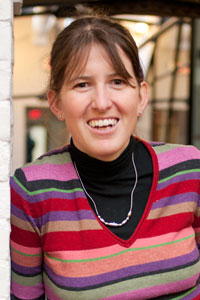
Richard Arès is a professor at the University of Montreal specializing in semiconductor epitaxy, photovoltaics, and photonics. His research spans electrical engineering, mechanical engineering, and condensed matter physics. Doctorate in Physics from Simon Fraser University (1998) Master's in Physics from Université de Montréal (1993) Bachelor's in Physics from Université de Montréal (1990) His work focuses on: Advanced semiconductor growth techniques High-efficiency multi-junction solar cells Photonics device fabrication Nanomaterials engineering Surface and interface analysis Process control in ultra-high vacuum environments Recent publications highlight expertise in: Through-cell via contacts for photovoltaics Quantum dot enhanced solar cells Mesoporous semiconductor structures Nonlinear optical waveguides Temperature-sensitive epitaxy processes
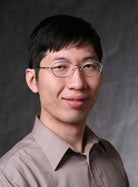
Anthony D'ALEO is a Senior Researcher at the Institut de Physique et Chimie des Matériaux de Strasbourg (IPCMS), University of Strasbourg, specializing in organic photonic materials. He completed his PhD at the University of Amsterdam under Prof. Luisa De Cola, followed by postdoctoral work at ENS Lyon and UC Berkeley with Prof. Kenneth N. Raymond. His career includes CNRS positions at CINaM (2009-2016), leading roles in the CNRS-Ewha International Research Center (2016-2017) and UMI 2B FUEL (2017-2019), and a leave period at startup KOALA Tech Inc. His research focuses on designing fluorescent π-conjugated organic molecules for applications in organic electronics, lasers, and bioimaging. Research Interests: Near-infrared (NIR) organic emitters Thermally activated delayed fluorescence (TADF) Hyperbolic metamaterials Photophysical characterization Organic laser dyes Epsilon-near-zero (ENZ) materials Publications demonstrate expertise in boron complexes, lanthanide sensitization, and molecular design for optoelectronic devices, with recent work on donor-acceptor architectures and nonlinear optical responses. Collaborations span institutions including UC Berkeley, CNRS-Ewha, and Ewha Womans University. Education: PhD in Chemistry, University of Amsterdam (2006) MSc in Chemistry, University of Bordeaux I
Dr. Liam O'Brien is a Reader in the Department of Physics at the University of Liverpool and a member of the Condensed Matter Physics group and Materials Innovation Factory. His research spans spin transport in nanoscopic devices, magnetic heterostructure growth, and nano-fabrication techniques. Previously, he held a Marie Skłodowska-Curie individual fellowship (2012-2015) and an early career lectureship at the Cavendish Laboratory, University of Cambridge (2014-2017). Education: MSc, University of Oxford (2006) PhD, Imperial College London (2011) His research focuses on spintronic devices , magnetic thin films , and quantum transport , with recent work on Dirac nodal arc semimetals and THz rectenna applications. Articles highlight trends in quantum computing , magnetic imaging , and nanofabrication . Notable grants include funding from the Medical Research Council , BBSRC , and EPSRC . Key scientific awards include the Marie Skłodowska-Curie individual fellowship . He advises on spin valve architectures and artificial spin ice , with teaching roles in Correlated Electron Materials and Magnetic Properties of Solids . His lab at the Materials Innovation Factory explores glancing multi-angle deposition and non-local spin transport .
Emmanuele Parisi is a Researcher at the Polytechnic University of Turin , affiliated with the Department of Applied Science and Technology (DISAT) and the Crystallization & Crystal Engineering Laboratory . His research spans Inorganic Chemistry , Materials Science , and Crystal Engineering . Co-author of cutting-edge studies on coordination polymers, MOFs, and cocrystallization techniques Supervises multiple PhD students in Chemical Engineering Teaching collaborator in courses like Green plants design and Industrial Chemistry for Circular and Bio Economy Research Focus : Parisi's work centers on designing functional inorganic and hybrid materials with applications in catalysis, gas adsorption, and surface property modulation. His 2025 publications highlight advancements in CuI coordination polymers for triazole synthesis, computational workflows for cocrystallization, and Ag-S MOFs for H2S/iodine capture. Earlier work (2024) explores high-pressure material dynamics and food-grade crystal engineering for emulsion stabilization. Academic Contributions : As a teaching collaborator, he contributes to interdisciplinary curricula spanning Electronic Engineering, Aerospace Engineering, and Computer Engineering. His supervised PhD students conduct research in areas such as chemical engineering and materials optimization.
Li Cheng is an Assistant Professor in the Department of Supply Chain Management at Michigan State University's College of Business. Their work bridges theoretical and applied approaches to address global supply chain challenges. Current Position: Assistant Professor, Supply Chain Management University: Michigan State University Research interests derived from their departmental affiliation include Supply Chain Management , Logistics , Business Analytics , Industrial Engineering , and Global Trade . Despite no explicit description of their current research, their Google Scholar publications reveal trends in Materials Science and Semiconductor Physics focusing on molecular beam epitaxy (MBE), bismuth incorporation, nanowire formation, and optical properties of GaAsBi and InAlN/GaN heterostructures. Recent work in their Google Scholar profile emphasizes techniques for enhancing bismuth concentration, strain engineering in thin films, and computational modeling of crystal growth. These publications span topics like Nanotechnology , Condensed Matter Physics , and Electronic Device Fabrication .
David Johnson is an Associate Professor of Political Science and an Assistant Professor of Industrial Engineering at Purdue University's College of Liberal Arts. He holds a Ph.D. in Policy Analysis from the Pardee RAND Graduate School (2013), a MASt in Mathematics from the University of Cambridge (2005), and a B.S. in Mathematics from North Carolina State University (2003). His research focuses on developing simulation models, economic analysis tools, and decision support systems to address environmental policy challenges, particularly climate change adaptation and flood risk management. He leads the development of Louisiana’s Comprehensive Master Plan flood risk model and explores bioenergy, water scarcity, and agricultural sustainability. His interdisciplinary work bridges public policy, environmental science, and engineering systems. Dr. Johnson’s research emphasizes uncertainty analysis, tradeoff assessment, and policy evaluation. His recent studies include optimizing flood protection systems, evaluating bioenergy’s greenhouse gas impacts, and analyzing long-term agricultural practices. While no formal student advisees are listed, his work intersects with engineering and environmental disciplines. Awards or grants are not explicitly mentioned in the provided materials. His academic roles span political science and industrial engineering, reflecting his dual focus on policy analysis and technical systems. He collaborates across disciplines to address complex environmental challenges, leveraging mathematical and computational modeling expertise from his academic background.
Katia Bertoldi is the William and Ami Kuan Danoff Professor of Applied Mechanics at Harvard University's John A. Paulson School of Engineering and Applied Sciences . She leads the Bertoldi Group: Solid Mechanics , focusing on mechanical metamaterials, multistable systems, and soft robotics. Her work integrates applied mathematics, materials science, and nonlinear dynamics to design architected materials with programmable properties. Research interests include: Mechanical metamaterials with tunable properties Multistable structures for energy absorption and reprogrammability Soft robotics leveraging origami/kirigami principles Machine learning-driven design of complex materials Recent work emphasizes reprogrammable systems (e.g., magnetic and thermal actuation) and textile-based metamaterials for wearable applications. Her team collaborates across disciplines, addressing challenges in biomedical devices, robotics, and sustainable manufacturing. Key contributions include: Developing metafluids with programmable shell instabilities Designing inflatable origami actuators for meter-scale reconfigurable structures Creating knitted fabrics with tunable mechanical responses Her lab explores energy-efficient actuators, adaptive fluid networks, and AI-driven material discovery, aiming to bridge theory and real-world applications.
Professor Kylie Vincent is a Professor of Inorganic Chemistry at the University of Oxford and Fellow and Tutor in Chemistry at Jesus College. She holds the role of Associate Head of Department (People) in the Department of Chemistry. Her academic journey includes a BA in English Literature and BSc (Hons) in Chemistry/Biochemistry from the University of Melbourne (2000), followed by a PhD in Chemistry from the same institution (2003). She has held prestigious fellowships, including the Royal Society University Research Fellowship and RJP Williams Junior Research Fellowship. She co-founded HydRegen, a spin-out company focused on sustainable biocatalysis technologies, in 2021. Education: University of Melbourne (BA English, BSc Chemistry, PhD Chemistry) Roles: Professor of Inorganic Chemistry, Associate Head of Department (People), and Fellow at Jesus College Her research focuses on understanding and applying catalytic mechanisms of metalloenzymes, particularly hydrogenases, to develop sustainable chemical synthesis methods. Key areas include biocatalytic hydrogenation (via the HydRegen system), spectroscopic studies of enzyme active sites, and translating biocatalysis into industrial applications. Recent work highlights H₂-driven cofactor recycling, continuous flow biocatalysis, and structural studies of enzyme intermediates. Publications span over 15 years, with contributions to Nature Communications , JACS , and Chemical Science , emphasizing mechanistic insights and applied biocatalysis. Awards include the RSC Emerging Technology Competition 2013 and grants from EPSRC, BBSRC, and ERC. Teaching includes undergraduate Transition Metals lectures and leadership of the Inorganic Materials for Advanced Manufacturing (IMAT) CDT. Supervision of ~30+ students (DPhil/MChem) and postdoctoral researchers reflects her mentorship focus. Her HydRegen spin-out demonstrates successful academic-industry collaboration, with applications in pharmaceutical and fine chemical sectors.
Neal Murphy is an Associate Professor at the School of Mechanical and Materials Engineering, University College Dublin. He holds a PhD (2007) and MEngSc in Robotics from UCD, along with BE and Certifications in Teaching and Learning. His research focuses on fracture mechanics, materials science, and advanced composites, with a particular emphasis on structure-property relationships and dynamic fracture processes. Professional activities include roles in the European Structural Integrity Society (ESIS) and National Standards Association of Ireland (NSAI) committees. Education: BEng, MEngSc (Robotics), PhD (Dynamic Fracture of PMMA) from UCD. Research interests span fracture behavior of adhesives, composites, and superhard materials like PCD/PCBN. He employs advanced techniques such as SEM analysis and FEA/FVM simulations, with recent work exploring additive manufacturing applications. Teaching responsibilities include coordinating courses in Fracture Mechanics and Mechanics of Solids across multiple academic cycles. Notable contributions include studies on nano-toughened adhesives, interfacial engineering of thermoplastics, and fatigue crack growth in aerospace composites. His work bridges experimental and computational methods to advance material understanding and applications.
Professor Safwan Akram is a distinguished academic at Teesside University's School of Health and Life Sciences, based at the National Horizons Centre and Centre for Biodiscovery. As a Professor of Innovation in Healthcare/Biosciences, his research focuses on biomanufacturing, synthetic biology, low-cost diagnostics, and biomimetic applications. He holds a PhD in Analytical Biotechnology from the University of Cambridge, with postdoctoral work on low-cost diagnostics. His teaching excellence was recognized with a university-wide Star Award. Research interests include nanobody manufacturing, gene therapy vectors, and amyloid protein dynamics. He leads major grants totaling over £4M, including BBSRC Landscape Awards for doctoral training and DefSec Accelerator funding. Collaborations span academia and industry (e.g., Selective Antibodies, Hexis Labs). Education: PhD (Analytical Biotechnology, Cambridge), M.Phil (Bioscience Enterprise, Cambridge/MIT), Postdoc at Cambridge Key Awards: Medimmune Award, CambridgeSens Innovative Idea Award, Star Teaching Award Lab Focus: Biomanufacturing innovation, diagnostic tools, and bioactive scaffolds His lab actively recruits PhD students in biopharma, biotechnology, and bioscience innovation. Notable projects include £1.5M BBSRC Yorkshire Doctoral Training Programmes and Launchpad NetZero grants for bioprocessing advancements.
Peter Kroll is Professor at The University of Texas at Arlington with joint appointments in Chemistry/Biochemistry and Physics. His research bridges computational and experimental materials science. Research focuses on: High-performance ceramics and glasses High-pressure materials synthesis Computational prediction of novel materials Polymer-derived ceramics Recent publications demonstrate expertise in computational materials design (2024 ML potentials), high-pressure synthesis (2024 oxynitrides), and functional materials development (2022 EMI shielding). Current graduate students include Takhya Holley (PhD) and Daniel Pearson (undergraduate researcher). Funded research includes NSF-supported projects on ceramic fibers and high-temperature coatings. Laboratory activities focus on computational modeling of materials under extreme conditions and experimental synthesis of advanced ceramics.
Dr. Helen Zha is an Associate Professor in the Department of Chemical & Biological Engineering at Rensselaer Polytechnic Institute (RPI). She holds affiliations in the Biochemistry and Biophysics graduate program and the Center for Engineering and Precision Medicine. As Associate Director of the NY Fashion Innovation Center, she bridges academic and industrial innovation. Her research focuses on biomimetic materials, particularly the synthesis of silk-mimetic polymers and their applications in regenerative medicine, sustainable materials, and biotechnology. Educated at MIT (B.Sc., 2007) and Northwestern University (Ph.D., 2013), Dr. Zha completed postdoctoral training at Eindhoven University of Technology and UC Berkeley. She joined RPI in 2018 as a tenure-track faculty member. Her research interests span biomaterials design, biopolymer synthesis, and sustainable material upcycling. Key projects include converting plastic waste into recombinant proteins and developing anti-angiogenic nanostructures for medical applications. Her work emphasizes the interplay between molecular design and functional properties of materials. Dr. Zha has received prestigious awards, including the NSF CAREER Award and NIH R35 MIRA Early Career Grant. She chairs the Biomaterials program area of the American Institute of Chemical Engineers and actively contributes to professional societies like the Society for Biomaterials. Her lab, the Bioinspired Materials Lab , explores bio-inspired material systems with applications in energy storage, drug delivery, and environmental remediation. Current projects include silk fibroin coatings for neural regeneration and nano-silica additives for sodium batteries.
Dr. Yunfeng Shi is a Professor of Materials Science and Engineering at Rensselaer Polytechnic Institute (RPI). He holds a Ph.D. from the University of Michigan (2006) and completed postdoctoral research at North Carolina State University. His research focuses on computational modeling of material behaviors, including metallic glasses, polymers, and nanomaterials, with applications in energy, nanotechnology, and structural materials. Notably, he was recognized as an inaugural Gordon S. Fulcher Distinguished Researcher by Corning Inc. in 2015. Dr. Shi's research interests encompass: Fracture mechanics and deformation mechanisms in amorphous solids Self-assembly of biomimetic polymers Nanostructured carbon and graphene-based composites Computational design of materials for energy and thermal applications Interface engineering in van der Waals materials His recent publications highlight advancements in atomic-scale material characterization, including cooling-free infrared detection via epitaxial membranes and enhanced fracture toughness in graphene-epoxy nanocomposites. He is affiliated with RPI's Center for Materials, Devices, and Integrated Systems (CMDIS), leveraging interdisciplinary collaboration for cutting-edge research. Scientific awards include the Gordon S. Fulcher Distinguished Researcher Award (2015). His work spans experimental and theoretical methods, with a focus on bridging atomistic simulations and macroscopic material behavior.
Philip W. T. Pong is an Associate Professor in the Department of Electrical and Computer Engineering at New Jersey Institute of Technology. His research focuses on electromagnetic sensing technologies for smart grid applications and nanotechnology. Education includes: Ph.D. in Engineering from University of Cambridge (2005) B.Eng. in Electrical and Electronic Engineering from University of Hong Kong (2002) Research expertise spans electromagnetic sensors, smart grid monitoring, nanotechnology applications in energy systems, and magnetic materials. Recent publications demonstrate strong focus on current sensing technologies (both contact and non-contact), fault diagnosis in power systems, wind turbine monitoring, and magnetic materials characterization. Article analysis reveals consistent emphasis on magnetoresistive sensors, wireless power transfer, renewable energy systems monitoring, and spintronics applications. Professional distinctions include Fellow status in multiple engineering institutions (IET, Energy Institute, IOM3, NANOSMAT) and chartered engineer credentials. Serves on editorial boards of IEEE journals. No information available regarding scientific awards or current students.
Dr. S. Holger Eichhorn is a Professor in the Department of Chemistry and Biochemistry at the University of Windsor, Faculty of Science. His research focuses on synthetic materials chemistry, encompassing molecular design, synthesis, and characterization of organic dyes, liquid crystals, and mesomorphic materials. Key areas include core-only dyes, columnar mesophases, polydiacetylene materials, and nanoparticle ligands. He leads the Eichhorn Team, investigating applications in organic electronics, sensors, and functional composites. Research Interests: Liquid Crystals: Development of mesomorphic dyes for electronic devices and sensors. Organic Dyes: Design of side-chain free dyes and their self-assembly into supramolecular structures. Nanoparticles: Stabilized monolayers and cross-linkable ligands for catalysis and drug delivery. Polymers: Polydiacetylene synthesis via topochemical polymerization for functional materials. Collaborations: Active partnerships with institutions globally for device integration and material characterization. Labs & Facilities: Expertise in temperature-dependent spectroscopy (UV-Vis, IR, Raman), X-ray diffraction, and thermal analysis (DSC, TGA).