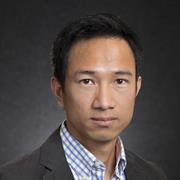
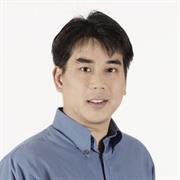
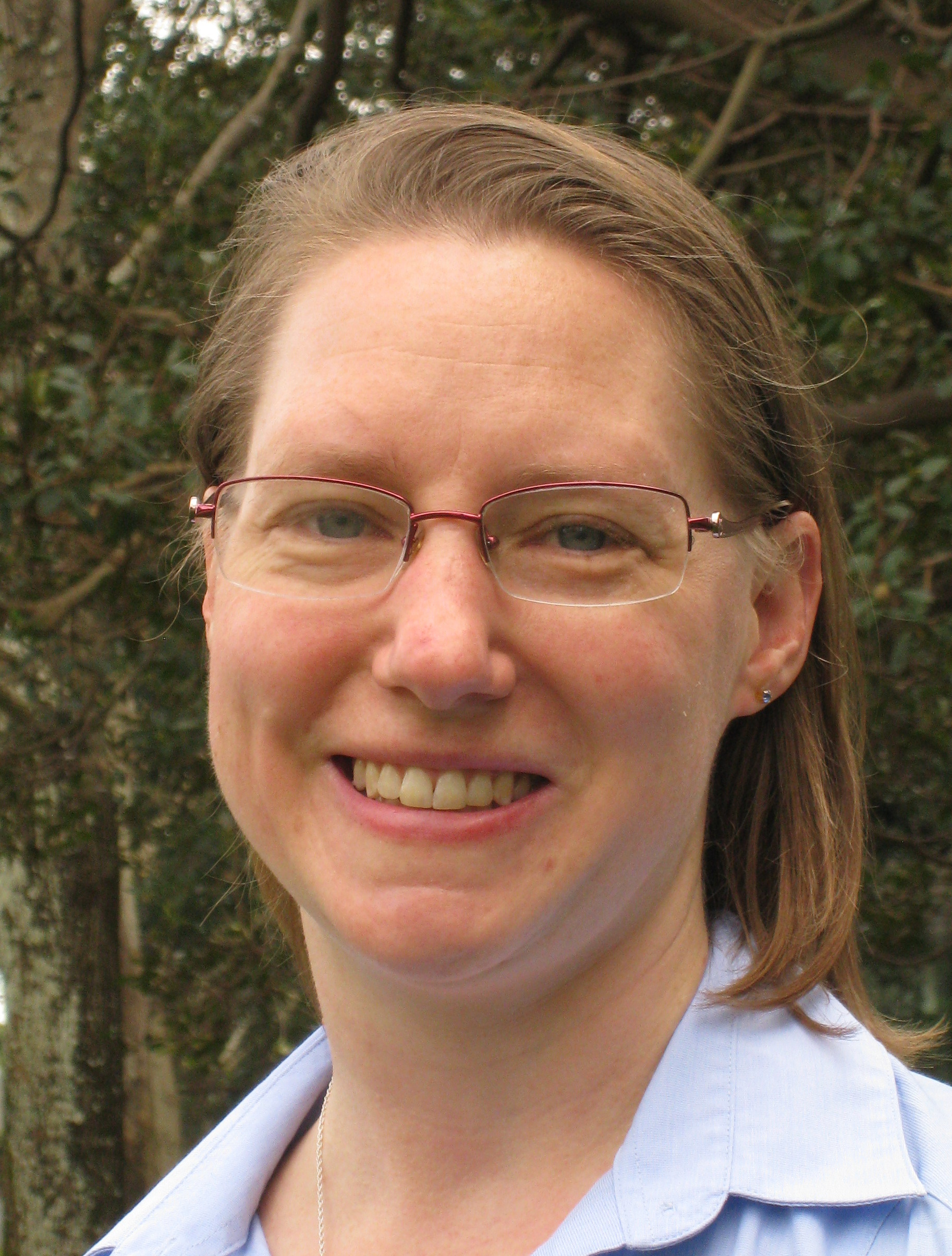
Professor Chunsheng Lu is a faculty member at Curtin University's School of Civil and Mechanical Engineering within the Faculty of Science and Engineering. He currently holds the position of Professor and serves as Editor-in-Chief of Mechanical Engineering Advances . His research focuses on fracture mechanics, multi-scale modeling, energy materials, nonlinear dynamics, and natural disaster risk analysis. Lu is actively involved in HDR (Masters/PhD) supervision, offering projects on advanced materials modeling and simulations. His research interests include mechanics of energy materials, multi-scale modeling, and fracture statistics. He has contributed to over 200 publications, with recent work emphasizing piezoelectric semiconductors, nanomaterials, and energy storage systems. Lu's teaching spans materials engineering, solid mechanics, and numerical methods.
Dr. Nhiem Tran is a Senior Lecturer in the Department of Applied Chemistry and Environmental Science at RMIT University's School of Science, part of the STEM College. He joined RMIT in 2015 as a Vice Chancellor's Research Fellow after completing his PhD in Physics at Brown University (USA, 2012) and postdoctoral research at Rhode Island Hospital (USA), CSIRO, and the Australian Synchrotron. His research focuses on developing biomaterials for drug delivery, gene therapy, and medical implants, particularly lipid nanoparticles and 3D-printed metallic implants. He leads the Biomaterial Interfaces group, investigating self-assembled lipid nanoparticles for cancer and autoimmune disease treatments. His work has resulted in over 65 high-impact publications and numerous awards, including the RMIT Vice Chancellor's Research Fellowship and the Stein/Bellet Foundation Fellowship. Tran's funding comes from grants such as the ARC Discovery Project, mRNA Victoria, and the CASS Foundation. His research interests span nanomedicine, biomedical engineering, and materials science, with a focus on applications in drug delivery, bacterial infection control, and orthopaedic implants. Education: PhD in Physics (Brown University, 2012) Key Projects: 3D-printed diamond-titanium implants, lipid nanoparticle drug carriers, and antimicrobial coatings. He actively supervises postgraduate research in areas like nanomaterials for drug delivery and biomedical applications.
Dist. Professor Leslie Yeo is a distinguished faculty member at RMIT University's School of Engineering, where he leads the Micro/Nanophysics Research Laboratory (MNRL). With a PhD from Imperial College London (2002), he has held positions at Monash University and the University of Notre Dame before joining RMIT. His research focuses on the interactions between high-frequency sound waves and matter at micro and nanoscales. Leslie Yeo's educational background includes a PhD from Imperial College London (2002), where he received the Dudley Newitt prize for outstanding computational/theoretical work. Prior to his academic career, he worked as a Mathematical Modeller at Det Norske Veritas UK. He held prestigious Australian Research Fellowships (2009-2017) that supported his groundbreaking work in micro and nanophysics. Professor Yeo's research interests center around high-frequency (MHz order) sound waves interacting with various materials including fluids, two-dimensional and bulk crystals, biomolecules, cells and microorganisms. His work explores both fundamental physicochemical phenomena and practical applications in microfluidics, drug delivery, diagnostics, tissue engineering, and materials synthesis. His research has significant implications for health technologies, environmental applications, and sustainable energy solutions, aligning with UN Sustainable Development Goals 3 (Good Health and Well-Being) and 7 (Affordable and Clean Energy). Analysis of Professor Yeo's recent publications reveals a strong focus on acoustofluidics and its diverse applications. His work demonstrates expertise in using surface acoustic waves for bacterial inactivation, synthesis of metal-organic frameworks, cell membrane manipulation, and energy conversion technologies. The research spans multiple disciplines including biomedical engineering, materials science, and environmental technology, with particular emphasis on practical applications that address real-world challenges. 2023: Fellowship of the Institution of Engineering & Technology (FIET) 2021: RMIT University Science, Technology, Engineering & Medicine College Research Impact Award 2019: RMIT University Distinguished Professorship 2018: RMIT University Vice-Chancellor's Award for Research Excellence 2016: Johnson & Johnson World Without Disease Quickfire Challenge Award 2007: Young Tall Poppy Science Award Professor Yeo has supervised numerous research students across engineering and science disciplines, with current projects focusing on acoustomicrofluidic synthesis of nanomaterials, high-frequency mechanobiology applications, and diagnostic technologies. His editorial roles include Editor-in-Chief of the American Institute of Physics journal Biomicrofluidics and Associate Editor of Frontiers in Bioengineering & Biotechnology. His work has been widely featured in media outlets including ABC's Catalyst, The Economist, and Nature. The Micro/Nanophysics Research Laboratory under Professor Yeo's leadership is at the forefront of fundamental and applied research on nonlinear high-frequency electroacoustic interactions. The laboratory has discovered novel physicochemical phenomena and actively develops theories to explain the fundamental mechanisms behind these discoveries, with applications ranging from medical diagnostics to sustainable energy solutions.
Associate Professor Mohammad Saadatfar is affiliated with the School of Civil Engineering at The University of Sydney. His research focuses on meso-scale materials, combining experiments with simulations to address challenges in environmental science, biomedical engineering, and advanced materials design. Key areas include the study of cellular solids, granular materials, and meta-materials. His work integrates physics, engineering, and biology, with applications to CO₂ geo-sequestration, bone implants, and mechanical meta-materials. He uses X-ray tomography, FE simulations, and topological analysis to explore material behavior. Recent publications span topics like additive manufactured foams, CO₂ flow dynamics in sandstone, and biomimetic wood structures. His contributions highlight interdisciplinary approaches to material science and engineering challenges. No scientific awards or student advisement details are explicitly mentioned in the provided text.
Dr. Lucy Gloag is a Lecturer at the Research School of Chemistry at the Australian National University (ANU), where she joined in 2024 after previously serving as a Lecturer at the University of Technology Sydney in 2023. Her research focuses on the development of advanced nanomaterials for energy applications, particularly in electrocatalysis and energy storage. Education: BSc/BCA and BSc(Hons) from Victoria University of Wellington, New Zealand PhD from the University of New South Wales (2018) on synthesis and characterization of Ru-based nanocatalysts Dr. Gloag is a nanomaterials chemist and electron microscopist specializing in the synthesis and characterization of nanomaterials for electrocatalytic applications. Her research addresses the fundamental question of how nanostructure can be used to enhance the performance of electrocatalysts . She employs solution-phase synthesis techniques to create nanoparticles with precise control over crystal structure, dimensions, and surface faceting, then correlates these structural features with electrocatalytic properties using transmission electron microscopy and electrochemistry. Her work spans energy conversion technologies, biomedical applications of nanoparticles, and advanced materials characterization. Analysis of her recent publications reveals a strong focus on single-atom catalysts, hierarchical nanostructures, and the relationship between nanomaterial structure and function. Her research spans both fundamental materials science and practical applications in energy conversion, with significant work on oxygen evolution reaction, hydrogen evolution reaction, and methanol oxidation electrocatalysts. She has also made notable contributions to biomedical applications of nanoparticles, particularly in magnetic particle imaging and Alzheimer's disease diagnostics. Scientific Awards: ARC Discovery Project Grant (2023) ARC Linkage Project Grant (2023) UNSW Science COVID19 Strategic Support Grant (October 2021) Dementia Australia Research Foundation – Yulgilbar Innovation Grant (2019-2022) Australian Postgraduate Research Scholarship (2015) AMN-7 Image Competition Finalist (2015) Dr. Gloag currently leads the ANU Futures Scheme 2.0 project (2024-2028) and has secured multiple competitive research grants, demonstrating strong research leadership. Her work involves extensive collaboration with researchers at UNSW and other institutions, particularly with Professors Richard Tilley and Justin Gooding. She has published 28 research outputs since 2015, with significant citation impact (h-index of 17). Her laboratory at ANU (Building 137, room 2.49) focuses on developing single atom and nanomaterials for energy storage and conversion technologies, continuing her trajectory as an emerging leader in advanced materials synthesis and electron microscopy characterization.
Dr. Qingbo Sun is a researcher at the Department of Materials Physics, Australian National University, specializing in advanced materials for energy and electronic applications. His work focuses on defect engineering, dielectric materials, and photovoltaic effects in nanocrystalline systems. Research interests include: Defect-driven local symmetry breaking Colossal dielectric permittivity Photocatalytic heterojunctions High-pressure material transformations Doping strategies in semiconductors Nonlinear electric polarization Research trends from his publications highlight innovations in TiO2-based photocatalysts, SnO2 dielectrics, and ferroelectric heterostructures. Collaborations span materials synthesis, computational modeling, and international experimental studies. His work is cited extensively in Scopus with 294 citations.
John Bell is a Professor and Deputy Vice-Chancellor (Research and Innovation) at the University of Southern Queensland (UniSQ), based at the Springfield Campus. He holds a BSc from the University of Sydney and a PhD from the University of New South Wales (UNSW). His leadership role involves overseeing research strategy and innovation initiatives across the institution. Bell's research spans advanced materials and energy technologies, with expertise in: Nanomaterials synthesis and characterization Renewable energy generation/storage (photovoltaics, batteries) Functional polymers and composite materials Semiconductor device engineering Smart building technologies His recent publications (2022-2025) demonstrate a strong focus on sustainable energy solutions, particularly next-generation batteries, solar cells, electrochromic devices, and nanotechnology-enabled sensors. Over 80% of his recent work addresses materials innovation for decarbonization and energy efficiency.
Yongxiang Li is a Professor in the School of Engineering at RMIT University, Australia, specializing in advanced materials and nanotechnology. His research focuses on piezoelectric materials, 2D functional materials, and energy harvesting systems. He is actively involved in supervision of PhD and Master’s projects, including topics like flexible piezoelectric nanogenerators, 2D heterostructures, and low-temperature co-fired ceramic (LTCC) sensors. Research Interests: Materials Engineering, Electrical Engineering, Nanotechnology, Condensed Matter Physics, and Functional Ceramic Design. Key projects include developing lead-free piezoelectric materials, integrating sensors for lithium-ion batteries, and exploring gas sensors using liquid metal-derived oxides. Teaching Interests: Dielectric materials, ferroelectric systems, sensor technologies, and LTCC applications. His interdisciplinary work bridges materials science with optoelectronics and energy storage. Publications span over 400 outputs, emphasizing machine learning-driven materials discovery, defect engineering in 2D materials, and sensor innovation. He leads projects in collaboration with industry, focusing on practical applications of advanced ceramics and nanomaterials.
Associate Professor Judy Hart is a materials scientist at the School of Materials Science & Engineering, UNSW Sydney , specializing in the development of semiconducting materials for renewable energy applications. Her work integrates computational (DFT) and experimental approaches to understand composition-property relationships in systems like solid solutions , heterostructures , and doped materials for photocatalysis and solar cells . She leads projects funded by ARC Discovery and Linkage grants , including work on photo-electro-catalysis systems and stabilizing ceramic materials . Education: PhD in Materials Engineering (Monash University, 2007), BEng (Materials) (Monash, 2002) Professional Experience: Senior Lecturer (UNSW, 2017–), Lecturer (UNSW, 2013–2017), University of Bristol (2007–2012) Research Interests Her research focuses on designing materials for renewable energy , particularly photoelectrochemical water splitting and organic oxidation reactions . Key areas include Density Functional Theory (DFT) , defect engineering , band gap tuning , and nanostructured materials . She investigates ferroelectric polarization effects , metal oxide heterostructures , and stability of battery components , with applications in hydrogen production , CO2 conversion , and advanced battery materials . Scientific Awards Ramsay Memorial Fellowship (University of Bristol, 2007–2009) Teaching Contributions She is co-author of the 1st Australian & New Zealand edition of "Materials Science and Engineering: An Introduction" , and teaches courses on computational materials science , corrosion-resistant surfaces , mechanical behavior of metals , and materials design .
Hongyi Xu is a Senior Lecturer at the Australian National University's Research School of Chemistry and a researcher/principle investigator at Stockholm University (0.2 FTE). He holds a PhD in Materials Engineering from the University of Queensland (2013) and a Bachelor of Engineering (Mechatronics) from the same institution (2008). His research focuses on developing electron crystallography methods for studying materials, small molecules, peptides, and macromolecules, with applications in drug design and structural biology. He has pioneered MicroED techniques, including solving the first new protein structure using this method and demonstrating protein-inhibitor binding analysis. Key research areas include electron crystallography methodology, multidimensional electron microscopy toolkits, metalloenzyme charge state analysis, and fragment-based drug design. He has secured grants such as the Swedish Research Council Starting Grant and has collaborated with over 25 international groups. Notable achievements include the development of SerialED and contributions to cryo-EM advancements like Single Particle Analysis (SPA) and cryo-ET. Recent publications highlight advancements in perovskite photovoltaics, electrocatalytic hydrogen peroxide production, and zeolite structural analysis. His work bridges materials science and biology, addressing challenges in structural determination through innovative microscopy techniques. Awards include the Dean’s Accommodation for Academic Excellence (2013) and the Best Thesis Award (2013).
Martin Saunders is an Associate Professor and leader of the Physical Science Electron Microscopy Platform at the University of Western Australia's Centre for Microscopy, Characterisation & Analysis (CMCA). He holds leadership roles in national microscopy consortia, including Microscopy Australia and the National Imaging Facility. His academic career spans over 20 years, with roles as Deputy Director and Acting Director of CMCA, and President of the Australian Microscopy and Microanalysis Society (AMMS). Saunders earned a PhD in Physics from the University of Bath (UK) and postdoctoral experience at institutions including the University of Bristol and the US Naval Postgraduate School. His research focuses on advanced electron microscopy techniques, including TEM, STEM, EELS, and tomography, applied across physical, biological, and geo sciences. Education: PhD in Physics (University of Bath, 1994), BSc in Applied Physics (University of Bath, 1990). Research interests include structural and chemical analysis of nanomaterials, biominerals, and geological samples. He collaborates globally, contributing to high-impact journals like Nature and Advanced Materials . Saunders has secured over $25M in grants from ARC, NHMRC, and NCRIS, funding cutting-edge microscopy infrastructure. Awards: Inaugural AMMS Fellow (2025), Life Membership (AMMS), Fellow of the UK Institute of Physics (2012). Teaching: Coordinates materials characterization courses for biomedical engineering and nanotechnology programs. Provides training in electron microscopy for researchers and postgraduates. Labs/Infrastructure: Manages state-of-the-art facilities including FEI Titan G2 80-200 TEM/STEM and DualBeam FIB-SEM systems at CMCA.
Dr. Daniel Preston is an ARC DECRA Fellow and leader of the Preston Group at the Research School of Chemistry , Australian National University. His research focuses on supramolecular chemistry, designing structurally and functionally complex architectures from metal ions and organic ligands in solution. Education : PhD in Chemistry from the University of Otago, Rutherford Postdoctoral Fellowship at the University of Canterbury (NZ). Key research themes include: Supramolecular self-assembly of metallosupramolecular systems Development of stimuli-responsive foldamers and sensors Photophysical applications in FRET, donor-acceptor systems Anion recognition and gas adsorption studies His recent publications highlight work on: Low-symmetry metal cages (Fe 2+ , Pd 2+ , Pt 2+ ) Dynamic covalent approaches to lantern-shaped architectures Excited state control in bichromophoric photosensitizers Heterometallic and heteroleptic systems with positional/orientational control Scientific Awards : ARC DECRA Fellow ARC Future Fellow Rutherford Postdoctoral Fellowship Dr. Preston supervises PhD candidates Jessica Algar and Zack Avery, with active projects in mixed-metal clusters, self-assembled systems, and molecular machine development.
Dr. Shelley Wickham is an Associate Professor and ARC DECRA Fellow at the University of Sydney, holding joint appointments in the Schools of Chemistry and Physics. She serves as a Westpac Research Fellow and leads the DNA Nanotechnology Group at the Sydney Nano Institute. Dr. Wickham is also co-Champion of the Sydney Nano Institute Grand Challenge project in Molecular Nanorobotics for Health, co-lead of the School of Physics Grand Challenge on Nanoscale brain navigation for targeted drug delivery, and faculty mentor of the University of Sydney BIOMOD team. Bachelor of Science and Master of Science in Physics from University of Sydney PhD in Condensed Matter Physics from University of Oxford Postdoctoral Fellow at Harvard Medical School, Dana-Farber Cancer Institute, and Wyss Institute Dr. Wickham's research focuses on self-assembling nanotechnology and molecular robotics, particularly in the design and assembly of programmable nanostructures out of DNA. Her work spans applications in cell biology, materials science, and nanomedicine. Current research projects include design and synthesis of self-assembling DNA nanostructures, proto-cells made of DNA gels that move under flow, new plasma fabrication methods for biomolecule micropatterning, and DNA computation circuits for navigating the brain using machine learning. Her research aligns with the Faculty of Science Research Strengths in Molecules to Materials, Preventing and Treating Disease & Disorder, and Next Generation Materials. Analysis of Dr. Wickham's recent publications reveals a consistent focus on DNA nanotechnology with increasing sophistication in structural complexity and biological applications. Her work has evolved from fundamental DNA origami structures to increasingly complex multi-component systems with practical applications in nanomedicine and biomimetic engineering. Recent publications show strong interdisciplinary collaboration across chemistry, physics, biology, and engineering disciplines, with emphasis on real-world applications including drug delivery systems and biomolecular sensors. ARC DECRA Fellow Westpac Research Fellow BIOMOD World Champions (2019) Dr. Wickham actively mentors PhD students and postdoctoral researchers in her DNA nanotechnology group. She has secured significant research funding including ARC Discovery Projects, Westpac Scholarships, and NSW Health grants. Her current grants support projects such as '3D Bio-Nanomaterial Displays with Designer Architectures and Functions' and 'RNA aptamer sensing devices for rapid detection of blood clotting.' Dr. Wickham encourages applications from diverse backgrounds and maintains active collaborations with researchers at Harvard, Oxford, and other international institutions. Dr. Wickham leads the DNA Nanotechnology Group at the University of Sydney, which is part of the Sydney Nano Institute. Her lab focuses on building tools from DNA origami - including tweezers, spanners, wrenches and springs - to better understand biological processes at the nanoscale. The group has achieved notable success with the BIOMOD team winning world championships in 2019, and continues to develop innovative approaches to molecular robotics for healthcare applications.
Roland Chung is a Lecturer in the Department of Pharmacy and Pharmaceutical Sciences Education at Monash University's Faculty of Pharmacy and Pharmaceutical Sciences. He is affiliated with the Monash Institute of Pharmaceutical Sciences, focusing on medicinal chemistry and enzymology. His work aligns with UN Sustainable Development Goals related to health and innovation. His research interests include enzyme structure-function relationships, inhibitor design for aldose/aldehyde reductases, and molecular modeling of drug candidates. Chung has contributed to studies on protein crystallography, coenzyme interactions, and drug discovery for metabolic diseases. Projects: UV-visible spectrophotometer and software (2009, Collier Charitable Fund) Benchtop centrifuge (2003, Collier Charitable Fund & Monash University) Chung has been active in professional organizations, serving on the Royal Australian Chemical Institute's advisory panels from 2013 to 2020.
Professor Francois Ladouceur is a distinguished academic at the University of New South Wales (UNSW), where he serves in the Faculty of Engineering, specifically within the School of Electrical Engineering and Telecommunications. With a career spanning over three decades, Professor Ladouceur has established himself as a leading expert in photonics, optical engineering, and neural interfaces. His educational background includes: Ph.D. in Optical Communication from The Australian National University (1992) Masters in Solid State Physics from École Polytechnique, Montréal, Canada (1987) B. Eng. in Engineering Physics from École Polytechnique, Montréal, Canada (1985) Professor Ladouceur's research spans several cutting-edge areas in photonics and optical engineering. His work focuses on integrated optics, silica and diamond-based photonics, optical sensing networks, and photonics-based brain/machine interfaces. He has made significant contributions to both fundamental waveguide theory and applied integrated optics, introducing innovative approaches to waveguide path design that have improved the size and ease of design of integrated optics devices. His recent work has particularly emphasized the development of liquid crystal-based optical electrodes for neural interfacing and brain/machine interfaces. Analysis of his recent publications reveals a strong trend toward biomedical applications of photonics, particularly in neural interfaces and optrode technology. His research has evolved from fundamental optical engineering to practical applications in healthcare, with a focus on developing novel optical sensing technologies for electrophysiological measurements. The interdisciplinary nature of his work combines optical engineering, materials science, and biomedical engineering to create innovative solutions for neural interfacing. Professor Ladouceur has secured significant research funding through multiple prestigious grants: ARC Discovery (DP200102825): "A Multi-Optrode Array for Closed-Loop Bionics" ($495k) NHMRC Ideas Grant (APP2002282): "Re-engineering the Future of Electrophysiological Measurements" ($732k) ARC Discovery 2016 (DP160104625): "Design of an optrode for next generation brain-machine interfaces" ($457.6k) CRC Project 2016: "High performance optical telemetry system for ocean monitoring" ($1,014,320) US Office of Naval Research: "Multi-Optrode Array for Neural Interfacing" (US$360,000) Professor Ladouceur has extensive experience in translating research into practical applications, having founded Bandwidth Foundry Pty Ltd after raising approximately $20 million from private and public sources. His work bridges the gap between academic research and commercial applications, with a particular focus on developing novel hybrid opto-electronics devices from initial design through to commercial realization. He collaborates extensively with researchers across disciplines, particularly with Professor Nigel Lovell and other colleagues in biomedical engineering. His laboratory focuses on developing optical technologies for neural interfaces, with current projects including multi-optrode arrays for brain-machine interfaces, optical telemetry systems for various sensing applications, and diamond-based photonic structures. The research group maintains strong connections with industry partners and defense organizations, applying photonics solutions to real-world problems in healthcare, mining safety, and ocean monitoring.