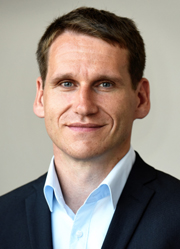
Prof. Mike Barth is a Professor for Networked Secure Automation Technology at the Karlsruhe Institute of Technology (KIT), affiliated with the Department of Electrical Engineering and Information Technology (ETIT) and the Institute for Control Systems (IRS). His academic background includes a doctorate from Helmut Schmidt University (2011) and a master's degree from Pforzheim University (2008). He previously held roles as a researcher at ABB and as a professor at Pforzheim University, focusing on blended learning and Industry 4.0 integration. Education: PhD in Automation Technology, Helmut Schmidt University (2011) M.Sc. in Product Development, Pforzheim University (2008) Diploma in Mechanical Engineering, Pforzheim University (2006) Research Interests: Automation technology, control systems, Industry 4.0, cyber-physical systems, digital twin engineering, cybersecurity, and IoT protocols. Teaching: Courses include System Modeling, Cyber Physical Production Systems, and Digital Twin Engineering. His research emphasizes secure automation architectures, decentralized systems, and model-based engineering. He chairs multiple committees including IFAC TC3.1 and the VDI/VDE Society for Measurement and Automation. Over 50+ publications span topics like simulation models, industrial security, and robotic integration. Labs/Teams: Leads the IRS Automation Technology team, focusing on innovation in control systems and digital twin applications.
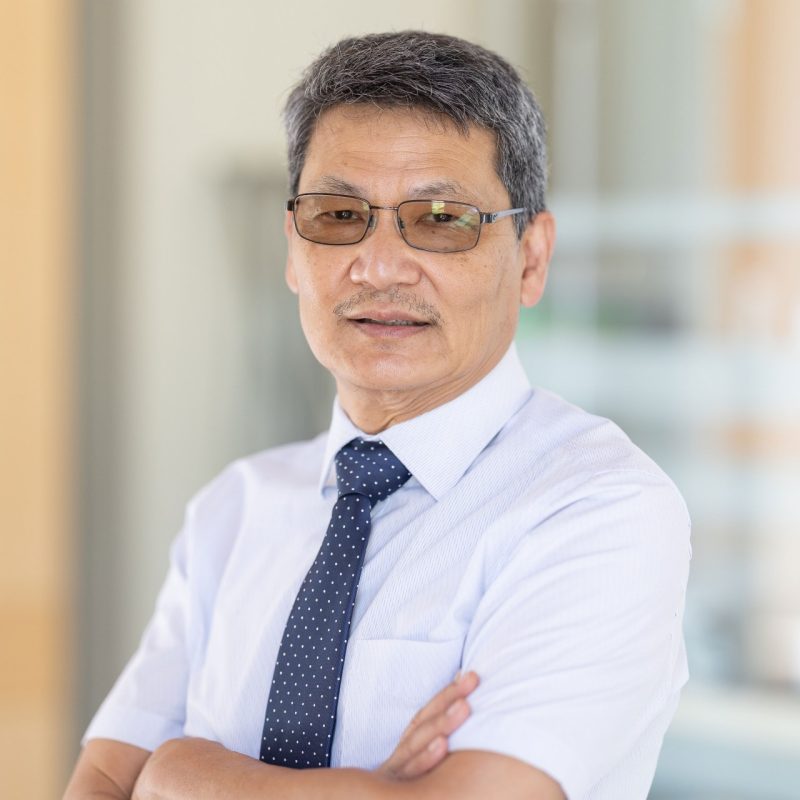
Ting-Chung Poon is a Professor in the Bradley Department of Electrical and Computer Engineering at Virginia Tech. His research focuses on optical scanning holography (OSH), digital holography, and 3D imaging applications. He leads the Optical Scanning-Holographic Imaging Group (OSIG), which explores OSH for 3D imaging, processing, and display, emphasizing 2D optical heterodyne scanning techniques. Education: Ph.D., University of Iowa, 1982 M.S.E.E., University of Iowa, 1979 B.A., University of Iowa, 1977 Research Interests: Optical Scanning Holography (OSH) and its applications in 3D imaging Computer-Generated Holography (CGH) Quantitative Phase Imaging Optical Cryptography Efficient Hologram Algorithms His work spans theoretical advancements and practical implementations, including encryption systems, noise reduction techniques, and high-resolution 3D reconstruction. Recent Research Trends: Focus on polygon-based CGH algorithms for faster rendering Integration of machine learning for speckle noise reduction and hologram classification Development of adaptive and compressive holography methods for industrial and biomedical applications Labs & Teams: Optical Scanning-Holographic Imaging Group (OSIG) at Virginia Tech Collaborations with institutions globally, including conferences on digital holography and photonics
Raul Sanchez Reillo is a Full Professor at Universidad Carlos III de Madrid (UC3M), affiliated with the Grupo Universitario de Tecnologías de Identificación (GUTI). His research focuses on biometric systems, mobile authentication, and security technologies. Key areas include presentation attack detection, vein recognition, and ECG biometrics. He leads projects involving smartphone-based biometric solutions, 3D printed markers, and standards development for biometric interoperability. Research interests span multiple modalities: fingerprint authentication, dynamic signature verification, gait recognition, and vascular biometrics. He emphasizes usability and accessibility in mobile environments, exploring ergonomics and user interaction challenges. His work integrates machine learning (transformers, RNNs) with hardware solutions like FPGA-based systems. Publications highlight innovations in spoofing detection, medical applications (ECG/vein analysis), and low-cost hardware implementations. He contributes to European standards (BioAPI, Hand Data Interchange Format) and evaluates security practices for R&D compliance with EU data protection regulations. Current initiatives include enhancing biometric systems for critical infrastructure security and improving accessibility for elderly users. Active in interdisciplinary collaborations, he leads the Mobile Pass project evaluating user interaction in biometric systems. His lab (GUTI) develops open testing methodologies for biometric performance under Common Criteria and environmental stressors. Recent work addresses vulnerabilities in mobile fingerprint sensors and the ethical implications of biometric-as-a-service models.
Hongjun Wu is an Associate Professor at the Division of Mathematical Sciences, School of Physical & Mathematical Sciences, Nanyang Technological University, Singapore. His research focuses on Cryptography and Computer Security , with contributions to authenticated encryption, stream ciphers, hash functions, and cryptographic vulnerabilities. Doctor of Engineering (2005-2008), Electrical Engineering, Katholieke Universiteit Leuven Master of Engineering (1998-2000) & Bachelor of Engineering (1994-1998), Electrical Engineering, National University of Singapore Research spans Lightweight Cryptography (TinyJAMBU finalist 2021), Authenticated Encryption (CAESAR winners ACORN/AEGIS), Hash Function Design (JH finalist in SHA-3), and Stream Cipher Development (HC-128 in eSTREAM). He has advised PhD students Huang Tao, Ivan Tjuawinata, Yu Haiwan, and Master students Peng Lunan. Former team members include Tao Biaoshuai, Wei Lei, and Yosua Michael Maranatha. Key publications include work on AES biclique attacks (2015), ICEPOLE differential-linear analysis (2015), Microsoft Office encryption flaws (2005), and CAESAR/AEGIS (2013-2015). Awards: Finalist, NIST Lightweight Competition (2021) CAESAR Competition Winner (2019) SHA-3 Finalist (2011) eSTREAM Selection (2008) He leads the JH Hash Function and TinyJAMBU projects, with hardware/software implementations and active participation in cryptographic standards development. His work involves security analysis of Microsoft Office encryption (2005) and advisories on Adobe Reader vulnerabilities (CVE-2014-0522 to CVE-2014-9165).
Ping Ji is a Full Professor and Chair of the Department of Computer Science within the School of Arts and Sciences at the City University of New York (CUNY), with dual appointments at Hunter College and John Jay College of Criminal Justice. She serves as Executive Officer of the Computer Science PhD Program and former Director of the Master's Program in Data Science at the CUNY Graduate Center (2018-2025). Educational background: PhD in Computer Science, University of Massachusetts Amherst (Advised by Jim Kurose and Don Towsley) MS in Computer Science, University of Massachusetts Amherst BA in Computer Science and Technology, Tsinghua University Her research spans network measurement and data analysis , security monitoring for computer and wireless networks , and Internet of Things (IoT) , with significant contributions to mobile network security and underwater acoustic communications. She founded John Jay College's Master's Program in Digital Forensics and Cybersecurity and the Graduate Center's Master's Program in Data Science. Analysis of her publication trends reveals a strategic evolution from foundational network security work toward AI-integrated systems for censorship detection, ethical security frameworks for small businesses, and transformative educational ecosystems. Her recent work increasingly incorporates large language models and multi-modal sensor analysis while maintaining core expertise in network measurement. Scientific recognition: Google Award ($3M) for CyberNYC Institutional Research Multiple NSF grants totaling over $2.1M including CCRI, I-Corps, and SFS programs Leadership in national cybersecurity workforce development initiatives Dr. Ji has secured over $3 million in research funding while advising numerous PhD students through the NeMo (Networks & Mobile Systems) Lab. Her grant portfolio demonstrates sustained success in translating theoretical research into practical applications for security monitoring, digital forensics, and educational technology. Current projects include AI-enabled censorship detection systems and ethical security frameworks tailored for resource-constrained small businesses. The NeMo Lab under her direction conducts cutting-edge research in wireless network measurement, mobile security, and IoT applications, with recent expansions into underwater acoustic communications and AI-driven educational transformation through the AeDA (AI-Enabled Attainable Education for All) initiative.
Prof. Mohammed Khalid is a Professor in the Department of Electrical and Computer Engineering at the University of Windsor. He specializes in FPGA-based systems, network-on-chip architectures, and hardware acceleration for signal processing applications. His leadership roles include serving on the executive committee of IEEE Canada. His research focuses on optimizing cryptographic hardware, automotive embedded systems, and efficient algorithm implementations on FPGAs. Key contributions include advancements in PUF-based security mechanisms, high-speed elliptic curve processors, and FPGA-accelerated machine learning algorithms. He has led projects in automotive radar systems and AUTOSAR configuration tools. His work emphasizes practical applications of hardware-software co-design principles. Research Highlights : Development of novel FPGA architectures for real-time signal processing Innovative approaches to resource-efficient cryptographic hardware Pioneering work on hybrid NoC architectures for multi-FPGA systems Awards : IEEE Windsor Section Award (2019) for group leadership Best Student Paper Award (2024) for supervised research by Mohit Sharma Prof. Khalid's 150+ publications span FPGA design methodologies, adaptive signal processing, and embedded systems security. His research group collaborates with industry partners to advance automotive electronics and IoT applications.
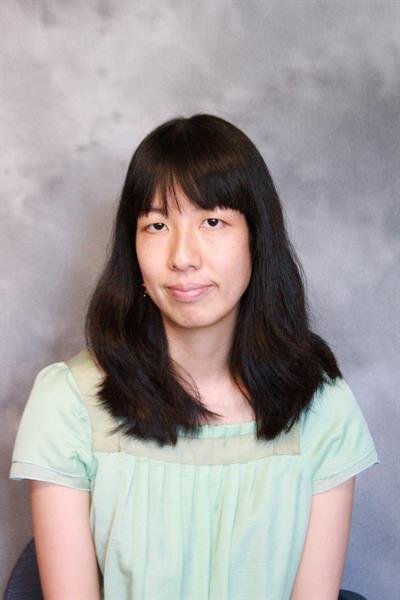
Megumi Ando serves as the Minnie McNeal Kenny Assistant Professor in the Department of Computer Science within Tufts University's School of Engineering. She joined Tufts in August 2023 as a full-time Assistant Professor after serving as a Visiting Assistant Professor from May to July 2023, with her named professorship awarded in February 2024. Previously, she was Lead Cybersecurity Research Scientist at MITRE Corporation where she consulted for federal agencies including the Department of Commerce. Her educational background includes: Ph.D. in Computer Science, Brown University (2020) M.Eng. in Electrical Engineering & Computer Science, MIT (2010) B.S. in Electrical Engineering & Computer Science, MIT (2010) B.S. in Mathematics, MIT (2007) Dr. Ando's research centers on the theoretical foundations of anonymous communication systems. Her work develops cryptographic protocols for onion routing with emphasis on resilience against network churn, asynchronous operations, and quantum threats. She investigates formal models for information leakage and composable security, aiming to build practical systems with provable privacy guarantees. Her research bridges theoretical computer science with real-world security applications. Analysis of her publication record reveals a cohesive trajectory from foundational cryptographic theory (2016) toward increasingly complex anonymity challenges. Early work established provable security for onion routing, evolving to address network churn (2022) and asynchronous models (2025). Her research consistently integrates quantum-resistance considerations and formal verification methods, demonstrating progression from theoretical constructs to practical implementations while maintaining cryptographic rigor. Her recognition includes: Four MITRE Innovation Program Awards (2013-2014, 2021-2022) ICALP Student Travel Award (2018) Brown University Graduate Fellowship (2016-2020) MITRE Accelerated Graduate Degree Fellowship (2014-2016) Dr. Ando has secured significant research funding including MITRE Innovation Program Awards and collaborative NSF grants for foundational anonymous communication research. She previously advised graduate students at Brown University and currently mentors students through her lab at Tufts. Her teaching portfolio includes Computation Theory, Cryptography, and specialized Data Infrastructure courses across multiple semesters. The Ando Lab at Tufts focuses on advancing theoretical frameworks for anonymous communication, with active projects in asynchronous anonymity protocols, churn-resistant network designs, and quantum-safe cryptographic systems. The lab maintains collaborations with federal security agencies and academic research groups specializing in network security and formal verification.
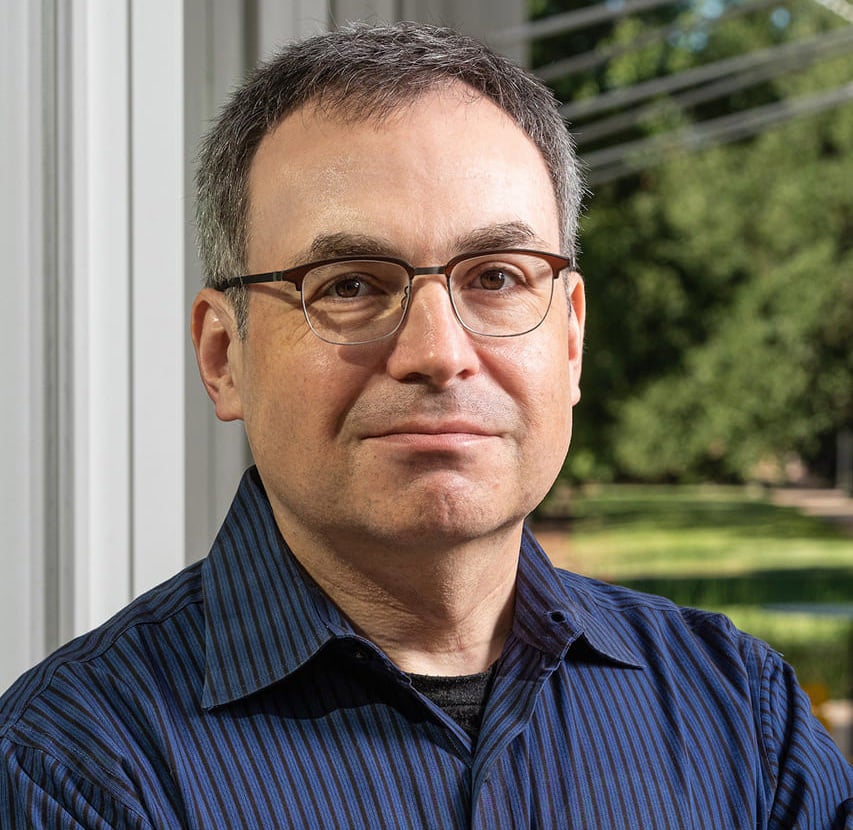
Dan S. Wallach is a Professor of Computer Science and Electrical and Computer Engineering at Rice University, and a Program Manager at DARPA's Information Innovation Office since June 2023. He holds a PhD (1999) and MA (1995) from Princeton University, and a BS (1993) from UC Berkeley. His research focuses on cybersecurity, electronic voting systems, and mobile security. He directed the NSF-funded ACCURATE Center (2005-2011), led the STAR-Vote project, and advised U.S. election security policies including testifying before state and federal committees. He also served on the Air Force Science Advisory Board (2011-2015), USENIX Board (2011-2013), and IEEE Technical Guidelines Committee (2019-2023). Recent work includes developing ElectionGuard cryptographic tools for verifiable elections and analyzing cyber warfare in Ukraine. His 15+ years of teaching include courses like Introduction to Program Design and Election Systems Technologies. Publications span secure voting protocols, smartphone security, and election auditing. Collaborations include Microsoft and VotingWorks on cryptographic voting systems like ElectionGuard and Arlo-CVR-Encryption.
Associate Professor Nalin Arachchilage is a leading academic in Cyber Security at RMIT University's School of Computing Technologies. He holds an honorary role at the University of Warwick and advises DEFSAFE Cyber Security Inc. His research focuses on usable security, privacy engineering, and AI-driven cybersecurity solutions. Key roles include revamping RMIT's Master of Cyber Security program and leading the Usable Security Engineering group at UNSW ADFA. Education: PhD in Cyber Security (Brunel University), Postdocs at Oxford and UBC. Research spans interdisciplinary areas including HCI, machine learning for threat modeling, and serious games for security education. He has published extensively in top venues like ACM CCS and SOUPS, contributing to global standards like OWASP. Leadership: Previously Assistant Head of School (Research) at the University of Auckland, and Director of the MProfStuds in Digital Security. Active in program committees for major conferences (ACM CCS, SOUPS). Current supervision includes 5 PhD students across RMIT and Auckland. Media Impact: Featured in Sky News Australia, ABC, and TVNZ. Collaborations with HP and Facebook. Awards include impactful contributions to security frameworks and standards. Teaching: Coordinates courses like INTE2625 (Cyber Security) and COSC2738 (Human-Centric Cyber Security). Supervises projects on topics like blockchain security and responsible AI. Non-Academic Roles: Chair of the Academic Board at Canberra Business & Technology College (2020-2021). Advisor to DEFSAFE, focusing on novel cyber-security products.
Carsten Baum is an Associate Professor at the Department of Applied Mathematics and Computer Science, Technical University of Denmark, working within the Cybersecurity Engineering Center for Quantum Technologies. His research focuses on cryptography, particularly post-quantum security, secure multi-party computation, and quantum-resistant protocols. Primary Affiliation: Technical University of Denmark (DTU) Academic Rank: Associate Professor Research Centers: Cybersecurity Engineering Center for Quantum Technologies Research Interests: Carsten Baum specializes in cryptographic protocols, including zero-knowledge proofs, multi-signatures, and oblivious computation. His work addresses quantum computing threats to classical cryptography and develops resilient post-quantum solutions. Key areas include: Secure multi-party computation (MPC) Post-quantum key agreement Quantum computing's impact on cryptographic security Privacy-preserving technologies Hash function security analysis (e.g., SHA-3) Time-based cryptographic primitives Advising and Projects: As a main or co-supervisor, Baum mentors multiple PhD candidates in post-quantum cryptography and secure protocols. His projects include proactive post-quantum cryptography, quantum key agreement, and long-term security frameworks, reflecting collaborations with institutions across Europe and Asia. Recent Activities: Baum actively organizes and participates in Nordic cryptography workshops, including NordiCrypt Spring 2024 and 2023, fostering academic exchange in cryptographic research.
Luca Caviglione is a prominent cybersecurity researcher at the National Research Council of Italy (CNR), specializing in steganography, covert channels, and network security. With over 140 publications spanning from 2015 to 2025, he has established himself as a leading expert in information hiding techniques and their security implications. His research bridges theoretical foundations with practical applications in IoT, cloud computing, and mobile security environments. Dr. Caviglione's primary research interests focus on steganography and covert communication channels , particularly their application in modern computing environments. He investigates how data can be hidden within network protocols, mobile applications, and cloud infrastructures, while simultaneously developing detection methodologies. His work extends to IoT security , where he examines vulnerabilities in constrained devices and develops AI-based approaches for threat detection. Additional research areas include container security, malware analysis (particularly stegomalware), and security protocol analysis. Caviglione's publication record reveals a clear evolution toward applying machine learning and artificial intelligence to detect sophisticated threats like stegomalware. His recent work increasingly addresses container security, DDoS protection in microservices, and post-quantum security challenges, reflecting the evolving threat landscape. He frequently collaborates with international researchers, notably Wojciech Mazurczyk (46 co-authored papers) and Steffen Wendzel (31 co-authored papers), forming a productive research network in information hiding. As an active contributor to the cybersecurity research ecosystem, Caviglione serves on editorial boards and has organized special issues focused on information security methodology and replication studies. His leadership in developing taxonomies for steganography methods demonstrates his influence in shaping research directions in this specialized field. His work has practical implications for securing modern computing environments against increasingly sophisticated hidden communication channels.
Aftab Ahmad is a Professor in the Department of Computer Science at the City University of New York (CUNY), specializing in cybersecurity and machine learning applications. He holds a Doctor of Science from George Washington University. His research focuses on developing machine learning algorithms for cyber threat intelligence (CTI) and public health prediction, along with designing secure generative deep learning models resistant to reverse-engineering. Key research areas include: Cybersecurity frameworks and privacy-preserving architectures Generative adversarial networks (GANs) with embedded security features Biomedical signal analysis and human body channel modeling Secure wireless protocols for critical infrastructure His publication trends emphasize: Privacy metrics and data protection mechanisms Smart grid and IoT security Neuroscience-inspired machine learning models Wireless network vulnerability assessments No scientific awards or grants were explicitly mentioned in the provided texts. He teaches advanced courses in computer security and network forensics at undergraduate and graduate levels. No advising relationships or lab affiliations were detailed in the available information.
Angelo Corallo is an Associate Professor at the Department of Experimental Medicine, University of Salento, specializing in technologies and methodologies for collaborative processes in industrial systems. His research spans Digital Business Ecosystems , Cybersecurity , and Collaborative Product Design , focusing on the interplay between technology and organizational dynamics. He leads interdisciplinary research divisions in Open Networked Business Management , Learning and Innovation , and Collaborative Product Design . Research Interests : Corallo's work integrates Information and Communication Technologies (ICT) with Business Management, particularly in Digital Twins for healthcare and manufacturing Knowledge Modeling and Ontology Engineering Industry 4.0 and Smart Manufacturing Agri-Food Sustainability through digitalization Scientific Contributions : His recent articles explore trends in Cybersecurity for Industrial IoT Metaverse Applications in business models Traceability Systems in food supply chains Collagen-Based Biomaterials from aquaponics
Dhammika Jayalath is an Associate Professor at Queensland University of Technology (QUT) in the School of Electrical Engineering & Robotics within the Faculty of Engineering. He has been with QUT since 2007, initially as a Senior Lecturer and later promoted to Associate Professor. Prior to joining QUT, he worked as a Senior Researcher at National ICT Australia Ltd and held a Fellowship at the Australian National University. His educational background includes a PhD in Wireless Communications from Monash University and a Graduate Certificate in Higher Education from QUT. He is a Senior Member of IEEE and active in multiple IEEE societies including Communications, Signal Processing, and Vehicular Technology. Research Interests: Dhammika's research focuses on Smart Systems with particular expertise in wireless communications and networking. His work spans Physical Layer Security, Massive MIMO Systems, Internet of Things, Optimum Resource Allocation, Cooperative communications, Cognitive radio, and Vehicular communications. He has made significant contributions to 5G New Radio, Chaotic Communications, Orthogonal Frequency Division Multiplexing (OFDM), and Space-Time Signal Processing. Publication Trends: His recent publications demonstrate a strong focus on 5G/6G networking technologies, physical layer security for IoT devices, and optimization of wireless communication systems. His work bridges theoretical communications theory with practical implementation challenges, particularly in vehicular networks, secure communications, and resource allocation for heterogeneous networks. The articles show increasing interdisciplinary work, combining machine learning techniques with traditional communications engineering approaches. Scientific Awards: 2007: Early Career Academic Recruitment and Development (ECARD) award from QUT 2009: Elevated to Senior Member Grade of IEEE 2000: IEEE travel grant Multiple scholarships during graduate studies at Monash University Supervision and Grants: Professor Jayalath has supervised numerous PhD students to completion with research topics including chaotic communication systems, resource allocation in heterogeneous networks, and vehicular communication systems. He has secured multiple research grants totaling over AU $300,000, including projects from ARC, QUT internal grants, and industry partnerships with Queensland Fire and Emergency Services. His current research includes physical layer security frameworks for IoT devices and optimization of massive MIMO systems for dense mobile networks. Laboratory and Team Work: He has been instrumental in establishing wireless communications research capabilities at QUT, including securing equipment grants for Software Defined Radio platforms. His work often involves interdisciplinary collaboration with researchers in signal processing, cybersecurity, and transportation systems.
Dr. Shaun Aghili serves as an Assistant Professor in the Faculty of Management at Concordia University of Edmonton (CUE), bringing extensive industry experience from the financial services sector. His academic focus centers on internal audit, fraud prevention, and information systems assurance within financial institutions. His educational credentials include: D.B.A. from Argosy University, USA (2003) M.Sc. in Financial Planning and Wealth Management from College for Financial Planning, USA (1999) B.A. from The Catholic University of America, USA (1985) Dr. Aghili's research integrates Risk Management , Cybersecurity , and Financial Services through frameworks like COBIT 5 and Lean Six Sigma. His work develops methodologies for fraud detection using data analytics, improves information systems audit protocols, and addresses security challenges in cloud computing and biometric authentication systems. Notable contributions include operational audit frameworks and corporate forensics governance models. His publication trend (2009-2014) reveals a strategic shift toward interdisciplinary solutions combining information security standards with financial risk management. This evolution demonstrates increasing focus on automated forensic approaches, e-government security models, and cloud computing SLA evaluations within financial contexts. Award recognitions include: IMA Certificate of merit for advancing management accounting literature 2009 IMA merit award for Lean Six Sigma audit framework research As a doctoral advisor, Dr. Aghili has successfully guided three PhD candidates through dissertation research on leadership dynamics in Taiwanese hospitality, workers' compensation fraud patterns, and RFID privacy implications in identification systems. His professional certifications—including CISSP, CISA, and CIA—enhance his industry-relevant research approach within the ISSAM Research Cluster. He actively contributes to CUE's ISSAM (Information Systems Security and Assurance Management) Research Cluster, focusing on cybersecurity risk mitigation strategies for financial institutions through collaborative framework development.