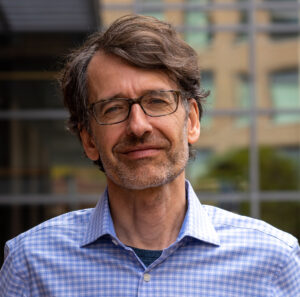
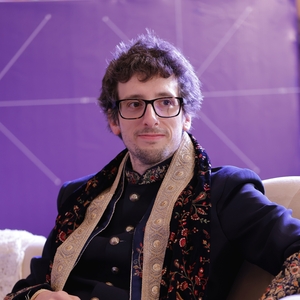
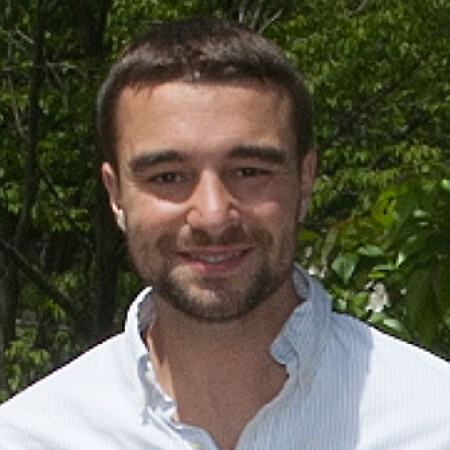
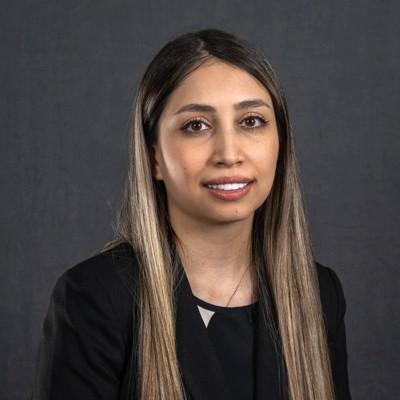
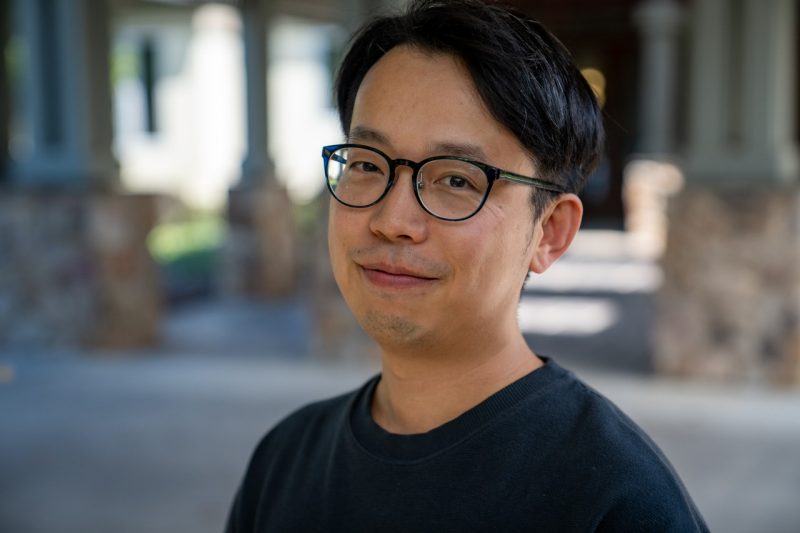
Stanislaw Jarecki is an Associate Professor of Computer Science at the Donald Bren School of Information and Computer Sciences (ICS) at the University of California, Irvine (UCI). He joined UCI in 2003 after earning his Ph.D. in Computer Science from MIT in 2001 under Prof. Shafi Goldwasser. His research focuses on applied and distributed cryptography, with significant contributions to threshold cryptography, secure computation, and password-authenticated key exchange (PAKE) protocols such as OPAQUE, which secures 2 billion WhatsApp users. He also worked at Intertrust’s StarLab and Stanford’s applied cryptography group under Prof. Dan Boneh. Education: Ph.D., Massachusetts Institute of Technology, 2001. Research Interests: Distributed cryptography, secure multi-party computation, privacy-preserving protocols, threshold security, blockchain applications, and efficient cryptographic primitives. His work emphasizes practical solutions for real-world systems, including protocols resilient to server compromises and scalable encryption methods. Awards: 2023 IACR Fellow for contributions to distributed cryptography and efficient secure computation. Advising and Grants: Jarecki’s research has been supported by grants including NSF SaTC programs. He advises students on cryptographic protocol design and security mechanisms. His work on OPAQUE and CHIC protocols exemplifies his focus on bridging theoretical cryptography with practical implementation. Labs/Teams: Leads a research group focused on applied cryptography and security within ICS at UCI, collaborating on projects like secure computation, privacy-preserving data processing, and cryptographic protocol development.
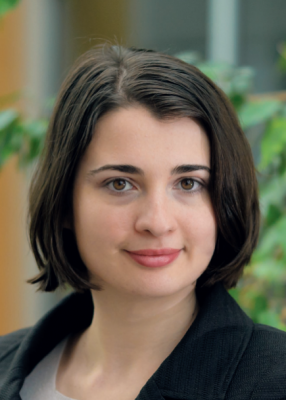
Roxana Geambasu is an Associate Professor at Columbia University's Department of Computer Science, with affiliations to the Software Systems Lab and the Cybersecurity Committee . She specializes in systems security, differential privacy, and resource management for modern computing environments. PhD: University of Washington (2011) Undergraduate: Polytechnic University of Bucharest, Romania Her research focuses on integrating differential privacy as a first-class computing resource in infrastructure systems, with key contributions in: Privacy Budget Management (PrivateKube, DPack, Turbo) Web & Mobile Privacy (Cookie Monster, Big Bird) Security Abstractions (POSIX, Vanish, XRay) Article trends show a strong emphasis on differential privacy (8/15), resource scheduling (5/15), and privacy-preserving advertising (3/15). Key subfields include budget optimization, browser APIs, and ML pipeline privacy. Scientific awards include: Alfred P. Sloan Fellowship NSF CAREER Award Google Ph.D. Fellowship in Cloud Computing Best Paper Awards at SOSP, EuroSys She advises M.S. and undergraduate students, teaching courses in Distributed Systems and Privacy Curriculum . Her lab develops tools like PixelDP and Sunlight for operationalizing privacy in real-world systems.
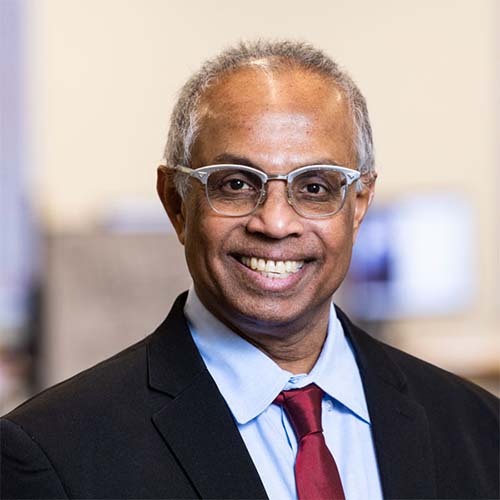
Duminda Wijesekera serves as Professor in the Department of Cyber Security Engineering and Department of Computer Science at George Mason University, where he was inaugural chairman of the Cyber Security Engineering Department until December 2022. He concurrently held the position of visiting research scientist at the National Institute of Standards and Technology (NIST) from 2007-2022 and maintains status as a fellow at the Potomac Institute of Policy Studies. He leads the Mason Innovation Laboratory at Mason Square, driving translational research in cyber-physical security. His educational foundation includes: PhD in Computer Science, University of Minnesota (1997) PhD in Mathematical Logic, Cornell University (1990) BSc in Mathematics, University of Colombo Professor Wijesekera's research centers on cyber-physical system security , with pioneering work in Intelligent Transportation Systems spanning trains, aircraft, and connected vehicles. His digital forensics innovations establish frameworks for evidence-based scenario reconstruction and error management, while his formal methods research provides mathematical guarantees for safety-critical systems. Current projects address Next G-based edge services, digital twin vulnerability detection, and healthcare security architectures, consistently bridging theoretical rigor with real-world infrastructure protection. Analysis of his 2022-2025 publications reveals intense focus on autonomous vehicle security (38% of recent output), including traffic signal control optimization, ramming attack countermeasures, and CARLA-based scenario validation. Digital forensics using AI (20%) and secure manufacturing/edge computing (27%) constitute other major thrusts, demonstrating how formal verification and machine learning converge to solve complex cyber-physical security challenges across transportation, energy, and healthcare domains. His scientific recognition includes: CCI Impact Award (2022) for groundbreaking cyber-physical security contributions Fellowship at the Potomac Institute of Policy Studies for cybersecurity policy leadership Professor Wijesekera has secured substantial research funding through: NIST grants for health record security frameworks (2014-2015) US Department of Transportation projects on wireless frequency mapping for high-speed rail (2013-2014) Cyber Security Research Alliance funding for trust architectures in cyber-physical systems (2014) Commonwealth Cyber Initiative awards for autonomous vehicle security and energy-efficient manufacturing His industry partnerships with Honeywell and NIST ensure practical impact of theoretical research. The Mason Innovation Laboratory under his direction serves as an interdisciplinary hub for cyber-physical security, integrating researchers from computer science, electrical engineering, and policy studies to develop deployable solutions for transportation networks, power grids, and critical infrastructure protection.
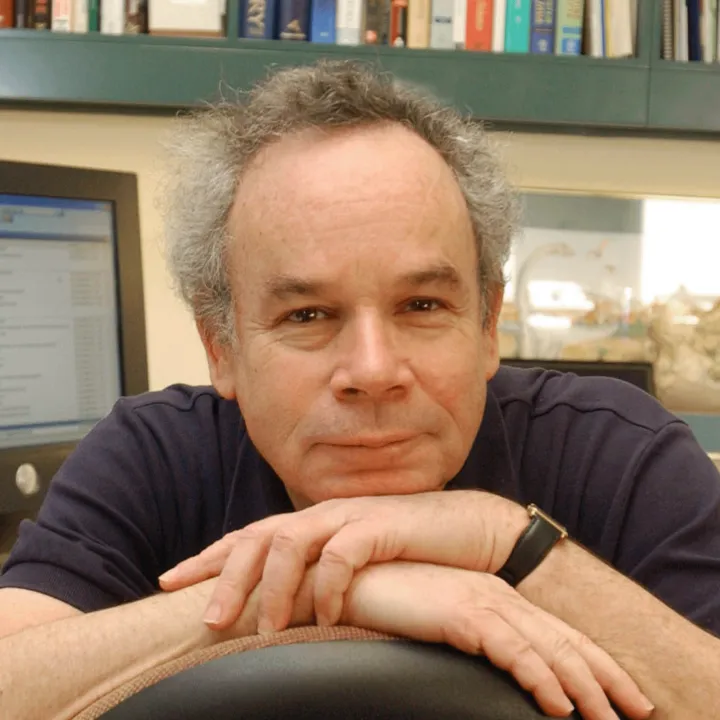
Robin Kravets is a Professor in the Department of Computer Science at the University of Illinois at Urbana-Champaign, where she leads the Mobius research group. She earned her Ph.D. in Computer Science from the Georgia Institute of Technology in August 1999. Her office is located at 3114 Siebel Center for Comp Sci, and she can be contacted via email at rhk@illinois.edu or phone at (217) 244-6026. Courses Taught: CS 438 (ECE 438) - Communication Networks CS 498 WN3 (CS 498 WN4) - Wireless IoT Lab CS 591 PH2 (CS 591 PHD) - PhD Orientation Seminar CS 591 SCH - PhD Job Search Prep CS 591 WN - Wireless Networking Seminar ECE 439 (CS 439) - Wireless Networks ENG 572 - Professional Practicum Research Focus: Dr. Kravets specializes in wireless and mobile systems, with emphasis on IoT security, energy-efficient networking, and privacy-preserving protocols. Her work addresses challenges in dense network environments, vehicular communication, and low-power devices, often leveraging probabilistic models and adaptive protocols to enhance system resilience. Publication Trends: Her recent articles (2016-present) predominantly explore wireless IoT security (e.g., MAC randomization defenses, BLE optimization) and practical applications in environmental sensing/retail. Earlier work (2007-2015) established foundations in vehicular networks, disruption-tolerant communication, and energy-aware protocols. Leadership: She directs the Mobius Group, which develops solutions for mobile and IoT systems, including projects like IVP (Illinois Vehicular Project) and contributions to standards in pervasive computing.
René Jr Landry is a full Professor in the Department of Electrical Engineering at École de technologie supérieure (ETS), Université du Québec, specializing in Global Navigation Satellite Systems (GNSS), avionics, and wireless communication technologies. His academic journey includes a B.Ing. from Polytechnique Montréal, M.Sc. from University of Surrey (UK), and Ph.D. from SupAréo in Toulouse. He maintains active research leadership through two key laboratories: LASSENA (Laboratory of Space Technologies, Embedded Systems, Navigation and Avionics) and LACIME (Communications and Microelectronic Integration Laboratory). His research spans critical aerospace navigation domains including GNSS signal processing, inertial navigation systems, software-defined radio for avionics, radio frequency interference mitigation, and indoor positioning technologies. Landry's work addresses real-world challenges in satellite navigation robustness, precision positioning in urban/denied environments, and next-generation avionic system security. His current projects focus on blockchain-enhanced IoT security, AI-driven GNSS disruption analysis, and adaptive RF front-ends for multi-band avionics applications. Analysis of his recent publications reveals strong emphasis on resilient positioning systems through multi-constellation integration (particularly Iridium-NEXT), blockchain applications for navigation security, and explainable AI techniques for GNSS signal quality assessment. His work increasingly bridges traditional navigation engineering with cutting-edge security and machine learning paradigms. 2014 Prix d'excellence du c.a. pour les services à la collectivité Landry has supervised over 100 graduate students across doctoral, master's, and research projects since 2005, with current supervision extending through Summer 2025. His research funding supports multiple industry partnerships focused on avionics certification, software-defined radio implementations, and next-generation navigation systems. The LASSENA laboratory under his leadership develops certified avionic products from open-source SDR platforms and advances multi-sensor fusion techniques for challenging navigation environments. His research infrastructure includes specialized facilities for GNSS signal simulation, avionics hardware testing, and multi-sensor integration. Current work emphasizes flight-tested validation of RF front-end technologies, blockchain-secured navigation data, and real-time interference mitigation systems for aviation applications.
Dr. Chutima Boonthum-Denecke is a Professor in the Department of Computer Science at Hampton University's School of Science. She joined Hampton University in 2006 as an Assistant Professor and now serves as Director of the Information Assurance and Cyber Security Center (IAC@HU). She leads the NSF CyberCorps Scholarship for Service program and has contributed to NSF initiatives like ARTSI and STARS Alliances. Her educational background includes a Ph.D. in Computer Science from Old Dominion University (2007), an MS in Applied Computer Science from Illinois State University (2000), and a BS in Computer Science from Srinakharinwirot University (1997). Dr. Boonthum-Denecke's research integrates artificial intelligence, natural language processing, and cybersecurity. Key interests include: Developing intelligent tutoring systems and educational games Secure coding practices for software engineering NLP applications in information retrieval and assessment tools Cyber-physical security for IoT and robotics Her recent publications (2016-2021) focus on machine learning applications in cybersecurity, including sentiment analysis for threat detection, blockchain-enhanced IoT security, and vulnerability assessments of emerging technologies. Collaborative work with students frequently addresses privacy ethics in AI assistants, RFID implants, and cloud systems. She mentors students through the IAC@HU lab, resulting in award-winning conference presentations on cybersecurity topics. As Principal Investigator of NSF CyberCorps, she oversees scholarship programs that bridge academic research with national security needs.
Mustafa A. Mustafa is a Senior Lecturer (Associate Professor) in the Department of Computer Science at The University of Manchester, where he leads the Trusted Digital Systems Cluster as part of the university-wide Centre for Digital Trust and Society. His academic journey spans prestigious institutions including The University of Manchester, where he completed his PhD, and KU Leuven in Belgium, where he served as a post-doctoral research fellow. Dr. Mustafa earned his educational qualifications through an impressive academic path: a B.Sc. in communications from the Technical University of Varna, Bulgaria (2007), an M.Sc. in communications and signal processing from Newcastle University, UK (2010), and a Ph.D. in computer science from The University of Manchester, UK (2015). His doctoral research focused on "Smart Grid Security: Protecting Users' Privacy in Smart Grid Applications," laying the foundation for his subsequent research career. Dr. Mustafa's research expertise centers on information security, data privacy, and applied cryptography with particular focus on smart grid systems, smart city applications, e-health, and IoT. His work addresses critical challenges in securing peer-to-peer electricity trading markets, smart metering infrastructure, electric vehicle charging systems, and health data management. He has developed innovative solutions for keyless car sharing systems, frictionless authentication mechanisms, and privacy-preserving protocols for data collection and distribution. His scholarly contributions demonstrate a consistent trajectory toward increasingly sophisticated privacy-preserving techniques applied across multiple domains. Recent work shows a growing integration of artificial intelligence and machine learning approaches with traditional cryptographic methods, particularly in federated learning systems and large language model verification. His research bridges theoretical cryptography with practical implementations in energy systems and healthcare applications. Dr. Mustafa's scientific achievements have been recognized with several prestigious awards: Winner of the Student Video Competition at IEEE SmartGridComm 2017 for "Secure and Privacy-friendly Local Electricity Trading" Best Paper Award at SECURWARE 2017 Distinguished Achievement Award as Postgraduate Research Student of the Year nominee by the School of Computer Science of The University of Manchester (2015) Dame Kathleen Ollerenshaw Research Fellowship (2018-2023) As an academic supervisor, Dr. Mustafa has mentored numerous graduate students through their PhD and Master's research, with a particular focus on privacy and security challenges in emerging technologies. His current supervision portfolio includes research on privacy-friendly multi-agent systems for smart grids, security for IoT in e-health, vulnerability detection in IoT cryptography, and bot detection systems. He has secured significant research funding through multiple competitive grants including EnnCore: End-to-End Conceptual Guarding of Neural Architectures (EPSRC, 2020-2024), SCorCH: Secure Code for Capability Hardware (EPSRC, 2019-2023), and SNIPPET: Secure and Privacy-friendly Peer-to-peer Electricity Trading (FWO-SBO project, 2019-2023). Dr. Mustafa leads the Trusted Digital Systems Cluster within the Centre for Digital Trust and Society at The University of Manchester. His research group comprises PhD students, postdoctoral researchers, and collaborators working on cutting-edge security and privacy solutions. The team maintains strong international collaborations, particularly with KU Leuven in Belgium, and contributes to standards development as evidenced by Dr. Mustafa's role as an expert in the IEC/SYC/WG 3 "IEC Smart Energy Roadmap."
Abraham Silberschatz is the Sidney J. Weinberg Professor of Computer Science at Yale University. He previously served as Vice President of the Information Sciences Research Center at Bell Laboratories and held a chaired professorship at the University of Texas at Austin. His research focuses on database systems, operating systems, and network management. Silberschatz has advised over a dozen PhD students, many now in academia and industry. Education: Ph.D., Computer Science, Stony Brook University (SUNY) Research Interests: His work spans database systems, operating systems, storage systems, and network management. Notable contributions include foundational textbooks like Operating System Concepts and Database System Concepts , which have become industry standards. He has also developed innovative systems like DataPlay and contributed to projects such as NetInventory. Publications: His 15+ years of research include influential papers on database architecture, network routing, and distributed systems. Recent work explores leveraging non-volatile memory technologies in systems design. Awards: ACM Karl V. Karlstrom Outstanding Educator Award (1998) IEEE Taylor L. Booth Education Award (2002) VLDB Test of Time Award (2019) Multiple Bell Laboratories President's Awards for innovation Grants & Patents: Recipient of over two dozen grants and over four dozen patents, including foundational IP in multimedia storage and distributed systems. His team's HadoopDB project merged MapReduce and DBMS technologies. Labs/Teams: Collaborates with Prof. Robert Soulé on projects in database systems and networking, focusing on next-gen memory technologies. Active in mentoring graduate students and postdocs in their research group.
Stefano Gogioso is a Departmental Lecturer at the University of Oxford , specializing in quantum theory and quantum software. He holds a DPhil in Computer Science from Oxford (2013–2017) and advanced degrees from Cambridge (MASt, BA) and the University of Genova (MSc, BSc). As a Fellow at Kellogg College and co-founder of Hashberg Ltd , he develops quantum programming tools and focuses on quantum causal structures, quantum field theory, and natural language processing applications. His research bridges foundational quantum theory with practical applications, including near-term quantum computing and educational outreach through visual methods like Quantum in Pictures . Research Interests: Quantum foundations, quantum software, categorical quantum mechanics, quantum field theory, and quantum causality. His work emphasizes pictorial formalisms and compositional methods, with contributions to indefinite causality, quantum cellular automata, and quantum natural language processing (QNLP). Key Contributions: Published over 25 papers, including works on causal polytopes, categorical Feynman diagrams, and QNLP pipelines. Co-developed Hashberg 's quantum programming tools and serves as a mentor for AI initiatives at CDL-Oxford. His thesis introduced dynamics in categorical quantum mechanics, addressing symmetry and quantum clocks. Teaching: Teaches quantum computing courses for MSc/MFoCS students, professionals, and continued education. Courses include Quantum Software , Quantum Computing for Software Engineers , and bespoke corporate training. Labs/Teams: Part of the Oxford Quantum Group and involved in collaborative projects with industry and academia. Advising: Supervised students like Nicola Pinzani (causal orders) and Maria Stasinou (quantum field theory). Grants/Awards: Not explicitly listed, but recognized for contributions to quantum foundations and education.
Joseph S. Friedman is an Associate Professor of Electrical & Computer Engineering at the University of Texas at Dallas, leading the NeuroSpinCompute Laboratory within the Erik Jonsson School of Engineering and Computer Science. His research focuses on unconventional computing paradigms leveraging nanotechnology, including neuromorphic systems, spintronics, and memristive devices. He specializes in nanomagnet-based logic architectures, neuromorphic computing with domain walls and skyrmions, and hardware security for emerging technologies. His research explores energy-efficient computing through novel paradigms such as reversible skyrmion logic, neuromorphic networks using magnetic tunnel junctions, and stochastic Bayesian inference circuits. He has pioneered spintronic neurons demonstrating 94% accuracy in handwritten digit recognition and developed secure logic locking mechanisms using nanomagnet logic. His work integrates experimental fabrication with SPICE modeling, emphasizing scalable beyond-CMOS systems. Recent advancements include toggle SOT-MRAM architectures, quantum circuit design for neutral atom systems, and neuromorphic networks leveraging superconducting flux quanta. He advises over 20 graduate and undergraduate students, fostering innovation in AI hardware and unconventional computing. Notable projects include the NeuroSpinCompute Lab's domain wall neuromorphic networks, secure logic locking schemes, and collaborations with institutions like Sandia National Labs on neuromorphic reservoir computing. Current research trends emphasize low-energy spintronic architectures, hybrid quantum-classical systems, and neuromorphic applications in edge computing. His research is supported by NSF grants CCF-1910800 and CCF-2146439, focusing on neuromorphic and spintronic systems. He regularly contributes to conferences like IEEE Rebooting Computing and SPIE Spintronics, showcasing breakthroughs in nanomagnetic logic and neuromorphic inference.
Prof. Daniel Große serves as Professor at the Institute for Complex Systems (ICS) within Johannes Kepler University Linz, Austria, while maintaining a dual affiliation with the German Research Center for Artificial Intelligence (DFKI) in Bremen. His research centers on Electronic Design Automation (EDA), specializing in verification, debugging, and synthesis of complex hardware/software systems through advanced virtual prototyping techniques. His primary research domains include Formal Verification , Hardware Verification , and Virtual Prototyping , with significant contributions to RISC-V architecture development and embedded systems validation. Current projects like PaSVer (automotive electronics), AUTOASSERT (analog-digital verification), and VerSys (RISC-V software platforms) demonstrate his focus on bridging simulation and formal methods for safety-critical applications. Recent publications reveal accelerating trends in metamorphic testing for embedded graphics libraries and RISC-V vector extensions, alongside innovations in waveform analysis tools like Surfer. His work increasingly integrates AI-assisted verification while maintaining rigorous formal methods foundations. Prof. Große actively supervises student research, having guided Lucas Klemmer's PhD thesis and nine Bachelor theses on topics ranging from RISC-V processor design to transaction visualization. His projects including SATiSFy (autonomous vehicle security) and CONVERS (complex system design automation) secure substantial research funding from academic and industry partners. He leads the Institute for Complex Systems' development of open-source tools such as RISC-V VP++ and contributes to international standards through program committee roles at DATE, ICCAD, and RISC-V Summit Europe.
Kimia Zamiri Azar serves as an Assistant Professor in the Department of Electrical and Computer Engineering at the University of Central Florida, focusing on hardware security and verification methodologies. Her research bridges theoretical formal methods with practical security implementations in semiconductor design and testing. Her educational background includes: Ph.D. in Electrical and Computer Engineering, George Mason University (2021) Postdoctoral Research, University of Florida Dr. Azar's research spans hardware security with emphasis on system-level verification, VLSI design-for-trust, and advanced IC testing. She pioneers techniques in logic locking, secure heterogeneous integration, and IC supply chain security, developing frameworks for authenticated encryption in Systems-in-Package and runtime security monitoring. Her work integrates formal verification with innovative testing methodologies to address hardware trust challenges across the semiconductor lifecycle. Analysis of her recent publications reveals two dominant trends: (1) Application of large language models (LLMs) to hardware design tasks including high-level synthesis code generation and RTL optimization, and (2) Advancement of secure heterogeneous integration techniques for System-in-Package architectures with focus on counterfeit prevention and split-test security protocols. These directions address critical gaps in hardware trustworthiness amid increasingly complex semiconductor supply chains. Her scientific contributions have earned significant recognition: Best Paper Award at ICCAD 2019 Best Paper Award at ISVLSI 2020 Best Paper Award at ICCAD 2020 Best Paper Award at IEEE DCAS 2020 Best Paper Award at HOST 2022 Best Paper Award at DATE 2023 Dr. Azar secures substantial research funding from premier agencies including NSF, SRC, DARPA, AFRL, DoD (NG), and Microsemi. Her grants support projects spanning hardware security validation frameworks, secure heterogeneous integration, and AI-augmented verification methodologies. She actively mentors students in her research group, guiding publications in top venues like IEEE D&T, IEEE TC, and DAC while fostering industry-academic collaborations. Her work directly impacts semiconductor security standards through patented innovations and open-source verification tools. As an active IEEE and ACM member, she contributes to community advancement through conference organization (HOST, DATE), journal editorial roles, and workshop leadership on hardware security standards. Her research group collaborates with semiconductor industry leaders to translate theoretical security frameworks into practical design-for-trust methodologies for next-generation integrated circuits.
Dr. Amir Keyvan Khandani is a Professor and Senior Ciena-NSERC Industrial Research Chair in the Department of Electrical and Computer Engineering at the University of Waterloo. He holds prestigious research chairs including Tier 1 Canada Research Chair in Wireless Communications and former Senior NSERC Chairs with Blackberry and Nortel. His research focuses on information theory, wireless and optical communications, and signal processing, emphasizing foundational principles and practical applications. Dr. Khandani earned his BEng and MEng from Tehran University (1985) and PhD from McGill University (1992). He joined Waterloo in 1993, supervising over 45 PhD students, 35 master’s candidates, and numerous postdoctoral researchers. His alumni work globally in academia and industry. Research interests include Network Information Theory , Media-Based Modulation , Full-Duplex Systems , and Quantum-Safe Encryption . Recent work explores secure key generation, interference management, and next-generation wireless innovations. Notable awards include NSERC/Ciena Industrial Research Chair and multiple Canada Research Chairs. His publications span foundational and applied topics in communications, with recent focus on cybersecurity and 5G/6G technologies. Dr. Khandani actively contributes to conferences, consults for industry/government, and teaches ECE 307 - Probability Theory and Statistics . His lab develops cutting-edge solutions in wireless networks, optical systems, and secure communication protocols.
Tijay Chung is an Associate Professor at the College of Engineering , Virginia Tech , specializing in Internet Security and Internet Measurement . His work bridges theoretical and applied aspects of cybersecurity, focusing on secure communication protocols and infrastructure. Education Ph.D., Computer Science and Engineering, Seoul National University (2015) B.S., Computer Science and Engineering, Pohang University of Science and Technology (2009) Research Interests Chung's research centers on improving certificate revocation mechanisms, DNSSEC, and TLS security. He explores vulnerabilities in web encryption, develops decentralized cryptographic solutions, and analyzes internet governance protocols like BGP and RPKI. His work also extends to privacy in contact-tracing technologies and understanding content distribution dynamics in peer-to-peer systems. Recent publications highlight trends in : Enhancing TLS and DNSSEC operational security Decentralized cryptographic accumulators for revocation Longitudinal studies of PKI and certificate ecosystems Privacy guarantees in Bluetooth Low Energy (BLE) systems Advising No student names were explicitly listed in the provided materials.
J. Haadi Jafarian is an Assistant Professor in the Department of Computer Science and Engineering at the University of Colorado Denver, where he leads the Active Cyber and Infrastructure Defense (ACID) Lab. He earned his Ph.D. from the University of North Carolina Charlotte in 2017. Research Interests: Active Cyber Defense (Moving Target Defense, Cyber Deception) Big Data Analytics for Cyber Threat Intelligence Security for Cyber-Physical Systems & Critical Infrastructures Cyber Resilience and Automation Recent Publications highlight innovations in traffic obfuscation, adversarial machine learning, and deception-based threat detection. His work spans network security, cybersecurity analytics, and scalable defense frameworks. Teaching includes: CSCI 4743/5743: Cyber and Infrastructure Defense (Fall 2023) CSCI 4742/5742: Cyber Programming and Analysis (Spring 2023) CSCI 4741: Cybersecurity Principles (Spring 2022) CSCI 4800: Web Application Development (Spring 2021) CSCI 3761: Computer Networks (Spring 2020) Labs & Teams: The ACID Lab focuses on developing proactive cyber defense strategies, including moving target defense, deception techniques, and security analytics for critical infrastructure.