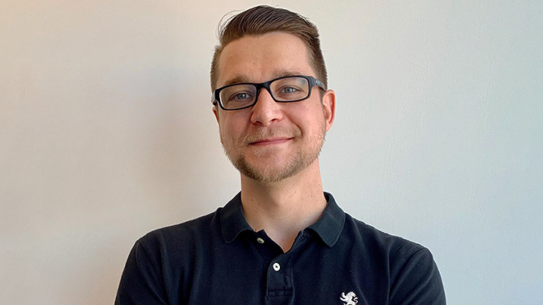
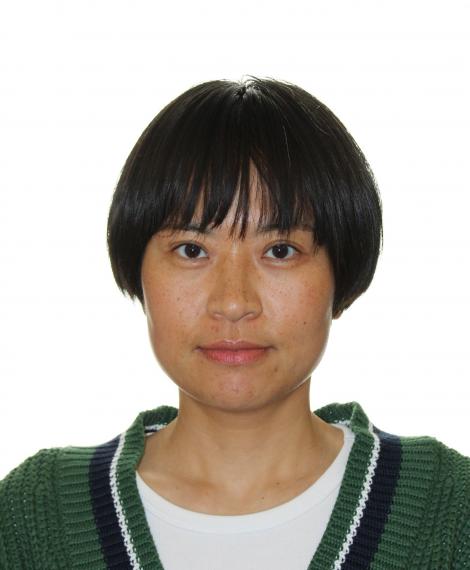
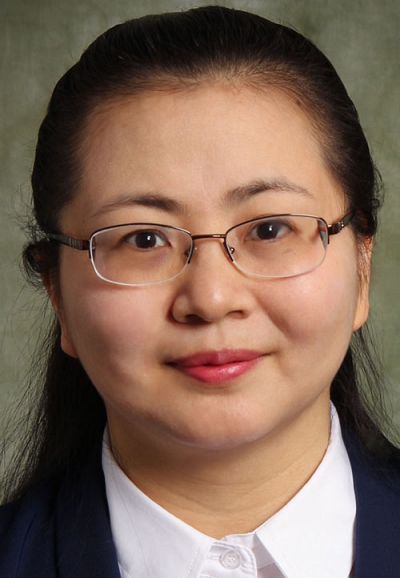
Moritz Wiese is a Researcher at the Chair of Theoretical Information Technology within the Department of Electrical and Computer Engineering at Technische Universität München (TUM) . His work focuses on information-theoretic security, quantum communication, and wireless networks, with significant contributions to interference modeling and secure coding schemes. Research Interests : Information-Theoretic Security, Quantum Wiretap Channels, MIMO Systems, 5G/6G Technologies, Physical Layer Security, and Network Coding. Key Grants : Involved in DFG-funded projects (Gottfried Wilhelm Leibniz Prize, UKoloS) and BMBF initiatives (6G-life, QuaDiQua). Collaborations : Worked with Prof. Holger Boche, Christian Deppe, and Rami Ezzine on secure communication and randomness generation. Labs : Active in the ACES Lab and 6G-life research hub, focusing on joint communication/sensing and neuromorphic computing. Publications : Over 20 papers on secure estimation, wiretap channels, and quantum secrecy, including top-tier journals like IEEE Transactions on Information Theory and Journal of Mathematical Physics .
Marina Blanton is an Associate Professor in the Department of Computer Science and Engineering at the University at Buffalo, and Faculty Director of Women in Science and Engineering within the School of Engineering and Applied Sciences. She holds a PhD in Computer Science from Purdue University (2007), along with multiple advanced degrees in Computer Science and Electrical Engineering from prestigious institutions in the US and Russia. Her research focuses on applied cryptography, information security, and privacy-preserving computation and outsourcing. She has pioneered work on secure multi-party computation protocols, privacy-preserving biometric authentication, and secure data analytics across distributed systems. Her contributions include foundational frameworks like PICCO, a compiler for private distributed computation, and advancements in protocols for genomic data analysis and floating-point secure computation. Blanton has been recognized with numerous awards, including IEEE and ACM Senior Membership (2016/2015), the ACM CCS Test of Time Award (2015), and the AFOSR Young Investigator Award (2013). Her research has been supported by grants such as NSF SaTC awards and AFOSR funding. Her work emphasizes practical implementations of secure computation, with applications in healthcare, biometrics, and distributed data systems. She has advised numerous students and contributed to educational initiatives promoting women in STEM through her leadership roles.
Professor Peter Y. K. Cheung is a Professor of Digital Systems at Imperial College London, holding dual affiliations within the Department of Electrical and Electronic Engineering and the Dyson School of Design Engineering. His work focuses on reconfigurable systems, FPGA architectures, and high-level synthesis tools. He co-founded one of the UK's leading FPGA research groups with Professor Wayne Luk, addressing challenges in variability mitigation, reliability, and application-specific FPGA deployments. His research spans Field-Programmable Gate Arrays (FPGAs) Reconfigurable computing Neural network acceleration Cryptographic protocols Embedded systems He has pioneered techniques such as logic shrinkage for FPGA-based neural networks and developed frameworks like LUTNet for efficient inference. His contributions also include fault-tolerant FPGA designs and methodologies for distributed computation protocols. Key collaborations include work with the Department of Computing on FPGA-based AI acceleration and cybersecurity applications. His recent work explores edge computing, secure decentralized systems, and pandemic modeling using adaptive control strategies. Notable projects include the DSCS protocol for secure distributed computation, acceleration of gravitational wave detection algorithms, and energy-efficient CNN implementations. His research bridges hardware-software co-design with real-world applications in healthcare, finance, and aerospace.
Juan Garay is a Professor in the Department of Computer Science & Engineering at Texas A&M University, affiliated with the College of Engineering. His research focuses on cryptography, information security, and distributed systems, with notable contributions to cryptographic protocols, blockchain technologies, and consensus mechanisms. He holds a leadership role in advancing theoretical and applied aspects of secure computation and network security. Research Interests: Cryptography and Information Security Secure Multiparty Computation Cryptocurrencies and Blockchain Protocols Consensus Algorithms Distributed Computing Game Theory in Cryptography Publications highlight his work on the Bitcoin Backbone Protocol, secure multiparty computation, and post-quantum cryptographic systems. He actively contributes to conferences and workshops in cryptography and distributed systems. He advises graduate students in computer science and engineering, though specific advisee names are not listed. His work is supported by grants from the National Science Foundation (NSF) and other institutions, focusing on secure protocols and distributed systems. Office: Peterson Building (PETR 429) Contact: garay@cse.tamu.edu
Yan Huang is an Associate Professor in the Department of Computer Science at Indiana University Bloomington, focusing on security and cryptography. His work bridges theoretical foundations with practical systems, emphasizing cryptographic protocols with strong security guarantees for generic computation. University: Indiana University Bloomington School: College of Arts and Sciences Department: Computer Science Academic Rank: Associate Professor His research combines theoretical computer science , program analysis , artificial intelligence , and software engineering to address real-world security problems. Key areas include secure computation , zero-knowledge proofs , and privacy-preserving technologies . Recent publications, such as Phecda (SP'25) and Dubhe (USENIX Security'23), highlight advancements in post-quantum cryptography , AES verification , and privacy-preserving deep packet inspection , reflecting his focus on scalable and practical cryptographic solutions. He has advised notable students including Changchang Ding (PhD, Computer Science) and Ruiyu Zhu (PhD, now at Facebook), and served on program committees for top conferences like ACM CCS and CRYPTO .
Scott Kerlin is a Senior Lecturer in the Department of Electrical Engineering and Computer Science at Oregon State University's College of Engineering. He holds an M.S. and B.S. in Computer Science from the University of North Dakota. Prior to academia, he worked at the Mayo Clinic on medical software systems and IBM as a build master for enterprise products. His career spans roles including network administrator, lab manager, and Undergraduate Director at UND. Dr. Kerlin's research focuses on bridging industry experience with academic curriculum, particularly in computer science education, project-based learning, and cybersecurity. He emphasizes practical applications of theoretical concepts, such as integrating 3D printing and scanning technologies with security systems for small satellites. His work also explores student efficacy in AI courses and scalable software project management methodologies. He has taught at multiple institutions, including the University of Minnesota and Augsburg University, and held roles at Michigan Tech as Senior Security Engineer. His 2024 Engineering+ Outstanding Teaching Award highlights his commitment to pedagogical innovation. Current projects include in-space 3D printing, solar energy systems, and cryptographic solutions for satellite communications. Key areas of contribution include: 3D printing/Scanning: Material characterization, key replication, and aerospace applications Cybersecurity: Intrusion detection, satellite communications security, and chaotic cryptosystems Educational Innovation: Active learning frameworks, PBL implementation, and student performance modeling His interdisciplinary approach connects computer science fundamentals with real-world engineering challenges, emphasizing sustainability and industry relevance in curricula.
Callie Hao is an Assistant Professor in the Department of Electrical and Computer Engineering at the Georgia Institute of Technology since 2021, holding the ON Semiconductor Junior Professorship. Her research bridges hardware efficiency and algorithmic innovation with significant industry and federal recognition. Education: Ph.D. in Electrical Engineering, Waseda University (2017) M.S. and B.S. in Computer Science and Engineering, Shanghai Jiao Tong University Research Focus: Dr. Hao pioneers software/hardware co-design for edge AI, specializing in hardware-efficient machine learning algorithms, FPGA-based reconfigurable computing, graph neural networks, and electronic design automation (EDA). Her work emphasizes neural architecture search, high-level synthesis optimization, and memory-efficient systems for embedded and IoT applications, driven by the philosophy that "1 + 1 > 2" for transformative efficiency gains. Publication Impact: Her 15 most recent publications (2023-2026) reveal a strategic shift toward machine learning-driven EDA tools, with 60% focused on high-level synthesis frameworks and 40% on graph neural network acceleration. Key trends include simulation speed breakthroughs (LightningSim), automated accelerator generation (GNNBuilder), and cryptographic hardware innovations (Cryptonite), predominantly published in top-tier venues like MICRO, ICCAD, and DAC. Awards & Recognition: NSF CAREER Award (2024) and Intel Rising Star Faculty Award (2023) Best Paper Awards at MLCAD 2024 and GLSVLSI 2021 ON Semiconductor Junior Professorship (2025) and Sutterfield Family Early Career Professorship (2022) DAC-SDC competition championships (2018-2020) Mentorship & Funding: Dr. Hao advises 8+ Ph.D. students in the Sharc Lab, with Rishov Sarkar winning the Oscar P. Cleaver Award and Qualcomm Innovation Fellowship. Her research is funded by DARPA (2021) for ultra-light video intelligence systems and supported by industry awards from Amazon and Sony. She actively serves on program committees for DAC, ICCAD, and DATE conferences. Lab Leadership: As director of the Sharc Lab (Software/Hardware Co-design lab), she cultivates interdisciplinary research at the intersection of FPGA design, machine learning, and EDA, requiring expertise in Verilog/HLS, GNNs, and compiler technologies while maintaining strict focus on real-world hardware implementation.
Brandon Reagen is an Assistant Professor in the Department of Electrical and Computer Engineering at New York University's Tandon School of Engineering, with affiliations in Computer Science, the Center for Advanced Technology in Telecommunications (CATT), and the NYU Center for Cybersecurity (CCS). He holds a PhD in Computer Science from Harvard (2018) and undergraduate degrees in Computer Systems Engineering and Applied Mathematics from the University of Massachusetts, Amherst (2012). His research focuses on computer architecture, hardware acceleration for deep learning and privacy-preserving computation, and VLSI design. He pioneered efficient deep learning accelerator designs through unsafe optimizations and contributed to benchmarking frameworks like Aladdin and MachSuite. His work spans privacy-preserving machine learning, secure computing systems, and hardware-software co-design for cryptographic protocols. Key achievements include the NSF CAREER Award (2024) and Siebel Scholar recognition (2018). His research centers on advancing secure computing through innovations like zero-knowledge proof accelerators (e.g., zkSpeed), fully homomorphic encryption frameworks (Orion), and entropy-guided privacy techniques for large language models. He leads interdisciplinary efforts at CATT and CCS to bridge hardware design and cybersecurity challenges. Reagen's contributions include over 50 publications in top-tier conferences (e.g., ISCA, ASPLOS, MLSys) and industry collaborations at Facebook AI. His work emphasizes practical solutions for encrypted computation efficiency, privacy-preserving inference, and scalable secure systems.
Mauro Conti is a Full Professor at the University of Padua, Italy, where he serves as Editor-in-chief of IEEE TIFS, UniPD Academic Advisor for Entrepreneurship Development, Study Program Coordinator of the MSc degree in Cybersecurity, Head of the SPRITZ Security and Privacy Research Group, and Director of the UniPD node of CINI Cybersecurity National Lab. He also maintains affiliations with TU Delft (NL) and the University of Washington (USA). Additionally, he is the CEO and co-founder of CHISITO and co-founder of DYALOGHI. His research focuses on security and privacy for wireless resource-constrained mobile devices (WSNs, RFIDs, and smartphones), computer system security, computer forensics, access control, and distributed and networked systems. Professor Conti has published extensively in top security venues including ACM CCS, IEEE S&P, NDSS, and USENIX Security, with recent work covering topics such as battery authentication, federated learning privacy, private set intersections, USB peripheral fingerprinting, and ATM PIN inference. He has received numerous prestigious awards including IEEE Fellow, Young Academy of Europe Fellow, EU Marie Curie Fellow, and DAAD Fellow. Professor Conti has advised over 100 students at various levels including PhD, MSc, and BSc, many of whom have gone on to successful careers in academia and industry. His research has been supported by multiple European Commission projects, university grants, and industry collaborations with companies like Cisco and Intel.
Dr. Wenjing Zhang is an Assistant Professor in the School of Computer Science at the University of Guelph, Canada. She holds a Ph.D. in Computer Science from the University of Guelph (2024) and was a visiting research scholar at the University of Arizona's Department of Electrical and Computer Engineering (2016–2018). Her research focuses on cybersecurity in AI/ML, including security threats to models, privacy-preserving techniques, and data privacy in generative AI. She leads projects on robust defenses against adversarial attacks, secure federated learning, and privacy-preserving prompt engineering for LLMs. Dr. Zhang’s research areas include: Security in AI/ML (e.g., poisoning, evasion, prompt injection attacks) Model Privacy (protection of internal parameters) Data Privacy (synthetic data generation, privacy-preserving prompt engineering) She has secured a five-year NSERC Discovery Grant (2025–2030) for her research on enhancing security, privacy, and fairness in generative AI. Her work has been published in top-tier venues such as NeurIPS, IEEE Transactions on Information Forensics and Security, and IEEE Transactions on Communications. She is a recipient of the 2022 Westin Scholar Award and serves on technical committees for IEEE conferences including CNS 2025 and ICC 2025. Her team collaborates on interdisciplinary projects involving federated learning, information theory, and reinforcement learning. She actively seeks partnerships in security, privacy, and generative AI applications.
Krishna Gummadi is a Scientific Director and Professor at the Max Planck Institute for Software Systems (MPI-SWS) in Germany, where he leads the Networked Systems Research Group. He also holds a professorship at the University of Saarland, demonstrating his dual commitment to research and academic instruction in computer science. His educational background includes: Ph.D. in Computer Science and Engineering from the University of Washington (2005) B.Tech. in Computer Science and Engineering from the Indian Institute of Technology, Madras (2000) Gummadi's research spans networked and distributed computer systems with a current focus on social computing systems. His work addresses critical challenges in algorithmic fairness, privacy in social media, trustworthiness of online identities, and information dissemination in social networks. He approaches these problems through interdisciplinary methods combining user-centric studies, data-centric analysis, and systems-centric design to create practical solutions that enhance fairness, transparency, and user control in online platforms. His methodology integrates large-scale observational studies, computational modeling, and system implementation to tackle complex human-computer interaction challenges at societal scale. His recent publications reveal a strong emphasis on fairness in algorithmic decision making, with significant contributions to quantifying and addressing discrimination in machine learning systems. His work bridges computer science, social science, and ethics, creating frameworks for fair classification, understanding media bias, and developing privacy-preserving techniques that maintain functionality while protecting user data. The research demonstrates a progression from technical system design to addressing societal implications of computing systems. Among his notable scientific achievements: ERC Advanced Grant in 2017 for 'Foundations for Fair Social Computing' Test of Time Awards at ACM SIGCOMM and AAAI ICWSM Casper Bowden Privacy Enhancing Technologies (PET) and CNIL-INRIA Privacy Runners-Up Awards IW3C2 WWW Best Paper Honorable Mention Multiple Best Paper awards across prestigious conferences Gummadi has advised numerous PhD students and postdoctoral researchers who have gone on to prominent positions in academia and industry. His ERC Advanced Grant has supported extensive research into fair social computing, while his leadership in major conferences (including serving as General Chair for ICWSM 2016 and Program Chair for WWW 2015) has shaped research directions in the field. His teaching portfolio includes courses on Distributed Systems, Human-Centered Machine Learning, and Social Media Analysis. He leads the Networked Systems Research Group at MPI-SWS, which has developed several publicly available systems including tools for fair classification, privacy risk assessment, trust evaluation in social media, and information diet management. The group's work bridges theoretical advances with practical implementations that address real-world challenges in social computing, with numerous software releases and datasets made available to the research community.
Stanislaw Jarecki is an Associate Professor of Computer Science at the Donald Bren School of Information and Computer Sciences (ICS) at the University of California, Irvine (UCI). He joined UCI in 2003 after earning his Ph.D. in Computer Science from MIT in 2001 under Prof. Shafi Goldwasser. His research focuses on applied and distributed cryptography, with significant contributions to threshold cryptography, secure computation, and password-authenticated key exchange (PAKE) protocols such as OPAQUE, which secures 2 billion WhatsApp users. He also worked at Intertrust’s StarLab and Stanford’s applied cryptography group under Prof. Dan Boneh. Education: Ph.D., Massachusetts Institute of Technology, 2001. Research Interests: Distributed cryptography, secure multi-party computation, privacy-preserving protocols, threshold security, blockchain applications, and efficient cryptographic primitives. His work emphasizes practical solutions for real-world systems, including protocols resilient to server compromises and scalable encryption methods. Awards: 2023 IACR Fellow for contributions to distributed cryptography and efficient secure computation. Advising and Grants: Jarecki’s research has been supported by grants including NSF SaTC programs. He advises students on cryptographic protocol design and security mechanisms. His work on OPAQUE and CHIC protocols exemplifies his focus on bridging theoretical cryptography with practical implementation. Labs/Teams: Leads a research group focused on applied cryptography and security within ICS at UCI, collaborating on projects like secure computation, privacy-preserving data processing, and cryptographic protocol development.
Ping Yang is a Professor and Associate Director for Research and Graduate Programs in the School of Computing at Binghamton University (SUNY). She holds a Ph.D. in Computer Science from Stony Brook University, an ME from the Chinese Academy of Sciences, and a BS from Zhongshan University. Her research focuses on cybersecurity, AI-based security, virtual machine security, privacy policy analysis, and formal methods. She directs the Center for Information Assurance and Cybersecurity and coordinates cybersecurity programs at both undergraduate and graduate levels. Education: BS in Computer Science, Zhongshan University ME in Computer Science, Chinese Academy of Sciences MS and PhD in Computer Science, State University of New York at Stony Brook Research Interests: Dr. Yang's work spans information and systems security, security in virtualized computing, access control mechanisms, privacy policies, and formal methods for security verification. Her projects include blockchain-based provenance storage, real-time anomaly detection in workflows, and privacy-preserving virtual machine migration. She has led NSF-funded initiatives on security in cloud environments and scientific workflows. Awards: Not explicitly listed in the provided materials. Advising & Grants: Advised over 30 PhD/Master’s students and contributed to grants including NSF Scholarship for Service and GenCyber programs. Her team develops tools like RBAC-PAT for access control analysis. Labs/Teams: Leads the Center for Information Assurance and Cybersecurity and collaborates on projects involving secure data workflows and blockchain applications in scientific research.
Gautam Kamath is an Assistant Professor at the University of Waterloo's Cheriton School of Computer Science, a Faculty Member at the Vector Institute, and a Canada CIFAR AI Chair. He leads The Salon, a research group focused on statistics, algorithms, machine learning, and optimization. His work bridges theoretical foundations with practical applications in data privacy and robustness, contributing to both academic research and real-world deployments that impact millions of users. Dr. Kamath earned his PhD and SM degrees in Electrical Engineering and Computer Science at MIT, where he was advised by Costis Daskalakis. Prior to MIT, he graduated from Cornell University in May 2012 with a degree in Computer Science and Electrical and Computer Engineering, where he worked with Bobby Kleinberg. His academic journey reflects a strong foundation in both theoretical computer science and practical applications. His research focuses on developing solutions for trustworthy and reliable machine learning and statistics, with particular emphasis on data privacy and robustness. He addresses fundamental problems in these areas, revitalizing statistical toolkits for the modern data era where privacy preservation is paramount. His work spans theoretical foundations of differential privacy to practical applications that have been deployed at scale, including contributions to systems that protect the sensitive information of hundreds of millions of individuals. Analysis of his recent publications reveals a strong trend toward addressing the interplay between privacy, robustness, and machine learning performance. His work increasingly examines practical deployment challenges while maintaining theoretical rigor, with growing emphasis on diffusion models, generative AI, and the legal implications of AI systems. There's a clear trajectory from foundational privacy theory toward addressing real-world implementation challenges across diverse application domains. Canada CIFAR AI Chair Ontario Early Researcher Award 2024 Caspar Bowden Award for Outstanding Research in Privacy Enhancing Technologies STOC Best Student Presentation Award ICML 2024 Best Paper Award Microsoft Research Fellow at the Simons Institute for the Theory of Computing Dr. Kamath actively mentors students, with notable successes including Valentio Iverson winning the Germain-Erdős Undergraduate Award and Chris Trevisan receiving the CRA Outstanding Undergraduate Researcher Award. His service to the research community is extensive, serving as Editor-in-Chief of TMLR, on the Executive Committee of the Learning Theory Alliance, and on steering committees for major conferences including ICML, COLT, and ALT. He has organized numerous workshops focused on privacy-preserving machine learning and differential privacy. Through The Salon research group, Dr. Kamath fosters a collaborative environment where postdoctoral fellows, graduate students, and undergraduates work together on cutting-edge problems at the intersection of statistics, algorithms, machine learning, and optimization. The group maintains strong connections with industry partners and participates in major research initiatives, including the Vector Institute's privacy and security research efforts. Looking forward, Dr. Kamath will be moving to the Computer Science department at NYU's Courant Institute of Mathematical Sciences in September 2026, where he plans to expand his research program.
Thomas Peyrin is a Full Professor at Nanyang Technological University (NTU) in Singapore, leading the Symmetric Key and Lightweight Cryptography Lab (SyLLab) since 2012. He co-founded TT-logic.ai, focusing on cryptographic innovations. His academic journey includes a Ph.D. in Cryptology from Orange Labs and University of Versailles (2008), a Master in Computer Science from MPRI (2005), and engineering training at CPE Lyon (2004). Education : Ph.D. (2008), MPRI Master (2005), EPFL Exchange (2003-2004), CPE Lyon (1999-2004) Career : Full Professor at NTU (2022-present), Associate Professor (2017-2022), Nanyang Assistant Professor and NRF Fellow (2012-2017), Research Fellow at NTU (2010-2012), Cryptography Expert at Ingenico (2008-2010) Thomas specializes in symmetric cryptography, cryptanalysis of hash functions and block ciphers, and machine learning applications to security. His work includes groundbreaking research on SHA-1 collisions, lightweight cryptographic primitives (e.g., GIFT, PHOTON), and automated cryptanalysis frameworks. Recent projects explore integrating AI with cryptographic verification and fault attack resistance. His publications span top conferences like CRYPTO, EUROCRYPT, and CHES, with awards including the FSE Test of Time Award (2025), FSE Best Paper (2023), and NRF Investigatorship (2022). He has advised numerous students in cryptographic research and co-founded SyLLab, a leading lab for symmetric cryptography innovation. Scientific Awards : Test of Time Award at FSE 2025 Best Paper Award at FSE 2023/ToSC NRF Investigatorship (2022) Lee Kuan Yew Postdoctoral Fellowship Best Paper Awards at FSE 2012 and ASIACRYPT 2007