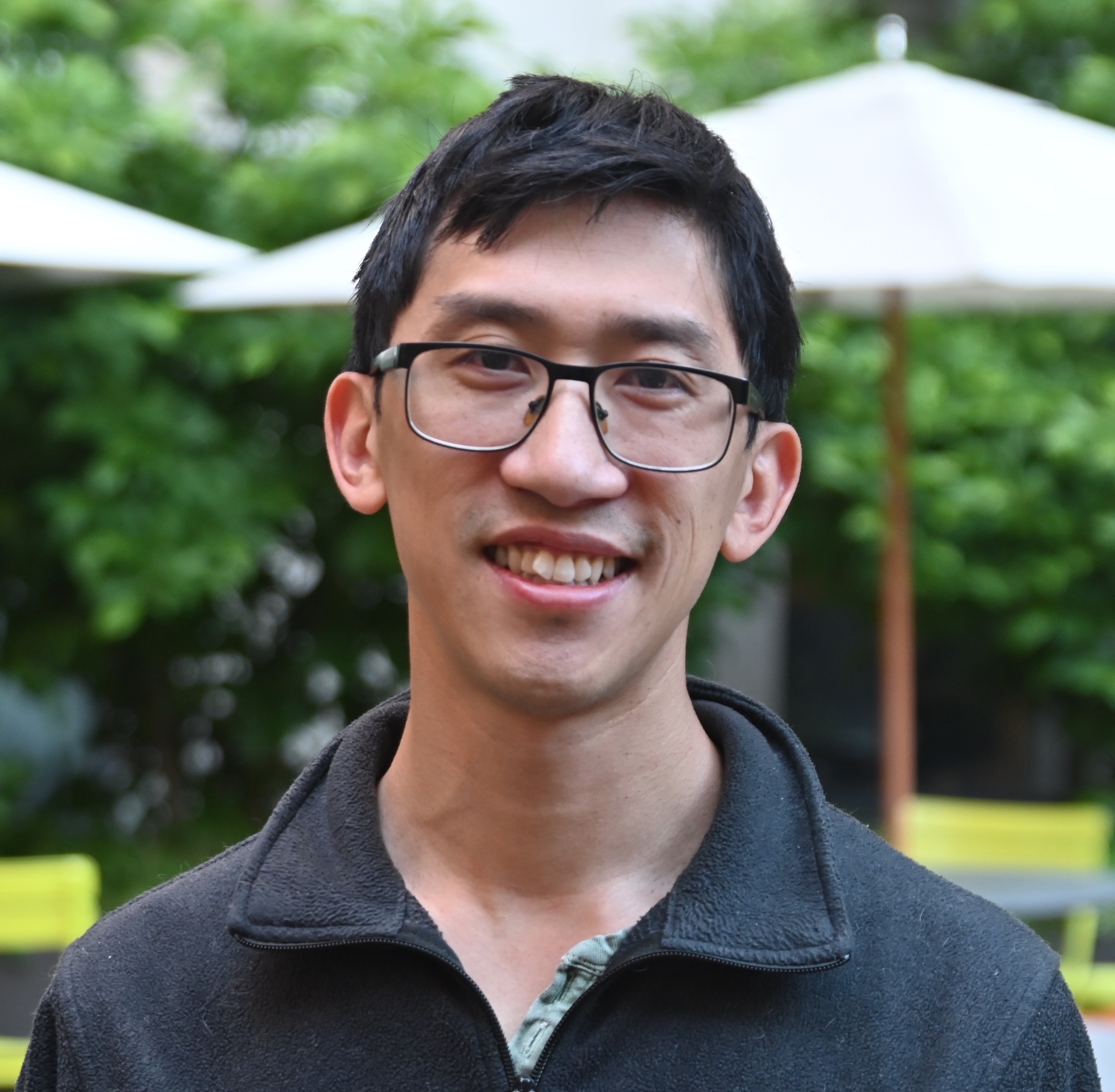
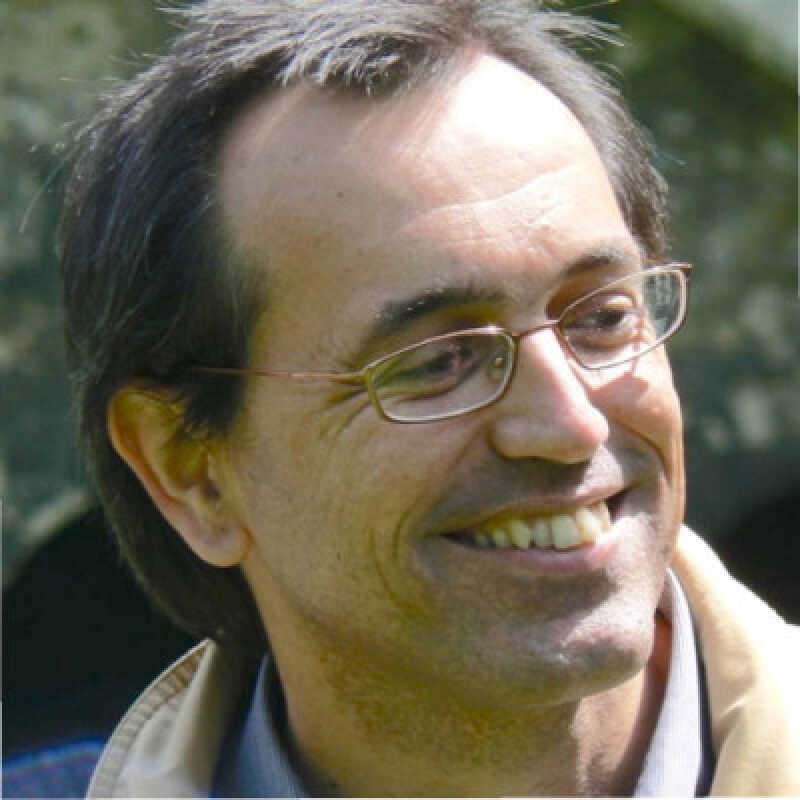
Jeremy Clark is an Associate Professor at the Concordia Institute for Information Systems Engineering (CIISE), Concordia University. His research focuses on security and cryptography with real-world applications to finance and democracy. He holds prestigious industrial research chairs from NSERC, Raymond Chabot Grant Thornton, and Catallaxy, emphasizing his contributions to blockchain technologies. Clark’s work explores blockchain’s technical and societal impacts, including smart contract vulnerabilities, decentralized finance (DeFi), and cryptographic protocols. His recent articles highlight Ethereum’s security mechanisms, blockchain upgradability, and stablecoin design. Scientific Awards: He holds multiple industrial research chairs for blockchain innovations. His grants reflect industry-academic collaboration in secure blockchain applications. Advising & Grants: While no students are listed, his 'Students' section on his homepage suggests academic mentorship. Grants include his chairs and potential funding for blockchain security projects. Labs/Teams: His affiliation with CIISE implies involvement in interdisciplinary research teams focused on information systems engineering and cybersecurity.
Prof. Bryan Ford leads the Decentralized/Distributed Systems (DEDIS) lab at EPFL. He focuses on secure decentralized systems, including blockchain technology, privacy, and systems security. He earned his Ph.D. from MIT and held faculty positions at Yale University and EPFL. His work spans distributed consensus protocols, peer-to-peer networking, and privacy-preserving systems. Key projects include QuePaxa (timeout-free consensus), UIA (global connectivity for mobile devices), and MedCo (secure healthcare data sharing). He advises numerous PhD students and contributes to open-source projects like Bitcoin collective signing and privacy networks like Riffle. Education: Ph.D., MIT; Postdoctoral work at Yale Research interests include blockchain scalability, consensus algorithms, and cryptographic privacy. His lab develops systems like TRIP for coercion-resistant voting and F3B to mitigate blockchain front-running. His work on NAT traversal and peer-to-peer protocols (e.g., STUN/ICE) remains foundational in network architecture. He emphasizes practical, auditable security solutions such as CertiKOS and atomic cross-chain transactions (Atom). Notable contributions: CoSi (collective signing), OmniLedger (sharded blockchain), and privacy-preserving protocols like PURBs (Protected Unsealable Recursive Boxes). His lab collaborates with Swiss Post to audit e-voting systems and designs democratic cryptocurrencies like PoPCoin.
Prof. Dr. Sebastian Steinhorst is an Associate Professor (W3-level with tenure) at the Technical University of Munich (TUM) within the Embedded Systems and Internet of Things group at the TUM School of Computation, Information and Technology . His research focuses on advancing the security, predictability, reliability, and interoperability of smart connected and autonomous systems, particularly for applications in Internet of Things (IoT) , Industry 4.0 , and automotive systems . PhD in Computer Science (2011) from Goethe University Frankfurt Postdoctoral roles at TUMCREATE Singapore (2011-2016) and Aarhus University (2016) Joined TUM in 2016 as Rudolf Moessbauer Tenure Track Professor His research areas include decentralized embedded systems, hardware/software co-design, modeling and verification of cyber-physical systems, security protocols for automotive networks, and time-sensitive networking (TSN) for industrial applications. Recent work explores blockchain-based data sovereignty, zero-knowledge proofs for vehicle authentication, and resilient architectures for autonomous systems. Key scientific contributions include the 2019 ACM TODAES Best Paper Award and pioneering work on CyberSecDome , LeapChain , and Simutack frameworks. He serves on editorial boards and conference committees, including co-organizing the Autonomous Systems Design initiative at DATE. His teaching portfolio spans lectures on System Design for IoT , Software Architecture for Distributed Systems , and IoT Security across multiple semesters. He also leads advanced seminars on embedded systems and IoT.
Sushmita Ruj is an Associate Professor in the School of Computer Science and Engineering at the University of New South Wales (UNSW), Sydney. She serves as the Faculty of Engineering Lead for the UNSW Institute for Cybersecurity (IfCyber) and as the Taste of Research (ToR) Coordinator within the School of Computer Science and Engineering. Her academic journey includes previous positions as a Senior Research Scientist at CSIRO's Data61 (2019-2022), Associate Professor at the Indian Statistical Institute, Kolkata, and Assistant Professor at the Indian Institute of Technology (IIT), Indore. Dr. Ruj's primary research interests focus on applied cryptography, post-quantum cryptography, cybersecurity, blockchains, and data privacy. She designs practical, efficient, and provably secure protocols for real-life applications, with particular emphasis on critical infrastructure including smart grids, cloud computing, ad hoc networks, and data sharing frameworks. As quantum technology advances, her work increasingly focuses on developing quantum-safe algorithms to ensure a more secure Internet infrastructure. Her research spans multiple domains including cryptographic key management, proofs of storage, verifiable computation, vector commitments, and privacy-enhancing technologies for cloud and IoT environments. Her recent publications demonstrate a strong trend toward post-quantum cryptography solutions, with particular emphasis on blockchain applications, DNS security, and privacy-preserving protocols for industrial IoT. The research shows increasing focus on practical implementations of theoretical cryptographic concepts, with applications across multiple sectors including finance, healthcare, and critical infrastructure. Her work bridges the gap between theoretical cryptography and real-world security challenges, with growing emphasis on the transition from classical to quantum-resistant systems. Best Paper Award at ACISP 2024 JNCA Best Survey Award (2023) NSW Innovation Award (iAward) Merit Winner (2022) Women in Science Award from CSIRO (2020) ACM Senior Member (2016) IEEE Senior Member (2015) Samsung GRO award (2014) Dr. Ruj has successfully mentored numerous PhD and Master's students, with many of her former students now holding academic positions at institutions like IIT Indore, TU Wien, and CISPA Helmholtz Center. She has secured significant competitive funding including multiple Australian Research Council (ARC) grants, Samsung GRO Award, NetApp Faculty Fellowship, Cisco Academic Grant, and IBM Research grant. Her current research portfolio includes projects on blockchain-based quantum-safe digital medical passports, embedding trust in digital IDs, and resilience of supply chain unstructured data. As Faculty of Engineering Lead for IfCyber, Dr. Ruj plays a key role in UNSW's cybersecurity research initiatives. She has served on editorial boards for prestigious journals including IEEE Transactions on Information Forensics and Security and has held leadership positions in major conferences such as ACISP 2021 and Indocrypt 2020. She was also a member of the working group on "Blockchain For Cybersecurity" for the National Blockchain Roadmap of Australia and the first Blockchain Working group set up by the Reserve Bank of India.
Conor Ryan is a Professor in the Department of Computer Science & Information Systems at the University of Limerick. He is a Science Foundation Ireland-funded Investigator since 2002 and a member of multiple research centres including Lero – the Irish Software Research Centre and the Limerick Digital Cancer Research Centre. His research focuses on Genetic Programming, Grammatical Evolution, and their applications in domains like healthcare analytics, digital circuit design, and financial modeling. He has authored over 250 publications, with recent work emphasizing automated feature selection in medical diagnostics, neural architecture search, and blockchain ecosystems. Teaching includes courses on Foundations of Computer Science and Computer Games Programming. Research interests span evolutionary computation, machine learning, and interdisciplinary applications. Collaborations involve global institutions, reflecting his work's impact across computer science, engineering, and healthcare. His research has addressed challenges in breast cancer diagnosis via genetic algorithms, cryptocurrency volatility prediction using random forests, and automated generation of digital circuits. Ongoing projects explore interpretability in AI, energy-efficient computing, and sustainable transport systems through predictive analytics. Professional memberships include roles in the Centre for Research Training in Foundations of Data Science and the Data-Driven Computer Engineering Research Centre, underscoring his commitment to interdisciplinary innovation.
Cong Ling is a Professor of Information Theory and Cryptography at Imperial College London's Department of Electrical and Electronic Engineering, within the Faculty of Engineering. His research focuses on lattice theory and its applications in coding, cryptography, quantum information, and number theory. Key affiliations include the Academic Centre of Excellence in Cyber Security Research and the Engineering Secure Software Systems group. Education details are not explicitly provided in the text, but his professional experience indicates advanced qualifications in electrical engineering and mathematics. Research interests span lattice-based cryptography, post-quantum security, algebraic coding theory, and quantum-resistant algorithms. His work bridges information theory and number theory, with contributions to MIMO systems, secure communication protocols, and cryptographic protocol design. Recent publications emphasize lattice reduction techniques, quantum algorithms for the shortest vector problem, and advancements in polar codes. Notable trends include exploration of non-commutative algebras for cryptography, Gaussian sampling optimizations, and hybrid quantum-classical approaches to hard integer problems. Over 50+ articles published since 2018 reflect his leadership in lattice-based research and quantum-safe technologies. Awards: None explicitly listed in the text. Grants/Advising: No specific grants or student advisees mentioned; focus remains on collaborative research outputs. Labs/Teams: Associated with Imperial's Cyber Security Research groups and quantum engineering initiatives.
Jens Groth is an Honorary Professor at the Department of Computer Science, University College London (UCL), and serves as Chief Scientist at Nexus. His primary research focuses on cryptography, with an emphasis on cryptographic protocols, zero-knowledge proofs, and privacy-preserving technologies. Groth has contributed significantly to advancements in digital signatures, homomorphic encryption, and secure multi-party computation. He holds a leadership role as Program Chair for the 15th IMA International Conference on Cryptography and Coding (2015) and has been a key figure in shaping modern cryptographic standards. His work often bridges theoretical foundations with practical implementations, emphasizing efficiency and security. Groth's research interests include but are not limited to: cryptographic protocol design, lattice-based cryptography, and the application of zero-knowledge proofs in real-world systems such as blockchain and voting systems. His publications span venues like CRYPTO, EUROCRYPT, and ASIACRYPT, reflecting his impact on the field. Notably, he advocates for open access to research and has contributed to strategies ensuring conferences adopt de facto open-access policies. His current focus at Nexus centers on verifiable computation and distributed cryptographic systems.
Henry Yuen is the Srivani Family Associate Professor of Computer Science at Columbia University, with affiliations in the CS Theory group, Data Science Institute, and Columbia Quantum Initiative. His work bridges theoretical computer science and quantum information, focusing on the computational foundations of quantum systems. Yuen received his BA in Mathematics from the University of Southern California (2010) and PhD in Computer Science from MIT (2016). His research explores quantum complexity theory, quantum cryptography, and quantum information through both theoretical frameworks and practical applications. His recent publications reveal a strong focus on quantum pseudorandomness, quantum circuit complexity, and quantum cryptographic primitives. The research trajectory demonstrates increasing sophistication in connecting quantum computational models with fundamental questions in complexity theory, particularly through the lens of quantum interactive proofs and quantum state complexity. His work frequently intersects with operator algebras and quantum information theory, reflecting the interdisciplinary nature of modern quantum computing research. NSF CAREER award Sloan Fellowship Yuen actively mentors graduate students, with several PhD students having graduated to postdoctoral positions or faculty roles. His service includes co-organizing the Columbia CS Theory Seminar and serving on program committees for major conferences including QIP, STOC, and ITCS. He has organized multiple workshops on quantum computing challenges and cryptography. As a member of the Columbia Quantum Initiative, Yuen contributes to Columbia's growing quantum ecosystem, collaborating across departments to advance both theoretical foundations and potential applications of quantum information processing.
Vijay Laxmi is a Professor in the Department of Computer Science and Engineering at Malaviya National Institute of Technology (MNIT) Jaipur, India. With over a decade of active research publication from 2014-2024, Dr. Laxmi has established themselves as a prominent researcher in network security, Android security systems, and Network-on-Chip architectures. Their work demonstrates consistent collaboration with Manoj Singh Gaur and numerous doctoral students at MNIT Jaipur. Dr. Laxmi's research interests span Network Security, Android Security, Malware Analysis, Network-on-Chip Architectures, Routing Protocols, Side-Channel Attacks, Wireless Networks, and Mobile Security. Their work bridges theoretical security frameworks with practical implementations, particularly in mobile and embedded systems. Recent publications indicate a growing focus on AI-based security approaches including GAN applications for fuzzing and deep learning for image dehazing. The research trajectory shows increasing sophistication in security analysis techniques, evolving from basic malware detection to advanced side-channel attack analysis and sophisticated network security protocols. Recent publications demonstrate expertise in both theoretical frameworks and practical implementations with applications in real-world security challenges. Dr. Laxmi has mentored numerous graduate students including Vineeta Jain, Anugrah Jain, Sonal Yadav, Mohit Singh, and Gaurav Singal, who appear as co-authors across multiple publications. Their collaborative network extends to researchers at international institutions, indicating strong academic connections beyond their home institution.
Dalibor Radovanović is a researcher at Singidunum University , affiliated with the Faculty of Business Informatics . His work spans cybersecurity, blockchain technologies, and their applications in business and IoT systems. Education: Doctoral Dissertation (2016, Singidunum University) Master's & Basic Studies (Faculty of Business Informatics) Secondary Education: ETŠ Nikola Tesla Research Interests include: Security frameworks for IoT and blockchain integration Smart card and wireless network vulnerabilities E-governance and corporate IT audit methodologies Machine learning applications in cybersecurity Environmental performance optimization in agribusiness Publication Trends reveal a focus on blockchain (2022), cybersecurity (2009-2022), and IT governance (2010-2017). His work bridges theoretical analysis with practical implementations in Serbia's digital economy. Collaborations with scholars like Marko Šarac and Saša Adamović highlight interdisciplinary approaches to securing financial systems, educational institutions, and industrial IoT applications.
Christina L. Garman is an Assistant Professor in the Department of Computer Science at Purdue University, where she joined in Spring 2018. Her research focuses on practical cryptography and cryptographic automation to make secure system development accessible to non-experts through error-resistant design methodologies. Her educational background includes: Bachelor of Science in Computer Science and Engineering from Bucknell University (2011) Bachelor of Arts in Mathematics from Bucknell University (2011) Master of Science in Engineering in Computer Science from Johns Hopkins University (2013) Doctor of Philosophy in Computer Science from Johns Hopkins University (2017) Professor Garman's work centers on real-world cryptographic system security, spanning protocol analysis (e.g., RC4 in TLS, Apple iMessage flaws), decentralized anonymous systems (Zerocash/ZCash), and cryptographic automation. She pioneered techniques for removing human error in cryptographic deployments through automated tools and frameworks. Her research bridges theoretical cryptography with practical implementation challenges in privacy-preserving technologies and secure infrastructure. Analysis of her 2021-2025 publications reveals expanding research horizons: hardware security vulnerabilities (Rowhammer, SGX), privacy network enhancements (Tor onion services), software supply chain security (SBOM tools), and advanced cryptographic protocols (zkSNARKs, MPC). This evolution demonstrates consistent focus on real-world security impact while diversifying into hardware-software cross-layer threats and formal verification methods for cryptographic implementations. Her major scientific recognitions include: NSF CAREER Award (2021) for cryptographic automation research ACM CCS Best Paper Award (2016) for iMessage security analysis IEEE Test of Time Award (2024) for foundational Zerocash work Professor Garman co-founded ZCash, a privacy-focused cryptocurrency based on her Zerocash protocol, and her NSF CAREER grant supports cryptographic automation development. Her research has received significant media coverage in The Washington Post, Wired, and The New York Times, highlighting real-world relevance. While specific student advising details aren't public, her active publication record indicates ongoing mentorship of graduate researchers in security and cryptography. Her work maintains strong industry connections through ZCash development and Tor network contributions, with recent projects like keyless CDNs demonstrating practical applications of cryptographic automation. She remains a leading voice in cryptographic research communities through conference participation and collaborative projects addressing evolving security challenges.
Pratyush Mishra is an Assistant Professor at the University of Pennsylvania in the Department of Computer and Information Science, where he is affiliated with the Security and Privacy Laboratory. His research focuses on the intersection of cryptographic proof systems and computer security , particularly on efficient implementations of zero-knowledge proofs and secure computation protocols. Pratyush completed his PhD in Computer Science at UC Berkeley , advised by Alessandro Chiesa and Raluca Ada Popa , and holds a BSc in EECS from UC Berkeley, where he worked with David Wagner . His current research group includes PhD students Anubhav Baweja , Tushar Mopuri , Bharath Namboothiry , and Alireza Shirzad , along with Matan Shtepel , a former research assistant who moved to CMU for his PhD. His work spans advanced cryptographic techniques like zkSNARKs , accumulation schemes , and private delegation of provers , with applications in decentralized systems and secure inference. His recent publications focus on optimizing polynomial commitments , read-write streaming for SNARKs, and horizontally scalable proofs . Key awards include: ACM SIGSAC Doctoral Dissertation Award Runner-Up (2022) CSAW Applied Research Award (2016) for Hidden Voice Commands He teaches courses like CIS 5560: Cryptography and 7000-2: Theory and Practice of Succinct Zero Knowledge Proofs , covering topics such as symmetric cryptography, public-key encryption, digital signatures, zero-knowledge proofs, and secure multiparty computation. His lab contributes to the arkworks ecosystem for zero-knowledge proof libraries and co-founded the startup Aleo based on his research.
Alex Lombardi is an Assistant Professor of Computer Science at Princeton University, specializing in cryptography and theoretical computer science. His work explores cryptographic proof systems, post-quantum security, and quantum cryptography. Princeton University (Current) Simons-Berkeley Postdoctoral Fellow (Former) MIT (Graduate Training) Visiting Scientist, Cryptography 10 Years Later Program (2025) Education: PhD in Computer Science from MIT (advised by Vinod Vaikuntanathan) Master's Thesis on Provable Instantiations of Correlation Intractability and the Fiat-Shamir Heuristic Dr. Lombardi's research spans foundational cryptography, with a focus on indistinguishability obfuscation, worst-case assumptions, and quantum cryptographic protocols. His work on SNARGs and PPAD hardness has advanced cryptographic proof systems, while his recent projects address quantum verification and post-quantum security. He encourages prospective cryptography students to apply to Princeton's PhD program. His publications highlight advancements in LWE-based cryptography, quantum protocols, and complexity-theoretic foundations. Key themes include secure computation, hash function design, and cryptographic reductions under quantum assumptions. Scientific Awards: Simons-Berkeley Postdoctoral Fellowship Dr. Lombardi serves on program committees for STOC 2025, EUROCRYPT 2025, and other conferences. He has taught courses like COS 433/533 (Cryptography) and COS 533 (Advanced Cryptography) at Princeton.
Rogério de Lemos is a Senior Lecturer in Computing Science and Director of Postgraduate Research (PGR) at the School of Computing, University of Kent. He previously served as an invited assistant professor at the University of Coimbra, Portugal, and as a Senior Research Associate at the Centre for Software Reliability (CSR) at the University of Newcastle upon Tyne, UK. Dr. de Lemos' research focuses on architecting resilient systems, particularly in resilient AI, self-adaptive software systems, and authorization infrastructures. He belongs to both the Programming Languages and Systems Group and the Cyber Security Group at the University of Kent. His specific research interests include: Software engineering for self-adaptive systems assurances and resilience evaluation Dynamic generation of processes Handling insider threats using self-adaptive authorization Architectural abstractions for fault tolerance Verification and validation of dependable software architectures Software development for safety-critical systems Dependability and bioinspired computing His publication trends show increasing emphasis on practical applications of self-adaptive systems in cyber security contexts, with recent work spanning network traffic analysis, cryptographic function detection, and cloud-edge security architectures. His research bridges theoretical foundations with practical implementations, particularly in cyber security and resilient systems architecture. Dr. de Lemos currently leads the "Collaborative and Confidential Information Sharing and Analysis for Cyber Protection" project funded by the European Union's Horizon 2020 Programme. His past projects include "ADAAS: Assuring Dependability in Architecture-based Adaptive Systems" and multiple collaborations with NCR on sensor fusion and fault tolerance. As Director of Postgraduate Research, he oversees the School of Computing's research degree programs and likely supervises PhD students in resilient systems and cyber security, though specific student names are not listed in the available information.
David Lie is a Professor at the University of Toronto, jointly appointed in the Edward S. Rogers Department of Electrical and Computer Engineering, Department of Computer Science, and Faculty of Law. He directs the Schwartz Reisman Institute for Technology and Society, co-founded the IT3 Lab, and serves as Associate Director at the Data Sciences Institute. His research focuses on securing computer systems through operating systems, architecture, and formal verification approaches. B.A.Sc (University of Toronto, 1998) M.S. (Stanford, 2001) Ph.D. (Stanford, 2004) His research emphasizes building secure systems for mobile platforms and cloud computing, with significant contributions to trusted execution environments (XOM architecture precursor to Intel SGX/ARM TrustZone) and Android permission mapping (PScout tool). Recent work spans cryptographic side-channels, web tracking detection, and AI safety. Key honors include SOSP 2003 Best Paper, Ontario MRI Early Researcher Award (2008), Connaught Global Challenge Award (2017), and Canada Research Chairs (Tier 2 2013-2018, Tier 1 current). He has secured over $30M in research funding and served as General Chair for CCS 2018. Lie leads the IT3 Lab (Technology and Policy Integration), collaborates with industry leaders (Google, VMware, Telus), and mentors graduate students working on practical security implementations. He co-teaches ECE1724: Privacy Problems with Lisa Austin from the Faculty of Law, reflecting his technology-policy interests.