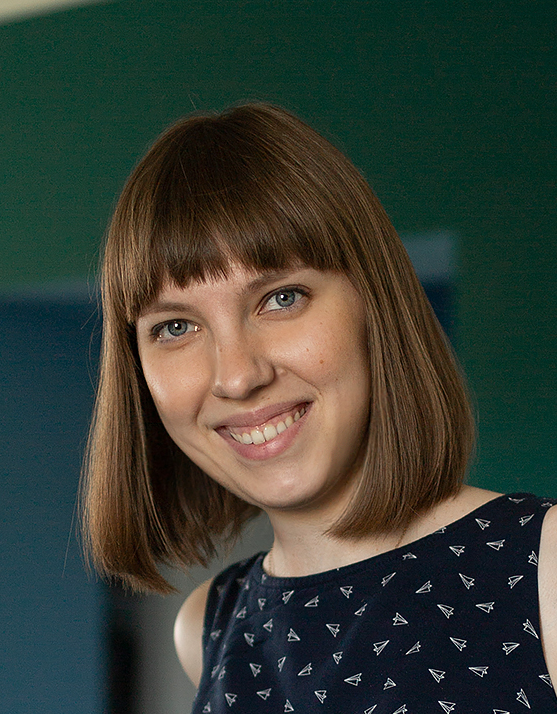
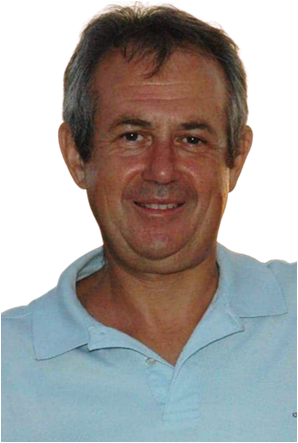
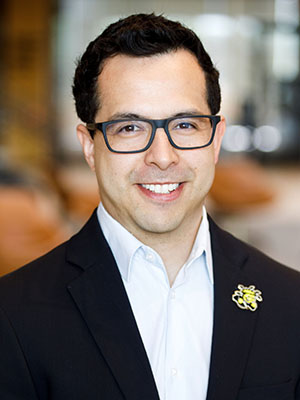
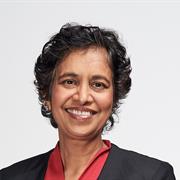
Elena Kirshanova is a part-time Lecturer at I.Kant Baltic Federal University and Lead Cryptographer at Technology Innovation Institute. Her research focuses on practical and theoretical cryptanalysis of lattice-based and code-based cryptographic primitives, with applications to post-quantum security. Research interests include: Lattice-based cryptanalysis Quantum algorithms for cryptographic problems Decoding attacks on McEliece variants Sieving techniques for codes and lattices She teaches courses in lattice-based cryptography, coding theory, and information security. Dr. Kirshanova serves on program committees for major cryptography conferences including Crypto, Eurocrypt, and PQCrypto. Her work bridges theoretical cryptanalysis with practical implementations for post-quantum cryptographic schemes.
Zi Hau Chin is an Assistant Professor at Heriot-Watt University Malaysia, specializing in Blockchain, Distributed Systems, and Artificial Intelligence. He earned his PhD from the School of IT at Monash University Malaysia (2025), a Master of Science in Information Technology (2021), and a B.Sc. (Hons.) in Computer Science from Multimedia University (2018). Education: B.Sc. (Hons.) in Computer Science, Multimedia University (2018) M.Sc. in Information Technology (2021) PhD in Computer Science, Monash University Malaysia (2025) His research focuses on enhancing blockchain scalability through innovations in compact block relay protocols and Proof-of-Work difficulty adjustment using genetic algorithms. He also leads AI projects in voice synthesis and recommendation systems for personalized business analytics. The articles reflect expertise in blockchain technologies (Bitcoin, distributed ledger systems), algorithmic optimization, and AI applications. Key subfields include network efficiency, consensus mechanisms, and machine learning integration. While no specific awards or grants are listed, his work has been cited (Scopus: 11 citations across outputs) and includes peer-reviewed publications in journals like the Journal of Supercomputing and Symmetry .
Mike Just is an Associate Professor in the School of Mathematical & Computer Sciences at Heriot-Watt University. His career spans academia, industry, and government, with roles including Research Scientist at Entrust (1998–2002), Government of Canada (2002–2008), Research Fellow at the University of Edinburgh (2008), and Lecturer/Senior Lecturer at Glasgow Caledonian University (2010–2015). Education: PhD in Computer Science, Carleton University (1998) Research Interests: Mike focuses on computer security, applying Human-Computer Interaction (HCI) and Machine Learning (ML) to solve security challenges. His work includes authentication protocols, mobile device security, and IoT security. Key areas involve evaluating security solutions, designing usability methodologies, and modeling attacks on systems like partial passwords and smartphone authentication. Awards: EICC Best Paper Award 2022 Advising & Grants: Mike has contributed to numerous projects and grants, including collaborations on IoT security and ethical cybersecurity practices. His involvement in conferences like the IEEE European Symposium on Security and Privacy highlights his leadership in the field. Labs/Teams: His research often involves interdisciplinary teams focusing on IoT security, ML-driven intrusion detection, and usable security solutions. Collaborations span academia and industry, emphasizing practical applications of theoretical security frameworks.
Armin Jamshidpey is an Assistant Professor (Teaching Stream) in the Cheriton School of Computer Science at the University of Waterloo (since 2024). He is also an Affiliate Member at the Institute for Quantum Computing (IQC), University of Waterloo (since 2021). Previously, he held roles as a Faculty Lecturer (2023–2024), Post-doctoral Fellow at the University of Toronto (2021–2022), and multiple postdoctoral positions at IQC and the Cheriton School (2017–2021). Education: PhD in Mathematics from Western University (2017), M.Sc. in Mathematics from IASBS, Iran (2012). Thesis: Algebraic Tori: A Computational Approach . Research interests focus on Post-Quantum Cryptography , Quantum Computing , and Computer Algebra . His work bridges computational algebra with algorithm design, particularly in normal bases and algebraic tori applications. Recent publications emphasize efficient algorithms for algebraic structures with cryptographic relevance. Teaching includes courses in algorithms (CS341), data structures (CS234/CS240), computational linear algebra (CS475/675), and symbolic computation (CS487). He has taught across multiple institutions, including the University of Toronto and Western University. Organized notable events: Workshop on Quantum Algorithms in Number Theory (2022), Fields Institute Special Session on Symbolic Linear Algebra (ACA 2021) Minisymposium on Computational Aspects of Finite Groups (SIAM AG19)
Warwick Powell is a Professor at Queensland University of Technology (QUT), specializing in blockchain technology applications, supply chain governance, and digital economy dynamics. His research explores the intersection of technology and socio-economic systems, particularly focusing on trust mechanisms, cross-border trade, and supply chain transparency. Powell has authored a monograph on China’s digital supply chain dynamics and contributed to influential studies on blockchain-enabled provenance systems for Indigenous foods and livestock exports. His work often addresses challenges in integrating IoT, sensors, and blockchain to enhance food safety and traceability. Powell collaborates closely with industry partners like BeefLedger and engages with policy frameworks shaping blockchain adoption in China and Australia. His research spans technical innovations (e.g., graphene sensors) and theoretical contributions (e.g., redefining trust in digital ecosystems). Key collaborations include projects with Professors Cao Shoufeng and Marcus Foth, exploring blockchain’s role in governance, cultural mediation, and economic systems. Powell’s work frequently bridges engineering, business, and political science disciplines, addressing real-world challenges like Sino-Australian trade complexities and sustainable supply chain practices. His contributions to distributed ledger technologies have been published in journals like Sustainability , Computer Networks , and Journal of Contemporary Asia .
Papageorgas Panagiotis is a tenured Professor in the Department of Electrical & Electronics Engineering at the University of West Attica, where he directs the Laboratory of Smart Technologies, Renewable Energy Sources and Quality. He holds a B.Sc. in Physics (1984) and a Ph.D. in Physics (1995) from the National and Kapodistrian University of Athens (NKUA). His career includes research roles at NKUA's Departments of Electronics and Applied Physics (1985–1994) and Informatics and Telecommunications (1994–2002), followed by a professorship at the Piraeus University of Applied Sciences (PUAS) until 2018. Research focuses on embedded systems, wireless sensor networks (WSNs), IoT, smart grids, and cyber-physical systems (CPS). He has authored/co-authored over 100 publications addressing topics like energy efficiency, smart cities, and environmental monitoring. His work spans applications in renewable energy systems, sensor network architectures, and low-power wide-area networks (LPWAN). Teaching responsibilities include undergraduate courses in Electronics I, Modern Microcomputer Systems, and Mechatronics, as well as postgraduate modules on Embedded Systems, Cyber-Physical Systems, and Wireless Sensor Networks. He actively participates in international conferences like the Technologies and Materials for Renewable Energy, Environment and Sustainability (TMREES) series. Key projects include developing low-cost PV I-V curve tracers, smart LED lighting platforms (LEDWIRE), and emergency communication systems using SD-WAN and LPWAN technologies. His lab emphasizes practical implementations of IoT and CPS for sustainability and resilience, with recent contributions to smart agriculture, emergency ventilators via 3D printing, and blockchain-based energy metering.
Abdullatif Baba is an Assistant Professor in the Department of Computer Engineering at Turkish Aeronautical Association University. His research focuses on interdisciplinary applications of artificial intelligence, robotics, and sustainable energy systems. He develops solutions for smart infrastructure, including AI-driven energy forecasting, autonomous drones for grid maintenance, and hyperspectral imaging techniques. His research interests span: AI/ML Systems : Neural networks, probabilistic forecasting, and FPGA-accelerated deep learning Robotics : Autonomous drones with computer vision for industrial and energy applications Sustainable Energy : Solar-based systems, smart grid optimization, and consumption prediction Security : Chaos-based cryptographic systems for secure communications Recent publications (2020-2024) demonstrate strong trends in practical AI implementations. Key themes include energy forecasting using adaptive neural networks (11 papers), robotics for infrastructure maintenance (4 papers), computer vision for biometrics and imaging (3 papers), and cryptographic systems (2 papers). Methodologies frequently involve hybrid approaches combining ANN, fuzzy logic, and hardware acceleration. No awards, students, or grant details were mentioned in the source material. Research collaborations include institutions in Turkey and the Middle East.
Sergio Salinas Monroy is an Associate Professor at Wichita State University's College of Engineering, School of Computing. His research focuses on cyberphysical systems, network security, and privacy enhancement in critical infrastructures like additive manufacturing, power grids, and edge computing networks. He currently leads the Graduate Certificate in Information Assurance and Cybersecurity program and spearheaded the NSA/DHS CAE-CD designation for WSU. Academic Rank: Associate Professor Department: School of Computing University: Wichita State University Email: sergio.salinasmonroy@wichita.edu His research spans secure resource allocation in supply chains, cyberfraud investigation, and federated deep learning systems. Recent publications emphasize adversarial machine learning, intrusion detection, blockchain applications in manufacturing, and privacy-preserving algorithms. His work integrates deep learning, anomaly detection, and cryptographic protocols for industrial cybersecurity. Research trends in his articles include cyberphysical systems security (4 entries), privacy preservation in distributed networks (3 entries), and machine learning optimization for threat detection (5 entries). He also explores blockchain integration, edge computing economics, and energy-based attack detection in IoT-enabled systems. Professor Salinas Monroy actively contributes to academic service as an organizer and technical program committee member for IEEE conferences. His office hours are held in Jabara Hall (239) on Wednesdays from 3:30–5:00 PM.
Erica Blum is an Assistant Professor of Computer Science at Reed College, affiliated with the Computer Science Department within the Division of Mathematical and Natural Sciences. Her research focuses on cybersecurity and cryptography, particularly in designing provably secure systems for scenarios involving faulty devices. Key areas include multiparty computation and Byzantine consensus protocols. Blum holds a bachelor's degree in mathematics from Haverford College and a Ph.D. in computer science from the University of Maryland. Her work emphasizes theoretical foundations with practical applications in distributed systems security. Her recent publications (2019–2023) explore consensus protocols under dynamic network conditions, blockchain security (e.g., Algorand analysis), and hybrid asynchronous/synchronous systems. Notable contributions include the Tardigrade atomic broadcast protocol and analyses of HashGraph and Proof-of-Stake mechanisms. While no awards or grants are explicitly listed, her research demonstrates sustained engagement with foundational challenges in distributed computing security.
Dr. Kashinath Basu is a Senior Lecturer in Computer Science at Oxford Brookes University, affiliated with the School of Engineering, Computing and Mathematics. He holds a PhD in Computer Science and specializes in network virtualization, cloud computing, AI/ML for infrastructure management, and smart grid communication. His research explores SDN/NFV, cybersecurity frameworks, and quantum-resistant cryptography. Education: PhD in Computer Science, with academic and professional experience spanning over two decades. Research focuses on next-gen networks, cloud orchestration, and AI-driven security solutions. Current projects include softwarization of networks, smart grid communication protocols, and QoS-aware cloud services. Research interests span from foundational network architecture design to applied cybersecurity in smart cities. He has authored influential papers on topics like SD-WAN traffic prediction using ML, QoS-aware service selection in cloud environments, and control frameworks for smart grids. His work bridges theoretical network research with real-world infrastructure challenges. Professional contributions include editorial roles for journals like IEEE Transactions on Smart Grid and active participation in IEEE Working Groups on SDN/Quantum Communication. He has organized major conferences such as IEEE MobileCloud and ITNAC, reflecting his leadership in advancing network technologies. Labs/Teams: Member of the Cloud Computing and Cybersecurity Research Group, Artificial Intelligence, Data Analysis and Systems (AIDAS) Institute, and the Dependable Systems Engineering Research Centre. Collaborates with industry partners on projects related to autonomous cyber defense and blockchain for smart city infrastructure.
Markku-Juhani Saarinen is a Professor of Practice in Computing Sciences at Tampere University, affiliated with the Faculty of Information Technology and Communication Sciences. He holds a Ph.D. from Royal Holloway, University of London (2009), and is a Docent in Cryptography and Information Security. His expertise spans applied cryptography, cryptographic engineering, post-quantum cryptography, and security assessments. He has led research on lattice-based cryptography, side-channel resistant implementations, and hardware security. Key contributions include the Round5 post-quantum encryption scheme, RISC-V entropy source interfaces, and the BLAKE2 cryptographic hash function. He has published extensively at top venues like CRYPTO, EUROCRYPT, and PQCrypto, and co-edited conference proceedings such as the 2024 PQCrypto workshop. His research focuses on securing cryptographic systems against quantum computing threats, optimizing implementations for embedded devices, and advancing hardware-software co-design for cryptographic primitives. He actively collaborates with industry and academia to bridge theoretical advancements with practical applications in secure communication and embedded systems.
Michel BOYER is an Associate Professor at the University of Montreal's Faculty of Arts and Science, affiliated with the Department of Computer Science and Operations Research. He is a member of the INTRIQ (Institute for Transdisciplinary Quantum Information) and LITQ (Laboratory for Theoretical and Quantum Information) research groups. Research Interests : His work focuses on Quantum Computing , Theoretical Computer Science , and Quantum Key Distribution (QKD) Protocols . He explores foundational aspects of quantum information, including security proofs for QKD, entanglement theory, and hybrid classical-quantum cryptographic systems. His contributions address both theoretical rigor and practical implementations of quantum communication protocols. Key Projects : A notable project is the INTRIQ strategic research initiative (2011–2014), funded by the Fonds de recherche du Québec - Nature et technologies (FRQNT), which advanced quantum information science in Canada. Student Supervision : He has advised numerous graduate students, including: Arsène Sabas (Ph.D., 2013) Éric Oliver Paquette (Ph.D., 2009) Gilles Pesant (Ph.D., 1996) Paul Tarau (Ph.D., 1990) Labs & Teams : His affiliations with INTRIQ and LITQ reflect his involvement in collaborative quantum research networks.
Professor Asha Rao is a distinguished academic at RMIT University, holding the title of Professor in Mathematics and Cybersecurity. She has been instrumental in advancing cyber-mathematics to enhance cybersecurity. Her roles include Associate Dean of Mathematical Sciences (2017–2023) and Interim Director of the Australian Mathematical Sciences Institute (AMSI) (2020). She champions gender equity in STEM and frequently engages in public science communication. University: RMIT University School: School of Science Academic Rank: Professor Research Focus: Her work spans cybersecurity, coding theory, complex networks, and risk management, often integrating mathematical frameworks to address real-world problems like money laundering and small business digital security. She also explores fractal analysis and post-quantum cryptography. Recent Publications: Highlight recent advancements in post-quantum homomorphic encryption, small business cybersecurity frameworks (2021–2025), and data fusion techniques for internal network anomaly detection. Her research bridges technical innovation with policy implications. Scientific Recognition: 2019–2020 Science & Technology Australia Superstar of STEM 2021 Victorian Honour Roll of Women (Trail Blazer) 2021 India Australia Science and Technology Development Award 2016 RMIT Media Stars Award Teaching & Leadership: Actively supervises Masters and PhD students, emphasizing teamwork in cybersecurity education. She led curriculum design initiatives and addressed non-technical skills gaps in the industry (2020). Her leadership extends to national organizations like AMSI. Community Engagement: Promotes cybersecurity through media appearances (ABC News, Australian Financial Review) and events like Pint of Science. She co-founded Women in Mathematics and advocates for girls in STEM.
Professor Arnold Beckmann is a Professor of Computer Science at Swansea University, part of the Faculty of Science and Engineering, within the School of Mathematics and Computer Science. He previously served as Head of Department from 2014 to 2021. His research focuses on Mathematical Logic, Theoretical Computer Science, Blockchain Technology, and their applications in Industry 4.0. He leads initiatives such as the Zienkiewicz Institute for Modelling, Data and AI, the Grenoble-Swansea Centre for AI, and is involved in the Wales Data Nation Accelerator. He has led projects on hybrid AI for manufacturing supply chains, blockchain applications, and semantic technologies. Beckmann has been awarded the Leopoldina and Marie-Curie fellowships and has publications in areas including proof complexity, ontology engineering, and cybersecurity. He supervises PhD students in topics like blockchain licensing, smart contracts, and steelmaking analytics. His work bridges foundational theory with real-world industrial challenges. Education: PhD and Habilitation in Mathematics from University of Münster (Germany). Research Highlights: Over 60 publications, including work on bounded arithmetic, blockchain verification, and Industry 4.0 applications. Research interests include foundational logic, computational complexity, and applying these to manufacturing and smart systems. His work on semantic technologies integrates domain knowledge with machine learning for process optimization. Grants include EPSRC, Royal Society, and EU funding. Beckmann also co-leads the Swansea Blockchain Lab and contributes to global academic networks like The Proof Society.
Massimiliano Sala is a Full Professor at the Department of Mathematics of the University of Trento. His expertise spans Algebra, Algebraic Coding Theory, Boolean Algebras, Cryptography, and Computational Algebra. He specializes in cryptographic protocols, post-quantum security, and elliptic curve cryptography. His recent work includes advancements in blockchain-agnostic multi-signature schemes, searchable encryption, and elliptic curve group structures. Research Focus: Dr. Sala's research integrates mathematical foundations with applied cryptography, emphasizing secure communication protocols, cryptographic algorithm design, and blockchain technologies. He has contributed to the analysis of Boolean functions, APN permutations, and secure multi-party computation. Recent Contributions: His 2024 publications address topics like cubic Boolean functions, blockchain-agnostic asset management, and randomized searchable encryption. He also explores post-quantum cryptographic frameworks and elliptic curve-based security mechanisms. Awards & Recognition: None explicitly listed in the provided materials. Teaching & Academic Leadership: Teaches Algebraic Cryptography at the Master's level, focusing on public-key systems and post-quantum cryptography. His academic contributions include editorial work for cryptographic journals and conference proceedings.