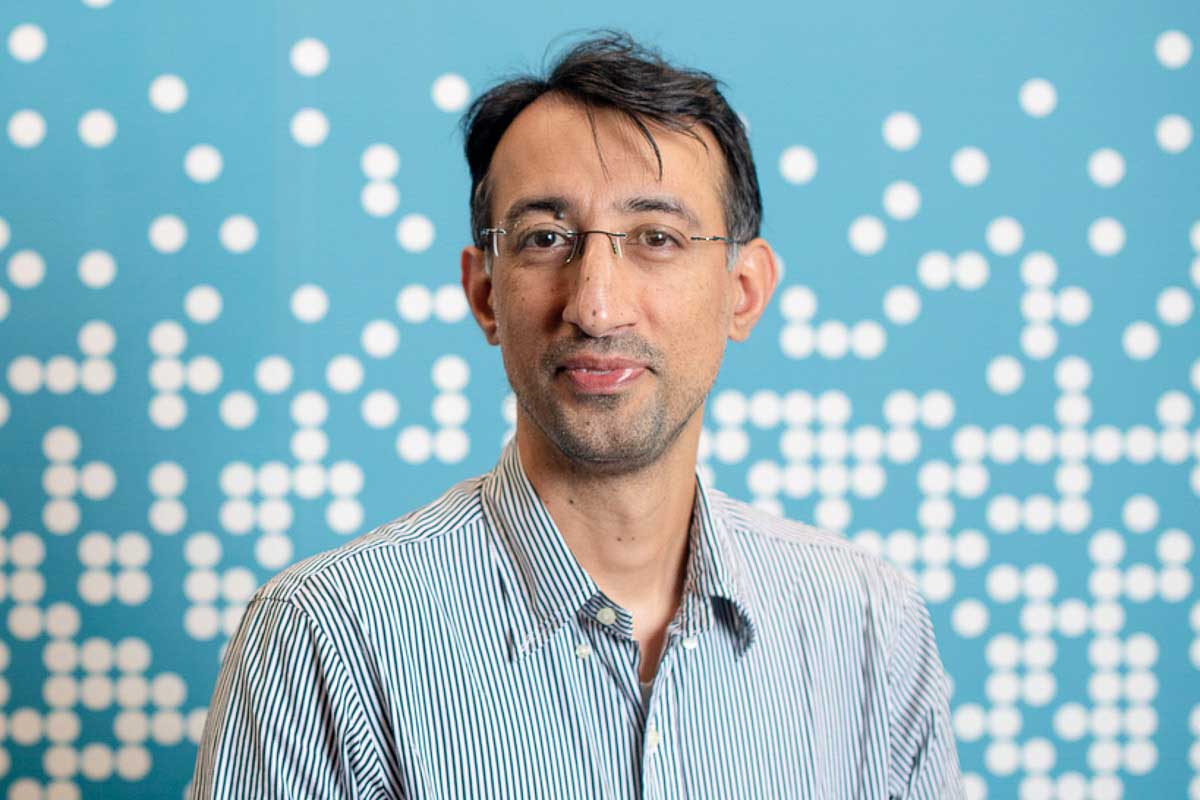
Darion Cassel is an Applied Scientist at Amazon Web Services Automated Reasoning Group , focusing on improving the reliability of Large Language Models (LLMs) through formal methods. He completed his PhD at Carnegie Mellon University's CyLab under the advisement of Limin Jia , where his research centered on practical analysis of security properties for software systems using program analysis and type system design. His research interests span Security Analysis , Program Analysis , Type System Design , Formal Methods , Web Privacy , and Secure Computation . He has contributed to various high-impact publications in conferences like NDSS , EuroS&P , PETS , and CCS , with a notable PETS Best Artifact Award (2022) . His work includes tools like NodeMedic-FINE for vulnerability detection and MIRAI , an abstract interpreter for Rust. He has served on program committees for CCS and MADWeb , and as an Artifact Evaluation Committee member for PETS and ISSTA . His professional experience includes internships at AWS , Facebook Research , and NASA Goddard , among others.
Kjetil Haslum is a researcher specializing in Cloud Computing , Network Security , and Cryptography at SINTEF AS's Software Engineering, Safety and Security group. His work focuses on real-time security mechanisms, cryptographic implementations, and cloud infrastructure scalability. Research Highlights: Developed real-time intrusion prevention systems for network security Contributed to cryptographic implementations using Hesse curves Created benchmarking frameworks for cloud computing scalability
Fauzia Idrees is a prominent cybersecurity researcher at the Department of Information Security , Royal Holloway, University of London , specializing in mobile communications security and malware detection. She has contributed to advancements in Android permissions, GSM security, and VoIP protection. MBA in Leadership and Management, University of Kent PhD in Information Security (2022), City University London MSc in Information Security (2018), National University of Science and Technology (NUST) BE in Electronics Engineering (1995), focus on cellular security Her research focuses on Android application collusion , malware detection , and secure mobile communications . She has published extensively on GSM and VoIP security, with recent work emphasizing digital transformation policies and civil-military cybersecurity collaboration. She has received notable awards including the Roger Mills Prize for Innovation in Education (2024) , UK Alumni Award (2020) , and UN Excellence Award: Women in Science & Technology (2018) . Her work also includes leading the establishment of Pakistan's National CyberSecurity Center. Fauzia.Idrees@rhul.ac.uk
Adeel A. Bhutta is an Associate Teaching Professor at Khoury College of Computer Sciences , Northeastern University in Boston, MA. Since 2021, he has been teaching upper-level software engineering and programming courses, while also serving on numerous college and university committees including the Faculty Senate, Bylaws Committee, MS CS Curriculum Committee, and Academics Appeals Resolution Committee. Education: PhD in Computer Engineering – University of Central Florida MS in Computer Engineering – University of Central Florida MS in Computer Science – University of Central Florida BS in Electronic Engineering – GIK Institute, Pakistan Research Interests & Focus: Adeel's research spans computer vision , image processing , machine learning , and computer science education . His doctoral work advanced selective subtraction techniques for background modeling in videos. Recently, he has integrated deep learning methodologies and is actively exploring active learning pedagogies to enhance student engagement and outcomes in large-scale CS courses. Scientific Awards & Honors: Mumford Excellence in Extraordinary Teaching Award (2021) TRESTLE Fellowship (2019-20) IU Trustees Teaching Award (2019) Champion of Inclusion Award (2017) Graduate Student Achievers Scholarship (2007) UCF Student Organization Officer of the Year Award (2007) Who's Who Among Students in American Universities (2006) Graduate Summer Research Fellowship (2006) National Scholars Award of Achievement (2006) SGA Campus Involvement Scholarship (2006) Outstanding Leadership Award by Pakistani Students Association (2006) ECE Graduate Fellowship (2005) Advising & Service: In addition to classroom teaching, Adeel mentors teaching assistants and project groups, emphasizing high-impact practices. He has served in elected leadership roles such as President of the Graduate Students Association at UCF (representing 7000+ students) and continues to contribute to faculty governance at Northeastern. He also volunteers as Director of Security and Sunday-school teacher at the Islamic Center of Boston, Wayland. Labs, Teams & Entrepreneurship: While no dedicated lab is explicitly listed, Adeel has founded and managed two companies over the past two decades and currently operates several small e-commerce ventures. His industry background includes optimizing video-compression algorithms for TriMedia processors and developing Voice-over-IP applications.
Jialin Li is the Sung Kah Kay Assistant Professor at the School of Computing , National University of Singapore (NUS). They earned a PhD from the University of Washington under the advisement of Dan Ports and a bachelor's degree from the University of Michigan . Their research focuses on distributed systems and operating systems, particularly on co-designing systems with data center networks, data plane operating systems, and decentralized infrastructure. Research Interests : Distributed systems, network ordering, consensus algorithms, in-network processing, decentralized infrastructure, and programmable hardware. Awards : OSDI '14 Jay Lepreau Best Paper Award, NSDI '15 Best Paper Award. Students : Mentors PostDocs (Chaoyi Ruan), Graduate Students (Inho Choi, Yunfan Li, Ziji Shi, etc.), and Undergraduate Students (Mohsen Ghasemi, Akshaye Shenoi, etc.). Service : Conference Organizer (APSys '25 Program Co-Chair), Technical Committee for EuroSys, SOSP, NSDI, and others.
Alastair F. Donaldson is a Professor in the Department of Computing at Imperial College London, where he leads the Multicore Programming Group. His academic career spans positions as a Visiting Researcher at Microsoft Research Redmond, a Postdoctoral Research Fellow at the University of Oxford, a Research Engineer at Codeplay Software Ltd., and PhD studies at the University of Glasgow. Notably, he served as Director of GraphicsFuzz, an Imperial College spinout acquired by Google in 2018, demonstrating significant industry impact from his academic research. Donaldson's research focuses on Programming Languages, Compilers, Verification, Testing, and Multicore Programming, with particular expertise in randomized testing methodologies for compilers and program analyzers. His work bridges theoretical computer science with practical software engineering applications, developing innovative techniques like metamorphic testing for graphics shader compilers and systematic approaches for testing memory persistency models. His research output shows consistent progression toward increasingly sophisticated testing frameworks for verification-aware languages and GPU programming interfaces. Analysis of his 15 most recent publications reveals a strong trend toward applying fuzzing and randomized testing techniques to increasingly complex systems, including zero-knowledge proof circuits, large language models for code generation, and WebGPU APIs. His work consistently addresses the challenge of verifying correctness in systems where traditional testing approaches fall short, with growing emphasis on industrial deployment of compiler testing techniques. Throughout his career, Donaldson has maintained exceptional service to the academic community, serving on program committees and as chair for numerous prestigious conferences including SPLASH, PLDI, POPL, ECOOP, and ISSTA. His leadership roles have included Program Chair for ECOOP and General Chair for PLDI, reflecting his standing within the programming languages research community. As an advisor and mentor, Donaldson has contributed to the PLMW (Programming Languages Mentoring Workshop) with talks on 'The Lean Researcher' and 'Hacks to Compensate for Lack of Novelty in Programming Languages Research,' demonstrating his commitment to nurturing the next generation of researchers. His work on integrating compiler fuzzing into continuous integration pipelines represents significant practical impact on software development practices.
Adjunct Professor Josef Pieprzyk is affiliated with the Queensland University of Technology (QUT) , specifically within the Faculty of Science and the School of Computer Science . His research focuses on Cryptography, Information Security, Algorithms and Complexity , and Security of Computer Networks . Qualifications : PhD in Computer Science from the Polish Academy of Science Research Interests revolve around cryptographic protocols, biometric security systems, and cryptanalysis of modern encryption algorithms. He has contributed to topics such as multibiometric cryptosystems , lattice-based attacks , and graph coloring for multiparty computation . His work is categorized under Data management and data science , Distributed computing and systems software , and Theory of computation . Publications (2014–2015) highlight his expertise in cryptographic hashing , block cipher analysis , and protocol security frameworks . These include studies on CLEFIA-128 and Keccak , aligning with Australian Competitive Grant DP0987734 (2009–present). Professional Memberships : International Association for Cryptologic Research (IACR) Steering Committee for ASIACRYPT, ACISP, and ProvSec conferences
Mario Alviano is a Professor at the University of Calabria's Department of Computer Engineering, Modeling, Electronics and Systems (DIMES) in Rende, Italy. With a prolific publication record spanning from 2008 to 2025, he has established himself as a leading researcher in Answer Set Programming (ASP), logic programming, and knowledge representation. His work bridges theoretical foundations with practical applications across diverse domains including cybersecurity, environmental monitoring, and explainable AI. Alviano's research focuses on advancing the theoretical understanding and practical applications of Answer Set Programming. His key contributions include developing ASP Chef, a visualization and development framework for ASP; advancing theoretical foundations of conditional reasoning and typicality in weighted knowledge bases; and creating bridges between neural networks and symbolic AI through preferential interpretations. His recent work explores temporal extensions to conditional logics, applications of ASP to digital twin visualization, and tools for improving explainability in AI systems. Alviano's publications consistently appear in top-tier venues including ICLP, LPNMR, JELIA, and Theory and Practice of Logic Programming. His research demonstrates strong trends toward practical applications of theoretical advances, with increasing focus on explainability, visualization, and real-world problem solving. The recent surge in publications (26 in 2024 alone) indicates significant ongoing research activity and leadership in the field. His work increasingly integrates ASP with other AI paradigms, particularly neural networks, to create more interpretable and robust AI systems. Alviano has made substantial contributions to the development of tools and frameworks that lower barriers to entry for ASP, most notably ASP Chef which provides visualization capabilities for complex logic programs. His work on Hashcash Tree demonstrates applications to security problems, while his research on marketplace logistics shows practical business applications of declarative programming. His collaborative network is extensive, with frequent co-authorship with researchers including Wolfgang Faber, Nicola Leone, Francesco Ricca, Carmine Dodaro, Laura Giordano, and Daniele Theseider Dupré, reflecting strong connections across European AI research institutions. Alviano has also organized workshops including multiple editions of Datalog 2.0, demonstrating leadership in the logic programming community.
Dr. José Vicente Aguirre is an Associate Professor at the University of Alicante since 2017, affiliated with the Department of Computer Science and Artificial Intelligence, Higher Polytechnic School III. He holds a PhD in Computer Science (2016) and a degree in Computer Engineering (2004), both from the University of Alicante. His research focuses on secure communication protocols, cryptography, and cybersecurity applications in computing. He has directed 6 undergraduate/master's theses in the last 5 years and actively contributes to educational software and teaching methodologies innovation. Key Research Trends Cybersecurity protocol development (P2P, mobile devices) Random generation algorithms for cryptographic applications ICT integration in higher education Statistics-to-machine-learning pedagogy Secure multimedia transmission He has participated in 5 public research projects (2009-2012, 2024) under the "Criptología y seguridad computacional" program, with collaboration in journals like International Journal of Applied Mathematics and Informatics and conferences in educational technology.
Rafael Ignacio Álvarez Sánchez is a Full Professor in the Department of Computer Science and Artificial Intelligence at the University of Alicante's Polytechnic School. He has held this position since 2017 after progressing through academic ranks from Teaching Assistant (2005) to Associate Professor (2007-2008). He served as Department Director from 2016-2021, Deputy Director in multiple periods (2012, 2013, 2016), and Department Secretary from 2008-2012. His academic home is firmly within the University of Alicante where he completed all his formal education. Dr. Álvarez earned his Computer Engineering degree in 2001, Advanced Studies Diploma in 2003, and PhD in Computer Science in 2005, all from the University of Alicante. He received the Extraordinary Doctorate Award in 2009 and completed a postdoctoral research stay at the Claude Shannon Institute in Dublin under the José Castillejo program in 2008. His English proficiency is certified at C2 level (Cambridge Proficiency). His research focuses primarily on cryptography, cybersecurity, and information security with expanding applications in machine learning. Recent work examines adversarial attacks in neural networks and advanced malware detection using deep learning. He has directed 7 doctoral theses, including two defended in July 2024 on adversarial neural network attacks and malware detection. His publication record spans cryptographic techniques, security protocols, and machine learning security applications. His scholarly output shows consistent focus on cryptographic methods and security systems, with recent publications addressing modern challenges in machine learning security and password protection. The research trajectory demonstrates evolution from foundational cryptographic research toward contemporary security challenges in AI systems and advanced computing environments. Extraordinary Doctorate Award (2009) Predoctoral collaboration grant from the Ministry of Education Postdoctoral grant under the José Castillejo program C2 level English certification (Cambridge Proficiency) Professor Álvarez has directed or co-directed 29 undergraduate/master's theses in the last five years and 7 doctoral theses overall. He has participated in 5 public research projects over the last five years as both coordinator and collaborator, including projects funded by the Valencian Government and Ministry of Education. His research group affiliation is with Cybersecurity and Computing (CSC) at the Institute of Computer Research. Current work appears focused on the intersection of machine learning security and traditional cryptographic methods, particularly examining adversarial attacks and advanced malware detection techniques.
Andreia Mordido serves as an Assistant Professor in the Department of Informatics at the Faculty of Sciences, University of Lisbon, and is an integrated researcher at LASIGE. She previously conducted research as a visiting scholar at Carnegie Mellon University's Principles of Programming (PoP) group during Fall 2019. Her academic credentials include: Ph.D. in Information Security (2017), Instituto Superior Técnico, University of Lisbon M.Sc. in Mathematics and Applications (2011), Instituto Superior Técnico, University of Lisbon B.Sc. in Mathematics (2009), Faculty of Sciences and Technology, New University of Lisbon Her research centers on programming languages and type systems for specifying and verifying communication protocols, with earlier contributions to probabilistic/equational logics for cryptographic protocol security and probabilistic satisfiability solvers. Primary interests span Programming Languages, Type Systems, Logic, Satisfiability Problems, and Probabilistic and Equational Reasoning. Analysis of her 15 most recent publications reveals a concentrated research trajectory in session types and protocol verification, with increasing sophistication in handling nested protocols, context-free session types, and higher-order abstractions. Her work bridges theoretical foundations in type theory with practical applications in concurrent and distributed systems, particularly evident in blockchain and smart contract domains. Scientific recognition includes: Distinguished Paper Award at POPL 2024 for "Parametric Subtyping for Structural Parametric Polymorphism" Dr. Mordido has secured involvement in multiple research initiatives: SafeSessions: Safe Concurrent Programming with Session Types Confident: Communication contracts for distributed systems development ASGARD: Analysis system for gathered raw data ECOSSIAN: European Control System Security Incident Analysis Network ComFormCrypt: Computational Semantics of Formal Methods in Cryptography Co-evolution and self-organization of cooperation Her teaching portfolio spans Domain-Specific Languages, Object Oriented Development, Introduction to Programming, and Theory of Computation across Faculty of Sciences (2018-present) and Instituto Superior Técnico (2012-2016), demonstrating consistent engagement with both theoretical and applied computer science education. As an LASIGE researcher, she contributes to Portugal's premier software engineering research laboratory focused on advanced computing solutions and formal methods.
Eman Saleh is a Senior Lecturer at the School of Computing, University of Georgia, serving since August 2022 after previously holding a Lecturer position there from 2016-2022. Her academic career includes Assistant Professor at Applied Science Private University (2010-2016) and Senior Lecturer at Al-Zaytoonah University of Jordan (1998-2009). She earned both her Master of Science (1998) and Bachelor of Science (1993) in Computer Science from the University of Jordan. Her research focuses on Software Engineering and Human-Computer Interaction , with expertise in model-driven approaches for GUI testing, user interface derivation, and algorithm development. Her work bridges theoretical modeling with practical software solutions, emphasizing automated testing methodologies and cross-platform interface design. Analysis of her publications reveals consistent contributions to software testing frameworks and user interface engineering, with increasing emphasis on model-based techniques and task-oriented design patterns across multiple platforms. She has received significant recognition including: Student Career Success Influencer Award 2023 (awarded twice: January 2023 and January 2024) Teaching Excellence Award (May 2023) Dr. Saleh secured the Center for Inclusive Computing Diagnostic Grant from Northeastern University (2021-2023). While specific advising details aren't documented, her award focus on student career development highlights her mentorship commitment. No institutional lab affiliations or research team memberships are mentioned in available records.
Giulia Fanti is the Angel Jordan Associate Professor of Electrical and Computer Engineering at Carnegie Mellon University. She holds courtesy appointments in the Computer Science Department and Machine Learning Department, and is affiliated with CyLab Security and Privacy Institute. Her research focuses on security and privacy in distributed systems, blockchain technology, and privacy-enhancing machine learning. Ph.D., Electrical Engineering & Computer Science, University of California, Berkeley (2015) M.S., Electrical Engineering & Computer Science, University of California, Berkeley (2012) B.S., Electrical & Computer Engineering, Olin College of Engineering (2010) Her research spans three major areas: privacy-preserving data sharing using generative models like GANs, privacy in decentralized networks under adversarial conditions, and blockchain scalability with rigorous mathematical modeling. She actively explores privacy-utility tradeoffs in synthetic data generation and secure federated learning frameworks. Recent publications highlight her expertise in blockchain economics, privacy-preserving machine learning, and secure consensus algorithms. Articles span topics like game-theoretic liquidity provisioning, federated learning with synthetic data, and differential privacy in distributed systems. These works demonstrate her focus on bridging theoretical guarantees with practical implementations. Scientific recognition includes: Best Paper Award Finalist @ ACM IMC Best Paper Award Finalist @ SIGMETRICS 2025 ICML 2025 Oral Presentation ICLR 2025 Honorable Mention Atlantic Council Senior Fellowship World Economic Forum Global Future Council Fellowship She advises numerous doctoral students and postdocs, including current advisees Shuaiqi Wang, Sangyun Lee, and former students now at institutions like HKUST, NTU, and University of Ottawa. Her group collaborates extensively through initiatives like the Upanzi Network and Secure Blockchain Initiative. Research teams include CyLab-Africa, which she co-directs, and CMU's Secure Blockchain Initiative. Her work has been funded by NSF awards and industry grants.
Riccardo Paccagnella is an Assistant Professor of Computer Science at Carnegie Mellon University, where he is a core faculty member in the Software and Societal Systems Department (S3D) and CyLab's Security and Privacy Institute, with a courtesy appointment in the Electrical and Computer Engineering Department (ECE). His work focuses on system and hardware security, with particular expertise in microarchitectural vulnerabilities and their implications for secure software. Paccagnella earned his Ph.D. in Computer Science from the University of Illinois Urbana-Champaign in 2023, where he was advised by Chris Fletcher. His doctoral research laid the foundation for his continuing work on hardware security vulnerabilities. Dr. Paccagnella's research centers on system and hardware security, with a focus on uncovering and mitigating new classes of microarchitectural vulnerabilities. His work examines how hardware features like data memory-dependent prefetchers, dynamic frequency scaling, and on-chip interconnects can be exploited to leak sensitive information. He has made significant contributions to understanding side-channel attacks on cryptographic implementations, particularly those related to power and timing analysis. His research bridges the gap between theoretical security models and practical hardware implementations, revealing vulnerabilities in widely used processors from Apple, Intel, and AMD. Paccagnella's recent publications reveal a strong focus on microarchitectural side-channel attacks, particularly those exploiting hardware prefetchers, frequency scaling mechanisms, and on-chip interconnects. His work has demonstrated novel attacks like GoFetch (targeting Apple's M-series chips) and Hertzbleed (turning power side channels into remote timing attacks), which have fundamentally challenged assumptions about constant-time cryptographic implementations. His research spans both theoretical analysis and practical demonstrations, with many of his findings receiving industry recognition through awards like the Pwnie Awards. Dr. Paccagnella's research has been recognized with numerous prestigious awards, including the Pwnie 2024 Award for Best Cryptographic Attack for his GoFetch research, multiple Pwnie Award nominations, the IEEE Micro Top Picks 2023 recognition, and the Intel Bug Bounty Award. His work has also been selected for the Top Picks in Hardware and Embedded Security 2024. These accolades reflect the significant impact of his research on both academic and industry understanding of hardware security vulnerabilities. Paccagnella advises PhD students including Inwhan Chun and Isabella Siu, and is actively recruiting new students for CMU's Security and Privacy-focused PhD programs. His research has been supported by significant funding from the Air Force Office of Scientific Research (AFOSR), the Defense Advanced Research Projects Agency (DARPA), the National Science Foundation (NSF), the Alfred P. Sloan Research Fellowship, and industry partners including Intel, Qualcomm, and Cisco. As a core faculty member of CyLab's Security and Privacy Institute at CMU, Paccagnella collaborates with a broad network of security researchers across multiple departments. His work often involves cross-institutional collaborations, particularly with researchers from the University of Illinois Urbana-Champaign, University of Texas at Austin, and Georgia Institute of Technology. He is part of CMU's vibrant security research ecosystem that includes the Software and Societal Systems Department and the Electrical and Computer Engineering Department.
Adil Ahmad is an Assistant Professor in the School of Computing and Augmented Intelligence (SCAI) at Arizona State University (ASU), Tempe, AZ. His research focuses on computer security, systems, and architecture, aiming to protect sensitive data from powerful adversaries using hardware-assisted trusted execution environments (TEEs) and secure system software design. Education: Ph.D. in Computer Science, Purdue University, 2022 B.S. in Computer Science, Lahore University of Management Sciences, 2016 Adil leverages TEEs to address protection and usability limitations while designing principles to strengthen critical system software (e.g., operating systems and hypervisors). His work has been supported by a US Department of Defense DEPSCoR Award, and he actively contributes to academic service as a program committee member and reviewer for top-tier conferences like IEEE S&P, USENIX Security, and ACM CCS. Selected publications include Veil (ACM ASPLOS 2023), OmniLog (USENIX Security 2023), and eOPF (USENIX OSDI 2023), focusing on confidential computing, secure logging, and cloud orchestration. He also leads outreach initiatives like the Desert CodeSprouts Workshop, promoting computer science education for middle-school students in cybersecurity, programming, and machine learning. Scientific Awards: US Department of Defense DEPSCoR Award Adil chairs sessions like "Verification for Security" at IEEE S&P and mentors students in systems and security research. He is open to hiring motivated PhD students and emphasizes hands-on, inclusive learning environments in his outreach activities.