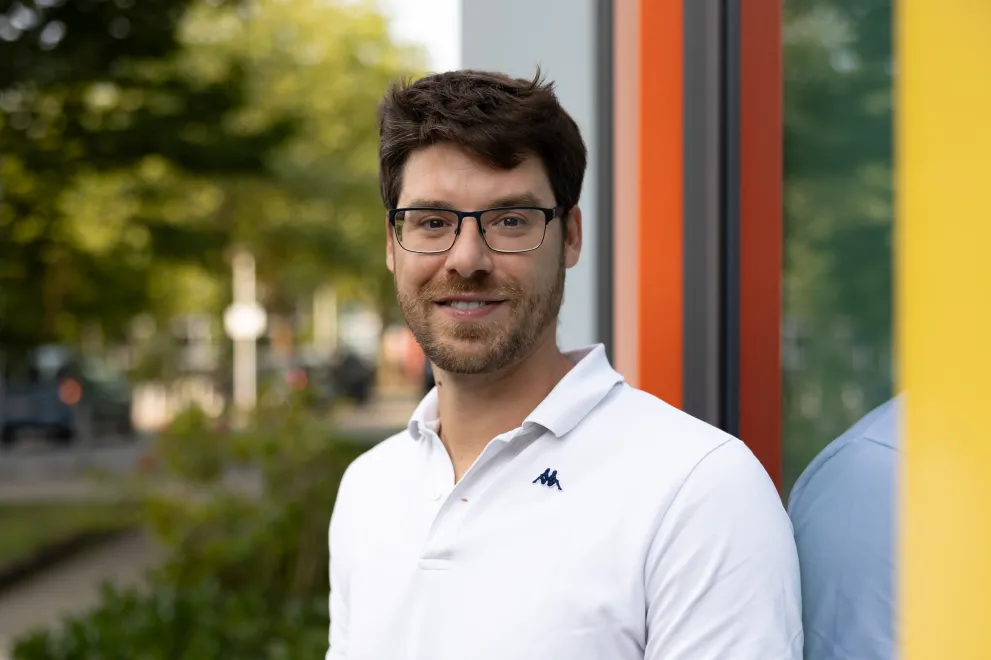
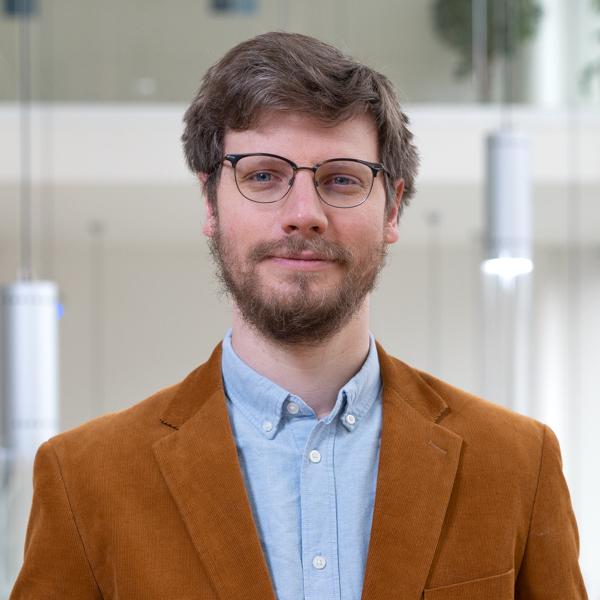
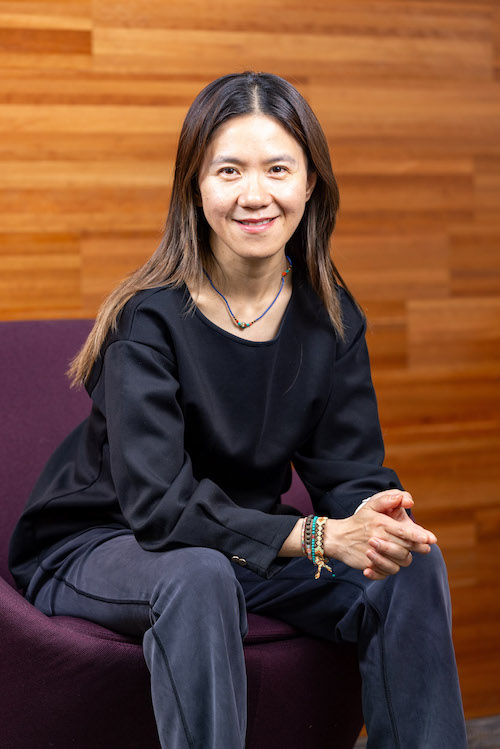
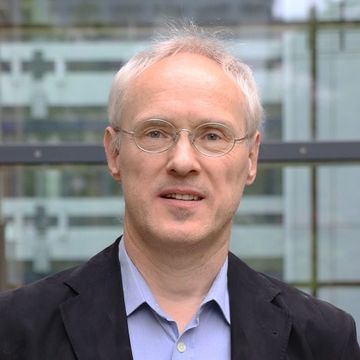
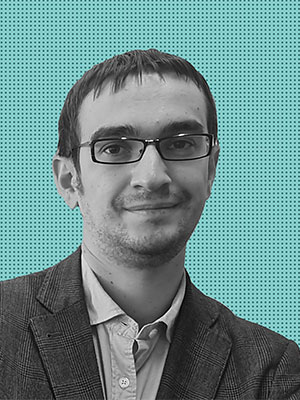
Vipul Goyal is an Associate Professor in the Computer Science Department at Carnegie Mellon University and a Senior Scientist at NTT Research . He previously spent 7 years at Microsoft Research before joining CMU. His academic journey includes a PhD from UCLA under advisors Rafi Ostrovsky and Amit Sahai , and a B.Tech. from IIT (BHU) Varanasi . Research Interests: Cryptography, Quantum Cryptography, Security & Privacy, Theoretical Computer Science Grants: NSF, DARPA, Department of Energy NETL, JP Morgan, Cisco, PNC, Ripple, DoS Networks, CyLab initiatives Education: PhD in Computer Science (UCLA, 2009) B.Tech. in Computer Science (IIT BHU Varanasi) His recent work focuses on Quantum Cryptography , Secure Multi-Party Computation , and Unclonable Security . Notable awards include the 2019 JP Morgan Faculty Award and the 2016 ACM CCS Test of Time Award . He advises the CMU Blockchain Group and has served on program committees for Crypto 2025 , FOCS 2024 , and others. Scientific Awards: 2019 JP Morgan Faculty Award 2016 ACM CCS Test of Time Award Microsoft Research Graduate Fellowship Google Outstanding Graduate Student Award Forbes 30 Under 30 in Science and Healthcare (2013) Students & Postdocs: He has mentored numerous PhD students and Postdocs , many of whom are now faculty at institutions like Tsinghua University, Max Planck Institute, and UT Austin. Former research assistants include Yifan Song and Elisa Masserova .
Hubert Tsz-Hong Chan is an Associate Professor in the Department of Computer Science, School of Computing and Data Science at The University of Hong Kong. He earned his PhD in 2007 from Carnegie Mellon University under the supervision of Anupam Gupta, followed by post-doctoral research at the Max-Planck-Institut für Informatik (2007-2009). Education PhD in Computer Science, Carnegie Mellon University, 2007 Research Interests Dr Chan's research lies at the intersection of algorithms , combinatorial optimisation , discrete metric spaces , and security & privacy . A recurring theme is the design of provably efficient approximation algorithms for geometric and graph-theoretic problems under realistic or adversarial settings. Representative contributions include polynomial-time approximation schemes (PTAS) for TSP and Steiner Forest in doubling metrics, spectral analysis of hypergraph Laplacians, and foundational work on differential obliviousness and oblivious RAM. Publications & Trends With more than 80 peer-reviewed papers in premier venues such as JACM , SIAM Journal on Computing , Algorithmica , FOCS , SODA , EUROCRYPT , ASIACRYPT , CCS , and WWW , his recent output (2018-2021) demonstrates a shift toward privacy-preserving algorithms, differential obliviousness, and socially-aware optimisation models, often combining rigorous theory with practical datasets like Netflix and Twitter. Scientific Awards IPDPS 2019 Best Paper Award WWW 2018 Honorable Mention Students & Mentoring Dr Chan has successfully graduated 17 PhD and MPhil students and currently mentors 7 PhD candidates and 1 MPhil student. His graduates have secured academic and industry positions worldwide, and their theses frequently build on his funded projects. Research Funding & Labs Since 2012 he has been Principal Investigator on 12 competitive grants from the Hong Kong Research Grants Council (RGC), totalling more than HK$8 million, spanning topics from privacy-preserving aggregation to Byzantine-resilient federated learning. While no dedicated laboratory name is advertised, his group operates within the Security & Privacy and Algorithms Labs in the Department of Computer Science.
Daniel Rausch is a Researcher at the University of Stuttgart , affiliated with the Institute of Information Security . His work focuses on cryptographic protocols, particularly in electronic voting systems, universal composability, and accountable security frameworks. Key research areas include Cryptography , Computer Security , and Formal Verification . Recent publications explore password-hardened encryption, zero-knowledge proofs, and tally-hiding mechanisms for e-voting. Scientific contributions span: Provably secure password-hardened encryption with round-optimal schemes Accountable bulletin boards with UC security guarantees Zero-knowledge proofs for ballot validity in ElGamal-encrypted elections Publicly tally-hiding protocols preserving vote privacy UC-IITM model unification for composability frameworks Collaborations include researchers like Ralf Küsters , Nicolas Huber , and Marvin Bechtold . Notable implementations include Fabric*BB for distributed ledger applications and Kryvos for verifiable elections.
Lorenzo Grassi is a postdoctoral researcher in symmetric cryptography at Ruhr University Bochum's Cluster of Excellence CASA and a consultant at Ponos Technology. He holds a PhD in Mathematics from Graz University of Technology (2019) and a degree in Mathematics from the University of Milano. Funded by the CASA Jump.Start Program for Postdocs since 2023, he focuses on cryptography for future applications, including quantum-resistant protocols and MPC-/FHE-/ZK-friendly schemes. Education: University of Milano (Mathematics), Graz University of Technology (PhD in Mathematics) Positions: Ruhr University Bochum (CASA Cluster), Ponos Technology (Consultant), Radboud University Nijmegen (2020-2023) His research spans symmetric encryption, hash function design, algebraic attacks, and cryptanalysis of modern cryptographic primitives. Recent work includes Gröbner basis attacks, side-channel secure implementations, and quantum cryptanalysis. Key trends in his publications include the development of zero-knowledge proof-friendly hash functions (e.g., Poseidon2), structural analysis of symmetric primitives (e.g., Subspace Trails, Feistel networks), and optimization of cryptographic schemes for MPC and FHE applications. Quantum cryptanalysis and truncated differential attacks also feature prominently. Scientific Awards: ERC Starting Grant 2024 Grassi contributes to advancing cryptographic security through innovative designs like Monolith and Reinforced Concrete, while also analyzing vulnerabilities in schemes like AES and Grendel. His work bridges theoretical analysis with practical implementations, emphasizing efficiency and resistance to emerging threats.
Dario CATALANO is a Full Professor of Informatics at the Department of Mathematics and Computer Science, University of Catania, where he has been employed since 2003, progressing from Associate Professor (2006-2020) to his current position since March 2020. He previously held research positions at the French CNRS (permanent researcher 2003-2006), Ecole Normale Supérieure in Paris, and conducted research at Columbia University and IBM's T.J. Watson Research Center. Education: Master's Degree in Computer Science (Laurea in Scienze dell'Informazione) with honors (110/110 cum laude) from University of Catania, 1995 Ph.D. in Computer Science from University of Catania, 2002 Professor CATALANO's research for the past twenty years has focused primarily on cryptography, with emphasis on reducing the gap between theoretical foundations and practical implementations. His work addresses foundational issues driven by real-world security needs, specializing in password-based cryptography, electronic voting systems, and cryptographic primitives with special properties including homomorphic signatures, MACs, and functional encryption. Early in his career, he also conducted research in machine learning theory. He leads the Crypto@DMI research group at the University of Catania (since 2006) and has held significant administrative roles including Chair of the Master's Degree in Computer Science (2019-2023), Member of the Orientation Committee (2015-present), and Local Coordinator of the National Cybersecurity Lab (2014-2017).
Nico Döttling is a faculty member at the CISPA Helmholtz Center for Information Security, where he leads research in cryptographic foundations. His work focuses on advancing theoretical and practical aspects of modern cryptography, with particular emphasis on homomorphic encryption, post-quantum cryptography, and secure multi-party computation. Dr. Döttling received his PhD in Computer Science from the Karlsruhe Institute of Technology in 2014 under the supervision of Jörn Müller-Quade. Prior to joining CISPA in 2018, he held positions as an Assistant Professor at Friedrich-Alexander University Erlangen-Nuremberg (2017-2018), a postdoctoral researcher at UC Berkeley (2016-2017) supported by a DAAD fellowship, and a postdoctoral researcher at Aarhus University's Cryptography Group (2014-2016) working with Ivan Damgård and Jesper Buus Nielsen. Dr. Döttling's research centers on the theoretical foundations of cryptography with practical applications. His work spans public-key encryption, communication-efficient secure multi-party computation, homomorphic encryption, and post-quantum cryptographic systems. He has made significant contributions to laconic cryptography, time-lock puzzles, and verifiable delay functions, with his ERC Starting Grant project 'Next Generation Laconic Cryptography (LACONIC)' driving innovation in communication-efficient cryptographic protocols. His research bridges theoretical computer science with practical security applications, addressing fundamental questions while developing usable cryptographic primitives. Analysis of Dr. Döttling's recent publications reveals a strong focus on efficient cryptographic primitives with particular attention to communication complexity, security proofs, and practical implementations. His work spans theoretical foundations of cryptography, post-quantum security, and novel applications of cryptographic techniques to real-world problems. A notable trend is his exploration of laconic cryptography - developing protocols with minimal communication overhead - which has applications in resource-constrained environments and large-scale distributed systems. Dr. Döttling's scientific achievements have been recognized with several prestigious awards: ERC Starting Grant for the project 'Next Generation Laconic Cryptography (LACONIC)' (2021) Best Paper Award at Crypto for 'Identity-Based Encryption from the Diffie-Hellman Assumption' (2017) Postdoctoral Fellowship at UC Berkeley sponsored by DAAD (2016) Best Paper Award at ProvSec 2015 for 'From Stateful Hardware to Resettable Hardware Using Symmetric Assumptions' (2015) Biennial dissertation award for best dissertation in computer science at Karlsruhe Institute of Technology (2014) As a faculty member at CISPA, Dr. Döttling leads an active research group focused on cryptographic foundations. His ERC Starting Grant provides significant research funding to advance laconic cryptography. While specific information about his advisees is not provided in the source material, his extensive publication record with multiple co-authors suggests active collaboration with students and researchers. His work bridges theoretical cryptography with practical security applications, making contributions that advance both academic understanding and real-world cryptographic implementations. Dr. Döttling leads the Algorithmic Foundations and Cryptography research group at CISPA, focusing on developing theoretically sound yet practically efficient cryptographic protocols. His team explores innovative approaches to longstanding cryptographic challenges, particularly in making cryptographic protocols more communication-efficient without sacrificing security. Current research directions include post-quantum cryptographic systems, verifiable delay functions, and novel applications of homomorphic encryption to privacy-preserving computation.
Semiha Tedik Başaran is an Assistant Professor in the Department of Electronics and Communication Engineering at Istanbul Technical University's Faculty of Electrical and Electronics Engineering. She received her PhD in Telecommunications Engineering from Istanbul Technical University in 2019 and has been working at the university since 2011, first as a Research Assistant and then as an Assistant Professor starting in 2020. Her educational background includes: PhD in Telecommunications Engineering from Istanbul Technical University (2013-2019) MSc in Telecommunications Engineering with Thesis from Istanbul Technical University (2011-2013) Bachelor's Degree in Electronics and Communication Engineering (Double Major) from Istanbul Technical University (2006-2011) Dr. Başaran's research focuses on wireless communications, network coding, and next-generation wireless networks. Her work spans theoretical analysis and practical implementation of communication systems, with particular emphasis on network coded cooperation, physical layer security, and wireless network reliability. She has made significant contributions to understanding the performance of network coded systems in various wireless environments, including satellite communications and 5G/6G networks. Her recent publications demonstrate a growing interest in integrating artificial intelligence with wireless communications, particularly for IoT applications and edge computing, while also advancing research in THz communication systems and their challenges in adverse weather conditions. Her scientific achievements have been recognized with several prestigious awards: Doctoral Thesis Award from Istanbul Technical University (2020) IEEE Türkiye Doctoral Thesis Award (2020) Best Poster Award at IEEE International Conference on Wireless for Space and Extreme Environments (WiSEE-2016) (2016) Dr. Başaran serves as Principal Investigator for multiple research projects including 'Designing 5G and Beyond Cellular Private Networks Secure Against DDoS Attacks,' 'Performance Analysis of THz Communication Systems,' 'Coverage Analysis of LEO Satellite Systems,' and 'Development of Multiple Access Techniques Providing Low Latency Performance for Next Generation Communication Systems.' Her h-index of 8 (based on Scopus) reflects her impactful contributions to the field of wireless communications, with 36 research outputs spanning from 2013 to 2024. She maintains an active research lab focused on wireless communications and network coding, where her team works on both theoretical analysis and practical implementation of next-generation communication systems using software-defined radio platforms, with strong international collaborations extending across multiple countries as indicated by her research footprint.
L.A.M. (Berry) Schoenmakers is an Associate Professor at the Coding Theory and Cryptology department of Eindhoven University of Technology. His research spans cryptography, secure computation, and algorithm design, with a focus on threshold systems and numerical methods in cryptographic contexts. Active in Secure Multiparty Computation , Secret Sharing , and Elliptic Curve Cryptography Published extensively in Cryptography , Fixed-Point Arithmetic , and Algorithm Design Recent work includes secure implementations of Newton-Raphson iteration and Extended GCD algorithms . He teaches courses in Cryptographic Protocols , Linear Algebra , and Programming , with active supervision of research outputs.
Mira Mezini is a Professor of Computer Science at the Technical University of Darmstadt, Germany, leading the Software Technology Lab. She serves on steering committees, program committees, and editorial boards of top-tier conferences and journals. Her affiliations include the National Research Center for Applied Cybersecurity ATHENE and co-directorship of hessian.AI, the Hessian Center for Artificial Intelligence. Her research focuses on programming systems for reliable distributed software and AI, automated software analysis, and foundational code models. She has developed large-scale module concepts for adaptability, extensible programming languages, and intelligent software development environments that leverage web-based resources to generate programming rules and patterns. Specializes in software engineering Expert in programming language design Contribution to cybersecurity and AI Her recent work emphasizes static analysis, distributed systems, and programming language design, with trends in API misuse detection, decentralized applications, and secure local-first programming. The focus spans from foundational type systems to practical tools enhancing software quality and developer productivity. Scientific Awards Two-time IBM Eclipse Innovation Award recipient (2005, 2006) Google Research Award (2017) Horst Görtz IT Security Award (2014) ERC Advanced Grant (2012) ACM Fellow Dahl-Nygaard Prize (2025) She has held leadership roles including Dean of Computer Science at TU Darmstadt (2013-2014) and Vice President positions (2014-2019). Her service extends to international juries, funding panels, and editorial boards. Labs & Teams Leads the Software Technology Lab at TU Darmstadt, driving research in programming paradigms and tools. Co-directs hessian.AI and contributes to the Excellence Cluster 'Reasonable Artificial Intelligence.'
Huijia (Rachel) Lin is a Professor in the Paul G. Allen School of Computer Science & Engineering at the University of Washington. Her research bridges theoretical cryptography with broader domains in computer science, including complexity theory, algorithm design, learning, and security. Dr. Lin leads the Simons Collaboration on the Theory of Algorithmic Fairness (2020–2027) and collaborates with UW’s cryptography and theory groups, which include Professors Andrea Coladangelo, Stefano Tessaro, and Nirvan Tyagi. She has also served on numerous prestigious program committees and steering committees, including as a co-chair for TCC 2025 and FORC 2026. Research Interests: Theoretical aspects of cryptography Program obfuscation and functional encryption Lattice-based cryptography Secure multiparty computation Non-malleability and concurrent security Connections to quantum computation Scientific Awards: NSF CAREER Award Hellman Fellowship Cisco Research Award JPMorgan Faculty Award Microsoft Research PhD Fellowship Best Paper Award at STOC 2021 Best Paper Award at Eurocrypt 2018 Best Paper Honorable Mention at Eurocrypt 2016 Advising and Grants: Dr. Lin has mentored numerous PhD students and postdocs, including Kameron Shahabi, Ji Luo, and Min Jae Song. Her research is supported by the Simons Collaboration on the Theory of Algorithmic Fairness.
Mohammad Mahmoody is an Associate Professor in the Computer Science Department at the University of Virginia (UVA), where he conducts theoretical research at the intersection of cryptography and machine learning. His research focuses on understanding fundamental limitations in cryptography and machine learning through the lens of lower bounds, impossibility results, and security barriers. Key areas include cryptographic protocols, adversarial robustness in learning systems, and computational complexity. His recent publications show a strong trend toward bridging cryptographic techniques with machine learning security, particularly in understanding data poisoning attacks, robust learning under adversarial conditions, and the computational foundations of security guarantees. His work spans both theoretical computer science venues (CRYPTO, EUROCRYPT, TCC) and machine learning conferences (NeurIPS, ICML). He actively advises graduate students and postdocs, with a track record of mentoring PhD candidates through completion of their degrees. His service to the academic community includes extensive program committee work for major conferences in both cryptography and machine learning. Dr. Mahmoody teaches advanced courses including Theory of Computation, Algorithms, and Cryptography at both undergraduate and graduate levels, demonstrating his commitment to educating the next generation of theoretical computer scientists.
John Harer is a Professor in Mathematics, specializing in geometric, combinatorial, and computational techniques for data analysis, shape recognition, image segmentation, cyber security, IoT, and biological networks. His work integrates topological data analysis (TDA) with applications in gene expression, pandemic surveillance, and network dynamics. Education: Ph.D. in Mathematics, University of California at Berkeley (1979) B.A. in Mathematics, Haverford College (1974) Research Interests: His research spans computational topology, geometric data analysis, and network inference. Key contributions include persistent homology for biological rhythm detection, topological methods in cyber threat modeling, and multi-scale sensor fusion. He bridges theoretical mathematics with practical challenges in public health, blockchain privacy, and adaptive urban infrastructure. Publication Trends: His 15 most recent publications (2014–2023) emphasize topological data analysis, machine learning, and computational biology. Themes include pandemic modeling (SARS-CoV-2 surveillance), gene regulatory networks, and cybersecurity (blockchain analysis). Early works focus on computational topology foundations, while recent studies apply TDA to real-world data merging and IoT resilience.
Pramita Bagchi is an Assistant Professor at the Department of Biostatistics and Bioinformatics, Milken Institute School of Public Health, The George Washington University. She holds a Ph.D. in Statistics from University of Michigan and completed postdoctoral research at Ruhr Universitat Bochum, Germany. Doctor of Philosophy (Ph.D.) in Statistics - University of Michigan, Ann Arbor (2015) Postdoctoral Researcher - Department of Mathematics, Ruhr Universitat Bochum, Germany (2015-2018) Master of Statistics - Indian Statistical Institute, Kolkata, India (2010) Bachelor of Statistics - Indian Statistical Institute, Kolkata, India (2008) Her research focuses on developing computationally efficient statistical methodologies for analyzing high-dimensional dependent data , including longitudinal, spatial, and time series observations. Applications span climate science, protein sequencing, medical imaging , and financial data . Methodologically, she explores functional data analysis, shape-constrained inference, asymptotic theory , and non-parametric methods . Current projects include frequency band analysis for functional time series and clinical data analytics for heart failure biomarkers . Dr. Bagchi has received research grants from the National Science Foundation (2022-2025) and INOVA Hospital (2020-2023). Her work emphasizes modeling data with minimal structural assumptions , addressing computational challenges in high-dimensional contexts.
Prof. Dr. Claus Hertling serves as Professor and Chair of Algebraic Geometry within the School of Business Informatics and Mathematics, teaching core courses including Linear Algebra I+IIa+IIb, Algebra, and Game Theory alongside specialized topics in Algebraic Geometry, Number Theory, and Data Security. His research program centers on Algebraic Geometry and Algebra with significant contributions to meromorphic differential equation systems , extending into applied domains like Game Theory , Data Retrieval , and Cryptographic Security through interdisciplinary mathematical frameworks. Prof. Hertling actively supervises Bachelor's and Master's theses in Game Theory and Algebra through the Chair for Algebraic Geometry, which functions as the primary research unit coordinating his academic activities and seminar offerings in Graph Theory and related fields.
Léo Perrin is a Researcher at Inria, a French national research institute focused on computational sciences. In 2021, he received the ERC Starting Grant for his work on symmetric cryptography, zero-knowledge protocols, and cryptanalysis, positioning him as an inventor of "next generation" cryptography techniques. His research addresses critical challenges in digital security and quantum computing, with affiliations to project teams including: Cosmiq (Cryptography, Security, Quantum) Quantic (Quantum Information, Computing, and Cryptography) Prosecco (Security Protocols, Formal Verification) Sierra (Security, Cryptography, and Privacy) Specfun (Symbolic Computation and Functional Programming) Perrin's scientific contributions focus on advancing cryptographic protocols and post-quantum security, aligning with Inria's mission to innovate in digital technologies. His work is recognized through prestigious awards like the ERC Starting Grant, which supports his exploration of novel cryptographic methods.