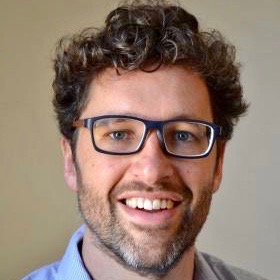
Prof. Sanjam Garg is an Associate Professor at the University of California, Berkeley in the Computer Science Division under the College of Engineering. His work focuses on cryptography and its applications to security and privacy , with affiliations to the Berkeley Center for Responsible, Decentralized Intelligence (RDI) and the Simons Institute for the Theory of Computing (SITC). Education: Ph.D., Computer Science, University of California, Los Angeles (2013) B.Tech, Computer Science and Engineering, Indian Institute of Technology, Delhi (2008) His research spans cryptography , secure computation , and zero-knowledge proofs , with recent publications on threshold encryption , zkSNARKs , and private set intersection . Trends in his work emphasize blockchain security , obfuscation , and secure multiparty computation . Scientific Honors: ACM Doctoral Dissertation Award (2013) Sloan Research Fellowship (2020) Okawa Research Grant (2016) IACR EUROCRYPT Best Paper Award (2013) FOCS Test of Time Award (2023) Bakar Fellows Spark Award (2023) Prof. Garg has advised researchers like James Bartusek (2024), Akshayaram Srinivasan (2020), and Peihan Miao (2019), who are now at institutions such as Microsoft Research and University of Toronto. He teaches CS 170 on algorithms at Berkeley.
Vassilis Zikas is an Associate Professor at the School of Cybersecurity and Privacy and holds a courtesy appointment in the School of Computer Science at Georgia Tech. He previously held positions at Purdue University, the University of Edinburgh, and Rensselaer Polytechnic Institute (RPI). His research focuses on cryptography, blockchain technologies, cryptocurrencies, game theory, and distributed computing. He leads the Blockchain Lab at Georgia Tech and serves as Chief Scientist at Sunday Group, where he contributes to the Mobby blockchain architecture. His work is supported by the NSF, DoD, Swiss NSF, and industry partners like Sunday Group and Algorand Foundation. He has organized major conferences including PKC 2020 and has served on program committees for EUROCRYPT, CRYPTO, and TCC. He advises PhD students in cryptography and related fields and has mentored postdocs and master’s students. Zikas’ publications span topics like secure multi-party computation (MPC), blockchain security, and cryptographic protocol design. His recent work includes advancements in privacy-preserving protocols, adaptive security frameworks, and composability in blockchain systems. Notable awards include the 2023 Leadership Award from Purdue College of Science and an AnlytiXIN Fellowship. He actively contributes to both theoretical and applied aspects of cybersecurity and privacy through academic and industrial collaborations.
Anantha Chandrakasan is the Vannevar Bush Professor of Electrical Engineering and Computer Science at MIT, serving as Dean of the MIT School of Engineering and Chief Innovation and Strategy Officer. His research focuses on energy-efficient integrated circuits, medical devices, and AI hardware security. He leads the MIT Energy-Efficient Circuits and Systems Group, developing systems for biomedical applications, wireless communication, and quantum computing. He holds appointments at MIT's Microsystems Technology Laboratories and has contributed to collaborations like the MIT-Takeda Program in AI-driven healthcare and a partnership with GlobalFoundries for energy-efficient AI chips. His work spans implantable drug delivery systems, conformable ultrasound patches, and secure edge computing architectures. Chandrakasan's innovations include ultra-low-power circuits for IoT devices, cryptographic processors for post-quantum security, and AI accelerators for edge applications. He emphasizes interdisciplinary research bridging electrical engineering with biomedical and quantum fields, supported by leadership roles in MIT's strategic initiatives. His contributions to energy-efficient computing have led to advancements in wearable health monitors, batteryless sensors, and secure communication protocols for medical devices. Ongoing projects include THz integrated systems and AI-enhanced analog circuit design optimization.
Daniel M. Kane is a Professor at the University of California, San Diego (UCSD), holding a joint appointment in the Department of Mathematics and the Department of Computer Science and Engineering (CSE). His research spans mathematics and theoretical computer science, with a focus on number theory, combinatorics, complexity theory, and computational statistics. He earned a Ph.D. in Mathematics from Harvard University (2011) and dual BS degrees in Mathematics with Computer Science and Physics from MIT (2007). Prior to UCSD, he was a postdoctoral researcher at Stanford University (2011–2014) on an NSF fellowship. His research interests include robust statistics, machine learning, polynomial threshold functions, and algorithmic methods for high-dimensional data. Notable achievements include co-authoring the book Algorithmic High-Dimensional Robust Statistics (Cambridge University Press, 2023) and receiving the Best Paper Award at the Conference on Computational Complexity (2013), as well as gold medals at the International Mathematical Olympiad (2002 and 2003). Current teaching includes courses such as Math 96 (Putnam Seminar), Math 154 (Graph Theory), CSE 101 (Algorithms), and CSE 203A (Randomized Algorithms). He has consulted for companies like CASPER Labs and AIble, and his work extends to cryptographic protocols, including quantum money schemes based on quaternion algebras. Key contributions include breakthroughs in robust mean estimation, list-decodable learning, and the development of efficient algorithms for statistical problems. His research often bridges foundational theory with practical applications in machine learning and data analysis.
Ben Fisch is an Assistant Professor of Computer Science at Yale University's School of Engineering & Applied Science. He is also the co-founder of Espresso Systems, a company focused on blockchain infrastructure. His research focuses on privacy and verifiability in decentralized systems like Bitcoin and Ethereum, with applications in digital finance and healthcare. Dr. Fisch received his B.A. from the University of Pennsylvania and completed his Ph.D. at Stanford University, where he worked with Dan Boneh in the applied cryptography research group. His educational background provided the foundation for his work at the intersection of cryptography, distributed systems, and economics. His research centers on leveraging cryptographic tools such as succinct non-interactive zero-knowledge proofs (zk-SNARKs), private information retrieval, and homomorphic encryption to address challenges in verifiable computation, verifiable storage, and verifiable fairness. He has made significant contributions to verifiable delay functions (VDFs) and proofs of replication, which have been adopted by major blockchain projects including Ethereum 2.0, Chia, and Filecoin. His work on Filecoin's Proofs of Replication has helped the network reach over 1.5 exabytes of storage capacity. His publication record shows a clear trend toward increasingly sophisticated cryptographic protocols for blockchain applications, with recent work focusing on data availability for Bitcoin rollups, efficient folding schemes for pairing-based arguments, and privacy pools with proof-carrying disclosures. His research bridges theoretical cryptography with practical implementations that have real-world impact in decentralized systems. His notable recognition includes: Best Paper Finalist at ACM CCS 2017 for 'Iron: Functional Encryption using Intel SGX' Dr. Fisch's research has led to significant technology transfer, most notably with his work on Verifiable Delay Functions (VDFs) sparking a multimillion dollar industry initiative through the VDF Alliance. His research on Proofs of Replication forms the basis of Filecoin's incentive layer and consensus protocol. His newer SNARK system Basefold is being used by several commercial products. He maintains active collaborations across academia and industry, with publications spanning top conferences in cryptography and security. As co-founder of Espresso Systems, Dr. Fisch leads a team developing next-generation blockchain infrastructure, particularly focusing on sequencing layers for rollups. His work bridges academic research with practical implementation, ensuring that theoretical advances in cryptography find real-world applications in decentralized systems.
Alessandro Chiesa is an Associate Professor at École Polytechnique Fédérale de Lausanne (EPFL) in the School of Computer and Communication Sciences, holding positions across multiple departments including Computer Security (COMPSEC), SSC, SIN, and EDIC. His office is located at BC 245 in Building BC, Station 14, Lausanne, Switzerland. Chiesa's research spans cryptography, complexity theory, and computer security, with particular focus on the theoretical foundations and practical implementations of cryptographic proofs that are short and easy to verify. His work bridges theoretical computer science with real-world applications, especially in blockchain technology and privacy-preserving systems. He has made significant contributions to zero-knowledge proof systems, including zkSNARKs, and their applications in cryptocurrency. His publications reveal a strong focus on cryptographic protocols, with particular emphasis on privacy-preserving technologies. The analysis of his articles shows consistent work in applying mathematical foundations to practical security problems, especially in the domain of blockchain and digital currencies. His research demonstrates expertise in both theoretical aspects of cryptography and their implementation in real systems. IEEE SP Test-of-Time Award (2024) Sloan Research Fellowship (2021) Okawa Foundation Research Grant (2020) Google Faculty Research Awards (2018 and 2017) MIT Technology Review's 35 Innovators Under 35 list (2018) Chiesa has supervised multiple PhD students including Di Zijing, Fenzi Giacomo, Guan Ziyi, Knabenhans Christian Louis, Manzur Ignacio, Weissenberg Guy, and Zheng Yuxi. His teaching includes Algorithms I, Foundations of Probabilistic Proofs, and Lattice-based Cryptography. He co-founded Zcash and StarkWare Industries, translating his theoretical research into practical applications that have significantly impacted the cryptocurrency space.
Andrew Miller is an Associate Professor in the Electrical and Computer Engineering department at the University of Illinois, specializing in Programming Languages, Formal Methods, Software Engineering, Security and Privacy, and Systems and Networking. His research focuses on blockchain technologies, cryptography, and secure systems. Professor Miller's research spans multiple critical areas in modern computer security. His work primarily focuses on blockchain technologies , where he has made significant contributions to understanding and improving the security, privacy, and performance of systems like Bitcoin and Ethereum. He has conducted empirical analyses of privacy in the Lightning Network and developed protocols for confidential smart contracts. His work in cryptography includes research on multiparty computation, zero-knowledge proofs, and formal methods for cryptographic protocol design. Miller also investigates security vulnerabilities in proof-of-stake systems and resource exhaustion attacks, contributing to the robustness of decentralized systems. His applied security research extends to privacy-preserving health applications, as evidenced by his work on the Safer Illinois platform for COVID-19 contact tracing. Miller's publication record demonstrates consistent contributions to top security and systems venues including IEEE Security & Privacy, ACM CCS, Financial Cryptography, and USENIX Security. His research shows a clear trajectory from foundational work in blockchain security to more applied systems addressing real-world privacy and security challenges. Recent work focuses on making multiparty computation services publicly auditable and developing decentralized identity solutions that maintain compatibility with existing systems. Distinguished Reviewer Award, IEEE Security & Privacy 2018 Professor Miller has advised students including Vivek Nair, who joined the prestigious Hertz Fellows program in 2022. He has taught various courses including Introduction to Algorithms & Models of Computation, Advanced Computer Security, Cryptography, Applied Cryptography, and Ideal Functionality in Cryptography. His research has received support through grants including the SaTC: CORE: Medium project on "Automated Support for Writing High-Assurance Smart Contracts" in 2018. Miller is actively involved in research groups focusing on blockchain security, cryptographic protocols, and privacy-preserving systems. His lab appears to collaborate extensively with researchers across multiple institutions, as evidenced by the diverse author lists on his publications. Current work seems to be focused on making decentralized systems more secure, privacy-preserving, and accessible for real-world applications.
Benedikt Bünz is an Assistant Professor of Computer Science at New York University's Courant Institute of Mathematical Sciences. He is also a co-founder and chief scientist of Espresso Systems, where he applies his research expertise to real-world blockchain solutions. His academic work bridges theoretical cryptography with practical blockchain implementations, focusing on enhancing privacy, security, and usability of decentralized systems. Dr. Bünz's research centers around applied cryptography, consensus mechanisms, and game theory as they relate to cryptocurrencies. His work spans zero-knowledge proofs, verifiable delay functions, secure multi-party computation, and privacy-preserving protocols. He has made significant contributions to Bulletproofs, a zero-knowledge proof system deployed on blockchains like Monero, and pioneered research in verifiable delay functions which are now part of Ethereum 2.0's design. His recent work focuses on recursive proof systems, accumulation schemes, and efficient verification techniques for blockchain scalability. His publication record shows a consistent progression from foundational cryptographic primitives to practical blockchain implementations. Recent work demonstrates increasing sophistication in recursive proof systems (ProtoStar, HyperPlonk), novel accumulation techniques (ARC, DewTwo), and foundational work on randomness generation (VDFs). His research consistently bridges theoretical cryptography with real-world blockchain applications, resulting in protocols that are both theoretically sound and practically implementable across multiple blockchain platforms. Dr. Bünz actively contributes to the academic community through teaching and mentorship. He teaches courses on cryptography of blockchains and computer security at NYU, providing students with hands-on experience in blockchain security and cryptographic protocols. His industry engagement through Espresso Systems demonstrates his commitment to translating academic research into practical solutions for the blockchain ecosystem.
Fred B. Schneider is the Samuel B. Eckert Professor of Computer Science at Cornell University , where he has been a faculty member since 1978. His career spans foundational work in trustworthy systems , fault-tolerant distributed systems , and system security . He served as department chair from 2014–2018 and previously earned a B.S. in Engineering from Cornell (1975) and a Ph.D. in Computer Science from Stony Brook University (1978).
Christof Paar is a Professor of Embedded Security at Ruhr University Bochum's Faculty of Computer Science. His work focuses on hardware security, cryptography, and embedded systems security. He leads the Embedded Security Group within the CASE Cluster of Excellence (Cyber Security in the Age of Large-Scale Attacks), addressing cutting-edge challenges in hardware Trojans, side-channel attacks, and cryptographic engineering. His research spans FPGA and IoT security, with contributions to physical-layer security, wireless jamming defenses, and tamper-resistant systems. Research Interests: Paar's expertise lies in hardware-software co-design for security, with a focus on embedded systems. His work includes analyzing vulnerabilities in FPGAs, developing countermeasures against side-channel attacks, and exploring physical-layer security mechanisms. He also investigates the human factors in hardware reverse engineering and the implications of adversarial machine learning on security systems. Notable Work: Recent publications highlight breakthroughs in detecting hardware Trojans across CMOS generations, breaking industry-standard IP protection mechanisms (IEEE 1735), and proposing novel defenses like IRShield against adversarial wireless sensing. His group actively contributes to standards for secure embedded systems and IoT devices, emphasizing practical implementations.
Prof. Bryan Ford leads the Decentralized/Distributed Systems (DEDIS) lab at EPFL. He focuses on secure decentralized systems, including blockchain technology, privacy, and systems security. He earned his Ph.D. from MIT and held faculty positions at Yale University and EPFL. His work spans distributed consensus protocols, peer-to-peer networking, and privacy-preserving systems. Key projects include QuePaxa (timeout-free consensus), UIA (global connectivity for mobile devices), and MedCo (secure healthcare data sharing). He advises numerous PhD students and contributes to open-source projects like Bitcoin collective signing and privacy networks like Riffle. Education: Ph.D., MIT; Postdoctoral work at Yale Research interests include blockchain scalability, consensus algorithms, and cryptographic privacy. His lab develops systems like TRIP for coercion-resistant voting and F3B to mitigate blockchain front-running. His work on NAT traversal and peer-to-peer protocols (e.g., STUN/ICE) remains foundational in network architecture. He emphasizes practical, auditable security solutions such as CertiKOS and atomic cross-chain transactions (Atom). Notable contributions: CoSi (collective signing), OmniLedger (sharded blockchain), and privacy-preserving protocols like PURBs (Protected Unsealable Recursive Boxes). His lab collaborates with Swiss Post to audit e-voting systems and designs democratic cryptocurrencies like PoPCoin.
David Cash is a Professor in the Department of Computer Science at the University of Chicago. His research focuses on applied and theoretical cryptography, computer security, and theoretical computer science. He joined UChicago in 2018 and has held roles such as teaching courses in cryptography, computer security, and discrete mathematics. Cash has advised numerous PhD and master’s students, including Sam Everett, Alexander Hoover, and Jesse Stern. His work includes constructing quantum-secure cryptography systems, analyzing encrypted data navigation, and foundational theoretical results. He has received notable awards like the 2025 Quantrell Award for Teaching and multiple Best Paper awards at Eurocrypt. Cash's research also explores secure computation, oblivious RAM, and cryptographic agility. His affiliations include the Systems Group at UChicago, focusing on interdisciplinary systems research. Education details are not explicitly provided in the text. However, his career trajectory suggests advanced degrees in computer science or related fields. His teaching spans undergraduate and graduate courses, emphasizing both theoretical foundations (e.g., discrete mathematics) and applied topics like cryptocurrencies and secure systems. Cash actively engages in academic service, including organizing conferences and reviewing research. His work bridges theoretical insights with practical applications, addressing modern computational security challenges. His research contributions span cryptographic protocols, secure data structures, and privacy-preserving technologies. Notable projects include work on searchable encryption, leakage-abuse attacks, and cryptographic systems resilient to quantum computing. Cash collaborates with institutions like Rutgers University and has mentored postdoctoral researchers such as Alexander Hoover. His grants include NSF CAREER awards and Simons Institute fellowships, supporting research in secure outsourcing and cryptographic data protection.
Prof. Norbert Lütkenhaus is a Professor and Executive Director of the Institute for Quantum Computing (IQC) at the University of Waterloo, cross-appointed to the Department of Applied Mathematics. He holds affiliations with Perimeter Institute and the Centre for Applied Cryptographic Research. His research focuses on quantum communication theory, particularly quantum key distribution (QKD) and quantum repeaters. He has pioneered methods to bridge abstract quantum protocols with practical optical implementations, emphasizing secure key rate calculations and overcoming quantum channel limitations. Education: PhD (2003) in Physics from University Erlangen-Nürnberg, MSc (1993) and BSc (1990) from Ludwig-Maximilians-Universität München and RWTH Aachen, respectively. Awards include the 2015 American Physical Society Outstanding Referee Award and a 2009 University of Waterloo Excellence Award. Research interests span QKD protocols (e.g., decoy-state BB84, phase-error mitigation), quantum repeater architectures, and entanglement verification. He develops numerical tools for key rate analysis and addresses implementation security loopholes. His work includes theoretical frameworks for long-distance quantum communication and practical QKD system optimizations. Teaching includes courses on quantum information processing (PHYS 768/QIC 890) and mechanics (PHYS 115). He contributes to international standards via ETSI’s QKD-ISG and the QCrypt steering committee. His patents cover QKD system designs and phase-randomization techniques.
Dr. Amin Sakzad is an Associate Professor in the Department of Software Systems & Cybersecurity at Monash University's Faculty of Information Technology. His research focuses on lattice-based cryptography, wireless communications, and post-quantum security protocols. He holds a PhD in Applied Mathematics from Amirkabir University of Technology (2011) and has held academic roles at Carleton University and Monash since 2012. Dr. Sakzad’s expertise spans lattice coding theory, MIMO systems, and privacy-preserving technologies for genomic databases and blockchain applications. He leads multiple ARC-funded projects, including work on secure databases (SRDBMS) and post-quantum cryptographic primitives for FinTech and energy sectors. His research has been recognized through awards such as the FIT Dean’s Award for Teaching Excellence (2021). Key collaborations include projects on blockchain security (CollinStar Lab), genomic data privacy, and energy market cybersecurity. His work addresses UN SDGs through contributions to quality education (SDG 4) and industry innovation (SDG 9). Recent publications highlight advancements in lattice-based cryptography (e.g., CRYSTALS-Kyber variants), privacy-preserving energy trading, and secure blockchain protocols like FPPW watchtower systems. His research bridges theoretical cryptography with practical implementations in embedded systems and 5G telecommunications. Grants: 16 active/completed projects including $1.2M in ARC funding Advising: Supervising PhD projects on lattice applications in post-quantum crypto and blockchain Labs: Core member of Monash’s Software Defined Telecommunications (SDT) Lab and CollinStar Lab
Cong Ling is a Professor of Information Theory and Cryptography at Imperial College London's Department of Electrical and Electronic Engineering, within the Faculty of Engineering. His research focuses on lattice theory and its applications in coding, cryptography, quantum information, and number theory. Key affiliations include the Academic Centre of Excellence in Cyber Security Research and the Engineering Secure Software Systems group. Education details are not explicitly provided in the text, but his professional experience indicates advanced qualifications in electrical engineering and mathematics. Research interests span lattice-based cryptography, post-quantum security, algebraic coding theory, and quantum-resistant algorithms. His work bridges information theory and number theory, with contributions to MIMO systems, secure communication protocols, and cryptographic protocol design. Recent publications emphasize lattice reduction techniques, quantum algorithms for the shortest vector problem, and advancements in polar codes. Notable trends include exploration of non-commutative algebras for cryptography, Gaussian sampling optimizations, and hybrid quantum-classical approaches to hard integer problems. Over 50+ articles published since 2018 reflect his leadership in lattice-based research and quantum-safe technologies. Awards: None explicitly listed in the text. Grants/Advising: No specific grants or student advisees mentioned; focus remains on collaborative research outputs. Labs/Teams: Associated with Imperial's Cyber Security Research groups and quantum engineering initiatives.