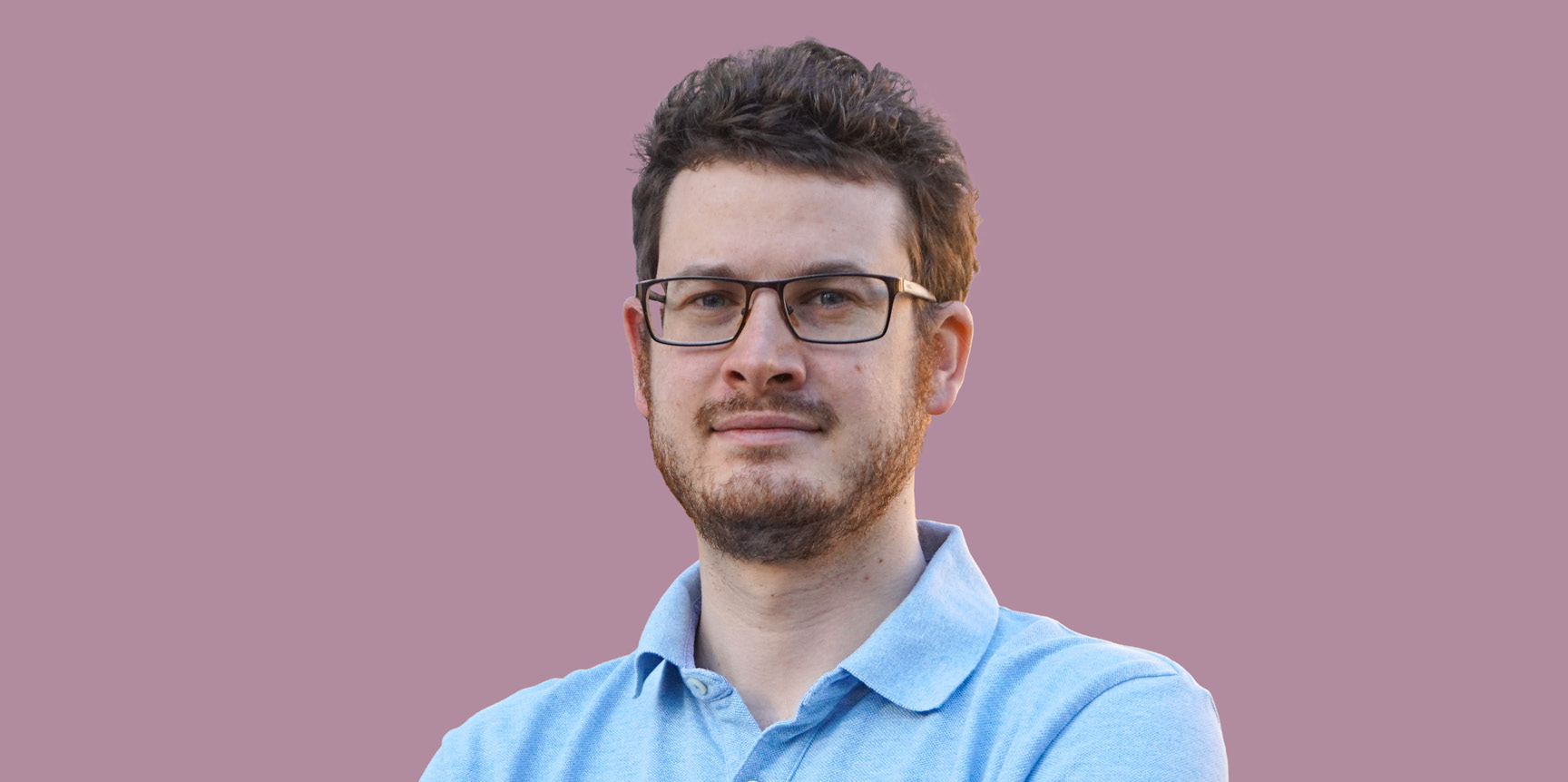
Dr. Flavio De Lorenzi is a researcher at the Zurich University of Applied Sciences (ZHAW) School of Engineering , focusing on scientific computing and algorithmics. His work spans computational modeling, machine learning, and thermodynamic simulations. Fields of Interest: Machine learning, NMR spectroscopy, viscoelastic material modeling, and data center energy management. Email: flavio.delorenzi@zhaw.ch Recent Research Trends include Bayesian analysis for NMR spectra (2024), peristaltic pump modeling for viscoelastic materials (2023), and neural network-based airflow control in data centers (2012). His publications reflect interdisciplinary applications of computational algorithms to mechanical, astrophysical, and thermal systems.
Oliver Hirschi is a Lecturer and Head of the «eBanking – aber sicher!» project at the Lucerne School of Computer Science and Information Technology, Hochschule Luzern. He also serves as Managing Director of SecAware GmbH since 2019. His professional background includes over 15 years of expertise in information security, covering roles as Senior Researcher and IT Teacher. Hirschi holds advanced qualifications including a Master of Science in Business Information Technology, a Master of Advanced Studies in Information Security, and certifications in university didactics and ISO/IEC 27001 Lead Auditor. His research focuses on cybersecurity, risk management, and awareness programs, particularly in banking and SME sectors. Education highlights include: CAS in University Didactics (HSLU, 2016–2019) M.Sc. in Business Information Technology (HSLU, 2013–2015) MAS in Information Security (HSLU, 2009–2010) Dipl. Ing. Informatik FH (HSLU, 1997–2000) Research interests emphasize practical cybersecurity solutions, including secure banking practices, threat analysis, compliance frameworks, and employee awareness campaigns. His publications include the widely cited Informationssicherheitshandbuch für die Praxis and annual reports on eBanking security trends. He actively engages in national studies on Swiss SME cybersecurity challenges and frequently presents at conferences on emerging cyber threats and mitigation strategies. Achievements include: ISO/IEC 27001:2013 Lead Auditor certification Leadership in the «eBanking – aber sicher!» initiative since 2013 Contributions to national cybersecurity awareness campaigns He advises on information security strategies for financial institutions and SMEs, combining academic research with industry实践. His team collaborates with banks and technology firms to develop practical security solutions, emphasizing real-world applicability and regulatory adherence.
Maurizio Tuccillo is a Lecturer and Subject Head of Security and Privacy, as well as Core ICT Infrastructure and Resilience at Lucerne University of Applied Sciences and Arts (HSLU). He holds leadership roles in Continuing and Executive Education, including Head of Program and Co-Programme Leader for numerous cybersecurity and data privacy courses (e.g., MAS Cyber Security, CAS Information Security). His expertise spans digital forensics, ICT fundamentals, and cybercrime investigation. Education: Dr. phil. nat., University of Basel/PSI Villigen Dipl. phys., University of Basel Fachkurs GDPR and Hochschuldidaktik certifications, HSLU Research Interests: Focus on cybersecurity frameworks, data privacy compliance (GDPR), ICT infrastructure resilience, digital forensics, and cyber threat mitigation. He actively contributes to applied research projects like CC Cryptology and eBanking – aber sicher . Publications: Co-authored technical reports on cryptology and security systems, emphasizing practical applications in cryptographic protocols and infrastructure protection. Advising & Grants: Leads over 10 academic programmes and collaborates with institutions like FORINCO AG on IT forensics and cybersecurity projects. Extensive industry experience includes roles as Regional IT Forensics Chief and Business Director at IT security firms. Labs/Teams: Involved in the Cyber Security Lab and coordinates interdisciplinary teams for data privacy officer training and ICT fundamentals courses.
Florian Tramèr is an Assistant Professor of Computer Science at ETH Zurich, leading the SPY Lab. His research focuses on computer security, privacy, and adversarial machine learning, particularly studying vulnerabilities in deep learning systems. He holds a PhD from Stanford University and previously worked at Google Brain. Education: Bachelor's and Master's from EPFL (Switzerland), PhD from Stanford University. Research Interests: Adversarial machine learning, privacy-preserving technologies, cryptography, and evaluating AI safety through frameworks like AgentDojo. His work addresses societal impacts of rapidly deployed machine learning systems. Awards: Two Best Paper Awards at ICML 2024, CAIS SafeBench competition win, Google/Amazon Research Awards. His research has been featured in Nature , Science , and The Economist . Labs/Teams: SPY Lab (ETH Zurich), part of the Information Security Institute and ZISC. Associated with ETHZ AI Center. Advises PhD students on AI safety and security topics.
Charalampos Anastasiou is a Full Professor of Theoretical Particle Physics at ETH Zurich's Department of Physics. He leads research in quantum field theory and its applications to particle physics phenomenology, particularly in predicting Higgs boson signals at the Large Hadron Collider (LHC). His work includes developing mathematical methods for Feynman diagrams and precision calculations for collider experiments. He has held academic positions at ETH Zurich since 2007, including Associate Professor (2010–2013) and Full Professor (2013–present). His career includes research roles at CERN and Stanford Linear Accelerator Center. Education: Ph.D. in Particle Theory, Durham University, UK (2001) Research Interests: Anastasiou's research focuses on advancing theoretical frameworks for particle physics, with emphasis on perturbative quantum field theory, collider phenomenology, and precision calculations for Higgs boson interactions. His work bridges mathematical rigor and experimental validation, contributing to the understanding of fundamental forces and particle interactions. Publications: His recent publications span superconducting magnet design for future colliders, quantum-resistant cryptographic methods, and material science studies. These reflect his interdisciplinary approach to addressing challenges in high-energy physics and technology. Awards & Grants: ERC Advanced Grant: PertQCD (2016) ERC Advanced Grant: IterQCD (2010) University Latsis Prize (2009) Advising & Labs: Anastasiou collaborates on projects like the Muon Collider and LHC upgrades. His lab develops novel superconducting magnet technologies and computational tools for high-energy physics experiments. He actively contributes to international initiatives like the Future Circular Collider (FCC) and European Strategy for Particle Physics.
Olivier Lévêque is a Senior Scientist at the École Polytechnique Fédérale de Lausanne (EPFL), affiliated with the School of Computer and Communication Sciences. He conducts research at the Laboratory of Information Theory (LTHI) and holds teaching responsibilities in both Communication Systems (SSC) and Computer Science (SIN) sections. Additionally, he contributes to the Interface EPFL-Gymnases initiative. Lévêque obtained his Physics diploma (1995) and PhD in Mathematics (2001) from EPFL, with a visiting lectureship at Stanford University's Electrical Engineering Department in 2005-2006. His research explores fundamental aspects of information theory , random matrices , and stochastic calculus , with applications in wireless communications and network theory. Key interests include capacity scaling laws in ad hoc networks, diversity-multiplexing tradeoffs, and mathematical frameworks for communication systems. Recent publications demonstrate broad interdisciplinary engagement, spanning computational thinking assessment (2022), digital education frameworks (2019), satellite positioning systems (2018), and theoretical advances in probability (2018). His work consistently integrates mathematical rigor with practical communication challenges, particularly in wireless network optimization and information-theoretic security. He has supervised four doctoral students at EPFL and teaches courses including Information, Computation, Communication , Markov Chains and Algorithmic Applications , and Cryptography . Lévêque leads research activities within the Laboratory of Information Theory, focusing on theoretical foundations of modern communication systems.