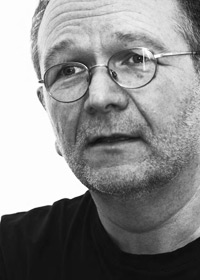
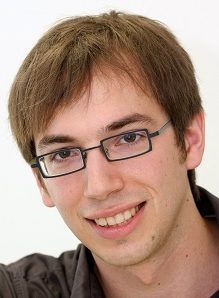
Prof. Dr. Rainer Schnell is a Professor at the Institute of Sociology, University of Duisburg-Essen. His research focuses on advanced survey methodologies, privacy-preserving data linkage techniques, and statistical analysis of health and social data. He leads the Chair of Empirical Social Research and contributes to interdisciplinary studies combining sociology, computer science, and public health. Research interests span: Survey Methodology : Innovations in web surveys, non-response analysis, and data quality assurance Data Privacy : Cryptographic techniques for secure record linkage and vulnerability assessments Health Analytics : Vaccination behavior studies, health data governance, and pandemic-related research Recent publications demonstrate a strong emphasis on: Privacy-enhancing technologies for sensitive data integration Methodological critiques of survey and data linkage practices COVID-19-related behavioral research using large-scale population data
Mario Wenning is a Researcher at the Chair of Communication Networks (Technical University of Munich). He holds an M.Sc. in Communication Engineering from TUM (2020) and works as an external doctoral candidate while employed in ADVA's Advanced Technology group. B.Eng. in Medical Engineering from Baden-Württemberg Cooperative State University (2017) 2 years with Siemens Healthineers in MRI development Doctoral research at TUM since 2021 His research focuses on quantum key distribution networks , optical network planning , and data-driven network optimization . Key projects include: Quantum network management with dynamic routing Physical-layer-aware multi-band optical planning Long-haul QKD infrastructure development Recent publications in Journal of Optical Communications and Networking (2023-2025) address: QKD network security models Meshed network architecture Rate-adaptive transceiver optimization Trusted node deployment strategies Associated with multiple research initiatives: 6G Future Lab Bavaria DFG-funded projects (QCDE, SDN APP AWARE) EU 5GPPP VirtuWind BMBF SoftwareCampus program
Artem Barger is a researcher specializing in blockchain technology, distributed systems, and database optimization. With affiliations primarily in blockchain development and academic research, he has contributed extensively to Hyperledger Fabric enhancements and decentralized information systems. Research Interests Optimizing state databases for blockchain platforms Byzantine Fault Tolerance in distributed networks Permissioned blockchain architectures Tokenization of real-world assets AI applications in soft skills evaluation Recent Publications Barger's work focuses on improving blockchain scalability and security through techniques like certification blocks, Patricia Merkle tries, and verifiable randomness. He has also explored tokenization applications in charity and energy sectors.
Piotr Pacyna is a researcher at the Faculty of Electronics, Telecommunications and Informatics, Gdansk University of Technology. He is actively engaged in academic research, with a focus on cybersecurity, identity management, and network protocols. His research interests include: Cybersecurity Identity Management Systems Network Protocols Virtualization in Future Internet Wireless Networks Group Key Distribution Piotr's recent publications highlight his work in blockchain-based identity discovery, self-healing cryptographic protocols, and network security frameworks. His contributions span both theoretical and practical implementations in cybersecurity and network systems.
Jürgen Schönwälder is a Professor at Jacobs University Bremen, Germany, with affiliations at the University of Osnabrück and TU Braunschweig's Department of Computer Science. His research focuses on network management, protocol design, and internet infrastructure. Key research areas include network management protocols (NETCONF, RESTCONF, YANG), IPv6 performance analysis, cybersecurity, and network configuration. He has contributed extensively to standardization efforts through RFCs and collaborations with institutions like the IETF and Dagstuhl Seminars. Recent publications highlight trends in RESTCONF implementation for constrained devices, active malware analysis using Bayesian models, and metamorphic testing for cryptographic protocols. His work intersects network management, internet infrastructure, and security evaluation. Co-authors like Vaibhav Bajpai, Anuj Sehgal, and Abhilash Hota appear frequently in his research, indicating long-term collaborations. He has participated in editorial roles for journals like IEEE Communications Magazine.
Ulrike Michaela Meyer is a Professor in the Department of IT Security at RWTH Aachen University. Her research focuses on privacy-preserving technologies, cybersecurity, and machine learning applications in domain generation algorithm (DGA) detection and healthcare systems. Recent Research Trends: In 2024, her work emphasized cryptographic methods for secure data applications, including privacy-preserving kidney exchange protocols and network flow analysis. She also explored robust machine learning frameworks for DGA classification and transfer learning approaches to improve domain detection accuracy. Contact: Email: meyer@itsec.rwth-aachen.de
Dr. Oliver Mischke is an academic researcher focusing on hardware security and cryptographic implementations. He was affiliated with the Chair for Embedded Security at the Horst Görtz Institute for IT Security, Ruhr-University Bochum. His research emphasizes side-channel cryptanalysis, efficient cryptographic algorithms, and secure hardware design. Mischke completed his PhD in Security in Information Technology at Ruhr-University Bochum (2011–2013), with a year abroad at Purdue University (2007–2008). He has held roles as a Security Engineer (ESCRYPT GmbH) and an intern at Qualcomm's Product Security Group. His research interests include FPGA-based cryptographic implementations, fault analysis, and countermeasures against side-channel attacks. Notable contributions involve dynamic logic reconfiguration for FPGA security, glitch-resistant masking schemes, and evaluation of AES countermeasures. Mischke's publications span conferences like HOST, CHES, and IEEE venues, focusing on cryptographic hardware security, timing attacks, and secure embedded systems. His work bridges theoretical cryptography with practical hardware implementations, addressing vulnerabilities in reconfigurable and embedded systems. He has contributed to projects such as the MicroACP crypto-processor and IPSec core designs. His collaborations include prominent institutions and industry partners, reflecting a strong emphasis on applied security solutions.
Dr. Anna Sperotto is an Associate Professor in Proactive Network Security at the University of Twente's Design and Analysis of Communication Systems (DACS) group. She holds a PhD in Computer Science (2010) and MSc/BSc degrees from Ca' Foscari University. Research Focus: Internet security, network measurements, DDoS attacks, DNS infrastructure vulnerabilities Projects: MASCOT (2019), MADDVIPR (NWO-DHS), TIDE (SIDNfonds), H2020 CONCORDIA Her recent publications examine DNS reflection attacks, DDoS mitigation, and network security through active measurement systems. Key trends include DNSSEC security analysis, domain hijacking prevention, and cryptographic efficiency in network protocols. Scientific Awards: Best Paper at IMC 2020 and EUNICE 2009 IRTF Applied Networking Research Prizes (2015, 2013) Academic Service: General Co-Chair, IMC 2019 TPC Co-Chair, PAM 2020 Steering Committee: TMA, AIMS Editorial roles in ACM SIGCOMM CCR, IJNM, JNSM Current PhD Students: Matteo Liberato Sousan Tarahomi Etienne Khan Ramin Yazdani Raffaele Sommese
Prof. Dr. Violetta Weger is a Rudolf Mößbauer Tenure Track Assistant Professor in Applied Algebra at the Technical University of Munich (TUM), within the Department of Mathematics (M11) and the TUM School of Computation, Information, and Technology (CIT). Her research focuses on cryptography, algebraic coding theory, and number theory, with a particular emphasis on post-quantum cryptographic solutions. She has held fellowships at TUM and Eindhoven University of Technology, working under Prof. Antonia Wachter-Zeh and Prof. Alberto Ravagnani. Weger’s work includes developing code-based cryptographic systems like the CROSS signature scheme, submitted to NIST’s post-quantum standardization call. She actively contributes to conferences such as CBCrypto and publishes in leading journals like Designs, Codes and Cryptography. Her academic journey includes a PhD in Mathematics from the University of Zurich under Prof. Joachim Rosenthal. Research highlights include advancements in Lee metric decoding, information set decoding, and cryptographic applications of structured codes. Weger mentors students such as Anmoal Porwal and Sebastian Bitzer, and collaborates with international researchers. She also engages in educational initiatives, teaching courses on coding theory and cryptography.
Professor Clemens H. Cap is a Full Professor with tenure and Chair for Information and Communication Services at the University of Rostock, Germany, where he has held his position since 1997. He maintains leadership of the Information and Communication Services research group and has previously held academic appointments at the University of Zurich (including an adjunct professorship until June 2023) and the University of Mannheim. University of Rostock: Full Professor (1997-present) University of Zurich: Adjunct Professor (2004-2023) University of Zurich: Assistant Professor (1992-1995) University of Mannheim: Associate Professor (1994) Professor Cap's research focuses on distributed systems, system security, Internet applications, and social problems in computer science. His work demonstrates an evolution from early research on workstation clusters to contemporary investigations of blockchain technology, classroom response systems, and the social implications of digital technologies. His research interests encompass system architecture for distributed and ubiquitous applications, Internet services, system security, and applications of formal specification techniques. His work has been supported by the German Research Foundation (DFG), the Federal Ministry of Education and Research (BMBF), and the European Union, including participation in the European Fifth Framework Research Program. His recent publications (2014-2022) reveal a strong focus on blockchain applications, security management, and educational technologies, particularly classroom response systems. His research shows consistent thematic development with security, distributed systems, and the social impact of technology as throughlines. Professor Cap regularly gives guest lectures in the Baltic States and Switzerland, demonstrating international engagement. Honorary doctoral degree 'sub auspiciis praesidentis' by Austrian president (1989) Professor Cap is active in academic self-administration as a member of the board of the interdisciplinary research department 'Knowledge - Culture - Transformation' and as Head of the ICT Science Confederation. His teaching portfolio includes Computer Networking, Data Security, Architecture of network services, Methodology of Scientific Research, Software Development Project Distributed Systems, Research Topics in Internet Technology, Computer Science and Society, and Social Impact of IT. He has developed numerous modules that are part of summer schools and international cooperations (BaSoTI). His teaching languages are German and English, and his courses are available for continuous education programs and in-house seminars for companies.
Prof. Georg Neugebauer is a Professor at RWTH Aachen University, specializing in cybersecurity, privacy-preserving protocols, and secure multi-party computation. His research focuses on developing frameworks for secure data reconciliation, enhancing information security management systems, and addressing cybersecurity challenges in AI, industrial systems, and smart environments. Research Interests: Secure Multi-Party Computation (MPC) Privacy-Preserving Systems Cybersecurity Education & Training Artificial Intelligence in Security Management Industrial IoT and Operational Technology (OT) Security Digital Forensics and Incident Response Recent work highlights a shift towards cybersecurity education initiatives (e.g., CampusQuest ), AI-driven security solutions, and addressing vulnerabilities in public AI tools. His frameworks like SMC-MuSe have advanced MPC applications for multi-set operations. His publications span conferences such as ARES, ICISSP, and AHFE, addressing topics from smart building protocol security to forensic triage tools. Collaboration with researchers like Schuba, Höner, and Meyer marks his interdisciplinary approach to solving real-world security challenges.
Roman Vaculín is a Researcher at IBM Research, focusing on interdisciplinary domains where artificial intelligence, blockchain technologies, and data-centric workflows converge. His work spans automated machine learning, time series analysis, and secure computation via cryptographic methods like homomorphic encryption. Affiliation: IBM Research Key research areas: Time Series Analysis, Blockchain, AI Explainability, Business Process Management Across his publications, Vaculín explores: Time Series Modeling: Developing robust frameworks like TsSHAP and end-to-end architectures for forecasting and imputation. Blockchain Applications: Designing trusted AI systems, secure multi-party computation, and verifiable simulations. Automated Machine Learning: Creating toolkits for industrial AI explainability and automation. Privacy-preserving Techniques: Optimizing encrypted inference and secure decision tree protocols. His methodology often integrates formal verification with practical implementations, emphasizing efficiency and interpretability in complex systems. While no formal awards or students are documented in the provided data, his collaborative publications with institutions like IBM Research and academic partners highlight his role in advancing applied AI research.
Xueguang Yuan is a researcher with expertise in optical communication systems, medical image segmentation, blockchain technology, and IoT networks. Their work spans 2009–2024, focusing on advanced sensor design, federated learning algorithms, and secure communication protocols. Key Research Areas : Optical Time-Domain Reflectometry, Graphene Metasurfaces, Thyroid Nodule Segmentation, and Federated Learning for Multi-Institutional Collaboration Recent Publications (2024): Wearable strain sensors using MXene composites, SNR optimization in Φ-OTDR systems, and polarization conversion metasurfaces for radar cross-section reduction Notable collaborations include Yangan Zhang (optical systems), Xiaohong Huang (medical AI), and Zhifang Deng (federated learning). Trends in their 2021–2024 articles highlight applications of transformers , compressed sensing , and blockchain in healthcare, 5G networks, and security. They have contributed to 5G broadcast services, satellite routing, and edge computing platforms, though no formal awards or student mentorship details are publicly listed in the provided sources.
Giulia Fanti is an academic researcher affiliated with Carnegie Mellon University in the Computer Science Department . Her research focuses on privacy-preserving technologies, blockchain systems, and machine learning mechanisms, with significant contributions to federated learning, differential privacy, and cryptocurrency network design. Key Research Areas : Privacy in blockchain, Generative Adversarial Networks (GANs), Federated Learning, Game Theory applications to decentralized systems. Recent Publications : Her work explores liquidity provisioning in decentralized finance, truncated consistency models for image generation, and private data valuation frameworks. She has contributed to venues like NeurIPS, ICLR, and SIGMETRICS, often addressing privacy-utility tradeoffs.
Patrick Karl is a Researcher at the Chair of Security in Information Technology (Technische Universität München). He holds an M.Sc. degree and focuses on efficient hardware implementations for post-quantum cryptography , particularly hardware acceleration of digital signature algorithms on RISC-V platforms for embedded systems. His work addresses performance optimization, power/energy efficiency, and countermeasures against physical attacks such as side-channel and fault attacks . His research spans both FPGA prototyping and ASIC design , including tape-outs for security applications. He contributed to NIST submissions like CROSS , LESS , and FuLeeca , and has published extensively on topics including lattice-based cryptography, masked accelerators, and hardware API overhead for lightweight cryptography. Patrick has taught Lab Course ASIC Design of Hardware Accelerators for RISC-V since WS22/23 and Lab Course Crypto Implementation in SS22. His publications (15 most recent) highlight trends in post-quantum cryptographic hardware , RISC-V security , and physical attack countermeasures . He has presented at venues like RISC-V Summit Europe, COSADE, and FDTC.