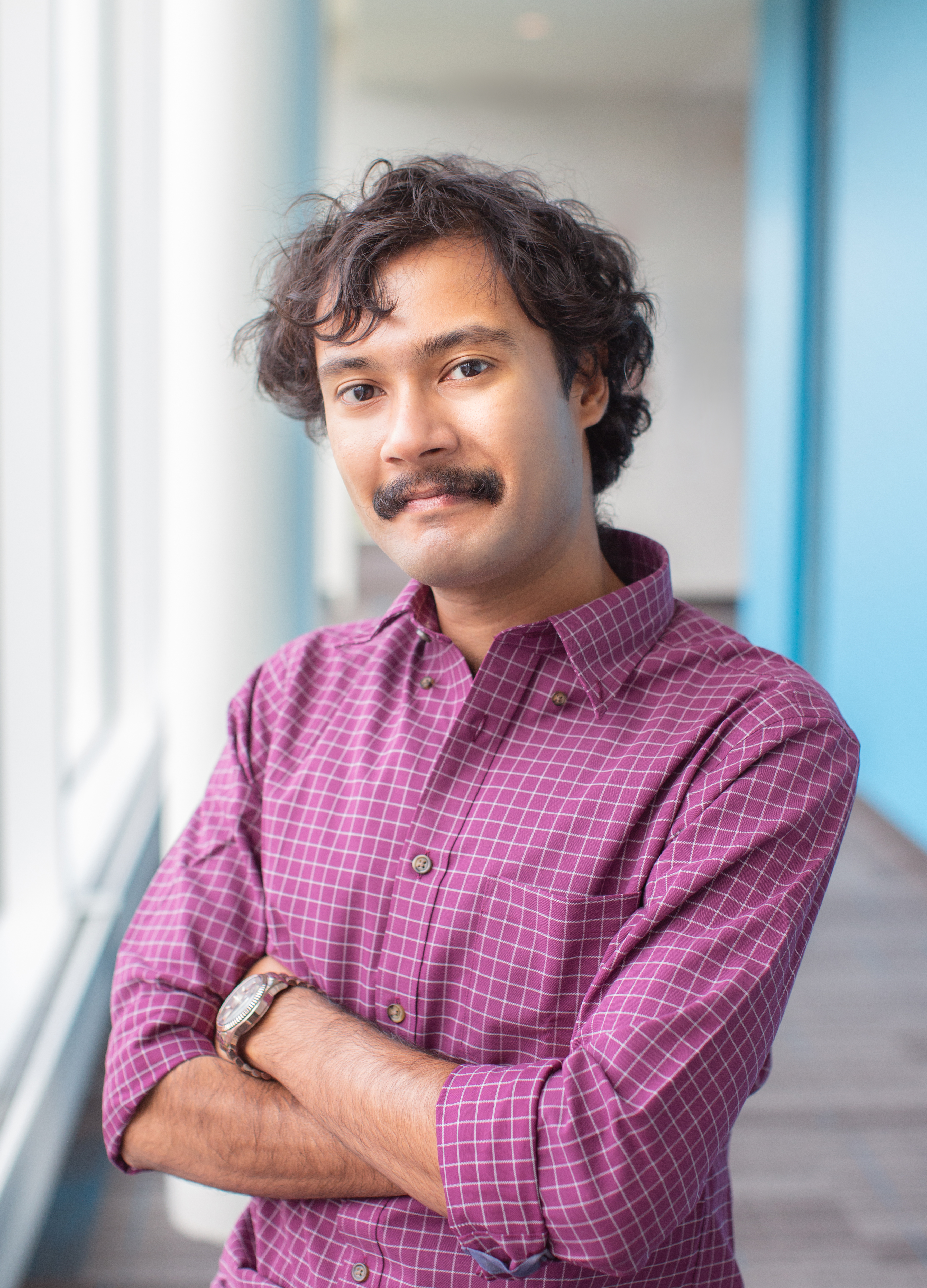
Eva van Roekel is an Assistant Professor at the Department of Social and Cultural Anthropology, Vrije Universiteit Amsterdam. She holds additional appointments at the Amsterdam Sustainability Institute and Mobilities, Beliefs and Belonging (MOBB). Her work combines fieldwork, creative writing, and visual anthropology with a focus on Latin America, particularly Venezuela and Argentina. Education: BSc (2006) and MSc (2007) in Latin American Studies from Utrecht University. PhD (2016) in Cultural Anthropology from Utrecht University, focusing on trials for crimes against humanity in Argentina. Research interests include violence, morality, human rights, and natural resource conflicts. Notable projects include research on the Venezuelan humanitarian crisis (funded by NWO Veni Grant) and creative ethnography through the Anthropology and Humanism journal. Awards include the 2020 Outstanding Academic Title and multiple grants from ISRF and NWO. Teaching involves courses on visual anthropology and creative methodologies. She co-developed the VU minor Visual Evidence , training students in documentary filmmaking. Active in public anthropology through media contributions and advisory roles at CEDLA and the Creative Anthropologies Network. Key grants include the Independent Social Research Foundation fellowship (2020) and Veni Grant (2022). Her research bridges moral philosophy with crisis ethnography, examining how economic collapse and environmental degradation shape ethical frameworks in Latin America.
Dr. Moinak Bhaduri is an Assistant Professor in Mathematical Sciences at Bentley University. His research applies stochastic modeling to change-point detection, spatio-temporal processes, and repairable systems. He holds a Ph.D. from the University of Nevada, Las Vegas. His interdisciplinary work spans finance (market spillovers), environmental science (hurricane interactions), legal analytics (defamation trials), and social dynamics (immigration networks). Publications leverage methods like hidden Markov chains and recurrence rate ratios. No awards or student mentorship details are provided.
Martin Harrigan is a Lecturer in the Department of Computing at South-East Technological University (SETU). His research focuses on blockchain technologies, decentralized systems, and privacy in cryptocurrency networks. He has contributed to studies on smart contracts, DAO governance mechanisms, and the analysis of protocols like Bisq and Ethereum. His work often intersects computer science, financial systems, and network analysis. Key research areas include blockchain architecture, tokenomics, and the privacy implications of decentralized platforms. Harrigan has published extensively on topics such as cross-blockchain analysis, address clustering techniques, and the structural patterns of networks like Wikipedia and social media. His findings have been presented at IEEE conferences and peer-reviewed journals. Notable projects include analyzing the privacy trade-offs in decentralized exchanges (e.g., Bisq), exploring token composition using EVM logs, and investigating voting mechanisms in DAOs. His work emphasizes practical applications of blockchain technology while addressing challenges in security, scalability, and anonymization.
Dr. Chinmay Jain is an Associate Professor of Finance at the School of Business, SUNY Geneseo. He specializes in financial regulations, short selling, high-frequency trading, and cryptocurrencies. His research has been published in journals like Financial Review , Economics Letters , and Journal of Trading , and has earned the 2012 Financial Review Best Paper Award for his work on SEC Rule 201. Dr. Jain holds a B.Tech. from the Indian Institute of Technology (Kharagpur) and a Ph.D. in Finance from the University of Memphis. Prior to Geneseo, he served at Ontario Tech University in Canada. He is a CFA charterholder and teaches courses on Investments, Managerial Finance, and Blockchain & Cryptocurrencies. His research focuses on regulatory impacts on financial markets, algorithmic trading dynamics, and cryptocurrency market mechanisms. Notable studies include analysis of SEC regulations, short selling strategies, blockchain transaction fees, and price manipulation in Bitcoin markets. Dr. Jain actively participates in academic conferences such as the Financial Management Association and Eastern Finance Association. His work integrates empirical analysis of market microstructure with policy implications, emphasizing real-world regulatory and technological innovations.
Christopher J Pollett is a Professor of Computer Science at San José State University (SJSU), serving as department chair. He holds a Ph.D. in Mathematics from the University of California, San Diego (1997). His research focuses on computational complexity theory, bounded arithmetic, quantum computation, and applications in AI and cryptocurrencies. Pollett has also held visiting positions at Clark University (1997–1999) and UCLA (1999–2001). His research interests span theoretical computer science, including but not limited to: bounded arithmetic, computational complexity, quantum circuits, databases, nonmonotonic logics, neural networks, and web development. He has contributed extensively to journals such as Information and Computation , Mathematical Logic Quarterly , and Journal of Symbolic Logic . Pollett’s work often bridges proof theory and computational limits, with key publications on time-space tradeoffs, circuit complexity, and quantum algorithms. His service includes roles on various departmental committees and administrative duties at SJSU.
Chen Ye is an Associate Professor of Management Information Systems (MIS) at Purdue University Northwest’s College of Business, specializing in technology user behavior, blockchain, and educational technology. He holds a Ph.D. and dual M.S. degrees in MIS and Mathematics from the University of Illinois at Chicago. His research bridges academic and practical insights, addressing topics like blockchain’s policy implications, IT project management complexities, and digital education tools. Published in journals such as CACM and CAIS, his work also extends to Brookings Institution blogs on central bank digital currencies. Ye teaches 11 MIS courses, redesigning curricula like ISM 10200 and CIS 20400, emphasizing experiential learning. A notable initiative involved a capstone project where students analyzed pandemic-related social media data for local communities, with some teams presenting at international conferences. Ye’s industry background as a Boeing avionics software engineer informs his teaching, helping students connect technical concepts to real-world applications. He actively develops new courses on blockchain business applications and integrates emerging technologies into classroom examples. His pedagogical approach emphasizes metacognition development and practical skill-building for future professionals.
Kay Giesecke is Professor of Management Science & Engineering at Stanford University, where he has been on the faculty since 2005. He serves as the Founder and Director of Stanford's Advanced Financial Technologies Laboratory, Director of the Mathematical and Computational Finance Program, and is a member of the Institute for Computational and Mathematical Engineering. He has held visiting positions at Cornell, UCLA, and the International Monetary Fund, and serves on the Governing Board and Scientific Advisory Board of the Consortium for Data Analytics in Risk and the Council of the Bachelier Finance Society. Dr. Giesecke received his doctorate in 2001 from Humboldt Universität zu Berlin where he was a fellow of the Deutsche Forschungsgemeinschaft. His educational background forms the foundation for his interdisciplinary work at the intersection of finance, technology, and quantitative methods. Giesecke's award-winning research sits at the intersection of technology and finance, transforming risk intelligence, market oversight, and investment management. He pioneers stochastic models, statistical machine learning methods, computational algorithms, and software to better understand risk, identify opportunities, and support decision-making. His key application areas include risk management, market surveillance, fair lending, and sustainable investing. His work informs financial regulation, guides institutional practices, and contributes to more transparent, resilient, and equitable financial systems. His research spans blockchain technology, mortgage risk analysis, and computational methods for financial systems, demonstrating both theoretical depth and practical relevance. Professor Giesecke has been recognized with multiple prestigious awards for his research contributions: JP Morgan AI Faculty Research Award (2019) SIAM Financial Mathematics and Engineering Conference Paper Prize (2014) Fama/DFA Prize for the Best Asset Pricing Paper in the Journal of Financial Economics Gauss Prize of the Society for Actuarial and Financial Mathematics of Germany (2003) Giesecke has supervised 29 doctoral dissertations, with graduates going on to faculty positions at institutions such as UC Berkeley, Oxford, Wharton, and NYU; leadership roles at firms including Goldman Sachs, Google, JPMorgan, Amazon, and Morgan Stanley; and founding successful technology startups. His research has been supported by the National Science Foundation and several leading financial institutions including JP Morgan, Swiss Re, BBVA, Royal Bank of Scotland, State Street, and Amazon Web Services. As an academic leader, Giesecke is Editor of Management Science (Finance Area) and Associate Editor for Operations Research, Mathematical Finance, Journal of Financial Econometrics, SIAM Journal on Financial Mathematics and several other leading journals. He founded and organizes Stanford's annual AI in Fintech Forum, which brings together academic researchers and industry practitioners to discuss cutting-edge developments in financial technology. His Advanced Financial Technologies Laboratory serves as a hub for interdisciplinary research at the intersection of finance, computer science, and engineering.
Darrell Duffie is the Dean Witter Distinguished Professor in Finance at the Graduate School of Business, Stanford University , with courtesy appointments as Professor of Economics and Senior Fellow at the Hoover Institution. His research spans Financial Economics, Econometrics, Market Design, and Monetary Economics . Recipient of the Dean Witter and Adams Distinguished Professorships Senior Fellow at Stanford Institute for Economic Policy Research (SIEPR) Advisor to the Group of 30 (G30) on Treasury Market Liquidity and Digital Currencies His recent work focuses on Treasury market fragilities , CBDC policy implications , and bank liquidity regulation . Key publications include analyses of reserve adequacy, dealer balance sheet capacity, and systemic risks in financial markets. Policy Engagement includes testimony before the U.S. Senate Committee on Banking, House Financial Services Committee, and advisory roles for the Federal Reserve Board, ECB, and G30. He also teaches courses like The Future of Money and Payments at Stanford.
Charles Leiserson is the Edwin Sibley Webster Professor in the Department of Electrical Engineering and Computer Science (EECS) at MIT. He is renowned for co-authoring the seminal textbook Introduction to Algorithms , now in its fourth edition, which is widely used globally. His research focuses on algorithms, parallel computing, and software performance engineering, with contributions to theoretical computer science and practical systems like the Cilk multithreaded language and the Connection Machine CM-5 architecture. Leiserson’s work spans compiler design (e.g., Pochoir for stencil computations) and high-performance computing frameworks. He explores post-Moore’s Law computational strategies, graph neural networks for financial forensics, and deterministic parallel algorithms. His educational contributions include courses like 6.172 (Performance Engineering of Software Systems) and initiatives in scalable graph learning. His research has led to innovations in parallel programming models, algorithm optimization, and hardware-software co-design. Leiserson’s interdisciplinary work bridges theory and practice, influencing both academic research and real-world applications in finance, cryptography, and supercomputing.
Chester Spatt is the Pamela R. and Kenneth B. Dunn Professor of Finance at the Tepper School of Business , Carnegie Mellon University, where he has taught since 1979. He served as Chief Economist of the SEC (2004-2007) and holds a Ph.D. in Economics from the University of Pennsylvania. Research Interests: Financial Economics Market Structure and Trading Financial Regulation Mortgage Valuation Asset Allocation Scientific Awards: Paul Samuelson Award (2004) Charles River Award (2022) Best Paper Awards (2022, 2023) His recent publications focus on proxy voting controversies, order execution quality, big data in finance, and regulatory frameworks for financial markets. He has held leadership roles in academic journals and regulatory advisory committees.
Konstantin Beznosov is a Professor at the Department of Electrical and Computer Engineering, University of British Columbia, and founder/director of the Laboratory for Education and Research in Secure Systems Engineering (LERSSE). His work bridges usable security , distributed systems security , and privacy in smart devices . Prior to UBC, he served as a Security Architect at Hitachi Computer Products (America) and Concept Five. Research Interests : Usable security, secure software engineering, access control, and privacy in emerging technologies like smart speakers and cryptocurrency. Advising : Mentoring students in topics such as mobile security, authentication, and cybersecurity ethics. Leadership : Founded LERSSE, focusing on network security and user-centered secure system design. His recent articles explore user behavior in smartphone authentication, privacy risks in shared smart speakers, and security challenges in cryptocurrency adoption. He has contributed to standards like XACML and CORBA security specifications and co-authored books on web services and EJB security. Professor Beznosov actively collaborates with industry partners (e.g., Samsung, Symetria) and serves on editorial boards for ACM Transactions on Information and System Security (TISSEC) and the International Journal of Secure Software Engineering (IJSSE).
Dr. Muhammad Ikram is a Senior Lecturer in Cybersecurity at Macquarie University's School of Computing, affiliated with the Information Security and Privacy (ISP) group and the Macquarie Cybersecurity Hub (MCHUB). His research focuses on privacy/security in mobile/Web platforms, leveraging machine learning for fraud detection and vulnerability analysis. He holds a PhD in Electrical Engineering from UNSW, a Master's from Ajou University, and a Bachelor's from UET Peshawar. Ikram has published 64+ works in top conferences/journals like Usenix Security, NDSS, and ACM TOPS. His notable contributions include analyzing iOS app vulnerabilities, tracking prevention mechanisms, and mobile health app privacy risks. He received the Best Paper Award at AsiaCCS 2019 and Outstanding Paper at Mobiquitous 2021. Research Interests: Mobile/Web Security, Malware Detection, Privacy-Preserving Systems Grants: Led projects on network security, telecommunications obligations, and cybersecurity hubs Media Impact: Featured in The Guardian and over 50 outlets for work on web resource loading (~11M audience reach) Service Roles: Technical Program Committee member at WWW/PETS, reviewer for CCS/PETS He previously held roles as a Postdoc at University of Michigan and Research Scientist at Data61. His work bridges academic research with real-world impact in cybersecurity policy and industry standards.
Prof. Dr. Alexandre Bovet is an Assistant Professor in Quantitative Network Science at the Department of Mathematical Modeling and Machine Learning (D3ML), Faculty of Science, University of Zurich. He holds a PhD in Physics from EPFL (2015) and completed postdoctoral research at ETH Zurich, City College of New York, Université catholique de Louvain, and the University of Oxford. He is a member of the Swiss Young Academy and the steering committee of the Winter Workshop on Complex Systems. His research focuses on complex systems and network science, particularly modeling social media dynamics, disinformation propagation, and opinion formation. He develops interdisciplinary approaches combining physics, mathematics, and data science to address societal challenges. Key projects include analyzing polarization in social networks, algorithmic curation on platforms like Bluesky, and fact-checking with large language models. Awardees of SNSF and FNRS fellowships, Bovet leads the ClarifAI project (funded by DIZH) to combat disinformation using AI. His work spans conferences such as NetSci, CompleNet, and CCS, with over 50 publications. Collaborations include institutions like UCLouvain, Oxford, and interdisciplinary teams in computational social science. Bovet advises PhD students like Dorian Quelle and contributes to labs like the Digital Society Initiative (DSI) at UZH. His research bridges theory and practice, addressing real-world issues in media, democracy, and technology.
Meysam Alizadeh is a Research Fellow at the Department of Political Science, University of Zurich. His work focuses on digital media governance, social network analysis, and the application of artificial intelligence in political and social contexts. He investigates issues such as platform governance, content moderation, fake news propagation, and the impact of social media on political discourse. Alizadeh has collaborated extensively on projects involving large language models (LLMs) for text annotation, comparing their performance to human workers, and developing methods to detect information operations and hate speech. His research bridges computer science, political science, and data science, addressing both theoretical and applied challenges in digital society. Key areas of investigation include analyzing cryptocurrency market dynamics through social media data, exploring the relationship between Russian information campaigns and hate crimes, and examining conspiracy theory proliferation during the pandemic. He has contributed to methodological advancements in creating national random samples of Twitter users and optimizing LLM-based tools for academic and practical applications. Alizadeh's publications span journals like Political Communication , Scientific Reports , and Proceedings of the National Academy of Sciences , reflecting interdisciplinary collaboration with institutions worldwide. His research often emphasizes the ethical and policy implications of emerging technologies in public communication and governance.
Elie Bouri is a Professor of Finance at the Lebanese American University's School of Business, Department of Finance. His extensive research portfolio demonstrates expertise in cryptocurrency markets, financial volatility analysis, and cross-market risk transmission. With over 30 scholarly publications indexed on SSRN, his work has garnered significant attention with more than 26,000 downloads and 162 citations. Professor Bouri's research interests focus on cryptocurrency market dynamics, particularly Bitcoin's properties as a hedge, safe haven, or diversifier relative to traditional assets. His work employs advanced econometric techniques including asymmetric GARCH models, quantile regression, and network analysis to examine volatility spillovers, market efficiency, and extreme dependence across financial markets. Recent research extends into climate risk, energy transition, and geopolitical influences on financial markets. His publication record shows consistent output since 2016 with significant recent activity, including multiple papers published or posted in 2024-2025. His research demonstrates methodological sophistication with applications of mixed data sampling, time-varying parameter models, and higher-order moment analysis to contemporary financial questions. Bouri frequently collaborates with an international network of researchers across Europe, Asia, and the Americas. Professor Bouri's scholarly contributions have appeared in journals such as the Journal of Finance, Finance Research Letters, Applied Economics, and Resources Policy. His work on cryptocurrency market properties during crisis periods has been particularly influential in understanding Bitcoin's role in diversified portfolios. His research program addresses critical questions about market efficiency, risk transmission, and asset pricing in both traditional and emerging digital asset markets, with practical implications for portfolio management, risk assessment, and financial regulation.