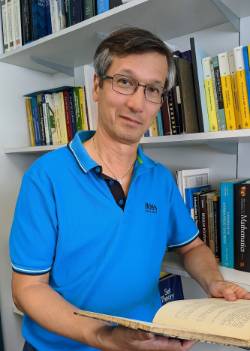
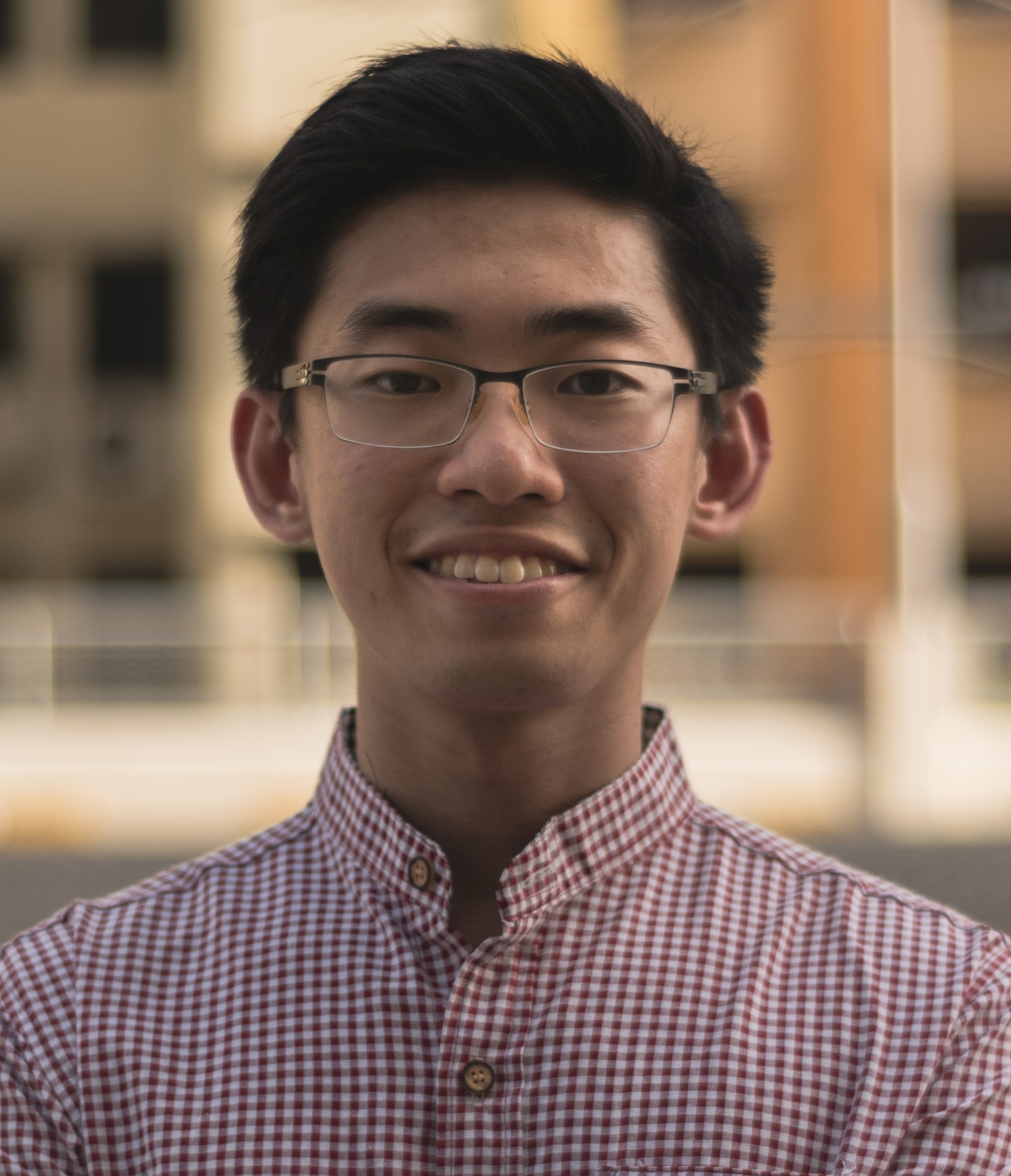
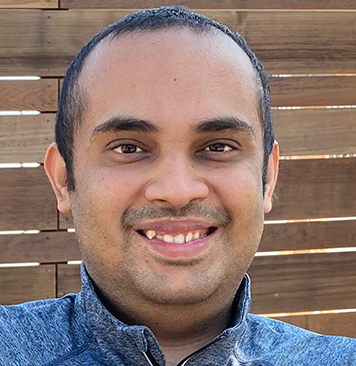
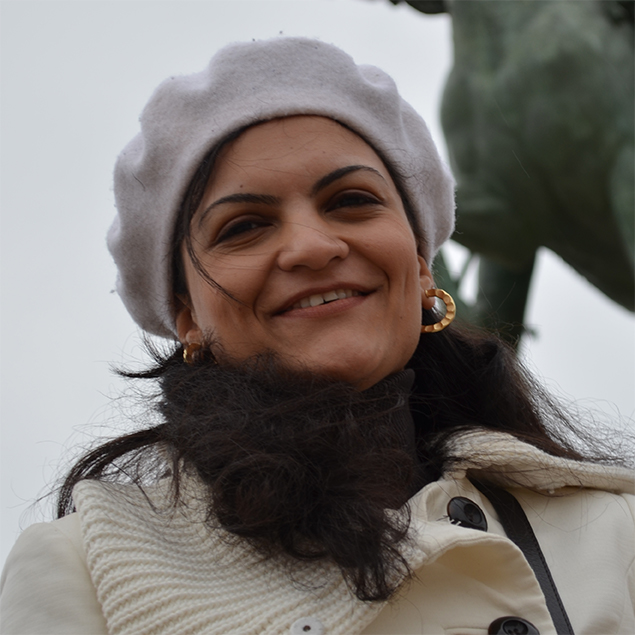
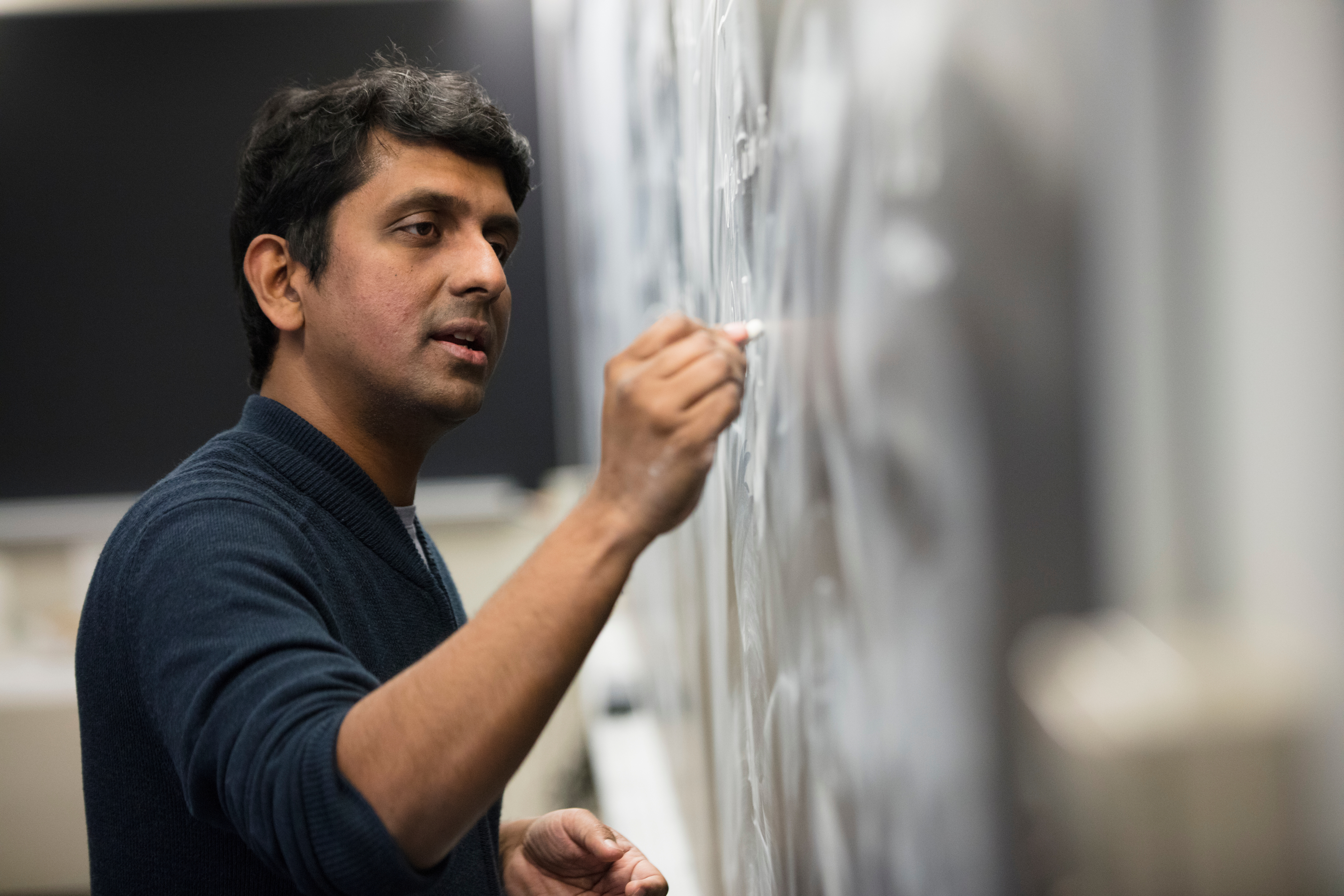
Francesco Sica is an Assistant Professor in the Department of Mathematics and Statistics at Florida Atlantic University, with research focused on mathematical cryptology, public-key cryptography, and number theory. He earned his Ph.D. in Mathematics from McGill University (1998), M.Sc. from Scuola Normale Superiore (1993), and B.Sc. from the University of Pisa (1993). Education Ph.D. in Mathematics, McGill University, Canada (1998) M.Sc. in Mathematics, Scuola Normale Superiore, Italy (1993) B.Sc. in Mathematics, University of Pisa, Italy (1993) His research spans implementation and security analysis of elliptic curve cryptography , including isogeny-based problems and torsion point attacks. He has also contributed to pseudorandom number generation, multistorage solutions on elliptic curves, and cryptographic competitions. Recent publications highlight advancements in isogeny-based security (2024), cryptographic Olympiad frameworks (2022), and integer factorization techniques using number-theoretic hints (2021). Earlier work (2019) addressed secure bit extraction from Koblitz curves. Sica previously collaborated with the NESSIE project at Université catholique de Louvain and worked at a crypto lab at the National University of Singapore. His work bridges theoretical number theory with practical cryptographic applications.
Joachim Rosenthal is a Professor of Applied Mathematics at the University of Zurich's Department of Mathematics, leading the Applied Algebra Group. His research integrates coding theory, cryptography, and algebraic geometry with applications in communications and security systems. His primary research explores algebraic coding theory including convolutional codes, subspace codes, and post-quantum cryptography. He develops algorithms for error correction, code optimization, and cryptographic protocol analysis, with emphasis on mathematical structures in finite fields and rings. Professor Rosenthal serves as President of the Swiss Mathematical Society (2024-2025) and sits on IEEE Information Theory Society's Board of Governors. He has organized multiple international conferences on coding theory and cryptography, including the Zurich COST Meeting and Workshop on Convolutional Codes. His editorial contributions include roles at Archiv der Mathematik and SIAM Journal on Applied Algebra and Geometry. Recent publications focus on code construction methods, complexity analysis in group-based cryptography, and algebraic approaches to error-correcting codes.
Thomas Peyrin is a Full Professor at Nanyang Technological University (NTU) in Singapore, leading the Symmetric Key and Lightweight Cryptography Lab (SyLLab) since 2012. He co-founded TT-logic.ai, focusing on cryptographic innovations. His academic journey includes a Ph.D. in Cryptology from Orange Labs and University of Versailles (2008), a Master in Computer Science from MPRI (2005), and engineering training at CPE Lyon (2004). Education : Ph.D. (2008), MPRI Master (2005), EPFL Exchange (2003-2004), CPE Lyon (1999-2004) Career : Full Professor at NTU (2022-present), Associate Professor (2017-2022), Nanyang Assistant Professor and NRF Fellow (2012-2017), Research Fellow at NTU (2010-2012), Cryptography Expert at Ingenico (2008-2010) Thomas specializes in symmetric cryptography, cryptanalysis of hash functions and block ciphers, and machine learning applications to security. His work includes groundbreaking research on SHA-1 collisions, lightweight cryptographic primitives (e.g., GIFT, PHOTON), and automated cryptanalysis frameworks. Recent projects explore integrating AI with cryptographic verification and fault attack resistance. His publications span top conferences like CRYPTO, EUROCRYPT, and CHES, with awards including the FSE Test of Time Award (2025), FSE Best Paper (2023), and NRF Investigatorship (2022). He has advised numerous students in cryptographic research and co-founded SyLLab, a leading lab for symmetric cryptography innovation. Scientific Awards : Test of Time Award at FSE 2025 Best Paper Award at FSE 2023/ToSC NRF Investigatorship (2022) Lee Kuan Yew Postdoctoral Fellowship Best Paper Awards at FSE 2012 and ASIACRYPT 2007
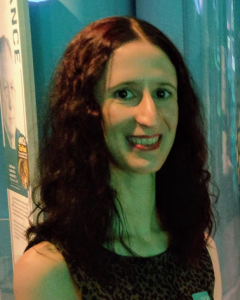
Olivia Di Matteo serves as an Assistant Professor in the Department of Electrical and Computer Engineering within UBC's Faculty of Applied Science, leading the Quantum Software and Algorithms Research (QSAR) group since her January 2022 appointment. Her academic foundation includes a BSc from Lakehead University and MSc/PhD in Physics (Quantum Information) from the University of Waterloo, completed in 2019. Dr. Di Matteo's research centers on quantum software engineering , with pioneering work in quantum compilation , circuit optimization , and debugging tools . She champions open-source quantum frameworks and develops accessible educational resources to democratize quantum computing. Analysis of her 15 most recent publications (2021-2025) reveals dominant trends in quantum programming infrastructure, particularly circuit analysis (33%), bug classification (20%), and qubit network optimization (15%), with strong emphasis on practical software tooling over theoretical physics. No scientific awards were documented in the source materials. She advises graduate students in the QSAR group while contributing to open-source quantum ecosystems through projects like PennyLane and The Ionizer transpiler, and teaches courses including CPEN 400Q (Gate-model quantum computing) and ELEC 221 (Signals and Systems). The QSAR group operates at the intersection of quantum software development and education, focusing on making quantum programming accessible through visual tools, real-time debugging environments, and hardware-agnostic compilation techniques.
Serge Fehr is a Senior Researcher in the Cryptology Group at CWI (Centrum Wiskunde & Informatica) in Amsterdam and a part-time Professor at the Mathematical Institute of Leiden University. His research focuses on foundational aspects of cryptology, including post-quantum cryptography, information-theoretic security, zero-knowledge proofs, and secure multiparty computation. He participates in AMSec (Amsterdam Cyber Security Center) and leads work packages in the NWO-funded HAPKIDO consortium. Education: M.Sc. in Mathematics from ETH Zürich (1998) Ph.D. in Cryptography from ETH Zürich and University of Aarhus (2003) Postdoc at Macquarie University (2003-2004) Research Interests: Post-quantum cryptographic primitives (e.g., digital signatures, lattice-based schemes) Quantum-resistant protocols (e.g., non-resignable signatures, Fiat-Shamir transforms) Foundational security proofs in the quantum random oracle model (QROM) Secure multiparty computation and privacy-preserving healthcare systems Key Activities: Editorial Board Member: Journal of Cryptology , IEEE Transactions on Information Theory Program Committee Co-Chair: EUROCRYPT 2025 Steering Committee Member: Beyond IID Information Theory, QCrypt Co-organizer: Symposium Series on Post-Quantum Cryptography Grants/Awards: NWO Cybersecurity consortium grant (HAPKIDO - 2021) NWO Veni Grant (2005) NWO Open & Free Competition Grants (2008, 2013) Students/Advising: Supervised or served on committees for over 15 Ph.D. students, including work on post-quantum signatures, MPC applications, and lattice-based cryptography. Labs/Teams: Active in CWI’s Cryptology Group and Leiden’s Mathematical Institute, collaborating with industry partners (e.g., KPN, Microsoft) in cybersecurity initiatives.
Damien Stehlé is a Professor at the École Normale Supérieure de Lyon (ENS Lyon), affiliated with the Laboratoire LIP (CNRS, ENSL, INRIA, UCBL, U. Lyon) and a member of the AriC team. He is also a member of the Institut Universitaire de France. His research focuses on cryptography, computational number theory, and computer algebra, particularly lattice-based cryptography and its applications in post-quantum security. He has held editorial roles at the Journal of Cryptology and Designs, Codes and Cryptography, and served on committees for major conferences like ASIACRYPT and CRYPTO. His work has led to advancements in lattice reduction algorithms, cryptographic protocols (e.g., signatures, encryption schemes), and security proofs in the quantum random oracle model. Stehlé has supervised numerous PhD students, including Alice Pellet-Mary and Miruna Rosca, and has contributed to open-source lattice reduction software like fplll. His awards include Best Paper Awards at ASIACRYPT 2021 and 2015. He teaches advanced courses on post-quantum cryptography and cryptanalysis at the Master’s level.
Prof Raphaël Phan is a Professor and Deputy Head of the School of IT at Monash University Malaysia. His expertise spans security, cryptography, malicious AI, emotion recognition, motion analysis, and generative AI. He has published over 220 papers and led significant projects including privacy-preserving data mining funded by UK MoD and Malaysian government grants exceeding RM4 million. He co-designed the BLAKE hash function (SHA-3 finalist) and has an h-index of 50. Education: PhD in Cryptography (Multimedia University, 2005), MEngSci (2001), BEng (Hons) Computer Engineering (1999). Research focuses on adversarial AI, brain networks, and secure systems. Current projects include Æmbience: emotion-aware virtual assistants using motion magnification. Supervised 15 PhD graduates and 19 current students. Professional affiliations: Chartered Engineer (IET, UK), HEA Fellow, Board of Engineers Malaysia. Recent work emphasizes causal bias detection in micro-expressions, brain tumor detection via advanced YOLOv8, and generative adversarial networks for medical imaging. His work bridges cybersecurity with neuroscience applications.
Assoc Prof Wu Hongjun is an Associate Professor at the Division of Mathematical Sciences, School of Physical & Mathematical Sciences, Nanyang Technological University (NTU). His research focuses on cryptography and information security, with notable contributions to lightweight authenticated encryption algorithms like TinyJAMBU and ACORN, as well as cryptanalysis of stream ciphers (e.g., ZUC, HC-128) and hash functions (e.g., JH, SHA-3 candidates). His academic career includes over 15 years of contributions to cryptographic standards, IoT security frameworks, and secure cloud data management. Key areas of expertise encompass symmetric-key cryptography, algorithm design for resource-constrained devices, and vulnerability analysis of cryptographic primitives. Prof Wu has authored influential papers on authenticated encryption modes (AEGIS, MORUS), lightweight cipher optimizations (ACORN), and cryptanalysis techniques applied to Feistel networks and stream ciphers. His work bridges theoretical cryptography with practical implementations across telecommunications, IoT, and cloud computing domains.
Thorsten Koch serves as Head of the Department of Applied Algorithmic Intelligence Methods within the Division of Mathematical Algorithmic Intelligence at Zuse Institute Berlin (ZIB). His research spans mathematical optimization, energy systems modeling, quantum computing applications, and scientometrics. Koch leads significant research projects including FAN (focusing on AI in scholarly communication), UNSEEN (energy scenarios), HPO-NAVI (research software visibility), and Multi-Energy Models for European Energy System Planning. Koch's research interests center on developing advanced optimization algorithms for complex systems, particularly in energy networks and scientific data analysis. His work bridges theoretical mathematics with practical applications in gas network optimization, wind farm design, portfolio management, and quantum computing. He has pioneered methods for large-scale mixed-integer programming, scenario generation, and the integration of machine learning with traditional optimization techniques. His recent publications demonstrate growing emphasis on quantum optimization, scientometrics, and the application of AI to scientific communication infrastructure. His publication trends reveal a strategic expansion from traditional mathematical optimization into quantum computing applications and scientific data infrastructure. Recent work shows increasing collaboration across disciplines - connecting energy systems analysis with financial modeling, integrating machine learning with optimization solvers, and applying computational methods to scientometrics. The 15 most recent articles highlight three major thrusts: quantum optimization (33%), energy systems modeling (27%), and scientific data infrastructure (40%), reflecting his leadership in both theoretical algorithm development and practical implementation for societal challenges. Koch actively contributes to research infrastructure through leadership roles in projects like KOBV (Berlin-Brandenburg Cooperative Library Network), HDC (Humanities Data Centre), and CIB (future library networks). His work on the DeepGreen initiative focuses on establishing legally secure workflows for implementing open-access components in scientific publication licensing agreements, demonstrating his commitment to open science principles and research data management.
Artur Konrad EKERT is a Research Professor at the National University of Singapore , a Lee Kong Chian Centennial Professor , and a Fellow of the Royal Society (FRS) . His work bridges theoretical and experimental quantum physics, computer science, and information theory, with a focus on quantum cryptography and quantum computing. Education: DPhil from the University of Oxford (1991). His research explores the foundational principles of quantum information processing, emphasizing secure communication protocols and algorithmic efficiency. Key contributions include advancing entanglement-based cryptography and analyzing quantum privacy limits. His publications span quantum key distribution, relativistic quantum effects, and computational complexity, reflecting interdisciplinary collaborations. Scientific awards include: Fellow of the Royal Society (FRS) Lee Kong Chian Centennial Professorship He has mentored researchers in quantum cryptography and contributed to experimental implementations of quantum communication technologies.
Quan Quan Tan is a Research Fellow at Nanyang Technological University (NTU), Singapore, specializing in symmetric-key cryptanalysis and automation tools. He previously served as a Cybersecurity Engineer at CSIT, Singapore for nearly two years. His educational background includes: Ph.D. in Mathematical Sciences from NTU (2023) under Prof. Thomas Peyrin. Thesis: "Cryptanalysis of Lightweight Symmetric-Key Cryptographic Algorithms" M.Sc. in Mathematical Sciences from NTU, with research on optimization techniques for block cipher hardware implementations B.Sc. in Mathematical Sciences from NTU Dr. Tan's research focuses on automation in cryptographic design and analysis, emphasizing secure symmetric-key primitives and advanced cryptanalysis tools. His work bridges theoretical cryptography with practical security engineering through algorithm development and vulnerability assessment. Analysis of his 2020-2025 publications reveals dominant themes in symmetric-key cryptanalysis, including innovative meet-in-the-middle attacks, differential cryptanalysis frameworks, and automated verification systems. His contributions span attack methodologies (e.g., higher-order differential-linear techniques), tool development (Trail-Estimator), and novel cipher design (uKNIT-BC), demonstrating consistent advancement in lightweight and low-latency cryptographic systems.
Aayush Jain is an Assistant Professor in the Computer Science Department at Carnegie Mellon University. Previously, he was a Postdoctoral Fellow at NTT Research and a PhD student at UCLA, advised by Professor Amit Sahai. His work bridges theoretical and applied cryptography with core computer science principles. Education PhD in Computer Science, University of California, Los Angeles (UCLA) Postdoctoral Fellowship, NTT Research Research Focus His research explores: foundational cryptography, indistinguishability obfuscation, functional encryption, lattice-based cryptography, secure multi-party computation, and post-quantum security. Work emphasizes rigorous theoretical frameworks with practical implications. Publication Trends Recent articles (2021-2024) demonstrate consistent focus on cryptographic primitives, obfuscation techniques, and security reductions. Dominant venues include CRYPTO, EUROCRYPT, FOCS, and STOC with emerging work in machine learning interfaces. Awards Best Paper Award at STOC 2021 for foundational contributions to indistinguishability obfuscation Advising and Collaboration Current PhD advisees: Alper Cakan, Quang Dao (co-advised), Sagnik Saha, Noah Singer (co-advised). Mentored postdocs: Mitali Bafna (2022-2023) and Rex Fernando (2022-2023). Teaches graduate courses in cryptography and theoretical tools. Leadership Leads the CMU Cryptography research group; organized the CMU Cryptography Workshop. Program committee member for FOCS, TCC, ITCS, and ICALP.
Riham AlTawy is an Associate Professor and MTIS Program Director at the Department of Electrical and Computer Engineering, University of Victoria. She previously held positions as an NSERC Postdoctoral Fellow at the University of Waterloo and an NSERC Canada Graduate Scholar at Concordia University. Her research focuses on IoT security, blockchain consensus mechanisms, lightweight cryptographic primitives, and privacy-preserving protocols. She leads the IoTSec group, which develops application-specific cryptographic solutions for IoT authentication and privacy challenges. Education includes postdoctoral training at the Communication Security (ComSec) group (University of Waterloo) and doctoral studies at Concordia University. Her work has led to publications in top venues such as IEEE Transactions and CANS conferences. She actively seeks PhD research assistants and postdoctoral fellows in cryptographic research. Key research areas include authentication protocols for edge computing, privacy in cross-domain systems, and lightweight algorithms for constrained devices. Her group emphasizes practical solutions for real-world IoT security challenges.
Vinod Vaikuntanathan is the Ford Foundation Professor of Engineering in the MIT EECS department and a principal investigator at MIT CSAIL. He holds a BTech from IIT Madras (2003), and SM/PhD degrees from MIT (2005/2009). His research focuses on cryptography, particularly fully homomorphic encryption (FHE), lattice-based cryptography, and quantum-resistant systems. He co-founded Duality Technologies as Chief Cryptographer. **Education:** BTech in Computer Science (2003), Indian Institute of Technology Madras SM in Electrical Engineering & Computer Science (2005), MIT PhD in Computer Science (2009), MIT **Research Interests:** His work spans FHE (enabling computations on encrypted data), lattice-based cryptography (post-quantum security), and intersections with quantum computing, machine learning, and privacy. He explores applications in secure computation, algorithm design, and cryptographic protocols. **Awards:** Recipient of the Gödel Prize (2022), Simons Investigator (2023), and MacVicar Faculty Fellow (2024). His work on FHE and lattice algorithms has earned widespread acclaim in cryptography and theoretical computer science. **Teaching & Mentorship:** Advanced cryptography courses at MIT (e.g., 6.5630, 6.876J) Advised PhD students (e.g., Sergey Gorbunov, Tianren Liu) and postdocs (e.g., Nir Bitansky, Mark Zhandry) now leading positions in academia and industry **Collaborations:** Organizer of the Charles River Crypto Day and MIT Cryptography Seminar Principal investigator on grants from NSF, DARPA, and Microsoft
Gianluca Setti is a Full Professor at the Department of Electronics and Telecommunications (DET) at Polytechnic University of Turin, where he has been serving since 2017. He previously held positions at the University of Ferrara from 1997 to 2017. His institutional roles include being the Contact Person for the Research Quality Evaluation process, Member of the Interdepartmental Center SmartData@PoliTO - Big Data and Data Science Laboratory, and Member of the University Quality Assurance Committee. He serves as Editor-in-Chief of the Proceedings of the IEEE, the first non-US editor to hold this position. Dr. Setti's research spans multiple interdisciplinary fields including machine learning, artificial intelligence, big data analytics, Internet of Things, biomedical signal processing, power electronics, and electromagnetic compatibility. His work bridges theoretical foundations with practical applications, particularly focusing on compressed sensing, neural networks, and circuit design for specialized applications. His research has significant implications for healthcare, sustainable infrastructure, and next-generation electronics. His publication record reveals a consistent trajectory from foundational work in chaotic systems and neural networks to contemporary applications in AI, IoT, and edge computing. The most recent publications demonstrate his focus on anomaly detection at the edge, neural oracles for biosignal processing, and power electronics innovations. His work shows strong integration between theoretical signal processing and practical circuit implementation. 1998 Caianiello prize (best Italian Ph.D. thesis on Neural Networks) IEEE Fellow (2006) IEEE Circuits and Systems Society Distinguished Lecturer (2004, 2015) 2004 IEEE CAS Society Darlington Award 2013 IEEE CAS Society Meritorious Service Award 2013 IEEE CAS Society Guillemin-Cauer Award 2019 IEEE Transactions on Biomedical Circuits and Systems best paper award Multiple best paper awards at major conferences including ECCTD2005, EMCZurich2005, ISCAS2011, PRIME2019, and EMCCOMPO2019 Dr. Setti has supervised numerous PhD students across various research domains including electromagnetic compatibility, signal and power integrity, communication networks, mechatronics and robotics. His research is supported by significant funding including national PRIN projects, EU-funded JTI-ECSEL initiatives, and commercial contracts. He leads the VLSILAB Group at DET, focusing on circuit architectures, embedded systems, and AI applications. His current projects include DECORI (anomaly detection), StorAIge (embedded storage for AI), PROGRESSUS (energy infrastructure), CONNECT (smart grid), and CONVERGENCE (wearable healthcare applications).